
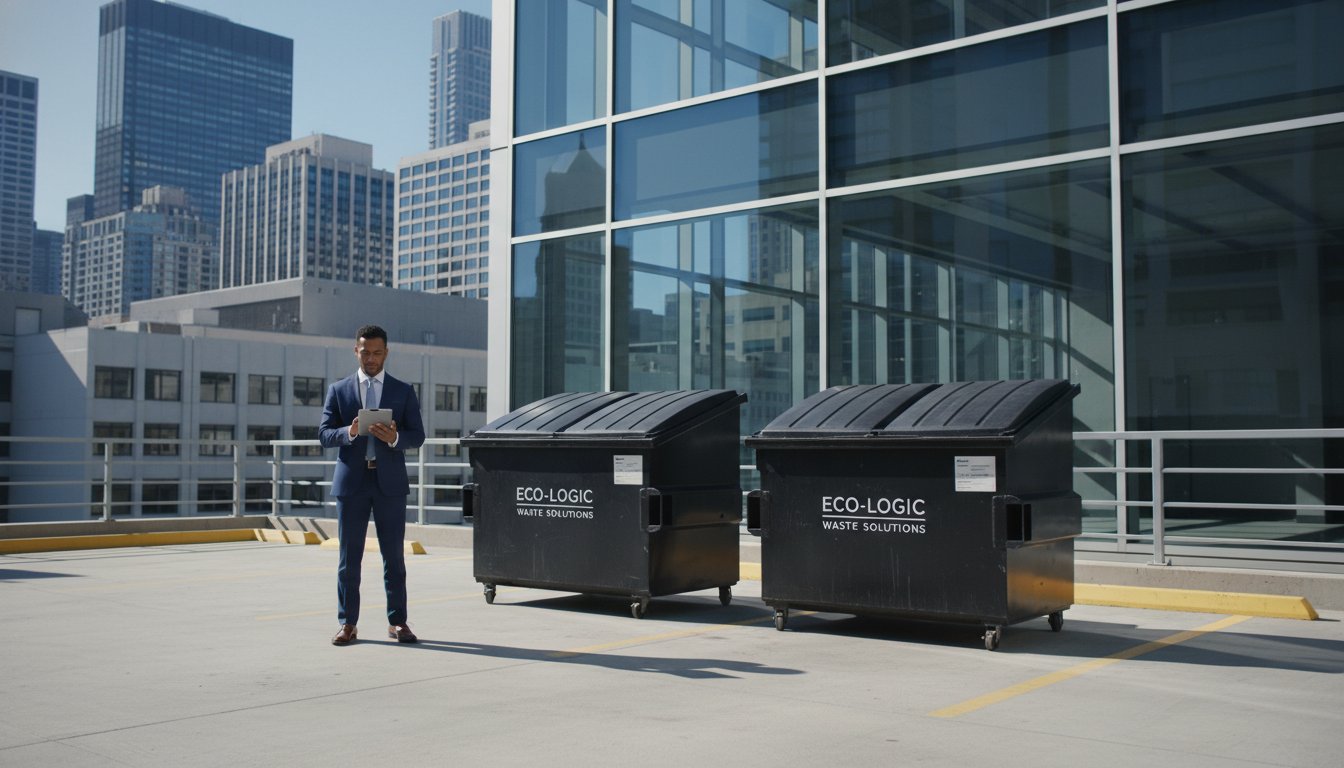
Your waste enclosure is either a silent asset or a visible liability for your business. Most managers treat waste as an afterthought until an overflowing bin or a surprise fee disrupts their operations. Managing commercial front load dumpsters shouldn't be a source of logistical stress. You need a setup that keeps your property professional and your monthly costs predictable. Stop guessing which container size fits your volume and start treating your waste management as a streamlined utility.
You already know that confusing contracts and missed pickups are more than just an annoyance; they're a threat to your compliance with local city ordinances. It's time to take control of your facility's cleanliness and your budget. This guide helps you master the logistics of selecting, sizing, and scheduling your service with confidence. We'll examine the specific differences between front-load and roll-off requirements, explain how to avoid common industry fees, and show you how to build a pickup schedule that actually matches your business pace.
Key Takeaways
- Identify the specific mechanics of front-load systems to establish a reliable, permanent waste solution for your business.
- Choose the ideal container size by matching your weekly volume to the right commercial front load dumpsters, from 2-yard retail bins to larger options.
- Distinguish between recurring front-load services and project-based roll-off containers to align your equipment with your actual business needs.
- Review local placement ordinances and truck clearance requirements in major urban centers like Chicago or San Francisco to ensure seamless, compliant pickups.
- Audit your waste stream to eliminate empty space in your bins and leverage recycling to reduce your total monthly overhead.
What Are Commercial Front Load Dumpsters?
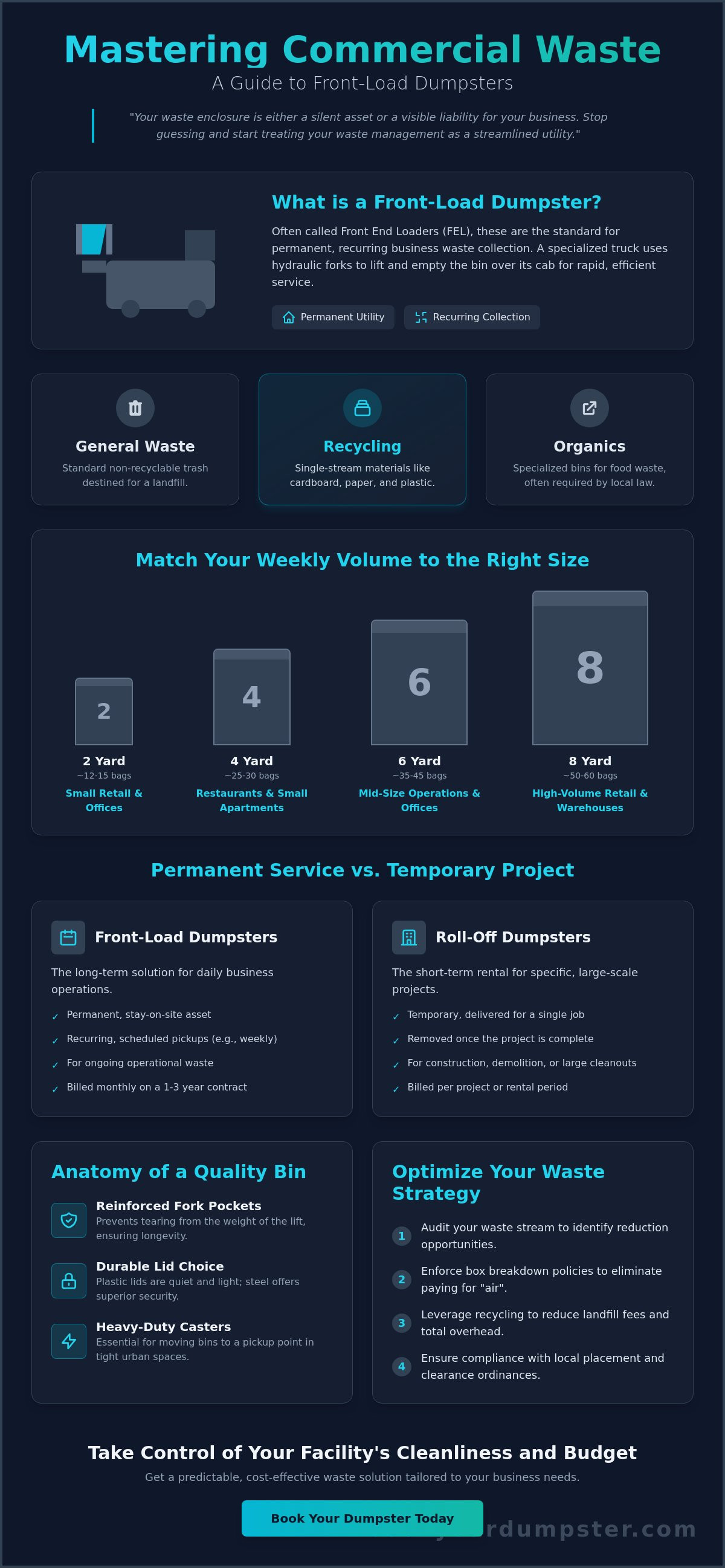
Commercial front load dumpsters, often called Front End Loaders (FEL), are the standard utility for business waste. Unlike temporary containers used for renovations, these are permanent fixtures designed for high-frequency, recurring collection. The "front-load" name refers to the mechanical process used to empty the bin. A specialized truck equipped with two hydraulic forks at the front slides into side pockets on the container. The driver then lifts the bin over the cab and tips the contents into the truck's hopper. This process, deeply rooted in the history of front-load dumpsters, allows for rapid servicing without the driver needing to exit the vehicle.
Selecting the right bin involves more than picking a size. You must categorize your waste streams to maintain efficiency and compliance. Most businesses utilize these containers for three primary purposes:
- General Waste: Standard trash that goes directly to a landfill.
- Recycling: Single-stream materials like cardboard, paper, and plastic.
- Organics: Specialized bins for food waste, often required by law in specific jurisdictions.
Durability is a non-negotiable requirement for these assets. In climates like New York or Illinois, bins face extreme temperature shifts, heavy snow loads, and corrosive road salt. High-grade steel construction ensures the bin doesn't warp or rust through, maintaining a professional appearance for your facility year-round. A failing bin leads to leaks, odors, and potential fines from city inspectors.
Permanent Utility vs. Temporary Rental
Understand the difference between a project tool and a permanent utility. Front-load bins are stay-on-site assets. They remain at your location for the duration of a service contract, which typically ranges from one to three years. This is a distinct departure from roll-off rentals, such as 10 yard or 20 yard dumpsters, which are delivered for a specific project and removed once the job is complete. If you are moving from a construction phase to active business operations, you must transition from project-based roll-offs to a scheduled commercial service to ensure your waste management remains predictable and cost-effective.
Anatomy of a Commercial Bin
Small design details dictate the longevity of your service. High-quality commercial front load dumpsters feature reinforced fork pockets. These sleeves bear the entire weight of the waste during a lift; without reinforcement, the metal will tear, making the bin unserviceable. Lid choice also matters. Plastic lids are lighter and quieter for employees to use, while steel lids provide a higher level of security against pests and unauthorized dumping. For businesses in tight urban spaces that require moving the container to a specific pickup point, heavy-duty casters are an essential addition to the base of the bin.
Sizing Your Service: From 2-Yard to 10-Yard Containers
Choosing the wrong bin size is a fast way to inflate your operational budget. If the bin is too small, you face overflow fees and unsanitary conditions. If it's too large, you're paying to haul air. Selecting the right commercial front load dumpsters requires a balance between your physical footprint and your weekly waste volume.
The 2-yard container is the standard starter bin for small retail shops and professional offices. It holds approximately 12 to 15 large trash bags. For mid-sized operations like restaurants or small apartment complexes, the 4-yard and 6-yard options are the industry workhorses. These sizes accommodate the heavier weight of food waste while offering enough capacity for daily discarded materials. High-volume facilities, such as distribution centers and large residential blocks, require 8-yard or 10-yard containers. These larger bins manage massive amounts of cardboard and packaging without requiring daily truck visits, which helps minimize traffic on your property.
Matching Size to Industry Needs
Your industry dictates your waste profile. Restaurants should prioritize 4-yard or 6-yard bins paired with high-frequency pickups. This strategy prevents organic waste from sitting too long, which mitigates odor and pest issues. Office buildings often generate more volume through paper and packaging than actual weight. In these cases, a larger 6-yard bin with a lower pickup frequency is often more cost-effective. Retailers dealing with high cardboard volume should look at 8-yard containers. Ensure your staff breaks down boxes to maximize space; otherwise, you'll pay for "air" in the bin. Adhering to Federal guidelines for commercial waste ensures your storage and collection methods meet safety and sanitation standards.
Calculating Your Volume Requirements
Use a simple rule of thumb for estimation: one cubic yard equals roughly six large, 30-gallon trash bags. If your business generates 24 bags a week, a 4-yard bin is your minimum requirement. However, avoid the overflow trap. Many managers choose a smaller bin to save money, only to be hit with overage fees when the lid won't close. A slightly larger bin is almost always cheaper than a single overage penalty. For short-term projects that exceed your daily capacity, you might need a different approach. You can compare these permanent solutions against temporary options in our 10 yard dumpster guide. If you're ready to secure your service, view our commercial options to find the right fit for your site.
Front-Load vs. Roll-Off: Which Does Your Project Need?
Distinguishing between permanent waste management and project-specific disposal is the first step in controlling your facility's overhead. Commercial front load dumpsters serve as your daily utility. They handle the predictable stream of breakroom trash, retail packaging, and office paper. In contrast, roll-off dumpsters are temporary tools designed for high-volume debris from construction or cleanouts. If your goal is a clean, professional-looking waste area with fixed monthly costs, the front-load system is your primary asset.
Space constraints often dictate your choice. Front-load bins are compact and sit within a standard enclosure or a small parking stall. Roll-off containers, like our 20 yard or 30 yard options, require a long, flat runway for the delivery truck to drop and retrieve the bin. If you operate in a tight urban alley, a roll-off might be physically impossible to place, making the front-load bin your only viable option. Pricing models also differ. You pay a predictable monthly fee for front-load service based on the bin size and pickup frequency you select. Roll-offs usually operate on a per-haul basis plus disposal fees. For maximum efficiency, consult the EPA's guide for commercial buildings to understand how reducing your total waste can lower these recurring costs.
Many businesses eventually need both. You might maintain a permanent 4-yard front-load bin for daily trash but rent a temporary 10-yard roll-off during a store remodel or a seasonal warehouse purge. Using the right tool for each waste stream prevents damage to your permanent equipment and keeps your project on schedule.
When to Choose Front-Load
Select this for your day-to-day operations. It's the right choice for businesses that need a secured, locked container to prevent illegal dumping. If your waste consists mostly of lightweight debris and your site has limited space for truck maneuvering, stick with a front-load setup. These bins are designed for longevity and frequent, automated servicing.
When to Choose Roll-Off
Switch to a roll-off for one-time events. This includes large-scale construction, roofing repairs, or site clearing projects. These containers handle heavy materials like concrete, dirt, and brick that would exceed the weight limits of commercial front load dumpsters. For a deeper dive into managing job site waste, read our Construction Debris Removal Guide.
Urban Logistics: Placement and Local Regulations
Operating in dense urban centers like Queens or San Francisco means your waste management strategy must account for inches, not just feet. Precision is required for the placement of commercial front load dumpsters to avoid service interruptions and city fines. High-density areas present unique logistical hurdles, including narrow access points, low-hanging utility lines, and strict municipal codes. You must verify that your designated waste area is accessible for a heavy-duty truck with a wide turning radius before finalizing your service agreement.
Most major metros now mandate the use of enclosures or "corrals" for permanent waste containers. These structures serve two purposes: they maintain the professional appearance of the neighborhood and prevent wind-blown litter. However, an poorly designed enclosure can actually block service. Ensure your enclosure doors open at least 120 degrees and have pins to secure them in place during pickup. If your bin must sit on a public right-of-way, such as a sidewalk or a parking lane, you are responsible for obtaining a public space permit. Check your local municipal website for annual permit fees and renewal dates to avoid impoundment of your bin.
Navigating City Ordinances
City-specific rules can change your entire waste budget. In New York, specifically Queens, the city has transitioned to a Commercial Waste Zone system. This means only specific authorized carters can service your area. Chicago businesses must adhere to strict sanitation codes regarding alleyway placement. If your bin blocks emergency vehicle access or protrudes too far into a public alley, the city will issue a citation. For businesses in Boston or other parts of Massachusetts, winter accessibility is the primary concern. You must ensure that snow is cleared at least three feet around the bin and that the path to the truck is salted to prevent the container from freezing to the ground.
Accessibility and Safety Standards
Follow the "15-foot Rule" for vertical clearance. Front-load trucks require significant overhead space to lift and empty a container over the cab. Check for low-hanging wires, tree branches, or building overhangs that could snag the lift arms. Ground surface also matters. A loaded 6-yard bin is incredibly heavy and will sink into soft dirt or thin asphalt over time. Place your bin on a reinforced concrete pad to prevent property damage. Finally, manage your delivery zones and parking to ensure the truck has a clear line of sight. If a vehicle blocks the bin, the driver will skip the pickup, leading to overflow issues. Secure your service area by selecting the right front load commercial waste pickup for your specific city requirements.
Optimizing Your Commercial Waste Strategy
Effective management of commercial front load dumpsters requires more than just a signed contract. It demands a proactive strategy to eliminate waste in your budget. Start by auditing your waste stream to identify how much "air" you are paying to haul. If your bins are consistently half-full on pickup day, you are overspending on frequency. Conversely, if your staff struggles to close the lids, you are risking overage penalties. Adjust your service levels to match your actual output. Break down every cardboard box and compress lightweight trash to maximize the utility of every cubic yard you pay for.
Recycling diversion is your most effective tool for cost control. Moving cardboard, plastic, and metal into a dedicated recycling stream often reduces the volume and weight of your primary trash. This shift can allow you to downsize your general waste bin or reduce the number of weekly pickups. For multi-location businesses, managing these variables across different regions is a significant logistical burden. Use a streamlined digital platform to centralize your waste data and ensure every site operates at peak efficiency.
Avoiding Common Commercial Fees
Hidden charges often stem from poor site management. "Dry run" fees occur when a driver arrives but cannot service the bin because a vehicle is blocking the enclosure or a gate is locked. Clear the path before every scheduled pickup to avoid these unnecessary costs. Monitor your fill levels daily. Most haulers charge significant overage fees if waste protrudes above the rim of the bin. If your business is seasonal, such as a retail store during the holidays, negotiate a flexible service frequency. Increase your pickups during peak months and scale back during slower periods to keep your monthly front-load bill aligned with your revenue.
The Book Your Dumpster USA Advantage
We are modernizing a legacy industry through a digital-first approach to waste logistics. Our platform removes the friction from the procurement process, providing a high-functioning tool for facility managers. We prioritize pricing integrity; the rate you see is the rate you pay, without the opaque surcharges common in traditional contracts. Whether you are managing a single storefront in New Jersey or a complex of buildings in San Francisco, we provide the reliability you need to keep your property clean and compliant. Take control of your facility's waste today. Visit Book Your Dumpster USA to receive a custom quote for your business.
Take Control of Your Facility Logistics
Managing commercial front load dumpsters shouldn't be a source of constant logistical stress or unexpected budget drains. Successful waste management relies on the precise intersection of container sizing, pickup frequency, and local ordinance compliance. By auditing your volume and optimizing your placement strategy, you eliminate the risk of overflow and avoid common city fines. Whether you operate a single retail storefront or manage multiple warehouse locations, treating your waste removal as a streamlined utility is essential for maintaining a professional property.
We've modernized the industry with a digital-first approach that prioritizes your time and budget. Our streamlined online booking system provides immediate clarity for businesses across NY, NJ, IL, MA, and CA. You can expect transparent pricing with no hidden fees and a commitment to punctuality that keeps your operations moving forward. Stop struggling with opaque contracts and missed pickups. Book Your Commercial Waste Service Today and experience a more reliable way to handle your business waste. We're ready to help you resolve your clutter and secure a cleaner future for your facility.
Frequently Asked Questions
What is the most common size for a restaurant front load dumpster?
A 4-yard or 6-yard container is the standard choice for most food service operations. Smaller cafes and coffee shops usually opt for a 4-yard bin to balance their physical footprint with daily waste capacity. Larger, full-service restaurants require a 6-yard bin to manage higher volumes of food prep waste and packaging. Pair these sizes with frequent pickups to prevent organic decay and pest attraction in your enclosure.
How often can commercial front load dumpsters be picked up?
You can schedule pickups anywhere from once per week to six times per week. Most businesses find a balance with two or three collections to keep waste from compacting or rotting. High-volume locations, such as grocery stores or busy retail centers, often require daily service for their commercial front load dumpsters to maintain site cleanliness and comply with local health codes and sanitation ordinances.
Do I need a permit for a commercial dumpster on my own property?
You generally don't need a permit if the dumpster sits entirely on your private property. Permits are typically reserved for containers placed on public right-of-ways, such as city streets, sidewalks, or public alleys. However, you should still verify your local zoning laws. Some municipalities have specific aesthetic requirements for permanent enclosures or "corrals" that must be met before your recurring service begins.
Can I lock my front load dumpster to prevent others from using it?
Yes, you should lock your bin to prevent unauthorized use and illegal dumping. Third-party dumping can lead to unexpected overage fees and the disposal of prohibited hazardous materials on your account. Most bins feature a lock bar that accepts a standard padlock. Ensure your driver has the key or combination on file, or unlock the bin before your scheduled pickup window to avoid service interruptions.
What is the difference between a slant-top and a flat-top dumpster?
Slant-top dumpsters feature a lower front rim, which makes it easier for employees to toss bags inside without lifting them over their heads. Flat-top dumpsters have a uniform height and are often used in areas with tight vertical clearance or specific enclosure height restrictions. Choose a slant-top for manual loading efficiency and a flat-top if your storage area has limited overhead space for the lids to open.
What happens if my dumpster is blocked on pickup day?
A blocked bin results in a "dry run" fee because the driver cannot safely access the container to service it. If a vehicle, snow pile, or debris obstructs the path, the truck will move on to the next stop to remain on schedule. You'll typically have to wait until your next scheduled pickup day or pay an additional fee for a special trip to empty the overflowing bin before your next service.
Are there items I cannot put in a commercial front load bin?
Federal and local regulations prohibit hazardous waste, liquids, and specific bulk items from entering the general waste stream. Do not place tires, car batteries, electronics, or chemical containers in your bin. Paints, oils, and asbestos are also strictly banned. Disposing of these items in commercial front load dumpsters can result in heavy fines from the landfill and potential environmental liability for your business.
How do I calculate the right pickup frequency to avoid overage fees?
Conduct a simple waste audit by counting your average weekly trash bags. Use the rule of thumb that one cubic yard equals approximately six large 30-gallon bags. Divide your total weekly bag count by six to determine the total yardage needed. For example, if you generate 36 bags, a 6-yard bin emptied once per week or a 3-yard bin emptied twice per week will prevent overage fees and lid-clearance issues.


