
Why are you paying to haul away empty air? Most businesses treat their front load trash service as a fixed expense, but an unoptimized schedule is a silent drain on your monthly budget. Whether you manage a retail storefront or a high-volume warehouse, the goal isn't just to move garbage. It's about matching your bin volume to your pickup cadence so your waste area stays clean without the sting of hidden environmental surcharges or missed collections.
You likely believe that waste management should be invisible, yet confusing bin sizing and rigid contracts keep it at the top of your logistics list. It's time to take control of your dock. This guide shows you exactly how to master the logistics of front-load collection to reduce disposal costs and streamline your operations. We'll cover everything from choosing between a 2-yard and 8-yard container to navigating the 2026 EPA transition toward electronic manifests, ensuring your business stays compliant and clutter-free.
Key Takeaways
- Learn how front load trash service functions as a permanent, scheduled solution for daily compactable business waste.
- Select the optimal bin size from 2 to 8 cubic yards by evaluating your weekly waste volume rather than just physical footprint.
- Distinguish between recurring commercial pickups and temporary roll-off needs to ensure you use the most cost-effective equipment.
- Prevent service disruptions by maintaining proper truck clearance and adjusting pickup frequency to match your operational flow.
- Eliminate billing confusion by prioritizing providers that offer transparent pricing and digital management tools.
What is Front Load Trash Service and How Does It Work?
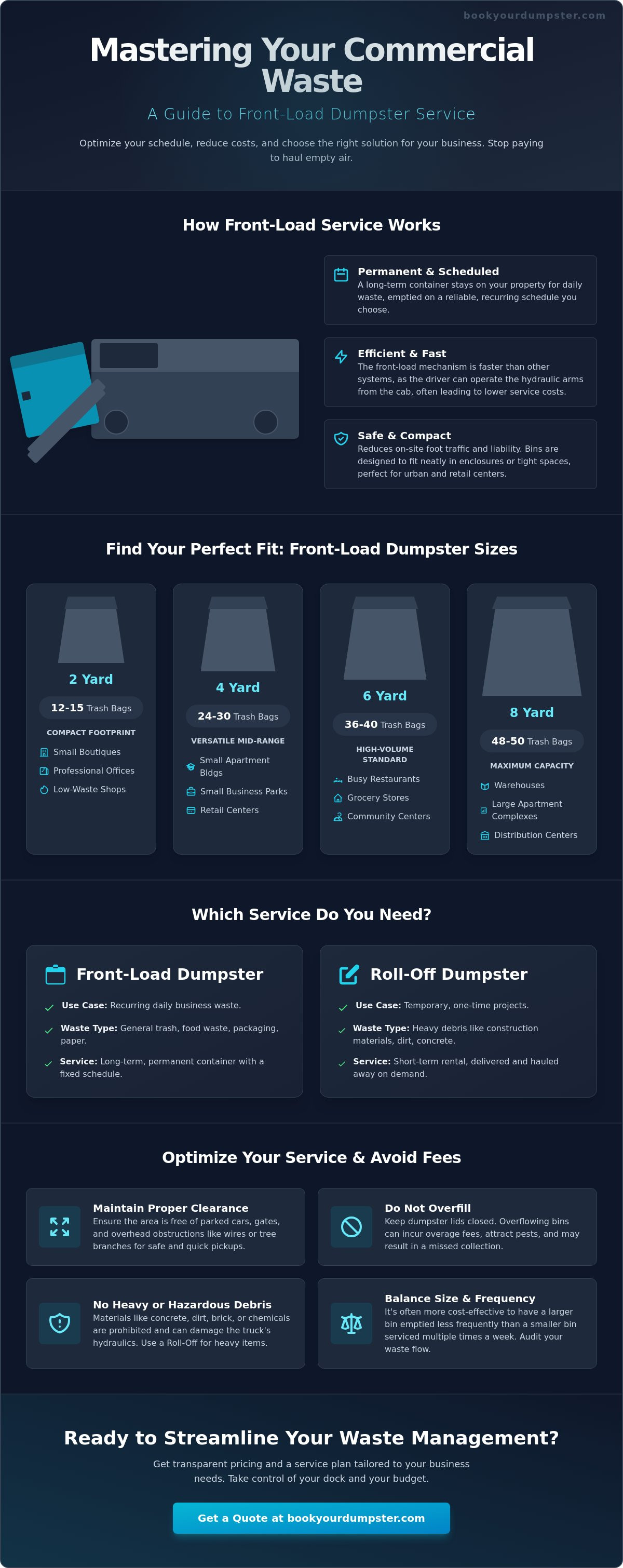
Front load trash service is the industry standard for recurring commercial waste management. It's designed for long term consistency. Unlike temporary solutions, this service provides a permanent container on your property that stays in place for years to handle daily operational debris. With industrial waste projected to hold a 92% market share in 2026, choosing a reliable, high volume system is critical for maintaining a professional storefront and a safe workspace.
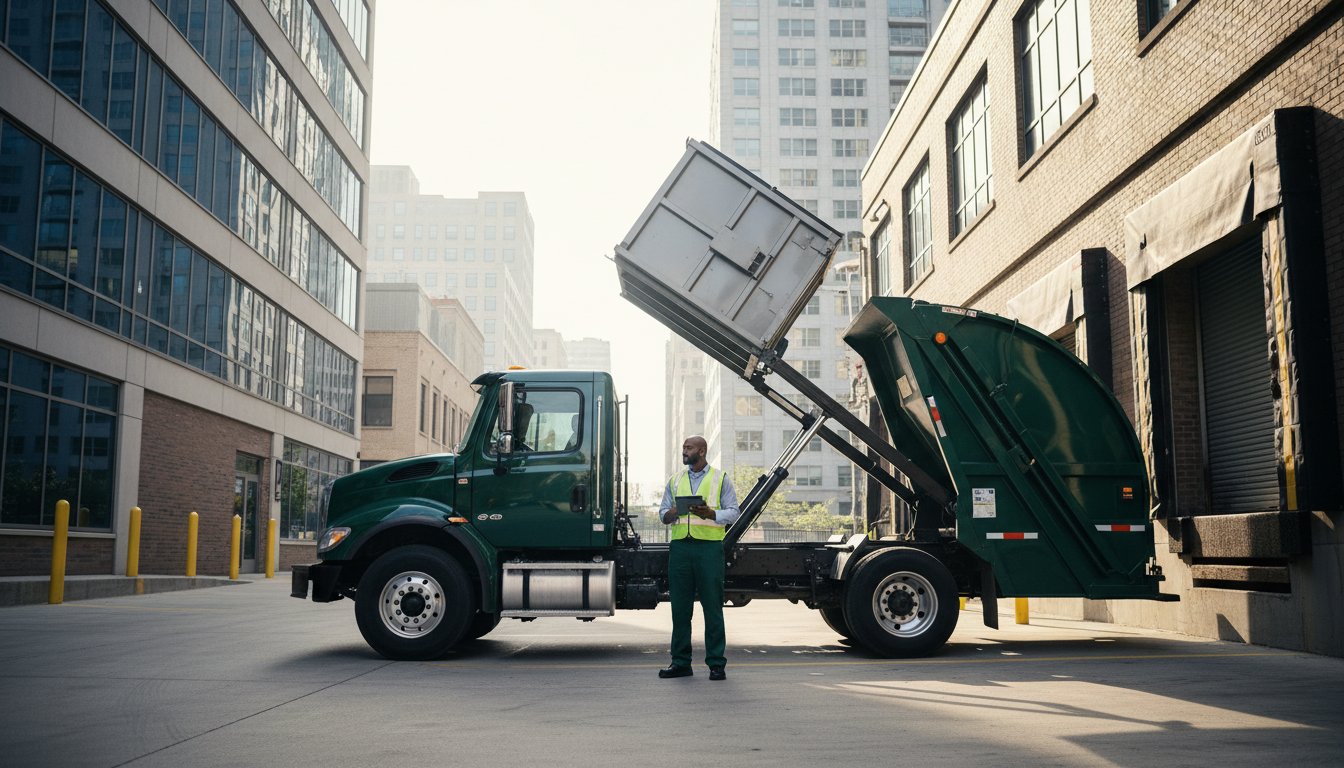
The mechanics of the service are straightforward but powerful. A specialized truck equipped with two heavy duty hydraulic arms approaches the bin from the front. These arms insert into slots on the sides of the container, lift it over the truck's cab, and tip the contents into the hopper. This setup works best for businesses generating steady volumes of compactable waste. Typical users include restaurants, retail centers, apartment complexes, and small professional offices. While a roll off dumpster rental is the right choice for one time construction projects or massive cleanups, front load trash service handles the predictable flow of business life.
The Anatomy of a Front-Load Container
A standard Waste container for front-load service features "pockets" or "ears" on both sides. These steel slots allow the truck's arms to secure the bin during the lift. Most containers feature a slanted top design. This ensures that gravity does the work during the dump cycle, preventing trash from sticking to the bottom. Lids are typically made of durable plastic to reduce weight and noise, though metal lids offer higher security. If your business handles sensitive materials or is located in an area with high pest activity, look for bins with integrated locking bars to keep the contents secure between pickups.
Why Businesses Prefer Front-Load over Rear-Load
Efficiency is the primary driver for choosing front-load systems. These trucks complete their routes significantly faster than rear-load alternatives. Because the driver can see the container and the arms from the cab, the alignment and dumping process takes seconds. This speed often translates to lower service rates for the customer. Space also plays a major role. These bins are designed to fit perfectly into standard enclosures or tight docking areas common in metro centers. Finally, consider safety. The driver stays inside the vehicle for the majority of the process. This reduces on-site foot traffic and lowers the liability risk for your business during pickup hours.
Choosing the Right Front-Load Dumpster Size
Selecting the correct size for your front load trash service prevents two major headaches: overage fees and overflowing bins. Standard commercial containers come in four primary sizes: 2, 4, 6, and 8 cubic yards. Remember that "cubic yard" is a measure of volume, not just the physical space the bin takes up on the pavement. For example, a 4-yard bin often occupies a similar footprint to a 2-yard bin but stands significantly taller to accommodate more waste.
Before you commit to a service level, audit your waste stream. The EPA guide to commercial waste suggests that understanding your specific volume is the first step toward effective cost reduction. If your business generates heavy, dense materials like concrete, brick, or dirt, keep them out of these containers. These materials exceed the weight limits of front-load hydraulic systems and can cause equipment failure. For heavy debris, utilize a 10 yard dumpster rental instead. Finding the "sweet spot" involves balancing bin size with pickup frequency. It's often more cost-effective to have a larger bin emptied once a week than a smaller bin serviced three times.
2 And 4 Yard Bins: Small Business Essentials
These bins are the workhorses for small boutiques, professional offices, and low-waste retail shops. A 2-yard bin holds roughly 12 to 15 large trash bags. These smaller sizes offer a significant footprint advantage. They fit into the tight alleys of cities like New York or Boston where every inch of real estate is valuable. If you manage a small team with minimal food waste, start with these compact options to keep your waste area tidy.
6 And 8 Yard Bins: High Volume Solutions
Busy restaurants, mid-sized apartment complexes, and grocery stores require the capacity of 6 or 8-yard bins. An 8-yard container handles approximately 48 to 50 large trash bags. While these bins offer massive volume, they come with specific logistical requirements. Because 8-yard bins are tall, they require significant overhead clearance. The truck's arms need at least 25 feet of vertical space to lift and tip the bin without hitting ceilings, overhangs, or power lines. Always measure your vertical clearance before placing these larger units.
If you aren't sure which volume fits your monthly flow, compare container dimensions to see what actually fits your enclosure.
Front-Load vs. Roll-Off: Which Does Your Project Need?
Choosing between these two systems depends entirely on your timeline and the density of your waste. Front load trash service provides a permanent, scheduled solution for businesses with a predictable daily output. In contrast, roll-off containers serve temporary needs like renovations or site cleanups. For many contractors, a hybrid approach works best. They maintain a front-load bin at the main office for everyday office waste and deploy roll-off units to specific job sites for heavy debris. If you are managing a site with mixed materials, consult the construction debris removal guide to ensure you select the right equipment for specialized disposal.
The National Waste & Recycling Association emphasizes that proper equipment selection is the foundation of site safety and efficiency. Using a front-load bin for bulky construction materials like lumber or rebar can damage the hydraulic arms of the collection vehicle. Stick to compactable bags and lightweight retail waste for your recurring service. This protects the equipment and ensures your pickups remain on schedule without the risk of a driver refusing a contaminated load.
The Logistics of Placement
Placement is not just about convenience; it's about physics. Front-load bins require a reinforced concrete pad to withstand the weight of the truck during the lift. Drivers need a straight 40 to 50 foot approach to align the arms with the container pockets. Roll-offs offer more placement flexibility, but they consume more ground space. Always check local ordinances before positioning any bin. In high density areas like Queens or San Francisco, you often need a specific permit for street placement or even for placing a bin in a visible alleyway. Ensure your site plan accounts for these access requirements to avoid missed pickups.
Cost Structure Differences
The billing models for these services differ significantly. Front load trash service typically involves a flat monthly fee based on your container size and how many times per week it's emptied. This creates predictable overhead for your business. Roll-off pricing is usually project based, involving a per-haul fee plus tonnage charges for weight overages. To avoid hidden costs, ensure your contract clearly lists environmental surcharges and fuel adjustments. Transparency at the start prevents invoice shock at the end of the month. Choose a provider that offers straightforward billing so you can focus on your business instead of deciphering complex invoices.
Managing Your Service: Frequency, Access, and Compliance
Schedule your front load trash service based on actual output, not habit. Most businesses find a rhythm between weekly and bi-weekly pickups, but high volume locations like restaurants often require daily service. Don't let your waste area become a liability. If you operate in New York, Illinois, and Massachusetts, strict local ordinances regarding container visibility and overflow can result in heavy fines if not managed correctly. Review your volume quarterly and adjust frequency to account for seasonal spikes, such as the holiday retail rush or summer tourism peaks.
Address the "Enclosure Problem" before your first delivery. A front-load truck needs a straight, unobstructed approach of at least 40 to 50 feet to align its hydraulic arms. If your bin is tucked into a tight corner or behind a gate that requires a sharp turn, the driver may be unable to service the unit safely. This leads to a dry-run fee. Audit your enclosure weekly to ensure no delivery pallets, extra inventory, or stray equipment blocks the path of the collection vehicle.
Access and Obstruction: Avoiding Dry-Run Fees
Keep the area clear. Parked employee cars or delivery trucks are the most common causes of missed pickups. In colder climates like Chicago or Boston, snow removal is a non-negotiable requirement. If a driver sees a snowbank blocking the bin, they will move to the next stop on their route. Provide any necessary gate codes or keys to the dispatcher during your initial setup. If the driver can't get past the gate, your trash stays on-site, and you still pay for the attempt.
Prohibited Items in Front-Load Bins
Managing a consistent front load trash service requires discipline regarding what goes inside the container. These bins are for compactable waste only. Never toss tires, electronics, hazardous chemicals, or large appliances into the bin. These items can damage the truck's compaction system or lead to environmental fines at the disposal site. If you have bulky items or hazardous materials, a specialized debris removal service is required instead. Additionally, avoid the "overfilled bin" penalty. If the lids cannot close completely, the driver may charge an extra fee or refuse the pickup entirely. Keep your waste levels strictly below the rim.
Ready to streamline your waste logistics? Set up your commercial service and choose a schedule that fits your business flow.
Streamline Your Waste Management with Book Your Dumpster USA
Stop managing your waste and start managing your business. Book Your Dumpster USA provides a pragmatic, digital-first platform for your front load trash service needs. We remove the logistical friction that usually accompanies commercial waste management. Our system is built for speed and clarity. This ensures your enclosure stays clean and your monthly billing remains predictable. We understand the high-velocity requirements of modern commerce, which is why our platform prioritizes transparency over complex, opaque contracts.
Reliability is our primary metric. In major metros like NYC, San Francisco, and Chicago, local regulations are dense and unforgiving. Our team possesses the local expertise required to navigate these city-specific requirements without disrupting your daily workflow. We don't hide behind hidden environmental surcharges or confusing invoices. Instead, we offer a straightforward partnership. This approach allows you to focus on your operations while we handle the heavy lifting of waste logistics.
The Book Your Dumpster Advantage
Our communication is direct and respects your time. We avoid the fluff of traditional waste providers by offering a high-functioning tool for your disposal needs. This modern technology is paired with a commitment to reliability that feels like a verbal handshake. Whether you're managing a single retail storefront or a large professional commercial account, our service adapts to your volume. We provide the same level of competence for residential cleanouts as we do for industrial contracts. You get clear answers and immediate action every time you interact with our team.
How to Start Your Service Today
Transitioning to a cleaner, more efficient waste area is a simple process. Follow these three steps to lock in your 2026 service plan:
- Step 1: Visit bookyourdumpster.com and use our online tool to select your service area.
- Step 2: Choose your bin size and frequency. Use the 2026 guidelines discussed in this article to match your volume to the right container, whether it's a 2-yard office bin or an 8-yard restaurant solution.
- Step 3: Schedule your first delivery. Experience high-velocity waste resolution with a provider that prioritizes punctuality and pricing integrity.
Don't let trash logistics slow down your growth. Book your service online today or reach out for a professional consultation to optimize your waste flow.
Take Control of Your Commercial Waste Logistics
Efficient waste management isn't just about getting rid of trash; it's about protecting your bottom line. You've learned that matching your container size to a strategic pickup cadence eliminates the cost of hauling empty air. Maintaining a clear, accessible enclosure in cities like San Francisco or Chicago is equally vital to avoid unnecessary dry-run fees and keep your operations moving. By optimizing your front load trash service, you turn a messy chore into a streamlined business process.
Book Your Dumpster USA provides transparent pricing with no hidden fees and real-time online management. We serve major metros across NY, NJ, IL, MA, and SF with a relentless focus on reliability and punctuality. It's time to remove the logistical stress from your day so you can focus on growing your business. Stop letting waste management be a source of friction and start using it as a high-functioning tool for your success.
Secure Your Commercial Front-Load Service Today
Your cleaner, more efficient waste area is just a few clicks away. Get started now and experience the difference of a professional, no-nonsense partnership.
Frequently Asked Questions
What is the most common front load dumpster size for a small restaurant?
A 4 or 6 cubic yard bin is the standard choice for small restaurants. If you produce heavy food waste or have high daily turnover, a 6-yard container provides the necessary capacity to avoid mid-week overflows. Smaller cafes often start with a 4-yard bin. Monitor your volume for two weeks to determine if you need to scale up or increase pickup frequency to maintain a sanitary enclosure.
Can I change my pickup frequency if my business waste volume increases?
You can adjust your pickup frequency at any time to match your current waste output. Most commercial accounts start with a weekly schedule and increase to daily service during peak seasons or growth periods. Simply update your service plan through our digital portal to ensure your front load trash service remains efficient. Constant adjustments help you avoid overage fees while keeping your waste area clear of excess debris.
How much clearance height does a front-load truck need for pickup?
Front-load trucks require a minimum of 25 feet of vertical clearance to lift and tip the container safely. The hydraulic arms must extend fully over the cab without hitting power lines, tree branches, or building overhangs. Measure your enclosure height before delivery. If you have low clearance, you may need to relocate the bin to an open area of the parking lot to ensure the driver can complete the pickup without equipment damage.
Are there weight limits for a 4-yard or 6-yard front load bin?
Yes, weight limits apply because the truck's hydraulic arms have specific lifting capacities. Generally, these bins are designed for light, compactable commercial trash rather than dense materials. Don't fill your bin with concrete, dirt, or heavy metal. If the container is too heavy for the truck to lift, the driver will leave it on-site. For heavy materials, utilize a roll-off dumpster instead of your standard recurring front load trash service.
What happens if someone parks in front of my dumpster on pickup day?
An obstructed bin results in a missed pickup and a dry-run fee. Drivers require a straight approach of 40 to 50 feet to align the truck's arms with the container pockets. If a vehicle or delivery pallet blocks this path, the driver can't service the unit and will move to the next stop. Post "No Parking" signs near your enclosure to prevent these disruptions and keep your waste management on schedule.
Do front load trash services include recycling collection?
Recycling is typically handled through a separate dedicated bin rather than a single mixed container. You can set up a secondary service specifically for cardboard or co-mingled recyclables to stay compliant with local diversion laws. Many states have strict requirements for commercial recycling. Splitting your waste streams often reduces your total disposal costs by lowering the volume sent to the landfill and avoiding potential contamination fines.
How do I prevent illegal dumping in my commercial bin?
The most effective way to prevent illegal dumping is to install a locking bar on your container. Most standard bins can be fitted with a padlocked bar that prevents the lids from opening without a key. You can also use gravity locks that automatically unlock when the truck tips the bin. Keeping your enclosure gated and well-lit also discourages unauthorized use, ensuring you only pay for the waste your business actually generates.
Is front-load service available for residential properties with long driveways?
Front-load service is generally not recommended for residential driveways because the collection trucks are extremely heavy and can crack standard asphalt or concrete. Most residential needs are better served by private curbside pickup or temporary roll-off dumpsters. If you have a large estate or a multi-family complex with a reinforced commercial-grade pad, contact a specialist to evaluate if the truck can safely navigate your specific access route without causing property damage.


