

A commercial renovation is only as fast as its slowest dumpster swap. In dense urban environments, your waste management strategy is just as critical as your electrical or plumbing plan. If you treat commercial tenant improvement waste disposal as a final cleanup task rather than a core logistical pillar, you risk expensive project delays and heavy municipal fines. You face the daily reality of limited staging areas and strict C&D recycling mandates that require precise separation of debris streams like concrete and brick.
Navigating local ordinances and tight physical spaces often stalls even the most efficient crews. This 2026 guide provides a clear roadmap to master your site logistics and keep your renovation on schedule. You'll learn how to choose between 10, 20, 30, or 40-yard containers based on your specific volume and site constraints. We also provide a breakdown of the current regulatory landscape, including the full rollout of New York City's Commercial Waste Zones and new digital tracking requirements. Follow this plan to keep your job site clear, your project compliant, and your timeline intact.
Key Takeaways
- Identify specific TI waste streams like drywall and ceiling tiles early to prevent debris bottlenecks and ensure proper material handling.
- Match your project scale to the correct container by evaluating the footprint of 10 to 40-yard dumpsters against your available staging area.
- Secure required street occupancy permits and follow "Right of Way" rules to keep your commercial tenant improvement waste disposal plan legally compliant.
- Implement a proactive switch-out schedule based on your debris volume estimates to maintain a clear work site and avoid project delays.
- Streamline your logistics in high-traffic urban zones by using a digital-first booking system designed for professional reliability and speed.
Understanding Commercial Tenant Improvement (TI) Waste
Tenant Improvement (TI) refers to the specific alterations a building owner makes to accommodate the needs of a commercial tenant. These aren't structural overhauls of the entire building. Instead, they're targeted modifications like moving interior walls, updating lighting, or installing specialized flooring. Effective commercial tenant improvement waste disposal begins with recognizing that these projects move fast. You aren't just clearing out old furniture; you're managing a high-volume stream of debris that must be removed immediately to keep contractors working.
Common TI waste streams include massive quantities of drywall, acoustic ceiling tiles, luxury vinyl tile (LVT), and copper wiring. This Demolition waste requires more than just a place to sit. In 2026, commercial building standards demand strict adherence to recycling protocols and material separation. You can't just toss everything into one pile and hope for the best. A strategic plan for commercial tenant improvement waste disposal ensures that your site stays compliant with local environmental laws while maintaining a professional appearance for other building occupants.
The Difference Between TI Debris and General Construction Waste
TI projects focus on finishing materials rather than the heavy concrete and steel found in ground-up construction. Because retail and office spaces operate on "demo-and-replace" cycles, these materials are often high-quality but high-volume. The timeline is usually compressed. You might have only two weeks to gut a storefront and another three to rebuild it. This time-sensitive nature makes debris removal a critical path item. If your dumpster isn't there when the drywall comes down, your project stops.
Why Logistics Matter in Urban Commercial Hubs
Logistics become a nightmare in dense urban centers like New York, Queens, or San Francisco. You don't have the luxury of a sprawling parking lot for staging. You're dealing with strict loading zone hours and limited "Right of Way" access. Poorly managed waste leads to job site congestion. This increases the risk of accidents and slows down material deliveries. Efficient waste removal keeps the loading dock clear. It allows your subcontractors to move freely and ensures your build-out stays on its aggressive schedule. Visit Book Your Dumpster USA to coordinate your delivery and keep your urban job site moving.
Selecting the Right Dumpster Size for Your Build-Out
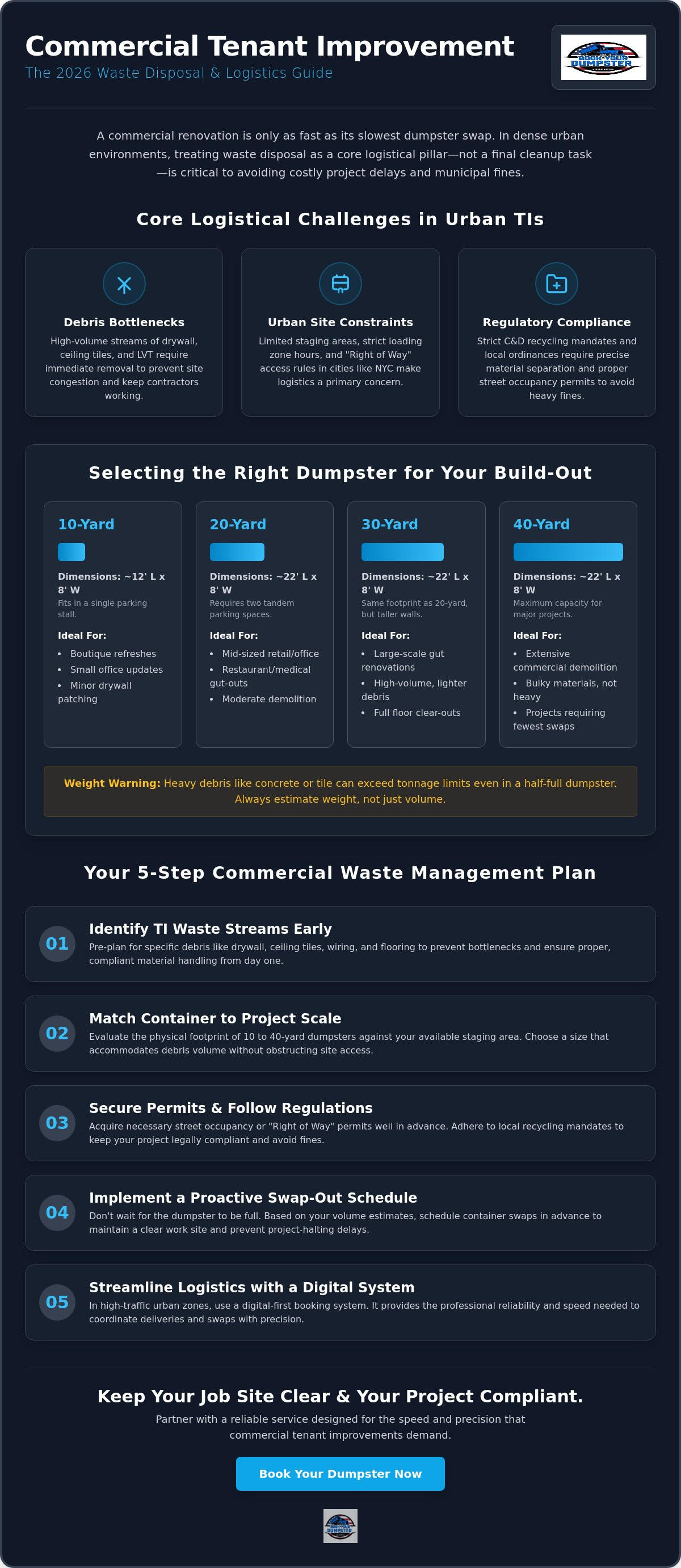
Selecting the correct container is a math problem, not a guess. If you underestimate your debris volume, your crew will end up piling trash on the sidewalk while waiting for a swap. If you overestimate, you're paying to haul away empty air. For commercial tenant improvement waste disposal, the primary factors are material density and your site's physical footprint. A standard 10-yard dumpster is roughly 12 feet long, making it a perfect fit for a single commercial parking stall. However, as you move up to a 20 or 30-yard container, the length typically stretches to 22 feet. This requires two tandem parking spaces and extra clearance for the delivery truck's lift rails.
Weight limits are the second critical variable. Heavy debris like floor tile, mortar, or concrete can quickly exceed the tonnage allowance of smaller units. The EPA emphasizes the Sustainable Management of Construction and Demolition Materials to reduce landfill impact, which often involves separating these heavy streams. If your TI project involves stripping 5,000 square feet of ceramic tile, a 20-yard dumpster might hit its weight limit before it's even half full. Always estimate your tonnage based on the specific material type, not just the visual volume. For large scale gut renovations, you'll need to plan for high-capacity 30 or 40-yard units to avoid constant interruptions.
The 10-Yard and 20-Yard Advantage for Retail TIs
Retail build-outs often happen in tight corridors where staging space is at a premium. A 10-yard dumpster is the surgical tool for these jobs. It's ideal for boutique refreshes or small office updates involving basic carpet removal and minor drywall patches. For more detailed specs on these compact units, check out our 10 Yard Dumpster Rental: The Complete Buying Guide for 2026. If you're moving into a mid-sized restaurant or medical office, the 20-yard container becomes the industry standard. It provides enough capacity for kitchen equipment removal or extensive cabinetry demo without blocking the entire loading dock.
Large Scale Solutions: 30 and 40-Yard Roll-Offs
Full-floor office guts or warehouse conversions generate massive amounts of low-density waste. This includes fiberglass insulation, ceiling grids, and bulky cardboard packaging. These items take up space quickly but don't weigh much. In these scenarios, a 30 or 40-yard roll-off is the most efficient choice to minimize haul-away fees. These large containers require significant overhead clearance. Don't place them under low-hanging power lines or inside parking garages with height restrictions. You can view our available dumpster sizes to find the right match for your project's square footage and site constraints.
Navigating Local Regulations and Street Permits
Legal compliance is the backbone of a successful build-out. Executing commercial tenant improvement waste disposal requires more than just a permit for the construction itself. If your project lacks private staging space, you must secure a Street Occupancy Permit. In cities like Chicago or Boston, placing a container on a public way without this documentation leads to immediate work stoppages. The "Right of Way" rules dictate where a dumpster can sit, how much sidewalk it can block, and what safety markings it must display. Usually, the general contractor manages these permits during the mobilization phase, but the property owner remains ultimately responsible for site compliance.
The regulatory landscape is shifting rapidly in 2026. New York City is currently rolling out its Commercial Waste Zones (CWZ) program to streamline haulage and improve safety. Lower Manhattan hit full implementation on May 31, 2026; followed by Midtown South and Staten Island on August 31, 2026. By November 30, 2026, Brooklyn North and Upper Manhattan will follow suit. Businesses in these zones must contract with authorized haulers. Failure to align your waste logistics with these specific zone deadlines can result in heavy municipal fines and debris piling up on your job site. Verify your zone's status before you schedule your first drop-off.
City-Specific Considerations for NY, IL, and MA
Regional climate and traffic patterns dictate strict placement windows. For commercial tenant improvement waste disposal in the Northeast, you must account for "Snow Emergency" routes. Cities like Boston will force the immediate removal of any containers on designated routes during a storm. If you fail to move the dumpster, the city will tow it at your expense. For a deeper dive into these regional nuances, read our guide on dumpster rental in New York and Massachusetts. Always ensure your containers are properly covered to avoid ticketing for "blown debris" in high-wind urban corridors.
Prohibited Materials in Commercial Waste Streams
Tenant improvements often involve upgrading old technology and lighting systems. You cannot toss everything into a standard roll-off. Prohibited items include mercury-containing fluorescent tubes, PCB-containing ballasts, and chemical solvents used in floor stripping. Contaminating a load with these materials results in significant "dig-out" fees and potential environmental penalties. Office technology upgrades also generate "e-waste," such as old server components and wiring. These require separate handling. Don't risk your project budget on a contaminated load. Separate your hazardous materials at the source to keep your waste stream clean and your costs predictable.
How to Execute a Commercial Waste Management Plan
A successful build-out depends on a rigorous waste management plan. Treat commercial tenant improvement waste disposal as a logistical workflow rather than an afterthought. Start by estimating your total debris volume using your architectural plans and TI allowance. Don't wait until the demo crew arrives to guess how many containers you'll need. Calculate the cubic yardage of walls being removed and the packaging for new fixtures. This data allows you to schedule "Switch-Outs" in advance. A fresh container should arrive the moment the current one hits capacity. This keeps your crew moving and prevents debris from piling up in the tenant space.
Designate a specific sorting area on-site to maximize recycling efficiency. If your project aims for LEED credits or needs to meet 2026 sustainability standards, you must separate materials like cardboard, scrap metal, and clean drywall. Sorting at the source reduces your total tonnage costs. Mixed loads are always more expensive due to higher processing fees at the facility. Secure your site every evening. Open dumpsters in urban areas are magnets for illegal third-party dumping. Use heavy-duty tarps or locking lids to prevent neighbors from filling your container with household trash. Finally, conduct a thorough audit of all waste receipts. These documents are essential for project closeout and proving compliance with local municipal ordinances.
Optimizing the Staging Area
Keep the path to your primary roll-off container clear at all times. Use smaller interior bins or rolling hoppers to transport debris from the work zone to the dumpster. This prevents subcontractors from tripping over piles of scrap and keeps the work area safe. Reducing interior accumulation also lowers fire risks and improves air quality during the demo phase. Ensure your staging area doesn't block fire hydrants or emergency exits; this leads to immediate safety violations and site shutdowns.
Managing the "Final Clean" Phase
The waste stream shifts during the final weeks of a project. You'll move from heavy demolition materials to high-volume, low-density items like furniture packaging, protective film, and floor coverings. Schedule your final haul-away to coincide with your Certificate of Occupancy inspection. A pristine exterior site is a requirement for a successful grand opening. Don't leave a half-full dumpster in the parking lot when the first customers or employees arrive. Coordinate your final swap at Book Your Dumpster to ensure a clean finish for your build-out.
Partnering with Book Your Dumpster USA for Seamless TIs
Managing a commercial build-out requires a partner who understands the high stakes of urban construction. Book Your Dumpster USA provides a digital-first solution to the messiest part of your project. Our online booking system eliminates the back-and-forth of traditional waste brokers. Choose your size, set your schedule, and get back to managing your crew. We maintain deep operational expertise in high-traffic commercial zones where timing is everything. Whether you're working in a dense Chicago corridor or a retail block in Boston, our drivers understand the local constraints. A single partner for your projects across NJ, IL, and MA ensures consistency in your commercial tenant improvement waste disposal workflow. Your professional reputation depends on a clean, safe job site. Don't let overflowing bins or missed pickups define your work to the building owner. Book Your Dumpster USA acts as a high-functioning tool in your project management arsenal.
Transparent Pricing for Commercial Budgets
Hidden fees destroy construction margins. Traditional brokers often add fuel surcharges or environmental fees after the fact. We prioritize pricing integrity with clear, upfront costs. Read our Dumpster Rental Prices: 2026 Guide to understand the factors affecting your bottom line. Punctuality is a financial strategy. Every hour your subcontractors spend moving debris twice because the dumpster didn't arrive is money wasted. Our reliable delivery and pickup window keeps your labor costs in check and your site moving forward.
Ready to Start Your Build-Out?
Evaluate your current project needs now. Do you have the right container size for the demo phase starting next week? Our service coverage extends through Queens, San Francisco, and other major commercial hubs. We offer 10, 20, 30, and 40-yard dumpsters to match every scale of commercial tenant improvement waste disposal. Take control of your site logistics today. Avoid the stress of last-minute coordination and regulatory fines. Our system is built for speed and simplicity. Use our platform to secure your equipment and maintain your project timeline. Click here to Book Your Commercial Dumpster Now.
Master Your Site Logistics Today
Successful project management depends on treating commercial tenant improvement waste disposal as a core strategy rather than a final task. You've learned how to right-size your containers and navigate the shifting regulatory landscape of 2026. Whether you're managing a boutique retail refresh or a full-floor office gut, your debris removal plan must be as precise as your architectural drawings. Don't let site congestion or municipal fines derail your timeline. Instead, use a proactive approach to keep your job site clear and your subcontractors productive.
We specialize in construction and commercial debris logistics across major hubs including NY, NJ, IL, MA, and SF. Our streamlined online booking system allows you to secure 10, 20, 30, or 40-yard containers with total pricing integrity. Take control of your build-out and maintain your professional reputation with a partner that values punctuality as much as you do. Streamline your project—Book Your Dumpster USA today. It's time to clear the way for your project's successful completion and grand opening.
Frequently Asked Questions
Do I need a permit for a dumpster on a commercial property?
You don't need a permit if the dumpster sits entirely on private property. However, you must secure a Right of Way or Street Occupancy permit if any part of the container touches a public sidewalk or street. Cities like Chicago and Boston are strict about these requirements. Always verify your property lines before scheduling your delivery to avoid immediate municipal fines or project shutdowns.
What size dumpster is best for a 2,000 sq. ft. office renovation?
Select a 20-yard dumpster for a 2,000 square foot office build-out. This size manages the typical volume of drywall, carpet, and ceiling tiles generated by a project of this scale. If your renovation involves heavy demolition of masonry or concrete floors, consider a 10-yard unit for weight distribution. Proper sizing is a critical part of commercial tenant improvement waste disposal to avoid unnecessary swap fees.
Can I put old office furniture in a construction dumpster?
You can put standard office furniture like desks, chairs, and wooden shelving into your construction dumpster. Avoid mixing in "e-waste" such as monitors, printers, or server components. These items often require specialized recycling and can lead to contamination fees at the facility. Separate your furniture from hazardous lighting ballasts to keep your waste stream clean and your disposal costs predictable.
How much lead time is needed for a commercial roll-off delivery in New York?
Schedule your delivery at least 48 hours in advance for standard commercial sites. If your project is in a high-traffic New York zone or requires a street permit, provide 3 to 5 business days of lead time. This window allows for permit processing and ensures your container arrives before your demo crew starts. Early coordination prevents labor downtime and keeps your construction schedule on track.
What is C&D waste and why does it matter for my tenant improvement?
C&D waste stands for Construction and Demolition debris, which includes heavy materials like concrete, wood, and metal. It matters because 2026 regulations often mandate specific recycling percentages for these materials. Managing your commercial tenant improvement waste disposal correctly ensures you comply with local ordinances. Failure to track these waste streams can result in project closeout delays and failure to receive your Certificate of Occupancy.
How do I prevent people from throwing trash in my rented dumpster at night?
Secure your container with a heavy-duty tarp or choose a model with locking lids. Unauthorized dumping is common in urban commercial areas and can quickly push you over your weight limit. Place the dumpster in a well-lit area or within view of site security cameras. These simple steps protect your budget from paying for other people's trash and ensure your container remains available for project debris.
Are there weight limits for commercial dumpster rentals?
Every roll-off container has a specific weight limit ranging from 2 to 6 tons depending on the size and local hauling laws. Exceeding these limits results in overage charges and may prevent the truck from legally lifting the container. If you're disposing of dense materials like floor tile or masonry, fill the dumpster only halfway. Always discuss your material types with us during the booking process.
Can Book Your Dumpster USA handle multiple locations for a retail chain rollout?
Book Your Dumpster USA manages waste logistics for multi-site retail and office rollouts across NJ, IL, MA, and SF. You get a single point of contact for all locations, which simplifies your billing and scheduling. This centralized approach ensures consistent service quality and pricing integrity for your entire expansion. Use our online platform to track multiple deliveries and pickups simultaneously to keep your brand rollout moving.


