Your current waste contract shouldn't be a source of operational stress or regulatory risk. As cities like New York and San Francisco tighten their mandates in 2026, the margin for error in business disposal has vanished. Securing a reliable front load dumpster rental is no longer just about finding a bin. It's about ensuring your provider understands the specific deadlines for Brooklyn South or the organics diversion requirements in Massachusetts. You need a system that works as hard as your business does without the surprise fees or missed pickups that stall your workflow.
We agree that waste management should be a silent utility, not a daily headache. You deserve a logistics partner that prioritizes punctuality and total transparency. This guide provides the professional framework to master your disposal strategy, from selecting the right container size to ensuring total compliance with local laws. We'll walk you through the 2026 regulatory shifts, explain how to optimize your pickup frequency, and show you how to maintain predictable costs in an evolving market. Follow these steps to take full control of your facility's waste stream today.
Key Takeaways
- Distinguish between front-load and roll-off strategies to ensure your waste solution aligns with your specific industry, from retail to construction.
- Optimize your disposal costs by selecting the correct container size, ranging from 10-yard bins for heavy debris to 40-yard solutions for massive renovations.
- Master localized compliance in cities like New York and San Francisco to meet 2026 diversion mandates and avoid regulatory penalties.
- Streamline your logistics with a front load dumpster rental booked through a digital-first system that guarantees pricing integrity without hidden surcharges.
- Transition efficiently from temporary project cleanouts to long-term commercial waste pickup with a reliable, no-nonsense service partner.
What are Commercial Waste Services and Why Do They Matter in 2026?
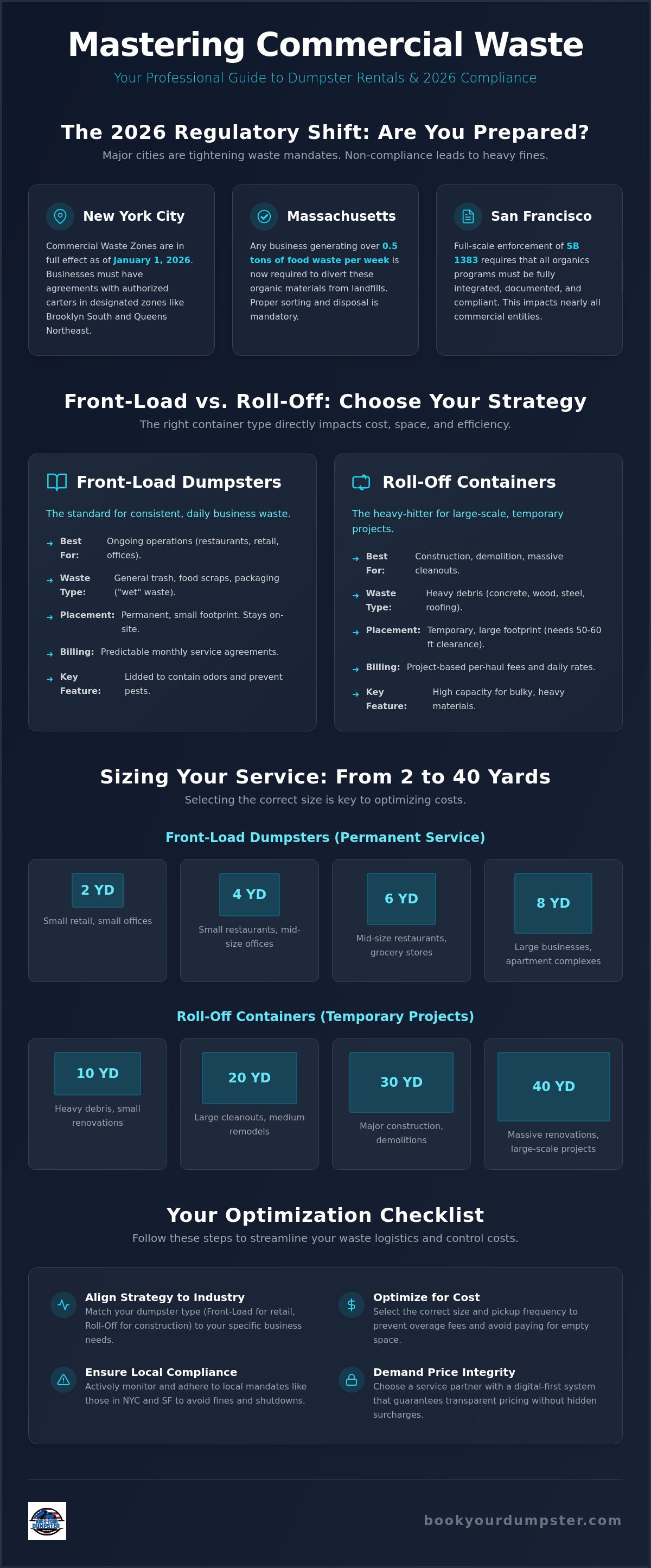
Commercial waste services are the logistical backbone of urban business operations. They encompass the professional collection, transport, and disposal of materials generated by non-residential entities. Understanding What is Commercial Waste? is the first step in managing your facility's environmental footprint. In 2026, this isn't just about hauling trash; it's about strict compliance. New York City's Commercial Waste Zones are now in full effect as of January 1, 2026. Businesses in areas like Brooklyn South and Queens Northeast must have active agreements with authorized carters. Failure to align with these localized urban mandates leads to heavy fines and operational shutdowns.
Regulations are tightening across the country. Massachusetts now requires any business generating over 0.5 tons of food waste per week to divert those materials from the trash. In San Francisco, full-scale enforcement of SB 1383 means your organics programs must be fully integrated and documented. Efficient waste management directly impacts your bottom line. It reduces overhead by preventing overage fees and ensures site safety by keeping loading docks clear of debris. Selecting a reliable front load dumpster rental allows you to schedule pickups that match your actual waste generation rather than relying on guesswork.
The Spectrum of Commercial Waste Needs
Every business has a unique waste profile. Small businesses (SMBs) often require weekly curbside or front-load pickup for general refuse and packaging. Contractors and construction firms need heavy-duty debris removal for materials like concrete, wood, and steel. Industrial facilities handle high-volume, specialized waste streams that demand precise logistical coordination. Don't use a one-size-fits-all approach. Identify your specific waste category to select the most cost-effective container and pickup frequency for your site.
Permanent vs. Temporary Commercial Solutions
Permanent service involves scheduled weekly or bi-weekly pickups for ongoing operations. This is the standard for restaurants, retail shops, and offices using a front load dumpster rental. Temporary service utilizes roll-off dumpster rentals for short-term projects like office renovations or warehouse cleanouts. To determine which model fits, evaluate your current business phase. If you're managing daily operations, stick to a permanent schedule to ensure predictable costs. If you're breaking ground on a new project or clearing a site, opt for a temporary 10 to 40-yard roll-off from Book Your Dumpster USA. Moving between these services should be seamless. High-functioning businesses often use both simultaneously during expansion phases to maintain a clean and compliant workspace.
Front-Load vs. Roll-Off: Choosing Your Commercial Waste Strategy
Selecting the right disposal method is a critical operational decision that directly impacts your monthly overhead. You must choose between a permanent setup and a project-based rental. A front load dumpster rental is the industry standard for businesses with consistent, daily waste generation. These bins, ranging from 2 to 8 cubic yards, stay on-site indefinitely. In contrast, roll-off containers are the heavy hitters designed for construction, demolition, and massive cleanouts. They range from 10 to 40 yards and are typically removed once the project ends.
Space is your primary constraint. Front-load bins require a small, permanent footprint, often tucked into an alley or behind a retail enclosure. Roll-off containers are much larger and need significant clearance for the delivery truck to maneuver. Before you commit, measure your lot to ensure the truck has at least 50 to 60 feet of straight-line clearance. Your choice also dictates your billing. Monthly service agreements for front-load bins provide price stability, while roll-offs usually involve per-haul fees and daily rental rates. All commercial disposal must adhere to Federal Waste Regulations to ensure safety and environmental compliance.
When to Choose Front-Load Services
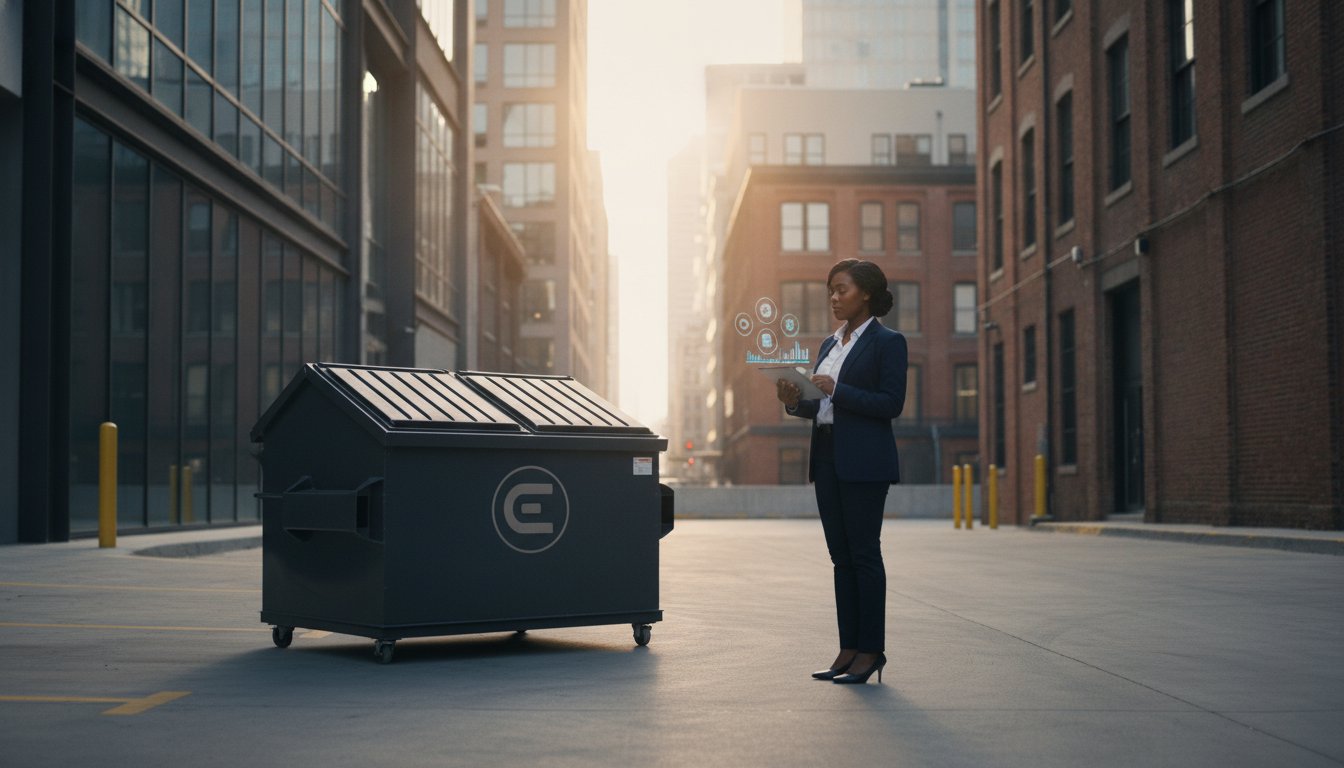
Opt for front-load services if your business produces "wet" waste, food scraps, or standard office trash. These bins come with metal or plastic lids to contain odors and prevent pests. Choose from 2, 4, 6, or 8-yard sizes based on your weekly volume. Don't set a pickup schedule that leaves your bin half-empty. Start with a conservative frequency and adjust as you monitor your fill levels. This prevents overflow while keeping your costs lean. If your business grows, simply swap the container for a larger size or increase your collection days.
The Power of Roll-Off Dumpsters for Commercial Projects
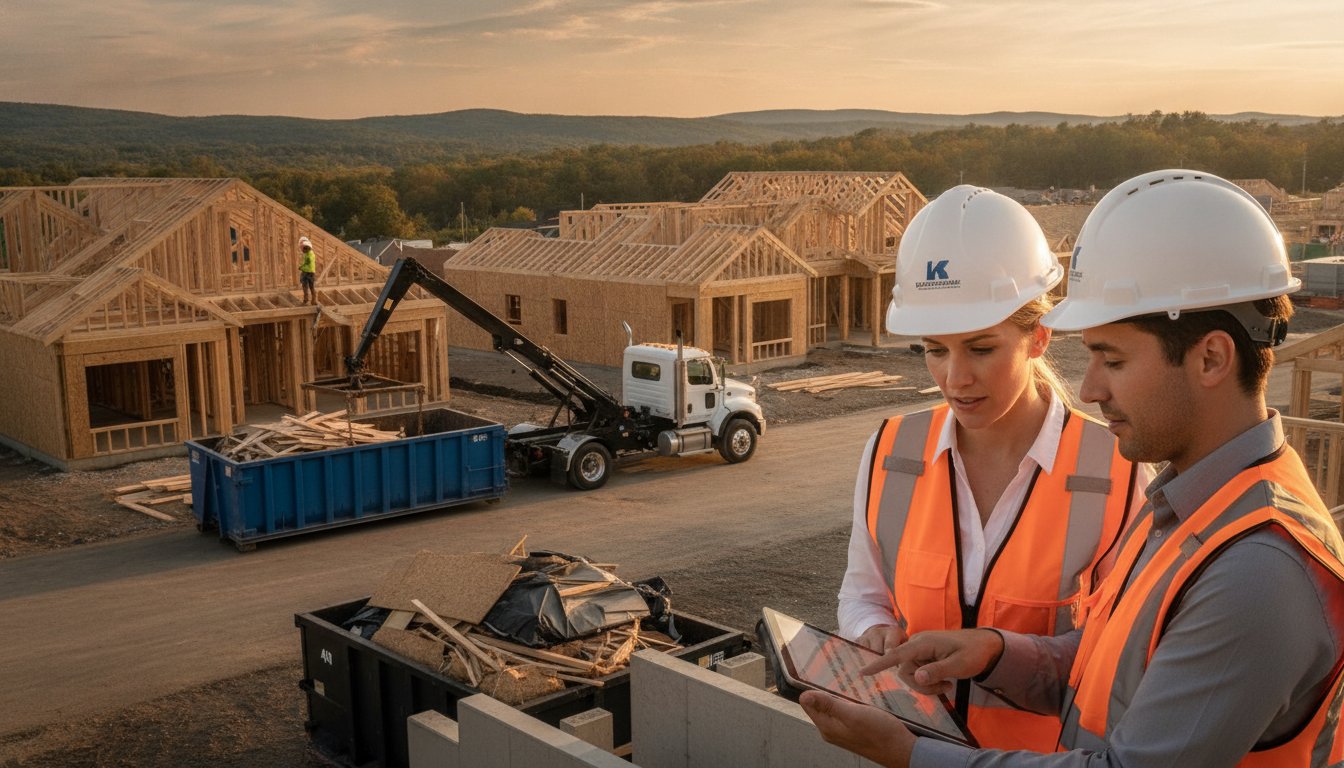
Switch to roll-off containers when your waste volume exceeds the capacity of a standard bin. Retail renovations often generate bulky items like shelving, drywall, and flooring. In these cases, 10-yard dumpsters are the "goldilocks" size because they fit in tight parking lots while holding several tons of debris. For major commercial construction or demolition, deploy 30 or 40-yard containers to handle the heavy lifting. The logistical advantage of roll-off flexibility allows you to scale up for a short-term contract without long-term commitment. Review your upcoming project timeline and choose the right commercial container before the first hammer swings.
Sizing Your Service: From 10 to 40 Yard Solutions
Correct sizing is the difference between a streamlined project and a logistical bottleneck. While your daily front load dumpster rental handles standard office refuse, commercial expansions and site cleanouts require the heavy-lifting capacity of roll-off containers. In 2026, choosing the wrong size leads to more than just clutter; it results in overage fees that often reach $200 per ton. Evaluate your waste stream before booking to match your volume with the right container class.
- 10-Yard Dumpster: This compact unit is the standard for heavy debris. Use it for concrete, dirt, or asphalt removal. It's small enough to fit in a single parking space but durable enough for dense materials.
- 20-Yard Dumpster: This is the versatile choice for mid-sized commercial renovations. It handles roughly 110 to 130 trash bags, making it ideal for retail fit-outs or office furniture replacements.
- 30-Yard Dumpster: Designed for large-scale debris removal. Use this for warehouse cleanouts, major commercial roofing projects, or large-scale landscaping removals.
- 40-Yard Dumpster: This is the maximum capacity solution. It's reserved for major construction sites, industrial waste management, and massive demolition projects where volume is the primary concern.
Calculating Your Waste Volume
Don't guess your capacity needs. Use a simple framework to estimate your weekly yardage based on your facility's square footage and employee count. If your current bins overflow before pickup day, it's time to upsize. Consult the Ultimate Guide to Construction Debris Removal for precise volume estimation tips. Under-sizing is a common mistake that costs businesses thousands in extra haul rates. It's always more efficient to have extra space than to pay for emergency pickups because of an overflowing container.
Weight Limits and Commercial Debris
You must distinguish between volume (yards) and mass (tons). A 20-yard dumpster filled with drywall is manageable, but the same volume of wet soil will likely exceed legal weight limits. Every commercial bin must adhere to EPA's RCRA regulations to ensure the safe handling of solid waste. Prohibited items include hazardous chemicals, tires, and electronics. If you're disposing of heavy masonry, never fill the container more than halfway to ensure the truck can safely lift and transport the load. Following these safety limits keeps your site operational and avoids the stress of rejected hauls.
Local Compliance: Navigating Waste Regulations in Major Cities
Compliance is a moving target. In 2026, the legal requirements for a front load dumpster rental vary wildly depending on your zip code. New York City's Commercial Waste Zoning program is now fully active. As of January 1, 2026, businesses in Brooklyn South and Queens Northeast must operate under contracts with carters specifically authorized for their zones. If you're operating in these high-density areas, verify your carter's status immediately to avoid operational disruption. In San Francisco, the focus remains on SB 1383. This law requires every business to maintain integrated organics and recycling programs. You can't simply throw everything into one bin; you must prove your diversion rates to city inspectors or face escalating penalties.
State-level bans also dictate your disposal strategy. In Massachusetts, any business generating more than 0.5 tons of food waste per week is legally barred from sending those materials to a landfill. Illinois has similar restrictions on cardboard and yard waste. New Jersey takes a decentralized approach, where county-specific recycling mandates often require separate permits for commercial containers. Check the Dumpster Rental in New York, Illinois, and Massachusetts Guide to pinpoint the exact rules for your facility. Managing these layers of regulation is a full-time job, but it's the only way to ensure pricing integrity and avoid surprise fines.
Urban Logistics and Permit Requirements
City-center operations face unique hurdles. If you're placing a container in the public right-of-way in Chicago or Boston, you need a street permit before delivery. These permits often come with strict time limits and placement rules. Many high-density zones also enforce timed pickups to comply with noise ordinances. Ensure your front load dumpster rental schedule respects these quiet hours, especially if your business is adjacent to residential buildings. Failure to coordinate these logistics leads to blocked streets and city-issued citations. Secure your permits before the container arrives to keep your site running smoothly.
Mandatory Commercial Recycling
Most major markets now enforce the "Source Separation" rule. This requires businesses to keep recyclables, organics, and trash in separate containers. Property managers often face fines when tenants mix waste streams incorrectly. Conduct a formal waste assessment to identify where you can divert materials from the landfill. This isn't just about the environment; it's about cost-saving. Removing cardboard and heavy organics from your primary trash stream can often reduce your overall haul frequency. Book your compliant commercial dumpster today to align your business with 2026 city mandates.
Streamlining Your Waste Logistics with Book Your Dumpster USA
Managing a business is complex enough. You don't have time for a game of phone tag just to find out what a container costs. Book Your Dumpster USA uses a digital-first system that lets you secure your commercial container in minutes. This transparency is our verbal handshake. We provide flat-rate pricing for the NY, NJ, IL, and MA markets. You won't find hidden surcharges for fuel or environmental fees on your final invoice. We prioritize pricing integrity because we know your budget depends on it. Competitors often require complex account setups or a series of phone calls for initial quotes. We remove that friction entirely, allowing you to book and pay in one sitting.
Operational efficiency relies on punctuality. A missed pickup doesn't just create a mess; it creates a safety hazard and a regulatory risk. We treat on-time delivery and pickup as non-negotiable promises. Whether you're starting with a 10-yard project bin for a retail fit-out or transitioning to a permanent front load dumpster rental for daily operations, our logistics scale with you. Moving from a temporary construction phase to long-term commercial service is seamless. This flexibility allows you to maintain control over your waste stream as your business grows. We understand that your site must remain clear to stay compliant with 2026 local mandates. Our drivers are local experts who know how to navigate the specific traffic patterns of Queens or the strict loading zones of San Francisco.
The Book Your Dumpster USA Difference
We offer a pragmatic, professional service that respects your specific project timeline. Our local expertise in New York, Queens, and San Francisco means we understand the logistical hurdles of high-density urban environments. You get direct access to 10, 20, 30, and 40-yard roll-offs. This range ensures we can handle any commercial scale, from small office cleanouts to massive industrial demolition. We are a high-functioning tool for your business, not a lifestyle brand. Our focus is on reliability and the removal of logistical stress so you can stay productive.
How to Get Started Today
Ready to simplify your disposal? Visit Book Your Dumpster USA to select your service area. Use our pragmatic sizing guide to choose the container that matches your volume and debris type. Schedule your delivery through our streamlined online booking system. Once the bin is on-site, focus on your core business goals. We'll handle the debris, the compliance, and the logistics with professional precision. Don't let waste management slow your operations. Take control of your site logistics with a partner that values your time as much as you do.
Master Your Business Waste Logistics Today
Operating a business in 2026 requires a disposal strategy that is both compliant and cost-effective. You now understand how to navigate complex mandates in cities like New York and San Francisco. You also know how to match your container size to your specific debris type to avoid expensive overage fees. Whether you're managing a high-volume retail site or a temporary construction project, a reliable front load dumpster rental provides the consistency your operations demand.
Book Your Dumpster USA removes the logistical stress from waste management. We offer professional roll-off services across NY, NJ, IL, MA, and San Francisco with 10 to 40-yard containers available for immediate booking. Our transparent pricing model ensures you never deal with hidden fees or surprise surcharges. You can manage your entire waste stream through our streamlined digital platform. Take the guesswork out of your site logistics. Book your commercial dumpster online today with Book Your Dumpster USA and secure a partner that values punctuality and pricing integrity. Professional waste management is a tool that keeps your business moving forward.
Frequently Asked Questions
What is the difference between commercial and residential waste services?
Commercial waste services are designed for businesses, retail, and industrial sites with higher waste volumes and specific regulatory requirements. Residential services focus on household trash and curbside collection for single-family homes. Commercial contracts often include specialized containers like a front load dumpster rental to handle consistent, heavy-duty disposal needs that exceed standard residential capacity. These services are tailored to professional logistics and local business compliance laws.
How much does commercial waste pickup cost for a small business?
Commercial waste disposal costs are influenced by your location, container size, and pickup frequency. While industry averages fluctuate, businesses often see price variations based on the length of their service agreement. Signing a multi-year contract can sometimes reduce monthly rates compared to short-term agreements. Always verify local market rates in cities like New York or San Francisco to ensure your budget accounts for regional disposal fees and taxes.
Do I need a permit for a commercial dumpster in New York City or Chicago?
You generally need a permit if you place a dumpster on a public street or right-of-way in New York City or Chicago. In NYC, businesses must also comply with the Commercial Waste Zoning program as of January 2026, which requires contracting with authorized haulers. Chicago requires a public way permit for any container that obstructs city property. Always secure these permits before your scheduled delivery to avoid city-issued citations and heavy fines.
What sizes do commercial front-load dumpsters come in?
Commercial front-load dumpsters typically come in 2, 4, 6, and 8-cubic yard sizes. These containers are designed for permanent placement and feature metal or plastic lids to manage odors and prevent pests. Small retail shops often find a 2-yard bin sufficient; however, high-volume restaurants or mid-sized offices usually require 6 or 8-yard bins to handle daily waste streams. Choose the size that prevents overflow while maintaining a lean operational budget.
Can I rent a roll-off dumpster for a one-time commercial cleanout?
You can rent a roll-off dumpster for one-time projects like warehouse cleanouts or office renovations. While a front load dumpster rental is better for daily trash, roll-offs ranging from 10 to 40 yards are the standard for heavy debris removal. These temporary containers provide the capacity needed for bulky items and construction waste that standard commercial bins cannot accommodate. Simply schedule a drop-off and a final haul once your project is complete.
What items are prohibited in a commercial waste container?
Prohibited items include hazardous materials, electronics, tires, and medical waste. You must also avoid placing batteries, paints, or flammable liquids in your commercial container. As of January 1, 2026, New York State has also implemented a ban on expanded polystyrene foam, including cold storage containers like coolers. Check your local city ordinances for specific 2026 mandates regarding organics and recyclables to ensure your business remains in full legal compliance.
How often should my business schedule waste pickups?
Schedule your pickups based on your actual waste generation to prevent unsightly overflow and pest issues. Most businesses opt for weekly or bi-weekly service, though high-volume food service establishments may require daily collections. Monitor your bin levels during the first month of service to identify the most efficient cadence. Adjusting your schedule based on seasonal volume changes helps maintain a clean site without paying for unnecessary hauls or empty pick-ups.
What happens if my commercial dumpster is overfilled?
Overfilling a dumpster leads to immediate safety hazards and significant financial penalties. If the lids cannot close or debris spills over the sides, drivers may refuse to haul the load until it is leveled. You will likely face overage fees, which often range from $100 to $200 per ton in many markets. Keep your waste level below the fill line to ensure safe transport and avoid the logistical delays caused by rejected pickups.