

A single oversight in your dumpster placement can cost you more than the rental itself in city fines and driveway repairs. Most homeowners and contractors want their cleanup project to be efficient and predictable, not a source of unexpected invoices. It's frustrating to realize you ordered a 10 yard bin for a 30 yard job or to find your budget blown by weight limit overage fees that can reach $200 per ton. This guide outlines the common dumpster rental mistakes to avoid so you can maintain total control over your project budget and timeline.
Avoid costly delays and hidden fees by following our tactical approach to waste management. You'll learn how to secure a flat-rate experience and protect your property from avoidable damage. We will walk through the 2026 planning checklist, covering everything from selecting the right container size to navigating local permit regulations and prohibited materials. Use these steps to move from a state of clutter to a resolution with minimal friction. This professional guide ensures your next project stays on schedule and within your planned budget.
Key Takeaways
- Identify the specific site preparation steps needed to avoid "dry run" fees and delivery delays.
- Master volume estimation techniques to help you navigate the common dumpster rental mistakes to avoid when choosing between 10-yard and 40-yard containers.
- Determine when a city permit is required for street placement to prevent immediate fines from local authorities.
- Learn the "Fill Line" rule and identify prohibited hazardous materials that can lead to significant overage penalties.
- Streamline your project logistics by using a digital booking system that guarantees pricing integrity and on-time service.
The Financial Impact of Common Dumpster Rental Mistakes
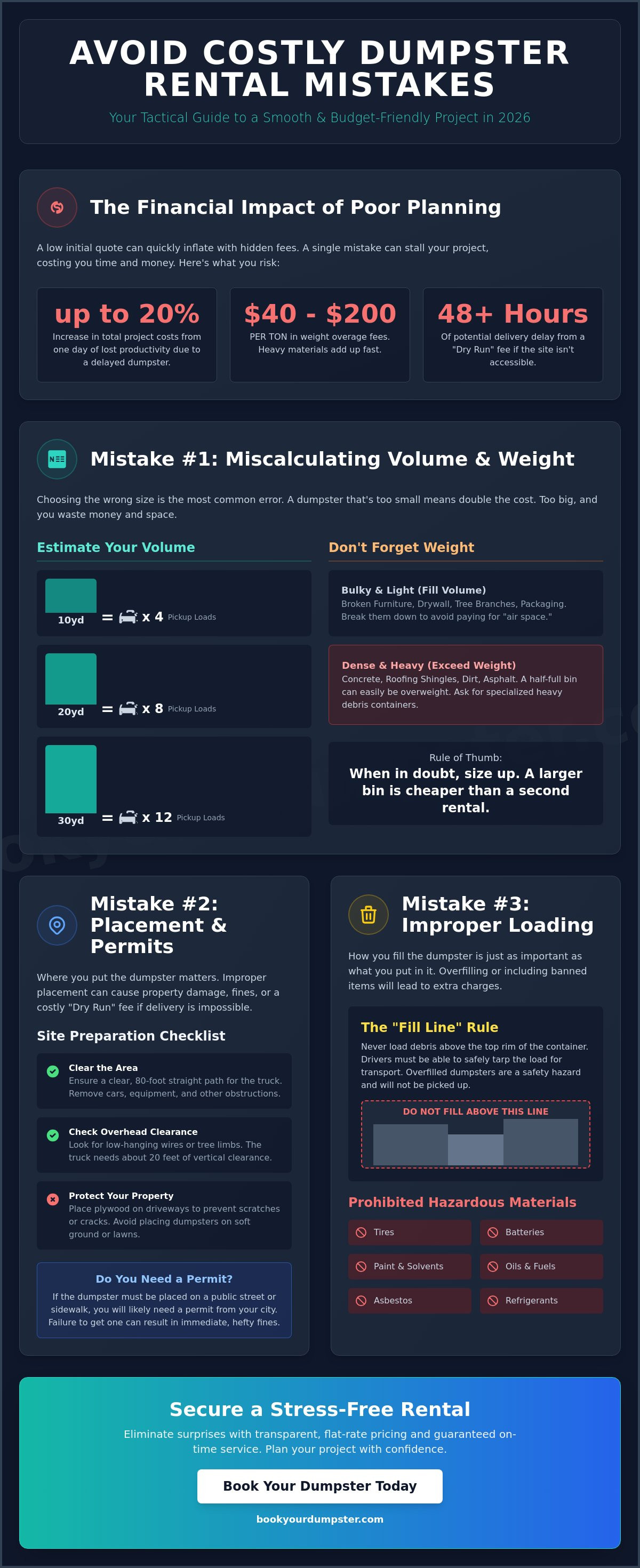
A low sticker price often masks poor logistical planning. If you ignore the common dumpster rental mistakes to avoid, you will likely pay significantly more than the initial quote. Reliability is the true measure of value in waste management. For professional contractors, a missing dumpster means a crew of five or more stands idle. You continue to pay hourly wages while debris piles up; this creates a bottleneck that stalls every subsequent phase of the build. Total project costs can spike by 20% just from one day of lost productivity.
The "Dry Run" fee is one of the most frequent financial pitfalls. This charge applies when a driver arrives at your site but cannot safely drop the bin. Blocked driveways, low-hanging tree limbs, or parked cars are typical culprits. You pay for the truck's fuel and the driver's time without receiving a container. Understanding Dumpster Sizes and the clearance required for a roll-off truck is essential for any project manager. Planning for these physical requirements ensures your budget stays focused on waste removal rather than logistical failures.
The Hidden Costs of Rental Inefficiency
Trip charges are a standard industry response to site access issues. In high-density areas like Queens or Boston, re-routing a truck isn't just an inconvenience; it's a massive expense. Traffic congestion and tight street regulations mean a missed window can push your delivery back by 48 hours. Last-minute bookings also carry a premium. In 2026, demand for 20 yard and 30 yard bins remains high. Booking three to six weeks in advance secures your rate and ensures availability. Industry data shows that weight overage fees typically range from $40 to $200 per ton, making precise volume estimation a financial necessity.
Why Planning Your Dumpster Rental Matters
Effective planning moves your project from a state of clutter to a state of resolution. A clean job site is a safe job site. When debris is contained immediately, you reduce the risk of worker injury and property damage. Clear terms act as a verbal handshake between you and your provider. Demand transparency regarding weight limits and rental duration. This clarity eliminates the "sticker shock" that often follows a poorly planned cleanup. For a predictable experience, visit Book Your Dumpster to select the right container for your specific project needs. Direct service and honest pricing are the tools you need to finish on time.
Mistake #1: Miscalculating Dumpster Volume and Weight Limits
One of the most frequent common dumpster rental mistakes to avoid is treating volume and weight as interchangeable metrics. Renters often look at a pile of debris and assume it fits a specific bin size based on visual estimation alone. They forget that "air space" between irregularly shaped items like broken furniture or tree branches consumes volume without adding much weight. Conversely, materials like roofing shingles or concrete occupy very little space but can easily push a container over its legal hauling limit. This creates a situation where a bin is physically half-empty but legally too heavy to move safely on public roads.
Choosing the wrong footprint leads to two problems. A bin that is too small requires a second rental, effectively doubling your delivery costs and labor time. A bin that is too large might not fit in a standard residential driveway or may exceed local weight restrictions for residential streets. For small basement cleanouts or single-room flooring removals, a 10 yard dumpster rental is often the most efficient choice. However, for large scale demolition, 30 or 40 yard options provide the necessary capacity to keep the job site clear and compliant. Heavy debris like concrete, dirt, and asphalt requires specialized containers because even a 20 yard bin filled with these materials will exceed most truck lifting capacities.
Estimating Your Project's Waste Volume
Visualize your waste in terms of standard pickup truck beds. A 10 yard bin holds roughly four pickup loads, while a 40 yard bin holds sixteen. A kitchen remodel typically generates more waste than a simple cabinet replacement because of drywall and flooring demolition. Bulky items create "Air Space" traps. If you don't break down boxes or furniture, you pay to haul air. Pack the bin tightly to maximize every cubic yard you've paid for.
Navigating Weight Limits and Overage Fees
Weight limits are strictly enforced for road safety and to comply with OSHA Safety Regulations regarding material handling. A container might look half empty but be at its maximum weight capacity if filled with roofing shingles or wet debris. Tonnage limit is the maximum weight included in a flat-rate quote. Exceeding this limit results in additional charges at the transfer station where scales determine the final weight. To ensure you select the correct capacity for heavy materials, review the available dumpster sizes and weight allowances before you finalize your order. This prevents the driver from having to leave the bin behind because it's too heavy to lift.
Mistake #2: Poor Placement and Ignoring Local Permit Laws
Selecting a drop site based solely on convenience is one of the most expensive common dumpster rental mistakes to avoid. A roll-off truck requires significant physical space to operate. You need at least 60 feet of linear distance and 23 feet of vertical clearance to safely unload a container. If your site has low-hanging power lines, narrow alleyways, or overhanging tree limbs, the driver may be forced to abort the delivery. This results in a dry run fee and pushes your project timeline back. Beyond the truck's needs, consider the impact on your community. Blocking a fire hydrant or a neighbor's sightline at a busy intersection creates a liability that could lead to your rental being towed at your expense.
Placement on public property almost always triggers a legal requirement for a permit. While private driveways are generally exempt, placing a 20 yard or 30 yard bin on a city street without authorization results in instant fines. These penalties often exceed the daily rental rate of the dumpster itself. Planning ahead for these logistical hurdles ensures your cleanup stays on track and within budget.
Protecting Your Property from Structural Damage
Never assume your driveway can support the concentrated weight of a loaded steel bin. A fully packed dumpster can weigh several tons; this pressure can easily crack aged concrete or leave deep ruts in soft asphalt. Use the "Plywood Rule" by placing 2x4 boards or sheets of plywood under the wheels to distribute the load. Before delivery, walk the site to identify underground hazards. Avoid placing the bin over septic tanks, lawn irrigation lines, or manhole covers. Heavy equipment can collapse these structures, leading to thousands of dollars in repair costs that far outweigh the convenience of a closer drop point.
Navigating City Permits and Street Rules
Local municipal codes vary wildly between major hubs. For a dumpster rental in New York, you must strictly follow Department of Transportation rules regarding sidewalk safety and lighting. In cities like Chicago or San Francisco, you might need a "Right-of-Way" or "Street Occupancy" permit. These costs typically range from $10 to $100, though Los Angeles permits can reach $150. Following EPA guidelines on C&D materials is a best practice for sustainability, but your first priority is legal compliance. Navigating common dumpster rental mistakes to avoid involves confirming whether you or your provider is responsible for pulling these permits. Always verify with your local public works department before the truck arrives.
Mistake #3: Improper Loading and Prohibited Materials
Filling a container past its top edge is a safety hazard that creates immediate legal liability. This "Fill Line" rule exists because debris protruding from the top can fly out during transport, endangering other drivers. If a driver arrives and sees an overflowing bin, they will refuse the pickup. You will then face a dry run fee and the labor-intensive task of removing the excess material yourself. Shifting debris is another consequence of poor loading. When items aren't secured, the weight can shift during turns, potentially causing the truck to tip or damaging the container's lifting mechanism. These are common dumpster rental mistakes to avoid that directly impact your project's safety and bottom line.
The environmental impact of mixing waste types is also a major concern for 2026. Improperly disposed items like tires or electronics contaminate entire loads, preventing recyclable materials from being processed. This negligence often leads to significant fines from local municipalities and disposal facilities. In 2023, the average landfill tipping fee reached $68 per ton; contaminating a load increases these costs for everyone involved. Maintain a clean job site by strictly adhering to the accepted materials list provided at the time of booking.
Maximizing Space with Strategic Loading
Use the "Bottom-Up" method to get the most value from your 10 yard or 20 yard bin. Load heavy, flat items like plywood, drywall, or old doors first to create a solid, level base. This strategy prevents large pockets of "void space" that waste the volume you paid for. Break down furniture, cabinets, and large boxes before tossing them in. Distribute weight evenly across the floor of the dumpster rather than piling everything at one end. This balance is critical for the roll-off truck to safely hoist the bin onto its bed without mechanical failure.
The Hazardous Material Trap
Hazardous materials are never allowed in standard dumpsters. This includes paints, stains, solvents, motor oil, antifreeze, pesticides, and herbicides. Batteries, tires, and appliances containing refrigerants also require specialized construction debris removal services. If you are renovating an older home, check for hidden hazards like asbestos or lead-based paint before demolition begins. Hazardous waste contamination can result in the entire load being rejected at the dump. Secure your project's success by choosing a partner that prioritizes transparency; book your dumpster today to ensure a compliant and efficient cleanup.
Securing a Stress-Free Rental with Book Your Dumpster USA
Navigating a major renovation or a site cleanup is difficult enough without logistical failures. You need a partner that functions as a high-functioning tool, not a burden. Book Your Dumpster USA provides a streamlined experience that removes the guesswork from waste management. By choosing a partner focused on digital transparency, you eliminate the common dumpster rental mistakes to avoid that typically plague manual booking processes. We maintain a diverse inventory of 10, 20, 30, and 40 yard dumpsters to ensure you have the exact footprint required for your specific job. Our commitment to punctuality means your project stays on schedule, even in the most challenging urban environments.
Reliability is the foundation of our service. We understand that a delayed bin means an idle crew and wasted labor costs. Our drivers are experts at navigating tight residential streets and complex commercial sites. We prioritize precise placement to protect your property and ensure your team can load the bin efficiently. This professional approach transforms waste removal from a messy chore into a predictable, managed phase of your project.
The Digital Advantage: Fast Online Booking
Efficiency is our priority. Our platform allows you to schedule a delivery and pickup in under five minutes. This speed is critical for contractors managing tight deadlines and homeowners juggling multiple tasks. Mobile app usage for dumpster bookings increased by 44% in 2023; we have optimized our system to meet this digital demand. You receive real-time updates on your rental status and driver arrival. This transparency allows you to coordinate your crew's labor with precision. If you are a professional builder, use our single customer dashboard to manage multiple job sites simultaneously. This centralized control reduces administrative friction and keeps your focus on the construction itself.
Why Pricing Integrity is Our Verbal Handshake
Hidden fees destroy project budgets and erode trust. We use a flat-rate structure that serves as a verbal handshake with our customers. Your quote includes the delivery, the rental period, and the specified tonnage. This clarity ensures you don't face the common dumpster rental mistakes to avoid, like the sticker shock of unexpected fuel surcharges or administrative fees. Our team provides expert sizing consultations to help you choose between a 20 yard and a 30 yard bin based on your debris type. This proactive approach prevents overage fees before they happen. In 2023, 73% of top firms adopted technology to improve accuracy; we use these tools to guarantee your pricing integrity. Don't leave your project's success to chance. Book Your Dumpster now to secure your 2026 project dates and experience a predictable, professional waste management solution.
Master Your Waste Management Strategy Today
Successful projects rely on logistical precision. By identifying the common dumpster rental mistakes to avoid, you protect your project budget from permit fines and weight overage charges. Remember that selecting the correct container size and preparing a stable, protected drop site are the most effective ways to ensure a predictable experience. Whether you're managing a small residential cleanup in San Francisco or a large-scale construction site in New York, professional waste management removes the stress of debris disposal. Proper loading and material sorting keep your site compliant and safe.
Our inventory includes 10, 20, 30, and 40-yard containers to fit any project scope perfectly. We serve homeowners and professional contractors across NY, NJ, IL, MA, and SF with a focus on punctuality and pricing integrity. Use our streamlined 24/7 online booking system to secure your delivery window in minutes. Don't let waste management become a bottleneck for your progress.
Ready to clear the clutter? Book Your Dumpster online today!
Take control of your job site today. Move toward a state of resolution with total confidence in your logistical partner.
Frequently Asked Questions
What happens if I overfill my dumpster past the top rim?
A driver will refuse to haul an overfilled container because it is a road hazard. Protruding debris can fall out during transport, creating a legal liability for the hauler. You will be charged a dry run fee and must remove the excess material before a second pickup attempt is scheduled. This is one of the most common dumpster rental mistakes to avoid if you want to stay on schedule and within budget.
Can I put a dumpster on the street in Queens or San Francisco?
Street placement is allowed in these cities only if you obtain a formal permit from the local Department of Transportation or Public Works. These "Street Occupancy" permits ensure the bin doesn't block essential traffic flow or utility access. Fines for unpermitted bins can reach hundreds of dollars per day. Always verify permit requirements with your local municipality before the truck arrives to avoid immediate and expensive penalties.
How do I prevent the dumpster from damaging my new driveway?
Place plywood or 2x4 boards on the ground where the dumpster wheels will rest. This distributes the heavy load and prevents the steel rollers from cracking your concrete or sinking into soft asphalt. Avoid placing the container over underground structures like septic tanks or irrigation lines. Taking these simple precautions protects your property from expensive structural repairs that are not covered by your standard rental agreement.
What items are strictly prohibited in a roll-off dumpster?
Hazardous materials like wet paint, motor oil, batteries, tires, and electronics are strictly prohibited from all containers. Appliances containing refrigerants, such as refrigerators or air conditioners, also require specialized disposal services. Mixing these items into your load can result in the entire container being rejected at the landfill. You will face significant contamination fines if these materials are discovered during the tipping process at the transfer station.
How much weight can a 10-yard dumpster actually hold?
A 10 yard dumpster typically includes a weight limit of one to two tons for standard household debris. However, if you are loading heavy materials like concrete, dirt, or brick, the weight adds up much faster than the volume. A 10 yard bin filled with dense material can easily exceed the truck's legal lifting capacity. Always discuss your specific debris type with your provider to ensure you don't exceed the legal hauling weight.
Do I need to be home when the dumpster is delivered or picked up?
You don't need to be present as long as the delivery area is completely clear of obstructions. Ensure there are no parked cars, locked gates, or low-hanging wires blocking the driver's path. Providing clear placement instructions during the booking process allows our drivers to drop the bin exactly where you need it. If the site is inaccessible when the driver arrives, you will be charged a dry run fee for the wasted trip.
What is a 'dry run' fee and how can I avoid it?
A dry run fee is a charge applied when a driver cannot complete a delivery or pickup due to site obstructions. Common causes include blocked driveways, low overhead clearance, or an overfilled bin. Avoid this fee by ensuring the truck has at least 60 feet of linear space and 23 feet of vertical clearance. Double check that the area is clear of vehicles and equipment before the scheduled arrival window.
How long can I keep the dumpster on my property?
Most rental agreements include a standard period of seven to fourteen days. If your project requires more time, you can usually extend the rental for a daily fee, typically ranging from $5 to $15 per day. It's best to schedule your pickup as soon as the bin is full to avoid these additional daily costs. Understanding your project timeline is a key part of navigating the common dumpster rental mistakes to avoid.


