
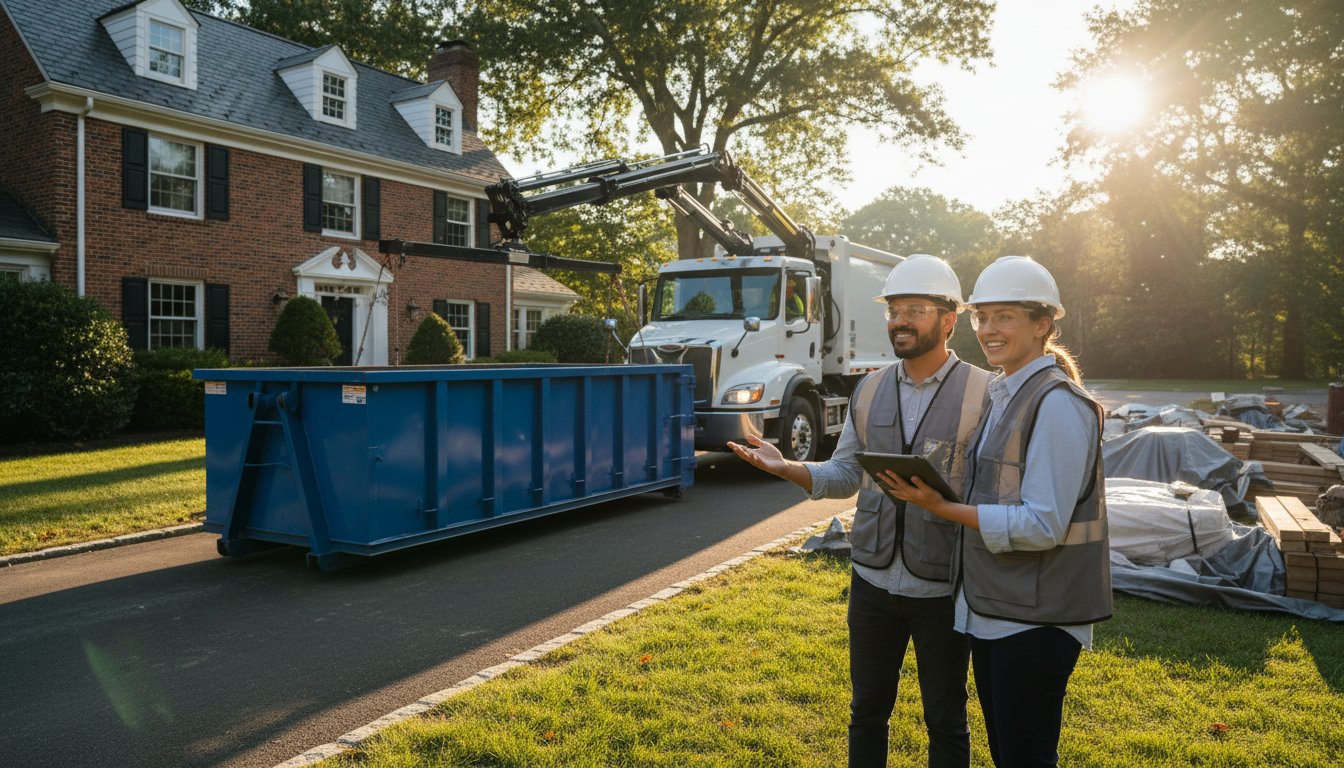
What if the most expensive part of your 2026 renovation isn't the materials, but the fine you receive for improper waste disposal? In major hubs like Chicago and Paterson, local ordinances now require specific documentation for almost every cubic yard of waste moved off-site. You already know that a standard debris pickup is far more complex than simple weekly trash collection. It's exhausting to stall a project because you're stuck deciphering permit requirements or worrying about surprise surcharges on your final bill.
We've designed this guide to remove that logistical stress and put you back in control. You will gain a clear plan for managing your waste while staying compliant with the latest state-specific disposal laws in Illinois, New Jersey, and Michigan. We break down the differences between hauling services, show you how to avoid hidden fees, and help you choose the most efficient disposal method for your project. From navigating Chicago's updated 2026 sanitation codes to securing a permit in Ann Arbor or Paterson, here's everything you need to book your dumpster with Book Your Dumpster USA and clear your site without the headache.
Key Takeaways
- Navigate the 2026 state mandates and "Right-of-Way" permit requirements for construction projects in New York, Illinois, and Massachusetts.
- Compare the cost-efficiency of roll-off dumpsters versus bulk junk removal for projects exceeding five cubic yards of waste.
- Master the logistics of debris pickup by selecting the optimal container size and preparing your site for seamless delivery and retrieval.
- Identify why professional waste strategies are essential for handling heavy construction materials that municipal services won't accept.
- Streamline your project management using a direct, online booking system that eliminates logistical stress and hidden fees.
Understanding Debris Pickup: Why Your Project Needs a Strategy
Debris pickup is the specialized removal of heavy-duty waste generated during construction, demolition, or home remodeling projects. Don't expect your local trash collector to haul away a pile of shingles or broken drywall. Most municipal services in 2026 strictly limit pickups to standard household refuse. They reject heavy construction materials due to vehicle weight limits and specific landfill regulations. This waste falls under a regulatory category known as C&D waste. To better understand what is demolition debris, you must view it as a complex mix of wood, steel, and gypsum that requires specialized processing. Proper sorting is now a legal requirement in many jurisdictions to meet 2026 sustainability targets and carbon reduction goals.
Construction vs. Yard vs. Bulk Waste
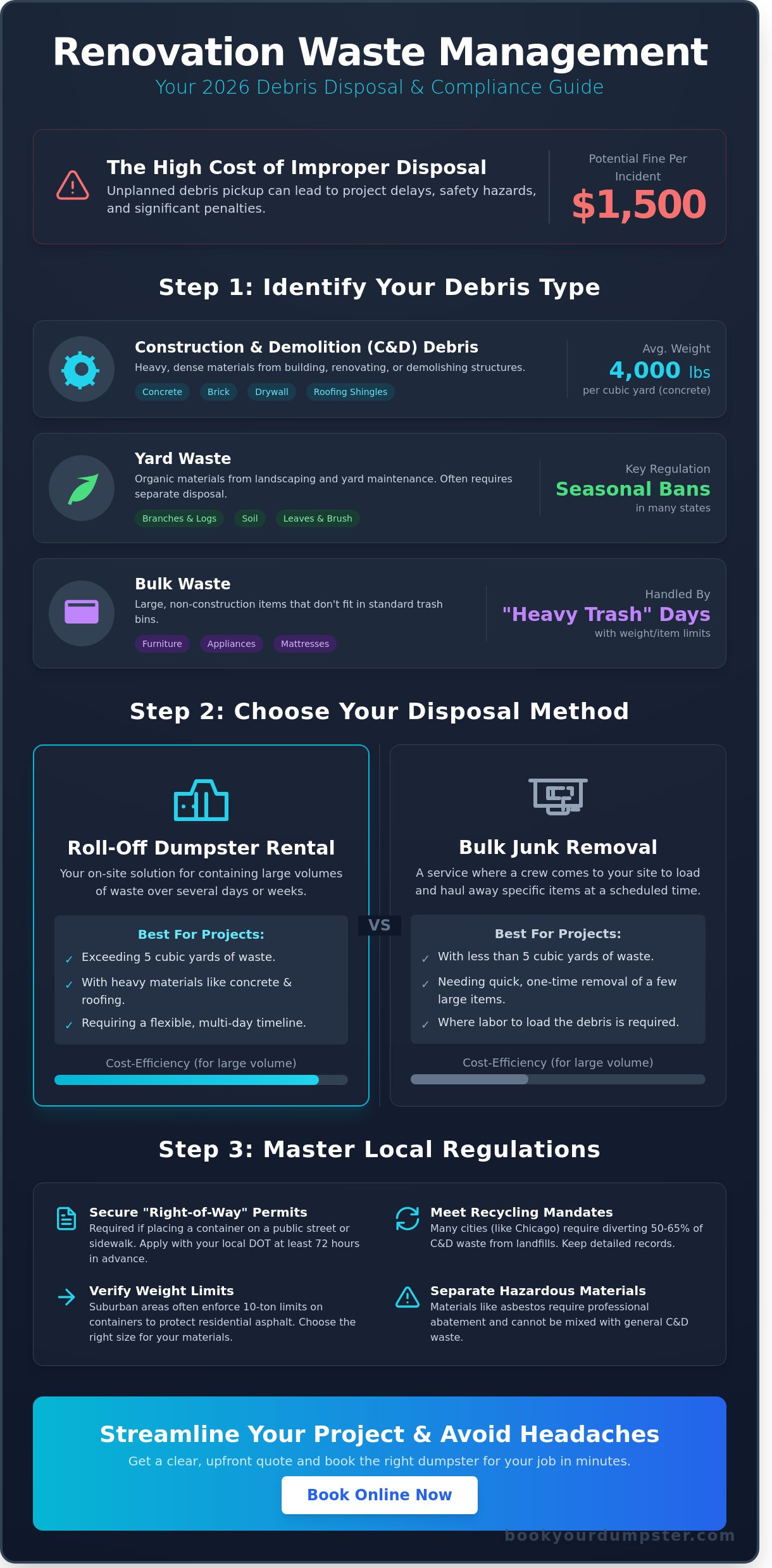
Not all waste is handled the same way. Construction debris like concrete and brick is exceptionally dense; a single cubic yard of concrete weighs approximately 4,000 pounds. This density requires heavy-duty roll-off containers and specialized trucks equipped for high-tonnage hauling. Yard waste consists of organic materials like branches, soil, and grass. In Massachusetts and Illinois, state laws mandate separate seasonal pickup schedules for organic matter to prevent it from entering standard landfills. Bulk waste refers to large items like old sofas or broken appliances. While these items are large, they lack the extreme weight and density of masonry materials. You must match your waste type to the correct disposal method to avoid service interruptions.
- Construction Debris: Concrete, brick, drywall, and roofing. Requires high-capacity roll-off containers.
- Yard Waste: Leaves, brush, and logs. Often subject to seasonal local government bans in the Midwest and Northeast.
- Bulk Waste: Furniture and mattresses. Usually handled via scheduled "heavy trash" days, though weight limits apply.
The Consequences of Improper Disposal
Leaving debris on the curb without a professional plan is a liability. Illegal dumping fines in major metropolitan areas can reach $1,500 per incident depending on the volume and material type. Beyond the financial cost, uncontained piles of wood and metal create immediate safety hazards for pedestrians and drivers on residential streets. Nail-embedded boards or crumbling masonry can lead to serious injuries or vehicle damage. If you're managing a smaller renovation or a single-room teardown, read our 10 Yard Dumpster Rental Pillar to find a compact, safe solution for your site. A clear debris pickup strategy keeps your project on track and your neighborhood safe.
Navigating Local Debris Regulations in NY, IL, and MA
State mandates starting in 2026 dictate that all debris must be secured in leak-proof, reinforced containers during transit. These regulations aim to reduce road hazards and micro-plastic runoff across the Northeast and Midwest. If your project requires placing a container on a public street or sidewalk, you must secure a Right-of-Way permit from your local Department of Transportation. Modern recycling laws now require a minimum 65% diversion rate for construction materials like concrete and brick. Check your local municipal code before scheduling a pickup.
New York: Managing Debris in High-Density Areas
In New York City, the Department of Sanitation requires a 5-foot clear path on all sidewalks at all times. You must use a private carter licensed by the Business Integrity Commission to haul any commercial or construction waste. Upstate New York projects must follow Part 56 regulations. These rules require professional abatement and strict separation of hazardous materials like asbestos before any debris pickup occurs. In Manhattan or Brooklyn, timing is critical. Schedule your drop-off for early morning or late night to avoid heavy traffic delays and potential fines for blocking transit lanes.
Illinois: Chicago and Suburban Disposal Rules
Chicago strictly enforces the Construction and Demolition Debris Diversion ordinance. This law requires contractors to recycle at least 50% of all debris by weight. You must maintain detailed records of where every ton of waste is hauled. Suburban counties like DuPage or Lake often enforce a 10-ton weight limit for roll-off containers to protect residential asphalt from cracking. For projects in Cook County, apply for your dumpster permit at least 72 hours before delivery to avoid project shutdowns. Book your dumpster through a provider that understands these local weight restrictions and permit timelines.
Massachusetts: Strict Environmental Compliance
Massachusetts 310 CMR 19.017 bans specific materials from all state landfills. This includes asphalt shingles, gypsum wallboard, and even large glass panes. In Boston, projects located in historic districts like Beacon Hill or Back Bay require specific approvals from the Landmarks Commission before a container can be placed. The state mandates that 100% of clean wood, metal, and cardboard debris be diverted to specialized processing facilities. Failure to separate these materials before your debris pickup can result in significant surcharges at the transfer station. Plan your sorting strategy before the container arrives on-site to ensure compliance with these environmental standards.
Dumpster Rental vs. Bulk Trash Pickup: Which is Right for You?
Choosing between a one-time junk removal service and a roll-off dumpster rental depends on your project's pace. A junk removal crew provides quick debris pickup, but you must have everything ready in a single, chaotic pile before they arrive. This often leads to cluttered lawns or blocked walkways while you work. Renting a dumpster offers a cleaner, more controlled workflow. You toss waste directly into the container as you generate it. This "clean-as-you-go" method keeps your job site safe and keeps your property looking professional throughout the process.
For any project exceeding 5 cubic yards of waste, a dumpster is almost always the most cost-effective choice. Many homeowners worry a container is too big for their driveway. Most residential driveways are at least 10 feet wide, which easily accommodates a standard roll-off. You get the capacity you need without sacrificing your entire parking area. It is a simple trade-off that saves you from multiple expensive trips from a hauling service.
Volume and Weight Considerations
Estimating your waste helps you avoid ordering the wrong size. Think in terms of pickup truck loads. A standard 8-foot truck bed holds about 2.5 cubic yards when filled to the rails. If your project looks like it will fill four or more trucks, a 10-yard or 15-yard dumpster is your best bet. Be careful with heavy materials. Dirt, concrete, and gravel are dense. These materials require specialized, smaller dumpsters to stay within legal weight limits for transport. Check out this Roll Off Dumpster Rental Guide for specific technical specs on weight capacities and dimensions.
Cost Analysis and Hidden Fees
Standard debris pickup services often charge by the fraction of the truck filled. This makes final costs hard to predict until the job is done. Dumpster rental pricing typically includes the rental period, a specific tonnage allowance, and local disposal fees. You only run into extra costs through overage charges if you exceed the weight limit or keep the bin past the agreed date. To avoid surprises, Book Your Dumpster USA provides transparent pricing upfront. You see exactly what you pay for before the delivery truck arrives. This clarity helps you stay on budget while managing large scale cleanups without the stress of hidden line items.
Preparing for Your Debris Pickup: A Step-by-Step Logistics Guide
Success starts with selecting the correct container size. We provide roll-off dumpsters ranging from 10 to 40 cubic yards. A 10-yard bin typically accommodates 50 to 60 large trash bags, while a 40-yard bin handles the heavy load from a complete home demolition. Match your container to your project scope to prevent the need for multiple hauls and unnecessary costs.
Clear a level, accessible space on your property before the truck arrives. Our drivers need approximately 60 feet of linear space and 23 feet of vertical clearance to operate the roll-off hoist safely. Move all vehicles and equipment out of the way. If the container must sit on a public road, obtain a local street permit first. In major hubs like Chicago or Boston, permit processing often takes 72 hours or more. Secure your paperwork early to avoid municipal fines and project delays.
Balance the load as you work. Distribute weight evenly across the floor of the dumpster rather than piling it in one corner. This stability is critical for a safe debris pickup and prevents the truck from tipping during the loading process. Finally, schedule your pickup at least 24 hours in advance. This lead time allows us to keep your project on schedule and ensures a driver is available exactly when you're finished.
Safe Loading Practices
Place heavy items at the bottom of the bin. Starting with a base of heavy furniture or masonry creates a lower center of gravity for the truck. Always follow the water level rule. This means your waste must never exceed the top rail of the container. Overfilling is a primary reason for failed pickup attempts and can lead to additional dry-run fees.
Prohibited Items and Hazardous Waste
Standard debris pickup services cannot accept hazardous materials. Keep paints, tires, car batteries, and appliances with Freon out of your dumpster. Local laws in MA and IL strictly regulate the disposal of electronics. For example, the Illinois Electronic Products Recycling and Reuse Act bans computers and monitors from landfills. Take these items to a designated municipal recycling center instead. Most counties host hazardous waste collection events at least twice a year to handle these restricted materials safely.
Eliminate the mess and stay on schedule. Book your dumpster now for transparent pricing and on-time delivery.
Streamlining Your Project with Book Your Dumpster USA
Managing a job site in New York, Illinois, or Massachusetts requires precision. You don't have time for logistical delays or vendors who overpromise. Book Your Dumpster USA operates as a no-nonsense partner for professional debris management. We handle the heavy lifting so you can focus on the build. Our system eliminates the endless phone calls and wait times that stall progress. Reliability is our baseline. We ensure on-time delivery and pickup because a missed window means a backup of waste and a direct hit to your project's momentum.
Transparency is a core brand promise. We maintain a strict "no hidden fees" policy to protect your bottom line. Many companies in the waste industry add surcharges for fuel, environmental compliance, or administrative costs after the transaction is complete. We don't do that. You see the price upfront, and you pay what you see. This honesty acts as a verbal handshake, ensuring that contractors and homeowners alike can budget with 100% accuracy. When you schedule a debris pickup, you're getting a high-functioning tool, not a surprise invoice.
Sizing Solutions for Every Debris Type
Choose the container that fits your scope. We offer 10, 20, 30, and 40-yard options to handle any volume of waste. Selecting the correct size is the most effective way to control costs. It prevents the need for multiple, expensive pickups that can drain a project's budget. For a detailed breakdown of which container suits your specific job, consult our Ultimate Guide to Construction Debris Removal. Getting it right the first time keeps your site clean and your overhead low.
- 10-Yard: Ideal for heavy materials like concrete or small basement cleanouts.
- 20-Yard: The standard choice for mid-sized kitchen or bathroom remodels.
- 30-Yard: Designed for large residential additions and full-home decluttering.
- 40-Yard: The workhorse for commercial construction and major demolition projects.
Booking Your Debris Solution Today
Secure your debris pickup solution in minutes. Visit our website and enter your zip code. This provides instant local pricing tailored to your specific service area in NY, IL, or MA. Our digital checkout process is designed for speed and mobile responsiveness. You can book a roll-off container from the cab of your truck or the middle of a job site without ever picking up the phone. Select your size, choose your delivery date, and finish the transaction. It's a digital-first approach to a traditional industry. Book your dumpster now and clear the way for your next project.
Simplify Your 2026 Site Cleanup
Managing a renovation or construction project in 2026 requires more than just a shovel; it demands a clear strategy for waste. You've now seen how local regulations in New York, Illinois, and Massachusetts dictate your disposal options and why a proactive plan prevents delays. Choosing between a dedicated roll-off container and standard bulk trash pickup can save you hours of logistical headaches. We've optimized our services specifically for these three states to ensure your project stays compliant and moves forward without friction. Our team provides a reliable partnership that handles the heavy lifting, letting you focus on the build itself. We guarantee on-time delivery and pickup so your crew never stands around waiting for a container. You'll always receive transparent pricing with no hidden fees, keeping your project budget exactly where it belongs. Don't let waste pile up and stall your progress.
Choose your size and book your debris pickup today at BookYourDumpster.com. Let's get your site cleared so you can finish your project with confidence.
Frequently Asked Questions
What is considered "debris" for a professional pickup service?
Professional debris pickup services typically accept common construction materials like wood, drywall, and metal. Household items such as old furniture or carpeting also qualify. However, 100% of standard haulers prohibit hazardous waste, including liquid paint, tires, and motor oil. If you're clearing a 2,000 square foot home, expect to separate these items to avoid landfill rejection fees. Focus on non-hazardous solids to ensure a smooth removal process.
Can I put concrete and bricks in a standard roll-off dumpster?
You can't put heavy materials like concrete or bricks in a standard roll-off container due to weight restrictions. A single cubic yard of concrete weighs roughly 4,000 pounds, which can easily exceed the 4-ton limit of a 20-yard dumpster. Use a dedicated 10-yard heavy-load bin instead. This prevents damage to your driveway and ensures the truck can safely lift the load for transport.
Do I need a permit for debris pickup if the dumpster is in my driveway?
You don't need a permit if the dumpster stays entirely on your private driveway. Permits are only required when the container occupies public space, such as a street or sidewalk. Approximately 90% of local municipalities mandate a right-of-way permit for street placements. Check your local building department's 2024 guidelines to avoid fines that can reach $200 per day for unpermitted equipment.
How much does debris pickup usually cost in Chicago or New York?
Debris pickup costs depend on local disposal fees and the volume of waste. According to 2023 industry reports from HomeAdvisor, national averages for junk removal range from $150 to $800. In Chicago or New York, expect higher rates because landfill tipping fees in these metro areas are 25% higher than the national average. Request an instant quote online to see the exact price for your specific zip code.
What happens if I overfill my dumpster before the scheduled pickup?
If you fill the dumpster past the side walls, the driver won't pick it up. Safety laws require all loads to be covered and secured during transport. Overfilling leads to a dry run fee, which often costs $150 or more depending on your location. Level your load and keep everything below the rim. If you have extra waste, book a second container to finish the job safely.
Is yard waste considered the same as construction debris?
Yard waste and construction debris are handled differently at 95% of disposal facilities. Yard waste includes branches, leaves, and grass clippings, while construction debris covers shingles, lumber, and flooring. Mixing these materials often results in contamination charges at the landfill. Keep your organic waste separate from your renovation materials to ensure you pay the lowest possible disposal rate for your project.
How long can I keep a dumpster on my property for a renovation?
Standard rental periods usually last between 7 and 14 days. Most customers find that a 10-day rental provides enough time for a standard bathroom or kitchen remodel. If your project takes longer, you can pay a daily extension fee to keep the container. Just call 24 hours before your scheduled pick-up date to adjust your timeline. This flexibility keeps your site clean until the final nail is driven.
Can I schedule a same-day debris pickup?
Same-day debris pickup is possible if you place your order before 10:00 AM. Our team prioritizes rapid dispatch to clear your site immediately. Availability varies based on daily truck routes and current inventory levels in your city. If you're facing a deadline, book your dumpster online now to lock in the fastest possible service. We handle the logistics so you can focus on your work.


