
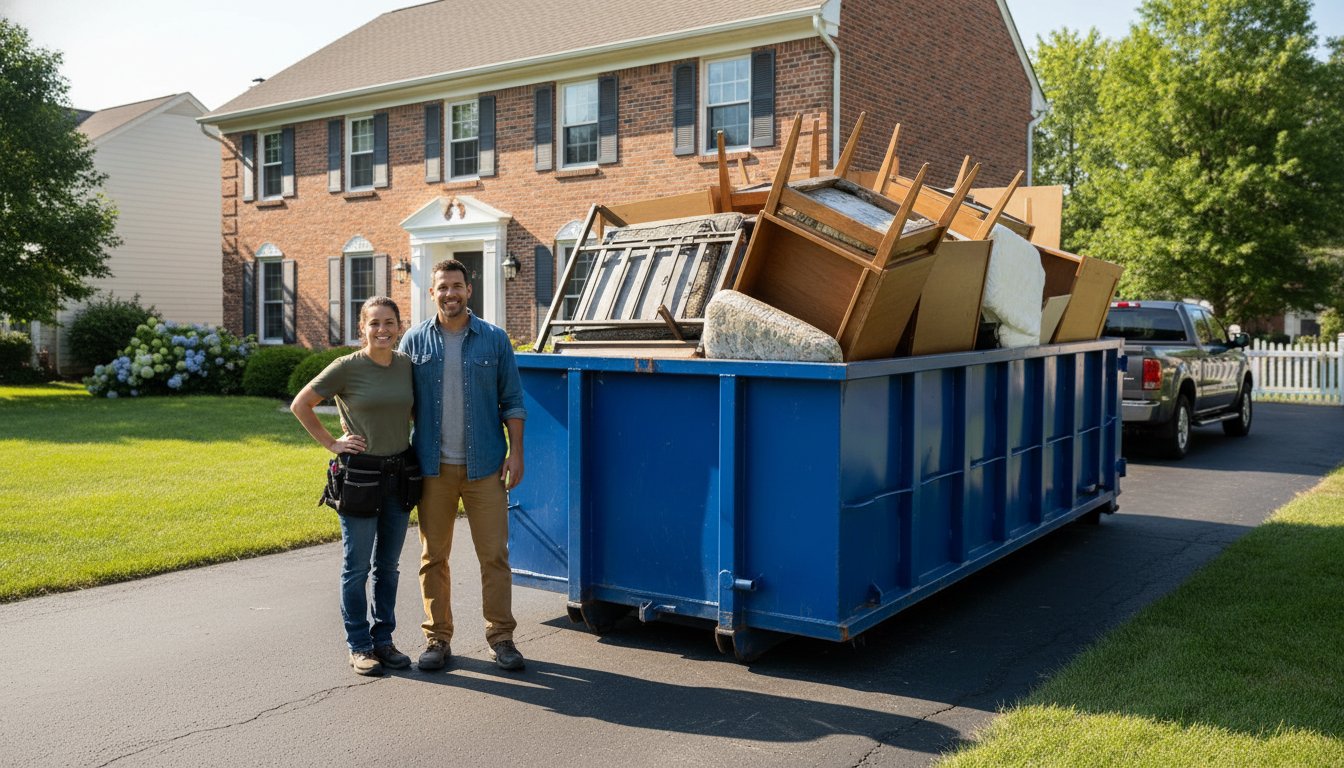
The most expensive mistake you can make when clearing out a home is paying to haul away empty air. Most people assume a 20-yard container can handle a full house of decor, but without a strategy, a single sectional sofa can ruin your capacity. Disposing of old furniture in a rental dumpster requires more than just heavy lifting; it requires a plan for your specific state. Whether you're facing New York City's $300 fine for unsealed mattresses or the November 2022 mattress disposal ban in Massachusetts, getting the details right is the difference between a clean driveway and a massive overage fee.
We understand that the logistics of a major cleanout are stressful and confusing. You want a clear path to get rid of the clutter without worrying about hidden costs or complex landfill bans. This guide provides the exact steps to break down your items, choose the right size, and stay compliant with laws in NY, IL, and MA. We'll cover loading techniques to maximize your cubic yardage and state-specific rules so you can book your dumpster with total confidence.
Key Takeaways
- Understand the specific classification of your items to avoid confusion between household junk and construction debris during your cleanout.
- Navigate the legal requirements for disposing of old furniture in a rental dumpster across NY, IL, and MA to avoid local fines and penalties.
- Calculate your "Furniture Footprint" to select the most efficient dumpster size and avoid paying for unused capacity in a larger bin.
- Implement the "Bottom-Heavy" loading rule to safely pack your roll-off container and maximize every cubic yard of available space.
- Learn how transparent, flat-rate pricing helps you manage your project budget without worrying about unexpected disposal fees at the landfill.
Can You Put Furniture in a Rental Dumpster? Rules for NY, IL, and MA
You can absolutely put furniture in your roll-off container. It's your private rental, so you aren't breaking any laws against illegal dumping or "dumpster diving." Most old tables, chairs, and couches fall under the category of Bulky waste. This is distinct from construction debris like drywall or concrete. For multi-room cleanouts, disposing of old furniture in a rental dumpster is the fastest way to clear space without waiting for city pickup schedules. If the item isn't hazardous and fits below the top rail of the bin, it's usually fair game.
The Legalities of Furniture Disposal in Your Region
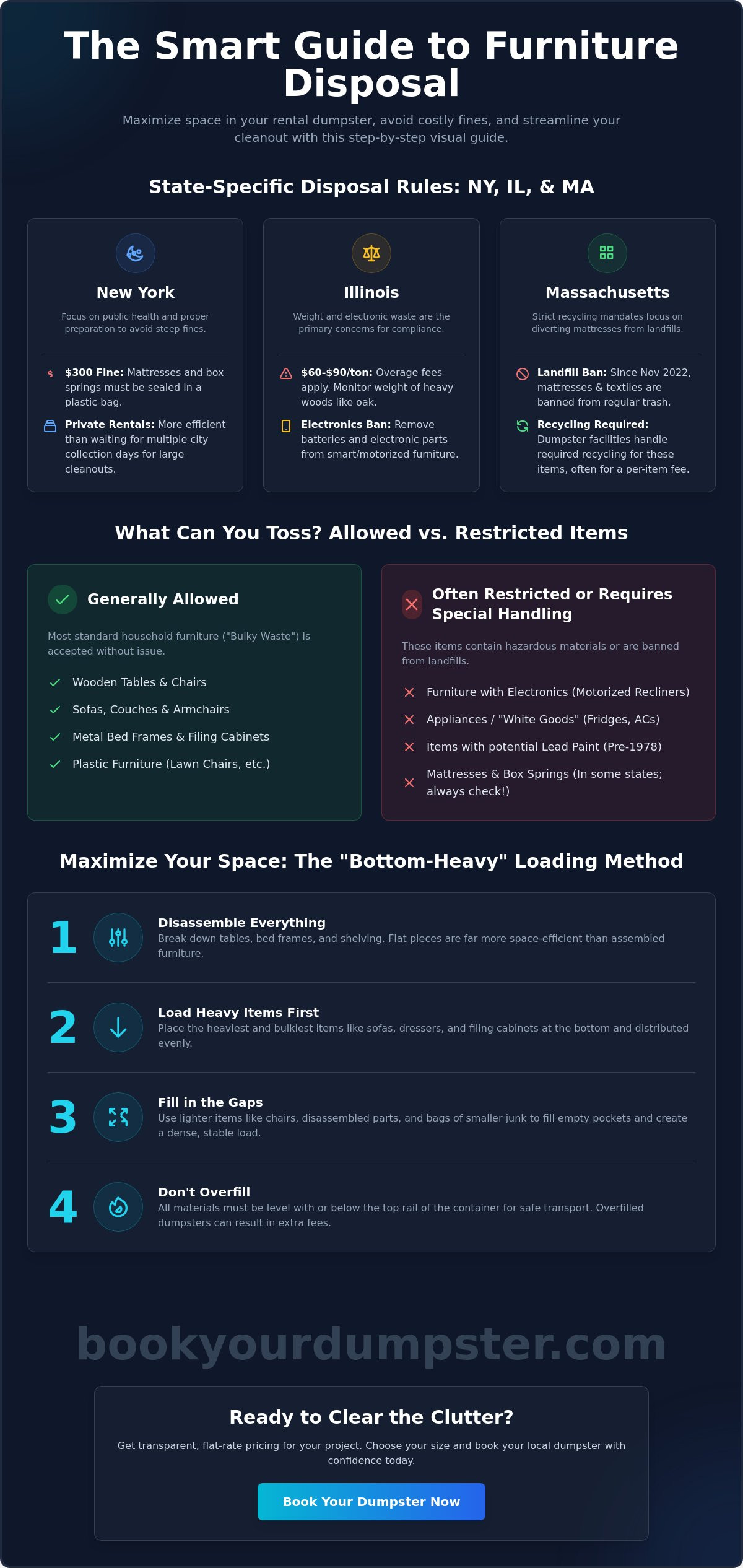
Regulations vary significantly between the East Coast and the Midwest. In New York City, residents can set out up to six items on the curb for free. However, you must seal mattresses and box springs in plastic bags or face a $300 fine. For larger projects, a private rental is more efficient than waiting for multiple city collection days. In Illinois, specifically the Chicago area, landfill overage fees typically range from $60 to $90 per ton. You should monitor the weight of heavy oak or mahogany pieces. Massachusetts residents face the strictest rules. As of November 2022, the state banned mattresses and textiles from regular trash. While these items are restricted at the curb, many dumpster facilities accept them because they handle the required recycling on your behalf.
When Furniture Becomes "Prohibited Waste"
Don't toss every item blindly. Some furniture contains components that landfills won't accept. Vintage pieces manufactured before 1978 might contain lead paint. These require special handling to prevent environmental contamination. Motorized recliners, adjustable bed frames, and smart desks often contain integrated electronics or batteries. Illinois has a statewide ban on disposing of electronics in landfills, so these components must be removed first. Always check for hidden hazardous materials, such as mercury switches in old reclining mechanisms or "smart" features. If your furniture has a power cord or a battery compartment, it likely needs separate disposal. Disposing of old furniture in a rental dumpster is simple, but keeping these exceptions in mind prevents unexpected fines or rejected loads at the scale.
Ready to clear out your space? Choose your size and book your dumpster today to get started on your project with transparent pricing and no hidden fees.
Identifying Allowed vs. Restricted Furniture Items
Disposing of old furniture in a rental dumpster is efficient for clearing out standard household items. Most wooden dining tables, plastic lawn chairs, and metal bed frames are simple to process and accepted without issue. Upholstered items like sofas and armchairs are slightly more complex. They occupy significant cubic yardage and add weight quickly if they get wet. For office cleanouts, cubicle walls and heavy steel filing cabinets are generally accepted. You should place these heavy metal items at the bottom of the bin to keep the center of gravity low during transport.
Don't confuse large household items with standard furniture. Large appliances, often called white goods, are restricted because of refrigerants and specific metal recycling laws. Electronics are another major exception. In Illinois, a statewide ban prevents electronics from entering landfills. If your desk has a built-in monitor or your recliner is motorized, you must remove those components before tossing the frame. Before you start your project, check local dumpster rates to ensure your specific furniture mix fits your budget.
The Mattress and Box Spring Dilemma
Mattresses are the most heavily regulated furniture components in the Northeast. Massachusetts implemented a mandate in November 2022 that officially banned mattresses and textiles from landfills. Since up to 75% of a mattress consists of recyclable materials, facilities now require specialized handling. Massachusetts residents dispose of over 600,000 mattresses annually, making recycling a top priority for the state. In New York, the NYC rules for large items focus on public health. Any upholstered item or mattress must be sealed in plastic to prevent the spread of bed bugs. While disposing of old furniture in a rental dumpster simplifies the process, be aware that many facilities charge a per-item surcharge for box springs because they are difficult to crush.
Treated Wood vs. Natural Materials
The material of your furniture dictates how much space and weight you'll use. Particle board and MDF are common in modern furniture. These materials are easy to break down but are surprisingly heavy due to high glue content. Natural wicker and rattan are lightweight but consume massive volume if you don't crush them. Pressure-treated wood from outdoor benches or decks contains chemical preservatives. Some landfills in New York and Massachusetts require these treated materials to be separated from "clean" wood waste. Always distinguish between a natural oak table and a chemical-soaked deck chair before loading your container.
Choosing the Right Dumpster Size for Your Furniture
Don't guess your dumpster size. Use the "Furniture Footprint" method to estimate your needs. A standard living room set including a sofa, two chairs, and a coffee table occupies roughly 5 cubic yards of space if you don't break the items down. According to EPA data on furniture disposal, furniture and furnishings account for over 12 million tons of municipal solid waste annually. Most of this volume comes from bulky, non-compacted items that consume dumpster space quickly. Disposing of old furniture in a rental dumpster is efficient only if you match the container volume to your total item count.
For a single-room renovation or a small basement cleanup, the 10-yard dumpster is the "Goldilocks" size. It holds roughly 50 to 60 kitchen trash bags or several large furniture pieces. If you're clearing out a small apartment or 3 to 4 rooms, step up to a 20-yard roll-off. This size is the industry standard for most residential moves. For whole-home estate cleanouts or commercial office liquidations in Chicago or Boston, you'll need 30 or 40-yard models. These massive bins handle the high-volume, low-density debris typical of large-scale furniture disposal projects.
Volume isn't your only constraint. Weight matters too. Solid oak wardrobes or heavy mahogany dining sets add up fast. A 20-yard dumpster typically holds 3 to 4 tons of debris. Exceeding this limit in Chicago results in overage fees between $60 and $90 per ton. Always choose a size that offers a weight allowance slightly higher than your estimated load to avoid these surcharges.
Furniture Capacity by Dumpster Size
Match your inventory to these general capacities to ensure you have enough room. A 10-yard bin is best for two sofas, three armchairs, and a standard dining set. A 20-yard container is ideal for a 1,500-square-foot home or roughly 10 to 12 large items. Move to 30 or 40-yard bins for bulky office desks, partitions, and multi-story estate removals where volume is the primary concern.
Local Pricing and Availability in NY, IL, and MA
Location dictates your final bill and scheduling. In the Chicago area, dumpster rentals generally range from $400 to $900. New York City prices are higher, averaging around $489 per week, with overage fees reaching $250 per ton. If you're in Boston, expect to pay between $500 and $750 per week. Booking ahead is essential during peak spring and summer months when demand spikes. Check local dumpster rental prices here to see current rates for your specific zip code.
Step-by-Step: How to Load Furniture to Save Space
Load your heaviest, flattest items first. This is the "Bottom-Heavy" Rule. It prevents the dumpster from becoming top-heavy, which is a major safety risk during pickup and transport. Disposing of old furniture in a rental dumpster requires a foundation of solid materials like tabletops or disassembled bed frames. By laying these flat on the floor, you create a level surface for the rest of your items. This strategy maximizes every cubic yard of the 20-yard or 30-yard container you've rented.
Safety is non-negotiable. Always wear 100% leather work gloves and impact-resistant goggles when breaking down furniture. Use a 16-ounce rubber mallet to pop joints loose without creating flying splinters. When lifting a solid oak dresser, always lift with your legs to avoid strain. If an item weighs more than 50 pounds, get a second person to help with the carry. Proper lifting prevents injuries and keeps your project moving efficiently.
Your dumpster functions like a giant game of Tetris. Once the heavy items are in, fill the gaps. Smaller items like footstools, cushions, or rolled rugs should be stuffed into the "dead space" inside cabinet shells or under table frames. Keep the weight balanced across the bin. Don't put all the heavy wood on one side. A lopsided load can cause the roll-off truck to tilt during the winching process, which might lead to a failed pickup and extra fees.
Dismantling for Maximum Volume
Break your 3D furniture into 2D planks. Remove the legs from every table and chair you toss. This simple step can increase your available space by 30% or more. Use a screwdriver to detach hinges and drawer slides from old dressers. If you have a large sectional sofa, cut it into smaller sections with a reciprocating saw. This prevents large "air pockets" from forming, ensuring you don't pay to haul away empty space.
Strategic Loading Order
Follow a 3-step sequence for the best results. First, slide flat items like headboards and tabletops against the side walls or floor. Second, place heavy carcasses like dresser shells and desks in the center. Third, fill the remaining voids with soft goods and small debris. Strategic loading is the only way to avoid overage fees when disposing of old furniture in a rental dumpster. Once you've planned your load, book your dumpster and get that old furniture out of your way today.
Ready to Clear the Clutter? Book Your Local Dumpster
You've done the heavy lifting of planning your cleanout. Now it's time to execute. Disposing of old furniture in a rental dumpster shouldn't be a guessing game or a source of stress. We provide the tools and the transparency you need to finish your project without a headache. Book Your Dumpster USA specializes in navigating the complex waste landscapes of New York, Illinois, and Massachusetts. Whether you're avoiding a $300 fine for unsealed mattresses in NYC or complying with the 2022 mattress recycling laws in Massachusetts, we have the local expertise to keep your project on track.
Our pricing model is built on honesty. You won't find the opaque fee structures common in the waste management industry here. We focus on flat-rate, transparent pricing that includes delivery, pickup, and a set weight limit. In Chicago, where overage fees typically range from $60 to $90 per ton, knowing your limit upfront is vital. We help you avoid the bill shock that often follows a major cleanout. By choosing a partner who understands regional landfill quirks, you ensure that disposing of old furniture in a rental dumpster remains the most cost-effective part of your renovation.
The Book Your Dumpster USA Advantage
Speed and reliability are the core of our service. Use our instant online booking system to schedule your delivery in Chicago, NYC, or Boston. We respect your time. Our on-time delivery ensures your roll-off container arrives exactly when you're ready to work. If you're still unsure about the volume of your sectional or dining set, our team provides expert sizing support. We'll help you choose the right capacity so you don't pay for more space than you actually need.
Next Steps for Your Cleanout
Follow this final checklist before you finalize your order. First, measure your driveway or drop-off spot to ensure the truck has clear access. Second, verify that your items aren't on the prohibited list, such as electronics or hazardous materials. Third, check local permit requirements if you're placing the bin on a public street. In New York City, a permit for placing a dumpster on public property can cost between $135 and $385. Learn more about our 10-yard dumpster rentals to see if this compact size is right for your specific room swap. When you're ready to reclaim your space, visit BookYourDumpster.com to start your rental today.
Reclaim Your Space Today
You now have the blueprint for a hassle-free cleanout. Dismantling tables into flat planks and removing legs from chairs can save you up to 30% of your container's volume. Staying compliant with regional mandates, like the November 2022 mattress ban in Massachusetts or NYC bag requirements, keeps your project on budget. Disposing of old furniture in a rental dumpster is a strategic process that rewards careful loading and local knowledge.
We handle the logistical stress so you can focus on the results. Our local experts understand the specific regulations in Chicago, NYC, and Boston to provide a seamless experience. We stand by our no hidden fees guarantee and offer an easy 3-minute online booking process to respect your time and urgency. You don't have to navigate these rules alone when our team is ready to help.
Book your furniture-ready dumpster now at BookYourDumpster.com. Take the first step toward reclaiming your property today. You've got this under control, and we're here to ensure the heavy lifting is the only hard part of the job.
Frequently Asked Questions
Can I put a couch in a 10-yard dumpster?
Yes, you can fit a standard couch in a 10-yard dumpster. This size typically holds two to three full-sized sofas along with several smaller chairs. It's the ideal choice for single-room furniture swaps or basement cleanouts. Just ensure the furniture does not extend above the top rail of the bin to allow for safe transport.
Are there extra fees for disposing of mattresses in Massachusetts?
Most facilities in Massachusetts charge a per-item surcharge for mattresses and box springs. As of November 2022, the state officially banned these items from landfills to encourage recycling. Since up to 75% of a mattress consists of recyclable materials, they require specialized processing. We include these state mandates in our transparent pricing to help you avoid hidden surprises.
Do I need to break down my furniture before putting it in the dumpster?
It's not a requirement, but it's the smartest way to save money. Disposing of old furniture in a rental dumpster is much more efficient when you remove legs from tables and chairs. This turns bulky 3D objects into flat 2D planks. Breaking down items prevents large air pockets and ensures you don't pay to haul away empty space.
What happens if I overfill my dumpster with bulky furniture?
We cannot legally pick up or transport a dumpster that is filled above the top rail. Overhanging furniture creates a significant safety hazard for other drivers on the road. If your bin is overfilled, you'll have to remove the excess items before we can complete the pickup. This usually results in a dry run fee and delays your project.
Can I dispose of office furniture in a residential rental dumpster?
You can dispose of desks, chairs, and filing cabinets in any residential roll-off container. However, you must remove all electronics first. In Illinois, a strict statewide ban prevents electronics from entering landfills. Ensure you strip motorized recliners or smart desks of their batteries and power cords before loading the frames into your bin.
Are there any types of wood furniture that are prohibited?
Most wood furniture is accepted, but pressure-treated outdoor pieces may have specific rules. Items like garden benches or old decks contain chemical preservatives that some landfills won't accept with standard trash. Always tell us if you're disposing of old furniture in a rental dumpster that includes chemical-soaked materials. This ensures we send your load to the correct facility in NY or MA.
How much weight in furniture can a standard 20-yard dumpster hold?
A standard 20-yard dumpster typically holds 3 to 4 tons of debris. Since furniture is bulky but less dense than concrete, you'll likely run out of physical space before you hit the weight limit. Watch out for heavy solid oak sets or water-logged upholstery. In Chicago, exceeding your weight limit can lead to overage fees between $60 and $90 per ton.
Can I leave furniture next to the dumpster if it doesn’t fit?
No, our drivers can only pick up items that are inside the container. Leaving furniture on the ground next to the bin is considered illegal dumping and can lead to local fines. If your furniture doesn't fit, you should order a second bin or break the items down into smaller pieces. Keeping everything inside the walls ensures a hassle-free pickup.


