

Drywall disposal is a game of weight, not just volume. If you treat a stack of gypsum like standard household trash, you'll likely face heavy fines before your renovation even finishes. Many homeowners and contractors assume a large bin is all they need, but the density of sheetrock requires a more calculated approach. Mastering drywall disposal in a dumpster is the only way to ensure your job site stays clean without triggering unexpected surcharges on your final bill.
It's stressful to manage the constant dust of a demolition while wondering if you've already exceeded your weight limit or violated a local gypsum regulation. You need a reliable plan that removes the logistical guesswork. This 2026 guide provides the exact steps to manage your waste efficiently, from selecting the right container to avoiding common disposal pitfalls. We'll break down how to choose the ideal dumpster size for your specific square footage and explain the current rules for handling construction debris. You'll finish this article with a clear strategy for a tidy site and a flat-rate budget that actually sticks.
Key Takeaways
- Understand local gypsum regulations and why some landfills limit drywall to prevent hazardous gas buildup.
- Select the correct bin size, like a 10 or 20-yard model, to avoid exceeding weight limits before the container is full.
- Optimize your drywall disposal in a dumpster by layering flat sheets at the bottom for a stable, space-efficient load.
- Use the 50-pound per sheet rule to calculate total weight and protect your budget from unexpected overage fees.
- Identify regional recycling facilities that accept gypsum to ensure your project remains compliant and environmentally responsible.
Can You Put Drywall in a Dumpster? Rules and Regulations
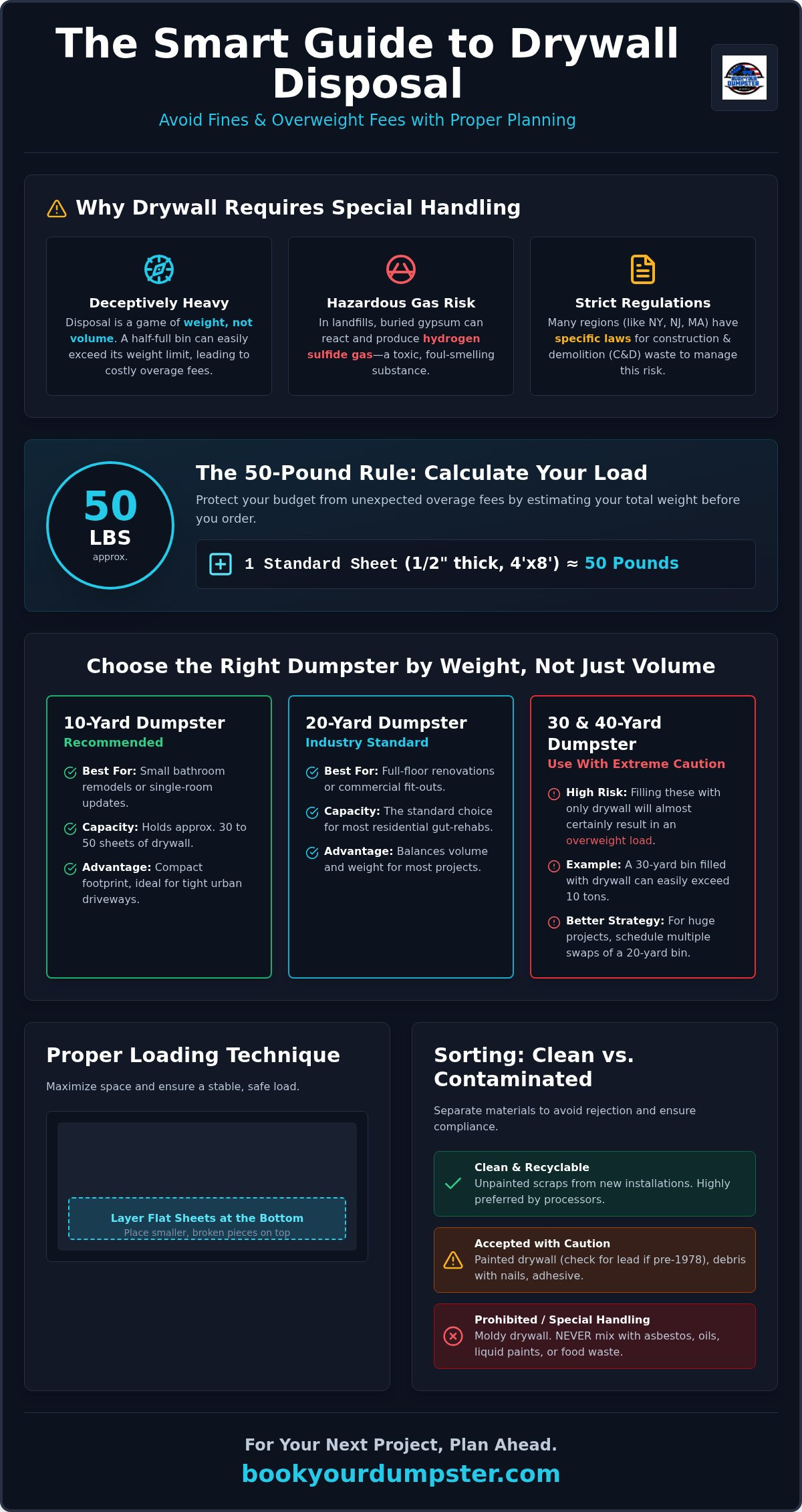
Drywall disposal in a dumpster is standard practice for most renovations, but it isn't as simple as tossing in old furniture. You must account for the specific drywall composition and materials. Drywall consists primarily of gypsum, a mineral that creates significant environmental issues in landfills. When gypsum is buried in an environment without oxygen, it reacts with moisture to produce hydrogen sulfide gas. This gas smells like rotten eggs and can be hazardous at high concentrations. Because of this, many local jurisdictions and landfill operators in states like NY, NJ, and MA have implemented strict mandates on how much drywall can enter the general waste stream. You aren't just paying for the space; you're paying for the specialized processing required to handle this material safely.
Check local laws before you book. In Massachusetts, for example, there are specific bans on disposing of certain construction and demolition (C&D) materials in traditional landfills. If you're working in New Jersey or New York, your debris must go to a specific C&D processing facility. Understand that demolition debris is frequently contaminated with insulation, wallpaper, or adhesive. This makes it harder to recycle than clean scraps. Ensure you separate your materials as much as possible to avoid logistical headaches. Mixing drywall with food waste is a fast way to get your load rejected. Focus on keeping your bin clean to ensure a smooth pickup and avoid heavy decontamination fees.
Clean Drywall vs. Painted or Moldy Drywall
Clean drywall refers to unpainted scraps from new installations. These materials are highly recyclable and preferred by processors. Demolition debris is often contaminated with insulation, nails, or adhesive, which complicates the recycling process. Painted drywall is generally accepted unless it contains lead-based paint, common in homes built before 1978. If you find mold, stop. Moldy debris requires specialized handling. Never mix drywall with asbestos, oils, or liquid paints.
Commercial vs. Residential Disposal Rules
Contractors in Chicago or Queens face strict reporting. You may need a C&D recycling report to prove waste diversion. Residential users should still be transparent. Always disclose your waste type when you book your dumpster. This ensures your drywall disposal in a dumpster is routed to a facility that accepts gypsum. Failure to disclose leads to refused pickups or high fees. Be direct about your project scale to get the right support.
Choosing the Right Dumpster Size for Drywall
Drywall disposal in a dumpster requires a focus on density rather than just volume. A bin that looks half empty might already be at its weight capacity. Gypsum is heavy. A single 1/2-inch 4x8 sheet weighs about 50 pounds. If you fill a massive 40-yard container to the brim with sheetrock, the truck might not be able to lift it. Even if it can, you'll likely exceed legal road weight limits and face massive overage fees. Success depends on matching your waste volume to a bin's specific weight allowance. You don't want to pay for air, but you also don't want to pay for a second truck because the first one was overloaded.
The 10-Yard Dumpster for Small Projects
A 10-yard dumpster is the sweet spot for small bathroom remodels or single-room updates. It typically holds approximately 30 to 50 sheets of drywall. This size is especially useful in tight urban environments like Queens or Boston where driveway space is limited. It offers a compact footprint without sacrificing the durability needed for construction debris. For more details on where to park your bin to avoid property damage, read our 10 Yard Dumpster Rental: The Complete Buying Guide for 2026. It's the most efficient choice for DIYers who need to keep a clean site without a massive metal box blocking the entire street.
When to Scale Up to a 20 or 30-Yard Bin
Step up to a 20-yard dumpster for full-floor renovations or commercial fit-outs. This is the industry standard for most residential gut-rehabs. It provides enough volume for walls and ceilings without becoming an unmovable block of lead. Be cautious with 30-yard and 40-yard bins. While these are great for bulky items like furniture or wood framing, filling them entirely with drywall is risky. A 30-yard dumpster packed with gypsum can easily exceed 10 tons. Most hauling trucks and local roads have strict weight caps. If your project is massive, it's often safer and cheaper to schedule multiple swaps of a 20-yard bin rather than one 40-yard container. This strategy keeps your project moving and prevents road damage fines. Before you start your demolition, view our available dumpster sizes to find the perfect match for your debris weight. Making the right choice now prevents a logistical nightmare later.
How to Properly Load Drywall into a Dumpster
Proper loading is the difference between a one-trip job and a failed pickup. Don't just throw broken sheetrock into the bin. Randomly tossed debris creates air pockets that waste valuable volume. This leads to a container that looks full but is mostly empty space. Efficient drywall disposal in a dumpster requires a systematic approach to maximize every cubic yard you've paid for. If you don't pack the bin tightly, you'll end up renting a second unit for debris that should have fit in the first one.
Start by creating a base layer of flat sheets. Lay the largest pieces directly on the floor of the dumpster to maximize the footprint. This creates a stable foundation for the rest of your waste. Once the base is set, break down any oversized or irregular pieces. Large, curved, or jagged scraps often lean against each other, creating "bridging." This traps air underneath and prevents you from using the full depth of the bin. Use a sledgehammer or your boots to crush these bridges as you go. This ensures the material settles and stays compact.
Always keep the load level. Hauling trucks use a tarping system to secure the debris during transit. If drywall protrudes above the top rim, the driver cannot safely secure the load. This results in a refused pickup and a dry-run fee. Ensure no jagged edges stick out past the sides or over the top. If you find your pile is growing too high, stop and reorganize the top layer before you schedule your pickup. A flat, level load is the only way to guarantee a smooth removal.
The Flat-Stacking Technique
Stacking sheets horizontally is the most effective way to manage weight and space. This technique keeps the center of gravity low and prevents the load from shifting when the truck tilts the bin. Avoid "tenting" pieces where they lean vertically against the side walls. Vertical pieces are prone to sliding and can create uneven weight distribution, making the container dangerous to haul. A flat stack ensures the weight is concentrated on the floor, where the dumpster is strongest. It also makes it easier to see exactly how much room you have left.
Managing Drywall Dust and Small Scraps
Drywall demolition is inherently messy. Small, crumbly pieces and fine white dust can easily blow out of the bin and into your neighbor's yard. Use heavy-duty contractor bags for these smaller remnants. Wear a high-quality N95 mask during this process to avoid inhaling gypsum particles. Place these bags on top of your flat-stacked sheets at the end of the day. The weight of the bags helps hold down loose scraps and prevents dust from becoming airborne. If you're working in a windy area like a Chicago high-rise site or a coastal Jersey shore project, use a tarp to cover the bin overnight. This simple step keeps the job site professional and compliant with local littering ordinances.
Calculating Drywall Weight and Avoiding Overage Fees
Overage fees are the most common surprise on a final invoice. Drywall is dense, and its weight is often underestimated by those focused only on volume. Successful drywall disposal in a dumpster starts with a scale, not just a tape measure. A standard 1/2-inch 4x8 sheet of drywall weighs approximately 50 lbs. If you're working with 5/8-inch "fire-rated" sheets, which are common in garages or commercial buildings, that weight jumps to 75 lbs per sheet. These numbers add up quickly. Forty sheets of standard 1/2-inch drywall equals exactly one ton. If your rental agreement includes a two-ton limit, you'll hit that cap with just 80 sheets of material. You must track your sheet count to keep your project within budget.
Weight Estimates by Project Size
Estimating your debris weight before the bin arrives prevents financial stress. A single 12x12 room remodel typically generates between 500 and 800 lbs of waste. Gutting a full basement is a much larger undertaking. You can easily reach 2,000 to 4,000 lbs, which translates to one or two tons of debris. Don't just count the sheets themselves. Joint compound, paper tape, and metal corner beads add significant hidden weight to your load. A five-gallon bucket of joint compound weighs about 60 lbs. If you're scraping old walls or disposing of thick layers of "mud," factor that into your total. Keep your bin covered if rain is in the forecast. Gypsum is porous and absorbs water like a sponge. Wet drywall can double in weight, leading to massive overage charges for nothing but rainwater.
How to Read Your Rental Agreement for Weight Limits
Read your rental agreement carefully before you start loading. You need to understand the difference between "included weight" and "maximum capacity." Included weight is the amount of debris covered by your initial flat-rate price. Maximum capacity is the physical and legal limit the truck can haul. If you exceed the maximum capacity, the driver will refuse the pickup for safety reasons. This results in a dry-run fee and forces you to unload the excess material yourself. If you are managing a large-scale project in New Jersey or Illinois, ask about flat-rate C&D pricing options. This can simplify your budgeting for heavy loads. For a detailed breakdown of regional costs, see our Dumpster Rental Prices in New York, Illinois, and Massachusetts: 2026 Guide. Accurate calculation is the only way to ensure your drywall disposal in a dumpster remains cost-effective.
Ready to lock in your weight limit? Rent a roll-off dumpster online today to secure transparent pricing and reliable service for your next renovation.
Sustainable Disposal: Recycling and Donation
Gypsum is a highly recyclable material that shouldn't always end up in a landfill. Processors can grind it down to create new wallboard or use it as a soil amendment in agricultural applications. If your project left you with full, unused sheets, don't throw them away. Organizations like Habitat for Humanity often accept these as donations for their ReStore locations. For the rest of your debris, Book Your Dumpster USA acts as your reliable partner in responsible waste logistics. We ensure your drywall disposal in a dumpster follows local mandates while removing the stress of coordination.
Finding a Gypsum Recycling Center
Look for specialized C&D (Construction and Demolition) recycling facilities. These plants are equipped to handle gypsum, whereas standard municipal dumps might have strict limits. For your material to be accepted for recycling, it must be clean. This usually means scraps from new construction that are free of nails, tape, and joint compound. Keep the material dry. Moisture ruins the recyclability of gypsum and significantly increases its weight. In many parts of the Northeast and Midwest, recycling centers offer lower tipping fees than traditional landfills. Choosing a recycling-focused facility can reduce your total project costs while keeping your job site compliant with environmental standards.
Safe Transport and Final Checklist
Confirm your pickup details 24 hours before the scheduled date. This ensures there are no scheduling conflicts or last-minute logistical delays. Clear the area around the container. Move all vehicles, tools, and construction equipment to give the hauling truck a direct line of sight. Drivers need ample room to maneuver and hoist the bin safely. Perform one last inspection of the debris. The load must be level with the top rim to allow for safe tarping and transport. Check the side door and ensure the latch is fully engaged and locked. A secure door prevents debris from spilling onto public roads during transit. Following this drywall disposal in a dumpster checklist guarantees a professional finish to your project without extra service charges.
Streamline Your Renovation Waste Management
Efficient waste logistics depend on matching your material's density to the correct container. You now have the tools to estimate weight accurately and load your bin to maximize every cubic yard. By following local gypsum regulations and choosing the right size, you protect your budget from unexpected surcharges and keep your project on schedule. Proper planning ensures that your demolition phase moves quickly without the burden of logistical guesswork.
Managing drywall disposal in a dumpster doesn't have to be a source of stress. We specialize in construction debris removal with a focus on reliability and pricing integrity. Whether you're working in Queens, Chicago, or Boston, we provide the no-nonsense support you need to maintain a clean and compliant site. Our services remove the friction from waste management so you can focus on the build.
Rent a Roll-Off Dumpster for Your Drywall Project Today. Our streamlined online system allows you to book in under five minutes with transparent weight limits across NY, NJ, IL, and MA. Take control of your demolition debris and finish your next renovation with confidence.
Frequently Asked Questions
Can I put drywall in a dumpster with regular trash?
Yes, in most cases, but it depends on the waste facility's specific rules. Drywall is classified as construction and demolition (C&D) debris rather than standard municipal solid waste. Mixing these streams can lead to sorting fees at the transfer station. Always declare your drywall disposal in a dumpster when booking to ensure your load is routed to the correct processing facility.
How much drywall fits in a 10-yard dumpster?
A 10-yard bin typically holds between 30 and 50 standard 4x8 sheets of drywall. This estimate assumes you stack the material flat to minimize empty air pockets. If your debris consists of broken, irregular chunks from a demolition, the total volume you can fit will be significantly lower. This size is perfect for single-room renovations or small bathroom updates.
Is drywall considered hazardous waste in the US?
Standard drywall is not classified as hazardous waste, but it does require special handling. Landfills often limit gypsum because it releases hydrogen sulfide gas when buried in oxygen-poor environments. Lead-painted drywall from homes built before 1978 or material contaminated with mold may be subject to stricter disposal protocols. Check local state guidelines in NY, NJ, or MA for specific handling requirements.
How much does a 4x8 sheet of drywall weigh for disposal purposes?
Expect a standard 1/2-inch 4x8 sheet to weigh approximately 50 lbs. Fire-rated 5/8-inch sheets are much denser and weigh about 75 lbs each. Use these figures to calculate your total load weight before you schedule a pickup. Accurate math prevents unexpected overage fees on your final bill and ensures the hauling truck can safely lift the container.
Do I need a permit to park a dumpster on the street for drywall disposal?
Permits are mandatory in most cities like Chicago, Queens, or Boston for any dumpster placed in a public right-of-way. These permits usually cost a small fee and must be secured from the local building or public works department before delivery. If you park the bin entirely on your private driveway or property, you generally won't need to obtain a permit.
Can I recycle old drywall from a home renovation?
You can recycle clean, unpainted drywall scraps from new construction projects quite easily. Recycling old, painted, or demolition drywall is more difficult due to contamination from tape, joint compound, and nails. Contact a local C&D recycling facility to see if they accept post-consumer gypsum. Many specialized processors can grind this material down for use in new wallboard or agricultural products.
What happens if my drywall dumpster is over the weight limit?
If the container exceeds its maximum weight capacity, the driver will likely refuse the pickup for safety and legal reasons. This results in a dry-run fee and requires you to remove the excess material yourself. If the truck can lift the load but it's over your agreed-upon limit, you'll be charged a per-ton overage fee as specified in your contract.
Is there a difference between disposing of sheetrock and drywall?
There is no difference in the disposal process between these two terms. Sheetrock is simply a brand name for drywall, similar to how Kleenex is a brand of tissue. Both products consist of gypsum and paper and follow the same weight calculations and landfill regulations. Treat them as the same material when planning your drywall disposal in a dumpster.


