
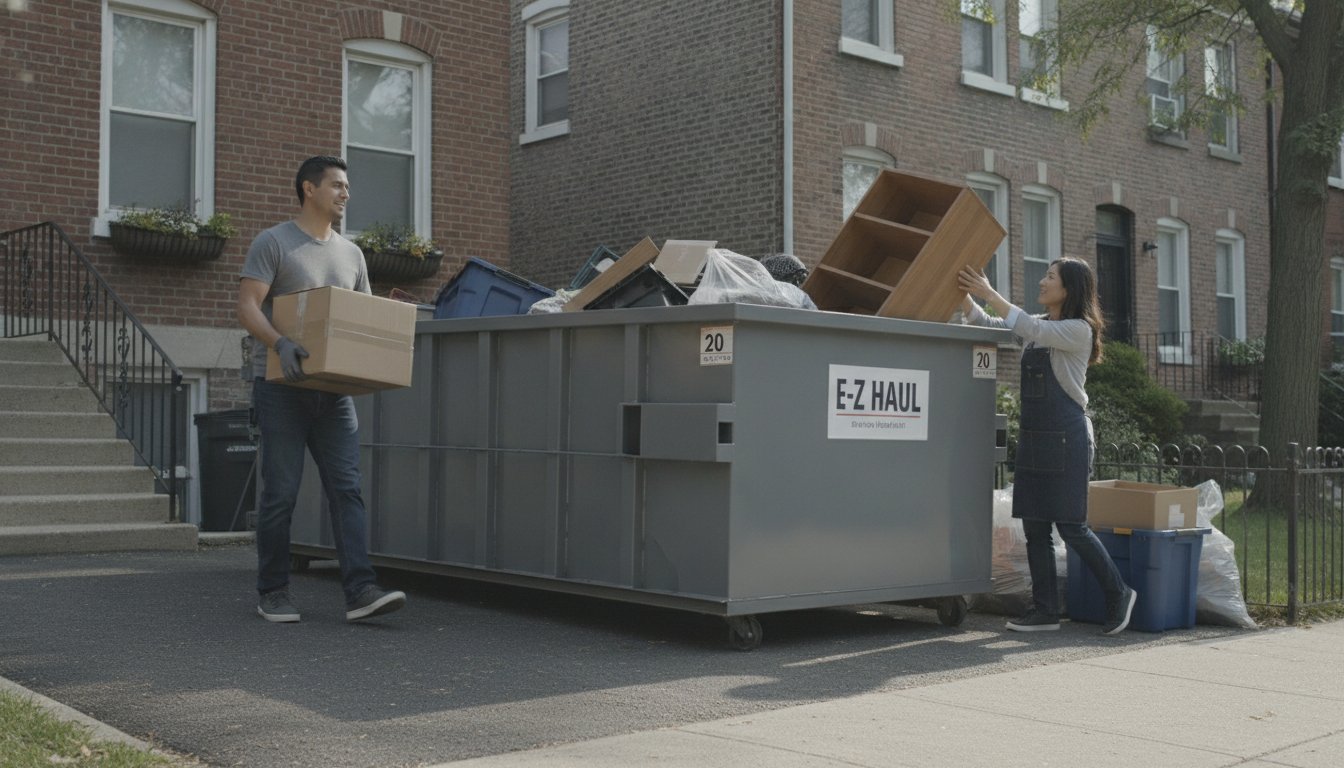
The success of your basement cleanout depends less on your energy levels and more on your disposal strategy. Selecting the right dumpster for basement decluttering project needs is the difference between a productive weekend and a month of physical exhaustion. You're likely tired of staring at years of accumulated boxes and heavy furniture while worrying about hidden fees. Handling municipal permit requirements in tight city spaces shouldn't stall your progress.
Use our professional step-by-step strategy to select the right dumpster size and execute your basement cleanout efficiently. This guide details the logistics of choosing between 10, 20, 30, or 40 yard dumpsters and managing prohibited items so you can reach a state of resolution with minimal stress. Follow our roadmap for a transparent rental process that prioritizes pricing integrity and punctuality. Move from a state of clutter to a state of resolution with minimal cognitive load.
Key Takeaways
- Select the optimal dumpster size by choosing a 10-yard container for standard debris or a 20-yard model for heavy furniture and workshop equipment.
- Streamline your dumpster for basement decluttering project by establishing a staging area near the exit before the roll-off container arrives on-site.
- Identify the shortest path from your basement bulkhead or stairs to the driveway to minimize physical strain and speed up the loading process.
- Check for overhead obstructions like low-hanging branches or power lines to ensure a safe and precise delivery in tight residential spaces.
- Utilize digital booking tools to secure transparent, fixed-price rentals that eliminate the risk of hidden fees and logistical delays.
Why a Roll-Off Dumpster is Essential for Basement Decluttering
Basements serve as the final destination for items that no longer have a place in your daily life. Over time, this leads to an accumulation of high-density waste that quickly exceeds the capacity of standard residential trash limits. Attempting to clear these spaces using weekly curbside pickup is inefficient and often impossible due to volume restrictions. Roll-off dumpsters provide the heavy-duty capacity required to manage these loads in a single operation. By placing a container directly on your property, you create a central hub for all debris. This setup eliminates the need for multiple, time-consuming trips to a local landfill or transfer station.
Efficiency is the core benefit of using a professional waste management solution. A dedicated dumpster for basement decluttering project allows you to work at a pace that suits your schedule. You aren't rushing to beat a junk removal crew's hourly rate. Instead, you can take several days to sort through sentimental items while knowing the disposal solution is ready when you are. Professional services also ensure that heavy basement items, such as old appliances or bulky workshop benches, are handled correctly according to local disposal regulations. This removes the logistical stress of figuring out where to take specific materials.
The "One and Done" Advantage
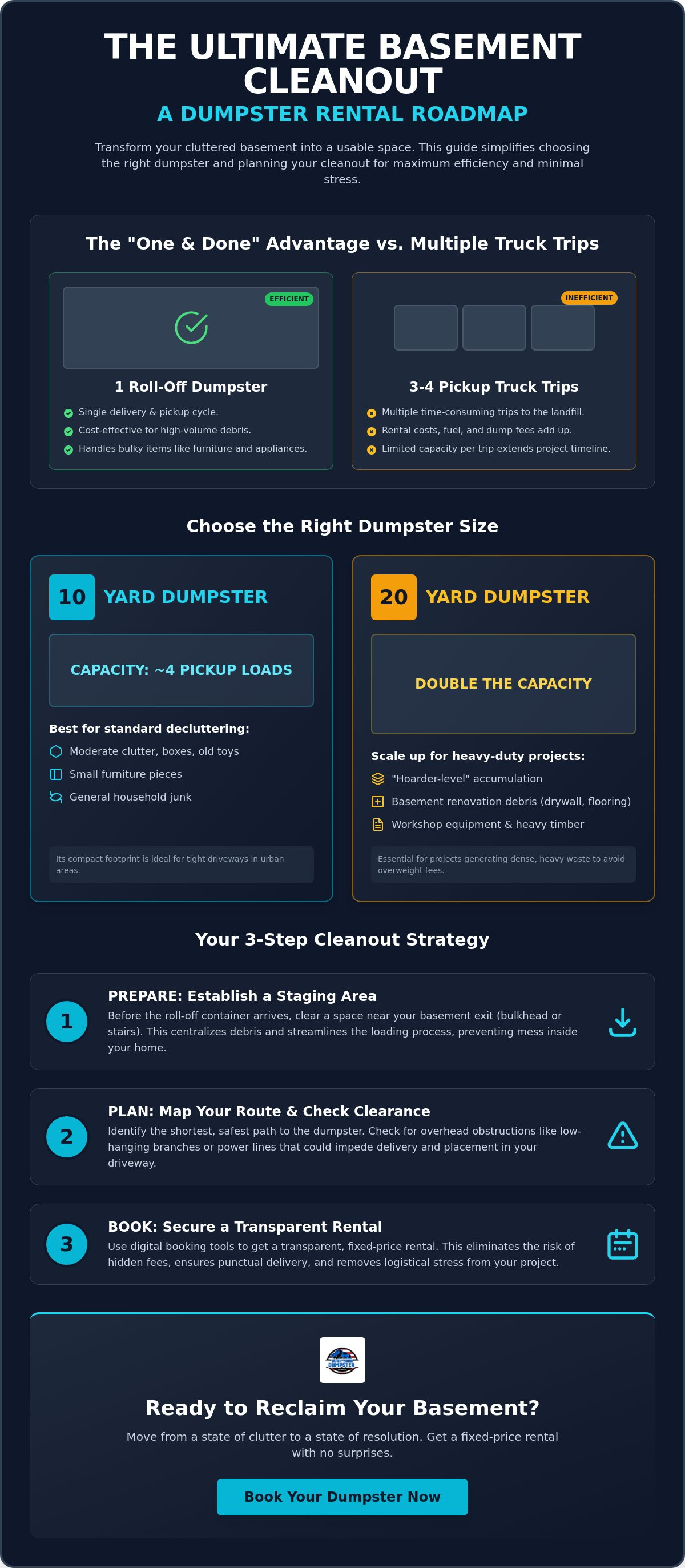
Managing a cleanout via a single delivery and pickup cycle significantly reduces your project timeline. Contrast this with the logistical nightmare of multiple truck rentals. Renting a pickup truck requires you to drive to the rental center, load the vehicle, drive to the dump, wait in line, unload, and repeat the process. This cycle drains your time and budget. Choosing a 10 yard dumpster rental is often more cost-effective than three or four truck rental cycles. Beyond the math, there is an immediate mental relief in seeing the junk leave your property instantly. Once the truck pulls away, the project is officially finished. You don't have to worry about lingering piles on the curb.
Handling High-Volume Basement Debris
Basements typically contain a mix of materials that are difficult to bag or bundle. You'll likely find old furniture, water-damaged boxes, and outdated electronics that have sat untouched for years. A dumpster for basement decluttering project provides a safe way to dispose of these items without cluttering your hallways or lawn. Keeping your walkways clear during the decluttering process is a vital safety measure. It prevents trip hazards while you carry heavy loads up stairs or through narrow corridors. For most residential cleanouts, a 10-yard unit serves as the reliable baseline. It handles approximately three pickup truck loads of debris, which is sufficient for most standard basement sizes.
Choosing the Right Size: 10-Yard vs. 20-Yard Dumpsters
Selecting the correct container size prevents the logistical headache of a half-finished cleanout or an overfilled bin. For most residential properties, the choice narrows down to two primary options. The 10-yard dumpster stands as the most popular selection for a standard dumpster for basement decluttering project. It balances capacity with a manageable footprint. However, basements often hide high-density materials like old concrete, heavy timber, or dense workshop equipment. These items consume weight limits faster than they fill physical space. One 10-yard dumpster holds roughly four pickup truck loads of debris, providing ample room for typical household accumulation. If your inventory includes heavy renovation waste, monitor your weight limit closely to avoid overweight fees, which typically range from $40 to $200 per extra ton depending on local landfill rates.
When to Choose a 10-Yard Dumpster
Pick the 10-yard unit if your basement contains moderate clutter. This includes standard boxes, old toys, small furniture pieces, and general household junk. Its compact footprint makes it the ideal solution for properties with tight driveways, a common challenge in dense urban areas like Queens or San Francisco. You can place it precisely where you need it without blocking sidewalk access or requiring complex street permits. This size serves as the primary service for Book Your Dumpster USA, offering a streamlined disposal path for the average homeowner. If you aren't dealing with structural debris or a massive volume of large appliances, this is your most efficient starting point.
When to Scale Up to a 20-Yard Container
Scale up to a 20-yard container for "hoarder-level" accumulation or projects involving basement renovation debris. If you're tearing out drywall, ripping up old flooring, or disposing of large appliances like old washers, dryers, and furnaces, the extra volume is mandatory. A 20-yard unit holds approximately 3 to 4 tons of debris, equivalent to about six pickup truck loads. Consider the height difference during your planning. Higher walls provide more volume but require more effort to lift heavy items over the side. Use the rear swing door to walk heavy furniture directly into the container rather than lifting. For larger projects, you can schedule a 20-yard rental online to ensure you have the necessary capacity for high-volume basement debris without needing a second delivery.
Step-by-Step: How to Declutter Your Basement with a Dumpster
Coordinate your schedule with the container arrival to maximize your rental period. Arrange for the dumpster delivery on the morning of your heaviest work day. This ensures you aren't wasting rental time on preparation that could have been completed earlier. Before the truck arrives, clear a staging area near the basement exit. This space acts as a temporary holding zone, allowing you to move items out of the basement quickly without waiting for the unit to be positioned in the driveway.
Execute a "bottom-up" sorting method to maintain your momentum throughout the day. Start with the items located furthest from the stairs or bulkhead. By clearing the back of the basement first, you create a clear path for larger items later in the project. This prevents the "dead-end" effect where you're trapped behind piles of junk you've already moved. Using a dumpster for basement decluttering project effectively requires a systematic approach to every square foot of the space.
The Staging and Sorting Phase
Establish three distinct zones for your inventory: Dumpster, Donate, and Dangerous (prohibited items). The "Dangerous" category is critical for safety and municipal compliance. Never place chemicals, wet paint, or flammable materials in your roll-off container. For items destined for the dumpster, break down large objects like tables, wooden shelving units, and old cabinetry before they reach the bin. Reducing the volume of individual items allows you to fit more into the container, protecting you from the need for a second rental.
Efficient Loading Techniques
Strategic loading is the key to maximizing the value of your dumpster for basement decluttering project. Place flat, heavy items at the very bottom of the dumpster first. This includes old tabletops, plywood, or flattened cardboard boxes. Once the base is set, fill the gaps with smaller bags of trash or loose debris to eliminate air pockets. This "Tetris-style" approach ensures you use every cubic yard of space you've purchased.
Monitor the height of the debris as the bin fills. Ensure the load remains level across the top of the container. Avoid "mountain-topping," where the waste piles higher than the side walls in the center. Drivers cannot safely transport a dumpster with debris protruding above the rim; they may refuse pickup until you level the load. This leads to unnecessary delays and potential fees. Finish the project by securing the rear door and confirming your pickup time through the online portal.
Logistics: Placement and Access for Basement Projects
Identify the shortest path from your basement exit to the dumpster location before the delivery truck arrives. Whether you're using a bulkhead door or internal stairs, every extra foot of travel increases physical fatigue. Position the container as close to the exit as possible while maintaining enough clearance for the delivery vehicle. A well-placed dumpster for basement decluttering project reduces the time spent hauling heavy debris and keeps the work area organized. Don't underestimate the impact of an efficient path on your project timeline.
Inspect the delivery site for overhead obstructions. Low-hanging tree branches or power lines can prevent a driver from safely extending the roll-off hoist. If your driveway is made of asphalt or pavers, protect the surface with plywood boards. This simple step prevents the weight of the steel bin from causing cracks or indentations. Clear all vehicles and obstacles from the delivery zone to ensure the driver has a straight path for placement. It's better to prepare the site in advance than to face a failed delivery attempt.
Navigating Bulkheads and Basement Stairs
Bulkhead doors and narrow stairs present unique challenges for moving heavy items. Use temporary ramps or heavy-duty dollies to move furniture and appliances from the basement floor to the driveway. Ensure the entire path is well-lit and the surfaces are dry to prevent slips. Safety is your first priority. Always use two people for heavy items like old sofas or workbenches to avoid injury. Breaking down large items into smaller pieces before moving them upstairs is a more efficient use of your energy. This strategy also helps you maximize the space inside your dumpster for basement decluttering project.
Local Permits in NY, NJ, and MA
Local permit requirements vary significantly by region. Cities like New York and San Francisco often require street permits if the container cannot fit in a private driveway. According to current data, these permits can cost between $10 and $200 depending on local regulations. Reference our dumpster rental prices guide to understand how these fees influence your total project cost. Check your local municipal website or ask your provider about permit filings before the delivery date. To secure your equipment and manage these logistics seamlessly, schedule your dumpster rental online today.
Book Your Basement Dumpster with Confidence
Transitioning from a cluttered basement to a functional space requires a partner who values your time and budget. Book Your Dumpster USA provides a functional, digital-first approach to waste management. We understand that a dumpster for basement decluttering project is a tool for progress. Our system removes the friction of traditional rental processes by offering transparent pricing from the start. You won't face hidden fees or surprise surcharges when your project concludes. Our fleet serves residential and commercial needs across New York, New Jersey, Illinois, and Massachusetts with a focus on reliability and pricing integrity.
Logistical stress often stems from uncertainty about equipment and timing. We eliminate this by offering expert support to help you choose between 10, 20, 30, or 40-yard sizes. If you're unsure about the density of your basement debris, our team provides clear guidance based on thousands of successful residential cleanouts. We prioritize straightforward communication, ensuring you know exactly when your container will arrive and how much it will cost. This professional approach builds immediate trust for a service that is inherently labor-intensive.
The Book Your Dumpster USA Advantage
The 10-yard dumpster remains our flagship residential solution. It fits comfortably in standard driveways while providing enough volume for most basement projects. Our drivers prioritize punctuality and professional placement. They ensure the bin sits exactly where you need it to minimize hauling distances from your bulkhead or stairs. For a broader look at logistical planning and waste categories, read our Roll Off Dumpster Rental: The Complete Guide. We maintain a serious, accessible demeanor that respects your urgency and project goals.
Ready to Start Your Cleanout?
Don't let basement clutter win; reclaim your space today. Our streamlined online booking tool at bookyourdumpster.com allows you to schedule your delivery in minutes. We offer same-day or next-day availability in key service areas like Queens and Chicago to keep your momentum high. Select your size, choose your dates, and let us handle the logistics of your dumpster for basement decluttering project. Move from a state of clutter to a state of resolution with a high-functioning tool designed for efficiency. Experience the honesty and simplicity of a modernized waste management partner.
Finalize Your Basement Cleanout Strategy
You now have a professional roadmap to navigate sizing, logistics, and efficient loading. Selecting the right dumpster for basement decluttering project needs is the final step in reclaiming your home's square footage. We specialize in 10-yard containers designed specifically for tight urban driveways. Our team completed over 1,000 residential cleanouts in 2025; we understand the unique challenges of below-grade projects. Our transparent, no-hidden-fee pricing model ensures your project stays on budget without any logistical surprises or technical delays.
Stop letting accumulated junk dictate the use of your home. Use our streamlined digital platform to secure your equipment and schedule a delivery that fits your timeline. Reclaim your space with a partner that prioritizes punctuality and pricing integrity. You're ready to clear the clutter and start your next renovation project with total confidence. Take the first step toward a clear, organized basement today.
Book Your 10-Yard Basement Dumpster Online Now
Frequently Asked Questions
What size dumpster do I need for a standard basement cleanout?
A 10-yard dumpster for basement decluttering project needs is the most efficient choice for approximately 70% of residential cleanouts. It holds about three pickup truck loads of debris, which is sufficient for most standard basement volumes. If your inventory includes multiple large appliances or heavy structural materials, opt for a 20-yard container. This ensures you have the necessary capacity to finish the project without needing a second rental.
Can I put old basement appliances like a dehumidifier in the dumpster?
You cannot place appliances containing refrigerants, such as dehumidifiers or old refrigerators, in a roll-off container. These items require specialized disposal due to environmental regulations. Most local municipalities offer dedicated recycling programs for freon-containing units. Always check with your rental provider before loading any appliance to avoid fines that can reach $500 for prohibited materials. Removing these items properly protects the environment and your project budget.
How much does it cost to rent a dumpster for a basement project?
Pricing for a dumpster for basement decluttering project depends on the container size, debris weight, and your specific location. Factors such as local landfill tipping fees and regional fuel costs influence the final rate. Use an online booking tool to receive a transparent, fixed-price quote. This ensures you understand the included weight limits and rental duration before the equipment arrives on your property.
Do I need a permit for a dumpster in San Francisco or New York City?
Street placement in dense urban areas like San Francisco or New York City typically requires a municipal permit. These permits ensure the container doesn't obstruct traffic or emergency access. If you can place the dumpster entirely on your private driveway, you generally avoid these fees and administrative requirements. Always verify local regulations through your city department of public works before scheduling your delivery to avoid project delays.
How long can I keep the dumpster for my decluttering project?
Standard rental periods usually range from seven to 14 days. This duration provides ample time to sort through items and load the container at your own pace. If you finish your project early, you can schedule a pickup through the digital portal to clear your driveway. Extension options are often available if the scope of your cleanout increases during the work. Manage your timeline effectively to maximize the value of your rental.
What items are prohibited from being thrown in a basement dumpster?
Prohibited items include hazardous materials, wet paint, tires, mattresses, and lithium-ion batteries. These materials pose fire risks or environmental hazards at landfills and transfer stations. Disposing of these items in a standard roll-off container often results in significant fines. Separate these materials and contact your local waste management office for information on hazardous waste collection days in your community. Keeping these items out of the bin ensures a smooth pickup.
Will a dumpster damage my driveway during a basement project?
Heavy steel containers can cause surface indentations or scratches on asphalt and pavers. Prevent this damage by placing three-quarter-inch plywood boards on the driveway before the delivery truck arrives. These boards distribute the weight of the dumpster and the debris more evenly across the surface. This simple precaution protects your property investment while allowing for convenient container placement near your basement exit. It's a professional standard for any residential project.
Is it better to hire a junk removal service or rent a dumpster for a basement?
Renting a container is the superior choice for homeowners who need time to sort through years of accumulation. Junk removal services typically charge by the hour or by the fraction of the truck filled, which adds financial pressure to work quickly. A roll-off container provides a central hub for debris, allowing you to manage the labor at your own pace while maintaining a lower total project cost. You retain complete control over the process.


