
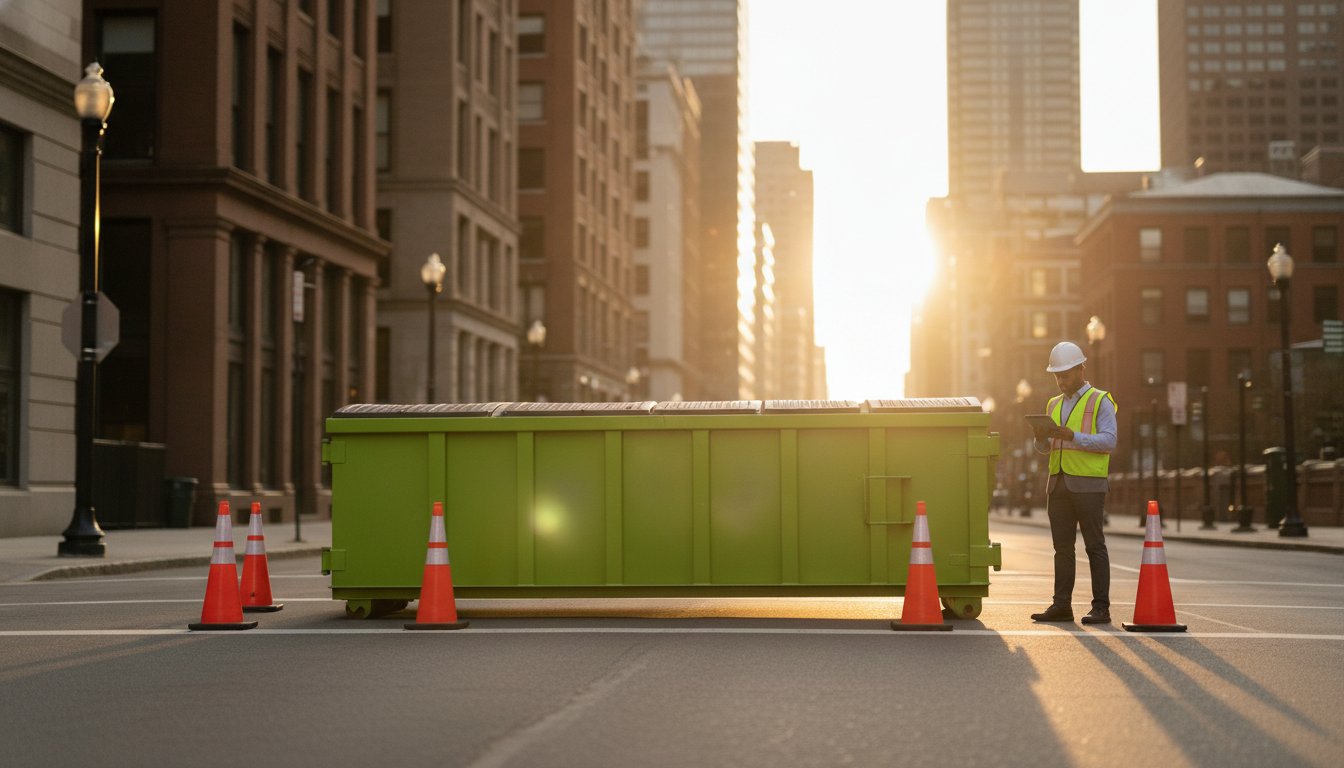
Did you know that in cities like San Francisco, proposed legislation could increase fines for repeat commercial dumping violations to as much as $15,000 per occurrence? Failing to understand dumpster placement on street regulations can turn a standard residential cleanup or construction project into a massive financial liability. Whether you're operating in the busy streets of Chicago or the residential blocks of Queens, ignoring local municipal codes leads to immediate project shutdowns and neighbor complaints. It isn't just about finding a spot for the container; it's about executing a regulated logistical operation that protects you from heavy city penalties.
We understand that handling logistics is the most stressful part of any cleanup. You want to focus on the work at hand, not spend your day decoding Department of Transportation permit schedules or worrying about a surprise inspection. This guide provides a direct, professional path to total compliance. You'll learn how to navigate the permit process, estimate your timelines, and implement mandatory safety standards. We'll provide the specific requirements for major regions like New York, New Jersey, and Massachusetts so you can keep your project on schedule. Follow these steps to ensure a legal delivery and protect your bottom line.
Key Takeaways
- Identify the public right-of-way boundaries to determine if your project requires specific municipal authorization.
- Follow a structured five-step process to secure Temporary Occupancy or Street Use permits from the correct city departments.
- Maintain mandatory safety clearances from fire hydrants and crosswalks to ensure emergency vehicle access and public safety.
- Master the dumpster placement on street regulations to avoid heavy daily fines and prevent project shutdowns.
- Learn how to select the optimal container size and follow loading rules to remain compliant with local road safety laws.
Understanding Local Street Placement Laws and the Right-of-Way
Before you schedule a delivery, you must identify where your property ends and the city's territory begins. The public right-of-way is the land reserved for transportation, utilities, and public passage. This includes the asphalt of the street, the concrete of the sidewalk, and the planting strips or "verges" in between. Cities enforce strict dumpster placement on street regulations to protect this vital infrastructure. Heavy steel containers can damage aging pavement or crush underground utility lines if they are positioned incorrectly or left for too long.
Safety is the primary driver for these municipal laws. Local governments must keep lanes clear for fire trucks, ambulances, and school buses. They also need to ensure that sightlines at intersections remain unobstructed for drivers and cyclists. If your project requires using public space, you are essentially renting a piece of the city's infrastructure. This is why a permit is almost always mandatory for street placement. Ignoring these boundaries leads to immediate citations and can result in the city towing the container at your expense.
Street vs. Private Property: Where the Law Changes
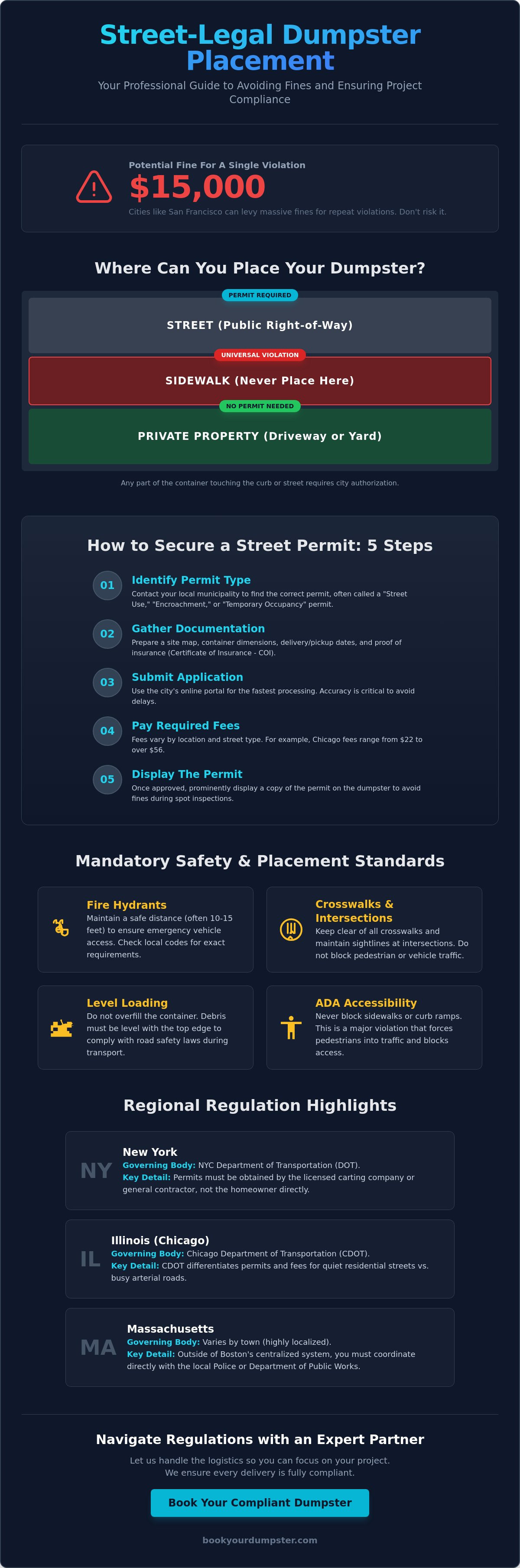
Place your dumpster on a private driveway or a flat patch of your own yard to avoid most permit requirements. Once the equipment touches the curb line, the legal landscape shifts. Most inspectors define the property line at the sidewalk edge closest to your home. Don't assume the area between the sidewalk and the street belongs to you. It's almost always public land. Never place a dumpster on a sidewalk. It's a universal violation in major cities because it forces pedestrians into traffic and violates ADA accessibility laws. Keep the container entirely behind your property line to stay exempt from street-use fees.
Regional Highlights: NY, IL, and MA Regulations
Compliance looks different depending on your zip code. In New York City, the Department of Transportation (DOT) governs all street-side containers. The permit must be obtained by the licensed carting company or the general contractor. In Chicago, the Department of Transportation (CDOT) handles "Public Way Use" permits. They distinguish between quiet residential side streets and busy arterial roads, applying higher scrutiny and different fee structures for the latter.
In New Jersey, regulations are highly localized. While the state DOT manages highways, individual municipalities like Newark or Jersey City set their own street occupancy rules. Massachusetts presents a similar challenge because many towns have individual bylaws. While Boston has a centralized system, smaller towns often require you to coordinate directly with the local police or Department of Public Works to ensure your dumpster placement on street regulations are met. Always verify the specific governing body in your town before the truck arrives.
How to Secure a Street Placement Permit: A 5-Step Process
Securing a permit is a linear, administrative task. Don't treat it as a suggestion. Most municipalities require you to follow a specific sequence to gain legal access to the curb. First, identify the permit type. Depending on your location, this is usually called a Street Use, Encroachment, or Temporary Occupancy permit. Second, gather your documentation. You'll need a site map, the dumpster's dimensions, and insurance proof. Third, submit the application. Use the city's online portal for the fastest response. Fourth, pay the required fees. In Chicago, for example, application fees for residential streets are $22.60, while arterial streets cost $56.51. Finally, display the permit. Tape a copy to the container or keep it with the project manager to avoid immediate fines during a spot check.
If you're unsure about the local permit requirements for your neighborhood, contact our team to discuss your project logistics. Following dumpster placement on street regulations ensures your project continues without a forced shutdown by city inspectors.
Essential Documentation for Your Application
Accuracy prevents delays. Create a basic site plan that shows exactly where the container will sit. Mark the distance from the nearest intersection and any nearby fire hydrants. If you're a contractor in cities like New York or Boston, you must provide a Certificate of Insurance (COI) that names the city as an additionally insured party. Always provide exact delivery and pickup dates. Most permits are date-specific. If the dumpster remains on the street after the permit expires, you'll face daily penalties that often exceed the original permit cost.
Timeline and Cost Expectations
Timing is critical for project scheduling. Processing times vary by region. While some smaller towns in New Jersey issue permits in 24 hours, the NYC DOT or San Francisco's Public Works department often require 3 to 7 business days for approval. Costs are equally variable. In New York City, expect to pay between $75 and $150. In Massachusetts, town-specific fees often range from $50 to $100. Factors like street type and the presence of parking meters will drive these costs higher. For a more detailed breakdown of project expenses, check our guide on dumpster rental prices in major markets.
Mandatory Safety and Placement Standards
Safety standards exist to prevent accidents and ensure city services remain uninterrupted. When you place a heavy steel container on a public road in high-traffic areas like Manhattan or downtown Chicago, you're responsible for the safety of every driver and pedestrian who passes it. Adhering to dumpster placement on street regulations means more than just having a valid permit. It requires active hazard management. If a container obscures a driver's view at a busy intersection or blocks a hydrant, the city will issue a citation immediately, regardless of your permit status.
Strict distance requirements are the foundation of legal placement across all our service areas. Maintain a minimum of 15 feet of clearance from any fire hydrant. This ensures fire departments in cities like Boston or San Francisco have enough room to connect hoses and operate equipment during an emergency. You must also stay at least 20 feet away from crosswalks and 5 feet from private driveways. In New York City, you're required to maintain a clear path on the sidewalk to comply with ADA accessibility standards and local pedestrian flow laws. Never block the "public way" in a manner that prevents garbage trucks or emergency vehicles from passing. If a standard fire engine cannot get through the remaining street width, your dumpster is a legal liability.
Traffic Control and Visibility Equipment
Your dumpster must be visible at all times, especially after dark in urban environments. Place orange traffic cones at the leading and trailing edges of the container to alert oncoming traffic. Many high-traffic districts in Illinois and New York require yellow flashing barricade lights for overnight placement. Don't rely on the dumpster's paint color for visibility. Use high-visibility reflective tape along the sides and corners. This simple step prevents collisions and protects you from liability if a motorist strikes the container at night.
Protecting Public Infrastructure
The weight of a loaded roll-off dumpster can easily crack asphalt or damage decorative brickwork in historic neighborhoods. Use 2x4 boards or sheets of plywood under the wheels to distribute the load. This prevents the steel rollers from sinking into the pavement during hot weather or heavy rain. Avoid placing the unit over manhole covers, water valves, or storm drains. Blocking these access points can lead to emergency project shutdowns if city crews need to reach underground utilities. Finally, check your local street sweeping schedule in cities like San Francisco or Chicago. Blocking a sweeper often results in an additional fine that isn't covered by your standard placement permit.
Avoiding Common Fines and Compliance Violations
Financial penalties for non-compliance can quickly exceed the total cost of your project. Placing a dumpster without a permit is the most frequent cause of municipal citations. These fines often start at $50 and can exceed $500 per day depending on your city's fee schedule. In Denver, for example, a first offense for illegal placement or dumping costs $150, while a third offense reaches $999. To stay compliant with dumpster placement on street regulations, you must also respect local zoning prohibitions. Never block bus stops, bike lanes, or handicap ramps. These violations are classified as high-priority safety hazards and often lead to the city towing the container at your expense.
Strictly follow the "top-off" rule. Overfilling a container violates road safety laws because loose debris can fly out during transport. Most haulers will refuse to pick up a container loaded past the rim. This results in a "dry run" fee and forces the dumpster to remain on the street longer than planned. If this causes you to exceed your permit window, you'll face additional daily overage penalties from the city. Schedule your pickup at least 48 hours before your permit expires to ensure the equipment is gone before the legal deadline.
What to Do if You Get a Citation
Act immediately if an inspector leaves a tag on your container. Rectify the physical placement or secure the missing permit within hours to stop recurring daily fines. Contact the issuing department, such as the DOT or Public Works, to request a brief grace period for relocation. The cost of a standard permit is a fraction of the potential penalties. In California, proposed legislation like SB 1230 suggests fines up to $15,000 for repeat commercial dumping violations. Compliance is always the cheaper option.
Neighbor Relations and Noise Ordinances
Manage your local environment to prevent unnecessary inspections. Notify your neighbors before the truck arrives to avoid complaints regarding blocked street parking or obscured views. Respect local noise ordinances by scheduling all deliveries and pickups between the standard window of 7 AM and 7 PM. This courtesy reduces the likelihood of "blocked access" reports that trigger city code enforcement visits. For more advice on managing your project site without the stress, read our residential dumpster rental tips.
Avoid the risk of municipal fines and project delays. Book your street-legal dumpster now to ensure a compliant delivery that follows every local code.
Booking Your Street-Legal Dumpster with Book Your Dumpster USA
Navigating the permit process is only half the battle. You also need a rental partner who understands the physical constraints of urban environments. We specialize in providing equipment that meets dumpster placement on street regulations without creating unnecessary logistical friction. Our team doesn't just drop a container and leave. We provide active placement advice in major markets, including New York, New Jersey, Illinois, Massachusetts, and San Francisco. We know the difference between a residential side street in Chicago and a narrow arterial road in Boston. This local expertise ensures your container sits exactly where the law allows.
Our drivers are the backbone of our compliance strategy. Every operator is trained on local DOT standards regarding visibility and safety clearances. When our truck arrives, the driver evaluates the site plan you submitted for your permit. If a parked car or a new utility marking creates a conflict, they work with you to find the safest, most compliant alternative. We prioritize precision because we know that a few inches of encroachment into a bike lane can result in an immediate city citation.
The 10-Yard Advantage for Urban Projects
Selecting the right size is the most effective way to simplify your street placement. While we offer 20, 30, and 40-yard options, our 10-yard dumpster is the "Goldilocks" choice for tight city spaces. It features a compact footprint that fits into a standard parking stall with ease. This small profile reduces the risk of blocking traffic and makes it much easier to maintain the mandatory 20-foot clearance from crosswalks. Additionally, its lower weight profile significantly reduces the risk of cracking older asphalt or damaging decorative streetscapes. See why the 10-yard dumpster is perfect for your project before you finalize your order.
Ready to Start? Book Online in Minutes
We've modernized the rental process to match the speed of your project. Our online booking system allows you to schedule a delivery that aligns perfectly with your permit dates. There's no need for long phone calls or opaque pricing structures. Simply select your city, choose your container size, and see your transparent rate immediately. We respect your time and your budget. By choosing a partner who respects dumpster placement on street regulations, you eliminate the stress of potential fines and focus entirely on your cleanup or construction goals. Rent your dumpster today and experience a no-nonsense approach to waste management.
Take Control of Your Street Placement
Mastering dumpster placement on street regulations is the difference between a smooth renovation and an expensive legal headache. You now have the tools to identify the public right-of-way, secure the correct municipal permits, and maintain essential safety clearances from hydrants and crosswalks. Compliance isn't just about avoiding fines. It's about ensuring public safety and protecting city infrastructure. By following the five-step permit process and choosing the right container size, you eliminate the risk of surprise inspections or project shutdowns.
We make the process simple by providing transparent pricing with no hidden fees. Our expert drivers understand local DOT standards in NY, NJ, IL, MA, and SF, ensuring your container is placed with total precision. Don't let logistical confusion stall your progress. Secure your street-legal 10-yard dumpster rental today and keep your project moving forward. You've done the hard work of planning. Now take the final step to clear the clutter and finish your project with confidence.
Frequently Asked Questions
Do I need a permit if the dumpster is only there for one day?
Yes, you need a permit for any duration of street placement. Most cities don't distinguish between a few hours and a full day when it comes to the public right-of-way. Any time equipment occupies a public parking space or traffic lane, it requires official authorization. Skipping the permit for a "quick" job is a risk that often results in an immediate citation from municipal inspectors.
How much does a street placement permit cost in NYC or Chicago?
Permit costs vary based on your specific street type and project duration. In Chicago, application fees range from $22.60 for residential areas to $92.63 for the Central Business District. New York City DOT permits typically range from $75 to $150. Remember that these are just the initial application fees. Many cities charge additional daily usage rates or meter fees based on the square footage occupied.
Can I put a dumpster in a "No Parking" zone if I have a permit?
No, a standard permit does not grant you the right to block restricted zones. You must avoid fire lanes, bus stops, and handicap access ramps at all times. If a zone is marked "No Parking" for safety or emergency access, your permit will likely be denied for that specific spot. Placing a container in a prohibited area leads to immediate towing at your own expense.
Will the city provide the traffic cones, or do I need to buy them?
You are responsible for providing all necessary safety equipment. The city issues the legal right to use the space but does not supply the physical markers. You must secure high-visibility orange cones and reflective tape yourself. In high-traffic areas, you may also need to rent battery-operated barricade lights to satisfy dumpster placement on street regulations regarding overnight visibility and driver safety.
What happens if someone parks in the spot I reserved for the dumpster?
You must resolve all parking conflicts before the delivery truck arrives. Most municipalities allow you to post "No Parking" signs 24 to 48 hours in advance once your permit is approved. If a vehicle remains in your reserved space, contact local parking enforcement to have the car ticketed or moved. Our drivers cannot drop a container if the space is obstructed; this usually results in a dry-run fee.
Can a dumpster be placed on a sidewalk if the street is too narrow?
Sidewalk placement is strictly prohibited in almost every major city. Blocking a sidewalk violates ADA accessibility laws and forces pedestrians into the street, creating a significant liability. If your street is too narrow for a standard container, consider a 10-yard dumpster with a compact footprint. Never obstruct the pedestrian path. Doing so triggers heavy fines and immediate demands for equipment removal from city code enforcement.
How far in advance should I apply for a street placement permit?
Apply for your permit at least 5 to 10 business days before your project begins. While some smaller towns offer faster approvals, larger cities like Seattle or San Jose often require a full week to process applications. Early submission ensures your dumpster placement on street regulations are met before the truck arrives. Waiting until the last minute can cause project delays and force you to reschedule your waste pickup.
Do I need a permit for a dumpster on my own driveway?
Usually, you don't need a city permit for placement on private property. As long as the container stays entirely behind your property line and doesn't overhang the sidewalk, you are exempt from municipal street-use fees. However, always check your Homeowners Association (HOA) rules first. Some private communities have their own restrictions on how long a dumpster can remain visible on a driveway before you face internal fines.


