You stand in a living room filled with decades of memories, feeling the weight of every piece of furniture and every box of old photos. It's an emotionally draining task that often leads to family friction and logistical paralysis. You want to honor a legacy, but the sheer volume of items feels impossible to manage without a clear system. Sorting through a lifetime of possessions is hard enough; don't add the stress of multiple, expensive trips to a local landfill to your plate.
Efficiency is the most respectful way to handle a difficult transition. Learn how to organize a structured project by building a family-led plan centered on the right dumpster rental for estate cleanout strategy. This article provides a clear roadmap for assigning family roles, managing logistical hurdles, and selecting the right unit to handle the heavy lifting. Follow these steps to clear the property for sale, minimize hidden costs, and move from a state of clutter to a state of resolution with minimal stress.
Key Takeaways
- Designate a lead coordinator to manage the timeline and logistics to prevent family conflict and keep the project on track.
- Select the most efficient dumpster rental for estate cleanout by matching the unit size to the home’s square footage and the weight of bulky furniture.
- Establish clear "Hard No" criteria for damaged items and create a staging area to separate donations from debris.
- Verify local permit requirements for street placement and use driveway protection to prevent property damage on older estates.
- Align your sorting schedule with delivery and pickup dates to maximize your rental period and avoid unnecessary daily extension fees.
Understanding the Unique Challenges of an Estate Cleanout
Clearing a property after a loss is fundamentally different from a standard residential junk removal project. While a typical cleanout focuses on speed and disposal, a sensitive estate clearing requires a balance of logistical efficiency and emotional care. You aren't just tossing trash; you're sorting through a lifetime of memories, legal documents, and valuable assets. This complexity makes a dumpster rental for estate cleanout the most effective tool for maintaining control over the property's physical state while you manage the personal details.
Estates often contain decades of accumulated items that a standard weekly trash service cannot handle. A roll-off dumpster acts as a dedicated staging area for debris, allowing you to separate the truly unusable items from those destined for an estate sale or donation. It provides a clear, physical boundary between what stays and what goes. This is essential for keeping the project moving forward without the house becoming a staging ground for trash.
The Emotional Logistics of Downsizing
Set realistic expectations from the start. A full estate cleanout rarely happens in a single weekend. Decision fatigue is a real obstacle; after hours of evaluating sentimental items, your ability to make logical choices about larger furniture or kitchenware will decline. This often leads to "item paralysis," where the family stops making progress because the house feels overwhelmed by clutter. Having a designated waste area outside the home prevents this buildup. It allows you to remove the "no" items immediately, clearing physical space and mental bandwidth for the harder decisions.
Volume Assessment: Why Estates Overflow
Most families underestimate the sheer volume of debris found in a long-term residence. Beyond visible furniture and appliances, estates harbor "hidden" debris in attics, basements, garages, and sheds. These secondary storage areas often contain heavy, bulky items like old workbenches, rusted lawn equipment, or forgotten boxes of water-damaged books. Unlike a renovation project that focuses on construction materials, an estate cleanout involves a massive volume of mixed household goods and sentimental items.
Use a 20 yard or 30 yard unit to handle this volume without needing multiple trips to a landfill. This centralized approach keeps the driveway clear and the interior of the home accessible for appraisers or real estate agents. By removing the logistical stress of hauling, you can focus entirely on the family's needs and the property's future. For those ready to begin, you can view sizing options and schedule your delivery at bookyourdumpster.com.
Creating Your Family Cleanout Plan: A Step-by-Step Guide
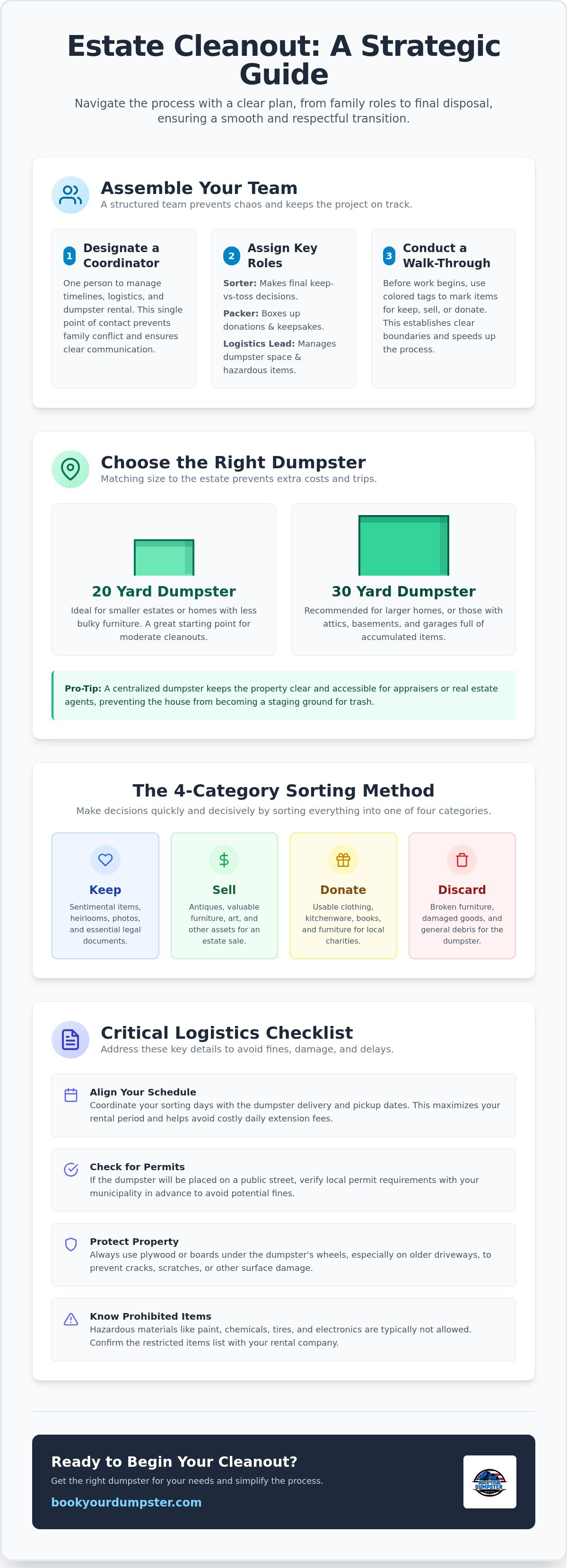
Organization prevents chaos during an emotional transition. Without a structured plan, family members often move the same box multiple times or stall when faced with difficult decisions. Start by designating a single lead coordinator. This person manages the dumpster rental for estate cleanout and serves as the primary point of contact for scheduling and logistics. Having one voice ensures that delivery and pickup dates are clear to everyone and that the project stays on a firm timeline.
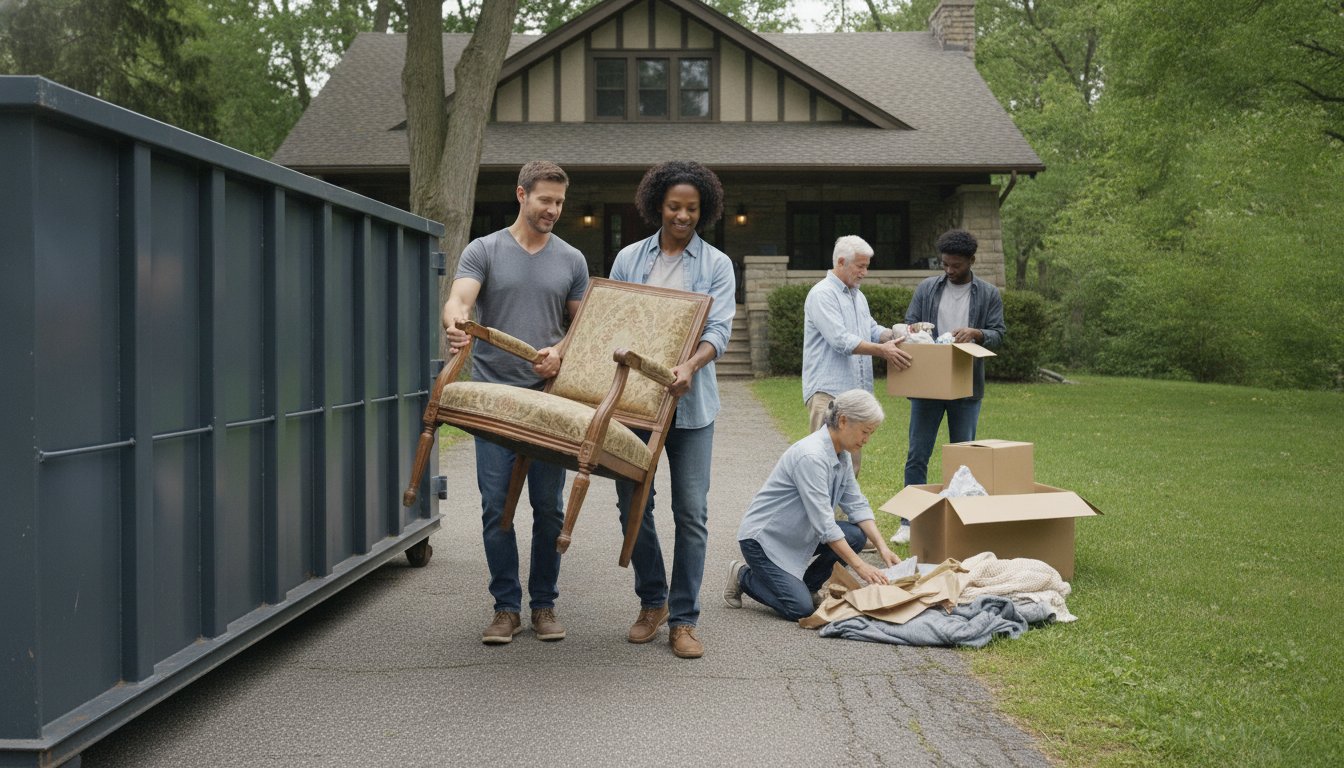
Conduct a mandatory walk-through before the container arrives. Use colored tags or tape to identify every item that must be kept, sold, or donated. This establishes clear boundaries before the heavy lifting begins. Remind everyone that once an item enters the dumpster, it is considered discarded. This sense of finality encourages faster decision-making and prevents "dumpster diving" or second-guessing later in the weekend. Clear communication about what is leaving the house ensures everyone has had their say before the haul-away happens.
Assigning Roles and Responsibilities
Break the work into specific roles to maximize efficiency. Assign a "Sorter" to make the final call on keep-versus-toss items based on your pre-set criteria. Designate a "Packer" to box up donations and keepsakes for transport. Finally, appoint a "Logistics Lead" to manage the dumpster space. This person ensures the family knows how to properly dispose of hazardous materials like old paint or chemicals that cannot go in the bin. If a disagreement arises over a specific item, the Lead Coordinator makes the executive decision to prevent emotional stalemates.
The 48-Hour Cleanout Timeline
A concentrated effort is more effective than dragging the process out for weeks. Follow this high-velocity schedule to maintain momentum:
- Day 1: Focus on heavy lifting. Clear the largest furniture pieces and major appliances first to create working space inside the home. Target high-volume areas like the garage or basement early in the day while energy levels are high.
- Day 2: Perform final sweeps of every closet, cabinet, and drawer. Use this time for detailed sorting of paper and small household goods.
Maintain progress by setting a hard "stop time" for each day. Seeing a room completely emptied provides the psychological boost needed to finish the job. If you are ready to lock in your dates, view local scheduling options to ensure your container arrives exactly when your team is ready to work.
Choosing the Right Dumpster Size for an Estate
Selecting the correct capacity is a critical financial and logistical decision. If you choose a unit that is too small, you'll face the unnecessary expense and delay of a second rental. Match the container volume to the property's square footage and the density of the items. A dumpster rental for estate cleanout must account for the heavy weight of solid wood furniture, which differs significantly from standard household bagged trash. Evaluate your driveway footprint before ordering. Large 40 yard units require significant clearance that narrow suburban lots may not provide.
Starting with a larger size is often the more cost-effective strategy. While a smaller unit has a lower initial price, the cost of a "swap out" (hauling a full dumpster and delivering a fresh one) usually exceeds the price of a single larger container. Avoid the logistical nightmare of a stalled project by choosing a size that provides a 15 to 20 percent buffer for unexpected debris. This is especially important when clearing out attics or basements where items are packed tightly.
10 to 20 Yard Dumpsters: Small Estates and Apartments
These sizes are best for 1 to 2 bedroom apartments or homes where a significant portion of the belongings has already been sold or donated. Use these units for heavy, dense materials that might exceed weight limits in larger containers. Stacks of old books, heavy paper records, and small kitchen appliances are ideal for this range. The 10 yard dumpster rental serves as the baseline for these smaller residential projects. If you're only disposing of a few rooms of furniture and standard household waste, a 20 yard unit is the most versatile choice.
30 to 40 Yard Dumpsters: Full Family Homes
A 30 or 40 yard dumpster is the standard requirement for a 3+ bedroom home with a full attic, basement, or garage. You need this capacity for bulky items like mattresses, sectional sofas, and rolls of old carpeting. These items take up massive amounts of space quickly. Use an efficient loading strategy to maximize the container. Place large, flat items like tabletops or plywood at the bottom. Break down furniture whenever possible and load heavy items toward the front. Fill the remaining gaps with smaller bags of trash to ensure you aren't paying to haul empty air. For large-scale property resolutions, you can view the full specs for these units at bookyourdumpster.com.
Sorting Strategies: Keep, Sell, Donate, and Discard
Establish a staging area outside the primary flow of traffic to separate keepsakes from debris. Use a garage or a specific spare room for items destined for an estate sale or donation. For everything else, rely on your dumpster rental for estate cleanout to remove clutter immediately and permanently. Establish "Hard No" criteria for donations before you start. If furniture has structural damage, stained upholstery, or missing parts, it belongs in the disposal unit. Most charities won't accept outdated mattresses or broken particle-board furniture. Tossing these items early prevents them from taking up valuable staging space inside the home.
Maintain a strict "no-retrieval" policy to ensure the project stays on schedule. Once an item is placed in the container, it stays there. This prevents family members from second-guessing decisions or dragging items back into the house after they've already been processed. It's a psychological boundary that keeps the team focused on the goal. Use the dumpster for broken furniture, stained rugs, and non-recyclable plastics to clear floor space quickly. Seeing the physical volume of the house decrease provides the momentum needed to tackle the more difficult sentimental sorting.
Identifying Prohibited Waste
Estates often contain hidden hazards that require special handling. Do not place paints, solvents, pesticides, pool chemicals, or car batteries in the container. These materials are environmentally sensitive and can lead to significant overweight or hazmat fees. Handle "e-waste" like old tube televisions, monitors, and bulky computers through local municipal electronics recycling programs. Safety during your dumpster rental depends on following local hazardous waste rules to the letter. Check with your local waste authority for specific drop-off locations for these restricted items before you begin your weekend.
The "One-Year Rule" for Estate Items
Apply the "One-Year Rule" to common household goods. If the deceased hadn't used or valued an item in the last year, and no family member has a specific, immediate use for it, it is a candidate for disposal. Managing "guilt-based" keeping is the hardest part of an estate project. Acknowledge that you don't need to keep every knick-knack or kitchen gadget to preserve a loved one's memory. Photograph sentimental objects before discarding the physical item. This preserves the visual memory without the burden of physical storage. It's a pragmatic way to honor the past while clearing the property for its next chapter.
Ready to clear the property? Book your dumpster rental today and take control of your cleanout project.
Navigating Local Logistics and Regulations
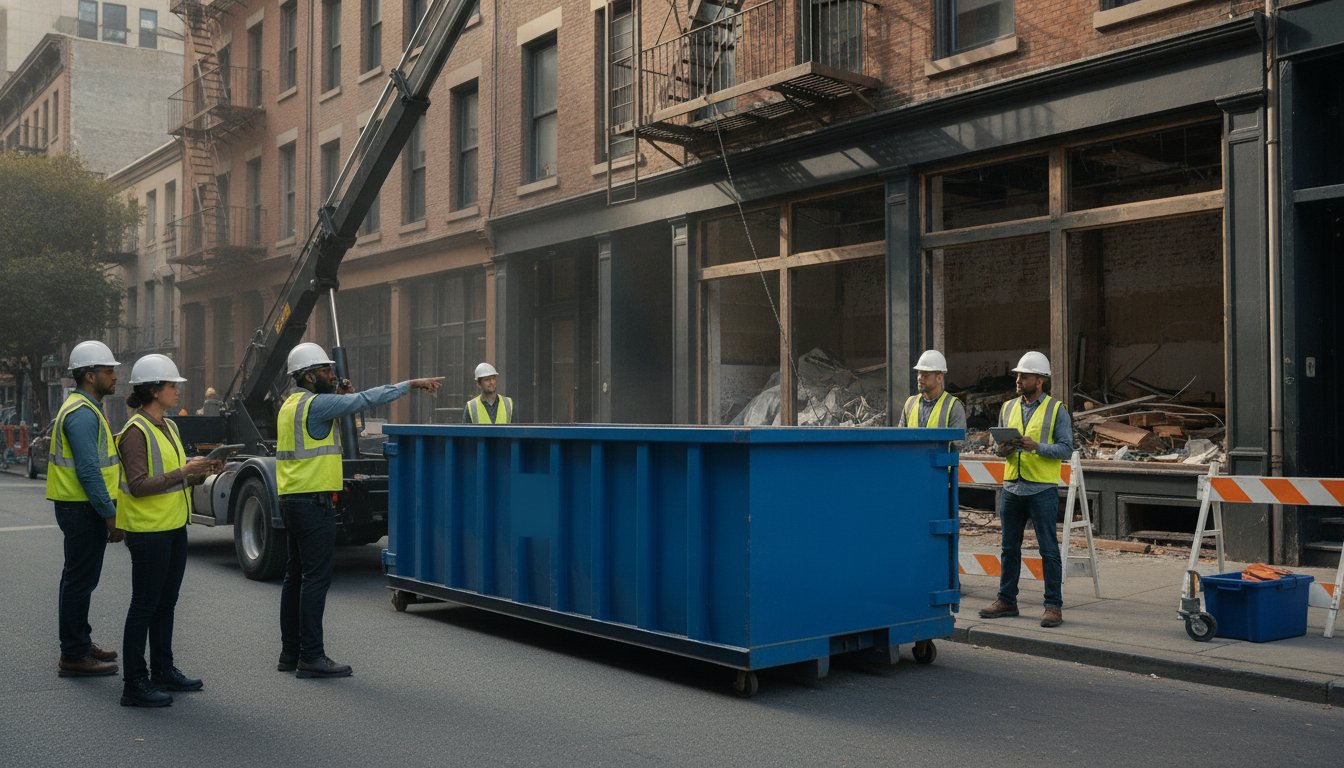
Logistical hurdles can stall a dumpster rental for estate cleanout just as quickly as a family disagreement. Managing a project in a dense urban area requires foresight regarding local ordinances and physical space. For properties in New York or Queens, placing a container on a public street typically requires a permit from the NYC Department of Transportation (DOT). Verify the current 2026 DOT requirements before you schedule your delivery. If the estate lacks a private driveway, you must secure this permit to avoid costly fines or the immediate removal of the unit by city authorities.
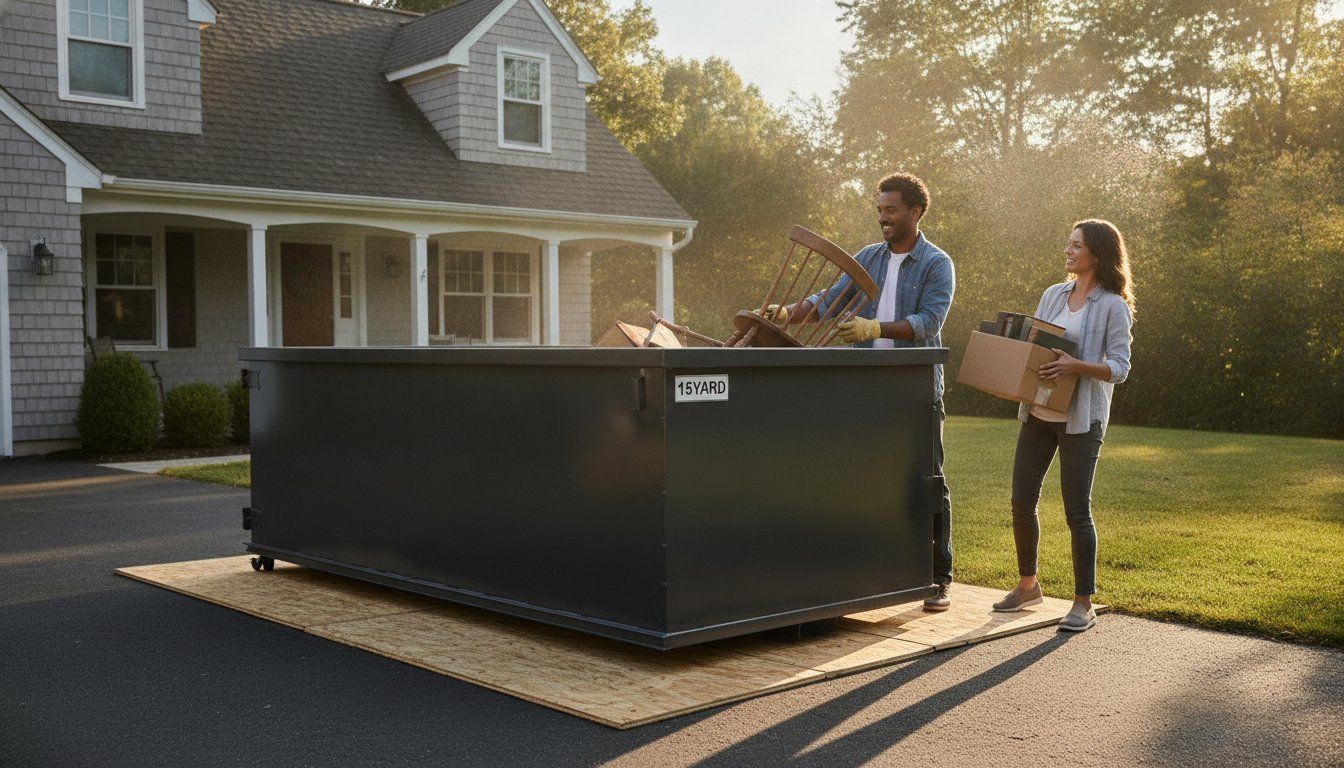
Physical property protection is another critical factor, especially for older estates in Massachusetts or Illinois. Heavy roll-off units can crack aged asphalt or leave ruts in soft soil during the loading process. Use plywood or specialized street pads to buffer the weight of the container and protect the driveway surface. In tight neighborhoods like San Francisco, delivery access is the primary challenge. Clear the street of vehicles and low-hanging branches before the truck arrives. Book Your Dumpster USA simplifies this local booking process by providing transparent logistics and clear communication from the start.
Permits and Street Placement
Determine where the dumpster will sit before you finalize your order. If the container stays on private property, you generally don't need a permit. However, if it occupies any portion of a sidewalk, street, or public right-of-way in cities like San Francisco or Chicago, city intervention is mandatory. Fees for these permits vary by municipality, often ranging from $20 to over $150 depending on the city and the duration of the rental. Secure your permit at least a week in advance to ensure the spot is legal and reserved for your delivery date.
The Professional Advantage: Reliable Delivery
Punctuality isn't just a courtesy; it's a requirement for a successful cleanout. When family members fly in for a specific weekend, every hour of delay costs money and emotional energy. Our online system ensures you get the right size on the right day without the typical industry runaround. This reliability allows you to stick to the 48-hour timeline established earlier in your plan. For a deeper look at managing the technical side of the process, consult our roll off dumpster rental guide. Our focus on pricing integrity and punctuality acts as a verbal handshake, giving you the control you need during a messy and labor-intensive project.
Take Control of the Property Resolution
A successful transition requires more than just physical labor; it requires a logistical anchor. You now have the roadmap to assign family roles, establish a firm 48-hour timeline, and select the container size that prevents expensive mid-project delays. By following these sorting strategies and managing local permit requirements, you protect both the property and your family's peace of mind. A dumpster rental for estate cleanout is the most efficient tool for turning an overwhelming house into a market-ready asset.
We provide reliable service across New York, New Jersey, and Illinois. Our streamlined 24/7 online booking system offers transparent pricing with no hidden fees, ensuring you stay within your budget. Don't let the weight of the project stall your progress any longer. Book your estate cleanout dumpster online today and move toward a state of resolution. You can clear the path forward with confidence and respect for the legacy you're handling.
Frequently Asked Questions
How much does a dumpster rental for an estate cleanout cost?
Total costs are determined by the container size, your geographic location, and the weight of the debris. Most providers offer flat-rate pricing that includes delivery, pickup, and a specific weight allowance. You should account for potential overweight fees if you're disposing of dense materials like solid wood furniture or heavy appliances. Always verify the weight limit of your specific unit before you begin loading to avoid unexpected charges.
What size dumpster is best for a 3-bedroom house cleanout?
A 20 yard or 30 yard unit is usually the most efficient choice for a standard 3-bedroom home. A 20 yard container handles a significant volume of household goods, while a 30 yard unit is better if the estate includes a full garage, basement, or attic. Selecting a slightly larger size prevents the need for a second rental fee if the volume exceeds your initial estimate during a dumpster rental for estate cleanout.
Can I put old furniture and mattresses in the dumpster?
You can place most household furniture and mattresses in the container, including sofas, tables, chairs, and bed frames. However, some municipalities or landfills charge extra per-item fees for mattresses due to specific recycling requirements. Disclose if you plan to dispose of multiple mattresses during the booking process. This ensures your quote is accurate and your disposal stays compliant with local landfill rules.
Do I need to be present when the dumpster is delivered to the estate?
You don't need to be physically present for delivery as long as the drop-off area is clear and accessible. Provide specific instructions during the booking process regarding the exact placement in the driveway. Ensure there are no low-hanging branches, power lines, or parked vehicles blocking the path. Drivers use these instructions to place the unit exactly where your family needs it to begin the project.
How long can I keep the dumpster for a family cleanout project?
Standard rental periods typically range from 7 to 14 days, which is usually sufficient for a focused family cleanout. If the project requires more time, you can request an extension for a daily fee. Coordinate your sorting schedule to align with the delivery date to maximize the use of the container. This ensures the unit is hauled away as soon as the house is clear and ready for sale.
What items are strictly prohibited from estate cleanout dumpsters?
Strictly prohibited items include hazardous materials such as paints, solvents, pesticides, motor oil, and batteries. You must also exclude e-waste like televisions and computers, along with tires and appliances containing freon. Placing these items in a dumpster rental for estate cleanout can result in heavy fines from the landfill. Check your local municipal website for specialized recycling drop-off locations for these restricted materials.
Will the dumpster damage the driveway of the estate property?
Heavy roll-off containers can potentially damage aged asphalt or pavers if they aren't handled correctly. To mitigate this risk, place plywood boards or specialized street pads on the driveway surface before the truck arrives. This distributes the weight of the container more evenly and prevents ruts or cracks. Requesting placement on a flat, solid surface is the most reliable way to protect the property's value.
How do I get a permit for a dumpster in Queens or New York City?
You must obtain a permit from the New York City Department of Transportation (DOT) if the dumpster will sit on a public street or sidewalk. In Queens and other NYC boroughs, this permit ensures the placement is legal and meets safety regulations. If the container stays on private property, such as a driveway, a permit is generally not required. Always verify current 2026 city requirements in your specific region before scheduling your delivery.