
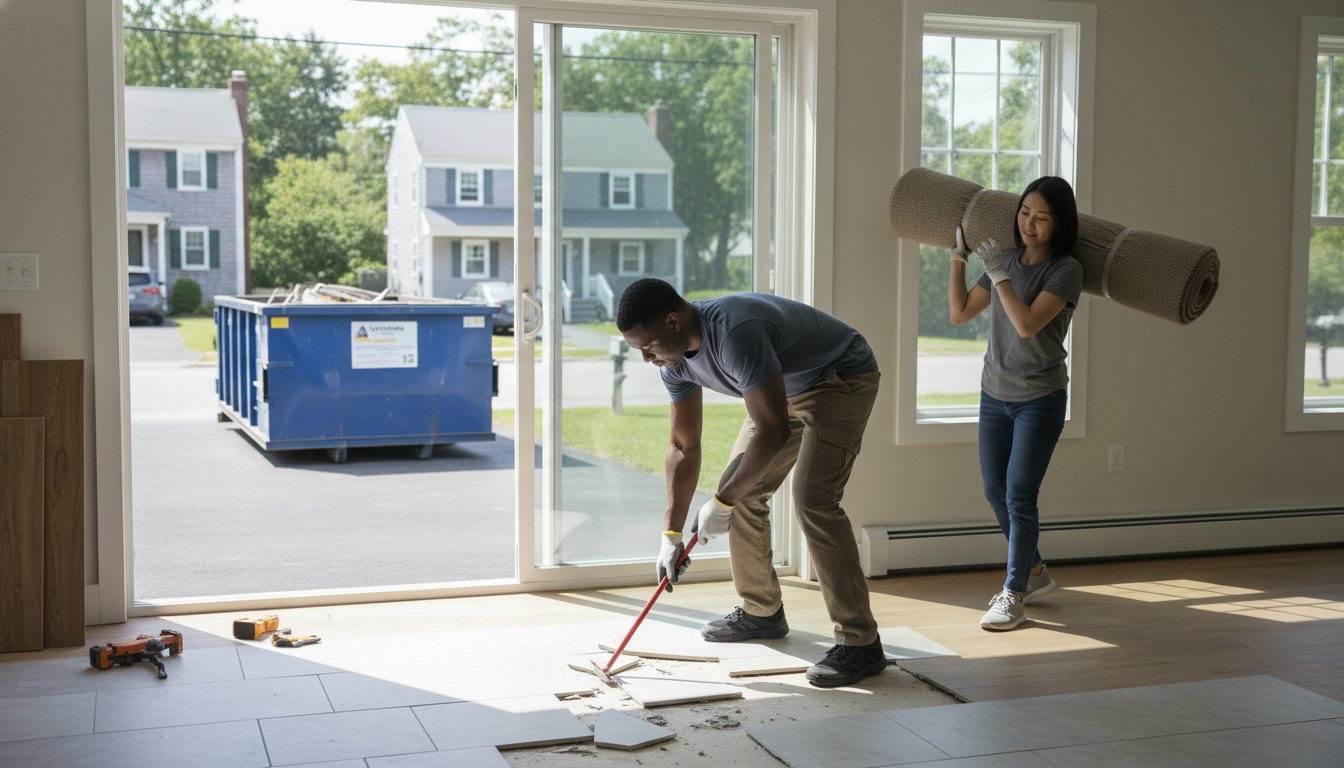
The weight of your old floor will break your budget long before it fills your dumpster. While a pile of carpet might look manageable, a single room of ceramic tile can easily weigh over 1,000 pounds. You need a disposal plan that accounts for material density, not just physical volume, to avoid overage fees that can reach $200 per ton in 2026.
We know you want a clean job site and a container that arrives on time without hidden surcharges. It's frustrating to deal with driveway damage or unexpected costs when you're already focused on a renovation. This guide simplifies your dumpster rental for flooring removal project by showing you how to match your specific materials to the right container. With the national average cost to rent a dumpster sitting at $618 this year, choosing the correct size is the smartest way to save money.
We'll break down the specific weights of hardwood, tile, and carpet so you can select a 10, 20, or 30 yard dumpster with total confidence. You'll also learn how to navigate local permits and schedule your delivery for maximum efficiency. Book your dumpster today and get the logistical side of your flooring project under control.
Key Takeaways
- Account for material weight rather than just volume to avoid hefty overage fees. Heavy tile and hardwood pack more weight into less space than carpet.
- Match your square footage to a 10-yard or 20-yard dumpster to ensure you have enough capacity without paying for unused space.
- Streamline your dumpster rental for flooring removal project by cutting carpet into manageable rolls and removing transitions before you start.
- Check local permit requirements for street placement in cities like NYC or Newark to avoid fines and delivery delays.
- Book your dumpster online to lock in transparent pricing and ensure your container arrives exactly when your project begins.
Why a Dumpster Rental is Essential for Flooring Removal
Standard curbside trash services won't take your renovation waste. Most municipal collectors classify old carpet, hardwood, and tile as construction and demolition (C&D) waste. If you leave a pile of laminate on the curb, it will stay there, potentially resulting in a local fine. A dedicated dumpster rental for flooring removal project is the only way to manage this debris legally and efficiently. It centralizes the mess and prevents sharp fasteners, rusted staples, or old adhesives from scattering across your property.
Renting a container is more cost-effective than DIY hauling. Landfill tipping fees average between $20 and $50 per ton in 2026. When you factor in fuel, your time, and the wear on a personal vehicle, the investment in a professional bin becomes a pragmatic choice. Don't risk multiple trips to a dump site when you can have a professional roll-off delivered directly to your driveway. This approach keeps your project on schedule and your vehicle clean.
The Volume vs. Weight Challenge
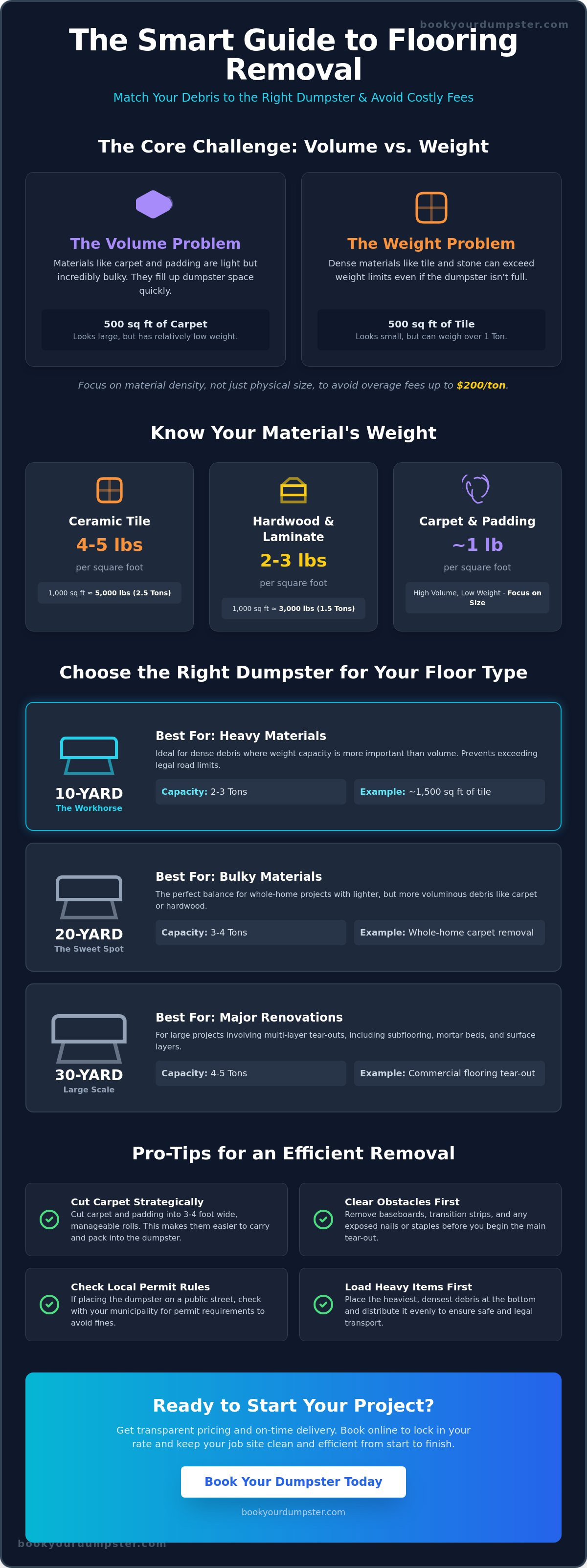
You must distinguish between how much space your debris takes up and how much it actually weighs. For example, 500 square feet of carpet is a volume problem. It's light but bulky once rolled. Conversely, 500 square feet of ceramic tile is a weight problem. Tile can weigh up to 4 pounds per square foot, meaning a single room can easily hit the 1-ton mark. For these heavy materials, 10 yard dumpster rentals are the ideal choice. They provide the necessary weight capacity for dense debris, typically holding 2 to 3 tons, without the wasted space of a larger bin.
Safety and Efficiency on the Job Site
A clear workspace is a safe workspace. Loose planks, shattered tiles, and exposed nails are significant tripping hazards that can cause injury or delay your progress. Using a container ensures that debris moves directly from the floor to the bin. Understanding what a roll-off dumpster is helps you visualize the process; it is a heavy-duty steel box designed for high-capacity waste that stays on-site until you're finished. At Book Your Dumpster USA, we prioritize driveway protection. We use specific placement techniques to ensure your property remains undamaged. This follows a logical sequence: you have the waste, we provide the container, and your job site stays clean from start to finish.
Choosing the Right Dumpster Size for Your Floor Type
Selecting the wrong container size leads to two outcomes: paying for empty space or getting hit with overage fees. For a successful dumpster rental for flooring removal project, you must match the container's cubic yardage to your material's density. Heavy materials like stone or ceramic tile require smaller, sturdier bins to prevent the truck from exceeding legal weight limits. Lighter, bulkier items like carpet require more volume.
The 10-yard dumpster is the workhorse for heavy materials. If you're tearing up approximately 1,500 square feet of ceramic tile, this size is perfect. It provides enough capacity for the weight without the footprint of a massive bin. For whole-home carpet or hardwood replacement, the 20-yard dumpster is the "sweet spot." It offers the volume needed for rolled carpet and padding, which take up significant space but weigh less than masonry products.
Large-scale commercial flooring or projects involving multi-layer tear-outs demand a 30-yard dumpster. These are essential when you're removing subflooring or thick mortar beds along with the surface layer. The 40-yard dumpster is reserved for massive commercial renovations. It's designed for high-volume, low-weight debris where you need to maximize every square inch of space to keep the job site clear.
Material Weight Estimates
Debris weight varies wildly by material type. Ceramic tile is exceptionally heavy, weighing between 4 and 5 pounds per square foot. A 1,000 square foot project results in 5,000 pounds of waste. Hardwood and laminate are lighter, typically averaging 2 to 3 pounds per square foot. While lighter, these materials are often bulkier and don't settle as flat in the bin. Carpet and padding are the highest volume but lowest weight. Following best practices for flooring debris means loading these materials strategically to maximize bin space and ensure safe transport to the disposal site.
Calculating Your Project Needs
Don't guess your tonnage. Use this simple formula: (Square Footage x Estimated Weight per Sq Ft) / 2000 = Tonnage. For example, 1,200 square feet of hardwood at 2.5 pounds per foot equals 3,000 pounds, or 1.5 tons. Most 20-yard bins include a 2 to 3 ton weight limit, making this a safe choice. Overestimating your size by one tier is usually cheaper than paying overage fees, which can range from $40 to $200 per extra ton in 2026. You can compare local rates and weight limits in our guide to dumpster rental prices to see how sizing affects your total cost. Once you have your estimate, select your dumpster size and schedule your delivery to keep your project moving.
How to Remove and Load Flooring Debris Efficiently
Efficiency on a job site isn't just about speed; it's about managing the physical footprint of your waste. A successful dumpster rental for flooring removal project requires a systematic approach to demolition. Start by removing all baseboards and transition strips before you touch the main floor. This prevents damage to your walls and gives you a clean edge to begin the tear-out. If you leave these small pieces for the end, they often become tripping hazards or get buried under heavier debris, making them harder to manage later.
When you begin loading the container, follow a "heavy-to-light" strategy. Place dense materials like ceramic tile, cement board, or mortar beds at the bottom of the bin. This creates a stable center of gravity for the roll-off truck during pickup. Distribute this weight evenly across the floor of the bin rather than piling it all against the bulkhead or the rear door. An unbalanced load can cause mechanical issues for the truck or safety risks during transport on local roads.
Step-by-Step Removal Process
Gather your tools before you start. You'll need heavy-duty pry bars, floor scrapers, and a mallet. For tile removal, use a powered chipping hammer to save hours of manual labor. Always wear puncture-resistant gloves and wrap-around eye protection; tile shards are sharp and can travel long distances when struck. If you're removing subflooring like plywood, cut it into 2-foot by 4-foot sections to ensure it lays flat in the bin. Adhering to OSHA waste material disposal regulations ensures that your site remains compliant with safety standards regarding the handling and containment of construction debris.
- Carpet: Slice into 3-foot wide strips using a sharp utility knife. Roll them tightly and secure them with duct tape to prevent them from unrolling in the bin.
- Hardwood: Bundle loose planks together or stack them neatly. Avoid tossing them in haphazardly, as "spider-webbed" planks create massive air pockets.
- Small Debris: Use contractor-grade 3-mil bags for staples, nails, and small tile fragments to prevent them from leaking out of the container during transit.
Maximizing Dumpster Space
Space is money. To get the most out of your rental, you must eliminate air pockets. Flat-loading hardwood and laminate planks is the most effective way to maximize your volume. When you throw materials in randomly, you're paying to haul air. Cubic yardage represents the total volume of three-dimensional space inside your container, specifically 27 cubic feet per yard, and every inch should be occupied by debris.
Never fill the dumpster past the top rim, often called the "water line." Haulers cannot legally transport "top-heavy" loads because debris can fly out on the highway. If your materials extend above the rails, you'll have to remove the excess before the driver can take the bin. This leads to project delays and potential dry-run fees. Keep your project on track by monitoring the fill level daily and adjusting your loading strategy as you go.
Navigating Local Regulations in NY, NJ, IL, and MA
Local laws vary as much as floor types. If you're planning a dumpster rental for flooring removal project in a major metro area, you must account for city-specific permits. In New York City, placing a bin on a public street requires a Department of Transportation (DOT) Street Opening Permit. This typically costs between $50 and $150 and requires 3 to 5 business days for approval. New Jersey follows similar rules; for instance, Newark requires a $100 permit for the first week of street placement. If you skip these steps, you risk heavy fines that far exceed the rental cost.
Prohibited items are another hurdle. While most flooring is acceptable, older homes often contain asbestos in floor mastics or adhesives. Standard roll-offs cannot accept hazardous waste. In Illinois, you can dispose of most construction debris, but you must keep hazardous materials like tires and liquid paint out of the bin. Massachusetts has strict bans on certain items in landfills, meaning C&D waste must be handled with care. Book Your Dumpster USA manages these complexities for you, ensuring your delivery complies with every local mandate.
City-Specific Considerations
Geography dictates your dumpster size. In Queens or Brooklyn, narrow driveways and low-hanging power lines make 10-yard bins the practical choice. Their smaller footprint allows for placement where a 30-yard bin simply won't fit. In Chicago, winter weather adds a layer of difficulty. You must tarp your bin to prevent snow from adding weight to your load. Water-soaked debris can push you over weight limits quickly, leading to overage charges. Massachusetts residents must also navigate specific recycling mandates for construction materials, which can affect disposal fees at local transfer stations. A successful dumpster rental for flooring removal project depends on following these regional ordinances to the letter.
Permitting and Placement
Always check with your Homeowners Association (HOA) before scheduling. Many HOAs have strict rules about how long a container can sit in a driveway or where it must be positioned. To protect public or private property, place plywood boards under the dumpster wheels. This distributes the weight and prevents the steel rollers from cracking your asphalt or scuffing your concrete. This is especially important for heavy tile projects where the total weight can exceed 3 tons.
For a deeper dive into regional requirements, see our guide on dumpster rental in New York, Illinois, and Massachusetts. We know the local landscape so you don't have to. Book your dumpster now to secure a compliant, on-time delivery for your flooring project.
Book Your Dumpster for Your Flooring Project Today
Your renovation timeline depends on a clean job site. Don't let piles of old hardwood or shattered tile stall your progress. A successful dumpster rental for flooring removal project requires a partner who understands the urgency of your schedule and the specific weight demands of your materials. We provide the heavy-duty infrastructure you need to move from demolition to installation without logistical friction. Our process is designed for speed, allowing you to focus on the new floors rather than the old debris.
Transparent pricing is the foundation of our service. We eliminate the "hidden fee" anxiety that often plagues the waste management industry. When you book with us, you get a clear breakdown of your costs from the start. You won't find unexpected fuel surcharges or environmental fees on your final invoice. This level of honesty is a verbal handshake, distinguishing us as a reliable partner in your home improvement journey. We respect your budget and your time, providing on-time delivery that ensures your container is there exactly when the first plank is pulled.
Our team understands the nuances of flooring debris. We know that a 10-yard bin filled with ceramic tile is vastly different from one filled with carpet padding. We help you navigate these weight limits to prevent overage charges and ensure safe transport. If you're managing a larger renovation beyond just the floors, review our construction debris removal guide for comprehensive disposal strategies. We are a high-functioning tool for your project, not just a service provider.
The Book Your Dumpster USA Advantage
We take a pragmatic, no-nonsense approach to waste. There are no middlemen and no unnecessary chat. Our direct-to-customer model ensures straightforward honesty and immediate resolution to your disposal needs. We've modernized a traditional industry through digital convenience. You get the reliability of a local expert combined with the speed of an instant online booking platform that is available 24/7. Book Your Dumpster USA has the logistical stress under control so you can maintain a high-velocity workflow on your job site.
Ready to Start? Schedule Your Delivery
Don't wait for debris to pile up. Visit BookYourDumpster.com right now to check local availability in your area. Our online system allows you to secure your container on your own terms in under five minutes. Select the 10, 20, or 30-yard option based on the weight calculations we've already established. Once you've made your choice, schedule your delivery and prepare your workspace. Book your dumpster today and clear the way for a successful flooring transformation. Your project deserves a clean start, and we are ready to deliver it.
Clear the Way for Your New Floors
Managing a renovation is complex enough without worrying about debris. You now have the tools to calculate your material weight and select the perfect container size for your needs. Remember to load your heavy tile first and keep your planks flat to maximize every cubic yard of space. By following local permitting rules in cities like New York or Chicago, you avoid unnecessary fines and keep your project on its 2026 timeline.
We handle the logistics so you can focus on the craftsmanship of your new installation. Our transparent pricing model means the quote you see is the price you pay; we don't use hidden fees to pad our bottom line. With on-time delivery across New York, New Jersey, Illinois, Massachusetts, and San Francisco, we ensure your container arrives exactly when your demolition begins. Our easy online booking system simplifies your dumpster rental for flooring removal project in just a few clicks.
Book your dumpster for your flooring project today and maintain a clean, professional job site from start to finish. You've done the planning; now it's time to get to work. Your new floors are closer than you think.
Frequently Asked Questions
What size dumpster do I need for 1,000 square feet of tile?
A 10-yard dumpster is the most efficient choice for this volume. 1,000 square feet of ceramic tile weighs approximately 2.5 tons. Since a 10-yard bin typically handles 2 to 3 tons of debris, it provides the capacity you need without taking up excessive space on your property.
Can I put old carpeting in a standard roll-off dumpster?
Yes, old carpeting is accepted as standard construction debris. To maximize the space in your dumpster rental for flooring removal project, cut the carpet into 3-foot wide strips and roll them tightly. Secure each roll with duct tape so they stay compact and don't create air pockets in the container.
How much weight can a 10-yard dumpster hold for flooring projects?
A 10-yard container generally holds between 2 and 3 tons of material. This equates to 4,000 to 6,000 pounds of debris. It is the gold standard for heavy, low-volume materials like ceramic tile, stone, or thick mortar beds that would quickly exceed weight limits in larger bins.
Do I need a permit to put a dumpster on the street in Queens or San Francisco?
Yes, you must obtain a permit for public street placement in these cities. In Queens, a DOT permit typically costs between $50 and $150. San Francisco requires a similar street occupancy permit. Apply at least 5 business days in advance to ensure your delivery arrives on schedule.
Can I mix flooring debris with other household junk?
You can mix flooring with general household junk like old furniture, cabinets, and drywall. However, you must keep hazardous materials out of the bin. Prohibited items include tires, liquid paint, batteries, and asbestos-containing mastics which require specialized disposal services.
What happens if my flooring debris exceeds the weight limit?
You will incur an overage charge if your load exceeds the agreed weight limit. These fees average between $40 and $200 per extra ton in 2026. If the load is dangerously heavy, the driver may refuse the pickup, which can lead to additional dry-run fees and project delays.
Is hardwood flooring considered recyclable or C&D waste?
Hardwood flooring is classified as construction and demolition (C&D) waste. While it is wood, the stains, sealants, and adhesives attached to the planks prevent it from being processed as organic yard waste. It must be disposed of in a roll-off bin designated for C&D materials.
How do I protect my driveway from a heavy dumpster full of tile?
Place 4-foot by 8-foot plywood sheets or sturdy wooden boards under the dumpster wheels before delivery. This distributes the weight of the steel bin and prevents the rollers from cracking your asphalt or scuffing your concrete. This is a critical step for any dumpster rental for flooring removal project involving heavy masonry.


