
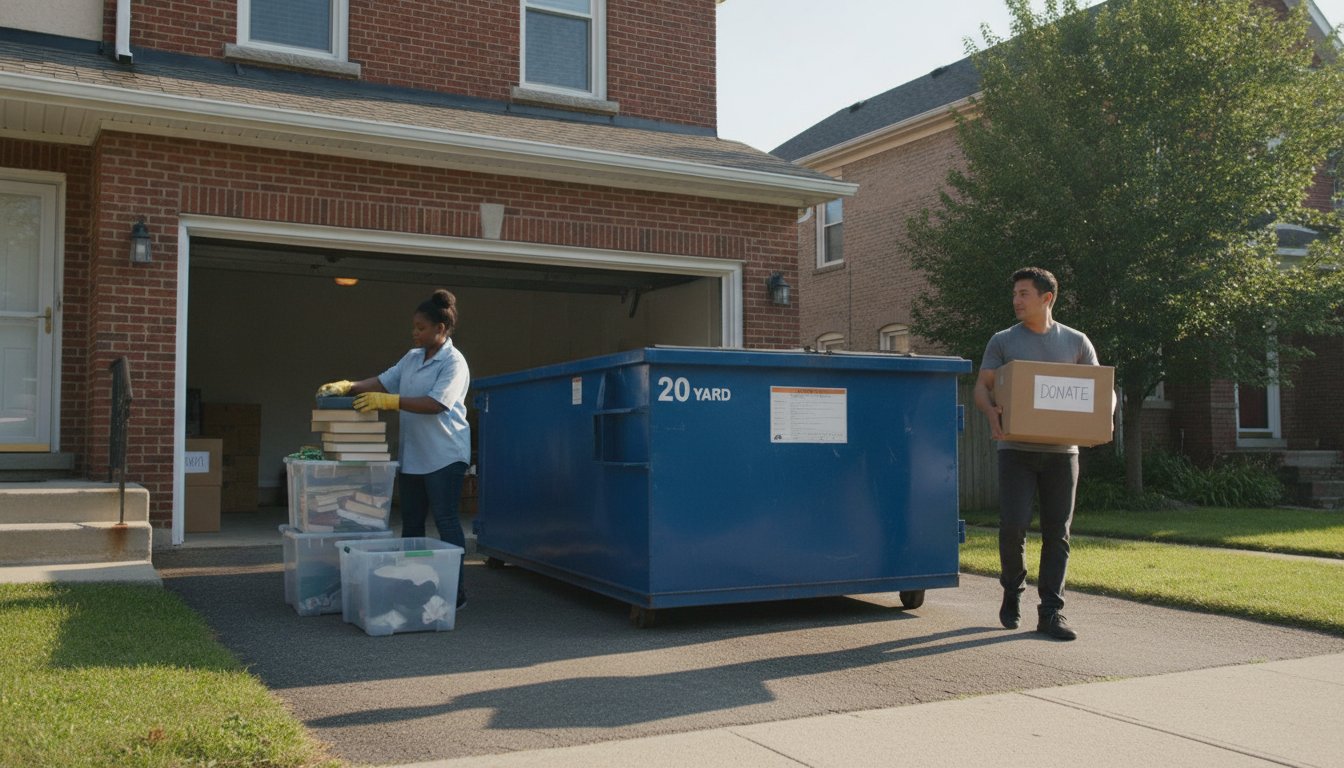
A hoarding cleanup is not a standard home project; it's a high-stakes logistical operation that requires a tactical approach to avoid neighborhood scrutiny and total physical exhaustion. You're likely facing an overwhelming volume of debris and the very real fear of logistical paralysis. Finding a reliable dumpster rental for hoarding cleanup is the first step toward reclaiming your space, but it's about more than just a metal bin. You need a strategy that handles the sheer scale of the waste while keeping the process discreet and professional.
We understand that the sight of a massive cleanup can be stressful. You want the right container size on the first try and a plan to manage potential hazards without attracting unwanted attention. This guide provides a pragmatic roadmap for high-volume waste management. You'll learn how to select between 10, 20, 30, or 40 yard dumpsters and how to navigate 2026 EPA regulations regarding hazardous air pollutants and asbestos. We'll move you from a state of clutter to a state of resolution with clear, actionable steps.
Key Takeaways
- Determine the exact dumpster volume you need by estimating loads per room to prevent logistical paralysis and ensure a single-trip cleanup.
- Execute a professional dumpster rental for hoarding cleanup using a "Zone Strategy" to efficiently sort items into Keep, Donate, and Dumpster categories.
- Identify and isolate prohibited hazardous materials like expired chemicals and asbestos to ensure compliance with 2026 waste regulations and avoid landfill penalties.
- Apply the "First 10 Feet" rule to clear entry paths, allowing for safe access and a more discreet removal process for high-volume waste.
- Streamline your project with a direct online booking system that guarantees reliable delivery and pickup across New York, New Jersey, and Illinois.
The Role of Roll-Off Dumpsters in Compassionate Hoarding Cleanup
A successful cleanup requires more than just manual labor; it needs a logistical anchor. A roll-off container serves as this central hub. Without a designated terminal for waste, projects often succumb to "re-hoarding." This occurs when items are simply shifted from one room to another because there is no immediate way to remove them from the property. Securing a dumpster rental for hoarding cleanup breaks this cycle by providing a permanent exit point for every discarded item. It transforms a chaotic pile into a managed waste stream.
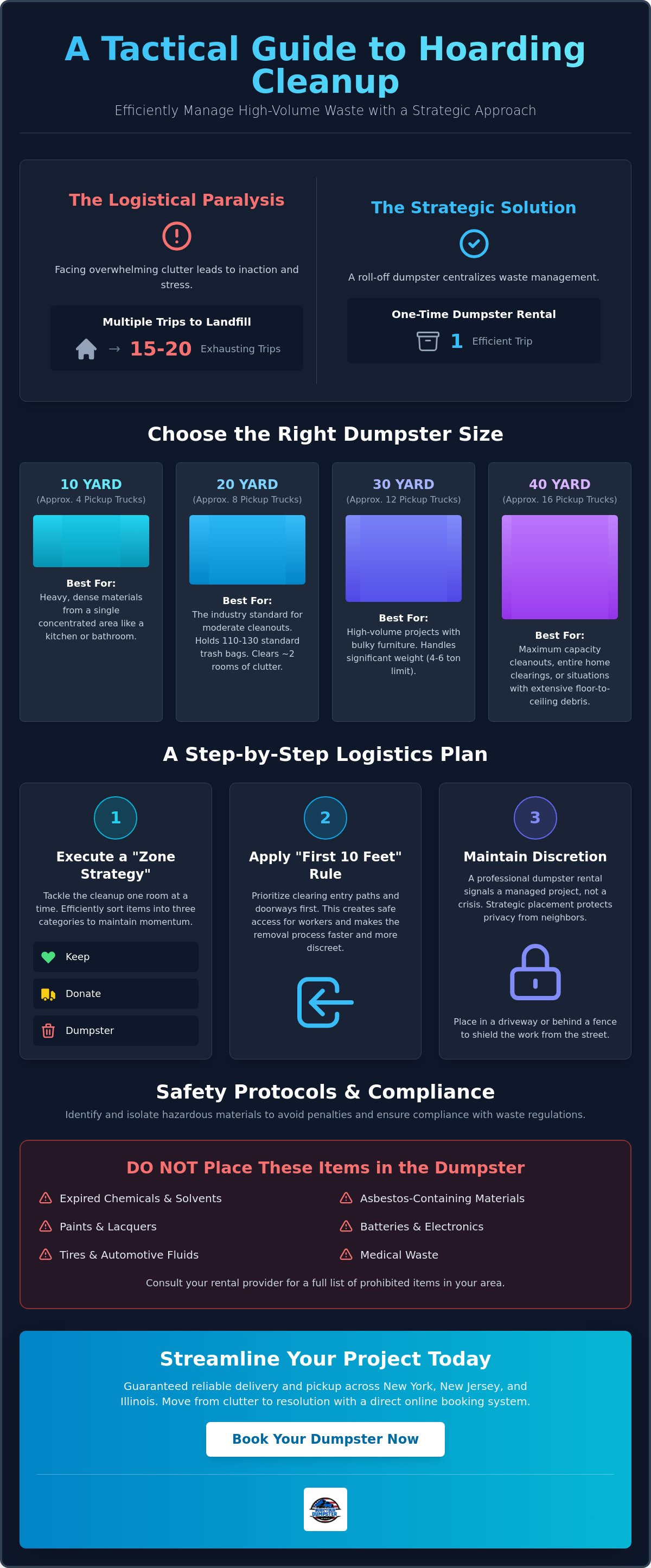
Managing a property affected by Hoarding disorder is emotionally and physically taxing. Efficiency is your best tool for reducing stress. Instead of making 15 to 20 trips to a local landfill in a pickup truck, you consolidate everything into a single 30 or 40 yard bin. This minimizes the time workers spend in transit and maximizes the time spent clearing the home. It also reduces the footprint of the project. Keeping noise and activity concentrated in one area helps maintain a sense of order during an inherently messy process.
Why a Dumpster is Preferable to Bagged Trash
Standard trash bags are insufficient for the weight and variety of materials found in a typical cleanout. Heavy furniture, broken glass, and saturated materials will easily pierce plastic. Steel roll-off containers provide the structural integrity needed to hold dense or sharp debris safely. Beyond durability, there is a psychological advantage. Using a dumpster creates an "out of sight, out of mind" effect. Once an object enters the container, the decision is final. It is no longer a part of the home's inventory. Contrast this with a pile of loose bags on the lawn, which invites second-guessing and looks like a public eyesore.
Maintaining Discretion During the Cleanup
Privacy is a primary concern for families. In dense residential neighborhoods across New York, New Jersey, or Illinois, a massive pile of trash on the curb attracts unwanted attention. A professional roll-off container signals a managed renovation or cleanout project rather than a crisis. This professional appearance shields the family from judgment. Discreet dumpster placement is a strategy to protect homeowner privacy.
Position the dumpster in a driveway or behind a fence line whenever possible to shield the work from the street. Schedule your delivery for the exact start of your project and arrange for a prompt pickup as soon as the bin is full. This reduces the window of visibility and prevents curiosity from neighbors. By choosing a strategic location and a reliable partner like Book Your Dumpster USA, you maintain absolute control over the project's public perception while moving debris out quickly.
Choosing the Right Dumpster Size for High-Volume Cleanouts
Selecting the correct container size for a dumpster rental for hoarding cleanup is the most critical logistical decision you'll make. Underestimating volume leads to project stalls and redundant delivery fees. Overestimating waste results in paying for air. In a standard residential cleanout, a single room might contain five cubic yards of loose debris. However, in high-volume situations where items are packed floor-to-ceiling, a single room can easily fill ten cubic yards or more. Use a "load per room" metric to guide your selection. Plan for at least one 20-yard bin for every two rooms of moderate clutter.
Weight capacity is just as vital as physical volume. Larger 30 and 40-yard containers have specific tonnage limits, often ranging from four to six tons. Exceeding these limits can result in overage fees between $40 and $200 per extra ton, depending on local landfill rates. Always prioritize your heaviest items, like saturated papers or old furniture, for the bottom of the bin to maintain a stable load. Before you start, view our available inventory to see which dimensions fit your property constraints.
The 10 and 20-Yard Options: For Targeted Areas
Use a 10-yard dumpster for heavy, dense materials found in kitchens or bathrooms. These smaller units are ideal for managing specific "zones" without blocking your entire driveway. The 20-yard dumpster remains the industry standard for moderate residential hoarding. It holds approximately 110 to 130 standard 13-gallon kitchen bags. Understanding the psychology of hoarding is helpful here; starting with a manageable 20-yard bin can help prevent the "logistical paralysis" that often stops a project before it begins.
The 30 and 40-Yard Heavyweights: For Whole-Home Remediation
Choose a 30-yard dumpster when dealing with furniture-heavy hoards. These units have higher walls, making them perfect for sofas, armoires, and large appliances. For large estates or extreme squalor situations, the 40-yard option is the only pragmatic choice. Be aware of spatial requirements in dense urban areas like Queens or Chicago. A 40-yard bin typically requires 22 feet of linear driveway space plus room for the truck to maneuver. If your driveway is too short, you must secure a local street permit before delivery. Measure your staging area twice to ensure the truck can safely drop and retrieve the unit without damaging property.
Safety Protocols and Waste Restrictions for Hoarding Situations
Hoarding environments often conceal regulated materials that a standard dumpster rental for hoarding cleanup cannot accept. You must differentiate between general debris and prohibited hazardous waste before the first load. As of February 2, 2026, the EPA's National Emission Standards for Hazardous Air Pollutants (NESHAP) for asbestos require specific handling protocols for older insulation and floor tiles. Managing a dumpster rental for hoarding cleanup requires a clear understanding of what can and cannot be tossed to avoid project delays. If your project involves a pre-1978 home in Queens or San Francisco, you likely face lead-based paint or asbestos-containing materials that demand specialized abatement rather than a roll-off bin.
Regional regulations in New York and New Jersey are particularly strict regarding electronic waste. You cannot dispose of computers, monitors, or printers in a general landfill container. Similarly, Massachusetts and Illinois have expanded their lists of prohibited items to include bulk liquids and certain household chemicals. Identifying these items during the sorting phase prevents landfill rejections and protects the structural integrity of the waste stream. Focus on isolating these materials into a dedicated hazardous zone as outlined in your staging plan.
Identifying Prohibited Materials
Standard containers are designed for municipal solid waste, not toxic substances. You must exclude car batteries, tires, fuel, pesticides, and oil-based paints from your bin. In hoarding situations, it's common to find large quantities of expired cleaning agents or industrial solvents that require hazardous waste drop-off. A roll off dumpster rental agreement strictly forbids hazardous liquids. Additionally, biohazards such as animal waste or heavily mold-saturated items often fall under local health codes that require separate hauling and disposal procedures.
Personal Protective Equipment (PPE) and Loading Safety
Physical safety is paramount when navigating unstable piles. Wear puncture-resistant gloves to guard against hidden sharp objects and N95 masks to prevent the inhalation of dust, mold spores, or dried animal waste. Sturdy, steel-toe boots are necessary to protect your feet from falling debris. These tools are your first line of defense in an environment where hidden biohazards are a statistical probability.
Utilize the "walk-in" feature of the dumpster to prevent injury. Every roll-off unit includes a heavy-duty rear door that allows you to carry heavy furniture and appliances directly into the bin. This eliminates the need to lift heavy loads over the high side walls, reducing the risk of back strain. Distribute the weight evenly across the floor of the unit and place the heaviest items at the bottom. This ensures the load remains stable during transit and complies with road safety regulations for heavy hauling.
A Step-by-Step Logistics Plan for Staging Your Cleanup
Efficiency in a high-volume cleanout depends on your staging strategy. Securing a dumpster rental for hoarding cleanup is only half the battle; you must also manage how debris moves from the home to the bin. Implement a "Zone Strategy" to categorize every item immediately. Create three distinct areas: Keep, Donate, and Dumpster. Use colored tarps or chalk markings on your driveway to define these boundaries. This visual organization prevents decision fatigue and keeps the workspace clear for the heavy lifting ahead.
Apply the "First 10 Feet" rule before you begin the bulk of the removal. Clear a wide, unobstructed path from the primary exit of the home directly to the dumpster door. This entry path is vital for safe access and prevents trip hazards when carrying heavy or awkward loads. Manage the logistics of your dumpster rental for hoarding cleanup by working in phases. Fill the container room-by-room. This approach provides a sense of immediate progress and prevents you from feeling overwhelmed by the entire property at once. If you anticipate needing more than one container, call for a "swap-out" when the first bin is 75% full to avoid work stoppage.
Establishing the Sorting Zone
Set up your primary staging area in a garage or a section of the driveway adjacent to the roll-off. Move items directly from the house to this zone. Speed is your ally here. Practice immediate disposal for any item designated as trash. Delaying the toss allows for second-guessing, which stalled many previous cleanup attempts. For the "Donate" pile, coordinate with local charities for a same-day pickup. For salvaged belongings like clothing and linens that require deep cleaning, especially if you are working in the Los Angeles area, check out Laundry Breeze to help restore your items to a usable state. Removing these items from the property as they are sorted keeps the focus on the remaining debris. Reserve your roll-off today to set your project timeline in motion.
Executing the Debris Removal
Maximize your bin space by breaking down large furniture. Remove legs from tables and disassemble bed frames before loading. This level of construction debris removal efficiency ensures you aren't paying to haul pockets of trapped air. Always maintain a clear path for the truck. Do not stack items around the exterior of the dumpster, as the driver needs several feet of clearance to safely winch the unit onto the bed. Before calling for pickup, verify that the load is level with the top of the bin. Landfill regulations and road safety laws prohibit hauling "over-topped" containers. Use a heavy rake to flatten the debris and distribute the weight evenly across the floor of the unit.
Streamlining Your Project with Book Your Dumpster USA
A high-volume cleanout is a significant property transition that demands professional-grade logistics. Book Your Dumpster USA acts as a high-functioning tool for both residential homeowners and commercial entities facing these challenges. We understand that a dumpster rental for hoarding cleanup is often just one part of a larger waste management strategy. Whether you're a family member reclaiming a home or a professional cleanout contractor managing multiple sites, our digital-first platform removes the friction of scheduling and coordination. We focus on reliability and the removal of logistical stress, allowing you to focus on the labor at hand.
Our service extends beyond one-time residential projects to meet the ongoing needs of businesses and commercial property managers. For property management firms dealing with abandoned units or large-scale estate remediations, we provide a full spectrum of utility. This includes our Front load Commercial Waste Pickup for permanent sites and heavy-duty roll-offs for intensive debris removal. By positioning ourselves as a dependable partner, we ensure that commercial cleanout crews have the equipment they need exactly when they need it. We maintain strict pricing integrity and punctuality, serving as a recurring rhythmic promise of reliability for our professional partners.
Local Expertise Across Major Metro Areas
Operating in dense urban environments requires a partner who understands the nuances of local ordinances. We manage the logistical groundwork for projects in Queens, San Francisco, and across Massachusetts, where permit requirements are often complex. For commercial entities, failing to secure a street permit can result in costly work stoppages and municipal fines. We provide direct support to ensure your 10, 20, 30, or 40-yard unit is placed legally and discreetly. This local grounding, combined with our technologically savvy booking process, distinguishes us from traditional haulers who lack transparency in their communication structures.
Book Your Next Dumpster with Confidence
Select the capacity your specific project requires and schedule your delivery through our 24/7 online system. We serve New York, New Jersey, Illinois, and beyond with a no-nonsense approach to waste management. Our inventory is maintained to professional standards, ensuring your site remains orderly and your project stays on schedule. By integrating our brand identity directly into your workflow, you gain a partner that values speed, simplicity, and straightforward honesty. Don't let the scale of a project lead to logistical paralysis. Secure your cleanup dumpster online now at Book Your Dumpster USA and transition from a state of clutter to a state of resolution.
Reclaim Your Space with Professional Logistics
Executing a successful property restoration requires a shift from emotional weight to logistical execution. You now have the tactical framework to select the correct container size and implement a staging strategy that protects your privacy. A dumpster rental for hoarding cleanup acts as your project's anchor, preventing the cycle of re-hoarding and ensuring a steady flow of debris removal from the property. By identifying prohibited materials early and utilizing the "First 10 Feet" rule, you maintain total control over the site and your safety.
Once the physical clutter is removed, the final stage of restoration often involves deep professional sanitization. For homeowners and managers in New York State, AlphaLux Cleaning provides the specialized residential and commercial cleaning services necessary to fully reclaim and refresh the property.
Book Your Dumpster USA provides the high-functioning tools you need to finish the job without unnecessary stress. We offer transparent, no-nonsense pricing and streamlined 24/7 online booking across New York, New Jersey, Illinois, Massachusetts, and San Francisco. Don't let logistical paralysis stall your progress any longer. Our 10, 20, 30, and 40-yard inventory is ready for immediate deployment to your location. Secure your cleanup dumpster online now at Book Your Dumpster USA. You have a clear plan; now take the first step toward a clear home.
Frequently Asked Questions
How many dumpsters do I need for a 3-bedroom hoarding house?
Estimate at least two 30-yard or 40-yard units for a standard 3-bedroom hoarding house. If the clutter reaches the ceiling in multiple rooms, you'll likely need three or four hauls to clear the entire property. Always plan for a higher volume of debris than you initially see; hoards are significantly denser than standard household junk. Consolidating waste into our largest bins is the most efficient way to manage this scale of cleanup.
Can I put old appliances and electronics in a hoarding cleanup dumpster?
You cannot put electronics like TVs, computers, or phones in the bin due to strict e-waste recycling laws in states like New York and New Jersey. Most standard appliances are acceptable, but you must ensure refrigerators and freezers have their refrigerants professionally removed first. Check local municipal regulations before loading large metal items, as some landfills require separate processing for "white goods."
Do I need a permit to park a dumpster on the street in Queens or San Francisco?
Yes, you must obtain a permit if the dumpster sits on a public street or sidewalk in Queens or San Francisco. These municipal permits typically cost between $10 and $100 depending on the duration. Secure this paperwork before your scheduled delivery date to avoid local fines or a refused delivery. If you can fit the unit entirely on a private driveway, no permit is required.
What happens if the dumpster exceeds the weight limit during a cleanup?
Exceeding the weight limit results in overage fees, which typically range from $40 to $200 per ton. These fees are passed through from the landfill based on the actual weight of your load. If the bin is dangerously heavy, the truck's hydraulic system won't be able to lift it. You'll have to remove heavy items until the load meets safety standards before we can complete the pickup.
Is there a limit on how long I can keep the dumpster for a large project?
Standard rental periods usually last between 7 and 14 days. For an extensive dumpster rental for hoarding cleanup, you can extend this time by paying a daily fee, often ranging from $5 to $10 per day. If you fill the container quickly, call for an immediate swap-out to keep your project moving. Schedule your pickup as soon as the work is finished to avoid unnecessary daily charges.
Can I dispose of moldy furniture or animal-soiled items in the dumpster?
You can dispose of moldy furniture and items soiled by animals in a standard roll-off container. These materials are classified as municipal solid waste and are acceptable for landfill disposal. However, wear an N95 mask and puncture-resistant gloves when handling these items to prevent illness from spores or bacteria. If the materials are saturated with liquid biohazards, they may require specialized removal services instead.
How quickly can a dumpster be delivered for an emergency cleanup?
Most dumpsters can be delivered within 24 to 48 hours of your order. Use our online booking system to check real-time inventory availability for your specific zip code in New York, Illinois, or California. For urgent situations, call us directly to see if a same-day drop-off is possible in your area. Planning ahead by at least two days is the best way to ensure your preferred bin size is available.
What should I do with hazardous chemicals found during the hoarding cleanup?
Take all hazardous chemicals to a designated county household hazardous waste (HHW) facility. This includes pesticides, paint thinners, pool chemicals, and old gasoline found during the dumpster rental for hoarding cleanup. These items are strictly prohibited in our containers. Mixing these liquids with general trash creates environmental risks at the landfill and can lead to heavy financial penalties for the account holder.


