
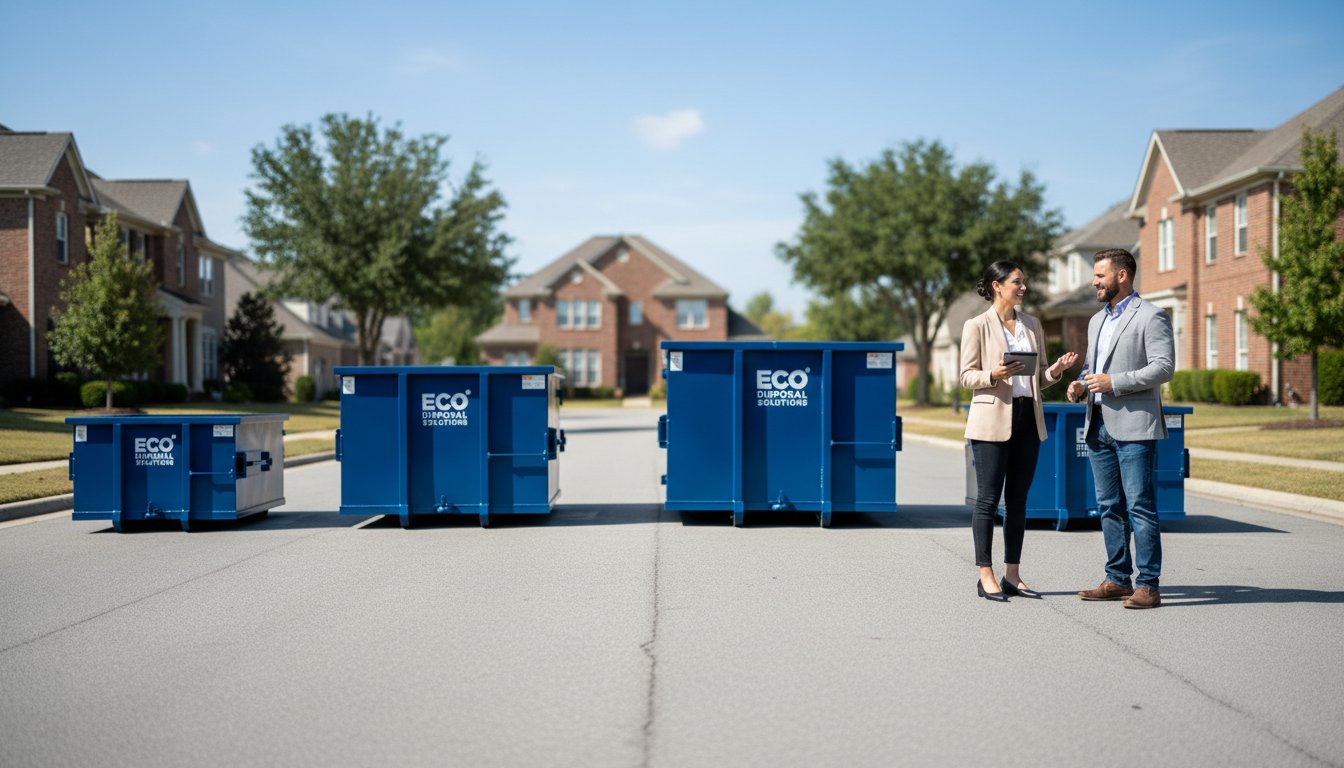
The smallest dumpster on the lot often ends up being the most expensive choice you can make for your cleanup. Industry reports indicate that 30 percent of first-time renters incur additional costs because they miscalculated their debris volume. You must understand dumpster rental sizes before you schedule a drop-off to avoid these avoidable setbacks. Whether you are managing a renovation in Chicago or a cleanout in Paterson, guessing leads to logistical headaches.
You want your waste gone and your budget intact. It is common to feel confused by cubic yards or worried about tight urban driveway clearances. This 2026 guide provides the clarity you need. Master the dimensions and weight limits required to choose the most cost-effective container for your project in Illinois, New Jersey, or Michigan. We detail every available size and explain exactly how to handle local street permit requirements on your first try. Review these essential specifications and book your dumpster with confidence through Book Your Dumpster USA.
Key Takeaways
- Learn to calculate cubic yards accurately so you only pay for the space your project requires.
- Select the most cost-effective dumpster rental sizes by comparing dimensions for heavy materials and household debris.
- Navigate local street permits and weight limit regulations in New York, Illinois, and Massachusetts to ensure a hassle-free delivery.
- Match your specific renovation or roofing project to the correct container capacity and avoid costly overages.
- Use our 2026 size comparison framework to estimate your volume and book your dumpster online in minutes.
Understanding Cubic Yards and Container Dimensions
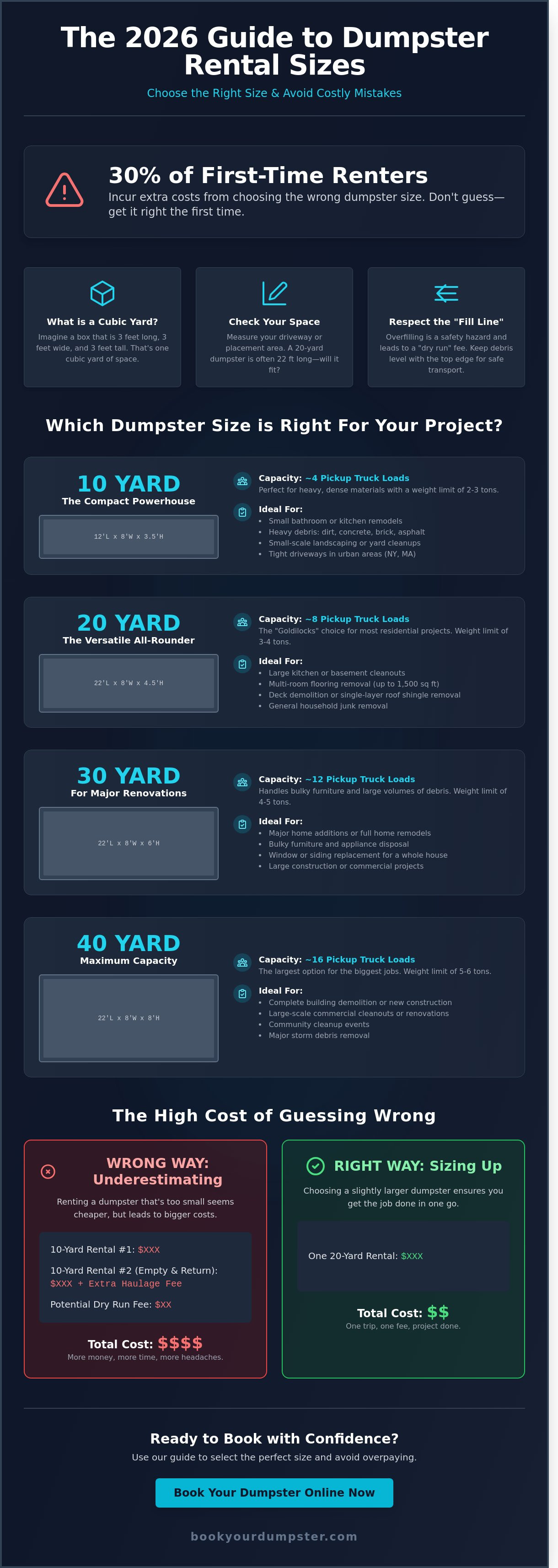
Every dumpster is measured by its internal volume in cubic yards. Think of a cubic yard as a solid block of space measuring 3 feet long, 3 feet wide, and 3 feet high. When you compare dumpster rental sizes, the numbers 10, 20, 30, and 40 refer to how many of these blocks fit inside the container. Total volume is the primary metric for waste management, but it doesn't tell the whole story of how a bin will fit on your property.
Internal volume tells you how much junk you can toss, but external dimensions dictate where the bin can sit. In tight neighborhoods across New York or Massachusetts, every inch of driveway space is a premium. A standard 20-yard container is typically 22 feet long. If your driveway in a dense urban area like Boston or Brooklyn is only 20 feet, that container will hang over the sidewalk. This leads to city fines or blocked pedestrian access. Measure your placement area before you schedule your delivery.
Safety is a non-negotiable part of the process. Every container has a "Fill Line" clearly marked on the side. This is a legal requirement for safe transport. Roll-off dumpsters must be tarped before the truck moves. If debris sticks out over the top, the driver cannot safely secure the load. This results in a "dry run" where the driver leaves without the dumpster, and you incur a fee for the failed attempt. Keep your waste level with the rim to ensure a smooth pickup.
Visualizing Dumpster Capacity
Visualizing volume is difficult for most homeowners. A 10-yard dumpster holds roughly four standard pickup truck beds worth of waste. If your project involves heavy materials like dirt or concrete, you need a container with lower side-walls, usually around 3.5 feet high. These lower walls make manual loading easier. For bulky furniture or large construction debris, taller walls provide the necessary room. To simplify the process, Book Your Dumpster provides a streamlined online selection tool to match your project to the right bin instantly.
Why Size Choice Impacts Your Total Cost
Choosing the wrong size creates immediate financial waste. Renting a 10-yard bin twice because it was too small costs significantly more than renting one 20-yard bin from the start. This "Empty-and-Return" cycle doubles your haulage fees and extends your project timeline. Right-sizing your dumpster rental sizes also prevents double-handling, where you waste hours moving debris around to make it fit. Avoid the risk of dry run fees by selecting a size that accommodates your entire pile with room to spare. Precision saves money and reduces logistical stress.
A Breakdown of Roll-Off Dumpster Sizes (10 to 40 Yards)
Choosing between different dumpster rental sizes depends on the volume and weight of your waste. Roll-off containers are measured in cubic yards, which represents the total volume the bin holds. A 10-yard bin holds 10 cubic yards of material, while a 40-yard bin holds four times that amount. Selecting the right capacity prevents the headache of a second rental or the cost of overweight fees.
The 10-yard dumpster is the most compact option. It's built for heavy, dense materials like dirt, concrete, or brick. If you're tackling a small bathroom remodel or a heavy landscaping project, this size keeps the debris contained without taking up the entire street. For interior projects, the 20-yard dumpster is the "Goldilocks" choice. It's large enough for kitchen renovations and basement cleanouts but still fits comfortably in most residential settings.
10 And 20 Yard Options for Residential Projects
The 10 yard dumpster rental is the top choice for NY driveways. Its small footprint allows it to sit in tight urban spaces without blocking sidewalk access or violating local parking codes. Don't let the size fool you; it's the workhorse for "heavy" debris. When you fill a bin with brick or stone, weight limits become a factor. Most 10-yard bins have a 2 to 3-ton limit. Exceeding this can lead to safety issues during pickup.
If your project spans multiple rooms, the 20-yard container offers better versatility. It's ideal for multi-room flooring projects, such as removing 1,500 square feet of hardwood or carpet. When disposing of renovation waste, you must follow New York C&D debris regulations to ensure your materials are handled legally. This size handles roughly 8 pickup truck loads, making it the most efficient choice for standard home improvements.
30 And 40 Yard Containers for Large-Scale Debris
Large-scale projects require the 30 or 40-yard options. The 30-yard bin is preferred for bulky items like furniture, old siding, or major home additions. Its higher walls allow you to toss in large, awkward items that wouldn't fit in smaller containers. It provides the necessary volume for whole-home decluttering where the items are light but take up significant space.
The 40-yard dumpster is the commercial standard. It's designed for full-house gutting and major roof replacements. The footprint of a 40-yard container is usually 22 feet long, so you'll need a clear, flat area for delivery. Be careful with weight limits on these massive bins. Even though they're large, filling them with heavy shingles or wet debris can quickly push the truck over legal limits. Overloading leads to municipal road fines and safety delays. Keep your load level with the top of the container to avoid these issues. Book your dumpster today to secure the right size for your specific project timeline.
Matching Your Project to the Right Dumpster Capacity
Choosing between different dumpster rental sizes depends entirely on the volume and weight of your waste. If you pick a bin that's too small, you'll pay for a second haul. If it's too large, you're paying for empty space. Match your project to these common scenarios to get it right the first time.
- Kitchen Remodels: Book a 20-yard dumpster. This size comfortably handles old cabinets, countertops, flooring, and large appliances like dishwashers or ovens.
- Roofing Projects: Base your choice on "squares," where one square equals 100 square feet of shingles. Use a 10-yard bin for 20 to 30 squares of three-tab shingles. Upgrade to a 20-yard bin if you're stripping 40 to 60 squares or using heavier architectural shingles.
- Whole-Home Cleanouts: A 30-yard dumpster is the standard for major decluttering. It accommodates bulky furniture, old mattresses, and large "junk" piles from basements or attics that won't compress easily.
- Landscaping and Dirt: You must use a 10-yard dumpster for these materials. Dirt, sod, and rocks are extremely dense. A 10-yard bin filled with dry soil weighs roughly 10 tons, which is the maximum legal limit for most transport trucks.
Construction Debris vs. Household Junk
Weight is the primary factor when dealing with construction debris removal. Demolition materials like drywall, studs, and tile are significantly heavier than household trash. Household cleanouts often face "air space" issues. A sofa might not weigh much, but it takes up massive volume, leaving you with a bin that looks full but isn't heavy. If you're hauling "heavy" loads like pure concrete or asphalt, these must be kept in dedicated bins to avoid massive overage penalties at the landfill.
The 'Real-World Scale' Measurement Guide
Visualizing cubic yards is difficult, so use these benchmarks to compare dumpster rental sizes effectively. A 10-yard container equals approximately 50 to 70 standard 33-gallon trash bags. A 20-yard dumpster holds roughly 100 to 120 trash bags or the debris from a small kitchen gut. If you're replacing flooring, a 10-yard bin fits about 1,500 square feet of pulled-up carpet, while a 20-yard bin can hold 3,000 square feet plus the padding. Don't overfill the container. Keep all materials below the "fill line" to ensure a safe, legal pickup. Book your dumpster based on your largest item to ensure everything fits in one trip.
Local Rental Regulations in New York, Illinois, and Massachusetts
Regional laws dictate how you use your container. In New York City, the Department of Sanitation (DSNY) oversees all private waste removal. You cannot simply drop a bin on a Manhattan street without a permit. If the unit occupies any public space, you must secure a DOT street permit. Failure to do so results in heavy fines and immediate removal of the equipment. We recommend checking your local precinct rules before scheduling your delivery.
In Chicago and across Illinois, the Illinois Department of Transportation (IDOT) sets strict weight limits for residential roads. Many local streets have a 5-ton or 8-ton limit. Exceeding these weights during transport leads to expensive citations for the hauler, which often get passed to the customer. Massachusetts residents face different challenges. The MassDEP implemented waste bans in 2022 that strictly prohibit mattresses, textiles, and electronics from landfills. You must separate these items or pay high contamination fees at the transfer station.
Many homeowners worry about driveway damage, especially during the freeze and thaw cycles common in these three states. Brittle asphalt can crack under the weight of a heavy roll-off. To prevent this, place 2x4 wooden planks or plywood sheets under the dumpster rollers. This simple step distributes the weight and protects your property from scarring or structural cracks. It keeps your driveway intact while you focus on the job.
Permit Requirements and Street Placement
Deciding where to place your unit depends on local "Right-of-Way" rules. In Boston and Chicago, narrow alleys often make street placement the only option. You need a permit if your bin will:
- Block any portion of a public sidewalk.
- Sit on a public road or occupy a metered parking spot.
- Obstruct access to fire hydrants or utility lines.
Our local experts handle the complex dumpster rental logistics to ensure your project stays compliant with municipal codes. Choosing the right dumpster rental sizes helps you fit the bin into tight urban spaces without violating city ordinances or blocking your neighbors.
Weight Limits and Regional Disposal Fees
Disposal costs vary based on "Tonnage Caps" set by regional transfer stations. New York facilities often have lower weight allowances compared to Illinois sites. If you go over the limit, you pay a pro-rated fee per ton. During winter months in MA and IL, snow and ice can accumulate inside an open bin. This adds significant weight. Always use a tarp to keep the interior dry and avoid winter surcharges. Understanding common dumpster rental sizes helps you estimate the total weight of your debris before the truck arrives. If you are disposing of only one material type, like concrete or dirt, ask for a "Clean Fill" rate. These loads are cheaper because they are easier to recycle at specialized facilities.
Ready to start your project without the regulatory headache? Book your dumpster today and let our experts handle the details.
How to Book the Correct Dumpster Size Online
Securing the right container for your project requires a systematic approach. Follow these four steps to ensure your cleanup stays on track and under budget. We've simplified the process to remove the guesswork often associated with waste management.
- Step 1: Identify your primary debris type. Categorize your waste as Construction and Demolition (C&D), standard household items, or heavy materials like concrete and dirt. Heavy debris requires specific 10-yard bins to avoid exceeding legal road weight limits. Mixing heavy materials with light trash can lead to unexpected weight issues.
- Step 2: Estimate your volume. Use our 2026 size comparison framework to visualize capacity. A 20-yard dumpster typically holds 8 standard pickup truck loads. Selecting the right dumpster rental sizes depends on matching your pile dimensions to these cubic yard capacities. If you're between two sizes, always choose the larger option to prevent the need for a second haul.
- Step 3: Inspect your site for obstructions. Look up before you book. Roll-off trucks require at least 14 feet of vertical clearance to operate the hoist safely. Ensure no power lines or low-hanging tree branches block the path to your driveway or job site.
- Step 4: Use the Book Your Dumpster system. Our digital platform provides instant, transparent pricing. Enter your zip code, select your debris type, and pick your delivery date in under three minutes. It's a direct route from a cluttered site to a clean one.
Avoiding Hidden Fees and Overage Charges
Our "No Hidden Fee" promise sets us apart from traditional haulers who often tack on fuel surcharges or administrative costs at the end of a project. To avoid extra costs, you must follow the "Level Fill" rule. This means debris cannot extend above the top rail of the container. If the load isn't level, the driver cannot safely tarp the bin for transport. In New York and Massachusetts, state regulations require separate processing for specific items. Tires and mattresses frequently trigger additional fees ranging from 30 to 90 dollars per item. Always declare these items during your booking process to keep your billing transparent and predictable.
Final Checklist Before Your Delivery
Preparation prevents delivery delays. Verify that your designated "Drop Zone" has at least 60 feet of straight-line approach room. This space allows the truck to back in, drop the bin, and pull away without maneuvering issues. You should also confirm your weight limit against the density of your waste. For example, a 15-yard bin full of household junk is rarely overweight; however, the same bin filled with wet roofing shingles can easily exceed a 3-ton limit. Double check your math to avoid trip fees or heavy load penalties on your final invoice.
Ready to clear your space? Book your dumpster now for on-time delivery and professional service you can trust. We manage the logistics so you can focus on the job at hand.
Streamline Your 2026 Project Cleanup
Choosing the right capacity is the foundation of a successful renovation or site clearing. You've learned how to distinguish between container dimensions and how to navigate the specific disposal regulations across New York, Illinois, and Massachusetts. Matching your debris volume to the industry-standard dumpster rental sizes, ranging from 10 to 40 cubic yards, ensures you don't pay for unused space or face unexpected weight penalties. Our service eliminates the logistical stress of waste management by offering transparent, flat-rate pricing with no hidden fees. We prioritize your timeline with guaranteed on-time delivery throughout our three-state service area. Our modern online booking system allows for instant scheduling, so you can focus on the actual work while we handle the heavy lifting. It's time to clear the clutter and move your project forward with a partner you can trust.
Choose your size and book your dumpster today
Your site will be clear and ready for the next phase before you know it.
Frequently Asked Questions
What is the most popular dumpster size for a home renovation?
The 20-yard dumpster is the most popular choice for standard home renovations. It offers a balance of capacity and footprint, handling projects like kitchen remodels or flooring replacements for a 1,500 square foot home. This size typically holds about 6 pickup truck loads of debris. Most residential driveways accommodate its 20-foot length easily, making it a reliable choice for suburban projects.
How do I know if a 10-yard dumpster is big enough for my bathroom remodel?
A 10-yard dumpster is usually sufficient for a standard 50 square foot bathroom remodel. It holds 3 tons of material, which covers the removal of a bathtub, toilet, vanity, and roughly 150 square feet of wall tile. If you're tearing down studs or removing heavy plaster, you might need more space. Review our guide on dumpster rental sizes to compare dimensions before you book.
Can I put a 30-yard dumpster on a residential street in Chicago or New York?
You cannot place a 30-yard dumpster on a residential street in Chicago or New York without a specific Right-of-Way permit. In New York City, the Department of Transportation restricts container size and placement to ensure traffic flow. Chicago requires a permit for any container placed on public property. Most residential streets in these cities favor 10 or 20-yard bins due to narrow lanes and strict 8-foot width limits.
What happens if I exceed the weight limit on my dumpster rental?
If you exceed the weight limit, you'll incur pro-rated overage fees based on the specific tonnage recorded at the landfill scale. Overloaded dumpsters also pose safety risks during transport; drivers may refuse to pick up a container that exceeds the truck's hydraulic lift capacity. Always distribute heavy materials like concrete or dirt evenly. We provide clear weight limits for all dumpster rental sizes to help you avoid these extra costs.
How many tons can a 20-yard dumpster hold in Massachusetts?
In Massachusetts, a 20-yard dumpster typically includes a weight limit of 2 to 3 tons for standard household debris. State DOT regulations limit the gross vehicle weight of the transport truck, which impacts how much material we can legally haul. If you're disposing of heavy items like brick or asphalt, the limit may change. Book Your Dumpster ensures your rental stays compliant with local hauling laws and offers on-time delivery.
Are there items I cannot put in any size dumpster?
You cannot put hazardous materials, wet paint, tires, or lithium-ion batteries in any dumpster. Federal EPA guidelines and local state laws prohibit these items from entering standard landfills. Prohibited items also include refrigerators containing Freon and large appliances like water heaters in certain jurisdictions. Always check our prohibited items list to ensure a smooth pickup and avoid environmental fines. We maintain a policy of no hidden fees for these regulations.
How much space does the truck need to drop off a 40-yard dumpster?
The delivery truck needs 60 feet of straight-line clearance to drop off a 40-yard dumpster safely. The container itself is 22 feet long, but the truck requires extra room to maneuver and extend its rails. You also need 23 feet of vertical clearance to avoid hitting overhead power lines or tree branches. Measure your site carefully to ensure the truck has a clear path for a hassle-free drop-off.
Do I need a permit for a dumpster in my own driveway?
You typically don't need a permit to place a dumpster on your own private driveway. Permits are generally only required by city municipalities when the container sits on a public sidewalk or street. However, check your Homeowners Association (HOA) rules first. 45% of HOAs have specific regulations regarding how long a container can stay on a property. Book Your Dumpster today and we'll help clarify local requirements for your specific address.


