
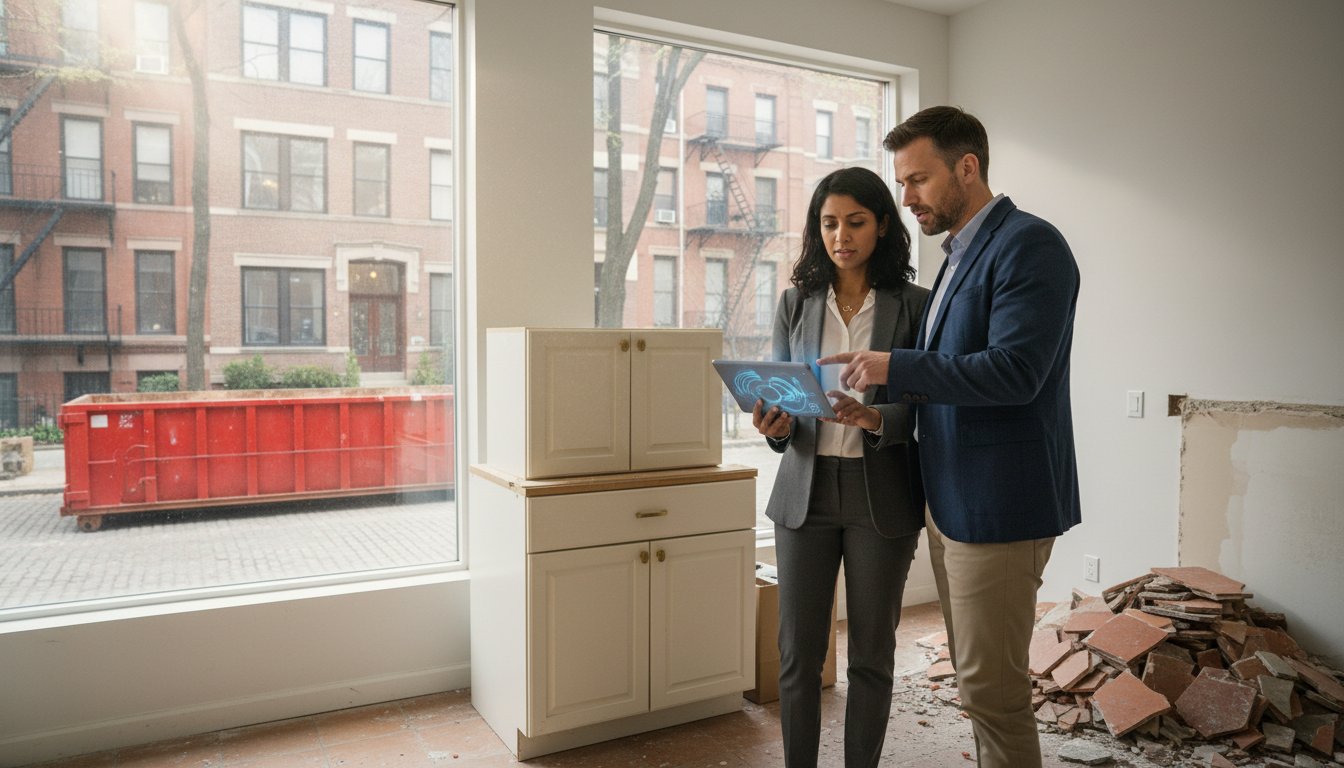
The weight of your old tile floor will likely cost you more than the volume of your entire cabinet set. Most homeowners focus on how much space their debris takes up, but in states like New York and Massachusetts, weight is the real budget killer. If you are currently estimating dumpster size for a kitchen demolition, you must balance cubic yards with tonnage limits to avoid hefty penalties. In New York City, for instance, exceeding your weight limit can result in overage fees between $200 and $250 per ton.
You want a clean job site without the stress of blocking a narrow Chicago street or paying for a container that's half empty. It's frustrating to deal with permit costs that range from $135 to $385 just to park a bin on the curb in Manhattan. This guide teaches you the exact math to choose the right dumpster and avoid costly mistakes. We'll break down local recycling mandates like Chicago's 50% diversion rule, explain how to load your bin to maximize space, and navigate the specific disposal regulations that require all Massachusetts waste to be trucked out of state as of December 2025.
Key Takeaways
- Learn to separate bulky cabinets from heavy flooring to avoid weight-based overage fees.
- Master the math of estimating dumpster size for a kitchen demolition using the 3x3x3 cubic yard rule.
- Identify the "sweet spot" dumpster size for your square footage to maximize space and minimize rental costs.
- Recognize specific heavy debris that requires special handling and unique disposal permits in dense metro areas.
- Get an instant quote through a streamlined booking system that guarantees no hidden fees and on-time delivery.
Understanding Kitchen Demo Debris in New York, Illinois, and Massachusetts
Kitchen demolition is a unique beast. You aren't just tossing old furniture; you're ripping out structural components and high-density surfaces. This process creates a mix of high-volume and high-density waste. When you start estimating dumpster size for a kitchen demolition, you must account for the sheer weight of tile and stone alongside the bulk of cabinetry. Kitchens often generate double the debris of a standard bedroom because of the density of materials involved. If you miscalculate, you'll end up with a container that's over its weight limit before it's even full.
Categorize your waste immediately to avoid surprises at the scale. Bulky items like cabinets, drywall, and island frames consume cubic yardage quickly but remain relatively light. Heavy materials like granite countertops, ceramic tile, and concrete backer board threaten your weight limit. Gaining a deep understanding construction debris helps you realize that these materials often require separate handling. In Massachusetts, for example, asphalt, brick, and concrete are banned from landfills. This means your debris must go to a specific processing facility for recovery.
Regional Waste Disposal Rules You Need to Know
States in the Northeast and Midwest have aggressive recycling goals. As of December 1, 2025, Massachusetts has no landfills that accept C&D waste. Everything you toss is trucked out of state. In Illinois, the Chicago Construction and Demolition Site Waste Recycling Ordinance requires you to recycle at least 50% of your site debris. New York is equally strict; the NYSDEC regulates fill material and debris handling under Part 360 rules. If you ignore these mandates, you face heavy fines. Check your local city ordinances before you start the tear-out.
The Logistics of Site Placement
Your available space often dictates your dumpster size as much as your debris volume does. In New York City, street placement requires a permit that can cost between $135 and $385. If you're in Chicago, narrow alley access might prevent a large roll-off truck from maneuvering. Measure your driveway or curb space before you book your dumpster. A 10-yard container is often the gold standard for urban renovations. It fits into tight footprints while handling the weight of heavy kitchen flooring without cracking your pavement.
The Kitchen Demolition Volume Calculator: Estimating Your Cubic Yardage
Successful waste management starts with precise math. Estimating dumpster size for a kitchen demolition is not a guessing game; it's a calculation of volume versus density. To visualize your waste, start with the standard unit of measurement. A cubic yard is a block of debris 3 feet long, 3 feet wide, and 3 feet high. If you use a standard pickup truck as a reference, one cubic yard fills roughly 1/3 of the bed. Most kitchen gut-outs produce between 12 and 20 cubic yards of waste, but your packing strategy determines if that fits in one container or two.
Account for the "fluff factor" immediately. This term refers to the air gaps created by irregular debris like twisted pipes, bent light fixtures, and intact cabinets. If you toss cabinets into a roll-off without breaking them down, they consume 300% more space than necessary. Smash every box flat. Remove the doors and hardware. By reducing the air pockets, you ensure you're paying for debris disposal, not for hauling air. Before you swing the first sledgehammer, choose your size and book your dumpster to ensure you have a designated spot for every load of debris.
Calculating Cabinetry and Countertop Volume
Use the linear foot rule for your cabinetry. On average, 10 linear feet of standard kitchen cabinetry equals approximately 1 cubic yard of waste once dismantled and stacked. If your kitchen features a deep center island, count those linear feet twice. Islands are typically 36 inches deep, compared to the 24-inch depth of standard base cabinets. Countertops add significant weight rather than just volume. Granite and quartz slabs weigh between 15 and 20 lbs per square foot. A 50-square-foot granite top adds 1,000 lbs to your load instantly. Factor this weight into your total tonnage to avoid overage fees in strict states like Illinois or New York.
Flooring and Drywall: The Hidden Volume
Flooring is the most deceptive part of the demolition. 100 square feet of ceramic or porcelain tile equals roughly 1 cubic yard of heavy debris. If you are stripping a 200-square-foot kitchen down to the subfloor, expect 2 cubic yards of tile alone. Drywall generates a surprising amount of bulk. A full gut-out of a 10x12 kitchen usually produces 2 to 3 cubic yards of wallboard. In older homes across Massachusetts and New York, you must also calculate the bulk of lath and plaster, which is significantly heavier and more voluminous than modern drywall. Always add a 10% buffer to your final estimate to account for unexpected layers of old flooring or thick underlayment.
Comparing Dumpster Sizes: From Small Pull-and-Replace to Full Gut
Selecting the right container size is the final step after calculating your debris volume. If you choose a bin that is too small, you'll pay for two deliveries. If it's too large, you're paying to haul air. When estimating dumpster size for a kitchen demolition, look beyond the cubic yardage and consider the weight. A 10-yard dumpster is often the smartest choice for heavy, dense materials like backsplash tile and granite slabs. It keeps you under the 2 to 3-ton weight limit while fitting into tight urban driveways in Boston or New York. Pick this size if you're only replacing flooring and countertops.
The 20-yard dumpster is the industry workhorse. It's the "Sweet Spot" for a standard 150-square-foot kitchen gut-out. This size typically holds 3 to 4 tons of debris, which is perfect for a full set of cabinets, drywall, and appliances. For large open-concept kitchens that require structural changes, step up to a 30-yard dumpster. Moving walls adds significant amounts of framing lumber, studs, and insulation to your waste stream. Finally, reserve the 40-yard dumpster for commercial kitchen demos or total home teardowns where volume is the primary concern.
When to Choose a 10 Yard Dumpster Rental
Choose this size for surgical strikes. It is the best 10 yard dumpster rental for heavy debris like tile and concrete. Because it holds roughly 50 to 60 trash bags of lighter debris, it works well for small galley kitchens. In dense residential areas, its smaller footprint prevents you from blocking the sidewalk or incurring street permit fees. It provides enough capacity for a minor renovation without the risk of overfilling a bin that takes up your entire driveway.
The 20 Yard vs. 30 Yard Dilemma
Decide between these two based on your "bulky" items. If your project includes full-height pantry cabinets or massive kitchen islands, the 30-yard bin offers the height you need to keep debris below the fill line. However, the 20-yard is often the most cost-effective option for Illinois suburban projects where space is less restricted but budgets are tight. For large-scale construction debris removal, the 30-yard advantage is clear: it reduces the number of trips to the facility. This is critical in Massachusetts, where all C&D waste must be trucked out of state as of 2025. Fewer trips mean lower transportation costs and a faster project timeline.

Managing Heavy Debris and Avoiding Overage Penalties
Do not let a half-empty bin fool you. When estimating dumpster size for a kitchen demolition, the weight of your materials often matters more than the space they occupy. This is the "Weight Limit" trap. A 20-yard dumpster filled only halfway with ceramic tile or granite can easily exceed its tonnage cap. In New York City, exceeding this limit results in overage fees between $200 and $250 per ton. Chicago projects face $60 to $90 per ton in penalties, while Massachusetts haulers charge approximately $200 per ton. These costs often exceed the price of simply renting a larger container from the start.
Identify your heavy debris before the first sledgehammer swing. Granite, quartz, floor tile, and concrete backer board are the primary culprits. In Illinois and New York, specific regulations govern how these materials are processed at C&D facilities. Smashing your cabinets and breaking down every cardboard box is essential. This eliminates "dead air," which refers to the useless gaps that take up space without adding weight. By packing the bin tightly, you maximize the value of every cubic yard you've paid for. If you find yourself nearing the weight limit, it's often cheaper to stop loading and rent a second bin rather than paying for multiple tons of overage fees.
Specific Weight Limits for Kitchen Materials
Expect a full kitchen gut to weigh between 2 and 4 tons. This range includes cabinets, countertops, and standard flooring. Cast iron sinks and old appliances are incredibly dense; stage these separately for a scrap metal recycler if possible. Removing these items from your waste stream saves significant tonnage for your main container. Understanding the "tonnage caps" included in your dumpster rental prices is the best way to protect your renovation budget. Always ask about the specific weight allowance for your chosen size before you finalize the booking.
Loading Strategies for Maximum Efficiency
Use the "Bottom-Heavy" method for every load. Place heavy tile and granite slabs directly on the floor of the bin. This creates a stable base and prevents the dumpster from shifting during transport. Nest smaller debris, like hardware or drywall scraps, inside old cabinet carcasses. This approach fills every available inch of space. Finally, keep your load level. Avoid the "Mt. Everest" effect where debris peaks above the top rail. Drivers cannot legally or safely transport an overfilled bin. Book your dumpster now to ensure you have the right equipment to handle your kitchen's heavy lifting without the headache of surprise fees.
Streamlining Your Kitchen Renovation with Book Your Dumpster USA
Planning the perfect renovation requires more than just a sledgehammer and a vision. Once you've finished estimating dumpster size for a kitchen demolition, you need a logistical partner who understands the high stakes of a home gut-out. Book Your Dumpster USA specialized in removing the friction from waste management for over 5,000 residential projects in 2025 alone. We don't just drop off a container; we provide a professional service designed to keep your contractors on schedule and your driveway clear of debris. Our online platform offers instant, transparent quotes that act as a verbal handshake, ensuring you never face the hidden surcharges often found in the waste industry.
Reliability is the core of our business model. A kitchen renovation is a high-velocity project where a single day of delay can push back plumbing, electrical, and cabinet installation. Book Your Dumpster USA eliminates these bottlenecks through a precision-managed fleet and a commitment to on-time delivery. Whether you're navigating the tight streets of Boston or a suburban driveway in Illinois, we have the right equipment to place your bin safely. Our team provides expert support to verify your calculations, helping you avoid the headache of a bin that's too small for your bulky cabinets or too large for your curb space.
Why Homeowners in New York, Illinois, and Massachusetts Trust Us
Our localized expertise is what sets us apart in the Northeast and Midwest. We maintain a deep understanding of regional dumpster rental regulations, from the specific C&D recycling mandates in Chicago to the street permit requirements in Manhattan. Book Your Dumpster USA offers a diverse fleet ranging from 10 to 40 yards. This variety ensures we can accommodate everything from a small galley pull-and-replace to a full commercial-grade teardown. We respect your property and your timeline, providing a hassle-free experience that keeps your site compliant with all local environmental laws.
How to Book Your Kitchen Demo Dumpster Today
Booking your container takes less than five minutes through our digital portal. Start by using the "Kitchen Math" guidelines from this article to select your ideal size. If you're estimating dumpster size for a kitchen demolition that involves heavy stone or extensive tile, consider our 10-yard or 20-yard options to stay within weight limits. Next, visit bookyourdumpster.com and enter your zip code to see live availability and pricing for your specific neighborhood. Finally, choose your delivery date and schedule your drop-off. Once your bin arrives, you can focus entirely on the demolition while we handle the heavy lifting of disposal and recycling.
Clear Your Site and Start Your Build
You've mastered the necessary calculations and identified the weight traps that catch most homeowners off guard. By accurately estimating dumpster size for a kitchen demolition, you've protected your budget from the $200 per ton penalties common in Massachusetts and New York. Book Your Dumpster USA stands ready to turn that plan into a clean, safe job site. With over 5,000 successful residential rentals completed in 2025, our team brings the localized expertise needed to navigate Chicago alleys or Boston curb permits without a hitch.
We provide a no-hidden-fee guarantee that serves as our verbal handshake, ensuring the price you see online is the price you pay at the scale. Don't let debris stall your renovation or create a safety hazard for your crew. Book your kitchen demo dumpster now at BookYourDumpster.com and move one step closer to your new home. Our streamlined process ensures you spend less time worrying about waste and more time choosing your new finishes. Get started today and clear the way for your dream kitchen.
Frequently Asked Questions
How much debris does a standard kitchen remodel generate?
A standard 150-square-foot kitchen gut-out typically generates between 12 and 20 cubic yards of waste. This volume includes cabinetry, drywall, and flooring. If you're only doing a "pull-and-replace" update, your debris will likely stay under 10 cubic yards. Always factor in the "fluff factor" for irregular items like light fixtures and plumbing pipes that create air pockets in the container.
Do I need a permit for a dumpster in Chicago or NYC?
You must obtain a permit for any dumpster placed on a public street or sidewalk in Chicago or New York City. In NYC, these permits cost between $135 and $385 depending on the duration and location. Chicago requires a Right-of-Way permit for alley or street placement. If you place the bin entirely on your private driveway, you generally don't need a city permit, though local HOAs may have their own rules.
Can I put kitchen appliances like a stove or dishwasher in the dumpster?
Most kitchen appliances like stoves, dishwashers, and microwaves are accepted in standard roll-off containers. However, refrigerators and freezers containing freon are strictly prohibited unless the coolant is professionally removed and tagged. In Massachusetts, specific items like televisions or monitors incur extra fees of $50 each. Stage your scrap metal separately if you want to save space and potentially earn money from a local recycler.
What happens if my kitchen dumpster is over the weight limit?
Exceeding your weight limit results in automatic overage fees that vary by state. In New York, expect to pay between $200 and $250 per additional ton. Chicago haulers typically charge $60 to $90 per ton, while Massachusetts rates average $200 per ton. These fees are calculated at the scale when the truck arrives at the disposal facility. Avoid these costs by accurately estimating dumpster size for a kitchen demolition and monitoring heavy debris.
Is a 10-yard dumpster big enough for a small kitchen demo?
A 10-yard dumpster is often sufficient for small galley kitchens or projects focused solely on heavy flooring and countertop removal. This size holds approximately 2 to 3 tons of debris, making it ideal for the weight of ceramic tile and granite. If your project includes a full gut of cabinetry and drywall for a room larger than 100 square feet, you should upgrade to a 20-yard bin to ensure everything fits in one trip.
What materials are not allowed in a kitchen renovation dumpster?
Prohibited materials include hazardous waste, chemicals, paints, and friable asbestos, which is strictly banned in New York C&D facilities. The Massachusetts Department of Environmental Protection also bans the disposal of asphalt, brick, and concrete in landfills. Avoid tossing tires, batteries, or propane tanks into your bin. If you're unsure about a specific item, ask your provider before loading it to avoid significant fines or rejection of the entire load.
How do I calculate the cubic yardage of my old kitchen cabinets?
Use the linear foot rule when estimating dumpster size for a kitchen demolition involving cabinetry. Every 10 linear feet of standard cabinetry equals roughly 1 cubic yard of space once the boxes are smashed flat. For a kitchen with 30 linear feet of cabinets, plan for 3 cubic yards of volume. Double this estimate for deep center islands or full-height pantry units. Always break down the boxes to eliminate air gaps.
Will a 20-yard dumpster fit in a standard residential driveway?
A 20-yard dumpster fits in most standard residential driveways, as it typically measures 22 feet long and 8 feet wide. Ensure your driveway is clear of low-hanging branches or power lines that could obstruct the delivery truck's lift system. You need about 60 feet of straight-line clearance for the truck to safely drop and pick up the roll-off. If your driveway is shorter than 20 feet, consider a 10-yard bin or street placement with a permit.


