
Did you know that concrete accounts for 67.5% of the total weight of construction debris in the United States? This heavy reality often leads to unexpected overage fees when you book a remodeling dumpster rental without a clear plan. You've likely felt the frustration of hidden permit costs or the fear of a heavy container cracking your driveway. Managing waste is a regional logistics challenge, and getting it wrong can stall your project before the first wall comes down.
Trust a partner who handles the mess so you can focus on the build. This 2026 guide teaches you how to select the ideal dumpster size, navigate state-specific regulations, and secure flat-rate pricing for your project. Follow our breakdown of the $50 license fees in Boston, the new June 2026 NYC bin requirements, and Chicago's daily permit costs that range from $25 to $60. Simplify your cleanup with easy online booking and guaranteed on-time delivery.
Key Takeaways
- Match your project to the right cubic yard capacity to ensure your remodeling dumpster rental fits your debris volume perfectly.
- Master the 2026 permit requirements and waste bans specific to major urban centers in New York, Illinois, and Massachusetts.
- Learn to calculate the weight of heavy debris like tile and concrete to avoid unexpected overage fees on your final bill.
- Prepare your property with plywood and proper clearance space to prevent driveway damage and ensure on-time delivery.
- Access flat-rate pricing and instant online booking to eliminate hidden environmental surcharges and logistical stress.
The Logistics of Remodeling Waste Management in 2026
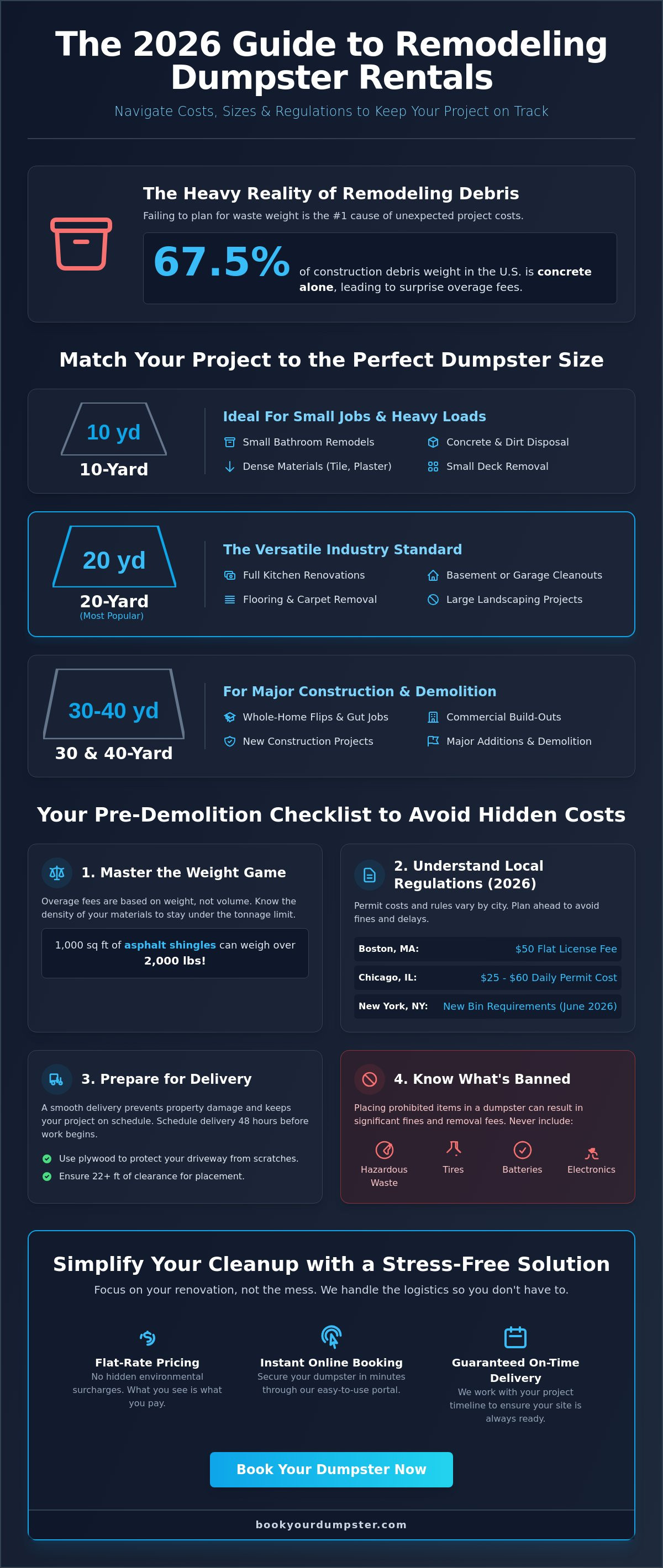
Modern open-concept renovations generate more debris than most homeowners anticipate. Removing a single wall or replacing 500 square feet of tile creates a massive pile of heavy waste. In 2026, managing this volume requires a professional strategy rather than a reactive approach. A standard remodeling dumpster rental provides the capacity needed for structural demolition, where materials like concrete and plaster can quickly exceed weight limits. Concrete alone makes up 67.5% of construction debris weight. Small DIY waste bags simply cannot handle the density of these materials without tearing or failing.
Create a waste management plan before the first sledgehammer swings. This prevents site bottlenecks where debris piles block contractor access to the work area. Use a high-capacity Roll-off (dumpster) to keep your site clean and safe. This professional solution outperforms DIY alternatives by offering specialized weight ratings for heavy debris. Validate your project timeline by scheduling your delivery 48 hours before demolition begins. This ensures your crew has an immediate place to put waste, keeping the project moving at full speed.
Residential vs. Commercial Remodeling Needs
Assess your volume requirements early. A single-room kitchen remodel usually fits in a 10 or 20 Yard Dumpster. Multi-unit commercial flips or retail build-outs require 30 or 40 Yard Dumpsters with recurring hauls. In high-traffic environments like New York or Chicago, logistics are more complex. You must coordinate delivery times to avoid peak traffic and ensure the container sits within legal boundaries. Choose a service partner that understands these urban constraints and offers the specific container sizes your project demands. Professional contractors prioritize reliability over the lowest price to keep multi-phase projects on schedule.
The Hidden Costs of Poor Waste Management
Debris piles lead to project delays. When contractors have to climb over old drywall or move piles of wood to reach a workspace, labor costs rise. Local municipalities in Illinois and Massachusetts also issue fines for debris left on sidewalks or public property. Secure your containers before demolition starts to avoid these penalties. For a deeper look at regional rules, see our complete guide to dumpster rental in New York, Illinois, and Massachusetts. Proper planning saves money and keeps your site compliant with local laws.
Choosing the Right Dumpster Size for Your Remodel
Don't rely on generic "bag counts" to estimate your project needs. Remodeling debris is bulky, rigid, and heavy. A bathroom gut job produces dense tile and plaster; a kitchen remodel involves large cabinets and appliances. Selecting an incorrect size for your remodeling dumpster rental leads to double-handling debris or paying for empty air. Measure your job site footprint before booking. A 20-yard container typically measures 22 feet long and requires significant clearance for the delivery truck's rails. Consult our sizing experts to prevent paying for a 40-yard container when a smaller unit fits the job.
From 10-Yard to 40-Yard: A Size for Every Project
- 10-Yard Dumpster: Best for small bathroom updates or high-density materials. If you're disposing of dirt or concrete, this size prevents the container from becoming too heavy for the truck to lift.
- 20-Yard Dumpster: The industry standard for kitchen renovations and basement cleanouts. It provides ample space for flooring, cabinetry, and countertops.
- 30 to 40-Yard Dumpster: Essential for whole-home flips and structural demolition. These containers handle large-scale debris like framing lumber and roofing shingles from major additions.
Weight Limits and Accepted Remodeling Materials
Weight management is the most overlooked aspect of waste disposal. Tonnage limit is the maximum weight allowed in the container before extra fees apply. For instance, 1,000 square feet of asphalt shingles can weigh over 2,000 pounds. Mixing heavy concrete with light drywall can quickly push you over your threshold. You must also adhere to State-specific regulations regarding prohibited items. Never place hazardous waste, tires, batteries, or electronics in your roll-off. If your project generates large quantities of a single material, ask about "clean load" requirements for wood or metal. This supports local recycling efforts and keeps your site compliant with 2026 environmental standards.
Once you've mapped out your debris volume, choose your size and schedule your delivery through our simple online portal.
Remodeling Waste Rules in New York, Illinois, and Massachusetts
Compliance is the most critical part of a successful remodeling dumpster rental. Each state has unique environmental mandates and right-of-way laws that can result in heavy fines if ignored. In 2026, waste diversion is no longer optional; it's a legal requirement. Local governments now use automated systems to track debris disposal, making it essential to understand the C&D debris management and policy landscape before your container arrives. Failing to secure a permit or mixing banned materials can stall your project for weeks.
State-Specific Permit and Placement Requirements
New York logistics require precision. As of June 2026, all residential buildings with 1 to 9 units must use official NYC Bins for standard waste, but remodeling debris still requires a DOT permit for street placement. If your container blocks a sidewalk or a fire hydrant, expect immediate citations. In Chicago, the "Permit to Deposit" system divides dumpsters into Class A and Class B. A Class A permit for containers under 30 cubic yards costs $50 for three days outside the Central Business District. Within the CBD, that price jumps to $100. Always verify your specific zone to avoid the $25 to $60 daily public way fees.
Massachusetts maintains some of the nation's strictest waste bans. Since November 2022, mattresses and textiles are prohibited from landfills. MassDEP also regulates gypsum wallboard and asphalt shingles to encourage recycling. In Boston, you must secure a street occupancy permit from Public Works. This involves a $50 license fee plus weekly costs ranging from $30 to $50. If you're disposing of heavy debris, remember that local landfill fees average between $75 and $120 per ton. Plan your load to keep these costs manageable.
Dumpster Rental vs. Junk Removal Services
Choose the most efficient tool for your project. Junk removal services charge for labor and space, which works for a one-day cleanout but fails during a multi-week renovation. A roll-off rental stays on-site, allowing your crew to toss debris as they work. This eliminates the need for multiple service calls and keeps your workspace clear of tripping hazards. For a detailed breakdown of what to expect in your budget, see our 2026 guide on dumpster rental prices. Having a container on-site ensures your project stays on schedule without waiting for a third-party crew to arrive.
Site Preparation and Delivery Logistics
Delivery logistics determine whether your project starts on time or with a headache. A successful remodeling dumpster rental requires more than just an open spot on the driveway. You must ensure the delivery truck has a clear 10-foot wide path and at least 22 feet of vertical clearance to safely drop the container. Low-hanging tree branches or power lines can prevent a successful drop-off; these obstacles often lead to avoidable dry-run fees. Use the Book Your Dumpster USA online system to provide specific placement instructions, such as "left side of driveway" or "behind the gate," so the driver knows exactly where to go. Communicate these details early to avoid day-of confusion.
Protecting Your Driveway or Job Site
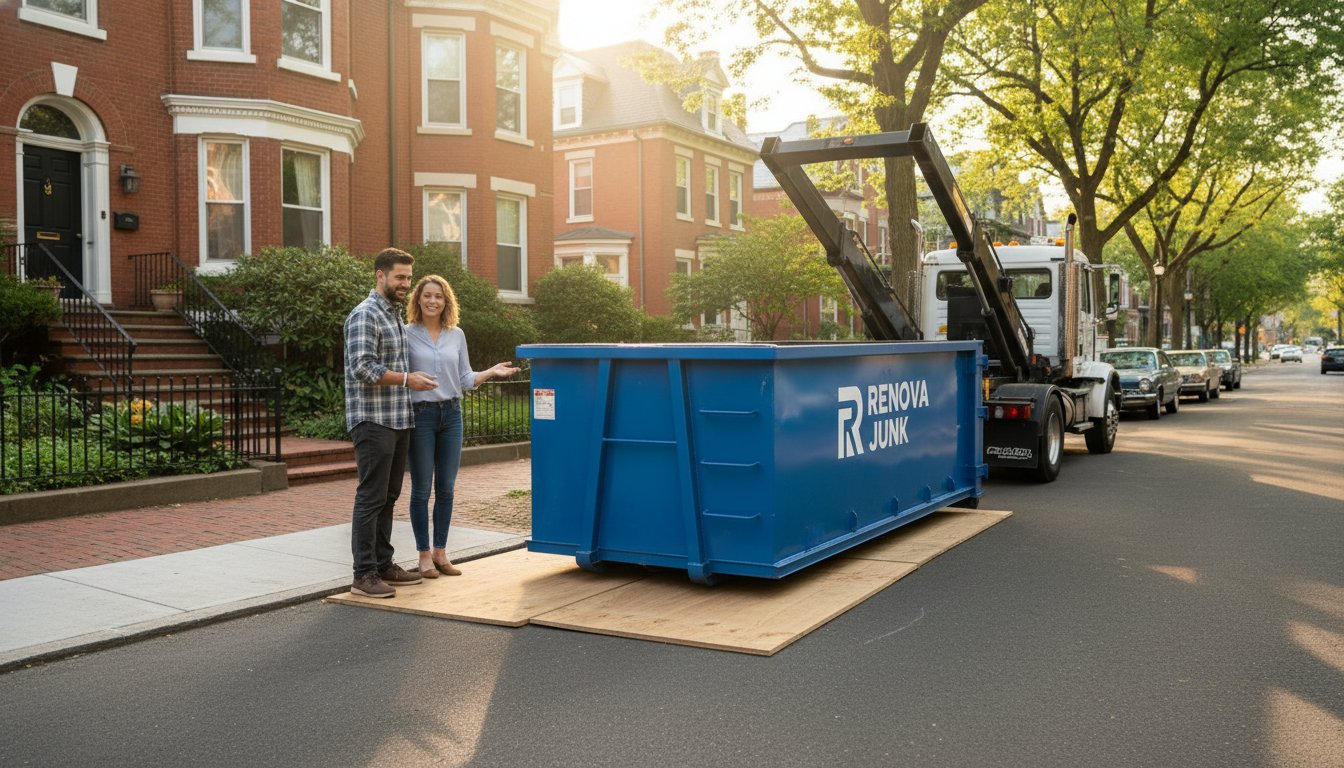
Heavy steel containers can damage residential surfaces if you don't prepare correctly. Select a flat, hard surface like concrete or asphalt that can support the weight of a fully loaded 20-yard bin. Avoid placing the unit over septic tanks, underground utilities, or soft landscaping that might sink under pressure. To prevent surface cracking, place large pieces of plywood or dedicated street pads where the dumpster rollers will land. Place 2x4 boards under the dumpster rollers to distribute the heavy weight more evenly across your driveway. This simple step protects your property from the high-pressure bite of the steel rollers during the drop-off and pickup process.
Scheduling for Multi-Phase Remodeling Projects
Multi-phase projects require a dynamic waste plan. Your demolition phase will generate the most volume, while the finishing phase might only require occasional hauls. Coordinate switch-outs during peak demolition to keep your crew working. This involves scheduling an empty container to arrive the moment the full one is pulled away. Adjust your rental period based on these specific phases to avoid paying for a container that sits empty for weeks. For more specialized waste planning, utilize our construction debris removal guide to map out your 2026 project timeline. Confirm your pickup schedule at least 24 hours in advance to maintain a clear job site and prevent site clutter from stalling your progress.
Don't let waste slow down your renovation. Schedule your delivery now to ensure your remodeling dumpster rental is on-site when the first wall comes down.
Book Your Dumpster USA: Stress-Free Solutions for Your Remodel
Your 2026 renovation deserves a waste management partner that respects your timeline and your budget. After mapping out your debris volume and navigating local permits, the final step is professional execution. A remodeling dumpster rental should be the most reliable tool in your arsenal, not a source of logistical friction. Our streamlined online booking system removes the complexity from the process, allowing you to secure a container in minutes. Schedule your delivery today to ensure your project stays on track and your job site remains clear of dangerous debris. Book Your Dumpster USA provides the high-functioning tools you need to move from a state of clutter to a state of resolution with minimal cognitive load.
Transparent Pricing and On-Time Delivery
Eliminate the invoice shock that often plagues the waste management industry. We provide transparent, flat-rate pricing that includes your delivery, pickup, and a set weight allowance. You won't find hidden environmental fees or fuel surcharges on your final bill. Trust our 2026 commitment to punctual drop-offs and pickups, ensuring your crew never stands around waiting for a container to arrive or depart. Book directly at BookYourDumpster.com for instant confirmation and total peace of mind. We handle the heavy lifting so you can focus on the craftsmanship of your remodel.
Contractor-Grade Service for Every Homeowner
Access the same professional 10, 20, 30, and 40 Yard Dumpsters used by the region's leading renovation firms. Homeowners in Yonkers, Chicago, and Boston no longer have to settle for confusing contracts or unreliable service. Book Your Dumpster USA provides expert advice on sizing and logistics tailored to your specific zip code and project scale. Join thousands of satisfied customers across the Tri-State and Midwest who have modernized their cleanup process. Our digital-first approach ensures that whether you need a 10-yard bin for a bathroom gut or a 40-yard container for a whole-home flip, the process is unmistakable and fast. Choose your size, enter your details, and schedule your delivery today. Book your dumpster and get back to building.
Clear Your Site and Finish Your Build on Time
Managing a renovation is complex, but your waste disposal doesn't have to be. You now understand how to navigate the 2026 regulatory shifts in New York and Massachusetts and how to protect your property during delivery. Selecting the right container size from our 10 to 40-yard inventory prevents overages and keeps your crew moving. We've served New York, Illinois, and Massachusetts since 2018 with a focus on reliability and professional integrity. Your remodeling dumpster rental should be a high-functioning tool that supports your project, not a source of logistical stress. Use the knowledge of local permit costs and site prep requirements to avoid the common pitfalls that stall modern construction projects.
Experience the difference of transparent flat-rate pricing and on-time delivery. Our digital-first platform makes it easy to schedule your haul and get back to the build. Don't let debris piles stall your progress or lead to municipal fines. Take control of your job site today with a partner who understands the utility of a clean workspace. Book your remodeling dumpster today at BookYourDumpster.com. We'll handle the logistics so you can focus on the finished product.
Frequently Asked Questions
Do I need a permit for a remodeling dumpster in New York?
Yes, you need a permit if the container sits on a public street or sidewalk. The New York Department of Transportation (DOT) requires a specific permit for any right-of-way placement to ensure pedestrian safety. If you place the unit on your private driveway, a permit usually isn't necessary. Check your specific borough requirements before scheduling your delivery to avoid city-issued citations.
What size dumpster is best for a standard kitchen remodel?
A 20-yard dumpster is the most efficient choice for a typical kitchen renovation. It provides enough cubic yardage for old cabinets, countertops, and appliances from a 150-square-foot space. If your project involves tearing out multiple layers of heavy tile flooring or plaster walls, monitor your weight carefully. This size balances capacity with a manageable physical footprint for most residential driveways.
Can I put old cabinetry and flooring in a roll-off dumpster?
Yes, you can dispose of cabinetry, hardwood flooring, and laminate in your container. These items are standard remodeling debris and are accepted at all local transfer stations. To maximize your space, break down large cabinet boxes and stack flooring planks flat. Don't include hazardous materials or liquid finishes, as these require specialized disposal methods under 2026 environmental laws.
How much weight can a 20-yard remodeling dumpster hold?
A 20-yard remodeling dumpster typically has a weight limit between 2 and 4 tons. This equates to roughly 4,000 to 8,000 pounds of debris. If you're loading heavy materials like concrete or brick, you'll reach this tonnage limit before the container is physically full. Exceeding these limits results in overage fees, so estimate your material density before you start loading.
Are there hidden fees for dumpster rentals in Illinois or Massachusetts?
No, we provide transparent flat-rate pricing to eliminate the common industry practice of adding fuel or environmental surcharges. Your quote includes the delivery, pickup, and a specific weight allowance. In Illinois and Massachusetts, the only additional costs are municipal permit fees for street placement. We identify these requirements during your online booking so there are no surprises on your final invoice.
What happens if I overfill my remodeling dumpster?
Overfilling a container creates a safety hazard that prevents our drivers from legally transporting the load. If debris is piled above the rim, you'll face additional fees and a refused pickup. In Chicago, overloaded dumpster fees range from $75 to $150 per occurrence. You'll need to remove the excess material to the "fill line" before we can reschedule the haul and clear your site.
How much space does the delivery truck need for a roll-off container?
The delivery truck requires a minimum of 10 feet in width and 22 feet of vertical clearance to operate the lift. You also need approximately 60 feet of straight-line distance to roll the container off the truck's rails. Ensure your driveway is clear of vehicles and equipment before the driver arrives. This prevents dry-run fees and ensures your project stays on its 2026 timeline.
Can I rent a dumpster for just one day for a small demolition?
Yes, you can rent a container for a single day, though most standard rental periods cover 7 to 10 days. If you finish your demolition quickly, simply use our online portal to schedule an early pickup. We'll remove the unit as soon as your project is complete. This keeps your property clear of clutter and allows you to move into the finishing phase without delay.


