

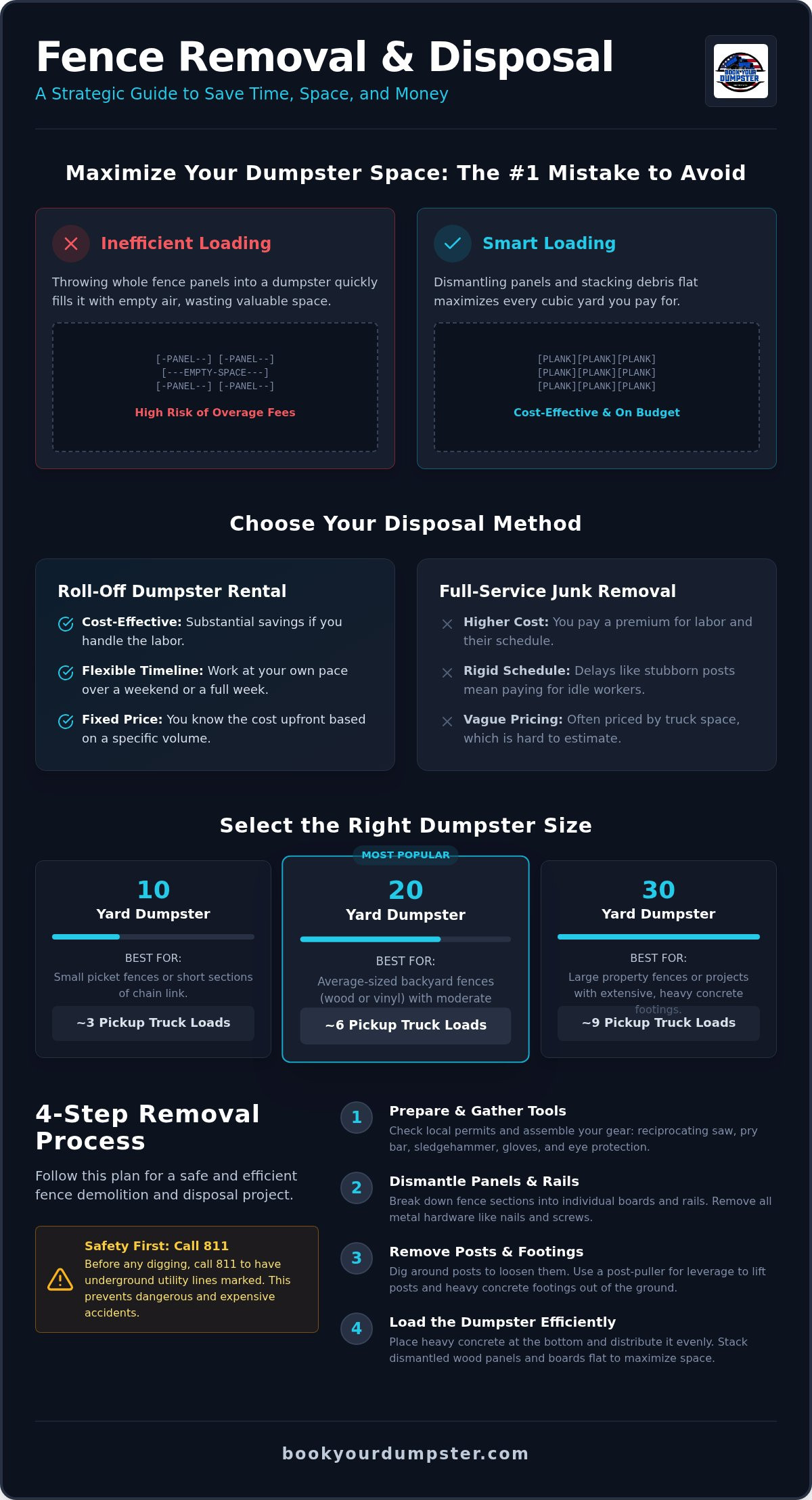
The fastest way to double your disposal costs is to throw whole fence panels directly into a container without breaking them down first. Most homeowners underestimate the total volume of a dismantled yard enclosure and the heavy weight of concrete footings hidden beneath the soil. To stay on budget, you need a professional strategy for your fence removal and disposal dumpster project. Selecting a container that is too small for bulky wood or too light for masonry leads to logistical headaches and overage fees that stall your progress.
You need the old structure gone without the stress of hidden costs or multiple landfill trips. We understand that efficient debris removal is critical to keeping your project on schedule. This article teaches you how to dismantle any fence type and pick the right dumpster size to maximize every cubic yard of space. We'll explain the weight limits for 10 to 40-yard dumpsters and provide a direct plan for loading. Follow these steps to ensure your disposal process is predictable and cost-effective.
Key Takeaways
- Choose a roll-off container over full-service junk removal to gain more flexibility and lower your total project costs.
- Call 811 before you start digging to locate utility lines and avoid dangerous, expensive repairs during post removal.
- Select the ideal fence removal and disposal dumpster by matching your project scale to a 10, 20, or 30-yard container.
- Dismantle panels and remove hardware before loading to maximize space and prevent paying for a larger dumpster than you actually need.
Why a Roll-Off Dumpster is the Best Choice for Fence Disposal
Standard curbside trash services aren't designed for demolition debris. Most local waste management regulations prohibit placing 8-foot fence panels or concrete-clogged posts at the curb. These items are too bulky for automated trucks and too heavy for manual crews. A roll-off container removes this barrier. It sits on your property and accepts everything from cedar pickets to rusty chain link. A roll-off container is the most efficient tool for a fence removal and disposal dumpster project because it keeps your yard clear of hazards. Piles of old wood with protruding nails are dangerous for kids and pets. Instead of creating a messy staging area on your lawn, move debris directly from the fence line into the dumpster.
Control your project timeline by choosing a rental over a crew. Junk removal companies charge for labor on a strict schedule. If you run into a stubborn concrete footing or a hidden underground utility, their clock is still ticking. Using a fence removal and disposal dumpster allows you to work at your own pace. You can dismantle the structure over a weekend or a full week without paying for idle workers. This on-site convenience ensures your workspace remains organized and safe from start to finish.
Dumpster Rental vs. Junk Removal Services
Evaluate the labor-to-cost ratio before you book. Full-service removal includes labor, but you pay a premium for their time. If you can handle a reciprocating saw and a pry bar, the savings are substantial. Dumpsters also simplify material sorting. You don't need to separate metal hardware from wood rails. Toss everything into the same bin. Junk removal crews often charge based on how much space you fill in their truck, which is difficult to estimate. With a roll-off rental, you have a fixed price for a specific volume. You know exactly what you are paying before the demolition starts. This is especially helpful when dealing with mixed materials like wood panels and concrete-filled metal posts.
When to Choose a 10 Yard Dumpster for Your Fence
Small projects don't require massive containers. A 10-yard dumpster is the ideal choice for a front-yard picket fence or a short section of chain link. These units fit easily into tight driveways in dense metros like Queens or Boston. They provide enough volume for about three pickup truck loads of debris. If your project involves heavy concrete footings from every post, monitor your weight limit closely. Read our 10 Yard Dumpster Rental Guide to see if this size fits your specific yard enclosure. This smaller footprint prevents property damage while providing ample space for residential demo waste.
Planning Your Fence Removal: Tools and Safety
Preparation is the difference between a one-day job and a week-long disaster. Before you touch a single picket, call 811 to have your underground utility lines marked. Striking a gas or water line turns a simple DIY project into a local emergency. Once the lines are marked, assemble your toolkit. You'll need a reciprocating saw for cutting through rails, a heavy-duty pry bar for prying boards, and a sledgehammer to loosen stubborn posts. For professional efficiency, rent a manual post-puller. This tool uses leverage to lift posts and concrete footings directly out of the ground, saving your back and your schedule.
Different materials require different approaches. Pressure-treated wood is heavy and often contains chemicals that require proper handling. Vinyl fences snap apart easily but take up significant volume in your fence removal and disposal dumpster. Chain link requires bolt cutters and pliers to roll up the mesh safely. Regardless of the material, wear heavy-duty leather gloves, wrap-around eye protection, and steel-toe boots. Following standard demolition safety protocols prevents common injuries like puncture wounds from old nails or crushed toes from falling panels.
Checking Local Regulations and Permits
Research your local municipal codes and Homeowners Association (HOA) rules before you begin. Some cities require a permit for fence replacement, while others have strict rules about where you can place a roll-off container. In high-density areas like New York or Chicago, you may need a street permit if the dumpster cannot fit on your driveway. Check out our Dumpster Rental in New York, Illinois, and Massachusetts guide for specific regional requirements. Ignoring these rules can lead to fines that far exceed your rental costs.
Identifying and Handling Concrete Footings
Most permanent fences use concrete footings to stabilize posts. Dig a few inches around a post to see if it's anchored in a "bell" of concrete. These footings are dense and significantly impact the weight limit of your container. A single 2-foot concrete footing can weigh over 100 pounds. If you have 20 posts, you're adding a full ton of weight to your load. Use a sledgehammer to break large chunks of concrete away from the wood or metal posts. This makes the debris easier to stack and ensures you don't exceed the weight capacity of your rental. To keep your project moving, schedule your dumpster delivery for the day your demolition begins.
Sizing Your Fence Disposal Dumpster: 10, 20, or 30 Yards?
Selecting the correct container size prevents the logistical nightmare of a half-finished job. For most residential projects, the 20-yard dumpster is the "sweet spot" for privacy fences. It provides enough volume for approximately 150 to 200 linear feet of wood fencing without requiring a second rental. If you are only removing a small front-yard picket fence, a 10-yard dumpster is usually sufficient. For large perimeter fences exceeding 250 linear feet, upgrade to a 30-yard dumpster. This ensures you have the capacity for oversized debris without exceeding the side walls of the container.
The most common mistake is underestimating how much space air takes up. Wood panels don't lay flat unless you break them down. This bulkiness factor is why volume usually dictates your choice for wood. Conversely, weight limits become the primary concern for wrought iron or fences with heavy concrete footings. A 20-yard container can typically hold 3 to 4 tons of debris, which is roughly equivalent to 6 pickup truck loads. If your fence removal and disposal dumpster project involves significant masonry or heavy metal, prioritize weight capacity over sheer volume to avoid overage fees.
Calculating Volume for Wood Privacy Fences
When calculating volume for standard 6-foot privacy panels, assume each 8-foot section occupies about 1.5 cubic yards of space if loaded whole. This adds up quickly. Dismantling panels into individual boards allows them to stack tightly at the bottom of the bin. This simple step can save you up to 30% of your total dumpster volume. For more technical details on managing demo waste, see our Construction Debris Removal Guide. Efficient stacking ensures you don't pay for empty air and keeps your project within a predictable budget.
Disposal Requirements for Chain Link and Metal
Managing chain link and metal posts requires a specific strategy. Roll the mesh into tight cylinders and secure them with wire. These rolls are heavy but take up very little floor space in your fence removal and disposal dumpster. Place long metal posts along the sides of the container to keep the center clear for other debris. While metal is accepted in our roll-off containers, some users prefer taking clean scrap metal to a local recycler. However, for most homeowners, the convenience of on-site disposal outweighs the small scrap value and the hassle of transport. Load these heavy items first to create a stable base for lighter materials.
Step-by-Step Guide to Fence Demolition and Loading
Strip all gates and metal hardware from the structure before you tackle the panels. Removing these heavy, swinging components first makes the rest of the teardown safer and more predictable. Use your pry bar to pop the hinges and latches, then set them aside. Efficiently managing your fence removal and disposal dumpster requires a logical teardown sequence. Instead of knocking over entire sections, use a reciprocating saw to cut the rails at the post. This allows you to handle individual panels without fighting the weight of the entire line. If you are working alone, cut the panels into smaller 4-foot sections to make them easier to carry and stack.
Stubborn posts often require more than just muscle. Use the lever method by chaining a high-lift jack to the base of the post to pull it straight up. If the concrete footing is massive, you may need a vehicle-assisted pull. Wrap a heavy-duty tow strap around the base of the post and use a truck to apply slow, steady tension. Avoid jerking the strap, as this can snap the post or damage your vehicle. Once the post is out, immediately move it to your staging area. Keeping the ground clear prevents trip hazards and ensures you don't lose track of heavy concrete chunks in the grass.
How to Load the Dumpster Efficiently
Maximize every inch of your rental by treating the loading process like a game of Tetris. Place heavy concrete footings at the bottom and center of the container. This keeps the weight balanced for the truck during pickup and prevents the dumpster from shifting. Stacking materials flat at the bottom of the dumpster prevents air pockets that waste valuable space. Layer your individual boards or cut panels directly on top of the concrete. Avoid tossing items in at random angles. If you see large gaps, use smaller pieces of debris to fill them. Ensure the final load is level and does not exceed the top rim of the container. Once you have a clear plan, order your roll-off container to keep your site organized.
Dealing with Overgrown Vegetation
Clear all vines, shrubs, and tall grass from the fence line before starting the demolition. Thick vegetation hides the hardware and makes it difficult to see where your saw blade is cutting. Cut back any branches that hang over the fence to provide a clear overhead path. Check with your local municipality regarding "clean wood" regulations. Some facilities prohibit mixing yard waste like fresh branches with treated fence wood. If your project area is tight, clear a 10-foot wide path from the fence to the driveway. This ensures the delivery truck has enough room to drop the bin exactly where you need it without damaging your landscaping.
Book Your Fence Removal Dumpster Online
Finalizing your project requires a reliable partner to haul the debris away. You can skip the phone tag and high-pressure sales calls by using the Book Your Dumpster USA online portal. Our system provides transparent, upfront pricing that includes delivery, pickup, and a set weight limit. You'll see the total cost before you enter your payment information. This digital-first approach removes the logistical stress commonly found in traditional waste management. Whether you need a 10-yard container for a small picket fence or a 40-yard unit for a massive commercial perimeter, we have the inventory ready for your fence removal and disposal dumpster needs. Our no-nonsense pricing model ensures you stay on budget without worrying about surprise environmental fees or fuel surcharges after the fact.
Scheduling Your Delivery and Pickup
Align your delivery with your actual work schedule. Most residential users find that having the bin arrive on a Friday afternoon is best for a Saturday morning demolition. This ensures the container is already on-site when you start cutting panels. Provide clear placement instructions during the checkout process. If your driveway has low-hanging branches or a steep incline, let us know. We prioritize punctuality and precision, ensuring the bin is placed exactly where it will be most useful for your crew. Stop loading once the debris is level with the top rim. Overfilled containers are a safety hazard on the road and can lead to a failed pickup or extra fees. Keep your load secure and flat to ensure a seamless transition from your yard to the landfill.
Service Areas and Local Expertise
We provide local expertise across New Jersey, Illinois, Massachusetts, and the San Francisco area. In high-density regions like Queens and New York City, we understand the challenges of narrow streets and strict parking regulations. Our drivers are experienced in navigating tight urban environments to ensure a smooth drop-off. We maintain a fleet that handles everything from residential cleanups to large-scale commercial demolitions. By combining modern digital convenience with traditional reliability, we've simplified the waste disposal process for homeowners and contractors alike. We offer 10, 20, 30, and 40-yard roll-off containers to handle projects of any scale. Ready to start? Book your dumpster now.
Clear Your Property and Start Your Next Project
Efficient fence disposal requires more than just brute force. By dismantling your panels and removing heavy concrete footings before loading, you maximize every cubic yard of your container. This strategy prevents overage fees and ensures your site remains safe and organized throughout the demolition process. Choose the 20-yard dumpster for standard privacy fences or the 10-yard option for smaller picket enclosures to keep your disposal costs predictable and your project on track.
Securing a professional fence removal and disposal dumpster simplifies the logistics of your renovation. You don't need to wait for a crew or worry about curbside rejections. Our no-nonsense professional service provides transparent pricing and reliable delivery across our major metro service areas. We have sizes from 10 to 40 yards available to handle any residential or commercial yard project.
Rent your fence disposal dumpster online today and complete your easy online booking in seconds. You have the tools and the plan to finish this job safely. Reclaim your outdoor space and get started on your new installation today.
Frequently Asked Questions
How much does it cost to rent a dumpster for fence removal?
Rental costs depend on the container size you select, your geographic location, and the total weight of the debris. Heavy materials like concrete footings or wrought iron will impact the final cost more than light wood pickets. Use our online booking system to get a transparent, upfront quote for your specific service area without hidden fees.
What size dumpster do I need for a 100-foot wood fence?
A 20-yard dumpster is the most efficient choice for 100 linear feet of standard 6-foot wood fencing. This size accommodates the bulky panels and the weight of the associated posts and concrete footings. If you dismantle the panels into individual boards before loading, a 20-yard unit provides ample space for the entire structure and additional project waste.
Can I put concrete fence post footings in a roll-off dumpster?
Yes, you can dispose of concrete footings in our roll-off containers. Be mindful of the weight limit, as concrete is much denser than wood or vinyl. Distribute the heavy concrete chunks evenly across the bottom of the fence removal and disposal dumpster to ensure the load is balanced and safe for transport during pickup.
Do I need a permit to put a dumpster on the street for my fence project?
Permit requirements depend on your local municipal regulations and where you place the container. If the dumpster sits on your private driveway, you generally don't need a permit. However, placing a bin on a public street or sidewalk in cities like New York or Chicago typically requires a temporary occupancy permit from the city.
Can I mix fence wood with other yard waste in the same dumpster?
You can usually mix treated fence wood with other construction debris, but mixing it with "green" yard waste like fresh branches or grass clippings depends on local landfill rules. Some facilities require organic yard waste to be processed separately from pressure-treated lumber. Confirm the specific disposal regulations for your metro area during the booking process to avoid sorting penalties.
How do I get a fence post out of the ground if it has a concrete base?
Use a high-lift jack or a manual post-puller to apply upward leverage to the post. If the concrete base is stuck, dig a small trench around the footing to break the soil's suction. For the most stubborn posts, a vehicle-assisted pull with a heavy-duty tow strap is effective, provided you apply slow and steady tension to lift the concrete bell out of the hole.
What happens if my dumpster is too heavy from the concrete?
Exceeding the specified weight limit will result in overage fees, which are usually calculated on a per-ton basis. If the load is significantly over the safety limit, the truck might be unable to lift the container, requiring you to remove some material before pickup. Monitor the amount of masonry you load into your fence removal and disposal dumpster to stay within your weight allowance.
How long can I keep the dumpster for my DIY fence project?
Our rental periods are flexible to accommodate both quick weekend teardowns and longer multi-day demolition projects. You can select your preferred duration during the online checkout process. If you finish your fence removal early, use our portal to schedule an early pickup and clear your property immediately.


