

In New York City, weekly dumpster rental costs can reach $1,080, yet the real budget killer is often the $250 per ton overweight fee that appears after pickup. You expect a straightforward service, but instead, you get hit with fuel surcharges and complex invoices that make construction bids impossible to predict. Having a flat rate dumpster rental explained means moving away from this uncertainty and toward a single, predictable price. It's time to stop worrying about surprise charges and start focusing on your project.
You deserve a waste management partner that respects your budget. This article helps you master the mechanics of flat-rate pricing to eliminate hidden fees and budget your project with total certainty. We'll examine specific costs across New York, Illinois, and Massachusetts. This includes local permit requirements and state-specific disposal bans like the 2022 mattress ban in Massachusetts. Learn exactly what is included in an all-in price and discover how to book your next container online with ease. We provide the tools you need to clear the debris without the financial headache.
Key Takeaways
- Understand the difference between all-inclusive bundles and variable-rate pricing to eliminate unexpected post-pickup invoices.
- Master the four pillars of pricing, delivery, pickup, rental duration, and tonnage, with this flat rate dumpster rental explained guide.
- Learn why flat-rate models are the ideal choice for residential cleanouts and mixed household debris.
- Navigate localized regulations, including street permit costs in Chicago and Boston or disposal fee hedges in New York.
- Use our expert checklist for site preparation and loading to guarantee a seamless, transparent rental process from start to finish.
What is Flat Rate Dumpster Rental? The All-In Pricing Model
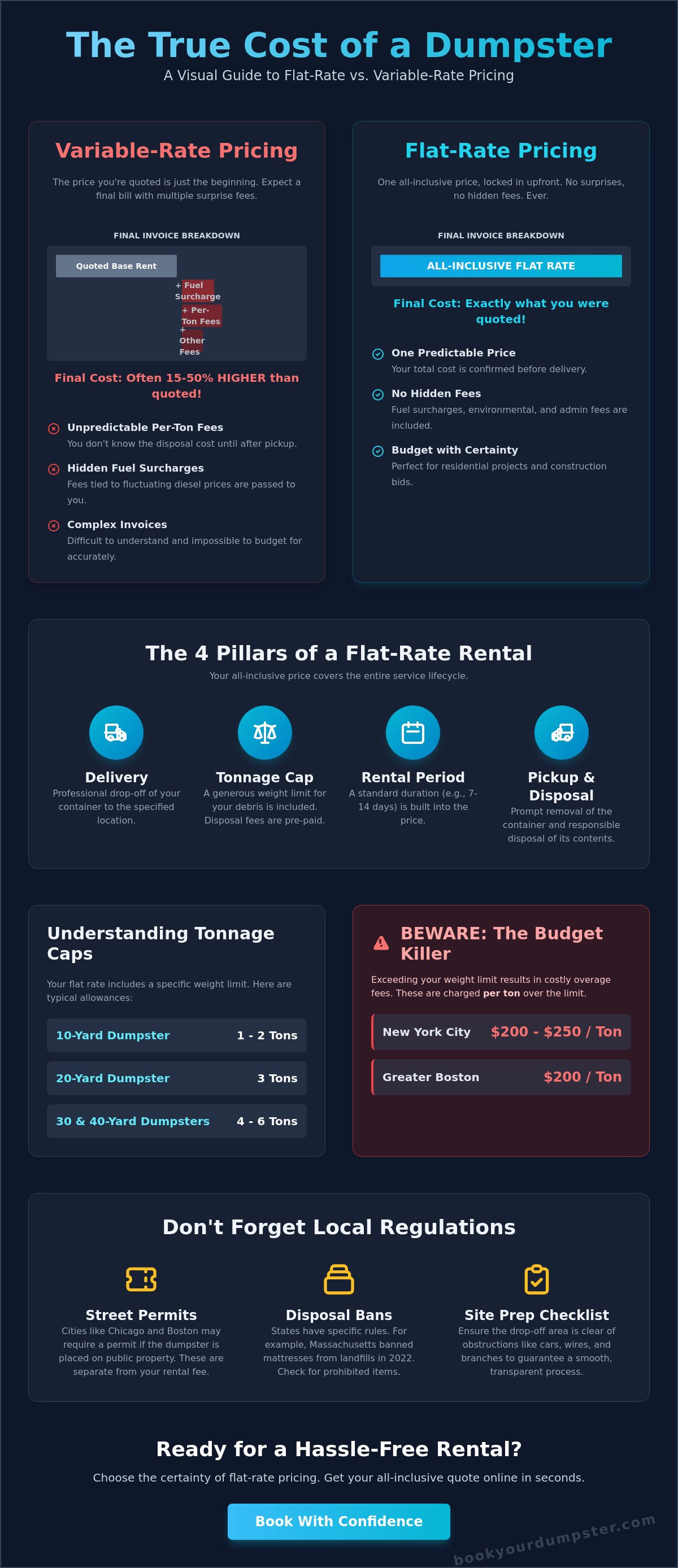
A flat rate dumpster rental is an all-inclusive price bundled at the time of booking. It covers the entire lifecycle of your container. This means you pay one upfront cost that includes the delivery, the pickup, a specific rental duration, and a set amount of weight. Having a flat rate dumpster rental explained simply means you won't see separate line items for fuel or environmental fees on your final bill. This model provides immediate transparency for homeowners and contractors alike. You know your total project cost before the truck even pulls into your driveway.
Flat Rate vs. Variable Rate: The Core Differences
Variable-rate pricing often feels like a trap. Companies quote a low base price to get you in the door, but that number only covers the drop-off. You are then billed separately for several unpredictable components:
- Base Rent: The daily or weekly cost for the container to sit on your property.
- Per-Ton Fees: The actual cost of disposal at the landfill.
- Fuel Surcharges: Floating fees tied to current diesel prices.
- Environmental Fees: Costs associated with state and local regulations.
In high-regulation markets like New York, where overweight fees can reach $250 per ton, a "cheap" rental quickly becomes a budget disaster. This unbundled model makes it impossible to provide accurate construction bids. The flat-rate model is the superior choice for most residential cleanouts. It simplifies the waste management process by absorbing these fluctuating costs into one predictable fee. While a variable rate might look lower on paper, the final invoice is almost always higher once the disposal facility weighs the load.
The "No Hidden Fees" Guarantee
Common industry "gotchas" like fuel surcharges and administrative fees often hide in the fine print. These variables can add 15% to your total cost without warning. Book Your Dumpster USA eliminates these surprises by using a transparent, digital-first booking system. We provide a clear breakdown of what you're paying for before you confirm your order. Flat-rate pricing is a bundled service agreement that includes delivery, disposal, and a pre-set weight limit. This commitment to honesty ensures you can manage your renovation or clean-up project without fear of post-pickup charges. Choose your size, schedule your delivery, and experience the reliability of a partner who understands the importance of having the flat rate dumpster rental explained before work begins.
What’s Included in a Flat Rate? Breaking Down the Costs
A flat-rate agreement isn't just a price tag; it's a bundle of four essential services designed to remove logistical stress. When you have a flat rate dumpster rental explained properly, you see that it covers delivery, pickup, a set rental period, and a specific weight allowance known as the tonnage cap. Disposal fees at the landfill are already pre-paid within this rate. This eliminates the anxiety of waiting for a weight ticket to find out what you owe weeks after the project ends. You get a single, predictable price that allows you to budget with total certainty.
Understanding Tonnage Caps and Weight Limits
Cubic yards measure volume, but tonnage measures weight. It's a common point of confusion for DIYers. A 10-yard dumpster holds 10 cubic yards of debris, but it typically includes a tonnage cap of 1 to 2 tons. For larger projects, a 20-yard container might include 3 tons, while 30 and 40-yard units often cover 4 to 6 tons. It's vital to stay within these limits to avoid pro-rated overage fees. In New York City, exceeding your limit can cost between $200 and $250 per ton. In the Greater Boston area, these fees are typically $200 per ton. Following New York State waste regulations ensures your debris is handled legally while you stay within your budget. If you aren't sure which size fits your debris, you can choose your size online to see the specific weight limits for each container before you book.
Rental Duration and Extension Policies
Most residential cleanups require a standard window of 7 to 14 days. This timeframe is factored into your flat rate. It allows you to work at your own pace without daily rental fees ticking up. If your construction project in Chicago or renovation in Boston runs behind schedule, requesting an extension is a simple, direct process. Most providers allow for daily or weekly extensions for a small, transparent fee. Keeping a fixed duration also helps maintain neighborhood curb appeal by ensuring the container doesn't become a permanent fixture on your street. This structure moves you quickly from a state of clutter to a state of resolution. By having the flat rate dumpster rental explained in terms of time and weight, you maintain full control over your project timeline and your wallet.
Choosing the Right Model: When is Flat Rate Better?
Flat rate pricing works best when your debris is high-volume but manageable in weight. This includes "mixed household debris" like old furniture, attic boxes, and clothes. For these items, you usually fill the physical space of the container before you ever hit the tonnage cap. If you are tackling a smaller residential task, review our 10 Yard Dumpster Buying Guide to see how this model fits DIY projects. In contrast, heavy construction debris like concrete or dirt might require a different approach, as these materials frequently exceed standard weight limits. Understanding this distinction is the core of having a flat rate dumpster rental explained for your specific project needs.
The Contractor Bidding Advantage
Professional contractors use flat rates as a risk-mitigation tool. When you submit a bid for a kitchen remodel or a commercial cleanout, you need fixed numbers to protect your profit margins. Variable rates introduce too much uncertainty into your overhead. Landfill costs in states like Illinois and Massachusetts fluctuate based on seasonal demand or changing Massachusetts solid waste regulations. By locking in a flat rate, you eliminate the risk of a single heavy load wiping out your project's profit. It simplifies expense tracking across multiple job sites. You receive one invoice per container. This clarity allows you to provide more accurate quotes to your own clients. Build trust through your own pricing transparency and keep your bids competitive.
Residential Projects and Budget Security
Homeowners often face "weight anxiety" when renting a roll-off container. You don't want to spend your weekend wondering if that old sofa or a pile of carpet will cost you an extra $200 in overage fees. The flat-rate model provides the psychological benefit of a "one and done" payment. You pay at the time of booking, fill the container, and watch it disappear. There are no secondary charges or confusing follow-up emails weeks after the project ends. This predictable structure is the primary reason residential customers choose Book Your Dumpster USA. It turns a messy chore into a high-functioning tool for home improvement. You get a state of resolution without the cognitive load of hidden fees. Having the flat rate dumpster rental explained means knowing your budget is secure before the first piece of trash is tossed.
Local Nuances: NY, IL, and MA Dumpster Regulations
Regional waste markets operate under vastly different rules. In New York City, weekly dumpster rental costs for roll-off units can reach $1,080, making budget management a challenge. Flat rates help you hedge against these high costs by locking in a price before the disposal truck arrives. Having a flat rate dumpster rental explained within the context of your specific state is essential for avoiding legal fines. Review the 2026 Dumpster Rental Guide for NY, IL, and MA to see how specific state laws impact your next project. Prohibited items like tires, batteries, motor oil, and asbestos are never included in flat rates. Tossing these into a container will result in immediate penalties from the haulers and local environmental agencies.
Street Permits and Placement Rules
Placement rules vary by city. If you plan to put a dumpster on a public street in New York City, you must obtain a Street Opening Permit from the Department of Transportation (DOT). These permits typically cost between $50 and $150. In Chicago, you need a permit from the Department of Transportation for any container placed on a public street or sidewalk. These are available for 3-day and 30-day durations. Suburban Illinois regulations are often more relaxed, but you should still check with your local municipality. Permit fees are usually handled separately from the flat rental rate. Plan your placement carefully. Avoid blocking public right-of-ways or fire hydrants to prevent the city from towing your container at your expense.
State-Specific Waste Bans
State laws dictate what can actually go to the landfill. As of November 2022, textiles and mattresses are banned from trash disposal in Massachusetts. If you're doing a home cleanout in Boston, you'll need a separate plan for these items. Illinois law prohibits hazardous materials such as liquid paint and lead-acid batteries. The Illinois Consumer Electronics Recycling Act also bans most electronics from landfills. Additionally, NYC residential buildings with 1 to 9 units must use official "NYC Bins" for trash setout as of June 1, 2026. Clean fill rules also differ. Dirt, concrete, and brick often require a dedicated container with a different pricing structure than general debris. Don't guess on local compliance. Schedule your delivery with a partner who understands these regional nuances and keeps your project on the right side of the law.
Booking Your Flat Rate Dumpster with Confidence
Transparency is the verbal handshake that defines our service. Having a flat rate dumpster rental explained means you can finally stop worrying about the "what ifs" of disposal costs. We provide 10, 20, 30, and 40-yard roll-off options to fit every project scale. Whether you're clearing a basement in Brooklyn or managing a retail renovation in Chicago, our system ensures you move from a state of clutter to a state of resolution. Use our instant online booking tool to secure your container in minutes. Follow this checklist for a successful rental:
- Choose your size: Match your debris volume to the right container.
- Verify permits: Confirm if your city requires a street permit.
- Prep the site: Clear all obstructions before the truck arrives.
- Load evenly: Keep debris level with the top of the container.
- Respect the cap: Stay within your tonnage limit to avoid overages.
Preparation for Delivery Day
Prepare your site to ensure an on-time delivery. Clear the "drop zone" of all vehicles, equipment, and debris. Roll-off trucks require at least 60 feet of straight-line approach to safely place the container. Check for overhead obstructions like low-hanging power lines or tree branches. These are common in older neighborhoods across Illinois and Massachusetts and can prevent a safe drop. If the truck can't safely place the dumpster, you might face a dry-run fee. Avoid this logistical stress by prepping the area before our driver arrives. This simple step keeps your project on schedule and your budget intact.
Why Book Your Dumpster USA?
We act as a high-functioning tool for your cleanup or construction project. Our team brings local expertise to New York, Illinois, and Massachusetts. We ensure your rental complies with regional waste mandates. We handle the complex logistics so you can focus on the work at hand. There's no fluff and no jargon. You get reliable delivery and transparent pricing every time. We've modernized the traditional waste industry to respect your time and your urgency. Rent your flat-rate dumpster online today and experience the efficiency of a partner who has everything under control.
Secure Your Project Budget Today
You now have the mechanics of a flat rate dumpster rental explained. This model removes the risk of $250 per ton overweight fees common in New York and the unpredictable fuel surcharges that inflate variable-rate invoices. By bundling delivery, disposal, and your rental period into one price, you protect your profit margins and simplify your cleanup. You've learned how to navigate local regulations in Chicago, Boston, and NYC while staying compliant with state-specific waste bans like the 2022 mattress disposal rules in Massachusetts.
It's time to move your project forward with total certainty. We provide on-time delivery across NY, IL, and MA with a range of 10 to 40-yard containers to suit any residential or commercial need. There are no hidden environmental fees or administrative surprises. Choose your size and schedule your drop-off through our instant online portal. Book your transparent, flat-rate dumpster now to clear your debris without the financial stress. You have the right tools; now get the job done with confidence.
Frequently Asked Questions
Does a flat rate dumpster rental include weight limits?
Yes, every flat rate dumpster rental explained here includes a pre-set weight limit called a tonnage cap. This limit varies by container size, typically ranging from 1 ton for small units to 6 tons for large ones. Staying within this cap ensures you pay only the initial bundled price. If you exceed this limit, you'll be billed for the additional weight based on the local disposal facility's rates.
What happens if I go over the weight limit on a flat rate rental?
Exceeding the weight limit results in a pro-rated overage fee for every ton over the cap. In New York City, these fees can reach $250 per ton, while the Greater Boston area typically charges $200 per ton. Your container is weighed at the disposal facility, and any extra charges are applied after pickup. Monitor your debris types carefully to avoid heavy materials like dirt or concrete in a standard mixed-waste rental.
Are permits included in the flat rate dumpster price?
No, street permits are almost always handled as a separate expense from the flat rental rate. If you place the container on public property, such as a sidewalk in Chicago or a street in New York City, you must pay the local municipality for a permit. These fees range from $50 to $150 depending on the city's specific Department of Transportation requirements and the total duration of the placement.
Can I put any type of waste in a flat rate dumpster?
No, you cannot dispose of hazardous or banned materials in any roll-off container. Prohibited items include liquid paint, motor oil, lead-acid batteries, and asbestos. Additionally, state-specific bans apply, such as the 2022 Massachusetts ban on mattresses and textiles. Illinois law also prohibits most electronics from landfills under the Consumer Electronics Recycling Act. Always check the prohibited items list before you start loading your container to avoid fines.
How long can I keep a flat rate dumpster rental?
Most flat-rate rentals include a standard duration of 7 to 14 days. This window is designed to provide enough time for residential cleanouts or small construction projects without incurring daily fees. If your project in Illinois or Massachusetts runs long, you can request an extension. These extensions are typically billed at a daily or weekly rate to keep your container on-site until your job is finally done.
Is flat rate pricing cheaper than variable pricing in New York?
Flat rate pricing is often more cost-effective in New York because it hedges against volatile disposal costs. In a market where weekly costs can reach $1,080, knowing your total expense upfront prevents budget spikes. While variable pricing might show a lower initial base rent, the final invoice often includes fuel surcharges and environmental fees that make it more expensive than a bundled flat rate for most users.
Are there any hidden fees with a flat rate rental?
No, there are no hidden fees like fuel surcharges or administrative costs when you choose a flat-rate model. The price you see during the instant online booking process is the price you pay for delivery, pickup, and disposal within your tonnage cap. This transparency is why having a flat rate dumpster rental explained is vital for contractors and homeowners who need to manage strict project budgets with total certainty.
What is the tonnage cap for a 20-yard dumpster in Illinois?
A 20-yard dumpster in Illinois typically includes a 3-ton weight limit for general household or construction debris. In Southern Illinois, specifically around Mount Vernon, this 3-ton limit is standard for a 10-day rental period. If you're disposing of heavy materials like shingles or masonry, you'll hit this limit faster than expected. Always estimate your debris weight to ensure you choose the correct container size for your specific location.


