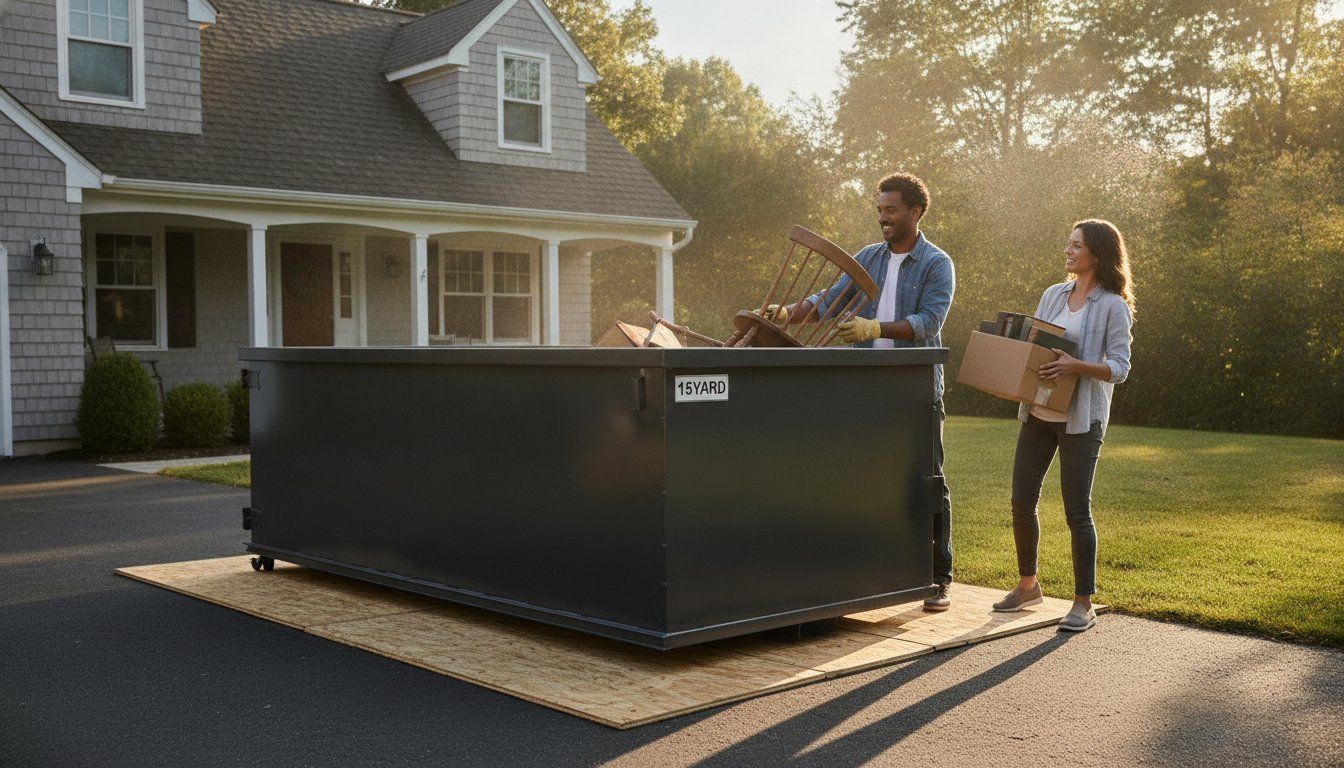
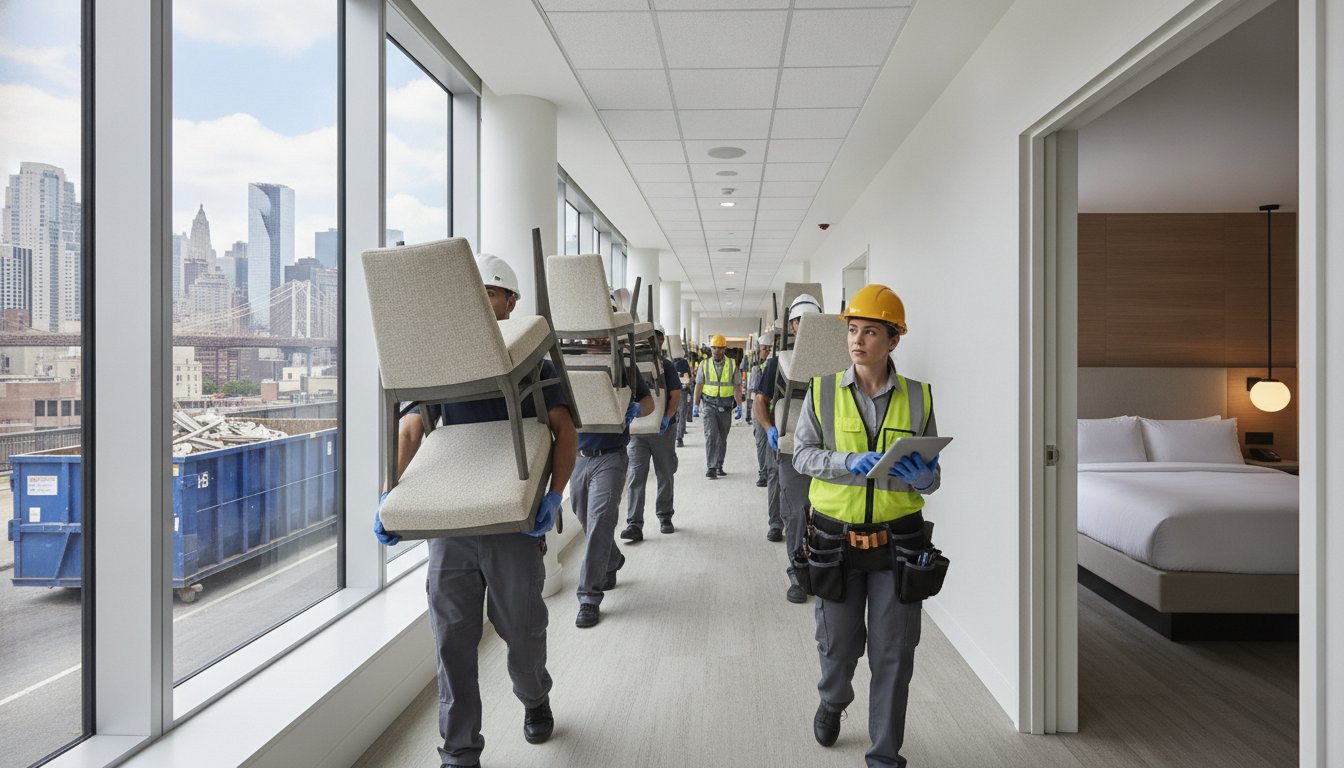
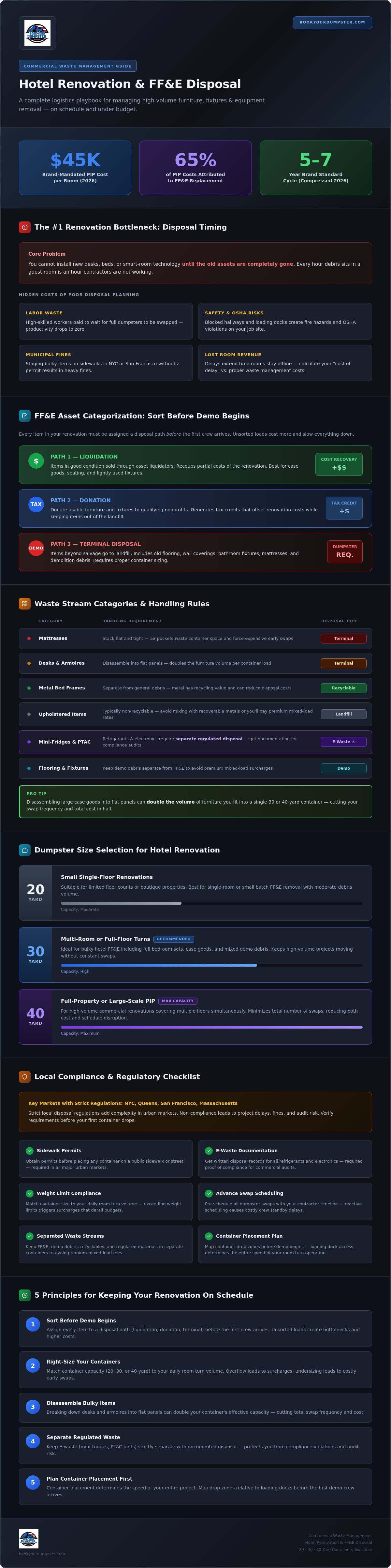
Did you know that a 2026 brand-mandated Property Improvement Plan can cost up to $45,000 per room, with FF&E replacement accounting for up to 65% of that total? Managing a hotel renovation and FF&E disposal is a high-volume logistics puzzle where container placement determines the speed of your entire project. You understand the pressure of tight room turn schedules and the frustration of hidden fees in waste management. In cities like New York or San Francisco, strict local disposal regulations add another layer of complexity to an already labor-intensive process.
Master the logistics of furniture and equipment removal to keep your renovation on schedule and under budget. This guide provides a clear plan for efficient FF&E disposal. We will show you how to select properly sized 20, 30, or 40 yard dumpsters to avoid overflow while ensuring compliance with local commercial waste laws. Use these strategies to move from a state of clutter to a resolved, renovated property with minimal friction.
Key Takeaways
- Eliminate room-turn bottlenecks by mastering the specific logistics of hotel renovation and FF&E disposal.
- Categorize your waste stream effectively to handle bulky furniture and fixtures without exceeding weight limits or incurring surcharges.
- Scale your container capacity with 30-yard and 40-yard dumpsters designed to keep high-volume commercial projects moving.
- Navigate local permitting and commercial waste regulations in major markets like New York City and Massachusetts to avoid project delays.
- Streamline your cleanup process with a transparent, digital-first approach that provides immediate scheduling across multiple job sites.
The Logistical Challenge of Hotel FF&E Disposal
Successful hotel renovation and FF&E disposal requires more than just moving furniture. It is a high-stakes logistics game where timing is your most valuable asset. In 2026, brand standard cycles have compressed to 5 or 7 years. This means you are processing a massive volume of waste more frequently than in previous decades. If your disposal plan is not synchronized with your construction schedule, the entire project will stall.
Disposal is the most common bottleneck in hotel room turns for one reason: space. You cannot install new desks, beds, or smart-room technology until the old assets are completely gone. You must decide early which items are fit for liquidation, which can be donated for tax credits, and which require terminal disposal. Terminal disposal often involves managing a heavy stream of Demolition waste, including old flooring, wall coverings, and bathroom fixtures that cannot be salvaged. Every hour that debris sits in a guest room is an hour your contractors are not working. Calculate your "cost of delay" by looking at lost room revenue and contractor standby fees. These numbers usually dwarf the cost of proper waste management.
Why FF&E Turnover is Accelerating in 2026
Guest expectations are shifting toward integrated smart-room technology and minimalist aesthetics. In high-occupancy urban markets like New York and Queens, furniture experiences rapid wear and tear. Franchise requirements now demand consistent, modern aesthetics across all properties to maintain brand equity. This pressure forces hotel operators to cycle through their FF&E assets faster than ever before. You need a disposal partner who can keep up with this accelerated pace without missing a beat.
The Hidden Costs of Improper Disposal Planning
Poor planning leads to immediate financial leaks. When crews have nowhere to stage old furniture, labor productivity drops. You are paying high-skilled workers to wait for a full dumpster to be swapped. Safety is another major concern; blocked hallways and loading docks create fire hazards and OSHA risks. In cities like San Francisco or New York, staging bulky items on a sidewalk without a permit results in heavy fines. Avoid these traps by scheduling your dumpster swaps in advance and ensuring your container size matches your daily room turn volume. Precision in waste logistics is the only way to protect your bottom line.
Categorizing Your Waste Stream: Furniture, Fixtures, and Equipment
Sort your inventory before the first demo crew arrives. Effective hotel renovation and FF&E disposal starts with accurate waste stream categorization. You aren't just throwing away trash. You're managing a complex mix of bulky furniture, fragile fixtures, and regulated electronic equipment. Group your items into clear categories to optimize your removal timeline. This prevents your loading dock from becoming a graveyard of unsorted debris.
When you discard old furniture during a renovation, you must separate materials that have recycling value from those destined for the landfill. Metal bed frames and certain plastics are often recoverable. Upholstered items and mattresses typically aren't. Knowing the difference prevents you from paying premium rates for mixed loads that could've been sorted more efficiently. A single room turn generates a chaotic mix of heavy case goods and lightweight construction debris, and your job is to keep them organized.
Handling Bulky Items and Mattresses
FF&E disposal is the systematic removal of non-structural hotel assets. Mattresses are your biggest logistical hurdle. They create massive air pockets in dumpsters, which wastes space and forces more frequent, expensive swaps. Instruct your crews to stack them flat and tight. For large case goods like desks and armoires, disassembly is mandatory. Break these items down into flat panels. This simple step can double the amount of furniture you fit into a single 30-yard or 40-yard container.
Managing E-Waste and Regulated Materials
Mini-fridges and PTAC units require specialized handling because of refrigerants and electronic components. Don't toss these into a general debris container. Local laws often require separate disposal for E-waste to prevent hazardous materials from entering the landfill. Ensure your waste partner provides documentation for these regulated items. This paperwork protects you during audits and proves your compliance with commercial waste regulations. If you're managing a high-volume project, view our commercial options to find the right container for your specific waste stream.
Choosing the Right Dumpster Size for Bulky Hotel Assets
Selecting the wrong container size is a fast way to blow your renovation budget. In a high-volume hotel renovation and FF&E disposal project, your waste volume is dictated by the number of room turns you complete each day. If you're clearing 10 rooms daily, a small bin will overflow before your lunch break. You need to match the container's cubic yardage to the physical footprint of your assets. This keeps your loading dock functional and your labor crews moving without interruption.
Efficiency depends on minimizing haul frequency. Every time a truck arrives to swap a dumpster, your loading dock operations must pause, which creates a logistical domino effect. For large-scale projects, focus on maximizing volume for light debris and managing weight for heavy materials. Compliance is also a factor; ensure your disposal methods align with Federal Environmental Regulations to avoid legal complications during property disposal. Proper sizing isn't just about space; it's about maintaining a constant, predictable workflow that respects your timeline.
The 30 and 40-Yard Advantage
The 30-yard and 40-yard dumpsters are the primary tools for any major hotel refresh. These containers provide the necessary length and height for large sofas, king-size headboards, and long drapery tracks. If you're performing a full floor-out in a high-rise hotel, these large bins are mandatory. They allow you to consolidate bulky items that would otherwise require multiple smaller hauls. By reducing the number of trips to the landfill, you lower your overall logistics pressure and keep your loading dock clear for incoming new FF&E deliveries. This prevents the "clutter creep" that often stalls room turns.
When to Use 10 and 20-Yard Containers
Don't use large dumpsters for bathroom renovations. High-density waste like marble, tile, and porcelain is extremely heavy. A 40-yard dumpster filled with tile will exceed legal weight limits, leading to failed hauls and expensive overage fees. Instead, use a 10 yard dumpster for these heavy materials. It's the safest way to manage weight while staying compliant with road safety laws. 20-yard containers are ideal for "soft goods" refreshes where you're only replacing items like bedding, pillows, and small chairs. These smaller units fit better in restricted urban loading docks where space is at a premium. Strategic container mixing ensures you have the right tool for every specific waste stream.
Navigating Local Regulations and Project Timelines in 2026
Regulatory compliance is the invisible backbone of any successful hotel renovation and FF&E disposal project. In 2026, oversight is tighter than ever. For example, New York City requires strict adherence to Business Integrity Commission (BIC) rules for all commercial waste. Using an unauthorized hauler can lead to massive fines that wipe out your renovation savings. Similarly, Massachusetts and Illinois have specific permitting requirements for dumpster placement on public streets. Don't assume your contractor has these permits. Verify them yourself to avoid work-stoppage orders.
Timing your hauls is just as critical as the disposal itself. Most major cities enforce "quiet hours" that limit when heavy trucks can operate. You must coordinate your dumpster swaps with local traffic patterns and hotel guest schedules. If a truck arrives late in Midtown Manhattan, it might get stuck in gridlock; this leaves your loading dock blocked for hours. This creates a backlog that affects every trade on the site. Precision scheduling is the only way to maintain your project timeline.
Urban Logistics: New York, Chicago, and San Francisco
Managing a loading dock in the Chicago Loop or San Francisco's Financial District requires military precision. You have a narrow window to deliver a 30-yard or 40-yard dumpster and remove the old one. On-time delivery is not a luxury; it's a requirement to keep thoroughfares clear. For properties in Queens or suburban New Jersey, the challenges shift to managing higher debris volumes from larger, sprawling properties. Always plan your logistics around the specific density of your location to avoid logistical bottlenecks.
Documentation and Compliance for Commercial Projects
Accurate project accounting depends on detailed documentation. You need weight tickets for every haul to track your total waste output and calculate diversion rates for LEED or local sustainability goals. Many 2026 projects now require proof that a certain percentage of FF&E was diverted from landfills. Ensure your waste partner provides these tickets promptly. You also need to verify that your insurance coverage meets the specific requirements for on-site container placement at a commercial property. For more detailed state-level information, check out our Dumpster Rental in New York, Illinois, and Massachusetts: The 2026 Complete Guide. To keep your project compliant and on track, schedule your commercial dumpster rental today.
Streamlining Your Renovation with Book Your Dumpster USA
Managing a complex hotel renovation and FF&E disposal project requires a partner who values your time. We've removed the friction from waste logistics by offering a digital-first platform for instant scheduling. You don't have time for phone tag or opaque pricing. Our system provides direct online booking so you can secure containers for multiple locations in seconds. This transparency ensures your project stays under budget without the surprise of hidden fees. We act as a high-functioning tool that helps you maintain control over your job site.
Reliability is the foundation of our service. We understand that a missed haul-away doesn't just leave a mess; it stops your renovation in its tracks. We provide dedicated support for large-scale projects to ensure your loading dock stays clear and your crews stay productive. By synchronizing our hauls with your specific room turn schedule, we prevent the debris bottlenecks that often plague unorganized projects. Our approach moves you quickly from a state of clutter to a state of resolution with minimal cognitive load. You get a dependable expert who understands the unique pressure of hotel timelines.
Why Contractors Choose Book Your Dumpster
Contractors rely on us for our versatility and deep local expertise. We offer the full range of 10, 20, 30, and 40-yard roll-off containers to handle every aspect of your project. Whether you're dealing with heavy bathroom tile or bulky king-size headboards, we have the right capacity ready for delivery. Our team has extensive experience with high-volume construction debris removal across New York, New Jersey, Illinois, and Massachusetts. We know the local permitting rules and urban traffic patterns, allowing us to navigate logistics with precision. This local grounding combined with technological savvy makes us the preferred partner for modern commercial projects.
Get Started with Your Hotel Disposal Plan
Don't let waste logistics dictate your project's success. Use our streamlined system to secure your containers today and keep your renovation on schedule. If you're managing a major property overhaul, contact our commercial team for customized high-volume quotes tailored to your specific timeline. Our focus on pricing integrity and punctuality serves as a rhythmic promise of reliability. We're here to help you master the logistical challenges of 2026 brand standard updates. Book Your Dumpster now to lock in your renovation schedule and ensure your property is ready for guests on time.
Secure Your Project Timeline
Efficient hotel renovation and FF&E disposal depends on your ability to anticipate logistical hurdles before they stall your crews. You've seen why matching container capacity to your daily room turn volume is vital. Using 30-yard and 40-yard bins for bulky furniture while reserving 10-yard units for heavy bathroom debris keeps your loading dock functional. Compliance with local regulations in cities like New York and San Francisco is not optional; it's the only way to avoid the fines that threaten your budget.
We serve NY, NJ, IL, MA, and San Francisco with a full range of 10 to 40-yard containers. Our streamlined online booking platform allows commercial contractors to schedule hauls across multiple job sites with total pricing transparency. You don't have to settle for the opaque communication of traditional waste haulers. Take control of your site logistics and eliminate the stress of debris management. Schedule your hotel renovation dumpster today at BookYourDumpster.com. Your next successful property refresh starts with a reliable disposal plan.
Frequently Asked Questions
What is FF&E in the hotel industry?
FF&E stands for Furniture, Fixtures, and Equipment. These are the movable assets that aren't permanently attached to the hotel structure. Examples include beds, chairs, lighting, and electronics. Proper hotel renovation and FF&E disposal requires a clear inventory of these items to determine which can be liquidated and which must be sent to a landfill.
How many rooms of furniture fit in a 40-yard dumpster?
A 40-yard dumpster typically holds the contents of 3 to 5 standard hotel rooms if the furniture is fully disassembled. Your crews must break down desks and armoires into flat panels to maximize space. Without disassembly, large furniture creates air pockets that waste container volume and increase your total haul costs.
Do I need a permit to place a dumpster at my hotel?
You need a permit if the dumpster sits on a public street or sidewalk. If the container is placed entirely on private hotel property, like a private loading dock or parking lot, a permit is typically not required. Always check local city ordinances in markets like New York or Chicago, as regulations regarding public right-of-way placement are strictly enforced.
Can I dispose of mattresses in a standard roll-off dumpster?
You can dispose of mattresses in a roll-off dumpster, but they require strategic loading. Stack them flat to prevent air pockets. Be aware that many landfills charge surcharges ranging from $15 to $50 per mattress. Check your local regulations to see if mattresses must be separated from the general debris stream to meet recycling mandates.
How do I handle E-waste like hotel TVs and mini-fridges?
E-waste must be handled as a separate waste stream. Items like hotel TVs, computers, and mini-fridges contain hazardous materials or refrigerants that are prohibited from standard landfills. Arrange for a specialized pickup or use a dedicated container for electronics. This ensures your hotel renovation and FF&E disposal process remains compliant with environmental laws.
What is the best way to dispose of hotel bathroom fixtures during a renovation?
Use a 10-yard dumpster for heavy bathroom fixtures like toilets, tubs, and tile. These materials are high-density and will quickly exceed the weight limits of larger 30 or 40-yard containers. Separating heavy masonry and porcelain from lighter furniture prevents failed hauls and expensive overage fees at the scale.
How often should I schedule dumpster hauls during a full hotel renovation?
Schedule your hauls based on your daily room turn rate. If your team is clearing 10 rooms per day, you may require daily dumpster swaps to prevent loading dock overflows. Monitor your fill levels closely during the first week of the project to establish a predictable rhythm for your waste partner and avoid labor downtime.
Are there weight limits for commercial hotel dumpsters?
Yes, every commercial dumpster has a specific weight limit dictated by the truck's lifting capacity and legal road limits. Most roll-off trucks cannot safely or legally transport more than 10 tons of debris. Exceeding these limits results in "dry run" fees where the driver cannot pick up the container, stalling your renovation timeline and increasing costs.