

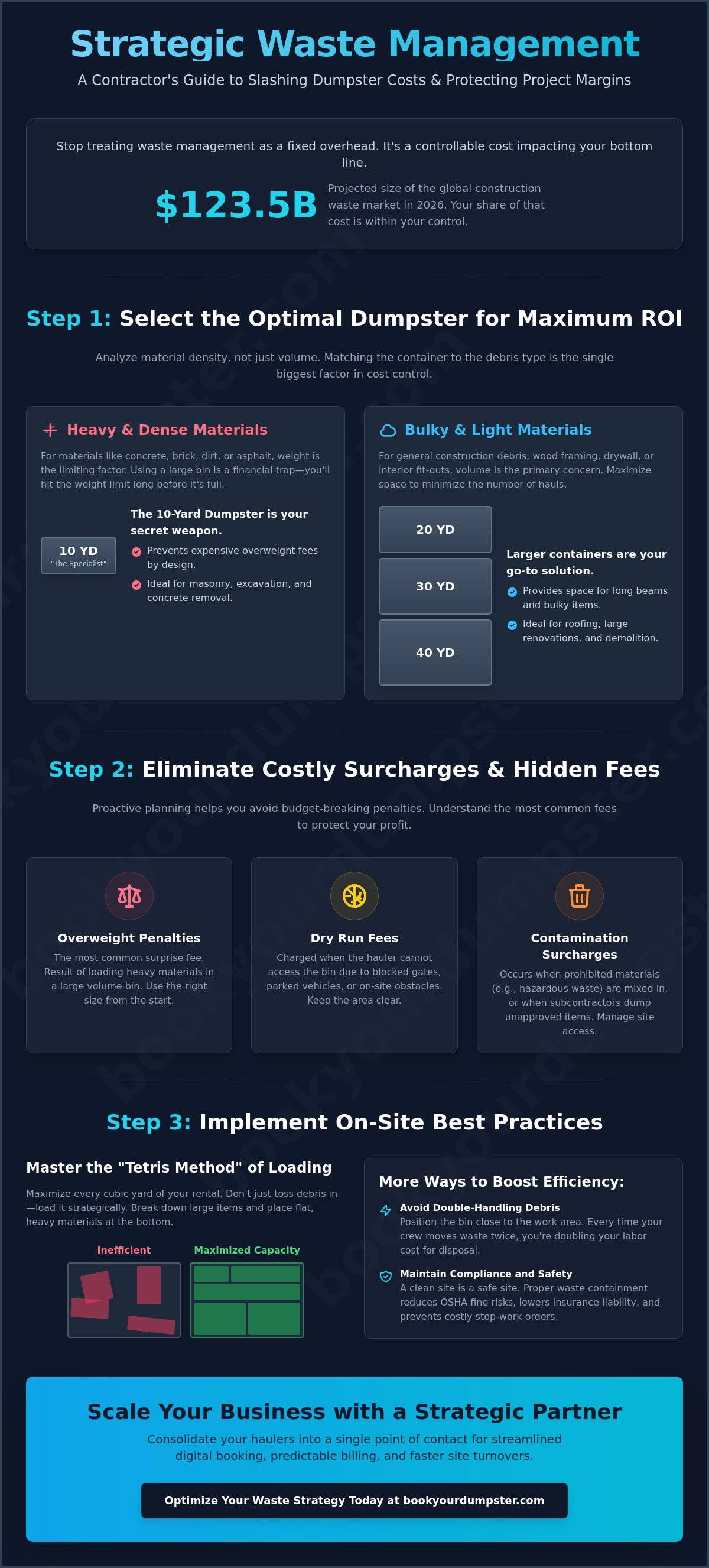
Waste management isn't just a fixed overhead expense; it's a controllable operational cost that directly impacts your project margins. Many site managers accept high disposal bills as an unavoidable tax on their business, yet the global construction waste market is projected to hit $123.5 billion in 2026. You've likely felt the sting of unexpected overweight surcharges or expensive dry run fees caused by blocked site access. These logistical hiccups don't just delay your timeline; they eat your profit. This guide explains exactly how contractors can save money on dumpster rentals by shifting from reactive ordering to strategic waste management.
We'll show you how to eliminate hidden fees and protect your bottom line from rising fuel and landfill costs. You'll learn to navigate 2026 regulatory shifts, such as the increasing requirements for digital waste tracking and local diversion mandates like CALGreen. We've compiled professional strategies to help you achieve predictable billing and faster site turnovers. From selecting the right 10 or 40 yard container to optimizing crew loading habits, this is your roadmap to more efficient waste disposal. Stop letting waste logistics drain your budget and start treating your dumpster strategy as a tool for project success.
Key Takeaways
- Treat waste management as a controllable operational cost rather than a fixed overhead to protect your project margins.
- Learn how contractors can save money on dumpster rentals by matching container size to material density and utilizing the 10-yard dumpster for heavy debris.
- Identify and eliminate hidden surcharges by choosing the right billing model between flat-rate and tonnage-based pricing.
- Implement the "Tetris Method" of loading to maximize bin capacity and manage subcontractor waste to prevent site contamination.
- Scale your operations by consolidating haulers into a single strategic partnership that offers streamlined digital booking.
Why Waste Management is a Critical Profitability Factor for Contractors
Waste management isn't a passive project requirement. It's a direct variable in your profitability. In 2026, the construction waste management market is projected to reach $123.5 billion, reflecting the massive volume of material moving through modern job sites. Understanding construction waste management principles allows you to treat disposal as a logistical asset rather than a sunk cost. If you want to know how contractors can save money on dumpster rentals, start by analyzing your waste-to-profit ratio. Every dollar spent on inefficient hauling or redundant labor is a dollar taken directly from your net margin.
Inefficient debris management creates labor bottlenecks that stall your entire crew. When piles of drywall, masonry, or timber block access points, your skilled tradespeople spend time navigating obstacles instead of completing their specialized tasks. This friction adds up. Small mistakes, like placing a bin too far from the work area or failing to schedule a swap before a bin reaches capacity, compound into significant financial drains. Integrate waste logistics into your initial project bid to ensure these costs are accounted for and managed from day one.
The Hidden Costs of Poor Planning
Double-handling debris is a silent profit killer. If your crew moves a pile of scrap wood once to clear a workspace and a second time to load it into the bin, you've doubled your labor cost for that specific material. Delayed pickups also disrupt trade schedules; a full container often means work stops or debris starts piling up on the floor again, creating a secondary mess. Failure to coordinate timely waste removal can stall site momentum and trigger liquidated damages clauses in your contract. Calculate your hourly crew rate against the time spent moving trash to see the true impact of poor bin placement.
Compliance and Safety as Cost-Savers
Clean sites are safe sites. OSHA frequently issues heavy fines for trip hazards and unmanaged debris piles, all of which are preventable with a disciplined disposal strategy. Local regulations in cities like Queens or Boston require strict adherence to diversion rates and street placement permits. Ignoring these municipal requirements leads to stop-work orders and expensive penalties. Using a contained waste strategy with a 20 or 30 yard dumpster reduces your insurance liability by minimizing on-site accidents. This proactive approach is a primary way how contractors can save money on dumpster rentals while protecting your professional reputation and your bottom line.
Selecting the Optimal Dumpster Size for Maximum ROI
Analyze your material density before you book. Volume is only half the equation; weight density is what dictates your final invoice. If you want to know how contractors can save money on dumpster rentals, you must stop guessing and start calculating. High-density materials like concrete or masonry require smaller containers to avoid exceeding legal hauling limits. Conversely, bulky but light materials like insulation or cabinetry demand maximum volume. Choosing the wrong container leads to either wasted space or expensive overweight penalties that can erase your project profit.
Use the 10-yard dumpster as your secret weapon for heavy debris. This container is specifically designed for dense materials such as dirt, brick, and asphalt. Attempting to use a 40-yard dumpster for these items is a financial trap. You'll hit the weight limit before the bin is even a quarter full, leaving you paying for 30 yards of air you can't use. For large-scale demolition involving wood framing or roofing, the 30 and 40-yard containers are the correct choice. They provide the necessary height and length for long beams and bulky debris without the risk of immediate weight violations.
Trade-Specific Sizing Recommendations
Roofing contractors and renovation crews have different logistical needs. Use these guidelines to match your specific project to the right container:
- Roofing: A 20-yard dumpster typically handles approximately 40 squares of three-tab shingles.
- Interior Fit-outs: Use 30-yard bins for bulky drywall, cabinetry, and flooring scraps.
- Masonry and Excavation: Stick to 10-yard dumpsters for concrete, dirt, and brick to stay within weight limits.
This precision prevents the high cost of over-renting or paying for unused capacity. Always confirm your material type with your provider to ensure the bin can be safely hauled once filled.
The High Cost of Air: Maximizing Internal Space
Paying for empty space is a logistical failure. If your crew isn't breaking down materials, you're paying to haul air. Follow construction waste best practices by compacting debris as it enters the bin. Sometimes, placing two 20-yard containers at different site access points is more efficient than one 40-yard container. This reduces the time your crew spends walking across the site, which lowers your total labor costs. If you're unsure of your needs, compare our dumpster sizes to find the most cost-effective option for your load. This level of planning is how contractors can save money on dumpster rentals while maintaining high site velocity.
How to Eliminate Costly Surcharges and Hidden Fees
Hidden fees are the primary reason project budgets spiral out of control. Most contractors focus on the base rental price, but the real cost is often buried in the surcharges. Understanding the anatomy of your invoice is essential for maintaining your margins. You'll typically encounter two pricing models: flat-rate and tonnage-based. Flat-rate models provide a set price for a specific weight limit, while tonnage-based models charge a smaller base fee plus a rate for every ton of debris. Knowing how contractors can save money on dumpster rentals starts with choosing the model that fits your specific material profile. Applying Sustainable materials management principles helps reduce the volume of waste sent to landfills, which naturally lowers these variable disposal fees.
Proactive communication with your hauler prevents most surprise charges. If you're working in a dense urban environment like San Francisco, logistical hurdles are constant. A single double-parked car or a locked gate can prevent a driver from accessing the bin. This results in a "dry run" fee. You pay for the truck's time and fuel even though no waste was moved. Check your site daily. Ensure the path is clear before the scheduled pickup time. This simple habit is a direct way how contractors can save money on dumpster rentals by avoiding unnecessary trip penalties.
Navigating Weight Limits and Overages
Estimating weight is a skill that saves thousands over a project's lifecycle. Drywall is deceptive; it's bulky but heavy when stacked. Concrete is the opposite, reaching weight limits very quickly. A 20-yard roll-off typically has a weight capacity of three to five tons. If you exceed this, you'll face overage fees that are often billed at a premium rate. "Clean loading" or separating materials like metal or clean wood can sometimes qualify you for lower disposal rates at specialized facilities. Don't mix heavy masonry with light trash if you can avoid it.
Preventing Dry Run and Trip Fees
Site access is your responsibility. In states like New York and Massachusetts, street permits are strictly enforced and must be displayed correctly to avoid fines or blocked deliveries. Beyond ground-level obstacles, you must account for overhead clearance. Low-hanging power lines, tree branches, and building overhangs can prevent a roll-off truck from extending its hoist. Verify that you have at least 14 feet of vertical clearance and 20 feet of overhead room for the bin to be dropped or lifted. If the driver identifies a safety hazard, they'll leave without the bin, and you'll receive the bill for the attempt.
Operational Best Practices for Loading and Site Efficiency
How your crew physically loads a container determines your final disposal cost. Stop treating the bin like a trash can. Start treating it like a packing crate. The "Tetris Method" requires stacking flat materials such as plywood, drywall, and doors tightly at the bottom. This prevents large air pockets that waste volume. If you want to know how contractors can save money on dumpster rentals, look at the sky. A heavy rainstorm can double your disposal costs if the container stays uncovered. Saturated drywall and timber gain significant weight. This often pushes you over your tonnage limit before the bin is even full. Use a heavy-duty tarp during off-hours to keep your load dry and your costs predictable.
Site security is equally vital. Illegal dumping by third parties happens fast. An unsecured bin at a residential site is an invitation for neighbors to toss their old mattresses or appliances. These items often carry separate "hard-to-handle" fees or are outright prohibited. Lock your gate or use a lockable dumpster lid to prevent unauthorized use. Every pound of someone else's trash is money out of your pocket. Direct oversight of the loading area ensures you only pay for the waste your project actually generates.
Clean Loading and Volume Maximization
Break down bulky materials immediately. Cut long timber scraps and collapse cardboard boxes to eliminate voids. Load heavy materials like concrete or brick first. This ensures a stable center of gravity for the hauler. Always keep debris level with the top rim. If materials protrude over the sides, the driver cannot safely tarp the load. This leads to rejected pickups and extra trip fees. Proper loading allows you to fit more debris into a single 20 or 30 yard dumpster, reducing the total number of swaps required over the project's lifecycle.
Managing the Human Element
Monitor your subcontractors closely. Inefficient loading or bin contamination by other trades ruins your budget. Designate a "waste captain" on multi-trade sites. This person oversees the bin and verifies that only approved materials are tossed. They ensure the crew follows the ultimate guide to construction debris removal. Training your team on these specific habits is a primary way how contractors can save money on dumpster rentals. When your site is organized, you reduce labor hours and avoid surprise billing. Schedule your next bin delivery to put these site efficiency practices to work on your next project.
Scaling Your Business with a Strategic Waste Partner
Juggling multiple haulers across different regions is an administrative burden that bleeds profit. When you work with a single-point-of-contact partner, you eliminate the time spent vetting vendors and chasing down fragmented invoices. Book Your Dumpster USA acts as a high-functioning tool for your business, providing the reliability you need to scale without adding logistical stress. This partnership is a fundamental way how contractors can save money on dumpster rentals because it streamlines your back-office operations and ensures pricing integrity across every job site. Instead of managing vendors, you manage your project's success.
A strategic partner understands that your waste needs change as your business grows. Whether you're handling a single residential fit-out or managing a large-scale commercial development, your logistics should remain consistent. Consolidating your waste services allows for better data tracking and more predictable billing. This bird's-eye view of your waste expenditure helps you identify patterns, such as which crews or projects consistently hit their tonnage limits, allowing you to adjust your bidding and loading strategies for future jobs.
Local Expertise and Logistics Support
Each major metro area has its own waste landscape. Navigating the unique disposal laws in New York or the specific permitting requirements in Chicago requires more than just a truck; it requires local knowledge. We manage these complexities for you, coordinating multi-site deliveries through a single, transparent dashboard. This is especially valuable for recurring jobs where a standard roll-off dumpster rental strategy can be replicated to maintain site velocity. Whether you're operating in New Jersey or Illinois, having a partner who understands local landfill fees and diversion mandates prevents costly compliance errors and ensures your waste is handled legally and efficiently.
Streamlining Logistics with Online Booking
Stop wasting hours on the phone. Modern waste management relies on digital speed and straightforward honesty. Our online booking system provides instant pricing and size availability, allowing you to include accurate waste costs in your project bids immediately. This transparency removes the guesswork and protects your margins from the start. You can scale your project needs in real-time, ordering a 10-yard bin for a small renovation or a 40-yard container for a major demo with a few clicks. This digital-first approach is how contractors can save money on dumpster rentals while allowing your team to focus on the actual construction work. Optimize your next job site with Book Your Dumpster USA to experience a professional, no-nonsense waste partnership that grows with your business.
Take Control of Your Project Waste Logistics
Waste management is a high-functioning tool for your job site, not a secondary concern. You've learned that strategic sizing and disciplined loading techniques are the foundation of a profitable project. By avoiding "air" in your bins and preventing costly dry run fees through better site coordination, you protect your margins from rising landfill costs. This proactive approach is the most effective way how contractors can save money on dumpster rentals while maintaining a safe and efficient workspace. Precision in waste logistics translates directly to your bottom line.
Stop letting logistical stress drain your budget. We provide professional waste solutions across NY, NJ, IL, MA, and San Francisco. Select from our full range of 10, 20, 30, and 40-yard containers to match your specific material density. Use our streamlined online booking to secure your equipment and get back to building. Book Your Contractor-Grade Dumpster Online Now and experience the difference of a reliable, no-nonsense waste partner. Your next successful project starts with a clean site.
Frequently Asked Questions
How much can a contractor realistically save by switching dumpster sizes?
Contractors save significantly by matching container volume to material density. Renting a 40-yard bin for heavy brick is a mistake. You'll hit weight limits early and pay for unused space. Switching to a 10-yard bin for masonry ensures you pay only for the capacity you use. This precision is a key way how contractors can save money on dumpster rentals. It's about paying for the debris moved, not the container size.
What is a "dry run" fee and how do I avoid it on a busy site?
A dry run fee is a charge applied when a driver is unable to complete a drop-off or pickup. Obstacles like locked gates, parked vehicles, or low-hanging wires trigger these penalties. Avoid them by inspecting the site 30 minutes before your scheduled window. Ensure the path is clear and overhead clearance is at least 14 feet. This proactive step keeps your schedule moving and prevents unnecessary billing on your account.
Are there specific dumpsters for heavy materials like concrete or brick?
Use the 10-yard dumpster for heavy debris like concrete, dirt, and brick. These materials are extremely dense. A larger 30 or 40-yard bin filled with concrete would exceed the legal hauling weight for the truck's hoist. By using the specialized 10-yard container, you stay within safety limits and avoid the massive overweight surcharges associated with larger bins. Always specify your material type when booking to get the correct equipment for the load.
How do I estimate the weight of my construction debris before it is hauled?
Multiply the cubic yardage of your materials by their specific weights to get a reliable estimate. For example, a yard of loose soil weighs roughly 1.1 tons, while a yard of concrete is about 2 tons. Use your project's take-off sheets to calculate the total expected tonnage. This data helps you select a bin with a weight limit that matches your load, preventing surprise overage fees when the bin reaches the landfill.
Do I need a permit for a dumpster on a residential street in Queens or Boston?
You generally need a permit if the dumpster is placed on a public street or sidewalk in Queens or Boston. If the bin stays on your private job site, you usually won't need one. However, if it blocks a sidewalk or occupies a parking spot, you must secure documentation from the city's Department of Transportation. Failure to display a valid permit can result in immediate fines and site shutdowns by local code enforcement.
What items are strictly prohibited in a construction roll-off container?
Strictly prohibited items include wet paint, chemicals, asbestos, tires, and large electronics. Construction roll-off containers are designed for C&D waste like wood, metal, and drywall. Tossing hazardous materials or appliances containing refrigerants leads to immediate rejection and heavy contamination fees. Always check with your provider if you're unsure about a specific material to avoid having your bin left on-site during a scheduled pickup attempt.
Can I share a dumpster with another contractor on the same site to save money?
Sharing a dumpster is possible, but it carries significant financial risk for the primary contractor. You are responsible for any prohibited items or weight overages regardless of who threw them in. If you choose to share, set strict loading rules and monitor the bin closely. Contamination from another trade's hazardous waste can lead to thousands in cleanup costs that you'll be required to pay as the primary account holder.
How does weather (like heavy rain) affect the cost of my rental?
Heavy rain adds significant weight to absorbent materials like drywall, carpeting, and lumber. When these items get soaked, their tonnage can double, leading to unexpected overage charges at the scale. Covering your bin with a heavy-duty tarp during storms is a primary way how contractors can save money on dumpster rentals. This simple habit keeps your load dry and ensures your final bill stays within the projected project budget.


