
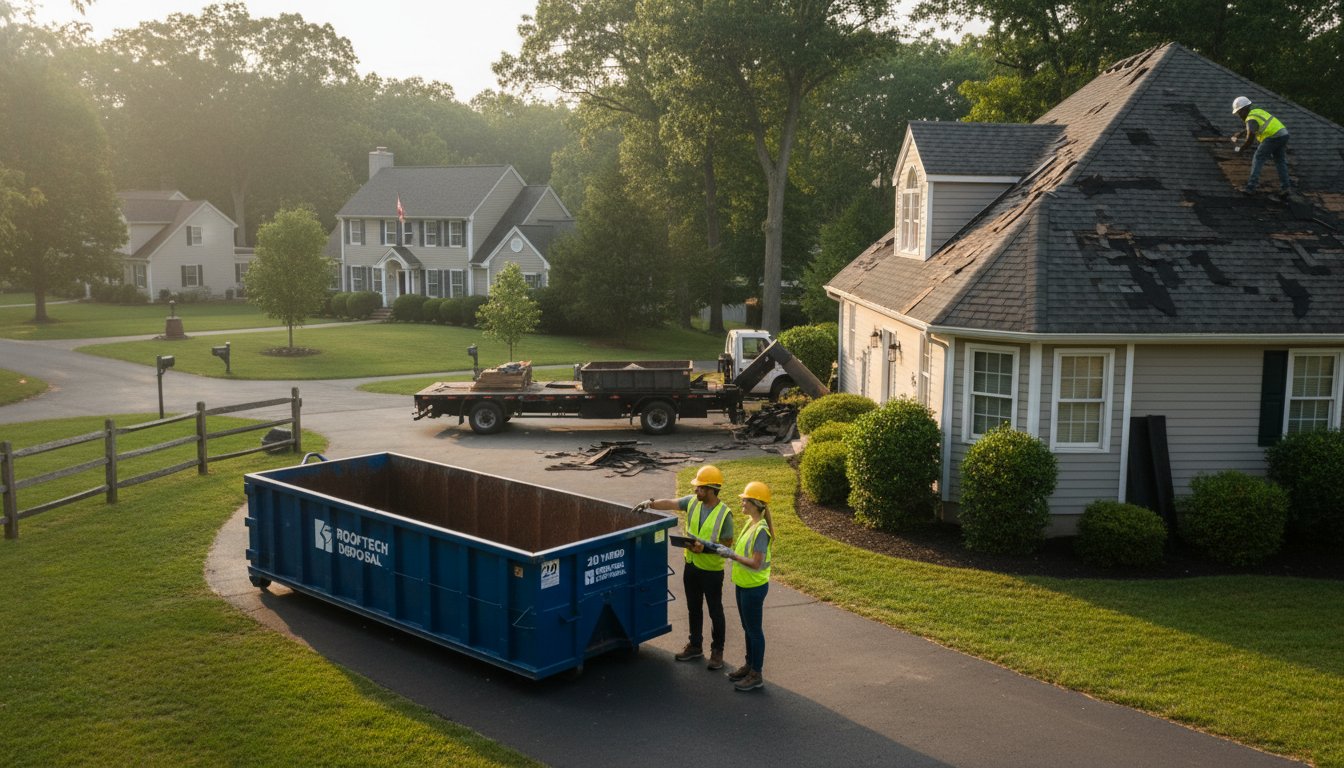
A single miscalculation on a roofing tear-off can kill your profit margin in overweight fees before the first shingle hits the ground. You know the frustration of seeing a dumpster only half-full but already over its weight limit due to heavy architectural shingles or unexpected second layers. Mastering how to estimate roofing debris weight is the only way to protect your project overhead and keep your job site moving efficiently.
We understand that waste logistics are often the most stressful part of a renovation. You need a reliable method to convert squares and bundles into tons so you can select the right container with confidence. This guide provides the exact formulas to master the math behind your debris. We will break down weight differences between material types, account for the 10 percent national increase in landfill tipping fees, and help you determine whether a 10 yard, 20 yard, or 30 yard dumpster is the right fit for your next project.
Key Takeaways
- Learn the standard conversion of three bundles per square to establish an accurate baseline for your total debris volume.
- Master how to estimate roofing debris weight by applying layer multipliers and material-specific density factors to your total square count.
- Account for the "Sponge Effect" where trapped moisture can add hundreds of pounds to your load and impact your final tipping fees.
- Identify the correct dumpster size, such as a 10 or 20 yard roll-off, to ensure heavy materials stay below the fill line.
- Understand state-specific tear-off regulations to plan your disposal strategy and avoid unexpected project delays or legal penalties.
Understanding Roofing Units: Squares, Bundles, and Weight Basics
Roofing projects rely on a specific set of measurements that don't always translate directly to dumpster capacity. While you might measure a roof in square feet, landfills operate on tonnage. To protect your bottom line, you must bridge the gap between surface area and physical mass. Understanding how to estimate roofing debris weight starts with the "square," the industry standard for 100 square feet of roof surface. Most asphalt shingles are sold in bundles, and it typically takes three bundles to cover one square. However, these units only describe how much material you need to buy, not how much it weighs when you tear it off.
Weight is the primary billing factor for every landfill and transfer station. They don't care how many yards of space your shingles take up; they care about the impact on their scales. You must also distinguish between nominal weight and actual disposal weight. Nominal weight is the dry, clean weight of the shingles listed by the manufacturer. Actual disposal weight includes the weight of the nails, underlayment, and the inevitable accumulation of grit and moisture. Asphalt shingle composition varies by brand and style, which means two different 30-square roofs can have vastly different weights once they hit the dumpster.
What is a Roofing Square?
A roofing square represents a 10-foot by 10-foot area. While this is a simple calculation for area, it doesn't account for the thickness or density of the material. When you calculate your squares, start with ground-level measurements of the building's footprint. You must then adjust for the pitch and slope of the roof. A steep 12/12 pitch requires significantly more material than a flat roof covering the same footprint. Always add a 10 percent waste factor to your total square count to account for ridge caps, starters, and valley cuts that add weight to your waste stream.
Why Weight Estimation Prevents Costly Overage Fees
Roll-off dumpsters are designed with specific weight capacities that vary by size. For example, a 10 yard dumpster often has a 2-ton limit, while a 20 yard dumpster may handle more. If you fill a container with heavy architectural shingles and exceed these limits, you will face expensive overage fees. These fees are driven by rising landfill tipping fees, which saw a 10 percent national increase in 2024. For a broader look at managing project waste, consult the ultimate guide to construction debris removal. Accurate estimation ensures you book the right size from the start and keep your overhead low.
Comparing Shingle Types: How Material Choice Impacts Total Weight
Different roofing materials have distinct density profiles that drastically change your disposal requirements. If you're figuring out how to estimate roofing debris weight, identifying the specific shingle type is your most critical step. A project's total tonnage isn't just about the footprint of the house; it's about the mass of the product being removed. Modern roofing trends have shifted toward thicker, more durable materials that offer better protection but carry a much heavier physical load than the products used twenty years ago.
Three-Tab vs. Architectural Asphalt Shingles
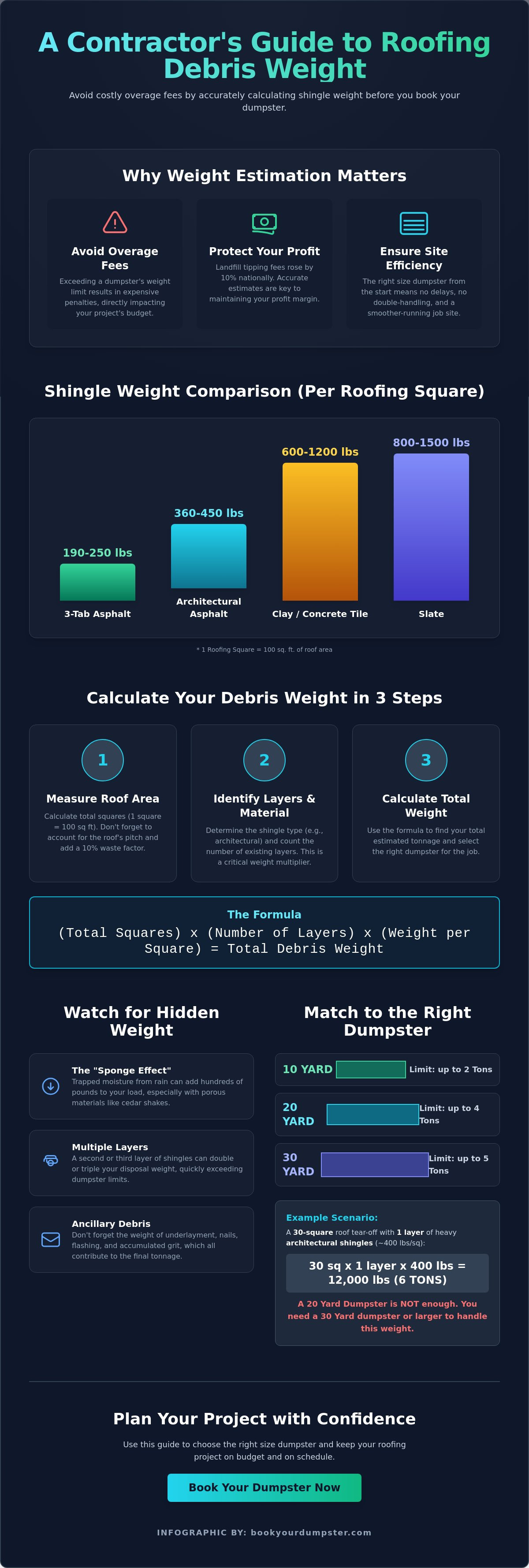
Standard 3-tab shingles are the baseline for most residential estimates. These typically weigh between 190 and 250 lbs per square. They are thinner and use less material per shingle. In contrast, modern architectural or laminate shingles are far denser. Because they feature multiple layers of material to create a dimensional look, they often weigh between 360 and 450 lbs per square. This density is a result of specific shingle composition and weight standards that prioritize wind resistance and longevity. If you're replacing an old 20-year 3-tab roof with a new lifetime architectural product, your disposal weight will nearly double.
The Heavyweights: Slate, Tile, and Cedar Shakes
Specialty materials require a completely different approach to dumpster sizing. Slate roofing is among the heaviest materials available, weighing between 800 and 1,500 lbs per square. Clay and concrete tiles are similarly burdensome, often hitting 600 to 1,200 lbs per square. These "heavy-duty" materials often require multiple dumpsters because you'll hit the weight limit long before you reach the top of the container. Cedar shakes present a unique challenge. While they are relatively light when dry, they are highly porous. A saturated cedar roof can double in weight after a heavy rain, turning a manageable load into an overweight disaster.
Always check for multiple historical layers before finalizing your estimate. In states like Massachusetts, building codes prohibit more than two layers of roofing. If you discover a second layer during the tear-off, your weight calculation must reflect that 100 percent increase in debris. For these high-volume projects, you should choose a dumpster size that accounts for both the physical space and the massive weight of multi-layered shingles. Heavy materials like tile or slate should never be piled high; keep the load level with the top of the dumpster to ensure safe transport and avoid safety violations.
How to Calculate Your Roofing Debris Weight (Step-by-Step)
Relying on digital calculators alone often leads to expensive mistakes. These tools cannot see the hidden layers or the water-saturated felt paper beneath your shingles. To protect your project budget, you must perform a manual calculation. This process ensures you account for every pound of material before you schedule your roll-off. Learning how to estimate roofing debris weight with pen-and-paper accuracy allows you to identify the exact tonnage your project will generate, preventing unexpected overage fees at the scale.
The Basic Weight Formula
Follow these four steps to determine your total project load. This formula provides the baseline for your dumpster selection. Use the material weights discussed in the previous section to ensure your data is accurate.
- Step 1: Determine the total number of squares on the roof. Remember that one square equals 100 square feet of surface area.
- Step 2: Identify the number of layers to be removed. Check the drip edge or pull a small sample. In states like Massachusetts and Illinois, building codes strictly prohibit more than two layers of roofing. If you find two layers, your disposal weight immediately doubles.
- Step 3: Multiply squares x layers x material weight. For example, 20 squares of architectural shingles at 400 lbs per square equals 8,000 lbs.
- Step 4: Convert total pounds to tons. Divide your total weight by 2,000 to find your tonnage. In the example above, 8,000 lbs equals 4 tons.
Accounting for Underlayment and Accessories
The shingles themselves are only part of the equation. You must account for the "invisible" weight of the assembly. Old tar paper and the thousands of nails used across a roof add significant mass. Estimate 20 to 30 lbs per square for this debris alone. If your project involves a full deck replacement, you must also factor in the weight of damaged OSB or plywood. A standard 4-foot by 8-foot sheet of 1/2-inch plywood weighs approximately 45 lbs. While metal flashing and gutters take up significant volume in a dumpster, they add minimal weight to your final tonnage calculation.
Always add a 10 percent buffer to your final weight estimate. This safety margin protects you from the weight of trapped moisture, extra ridge caps, and unexpected debris found during the tear-off. If your calculated weight is 4.5 tons, prepare your budget for 5 tons. This proactive approach ensures you book the correct dumpster size and maintain your profit margins despite rising landfill costs.
Critical Factors That Increase Roofing Debris Weight
Relying solely on manufacturer specs for a dry shingle will leave you vulnerable to expensive overweight penalties. Real-world conditions often add significant mass that isn't captured in a basic calculation. To truly master how to estimate roofing debris weight, you must evaluate the environmental and logistical variables unique to your job site. A dumpster that sits open during a weekend storm will weigh much more on Monday morning than it did on Friday afternoon.
Water Weight and Weather Conditions
The "Sponge Effect" is the most common cause of unexpected overage fees. Asphalt shingles are designed to shed water, but once they're torn off and piled in a dumpster, they trap moisture in the gaps between layers. Wet shingles can weigh 20 to 30 percent more than dry ones. A saturated architectural shingle can exceed 500 lbs per square, quickly pushing a 20 yard dumpster past its rated capacity. If you're working in rainy climates like Massachusetts, use a heavy-duty tarp to cover the dumpster during storms. This simple step prevents thousands of pounds of water weight from inflating your disposal costs.
Local Disposal and Recycling Factors
Your location dictates how you must sort your debris and what you'll pay at the scale. In some areas of Illinois, local regulations require you to separate shingles from other construction waste for recycling. These "clean loads" of shingles often have different pricing structures compared to mixed C&D (construction and demolition) waste. However, if you toss siding, gutters, or packaging into a shingle dumpster, it becomes a "mixed load," which typically carries a higher per-ton rate. In New York and New Jersey, strict shingle recycling mandates can also impact which facilities will accept your waste. Review local dumpster rental prices to understand how regional regulations and tipping fees affect your project budget.
Logistics also play a role in how you load your container. In high-density areas like Queens or San Francisco, narrow streets may limit you to smaller dumpster sizes or specific placement zones. This often means you can't use a single large 30 yard dumpster and must instead manage weight across multiple 10 yard containers. Never underestimate the weight of "minor" additions; a few hundred feet of aluminum gutters or several bundles of old siding will change your tonnage. To avoid logistics-driven delays and hidden costs, schedule your roofing dumpster through a provider that understands these local street requirements and weight limits.
Selecting Your Roofing Dumpster: Size and Weight Limits
Choosing the right container is the final step in securing your project's profitability. Even if you master how to estimate roofing debris weight, your efforts are wasted if you select a dumpster that cannot be legally hauled once filled. Heavy materials like asphalt shingles have a high density-to-volume ratio. This means you will hit the weight capacity of the hauling truck long before you reach the physical top of a large container. To stay compliant with Department of Transportation (DOT) regulations, you must respect the "Fill Line" rule. Never load shingles past the rim of the dumpster. Doing so makes the load impossible to tarp and often results in a weight that exceeds the legal limit for a standard roll-off truck.
Why the 10-Yard and 20-Yard Dumpsters are Roofing Favorites
Most residential tear-offs are best served by smaller, more manageable containers. A 10-yard dumpster rental is the industry standard for smaller homes or single-layer shingle swaps involving 20 to 30 squares. It fits easily in tight driveways and maintains a safe weight profile for residential pavement. For larger homes or double-layer tear-offs, the 20-yard dumpster is the "sweet spot." It provides the necessary volume for bulky underlayment while staying within the weight limits of most tandem-axle trucks.
Be cautious with 30 and 40-yard dumpsters. While these sizes are excellent for lightweight construction debris, they are dangerous for roofing. A 30-yard dumpster filled to the top with architectural shingles can easily weigh 12 to 15 tons. Most roll-off trucks have a maximum legal hauling capacity of approximately 10 tons. If you overfill a large container, the driver will be forced to leave it on-site until you manually remove the excess material. In high-density areas like Queens or Boston, stick to 10 or 20-yard units to ensure the truck can navigate narrow streets and make the lift safely.
Booking Your Dumpster for a Seamless Tear-Off
Timing is as critical as sizing. Schedule your dumpster delivery at least 24 hours before your crew arrives on-site. This buffer ensures that your team isn't standing around waiting for a place to toss shingles. Before the truck arrives, clear a wide path in the driveway and check for low-hanging branches or power lines. A loaded roofing dumpster is exceptionally heavy; ensure the placement area is level and stable to prevent sinking or damage to the surface. If you are still unsure about the specific tonnage for your material type, consult a professional to verify how to estimate roofing debris weight for your specific zip code. To keep your project on schedule and avoid logistical stress, rent your roofing dumpster from Book Your Dumpster USA today.
Secure Your Project Profits with Accurate Estimation
Eliminate the financial risk of your next tear-off by applying these calculation standards. You now have the tools to distinguish between the nominal weight of 3-tab shingles and the heavy mass of modern architectural materials. By accounting for hidden layers and the "Sponge Effect" of trapped moisture, you can maintain total control over your project overhead. Mastering how to estimate roofing debris weight is the difference between a profitable job and one buried in unexpected landfill fees.
We provide the reliable logistics you need to keep your job site moving. Our transparent weight limits and direct online booking for 10, 20, 30, and 40-yard containers ensure you never pay for more than you use. We serve contractors and homeowners across NY, NJ, IL, and MA with professional reliability. Get an instant quote for your roofing dumpster rental today and lock in your disposal plan. Take charge of your site waste and move forward with confidence.
Frequently Asked Questions
How much does a bundle of shingles weigh?
A standard bundle of 3-tab asphalt shingles weighs between 50 and 80 pounds. Architectural bundles are slightly heavier, typically ranging from 60 to 80 pounds. Since it takes three bundles to cover one roofing square, you can expect a total weight of 150 to 240 pounds per square. Always check the manufacturer's packaging to confirm the specific weight of the shingles you are removing from the structure.
How many squares of shingles fit in a 10-yard dumpster?
You can typically fit 20 to 30 squares of single-layer shingles in a 10-yard dumpster. However, the physical volume of the container is rarely the limiting factor for roofing projects. A 10-yard container usually has a weight limit of 2 to 3 tons. Since 30 squares of 3-tab shingles weigh approximately 2.7 tons, you will hit the weight capacity before the dumpster is physically full.
Does the age of the roof affect the weight of the debris?
Yes, the age and condition of the roof significantly impact debris weight. Older shingles may have lost protective granules, making them lighter, but they often compensate for this by absorbing moisture over time. If you are learning how to estimate roofing debris weight for an older home, always check for hidden second or third layers that were common in previous decades and significantly increase tonnage.
What happens if my roofing dumpster is over the weight limit?
If your dumpster exceeds the weight limit, you will be charged an overage fee based on the additional tonnage. These fees are tied to landfill tipping fees, which reached a national average of $62.28 per ton in 2024. In extreme cases, the truck may be unable to lift the container safely. This requires you to manually remove debris before the driver can haul the load away.
Can I put roofing felt and nails in the same dumpster as shingles?
Yes, you can include roofing felt, nails, and metal flashing in the same container as your shingles. These items are standard components of a tear-off and are accepted as mixed roofing waste. Avoid adding unrelated materials like tires, appliances, or hazardous waste. These items require separate handling and will trigger additional charges or refusal of service at the landfill or transfer station.
How do I calculate the number of squares if I don’t want to climb my roof?
You can estimate squares from the ground by measuring the building's exterior footprint and applying a pitch multiplier. Measure the length and width of the house to calculate the total square footage, then divide by 100. This is a reliable method for how to estimate roofing debris weight without taking risks on a ladder. Adjust this number for the roof's steepness and add a 10 percent waste factor.
Are architectural shingles heavier than 3-tab shingles?
Architectural shingles are consistently heavier than standard 3-tab shingles due to their multi-layered construction. A square of 3-tab shingles weighs between 135 and 180 pounds, while architectural squares weigh between 180 and 240 pounds. This added mass comes from the extra material used to create a dimensional appearance and increase durability. Always identify the shingle type before booking your dumpster to avoid unexpected weight overages.
Is it cheaper to rent two small dumpsters or one large one for a heavy roof?
It is often more cost-effective and safer to rent two 10 or 20-yard dumpsters rather than one 40-yard unit for a heavy roof. Large 30 and 40-yard containers quickly exceed legal road weight limits when filled with shingles. Using two smaller containers ensures the hauling truck can safely lift the load. This approach also helps you avoid the risk of being stuck with an unhaulable, overweight dumpster on your job site.