
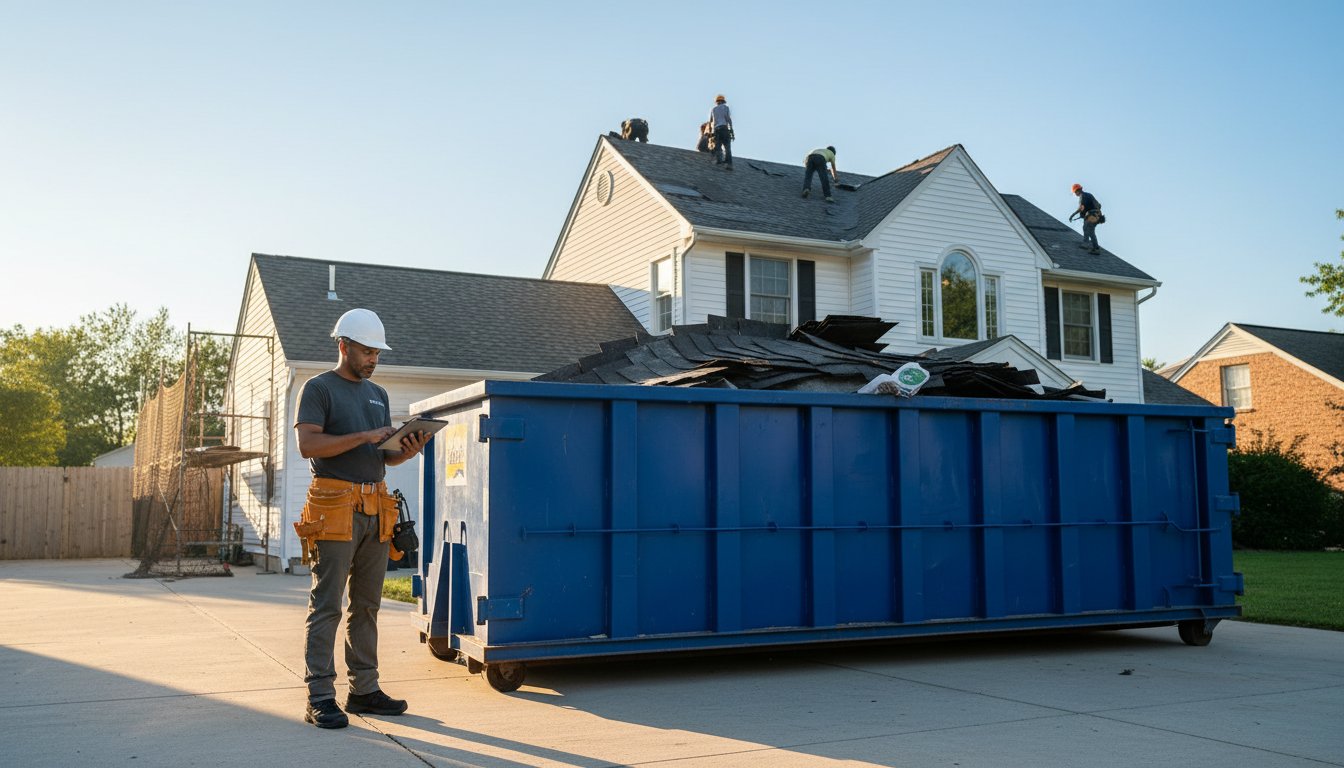
If you think a 20-yard dumpster is always enough for a standard roof tear-off, you're likely setting yourself up for an overage fee of up to $200 per extra ton in 2026. Most homeowners and contractors feel that same anxiety when they see a pile of shingles growing on the lawn. You shouldn't have to guess whether your debris will crack your driveway or drain your budget. This guide shows you exactly how to estimate shingle weight for a dumpster so you can book the right size and secure transparent pricing from the start.
Mastering the math behind roofing debris is the only way to avoid hidden costs. With 2026 disposal fees reaching $110 per ton in Tompkins County, NY, and $135 per ton in Brookhaven, an incorrect estimate is expensive. We'll give you the precise formulas for three-tab and architectural shingles. You'll also learn the specific recycling rules for Illinois and the strict asbestos regulations currently active in Massachusetts. Book your dumpster with confidence by knowing your numbers before the first shingle drops.
Key Takeaways
- Define your roofing squares and bundles accurately to establish a baseline for your total debris volume.
- Differentiate between 3-tab and architectural shingles to account for the significant weight gap between material types.
- Learn how to estimate shingle weight for a dumpster by factoring in multiple layers and adding a 10% weight buffer for nails and felt paper.
- Match your project scale to the correct container, ensuring a 10-yard or 20-yard dumpster fits both your debris and your driveway.
- Stay compliant with 2026 disposal regulations and recycling mandates specific to New York, Illinois, and Massachusetts.
The Fundamentals of Shingle Weight: Squares and Bundles
Before you book a container, you must speak the language of roofing. A "Roofing Square" is the industry standard for measuring surface area. It represents a 10x10 foot section, or exactly 100 square feet of roof surface. Don't confuse this with your home's total interior square footage. A 1,500-square-foot ranch might have 22 or 25 squares of roofing because of the pitch, eaves, and garage. If you estimate based on floor space alone, you'll likely under-order your bin. Learning how to estimate shingle weight for a dumpster starts with getting this measurement right. Every extra square adds hundreds of pounds to your load.
Most municipalities in New York, Illinois, and Massachusetts enforce strict weight limits for roll-off dumpsters to protect residential roads. In 2026, local hauling regulations are tighter than ever. If your dumpster exceeds the truck's lifting capacity or the street's legal limit, the driver cannot pick it up. This leads to "dry run" fees and the physical labor of removing heavy debris to meet weight requirements. Accurate estimation isn't just about saving money; it's about project logistics.
The Standard Unit: What is a Roofing Square?
Roofing professionals use squares because it simplifies complex calculations. A square covers a 10x10 foot area regardless of the material type. Understanding your total squares is the essential first step to a successful roll off dumpster rental. You can often find this number on your home's original blueprints, old insurance adjustment papers, or previous contractor quotes. If you're measuring yourself, remember that steeper pitches increase the total surface area. A roof with a 12/12 pitch has significantly more squares than a flat roof with the same footprint. Always round up to the nearest square to ensure you have enough capacity for the waste.
Bundles vs. Squares: Doing the Math
Manufacturers package shingles in bundles for easier transport. For a standard asphalt shingle, the rule of thumb is that three bundles equal one square. However, this isn't a universal law. Heavier designer products or slate-style shingles often require four bundles to cover a single square because of their thickness and weight. Always check the packaging or the manufacturer's spec sheet for the bundle count per square. If you have a 2,000-square-foot roof surface, you are dealing with 20 squares. At three bundles per square, that's 60 bundles of debris. If you have two layers of old shingles, you're suddenly managing 120 bundles. Use these numbers to calculate your total tonnage before you schedule your delivery.
Calculating Weight by Shingle Type: 3-Tab vs. Architectural
Identifying your shingle type is the most critical step in learning how to estimate shingle weight for a dumpster. While they might look similar from the ground, the physical density of 3-tab asphalt versus architectural laminate shingles varies by nearly 40%. This weight gap determines whether you can use a standard container or if you must upgrade to a heavy-duty bin to avoid road safety violations. Density matters more than volume for roofing projects. A dumpster can reach its weight limit long before it's physically full.
3-tab asphalt shingles are the lightest option, typically weighing between 230 and 250 pounds per square. These are identifiable by their flat, uniform appearance and single-layer construction. In contrast, architectural shingles, also called dimensional or laminate shingles, are significantly thicker. They consist of multiple layers of material bonded together to create a textured look. This extra material pushes their weight to a range of 320 to 400 pounds per square. Don't guess which one you have; pull a sample from the roof to be certain.
If you're replacing a 30-square roof in Illinois or New York, where architectural shingles are the standard for weather resistance, the math is clear. At 400 pounds per square, your 30 squares of debris will weigh approximately 12,000 pounds. That's six full tons of waste. A standard 20-yard dumpster often has a weight limit of 3 to 4 tons for mixed debris. Loading it to the brim with architectural shingles would result in a massive overage fee. Before you start the tear-off, choose your dumpster size based on these specific tonnage calculations.
Weight of Specialty Materials: Slate and Wood
New England neighborhoods, particularly in Massachusetts and upstate New York, frequently feature historic homes with slate or tile roofs. These materials are in a different weight class entirely. Natural slate can weigh between 800 and 1,000 pounds per square. A single square of slate is nearly four times heavier than 3-tab asphalt. Because of this extreme density, you cannot fill a standard roll-off bin more than halfway with slate or tile without exceeding legal transport limits.
Disposing of slate requires specialized weight-rated containers. Never mix heavy slate or clay tiles with lighter construction debris like wood or insulation. Imbalanced loads create dangerous conditions for the roll-off truck during pick-up and transport. If you're handling a historic renovation, prioritize weight capacity over cubic yardage to ensure your project stays on schedule and within budget. Always communicate the material type to your provider before the bin arrives on-site.
Accounting for the "Extra" Weight: Layers, Nails, and Moisture
Most overage fees don't come from the shingles themselves. They come from the debris you didn't account for during your initial walkthrough. When you learn how to estimate shingle weight for a dumpster, you must look beyond the top layer of the roof. Hardware, underlayment, and even the weather in the Northeast and Midwest play a massive role in your final tonnage. If you ignore these variables, you risk a dumpster that is too heavy for the roll-off truck to lift safely.
Always add a 5% to 10% weight buffer to your total estimate to account for nails and felt paper. While a single roofing nail is light, a standard 20-square project uses thousands of them. Combined with heavy organic felt underlayment, this "hidden" weight adds up quickly. If your project involves stripping the roof down to the rafters, you must also calculate the weight of rotted plywood or decking. A single 4x8 sheet of half-inch CDX plywood weighs about 48 pounds. Replacing 10 sheets of rotted decking adds nearly 500 pounds to your load before the first shingle is even tossed in.
Calculating Multiple Layers of Debris
Check the roof edge or near the gutters to identify how many layers you are removing. In many older homes across New York and Massachusetts, it's common to find two or even three layers of shingles hidden beneath the surface. The math rule is simple: Total Squares x Number of Layers = Total Debris Squares. If you have a 25-square roof with two layers of 3-tab shingles, you aren't disposing of 25 squares; you're disposing of 50. This volume of waste almost always requires a 20-yard or 30-yard dumpster to handle the weight and physical space.
The Impact of New York and Illinois Weather
Humidity and rainfall in cities like Chicago or Boston can create a "wet shingle trap" that ruins your budget. Asphalt shingles and organic underlayment are porous; they absorb water like a sponge. If your debris gets soaked during a storm, the weight can increase by as much as 20% overnight. A single inch of rain on an open 20-yard dumpster can add hundreds of pounds of water weight to your load. To prevent this, always cover your dumpster with a heavy-duty tarp when work stops for the day. Protect your estimate from the elements to ensure your pricing stays transparent and predictable. Schedule your delivery during a clear weather window whenever possible to keep your debris dry and light.

Selecting the Right Dumpster Size for Your Roofing Project
Matching your tonnage to the correct container size is the final step in the planning phase. Once you understand how to estimate shingle weight for a dumpster, you can avoid the logistical nightmare of a container that is too small for your debris or too heavy for your driveway. For roofing projects, the weight limit is almost always more important than the physical volume. Shingles are incredibly dense. A 40-yard dumpster filled to the top with asphalt shingles would exceed the lifting capacity of any standard roll-off truck, leading to a failed pick-up and costly delays. Always prioritize weight capacity over cubic yardage to ensure your project stays within legal transport limits.
When to Choose a 10 Yard Dumpster
For small repairs, sheds, or a garage roof with 10 to 15 squares of single-layer shingles, a 10 yard dumpster rental is the most pragmatic choice. These smaller bins have a compact footprint that fits easily into tight driveways in older Chicago or Boston neighborhoods. Because they are delivered on smaller trucks, they pose less risk of cracking your pavement than a massive 30-yard bin. These units are specifically designed for heavy, low-volume debris like roofing and concrete. If you're only stripping a small portion of your roof or managing a DIY shed project, don't pay for empty space you won't use. Choose the smaller bin for better placement and lower costs.
The 20 and 30 Yard Options for Full Tear-Offs
The 20-yard dumpster remains the industry standard for full residential tear-offs. It comfortably handles the 3 to 4 tons of debris generated by a typical 25 to 30 square roofing job. If your estimate reveals multiple layers or heavy architectural shingles, you must consider sizing up to a 30-yard container. This larger size is necessary for commercial roofs or multi-layer projects where the volume and weight of the waste are substantial. Using a larger container from the start is much cheaper than paying for a second swap-out or facing overage fees for an overloaded 20-yard bin.
Consult our dumpster rental prices guide to compare rates and weight limits across New York, Illinois, and Massachusetts for 2026. Every region has different tipping fees and weight allowances, so local data is essential. Choose your size based on your highest possible weight estimate to ensure a hassle-free removal. Book your dumpster now to secure your delivery date and keep your project on track.
Efficient Shingle Disposal with Book Your Dumpster USA
Planning your roofing project requires more than just buying materials. You need a disposal partner that respects your timeline and your budget. Now that you know how to estimate shingle weight for a dumpster, you can move from the planning phase to active cleanup with total confidence. We specialize in removing the logistical stress of waste management for homeowners and contractors throughout the tri-state area and the Midwest. Our process is designed for speed. You calculate your tonnage, select your container, and we handle the heavy lifting. There are no surprise costs because our pricing remains transparent from the moment you book.
Local expertise is vital when dealing with the fluctuating disposal landscape of 2026. In Illinois, for example, recycling shingles at facilities like the County Conservation Company costs approximately $64.00 per ton, provided the load is clean. In New York, disposal fees vary significantly by location; Tompkins County set its municipal solid waste fee at $110 per ton effective January 1, 2026. We understand these regional nuances. Our team ensures your debris reaches the correct facility while following all local mandates, including the strict asbestos disposal regulations currently enforced across Massachusetts. We manage the compliance so you can focus on the roof.
Local Reliability in New York, Illinois, and Massachusetts
Our fleet provides on-time delivery across the most demanding urban and suburban environments. Whether you are working on a brownstone in Brooklyn or a residential replacement in the Chicago suburbs, we prioritize punctuality. Street placement often requires specific local permits in cities like Boston or NYC. We help you navigate these requirements to ensure your bin is placed legally and safely. Don't let a permit delay stop your crew. Book your dumpster today to secure your delivery window and keep your project moving forward without interruption.
The Book Your Dumpster Advantage
We provide a no-nonsense approach to waste management. Our online platform allows you to schedule 10, 20, 30, or 40-yard dumpsters in under five minutes. You get instant confirmation and clear weight allowances that match the calculations you've made. This transparency is why we are the preferred partner for professional construction debris removal. We don't use hidden surcharges or vague weight limits. If you've mastered how to estimate shingle weight for a dumpster, our system rewards that accuracy with straightforward, predictable billing. Choose your size, schedule your delivery, and experience a cleaner way to work.
Secure Your Roofing Project Budget Today
Removing a roof is a massive undertaking, but your disposal strategy doesn't have to be a source of stress. You've mastered how to estimate shingle weight for a dumpster by calculating squares, identifying material density, and accounting for those heavy layers of moisture. Whether you're stripping 15 squares for a small repair or 50 squares for a commercial project, your math is now your best tool for avoiding overage fees. We provide the local expertise you need to navigate 2026 disposal rules in New York, Illinois, and Massachusetts without the guesswork.
Book Your Dumpster offers 10 to 40-yard containers available for immediate booking with transparent pricing and no hidden fees. We specialize in on-time delivery that respects your crew's schedule and your property's integrity. Don't let debris pile up on your lawn or risk an overloaded bin. Schedule your shingle dumpster delivery now and get your cleanup under control. Your next successful renovation starts with a reliable partner and an accurate estimate.
Frequently Asked Questions
How much does a bundle of architectural shingles weigh?
A single bundle of architectural shingles typically weighs between 133 and 143 pounds. Since these shingles weigh 400 to 430 pounds per square and it takes three bundles to cover that area, the individual bundles are quite heavy. Always use a hoist or proper lifting techniques to move these materials from the roof into the container to avoid injury.
How many squares of shingles fit in a 10-yard dumpster?
A 10-yard dumpster safely holds between 10 and 15 squares of single-layer asphalt shingles. This size is perfect for small garage roofs or sheds where the total weight stays under the truck's lifting capacity. If you're removing multiple layers, you'll likely exceed the weight limit and should consider a 20-yard bin instead.
Will a 20-yard dumpster be enough for a 30-square roof?
A 20-yard dumpster is usually not enough for a 30-square architectural roof because the total weight will exceed 6 tons. At 400 to 430 pounds per square, 30 squares of architectural shingles weigh between 12,000 and 12,900 pounds. Most 20-yard bins have a weight limit of 3 to 4 tons, so you'll face overage fees or a failed pickup for being overweight.
What happens if my dumpster is over the weight limit?
If your dumpster exceeds the agreed weight limit, you'll be charged an overage fee ranging from $40 to $200 per extra ton as of April 18, 2026. In extreme cases, the roll-off truck won't be able to lift the container safely. You'll then have to manually remove debris until the bin meets the legal transport weight for your specific municipality.
Does the weight of the dumpster itself count toward my limit?
The weight of the steel container does not count toward your debris limit. Your weight allowance applies only to the materials you put inside the bin. When the truck arrives at the landfill or transfer station, the scale operator subtracts the tare weight of the empty truck and dumpster to find your net debris weight.
Can I put roofing nails and felt paper in the same dumpster as shingles?
You can put roofing nails, felt paper, and underlayment in the same dumpster as your shingles. These materials are standard construction and demolition waste. When you learn how to estimate shingle weight for a dumpster, remember to add a 5% to 10% weight buffer to account for these heavy metal fasteners and organic liners.
How do I calculate shingle weight if I have three layers of roofing?
Calculate your weight by multiplying the total number of squares by three. If your roof surface is 20 squares, three layers mean you're disposing of 60 squares of material. This volume is extremely heavy and will require multiple 20-yard dumpsters or a specialized heavy-duty bin to stay within legal road weight limits in New York or Massachusetts.
Should I cover my dumpster if it rains during my roofing project?
Cover your dumpster with a tarp immediately if rain is in the forecast. Asphalt shingles and felt underlayment are porous and absorb water, which can increase your load weight by 20% or more. Since you pay for the weight of the debris at the scale, letting your dumpster fill with water in Chicago or Boston will lead to higher disposal costs.


