A full roof tear-off on a typical home can generate up to 4.8 tons of shingle debris. That is a massive amount of weight that often catches homeowners by surprise. You don't want to deal with hidden overage fees or the stress of a dumpster that's too heavy for the truck to pick up. Learning how to estimate shingle weight for dumpster rentals is the only way to ensure you choose the right size and keep your project budget on track. It's easy to get lost in roofing terminology like "squares" versus "bundles" while trying to manage your project logistics.
We understand that managing a renovation is messy and labor-intensive. You need a reliable way to calculate your load before the bin arrives on your property. Use this guide to select the correct size, whether it's a 10 yard or a 20 yard dumpster. Master the math of roofing debris and account for "system weight" like underlayment, nails, and moisture. We will break down the specific weights for three-tab, architectural, and slate shingles to ensure your project stays on schedule and your costs stay predictable.
Key Takeaways
- Establish your baseline measurements by converting roofing squares into bundles using the standard 3-to-1 ratio.
- Learn how to estimate shingle weight for dumpster rentals by identifying your shingle type and the number of existing layers on your roof.
- Account for hidden "system weight" from nails, old underlayment, and moisture to avoid unexpected overage fees.
- Select the right container size by understanding why 10 and 20 yard dumpsters are the preferred choice for heavy roofing debris.
- Prevent property damage and ensure a seamless pickup by using driveway protection and communicating your specific material types upfront.
Understanding the Basics: What is a Roofing Square?
Before you can accurately determine how to estimate shingle weight for dumpster rentals, you must speak the language of the trade. Professionals don't measure a roof in simple square feet. Instead, they use a specific unit called a roofing square. One roofing square represents a 100-square-foot area. This measurement is the industry standard for purchasing materials and calculating the volume of debris your project will generate. If your contractor tells you that your home is 25 squares, they mean you have 2,500 square feet of roofing material to remove.
Don't make the common mistake of using your home's "living space" square footage for this calculation. Your interior floor plan is a flat measurement that doesn't account for the complexity of your roof. A 2,000-square-foot house often has a roof surface area that is 20% to 50% larger than its footprint. You must account for the roof's pitch or slope, as steeper roofs require more shingles to cover the same horizontal area. Additionally, your roof includes overhangs, eaves, and garage coverage that aren't included in your home's living area. Always measure the actual roof surface or check your original installation documents for the most accurate square count.
The Math of Bundles vs. Squares
Shingles are packaged in bundles because a full square is too heavy for a single person to carry safely. For standard 3-tab shingles, the ratio is typically three bundles per square. If you are looking at a stack of leftover material in your garage, use this simple formula: Total Bundles / 3 = Total Squares. If you are dealing with heavier architectural shingles, the packaging might vary, but the 100-square-foot rule for a "square" remains the same. Use this math as your baseline before visiting BookYourDumpster.com to select your container.
Visual Identification of Shingle Types
Identifying your specific material is the next critical step in learning how to estimate shingle weight for dumpster loads. Different styles vary significantly in density and weight. Use these visual cues to identify your roof type:
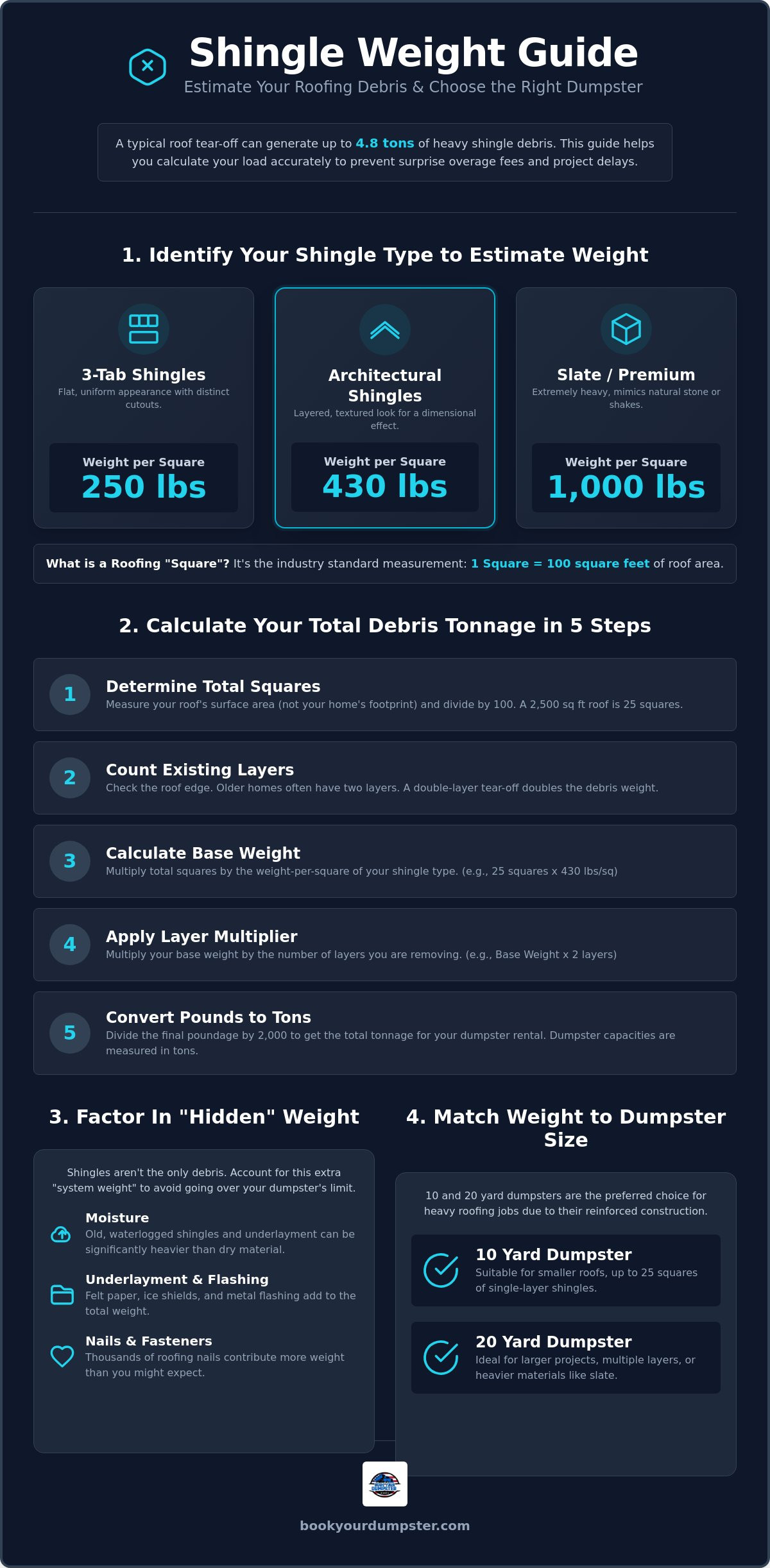
- 3-Tab Shingles: These have a flat, uniform appearance with distinct cutouts that create a rectangular pattern. They are the lightest option, weighing approximately 230 to 250 lbs per square.
- Architectural Shingles: Also known as dimensional shingles, these have a layered, textured look. They are much heavier than 3-tab versions, typically weighing between 400 and 430 lbs per square.
- Premium or Slate Shingles: These are thick and designed to mimic natural stone or wood shakes. These materials are extremely heavy, with slate shingles often weighing between 800 and 1,000 lbs per square.
How to Calculate Shingle Weight Step-by-Step
Calculating your load accurately prevents logistical failures and keeps your budget intact. Follow this five-step process to determine your total debris tonnage before you schedule a delivery. This method ensures you understand how to estimate shingle weight for dumpster rentals without relying on guesswork. Precise math is your best defense against unexpected overage fees that typically range from $50 to $100 per extra ton.
- Step 1: Determine the total number of roofing squares on your home. One square equals 100 square feet of roof surface.
- Step 2: Identify the number of layers currently on the roof. Check the drip edge or pull back a small section of flashing to see if a second layer is hidden beneath the top shingles.
- Step 3: Multiply the total squares by the weight-per-square based on your shingle type. Use 250 pounds for 3-tab, 430 pounds for architectural, and up to 1,000 pounds for slate.
- Step 4: Multiply that total by the number of layers you are removing. A double-layer tear-off creates twice the debris.
- Step 5: Convert the final poundage into tons by dividing the total by 2,000.
Calculating Squares from the Ground
If you don't have access to your roof, estimate the area using your home's ground footprint. Measure the length and width of the house at ground level; then multiply those numbers to find the base square footage. You must then apply a pitch multiplier to account for the steepness. A standard 4:12 pitch adds roughly 5% to the surface area. A steep 12:12 pitch can increase the surface area by nearly 42%. For the most reliable data, consult your original builder blueprints or a previous roofing quote. Once you have your tonnage, you can select your container size with confidence.
The "Layer Multiplier" Trap
Multiple shingle layers are common in older homes, particularly in regions like New York and Massachusetts where historic building codes often allowed for roofing over existing materials. A two-layer tear-off literally doubles your disposal weight and can easily push a standard project over the weight limit of a small bin. Identifying a second layer before you start is the most critical pre-rental step for maintaining pricing integrity. If you find multiple layers, expect to generate between 3.6 and 9.6 tons of debris for an average-sized home. This step-by-step approach simplifies the process of learning how to estimate shingle weight for dumpster rentals and protects you from the stress of an overweight load.
Accounting for "Hidden" Weight: Underlayment, Nails, and Moisture
Shingles are the main event, but they aren't the only material entering the bin. If you want to know how to estimate shingle weight for dumpster rentals accurately, you must calculate the "system weight." This includes every layer between the rafters and the sky. Ignoring these components is how homeowners end up with overage fees. You need a total weight profile that accounts for fasteners, barriers, and environmental factors. Fasteners add up. Metal matters. Every pound counts toward your final tonnage limit.
Old organic felt paper is significantly heavier than modern synthetic underlayment. It is essentially heavy paper saturated with asphalt. Over decades, this material becomes brittle and dense. If you are tearing off an original roof from the 1990s, that felt layer adds hundreds of pounds to your load. You must also consider the "nail factor." A standard roof uses four to six nails per shingle. Across a 20-square project, you are disposing of thousands of steel nails. This hardware adds a concentrated weight to the bottom of the dumpster that most people overlook.
The Moisture and Debris Buffer
Asphalt shingles are porous and act like a sponge. If your roof has leaked or been exposed to rain within 48 hours of the tear-off, your debris weight will spike. Add a 10% weight buffer to your final calculation to account for this absorbed water. If your project includes replacing rotted wood decking, your tonnage will increase even further. Sodden plywood or OSB is extremely heavy and occupies significant volume. Always use a "Safety Ton" approach. Round your final estimate up to the next full ton to give yourself a margin of error. This protects your budget from the volatility of water-soaked materials.
Additional Roofing Components
Don't forget the metal. Flashing, drip edges, and ridge vents are all part of the disposal process. While aluminum components are light, galvanized steel flashing adds up quickly. You must also account for starter strips and hip/ridge cap shingles. These are often thicker and more dense than standard field shingles to provide extra protection at the roof's edges. If your project involves a larger renovation beyond just the shingles, review our guide on construction debris removal to manage the full scope of your waste. This comprehensive view is the only way to ensure your weight estimate remains realistic and transparent.
Matching Your Weight Estimate to the Right Dumpster Size
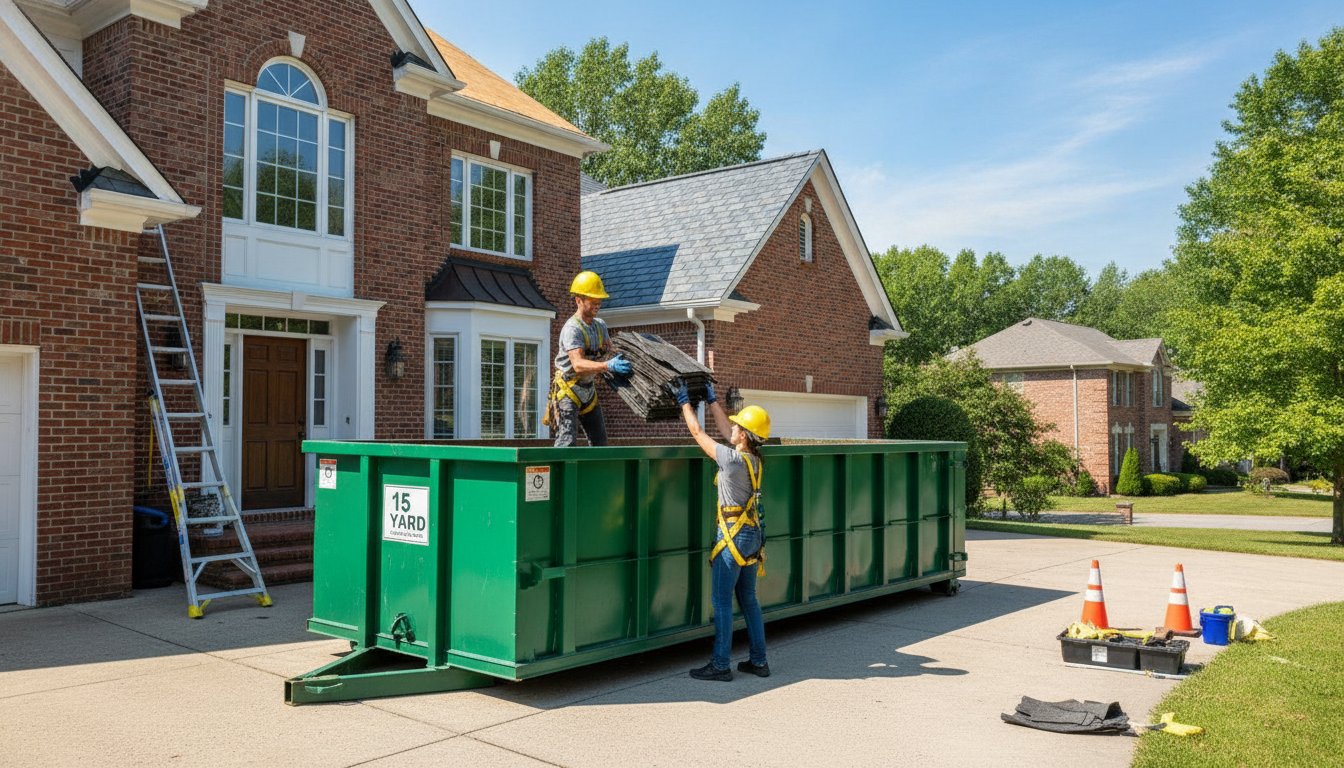
Select your container based on weight capacity rather than just physical volume. Shingles are dense, heavy, and unforgiving. When you are learning how to estimate shingle weight for dumpster rentals, you will encounter the "Heavy Debris" rule. Most providers restrict roofing materials to 10 or 20-yard bins. Larger 30 and 40-yard dumpsters are designed for bulky, light items like furniture or construction framing. Filling a 40-yard bin with asphalt would exceed the truck's hydraulic lifting capacity and violate Department of Transportation road weight limits. You will reach your tonnage cap while the bin still looks half empty.
The 10-yard dumpster is the gold standard for smaller residential roofing jobs or single-layer tear-offs. It occupies a small footprint on your driveway and handles the concentrated weight of asphalt effectively. For larger homes or roofs with multiple layers, the 20-yard bin provides the necessary headroom. Never attempt to "cheat" the system by overfilling a small bin. An overloaded dumpster is a safety hazard and may be left on-site until you remove the excess weight yourself.
The 10-Yard vs. 20-Yard Decision
Your choice depends on the specific shingle type and the square count you calculated in previous steps. Architectural shingles are nearly twice as heavy as standard 3-tab shingles, which often forces a jump to a larger bin even on medium-sized roofs. Use the table below to match your project specs to the correct container. If your estimate falls between sizes, always choose the larger option to ensure a single-trip pickup.
| Roofing Squares | Shingle Type & Layers | Recommended Dumpster |
|---|---|---|
| 10–20 Squares | 3-Tab (1 Layer) | 10 Yard Dumpster |
| 20–30 Squares | 3-Tab (1 Layer) | 20 Yard Dumpster |
| 15–20 Squares | Architectural (1 Layer) | 20 Yard Dumpster |
| 10–15 Squares | Architectural (2 Layers) | 20 Yard Dumpster |
Understanding Weight Limits and Overage Fees
Every rental comes with a "Tonnage Cap," which is the maximum weight included in your flat rate. This is different from the physical size of the bin. If your load exceeds this cap, you will face overage fees calculated at a per-ton rate. These fees are transparent but avoidable. It is almost always more cost-effective to pay for a 20-yard dumpster upfront than to pay multiple tons of overage fees on a 10-yard bin. Accuracy in how to estimate shingle weight for dumpster loads is your best tool for pricing integrity. Order your roofing dumpster today to secure the right size for your specific tonnage needs.
Booking Your Dumpster: Pro Tips for a Smooth Tear-Off
Clear communication with your provider is the final step in mastering how to estimate shingle weight for dumpster rentals. Don't just order a generic bin. Explicitly state that you are disposing of asphalt shingles and specify the shingle type. This allows the dispatch team to provide a container specifically rated for heavy debris. It also ensures that the driver is prepared for the concentrated weight. Transparency regarding dumpster rental prices is essential for project budgeting. Ask for an all-in rate that includes the tonnage cap you calculated in the previous sections.
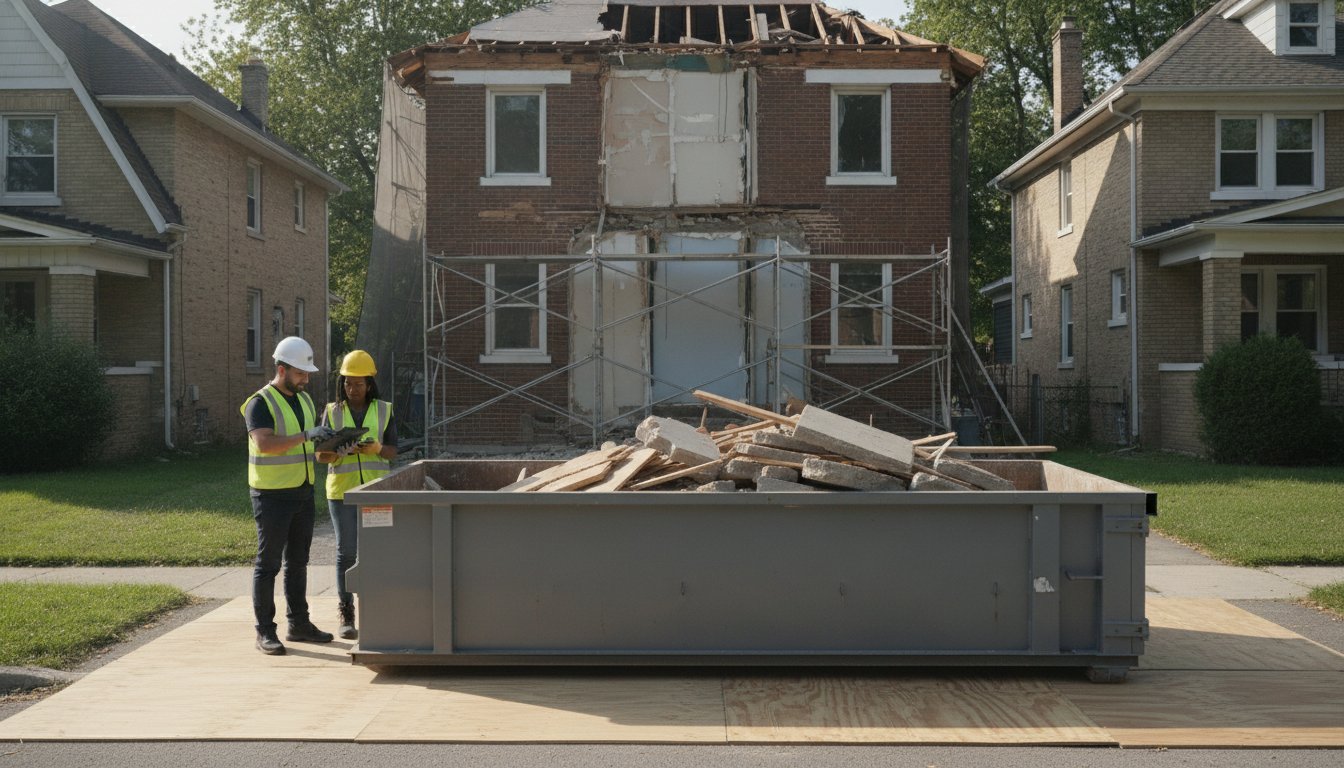
Protect your property before the truck arrives. A 20 yard dumpster filled with 4 tons of shingles exerts immense pressure on a residential driveway. This weight can crack aged asphalt or leave ruts in pavers. Lay down two-by-fours or large sheets of plywood where the dumpster's wheels and rails will rest. This simple step distributes the load and prevents costly surface repairs. It also creates a clear visual target for the driver during delivery. Reliability starts with a prepared site.
Local Regulations and Permits
Location dictates your logistical requirements. If you live in high-density areas like Queens, Chicago, or San Francisco, you may not have a private driveway. Placing a dumpster on a public street usually requires a municipal permit. In San Francisco, these are often called "Street Space" permits. In New York, you must ensure the bin doesn't block fire hydrants or bus stops. Failure to secure these documents can result in heavy fines or a refused delivery. Visit the Book Your Dumpster USA homepage to check local availability and permit requirements for your specific zip code.
Final Checklist Before the Truck Arrives
Preparation reduces friction on delivery day. Follow these final steps to ensure a smooth transition from your old roof to a clean property:
- Clear the path: Move all vehicles from the driveway and street. Trim low-hanging branches that could snag the truck's lift arm.
- Confirm the limit: Ensure the weight limit is clearly stated in writing on your digital rental agreement.
- Plan your load: Toss shingles in first. They are the heaviest and should sit at the bottom. Save lighter debris, like packaging or ridge vents, for the top.
By applying these strategies, you move beyond the confusion of roofing terminology. You have mastered how to estimate shingle weight for dumpster use. Now, focus on the tear-off and get your project completed without logistical delays. Stay in control of your project and avoid the stress of unexpected fees.
Streamline Your Roofing Project Logistics
You now have the technical foundation to handle a complex tear-off without the stress of hidden costs. By calculating roofing squares accurately and identifying the number of shingle layers, you've moved beyond guesswork. Remember that moisture and fasteners add significant system weight that can easily push a project over its tonnage limit. This precise approach to how to estimate shingle weight for dumpster rentals ensures you stay in control of your budget and timeline.
Don't let logistical surprises derail your renovation. We provide specialized 10 and 20-yard bins designed specifically for heavy roofing debris. Our service areas include NY, NJ, IL, MA, and San Francisco, offering you reliable disposal solutions with transparent pricing and no hidden overage surprises. Order your roofing dumpster online today with Book Your Dumpster USA to secure a container that matches your project's specific tonnage needs. It's time to clear the debris and get your new roof installed with confidence.
Frequently Asked Questions
How much does a bundle of shingles weigh?
A standard bundle of asphalt shingles weighs between 60 and 80 pounds. Since most manufacturers package shingles at three bundles per square, the total weight for one roofing square of 3-tab shingles is approximately 180 to 240 pounds. Architectural shingle bundles are heavier and often reach the 80-pound limit.
How many squares of shingles fit in a 10-yard dumpster?
A 10 yard dumpster typically accommodates debris from 10 to 20 squares of single-layer 3-tab shingles. If you are disposing of architectural shingles, the capacity drops to 10 or 15 squares because of the increased material density. Accurate math is essential when learning how to estimate shingle weight for dumpster rentals to avoid overfilling the bin.
Can I put other roofing debris like wood or flashing in the same dumpster?
You can include all components of the roofing system in the same container, including underlayment, nails, flashing, and drip edges. If you are replacing rotted wood decking, that plywood or OSB can also go into the bin. Ensure you account for this additional "system weight" in your initial tonnage estimate.
What happens if my dumpster is over the weight limit?
Exceeding the specified tonnage cap results in overage fees that typically range from $50 to $100 per extra ton. If the load is too heavy for the truck's hydraulic system to lift safely, the driver will leave the bin on-site. You will then be required to remove the excess debris manually before we can schedule a second pickup attempt.
Does a 20-yard dumpster have a higher weight limit than a 10-yard?
A 20 yard dumpster generally offers a higher weight allowance than a 10 yard unit to handle the volume of larger roofing projects. However, the limit is not infinite and is strictly governed by the truck's lifting capacity and local road safety regulations. Always confirm the specific weight cap listed on your digital rental agreement before you start the tear-off.
How do I know if I have one or two layers of shingles?
Inspect the roof's edge at the gables or check the drip edge to see the shingle profile. If you see two distinct layers of material stacked on top of each other, you have a double-layer roof. This means you will generate twice the debris, which is a critical factor in how to estimate shingle weight for dumpster selection.
Is it cheaper to rent two small dumpsters or one large one for shingles?
It is almost always more cost-effective to rent one 20 yard dumpster than two 10 yard units. You avoid the cost of a second delivery fee and the logistical headache of managing two separate pickups. Use your square count to select the larger bin upfront if your tonnage estimate is near the limit of a smaller container.
Do wet shingles weigh more in a dumpster?
Wet shingles weigh significantly more because asphalt and organic felt backing absorb water. If your roof has leaked or it has rained within 48 hours of your project, add a 10% weight buffer to your calculation. This margin of error protects you from overage fees caused by environmental moisture trapped in the debris.