
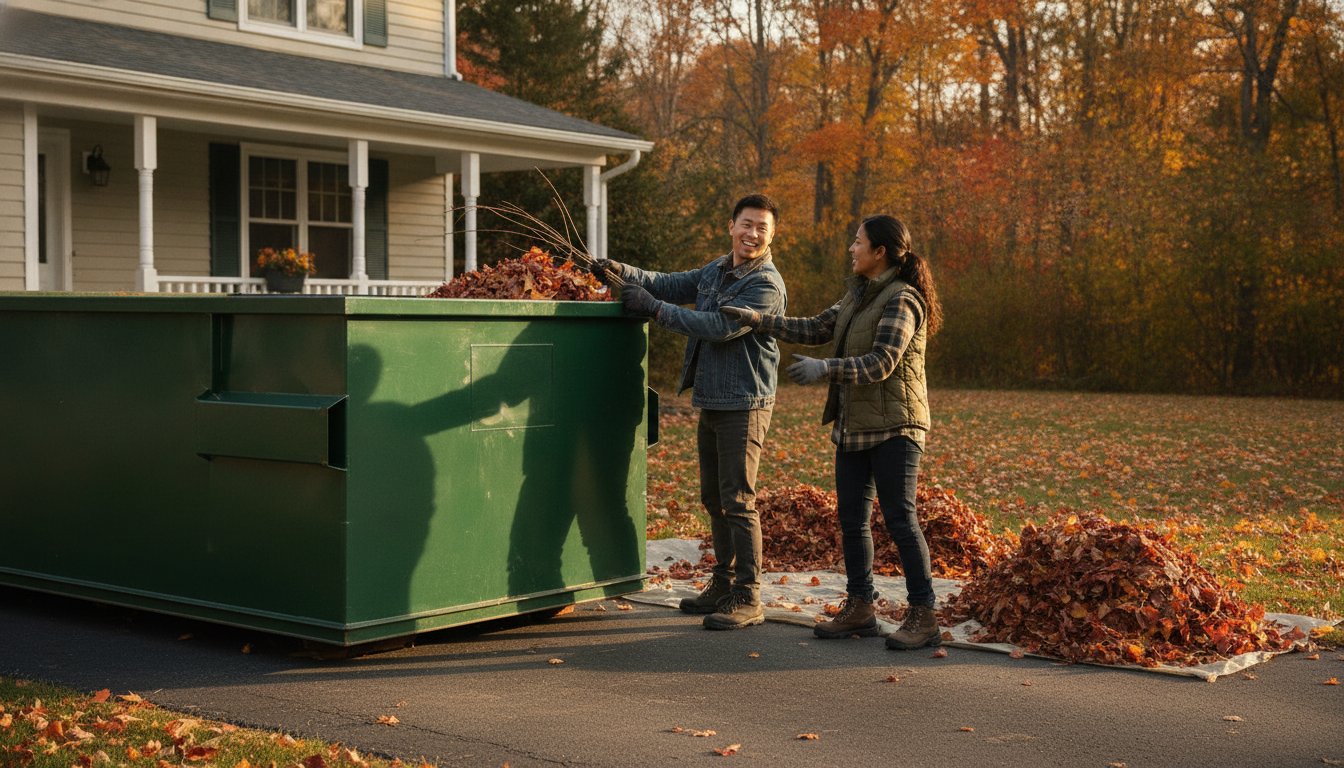
The most efficient fall cleanup isn't just about hauling; it's about staging your yard waste to match the specific weight and volume limits of a roll-off container. Most homeowners realize too late that bagging hundreds of pounds of wet leaves is a losing game when municipalities impose 40-pound limits and ban plastic bags. Organizing a fall cleanup and yard waste dumpster rental allows you to bypass these restrictions and handle massive debris in a single session. It's the most direct way to eliminate the physical strain of manual hauling and the frustration of hidden fees.
This guide provides a pragmatic approach to managing seasonal debris, choosing the right container size, and streamlining your disposal process. You'll learn how to distinguish between acceptable green waste and prohibited materials to avoid extra costs. We also cover the logistics of placement and weight limits for containers ranging from 10 to 40 yards. Follow these steps to take full control of your property maintenance and finish your project on your own schedule.
Key Takeaways
- Consolidate your debris into designated zones before delivery to maximize your rental period. Staging your yard for a fall cleanup and yard waste dumpster ensures you load the container efficiently without wasting time on delivery day.
- Distinguish between "clean" yard waste like leaves and branches and "heavy" debris like sod or dirt. Heavy materials require specific handling and container weight considerations to avoid overweight fees.
- Select the right container size based on your project scope, using a 10-yard dumpster for heavy sod or a 20-yard dumpster for larger residential debris. Choosing the correct volume prevents the need for multiple rentals.
- Determine if your project requires a city permit for street placement or if driveway delivery is a viable option. Checking local regulations in cities like Chicago or New York prevents unexpected fines.
- Use a streamlined online booking system to secure your container and guarantee transparent pricing. Reliable waste management partners eliminate hidden surcharges and logistical stress during peak seasons.
Staging Your Property for a Fall Cleanup and Yard Waste Dumpster
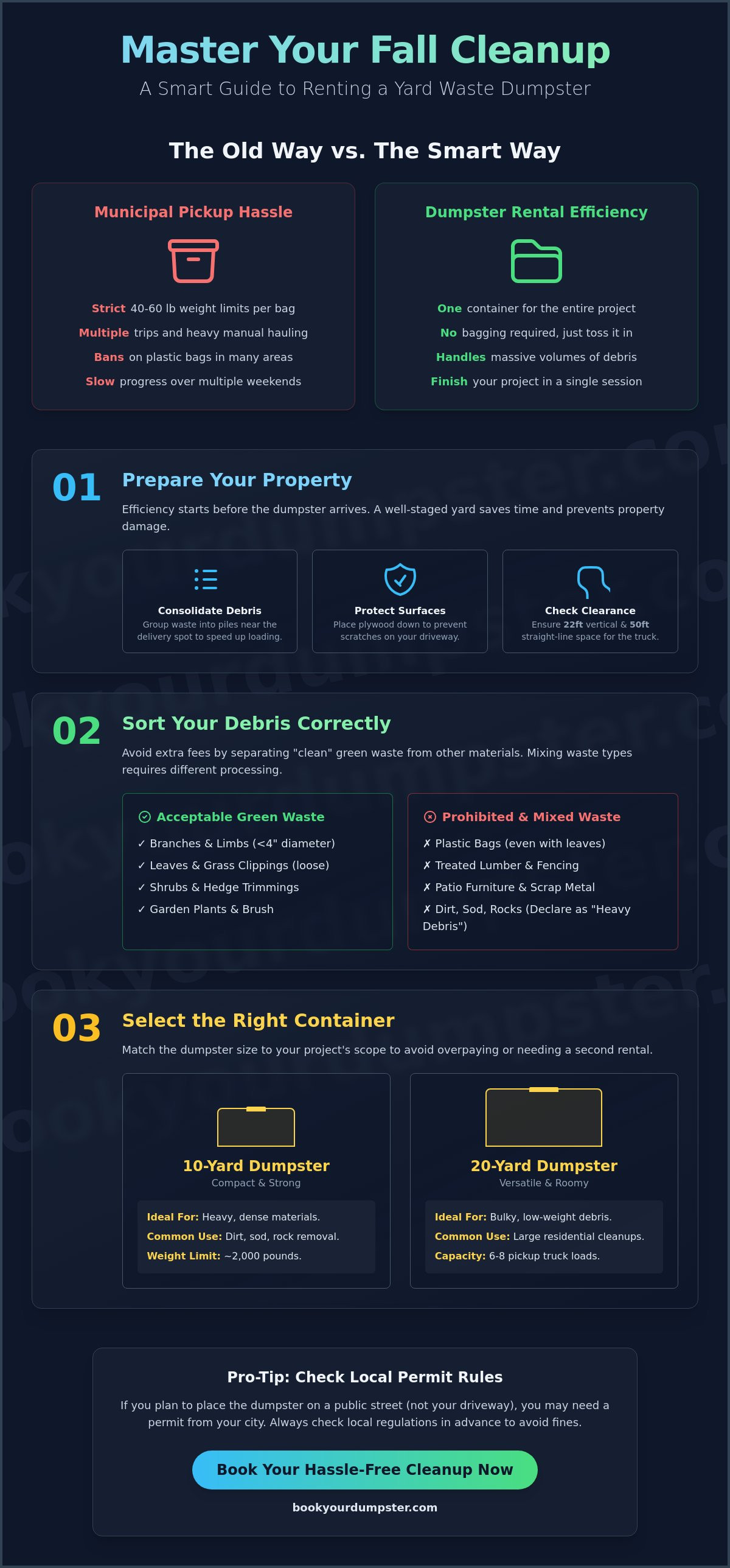
Curbside pickup often fails for large-scale 2026 fall projects. Most municipalities impose strict bag limits or weight restrictions between 40 and 60 pounds per container. These rules make it nearly impossible to clear a large property in a single weekend. Organizing a fall cleanup and yard waste dumpster allows you to bypass these bottlenecks. Instead of filling dozens of individual bags, you can dispose of dense debris in a single roll-off container. This method reduces physical strain and keeps your project moving at a professional pace.
Efficiency starts before the truck arrives on your property. Consolidate your debris into specific zones to minimize loading time. Group your piles near the intended delivery spot so you aren't carrying heavy branches across the entire yard. A dumpster with a rear swing door allows for walk-in loading, which is essential for heavy logs or dense piles of brush. Identify a flat, stable area for placement to ensure the container remains level and accessible throughout the weekend.
Calculate your waste volume carefully to avoid overfilling. Brush and branches occupy high volume but have low weight. Heavy organic matter like sod or dirt is much denser and can quickly exceed weight limits. A 10-yard dumpster usually has a weight limit of 2,000 pounds, whereas a 20-yard dumpster holds roughly 6 to 8 pickup truck loads of debris. Use these benchmarks to select the right container size for your specific property needs.
Creating a Debris Management Plan
Separate your waste by material type to stay organized. Keep woody debris like branches away from soft waste like grass clippings. Understanding What is Green Waste helps you identify what belongs in your fall cleanup and yard waste dumpster. This category includes biodegradable materials like hedge trimmings and small tree limbs. Remove any non-organic items like plastic fencing, broken lawn ornaments, or treated lumber. These items don't count as organic waste and can lead to contamination fees at the processing facility.
Driveway and Property Protection
Protect your driveway from the weight of a loaded container. Use plywood or street pads to distribute the load and prevent the steel rollers from scratching the surface. Check for low-hanging branches or utility wires above the drop-off point. The roll-off hoist mechanism requires 22 feet of vertical clearance to lift and place the container safely. Ensure the truck has at least 50 feet of straight-line space to maneuver during the delivery and pickup process.
What Can You Toss? Understanding Yard Waste Restrictions
Loading a container requires more than just throwing debris over the side. You must distinguish between organic materials and general household waste to avoid contamination fees. Most facilities follow the federal definition of yard waste, which classifies these items as vegetative matter resulting from landscaping or land clearing. For a successful fall cleanup and yard waste dumpster rental, keep your load "clean" by sticking to natural materials. Mixing in plastic bags, even if they contain leaves, is a common mistake that can lead to rejected loads in 2026.
Many homeowners use seasonal cleanups as an opportunity to purge old sheds or garages. If you plan to toss old patio furniture, broken lawn ornaments, or scrap metal alongside your branches, you are creating a "Mixed Load." These loads require different processing than pure organic waste. Always declare if you are mixing materials. If you're unsure which category your debris falls into, you can schedule your rental online and select the appropriate waste type during checkout to ensure transparent pricing.
Acceptable Organic Materials
- Pruning waste: Fallen branches and limbs are acceptable if they are under 4 inches in diameter.
- Garden trimmings: This includes shrubbery, bushes, and hedge clippings.
- Massive leaf volumes: Dumpsters are the best solution when your leaf piles exceed municipal bag limits.
- Grass clippings: Ensure these are loose and not contained in plastic liners.
The Heavy Debris Exception
Landscaping projects involving dirt, sod, or rocks fall under the "heavy debris" rule. These materials are significantly denser than brush and branches. Because of this weight, these items are often restricted to smaller containers to prevent the delivery truck from becoming overweight. A 10-yard dumpster typically has a weight limit of 2,000 pounds when used for heavy materials like sod or dirt. Never fill these containers to the top rim with heavy matter. Stop loading once you reach the designated "fill line" to ensure the truck can safely lift the hoist mechanism. Exceeding this line creates a safety hazard and will likely result in a failed pickup attempt.
Avoid tossing prohibited items into your container at all costs. This includes treated lumber, which contains chemicals that contaminate organic compost streams. Fertilizers, pesticides, and other yard chemicals are also strictly banned. If your fall cleanup involves removing an old deck or fence, that wood must go into a construction debris container, not a yard waste one. Stay focused on natural, untreated vegetation to keep your project on track and your costs predictable.
Choosing the Right Dumpster Size for Your Yard Project
Selecting the correct volume for your fall cleanup and yard waste dumpster prevents mid-project delays and unexpected costs. Don't underestimate the space required for un-shredded branches and brush. These materials are high-volume but low-density, meaning they consume vertical space quickly. If you are between two sizes, choose the larger option to avoid the need for a second haul. Most residential projects fit within our 10-yard or 20-yard containers, while 30 and 40-yard models handle commercial-scale land clearing or extensive property renovations.
The 10-Yard Option for Heavy Materials
Select a 10-yard dumpster for clean fill projects involving dirt, gravel, or sod. These materials are incredibly dense. A 10-yard container typically has a weight limit of 2,000 pounds, which is the maximum safe lifting capacity for many residential hoist systems when dealing with heavy organic matter. This size features a compact footprint, making it ideal for tight driveways in Queens or the Boston suburbs where space is limited. For a detailed breakdown of this size's capabilities, review our 10 yard dumpster rental guide. Homeowners in the Northeast should also consult Yard waste management regulations to ensure their heavy debris meets state-specific landfill diversion requirements.
The 20-Yard Mid-Size Standard
The 20-yard dumpster is the industry standard for medium-to-large residential fall projects. It provides the "sweet spot" for homeowners in Illinois and New Jersey who need to manage multiple tree removals or large brush piles. This container holds roughly 6 to 8 pickup truck loads of debris. It offers the necessary cubic yardage for "fluffy" waste like un-shredded branches that don't pack down tightly. Using a 20-yard container for your fall cleanup and yard waste dumpster ensures you have enough room for shrubbery and garden trimmings without the debris protruding over the top rail, which is a common safety violation during transport.
Reserve 30-yard and 40-yard dumpsters for major land clearing or commercial landscaping. A 30-yard dumpster can hold the contents of a typical house and handles up to 8,000 pounds of waste. These larger sizes are essential when removing entire wooded areas or clearing large commercial lots. Always prioritize safety by maintaining a clear fill line and avoiding overfilling. It's more cost-effective to have extra space than to pay for a second rental because your first container was too small to finish the job.
Navigating Permits and Placement in Major Cities
Placement logistics can derail your project if you ignore local ordinances. Most homeowners prefer driveway placement because it typically bypasses the need for municipal permits. However, if your driveway is too steep, narrow, or fragile, you must use the public right-of-way. This transition from private to public property triggers specific legal requirements that vary significantly by city. Secure your permit at least one week in advance, as processing times generally range from 2 to 10 business days.
A "Right-of-Way" permit is mandatory if any part of the container sits on a street, sidewalk, or alley. Failure to obtain this documentation can result in immediate fines or the removal of the container at your expense. Many cities also enforce strict regulations regarding overnight street parking. You may be required to use reflective tape or traffic cones to ensure the container is visible to motorists after dark. Before you schedule your delivery, check permit requirements in your area to ensure a seamless drop-off experience.
Regional Permit Requirements
In New York and Queens, the Department of Transportation (DOT) manages all street placement permits. These often cost between $75 and $150 and may require a licensed professional to submit the application. In Chicago and throughout Illinois, you must apply for a "Public Way" permit, which typically costs between $50 and $100. Massachusetts residents face different hurdles; many municipalities require you to notify the local fire or police department if the container stays on the street overnight, especially if it is near a hydrant or intersection.
Loading Tips for Maximum Efficiency
Maximize the space in your fall cleanup and yard waste dumpster by loading with a strategy. Place the largest branches and heavy logs at the bottom of the container. The cumulative weight of the leaves and smaller brush will naturally compress the bottom layer, creating more room at the top. This approach is far more effective than tossing items in randomly. Use the rear swing-open door for heavy organic matter to avoid the physical strain of lifting debris over the high side walls.
Maintain a level load throughout the weekend. Items sticking out above the top rail or hanging over the sides are safety hazards. Drivers are legally prohibited from transporting "over-height" containers. If your debris exceeds the fill line, you will have to remove the excess material before the truck can pull the hoist. Keep your piles contained and compressed to ensure your fall cleanup and yard waste dumpster is ready for pickup on schedule.
Book Your Dumpster USA: Your Fall Cleanup Partner
Managing a large-scale project requires a reliable logistics partner. We provide direct access to 10, 20, 30, and 40-yard containers without the broker runaround. Many national platforms act as middle-men; they add hidden fees and complicate the scheduling process. We operate with a different model. Our system focuses on pricing integrity and punctuality, ensuring your fall cleanup and yard waste dumpster arrives exactly when you need it. We serve homeowners and contractors across New York, New Jersey, Illinois, Massachusetts, and San Francisco with consistent, professional service.
Transparency is the foundation of our business. You won't encounter a "fall surcharge" or surprise disposal fees when your bill arrives. We provide upfront quotes that include delivery, pickup, and specific weight limits. This direct approach removes the logistical stress from your property maintenance. Residential users trust our service because we prioritize their time and clear communication. We handle the heavy lifting so you can focus on finishing your yard work before the first winter freeze.
The Book Your Dumpster USA Advantage
Working directly with a provider ensures accountability. You get immediate answers regarding permit requirements and container availability. Our team provides dedicated support for homeowners who are navigating their first rental. We help you select the right size based on your specific debris volume, whether you're clearing a small garden or an entire wooded lot. For a deeper look at managing your project logistics, read our comprehensive roll off dumpster rental guide. This resource explains how to optimize your waste management strategy from start to finish.
Ready to Start Your Cleanup?
Efficiency is just a few clicks away. Use our streamlined online booking system to select your container size and choose your delivery dates. The entire process takes minutes and provides instant confirmation for your schedule. We are committed to maintaining 100% on-time delivery for all residential and commercial projects throughout 2026. Don't let your yard waste pile up while waiting for municipal bags or unreliable haulers. Take control of your property today.
Book Your Fall Cleanup Dumpster Now
Finalize Your Seasonal Property Maintenance
Efficiently managing seasonal debris requires a combination of early staging and correct container selection. By organizing your waste into manageable zones and understanding local permit requirements in cities like Chicago or New York, you eliminate the typical bottlenecks of property maintenance. Choosing the right volume for your fall cleanup and yard waste dumpster ensures you finish the project without the frustration of multiple hauls or hidden surcharges.
We provide a streamlined online booking system and transparent, all-in pricing to keep your budget on track. Our service area covers major hubs across NY, NJ, IL, MA, and San Francisco, offering the punctuality you need for large-scale residential or commercial projects. You don't have to navigate the logistical stress of waste disposal alone when you have a dependable partner handling the delivery and pickup.
Secure your yard waste dumpster for fall 2026 today at Book Your Dumpster USA. Clear your land with confidence and prepare your property for the coming winter.
Frequently Asked Questions
Can I put leaves and grass clippings in a yard waste dumpster?
Yes, you can dispose of loose leaves and grass clippings in these containers. Do not use plastic bags as they contaminate the organic waste stream and lead to rejected loads. If your municipality has banned plastic for yard waste collection, using a roll-off container is the most efficient way to manage high volumes of loose organic matter during a large-scale project.
How much does a 20-yard yard waste dumpster rental cost?
The total cost for a 20-yard container depends on your geographic location, the weight of the debris, and the length of your rental period. We provide transparent, all-in quotes through our online booking system to ensure you have an accurate price before scheduling. This approach eliminates hidden surcharges and allows you to budget effectively for your fall cleanup and yard waste dumpster needs.
Is there a weight limit for yard waste in a roll-off container?
Every container size has a specific weight capacity that you must not exceed. For example, a 10-yard dumpster used for heavy debris like sod or dirt typically has a limit of 2,000 pounds. Exceeding these limits can result in overage fees or safety issues during transport. Always monitor your load levels and stop filling once you reach the designated fill line inside the container.
Do I need a permit to put a dumpster in my driveway in New Jersey?
Driveway placement in New Jersey generally does not require a city permit. You only need to secure a permit if the container must sit on a public street, sidewalk, or right-of-way. Check with your local Homeowners Association before delivery, as some private communities have specific rules regarding how long a container can remain on your property.
Can I mix old patio furniture with my yard waste in the same dumpster?
No, you cannot mix furniture or household trash with organic yard waste in a dedicated green waste container. This creates a "mixed load" which requires different processing and higher disposal fees. If your project involves cleaning out a shed alongside your yard work, select a general waste or construction debris container during the booking process to ensure proper handling.
What happens if it rains and the yard waste gets heavy?
You are responsible for the total weight of the container at the time of pickup, including any water weight. Saturated leaves and soil are significantly heavier than dry materials and can push your load over the allowed limit. Use a tarp to cover the dumpster if heavy rain is expected during your rental period. This simple step prevents unexpected overage charges and keeps your project within budget.
How long can I keep the dumpster for my fall cleanup project?
Standard rental periods typically range from 7 to 14 days depending on your specific needs. You can select your preferred delivery and pickup dates through our digital portal to match your project timeline. If you finish your cleanup early, call to schedule an early pickup; if you need more time, daily extensions are usually available for a small fee.
Are there items like stumps or large logs that are prohibited?
Large tree stumps and heavy logs exceeding 4 inches in diameter are often prohibited in standard yard waste containers. These items require specialized grinding equipment and are not processed the same way as brush or clippings. Always verify the maximum diameter allowed for your specific rental to avoid pickup delays or additional handling fees at the disposal site. For larger clearing projects, you can explore Tree Removal resources from CDA TREE AND UTILITY to ensure your property is managed professionally.


