
Waiting for your city's bulk pickup day is the slowest way to reclaim your living space. Most homeowners realize too late that municipal limits, such as NYC’s six-item cap or strict weekly quotas in other cities, turn a simple room clearing into a month-long logistical nightmare. You need a solution that moves at your pace, not the city's schedule. Renting a dumpster for furniture disposal is the most efficient way to handle high-volume cleanouts without the stress of multiple landfill trips or the high costs of specialized junk crews.
It's frustrating to stare at heavy sofas and broken tables while waiting for a pickup window that may never come. You deserve a clear home without the physical toll of hauling items to a dump yourself. This 2026 guide explains how to use roll-off containers to streamline your project. You'll learn how to select the right 10 to 40 yard unit, manage the heavy lifting safely, and ensure you get transparent pricing from start to finish. Follow these steps to move from a state of clutter to a state of resolution with minimal cognitive load.
Key Takeaways
- Compare disposal methods to see why roll-off containers outperform restrictive city services and expensive junk removal crews.
- Learn how to use a dumpster for furniture disposal to eliminate heavy lifting by utilizing integrated walk-in doors for easy loading.
- Select the correct container size for your project, ranging from 10-yard units for single rooms to 20-yard dumpsters for full estate cleanouts.
- Master the "Tetris" loading method and item breakdown techniques to maximize your available space and ensure efficient disposal.
- Navigate regional permit laws and placement logistics for high-density metropolitan areas like Queens, Chicago, and San Francisco.
Evaluating Your Furniture Disposal Options in 2026
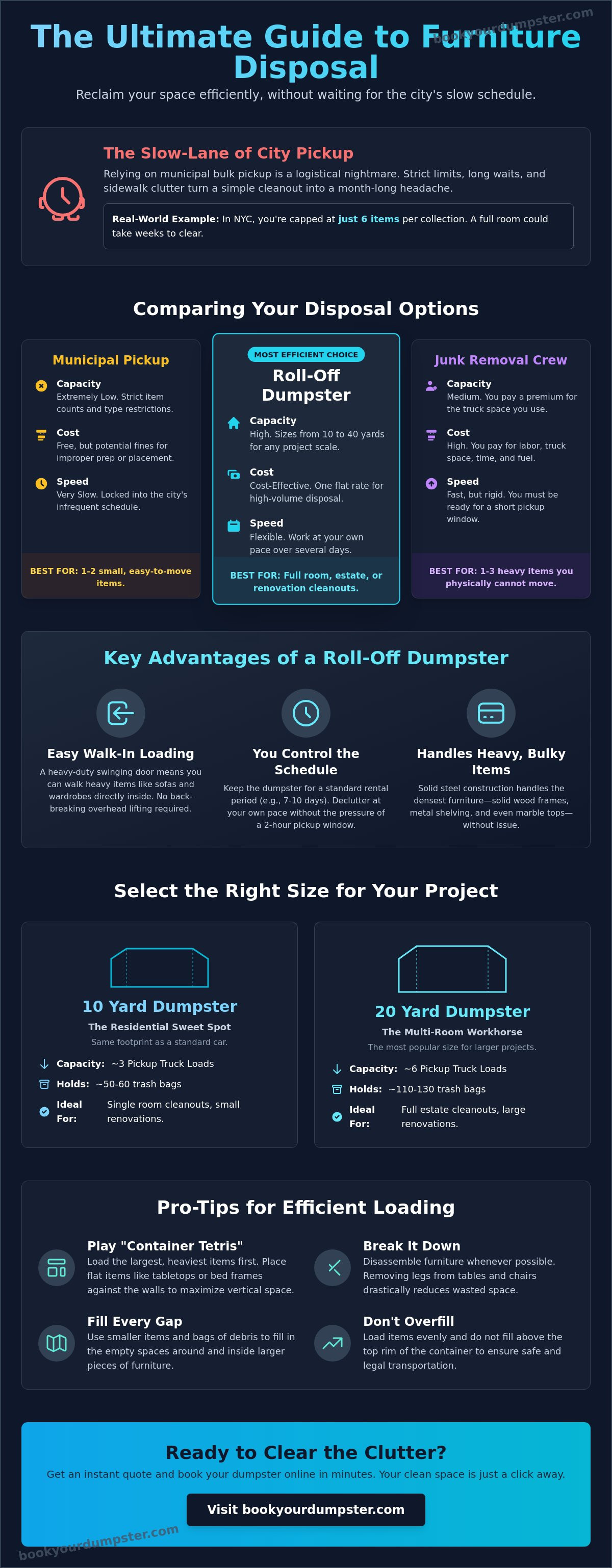
Clearing out old furniture is a logistical challenge that requires a clear plan. In 2026, you have three primary paths: municipal bulk pickup, professional junk removal, or renting a roll-off dumpster. Each method serves a different scale of waste. If you're only tossing a single chair, the city might suffice. However, for full room renovations or estate transitions, a dedicated dumpster for furniture disposal is the most reliable tool to regain control of your space.
High-density areas like Queens present unique hurdles. While the NYC Department of Sanitation offers free curbside pickup, they limit you to six items per collection. If you're clearing a three-bedroom home, that could take over a month of weekly scheduling. Relying on city services also means leaving heavy eyesores on the sidewalk. This invites fines and neighbor complaints. If your project involves more than what fits in the back of a standard pickup truck, you've reached the tipping point where a professional rental becomes necessary. A standard truck bed holds roughly 2.5 cubic yards, which a single sectional sofa can easily exceed.
Consider the environmental footprint of your choice. With 12 million tons of furniture sent to U.S. landfills annually, efficient disposal matters. Using a single large container reduces the carbon emissions associated with making four or five separate trips to a local dump site in a personal vehicle. It centralizes the waste, making it easier for processing facilities to manage the material volume.
When to Choose a Dumpster Over Junk Removal
Professional junk removal services offer labor, but they charge a premium for it. If you prefer to have a team manage the heavy lifting for you, you can explore Furniture Removal from professional specialists like Rapid Junk Pros as a full-service alternative. You pay for their time, their truck space, and their fuel. If you have the physical ability to move items, renting a dumpster for furniture disposal is significantly more cost-effective. It gives you the flexibility to work over several days rather than rushing to meet a strict two-hour pickup window. You manage the schedule. You decide what stays and what goes. This one-and-done approach ensures that once the container is hauled away, your project is completely finished.
The Limitations of Municipal Bulk Pickup
City services are designed for maintenance, not major cleanouts. Most municipalities impose strict caps on item counts and types. For example, many cities exclude pianos, treated lumber, or items exceeding specific weight limits. In New York, you must seal mattresses in plastic bags to avoid fines. Leaving these items at the curb for days creates a safety hazard and ruins the curb appeal of your property. Avoid the frustration of rejected items by using a private service that accepts a wider range of furniture materials in one go.
Why a Roll-Off Dumpster is Ideal for Furniture Cleanouts
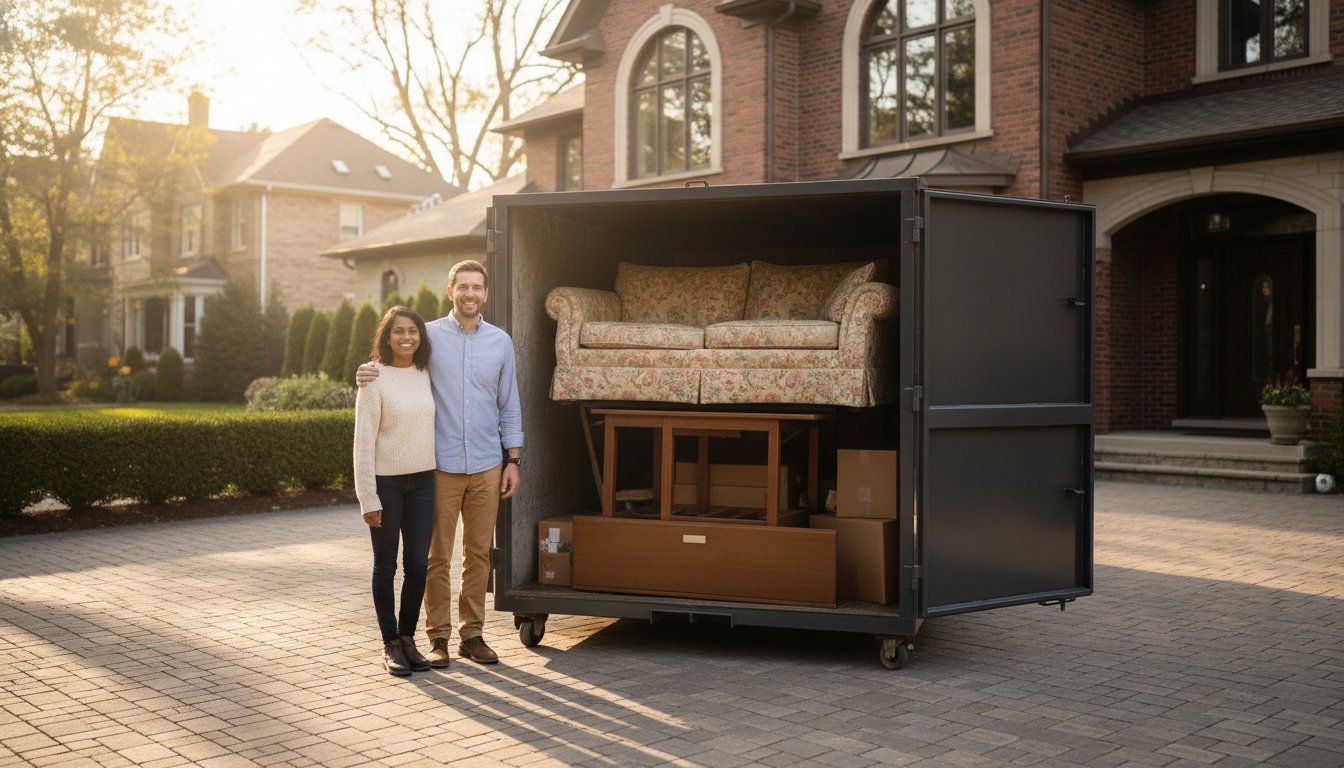
Roll-off containers remove the physical barriers associated with furniture removal. Unlike high-sided trash trucks or standard trailers, most residential dumpsters feature a heavy-duty rear swinging door. This allows you to walk items directly into the container. You don't have to lift a heavy oak wardrobe over your head or strain your back tossing a sleeper sofa over a high wall. This "walk-in" access is essential for managing the federal bulky waste collection guidelines, which categorize large furniture as items requiring specialized handling due to their significant size and weight.
The structural integrity of these steel containers handles the densest materials without issue. Solid wood bed frames, marble-top vanities, and metal shelving units won't compromise the bin. For those starting immediate projects, the Book Your Dumpster online platform allows you to secure a unit in minutes. This digital-first approach removes the friction of traditional phone-tag scheduling. It provides a reliable, professional tool for a task that's inherently labor-intensive. When you use a dedicated dumpster for furniture disposal, you consolidate the entire project into one manageable location, ensuring your site stays clean and organized.
The 10-Yard Dumpster: The Residential Sweet Spot
For most homeowners, the 10-yard dumpster is the most efficient choice for a dumpster for furniture disposal. It typically occupies the same footprint as a standard passenger vehicle. This makes it ideal for tight driveways or narrow city streets where space is at a premium. It holds roughly 50 to 60 trash bags of volume. This capacity easily accommodates several couches, dressers, and dining sets. Check the 10 Yard Dumpster Rental Guide to see exact dimensions and weight limits for your specific furniture inventory.
Safety and Property Protection
Renting a container protects your home's interior and your driveway surface. Dragging furniture to the curb often results in scuffed floors, chipped paint, or dented door frames. By placing a dumpster close to your primary exit point, you minimize the "carry distance" and the risk of accidents. Professional haulers also use protective boards under the container's steel rollers to prevent asphalt or concrete damage. This level of care ensures your property remains intact while you clear the clutter. If you're ready to start, you can schedule your delivery online to begin your cleanout today.
Selecting the Right Dumpster Size for Your Furniture
Choosing the correct container size is the most critical step in your project. If you underestimate your volume, you'll end up paying for a second haul. If you overestimate, you're paying for empty space. For a small project, like clearing out a single bedroom or a living room, a 10-yard dumpster is often sufficient. It can hold roughly three to four large couches or a few sets of dressers and nightstands. However, for full estate cleanouts or larger suburban homes, a 20-yard dumpster provides the necessary breathing room to avoid logistical bottlenecks. This larger unit is the standard for multi-room transitions where wardrobes, sectional sofas, and dining sets are all being discarded at once.
Consult the Roll Off Dumpster Rental Guide to compare dimensions before you book. Safety is paramount during transport. Never fill your container past the "fill line" or the top rail. Protruding table legs or stacked chairs create hazards for the driver and other motorists. If your furniture is piled higher than the sides of the bin, the hauler cannot legally transport it. This results in a "dry run" fee and forces you to unload the excess items yourself.
Estimating Your Volume: The Furniture Math
Calculate your needs by visualizing cubic yardage. A standard three-cushion sofa occupies about two cubic yards of space. A queen-sized mattress and box spring take up roughly one and a half cubic yards. Use these benchmarks to gauge your total load. Disassembling items significantly changes the size you need. Removing legs from dining tables and breaking down bed frames allows you to stack items flat, maximizing every inch of the container. For commercial office furniture removals involving dozens of desks and cubicle partitions, look toward 30 or 40-yard options to handle the massive volume in a single trip. Large-scale residential projects should also follow EPA furniture disposal guidance to ensure all household waste is managed according to safety standards.
Weight Limit Considerations for Heavy Items
Furniture is bulky, but it's generally lighter than construction materials like concrete or dirt. However, certain pieces carry significant weight. Solid oak dining sets, heavy wardrobes, and sleeper sofas with metal mechanisms can quickly add up. Distribute this weight evenly across the floor of the dumpster for furniture disposal. Avoid placing all heavy items in the back of the bin. This prevents the container from becoming unbalanced when the truck attempts to hoist it. Keep the heaviest items at the bottom to create a stable base for lighter chairs or cushions on top.
How to Load a Dumpster for Furniture Disposal Efficiently
Maximize every cubic inch of your rental to get the best value. Poor loading leads to wasted space and potential overage fees. Use the "Tetris" method to keep the load organized. Place flat items like headboards, mirrors, and tabletops flush against the interior walls. This strategy keeps the center of the bin clear for bulky, irregularly shaped pieces. By lining the perimeter first, you create a structured environment that prevents items from shifting during the loading process.
Break down every item possible before it enters the container. Remove the legs from dining tables, desks, and chairs. This simple step turns a large 3D obstacle into a series of flat panels that stack easily. Don't let empty air take up the space you're paying for. Fill "dead space" inside dresser drawers or cabinets with cushions, rolled-up rugs, or smaller debris. When you use a dumpster for furniture disposal, your goal is density. A tightly packed container ensures you won't need a second haul to finish the job.
Step-by-Step Loading Strategy
Open the rear swinging door and walk the largest pieces into the container first. Place heavy wardrobes or solid wood dressers at the very bottom. This creates a stable center of gravity for the hauler. Nest chairs by turning them upside down on top of tables or other flat surfaces. Use those flat panels as "shelves" to create multiple levels within the bin. This vertical stacking allows you to fit significantly more inventory than tossing items in randomly. Keep the load level and ensure nothing exceeds the top rail of the container.
Dealing with Tricky Items: Pianos and Sectionals
Certain items require extra planning. Pianos are extremely heavy and contain metal plates that may require special notification or separate handling; always check with your service provider before loading one. For large sectionals, separate every piece. Don't try to load a sectional as one unit. Individual pieces are easier to wedge into corners or gaps. Always prioritize safety. Never stand inside the container while others are tossing items in from the side. Once your inventory is staged and ready, reserve your 10 to 40 yard dumpster to lock in your delivery date and start your cleanout.
Disposal Logistics in NY, NJ, IL, MA, and San Francisco
Managing a cleanout in a major metropolitan area requires precision. In high-density zones like Queens or Manhattan, street placement is often the only option. This necessitates a right-of-way permit from the city. New York City permit fees for placing a container on city property typically range from $135 to $385. Failure to secure these documents leads to immediate fines and project delays. When you rent a dumpster for furniture disposal in these environments, timing is everything. You must coordinate the delivery to align with local traffic patterns and parking regulations to ensure a smooth drop-off without blocking essential transit routes.
Other regions have their own specific mandates that impact your project. In Chicago, street permits cost between $25 and $60 per day. Massachusetts residents must navigate a statewide ban on disposing of mattresses and textiles in landfills, which means these items require separate recycling streams. If your furniture removal is part of a larger renovation, consult our guide to construction debris removal to manage mixed waste streams effectively. Book Your Dumpster USA specializes in these tight urban windows. We understand the logistical pressure of city regulations and provide the punctuality needed to keep your project on track while avoiding municipal penalties.
Urban Placement: Navigating Tight Spaces
San Francisco and Boston present unique challenges with narrow streets and steep grades. If you lack a private driveway, you must verify local parking restrictions at least 72 hours before the truck arrives. Use "pavement protection" like plywood boards to prevent damage to sidewalk vaults or decorative stone in high-traffic residential areas. This is especially vital in historic districts where surface repairs are costly. Clear the delivery zone of all obstacles, including low-hanging branches or overhead wires. Direct communication with your hauler ensures the container is placed exactly where you need it without violating municipal codes or blocking neighbor access.
Ready to Clear the Clutter?
Renting a dumpster is the most pragmatic solution for large-scale furniture removal. It eliminates the slow, item-limited process of city bulk pickup and the high labor costs of professional junk crews. You gain total control over your timeline and your budget. Use our streamlined online booking system to secure your container and reclaim your space immediately. Visit Book Your Dumpster today to get a transparent quote and schedule your delivery. Move from a state of clutter to a state of resolution with one simple, professional tool.
Start Your Furniture Cleanout Without the Stress
Managing a house full of old furniture doesn't have to be a multi-week ordeal. By choosing a professional dumpster for furniture disposal, you bypass the restrictive limits of municipal pickup and the high labor costs of junk crews. You now have the strategy to maximize space using the Tetris loading method and the knowledge to navigate specific permit requirements in major hubs like New York, Chicago, and San Francisco.
Efficiency starts with the right equipment. Whether you need a compact 10-yard bin for a single room or a massive 40-yard unit for a commercial project, having a container on-site gives you the freedom to work at your own pace. We provide transparent, no-nonsense pricing and reliable delivery across NY, NJ, IL, MA, and SF. Stop staring at the clutter and start moving toward a resolution.
Rent Your Furniture Disposal Dumpster Online Now
Reclaiming your space is a straightforward process when you have the right tools. Lock in your delivery date today and experience the speed of a modernized waste management service.
Frequently Asked Questions
Can I put a mattress in a dumpster with my furniture?
You can include mattresses in your load, but local regulations often dictate how they must be handled. In Massachusetts, a statewide ban prevents mattresses from entering landfills, meaning they must be recycled or donated instead. Residents in New York City must seal mattresses and box springs in plastic bags before disposal to prevent the spread of bedbugs. Always check your local ordinances to avoid fines or rejected loads.
What is the best dumpster size for getting rid of an old piano?
A 10-yard dumpster is the most practical choice for disposing of a single piano. Pianos are exceptionally heavy and dense, so using a smaller container helps you stay within weight limits while providing enough floor space for the instrument. Because pianos contain large metal plates and complex internal mechanisms, notify your service provider before loading one to ensure the receiving facility accepts specialized musical instruments.
Do I need to disassemble my furniture before putting it in the dumpster?
Disassembly isn't required, but it's the most effective way to maximize your rental's capacity. Removing legs from dining tables and breaking bed frames into flat panels eliminates air pockets. This allows you to stack items tightly, ensuring you fit more into a single dumpster for furniture disposal. If you have the tools, taking ten minutes to break down bulky items can save you the cost of a second container.
Are there items I am not allowed to put in the dumpster with furniture?
Keep hazardous materials, electronics, and appliances containing refrigerants out of your container. Items such as wet paint, car batteries, tires, and televisions are strictly prohibited due to environmental safety laws. If your furniture cleanout involves these materials, you'll need to schedule a separate hazardous waste collection through your local municipality. Mixing these items into a standard load results in significant environmental fees and potential legal penalties.
How much does it cost to rent a dumpster for furniture disposal in New York?
Rental costs in New York City typically average between $381 and $600 for a standard week-long rental. For a 10-yard container specifically, prices in the NYC area can range from $431 to $995 depending on the specific borough and the weight of the debris. Don't forget to factor in city permit fees, which range from $135 to $385 if you place the container on a public street or sidewalk.
Can I put upholstered furniture like couches in a roll-off container?
Yes, all standard upholstered furniture is acceptable for roll-off containers. This includes sectional sofas, recliners, and padded office chairs. Use the integrated rear door to walk these bulky items into the bin rather than lifting them over the side. Place them at the bottom of the container to create a flat, stable surface for smaller household items or cushions to be stacked on top.
How long can I keep the dumpster on my property for a furniture cleanout?
Most standard rental agreements include a seven to ten day window. If your project requires more time, you can usually extend the rental for a daily fee. In New Jersey, extended rentals typically cost an additional $5 to $10 per day. Some areas in Massachusetts may charge closer to $15 per day for time beyond the initial agreement. Contact your provider 24 hours before your scheduled pickup if you need to adjust your timeline.
Do I need a permit if the dumpster is on my driveway in Chicago or Boston?
Permits are generally not required if the dumpster for furniture disposal sits entirely on your private property. However, if any portion of the container blocks a public sidewalk or occupies a street parking space in Chicago or Boston, you must secure a permit. Chicago street permits cost between $25 and $60 per day. Always verify your property lines before delivery to ensure the truck can drop the bin without infringing on public space.


