Hiring a full-service crew for your next clean-up project could cost you 30% more than managing the debris yourself. You already know that clearing out a property in high-density areas like Chicago, Boston, or New York is a logistical nightmare. Between the physical strain of moving heavy items and the confusion over local permit laws, it's easy to feel stuck. You need a direct way to handle junk removal without the stress or the hidden fees.
We promise to help you master the logistics of waste management with a professional checklist designed for homeowners and contractors in NY, IL, and MA. You'll learn how to navigate the January 2026 recycling mandates and understand the cost differences between hauling services and rentals. This guide provides a clear plan for debris disposal and shows you how to Book Your Dumpster with no hidden fees and on-time delivery. We will break down the essential steps to stay legally compliant and keep your project on schedule.
Key Takeaways
- Categorize your project waste into light furniture or heavy construction debris to determine the most cost-effective disposal method.
- Compare full-service hauling with roll-off dumpster rentals to find the right balance between labor costs and DIY flexibility.
- Follow a professional 7-step checklist to streamline your junk removal process, from initial volume estimation to final site resolution.
- Navigate complex permit requirements in New York and Chicago to ensure your container placement complies with local DOT and "Public Way" regulations.
- Use the Book Your Dumpster USA online system to secure a transparent, flat-rate container sized perfectly for your specific project volume.
Understanding Junk Removal: Defining Your 2026 Project Scope
Junk removal is the systematic clearing of non-hazardous waste from residential or commercial properties. It is a critical component of modern waste management that keeps our communities clean and functional. You must distinguish between "light" junk, such as furniture and boxes, and "heavy" debris, like concrete or roofing materials. Mixing these waste streams can lead to unexpected costs or pickup refusals at the scale house. Starting in January 2026, new waste mandates in New York and Massachusetts require stricter sorting at the source. These regulations aim to increase recycling rates by 25% over the next three years by keeping organic and recyclable materials out of the general waste stream. Identifying your project type early ensures you stay compliant with these local laws.
Common triggers for a junk removal project include:
- Estate cleanouts following a property transfer or inheritance.
- Tenant turnovers in high-density urban areas like Chicago or Boston.
- Full-scale home renovations or structural additions.
- Commercial office decommissioning and furniture liquidation.
The Problem with Procrastination
Accumulated junk creates immediate safety hazards and reduces property value. It blocks emergency exits and increases fire risks in cramped storage areas. Clutter also impacts your well-being. Studies from 2024 show that a decluttered environment significantly lowers cortisol levels and improves focus. Act now to save money. Landfill tipping fees in the Northeast and Midwest increased by approximately 8% between 2024 and 2026. Procrastination leads to higher disposal costs and logistical headaches. Clear the space today to protect your investment and your peace of mind.
Residential vs. Commercial Junk Needs
Household cleanouts often focus on personal items, old appliances, and basement clutter. Commercial needs are different. Office decommissioning involves heavy desks, cubicle walls, and electronic waste that requires specialized handling. Professional contractors require reliable construction debris removal to stay on schedule and maintain a safe job site. Landlords in high-turnover neighborhoods in Boston and Chicago must clear units quickly to meet move-in dates. Efficiency is the priority. Choose the right container size and schedule your delivery to ensure a seamless transition. We provide the tools to handle any junk removal task without the stress. Book your dumpster today and get the job done right.
Junk Hauling Services vs. Dumpster Rental: A Tactical Comparison
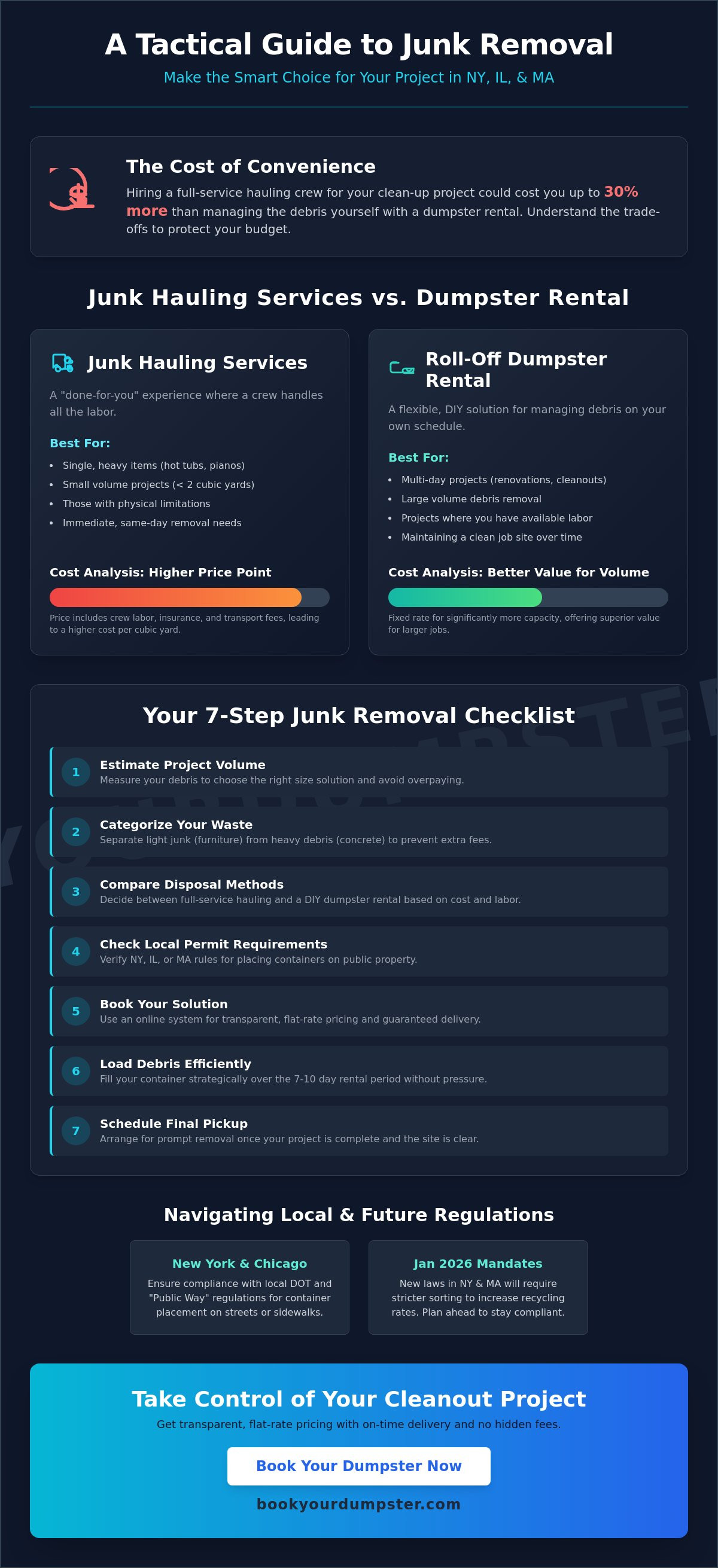
Choosing between a hauling crew and a roll-off container depends on your labor capacity and project timeline. Junk hauling services provide a "done-for-you" experience. These crews handle the heavy lifting, which makes them the standard choice for seniors or individuals with physical limitations. However, this convenience comes with a higher price point. You aren't just paying for disposal; you're paying for the crew's time, insurance, and transportation.
When you analyze the price per cubic yard, roll-off dumpsters typically offer better value for larger volumes. A hauling crew might charge a premium for a single truckload, whereas a 20-yard dumpster provides significantly more capacity for a fixed rate. If you have the labor available, renting a container is the logical financial move. It's also essential to stay compliant with New York State waste management regulations when disposing of construction debris or household items in the tri-state area.
The primary advantage of a rental is the 7 to 10 day window. This flexibility allows you to sort through items without the pressure of a crew waiting on your driveway. You can toss items as you find them, ensuring a thorough junk removal process that isn't rushed by a ticking clock.
When to Call a Hauling Crew
Hire a crew for specialized, high-intensity tasks. If you need to move a 500-pound hot tub or an upright piano, professional junk removal teams have the specific equipment to do it safely. These services also make sense for small volume projects under 2 cubic yards where a dumpster would sit mostly empty. Choose this option when speed is your primary metric and you're willing to pay for immediate removal without lifting a finger.
When to Rent a Roll-Off Dumpster
Rent a dumpster for multi-day projects like kitchen guts, roof replacements, or whole-home basement cleanouts. A container on-site allows you to maintain a safe, debris-free job site throughout the renovation process. This is the preferred method for contractors and cost-conscious DIYers who have their own crew or the physical ability to load the unit. For smaller residential tasks, check out this 10 yard dumpster rental guide to see if a compact container fits your driveway. If you're ready to clear the clutter, book your dumpster today to secure your delivery date.
The Ultimate Junk Removal Checklist: 7 Steps to Resolution
Effective junk removal requires a systematic approach to avoid logistical bottlenecks. Start by categorizing your waste into four distinct groups: Keep, Donate, Recycle, and Trash. This initial sort often reduces final disposal volume by 25% for the average residential cleanout. Once sorted, estimate your total volume in cubic yards. A standard 10-yard dumpster holds roughly three pickup truck loads of debris. If your project exceeds 15 cubic yards, book your dumpster in a larger size to avoid the cost of a second haul. Understanding these metrics is vital as the global waste management market continues to evolve, making professional efficiency a necessity rather than a luxury.
Check for prohibited items before the delivery truck arrives. Federal and state environmental regulations in New York, Illinois, and Massachusetts strictly forbid placing lead-acid batteries, whole tires, or hazardous chemicals in standard roll-off containers. Finally, secure your permits. If you plan to place your container on a public street in cities like Chicago, Boston, or New York City, you must obtain a right-of-way permit from the local Department of Transportation. In some jurisdictions, failure to display a valid permit can result in municipal fines exceeding $250 per day.
Pre-Removal Preparation
Clear a direct path for the delivery vehicle. Ensure at least 22 feet of overhead clearance to allow the hoist to operate without hitting power lines or tree branches. Protect your driveway by laying down 4x8 sheets of plywood where the dumpster rollers will land. This prevents asphalt cracking or concrete scraping. Notify your neighbors at least 24 hours in advance if the project will temporarily obstruct street parking or generate significant noise during early morning hours.
Execution and Loading Strategy
Load heavy, flat items like old doors, tabletops, or plywood sheets first. This creates a solid foundation and maximizes the bottom surface area of the container. Break down large furniture and collapse all cardboard boxes to eliminate air pockets. These gaps waste valuable space and can lead to uneven weight distribution. Keep the load level with the top rail at all times. Drivers cannot legally transport overfilled dumpsters, and debris protruding above the rim poses a significant safety risk to other motorists.
- Sort: Keep, Donate, Recycle, Trash.
- Measure: Calculate total cubic yards.
- Screen: Remove batteries, tires, and chemicals.
- Permit: Secure street placement rights.
Follow these steps to ensure your junk removal project stays on schedule and within budget. Professional coordination removes the stress of waste management, allowing you to focus on the renovation or cleanout itself. Schedule your delivery early to secure the best equipment for your specific site requirements.
Navigating Local Regulations in NY, IL, and MA
Local regulations turn a simple cleanup project into a legal minefield if you aren't prepared. New York, Illinois, and Massachusetts maintain some of the country's strictest waste management laws. You can't just drop a container anywhere or toss every item into the bin. Understanding these rules prevents expensive fines and project delays. Every city has its own logic for junk removal, and staying compliant is your first priority.
In New York City, the Department of Transportation (DOT) controls the streets. If you're working in Manhattan or Brooklyn and don't have a private driveway, you'll need a permit to place a dumpster on the road. Chicago's narrow alleys present a different logistical challenge. The city requires a "Public Way" permit for any equipment that blocks a sidewalk or street. If your bin blocks a 16-foot wide alley, the city will issue a citation immediately. Snow emergencies in Boston and Chicago add another layer of risk. When a snow emergency is declared, all containers on public routes must be removed to allow for plowing. If you don't move it, the city will tow it at your expense.
City-Specific Permit Guides
Applying for a temporary occupancy permit in Manhattan or Brooklyn requires specific insurance and site plans. You must ensure the container has reflective tape and doesn't block fire hydrants. In Cook County, Illinois, the solid waste tax adds a mandatory cost to every ton of debris. This tax funds local environmental initiatives, and it's a cost you must account for in your budget. Book Your Dumpster assists with these local logistics to ensure your placement is legal and stress-free.
Prohibited Items and Environmental Compliance
Massachusetts enforces strict "Waste Bans" managed by the Department of Environmental Protection (MassDEP). These bans target easy-to-recycle materials like cardboard, yard waste, and lead-acid batteries. Most notably, Massachusetts banned mattresses and textiles from landfills on November 1, 2022. You must coordinate separate recycling for these units rather than tossing them in a general roll-off. This keeps your junk removal project within state guidelines.
Illinois follows Senate Bill 2106, also known as the Electronic Products Recycling and Reuse Act. It's illegal to landfill electronics like monitors, printers, or computers in the state. If you have hazardous materials like wet paint, motor oil, or lithium-ion batteries, you cannot put them in a dumpster. You must take these items to a designated municipal household hazardous waste facility. Following these rules protects the environment and your wallet from heavy non-compliance penalties.
Ready to clear out your space without the regulatory headache? Book your dumpster today and let the experts handle the logistics.
Book Your Dumpster: Your Partner for Efficient Cleanouts
Get your project moving with a rental process that respects your time. Book Your Dumpster USA simplifies junk removal by offering a streamlined online booking system. You don't need to wait for a callback or handle complex paperwork. Select your location in New York, Illinois, or Massachusetts and secure your container in minutes. Our fleet includes sizes ranging from 10 to 40 yards. This range accommodates everything from a 500-square-foot bathroom remodel to a 3,000-square-foot commercial warehouse clear-out.
Transparency is our standard for 2026 budgeting. We provide a "No Hidden Fees" promise. The price you see includes delivery, pickup, and a specified weight limit. This eliminates the 15% to 20% price spikes often seen in the industry due to fuel surcharges or environmental fees. If you have questions about local regulations in Chicago, Boston, or New York City, consult with our local experts. They understand the specific permit requirements for each metro area. They ensure your container meets all municipal codes before it arrives on-site.
Why Choose Roll-Off Containers for Junk Removal?
Renting a roll-off container gives you total control. You set the pace for your junk removal project. Unlike full-service crews that charge by the hour, a dumpster allows you to sort items carefully over several days. This method results in lower costs for high-volume debris. For projects exceeding 15 cubic yards of waste, roll-off containers typically save homeowners 25% compared to labor-heavy alternatives. We use professional placement techniques. Our drivers utilize protective boards to ensure the container sits safely on your driveway or job site without causing surface damage.
Get Started Today
Start your cleanup now. Book your dumpster online at https://www.bookyourdumpster.com/ in under 5 minutes. If you're tackling a smaller residential project, check out our guide on trash dumpster rental for household needs. We guarantee on-time delivery and reliable pick-up. We handle the logistics so you can focus on the work. Choose your size, schedule your delivery, and clear the clutter today. Our team is ready to support your next project with the reliability you expect.
Take Control of Your 2026 Project Logistics
Successful junk removal in 2026 depends on two things: accurate project scoping and strict adherence to local disposal regulations in New York, Illinois, and Massachusetts. You've learned how to distinguish between simple hauling and the tactical advantage of a roll-off container. You also know that navigating municipal waste codes is non-negotiable for project compliance. Whether you're a homeowner tackling a basement or a contractor managing a multi-unit renovation, the right equipment eliminates the bottleneck.
We provide the specific tools you need to finish the job. Our inventory includes 10, 20, 30, and 40-yard containers, ensuring you don't pay for space you won't use. Our team applies specialized local knowledge to manage regional regulations across NY, IL, and MA. You get transparent, flat-rate pricing and a team that respects your timeline. Stop letting debris stall your progress. Choose your size, set your schedule, and get back to work.
Book Your Dumpster Now to secure your delivery date. Your clean site is just a few clicks away.
Frequently Asked Questions
How much does junk removal typically cost in 2026?
Junk removal costs in 2026 typically range from $134 to $600 based on national averages reported in the 2024 Angi Cost Guide. Your final price depends on the volume of debris and current disposal fees at local transfer stations in New York or Illinois. Expect to pay more for heavy materials like concrete or specialized items that require extra labor. Book your dumpster today to lock in transparent pricing for your project.
What items are considered "prohibited" in a rental dumpster?
You can't place hazardous materials, liquid waste, or flammable items in a rental dumpster. Prohibited items include lead-acid batteries, asbestos, motor oil, and propane tanks. Local regulations in Illinois and Massachusetts also restrict the disposal of tires and mattresses in standard roll-off containers to prevent landfill contamination. Check your local city ordinances for specific hazardous waste drop-off locations for these restricted items to avoid extra environmental fees.
Do I need a permit to put a dumpster on the street in Chicago or NYC?
Yes, you need a permit to place a dumpster on a public street in both Chicago and New York City. NYC requires a Department of Transportation permit, while Chicago mandates a Public Way Permit for any container blocking the sidewalk or street. Book your dumpster early to allow 3 to 5 business days for local agencies to process these applications. Failure to secure a permit often results in fines exceeding $500 from city inspectors.
What is the difference between junk removal and a dumpster rental?
Junk removal is a full-service option where a crew loads your waste, while a dumpster rental is a self-service solution where you fill the container at your own pace. Choose junk removal for quick, labor-intensive projects like clearing an attic in one afternoon. Opt for a roll-off dumpster for ongoing construction or multi-day home cleanouts where you need a staging area for debris. This flexibility allows you to work without a set crew schedule.
How do I calculate what size dumpster I need for my junk?
Calculate your dumpster size by estimating the volume of your debris in cubic yards. A standard 10-yard dumpster holds roughly 3 pickup truck loads of waste. For a 3-bedroom home cleanout, a 20-yard container is typically sufficient to handle furniture and general household clutter. Use our online sizing guide to compare dimensions and pick the right capacity. Choosing the correct size prevents overage fees and ensures a smooth pickup process for our drivers.
Can I put old appliances and electronics in a junk removal container?
You can put most appliances and electronics in a container, but specific rules apply to items with freon or heavy metals. Refrigerators and air conditioners require professional degassing before disposal in many Massachusetts municipalities. Always list your e-waste items when you book your dumpster to ensure compliance with state recycling laws. Electronics like televisions and monitors often require specialized handling to prevent toxic chemicals from entering the local soil or water supply.
What happens to my junk after it is hauled away?
Your junk goes to a local transfer station where workers sort materials for recycling, donation, or landfill disposal. In 2024, the EPA reported that approximately 32 percent of municipal solid waste was recycled or composted. We prioritize hauling your debris to facilities that maximize recovery rates to reduce the environmental impact. This process ensures that usable materials stay out of the landfill while your site stays clean and organized throughout the project duration.


