
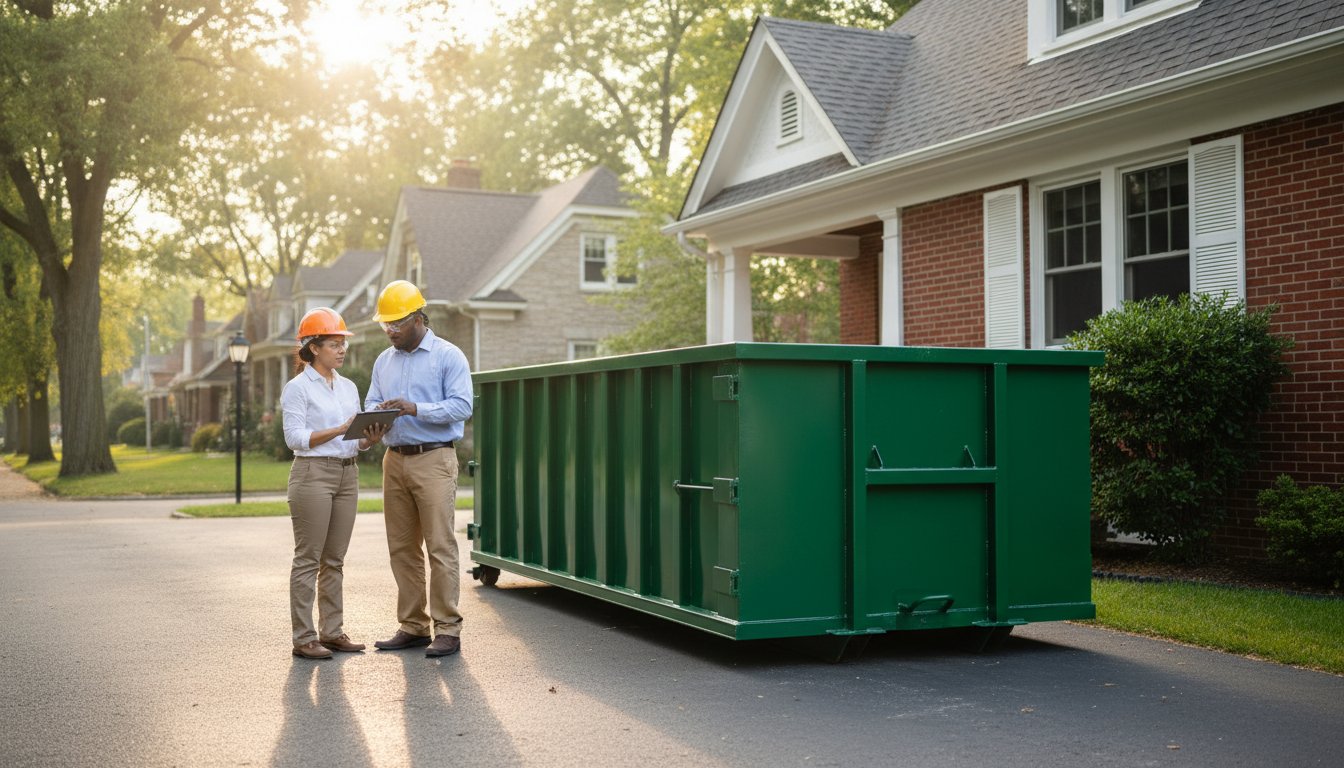
A single mistake in calculating your debris volume can increase your total project costs by 30 percent through avoidable landfill overage fees. If you are managing a renovation in Chicago or a clean-out in Boston, you don't have time to decode complex permit laws or guess which bin fits your driveway. You need your waste removed quickly and legally. Dealing with a trash dumpster rental often feels like navigating a minefield of hidden charges and confusing local regulations.
We agree that transparency is the only way to do business. You deserve a logistics plan that removes the guesswork from your site cleanup. This 2026 guide teaches you to master the logistics of sizing, local permits, and efficient loading across New York, Illinois, and Massachusetts. We provide the specific steps to secure a hassle-free delivery and ensure you remain compliant with state waste disposal mandates. Follow our breakdown of cubic yardage and street permit requirements to maintain a clean site and a predictable budget.
Key Takeaways
- Select the ideal container size for your project by comparing standard cubic yardage to real-world pickup truck loads.
- Master local permit requirements and site preparation strategies to ensure a hassle-free placement in NY, IL, or MA.
- Learn to load your trash dumpster rental efficiently by placing heavy items first to avoid overage fees and transport issues.
- Distribute weight evenly and avoid overhead obstructions to guarantee a safe and seamless pickup process.
- Book your dumpster using a streamlined, digital-first system that prioritizes transparent pricing and on-time delivery.
The Essentials of Trash Dumpster Rental in NY, IL, and MA
A roll-off dumpster is a temporary, high-capacity waste container designed for heavy-duty debris management. These containers arrive at your site on specialized trucks and sit on your property until your project is finished. Whether you are managing a residential cleanout, a complete roof replacement, or a commercial construction site, a trash dumpster rental provides the necessary volume to keep your workspace clear. Professional rental services offer a level of control that junk removal companies cannot match. You work at your own pace, disposing of items as you go, rather than waiting for a crew to arrive and haul away a single pile.
Choosing a professional service over a truck rental is a matter of efficiency. A standard pickup truck requires multiple trips to a transfer station, which consumes hours of labor and gallons of fuel. A single 20-yard dumpster holds the equivalent of six pickup truck loads. This capacity allows you to focus on the work itself instead of the logistics of transport. It is a pragmatic solution for projects that generate consistent waste over several days or weeks.
Why Local Context Matters for Waste Management
Waste regulations vary significantly between New York, Illinois, and Massachusetts. You must account for state-specific disposal bans to avoid hefty fines. For example, Massachusetts implemented strict waste bans in 2022 that prohibit disposing of mattresses and textiles in landfills. If these items are found in your container, the facility may reject the load or charge significant penalties. Local expertise also helps you navigate seasonal challenges. Chicago and Boston receive between 35 and 48 inches of snow annually on average. This weather requires precise delivery planning to ensure the container is placed on a clear, stable surface where it won't become an obstacle for snow removal equipment.
Tipping fees in the Northeast often exceed $100 per ton, which is significantly higher than in many other regions. Understanding these local cost drivers is essential for accurate budgeting. A provider with deep roots in these markets knows how to navigate these variables, ensuring your project remains compliant and cost-effective.
The Roll-Off Advantage for DIYers and Pros
Safety is the primary benefit of having a dedicated container on-site. By containing all debris in one sturdy, metal unit, you eliminate tripping hazards and keep sharp materials away from foot traffic. This is critical for both professional job sites and residential driveways. A trash dumpster rental also allows you to maintain a strict project timeline. You don't have to stop your progress to wait for a pickup. You control the schedule from start to finish.
- Save Time: Eliminate the need for multiple trips to a local landfill.
- Maintain Safety: Keep your job site free of scattered nails, glass, and heavy debris.
- Control Costs: Avoid the hidden expenses of fuel and vehicle wear and tear from hauling waste yourself.
- Flexible Scheduling: Choose a rental period that matches the actual duration of your project.
Book your dumpster through a reliable partner to ensure your delivery is on time and your pricing is transparent. This approach removes the stress of waste management so you can focus on completing your renovation or construction project efficiently.
Choosing the Right Dumpster Size for Your Project
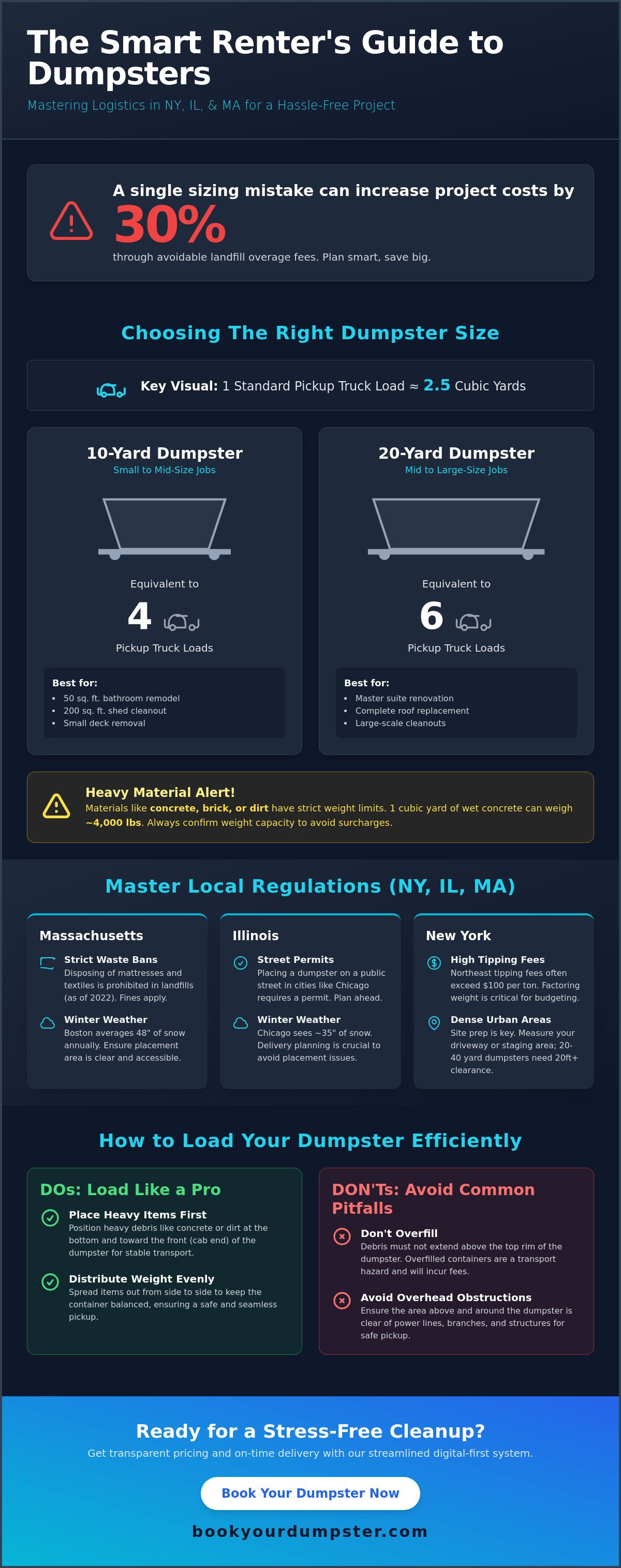
Select the wrong size and you'll face overage fees or the cost of a second haul. Avoid these logistics headaches by matching your debris volume to the right container capacity. A cubic yard measures 3 feet by 3 feet by 3 feet. For a quick visual, one standard pickup truck bed holds roughly 2.5 cubic yards of loose waste. If your project generates 10 truckloads of trash, you need at least a 25-yard capacity.
Weight is your second critical metric. Heavy materials like concrete, brick, or dirt require specialized sizing or strict weight limits. A single cubic yard of wet concrete weighs approximately 4,000 pounds. Exceeding your weight limit results in immediate surcharges. Also, measure your staging area. Most 20 to 40-yard containers require a flat, 20-foot long clearance plus room for the truck to maneuver. Always check your Local Permitting Requirements if you plan to place the unit on a public street in cities like Chicago or New York.
10 And 20-Yard Dumpsters: Small to Mid-Size Jobs
The 10-yard dumpster handles about 4 pickup truck loads. It's the best choice for a 50-square-foot bathroom remodel or cleaning out a 200-square-foot shed. If you're removing a deck or renovating a master suite, step up to the 20-yard model. This size accommodates roughly 8 truckloads and fits comfortably in most suburban driveways. For more details on the smallest option, read our 10 Yard Dumpster Rental: The Complete Buying Guide for 2026. Simplify your project by choosing a trash dumpster rental that fits your specific debris type.
30 And 40-Yard Dumpsters: Large Scale Projects
Commercial renovations and estate cleanouts demand higher capacity. A 30-yard container holds 12 to 15 pickup truck loads. It's the standard for 2,000-square-foot home siding replacements. The 40-yard dumpster is the largest available for a standard trash dumpster rental. It stands 8 feet tall, which makes tossing bags over the side difficult. Use the rear swing-open door to walk heavy items directly into the unit. This size is standard for major construction sites or 3,000-square-foot roofing tear-offs. If you're ready to clear the clutter, schedule your delivery with our easy online tool.
Site Preparation and Local Permitting Requirements
Proper planning ensures your trash dumpster rental arrives and operates without a hitch. You must designate a placement area that accommodates both the container and the delivery truck. A standard roll-off truck requires 60 feet of straight-line approach and at least 22 feet of vertical clearance to lift and drop the bin. Scan your site for low-hanging power lines, cable wires, or tree branches before the driver arrives. If the truck can't safely navigate the space, you'll likely face a dry-run fee.
Surface integrity is equally important. A fully loaded 20-yard dumpster can weigh over 10 tons. Placing this weight directly on soft soil or fresh asphalt can cause sinking or cracking. Use 3/4-inch plywood boards or specialized street pads under the rollers to distribute the load. This simple step protects your property and prevents expensive repairs after the project ends. Ensure the ground is level to prevent the bin from shifting while you load it.
Navigating Permits in Chicago, Boston, and NYC
Placement on private property like a driveway usually doesn't require a permit. However, if the container sits on a public street or sidewalk, you must secure local authorization first. In Chicago, you'll need a Public Right-of-Way permit from the Chicago Department of Transportation (CDOT). These permits often cover a specific timeframe and require visible reflective tape on the bin for nighttime safety.
In New York City, the rules are strict. You must comply with NYC regulations for construction debris to avoid heavy fines from the Department of Sanitation. Containers on city streets also require a permit from the NYC DOT. Massachusetts residents should contact their local Department of Public Works. Towns like Brookline or Cambridge have their own specific dumpster permit applications that differ from Boston's requirements. Check these details at least 72 hours before your scheduled delivery to avoid delays.
Preparing Your Driveway for Delivery
Clear the path of all vehicles, basketball hoops, and debris. The driver needs a wide turning radius to align the truck with your target spot. If you have specific placement needs, use the notes section when you book your dumpster online. Be precise. Tell the driver to "place the bin on the left side of the driveway" or "align the rear doors with the garage entrance."
- Provide 60 feet of straight-line clearance for the truck's approach.
- Check for 22 feet of overhead space to avoid utility lines.
- Lay down plywood to protect asphalt or delicate pavers.
- Confirm your street permit is active and displayed if required by your city.
Don't leave the placement to chance. Taking ten minutes to prep the site today saves hours of logistical headaches tomorrow. We prioritize efficiency, so having your site ready allows our drivers to complete your delivery and get out of your way quickly. This focus on preparation is the fastest way to get your project moving without unnecessary costs.
How to Load Your Dumpster to Avoid Overage Fees
Loading your container correctly prevents safety hazards and unexpected charges. Start by placing flat, heavy materials like plywood, doors, or old flooring at the bottom. This creates a solid foundation and utilizes the floor space efficiently. Distribute the weight evenly across the entire length of the bin. Don't pile heavy debris only at the front or back. Imbalanced loads make transport dangerous and might result in a driver refusing the pickup for safety reasons.
Break down bulky items to maximize every cubic yard. Dismantle furniture and flatten cardboard boxes to eliminate air pockets. These gaps waste valuable space and lead to unnecessary overflows. Always observe the fill line. Never load debris higher than the top rim of the container. Haulers cannot legally transport a trash dumpster rental if the waste extends above the sides, as this creates a road hazard for other drivers.
- Load heavy items first: Keep the center of gravity low.
- Distribute weight: Avoid lopsided loads.
- Eliminate air pockets: Crush or dismantle large items.
- Respect the rim: Keep all waste below the top edge.
Prohibited Items and Environmental Compliance
Federal and state regulations dictate what can enter a landfill. Hazardous waste like tires, lead-acid batteries, wet paint, and flammable liquids are strictly prohibited. In New York and Illinois, electronics disposal laws are particularly stringent. For instance, the NYS Electronic Equipment Recycling and Reuse Act requires specific handling for computers and televisions. Mixing these into a standard trash dumpster rental triggers contamination fees. Distinguish between Construction and Demolition (C&D) waste and general household trash, as processing facilities often separate these streams for recycling to meet 2026 environmental targets.
Managing Weight Limits Effectively
Every container size has a specific tonnage limit. A standard 20-yard dumpster typically includes a 2-ton to 3-ton allowance, while larger 40-yard bins may handle up to 6 tons depending on the local permit. Be cautious with heavy fill materials. Dirt, brick, and sod weigh approximately 2,000 to 3,000 pounds per cubic yard. Loading a 10-yard bin to the top with concrete will exceed the legal weight limit of most trucks. Review these loading tactics to stay within your weight allowance and avoid overage fees.
Ready to start your project? Book your dumpster online today for transparent pricing and reliable service.
Book Your Dumpster: Streamlined Service in NY, IL, and MA
Managing a renovation or site cleanup shouldn't involve endless phone tags or confusing paperwork. Our digital-first booking system prioritizes your time and removes the friction from waste management. It allows you to secure a trash dumpster rental in seconds from any device. We've optimized every step for speed because we know your project can't wait. Whether you're coordinating a multi-unit cleanout in Chicago or a residential roofing job in Boston, our platform responds instantly to your needs.
We believe in total transparency. You won't find hidden surcharges for fuel, delivery, or pickup here. The price you see during checkout is the final price you pay. Our team brings deep local expertise to every job in the Tri-State and Midwest regions. We understand the specific permit requirements in New York City and the logistical constraints of suburban Illinois neighborhoods. Since 2021, we've served over 18,500 customers with a 98 percent on-time delivery rate. We handle the logistical headaches so you can focus on the actual work.
The Book Your Dumpster USA Advantage
Your project timeline is our priority. We maintain strict delivery and pickup schedules that respect your deadlines. Our experts provide pragmatic support based on your specific neighborhood needs. They don't just drop a bin; they ensure it's placed correctly to minimize property impact. Our team has managed over 5,000 tons of debris in 2025 alone, proving we have the capacity for any scale. Access our online booking platform for instant scheduling right now. We make the process simple, professional, and reliable.
Ready to Clear the Clutter?
Don't let waste stall your progress or create a safety hazard on your site. Select your city, choose your container size, and schedule your delivery in under five minutes. Our system is designed for the modern contractor and the busy homeowner alike. Trust the pragmatic pros at Book Your Dumpster USA to handle the mess while you stay on schedule. For a deeper dive into local regulations and sizing charts, visit our pillar page: Dumpster Rental in New York, Illinois, and Massachusetts: The 2026 Complete Guide. Securing a trash dumpster rental has never been this straightforward. Book your bin today and experience the difference that professional waste management makes.
Simplify Your 2026 Project Logistics
Success on a job site in New York, Illinois, or Massachusetts depends on efficient waste management. You've learned how to select between 10 and 40 cubic yard containers to match your specific debris volume accurately. Following local permitting guidelines for street placement prevents costly municipal fines and project delays. Our local experts understand the unique regulations across these three states, ensuring your setup is compliant from day one. Proper loading techniques aren't just about safety; they're your best defense against weight-related overage charges. We've built a system that prioritizes your time through an on-time delivery guarantee and a straightforward digital interface. Every trash dumpster rental comes with transparent pricing, meaning you won't find hidden fees on your final invoice. It's time to remove the stress of debris removal and get back to the work that matters. We're ready to handle the heavy lifting while you maintain a clean, productive workspace. Book your dumpster online now for fast delivery in NY, IL, and MA. You've got a project to finish, and we're here to help you get it done right.
Frequently Asked Questions
How much does it cost to rent a trash dumpster in my area?
Pricing depends on your specific location, container size, and the type of debris you're tossing. According to 2024 industry data from HomeAdvisor, national averages range from $292 to $479 per rental. Your final quote includes delivery, pickup, and a specific weight allowance. Check our online booking tool for transparent, real-time pricing in NY, IL, and MA. We guarantee no hidden fees at checkout to keep your project on budget.
Do I need a permit to put a dumpster on the street in Chicago or Boston?
Yes, both Chicago and Boston require permits for any street placement. In Chicago, you must obtain a Public Right of Way permit through the Department of Transportation, which currently costs approximately $50 per 30-day period. Boston requires a Street Occupancy Permit from the Public Works Department. Place your container on private property like a driveway to avoid these municipal fees and the associated paperwork. It's the easiest way to save time.
What items are strictly prohibited from being put in a rental dumpster?
You cannot dispose of hazardous materials, electronics, or flammable liquids in a trash dumpster rental. Prohibited items include car batteries, asbestos, propane tanks, and wet paint. Federal EPA regulations and local state laws in NY and IL mandate separate disposal for these toxins. Loading these materials results in immediate safety risks and significant environmental fines from local waste authorities. Always check our prohibited items list before you start loading.
How long can I keep the dumpster on my property?
Our standard rental period lasts between 7 and 14 days depending on your specific project needs. You can schedule an early pickup if you finish your cleanup ahead of time. If you need more time, contact us 24 hours before your scheduled pickup date to extend the rental for a flat daily rate. This flexibility ensures you don't feel rushed during your home renovation or estate cleanout. We prioritize your schedule.
What happens if I exceed the weight limit for my rental?
Overweight containers incur additional pro-rated landfill fees based on the excess tonnage. Most rentals include a weight limit between 2 and 6 tons depending on the size you choose. If the scale at the transfer station shows your load exceeds the limit, we pass the exact landfill cost to you. Avoid overfilling by keeping heavy debris like concrete or dirt separate from standard household trash. This keeps your costs predictable and fair.
Can a dumpster be delivered if I am not home at the time?
We deliver your container whether you're home or not, provided the drop-off area is clear. Give us specific placement instructions during your online booking to ensure the driver puts the unit exactly where you want it. Clear all vehicles, low-hanging branches, and debris from the site before the scheduled delivery window. Our drivers follow your digital notes to provide a hassle-free experience that respects your busy schedule and property.
How much space does the delivery truck need to drop off the container?
Delivery trucks require a minimum of 60 feet of straight-line approach and 22 feet of vertical clearance. The site must be at least 10 feet wide to accommodate the width of a standard roll-off container. Ensure your driveway or designated spot is free of overhead wires and parked cars. These specific dimensions allow the driver to safely maneuver the hoist and drop the bin without causing property damage. Preparation ensures a smooth drop-off.
Are there special rules for disposing of mattresses in Massachusetts?
Massachusetts law officially banned mattresses and textiles from landfills on November 1, 2022. You must recycle these items through specialized programs rather than tossing them into a standard trash dumpster rental. The Massachusetts Department of Environmental Protection (MassDEP) requires these materials to be handled at dedicated recycling facilities. We can help you find a local mattress recycling partner to stay compliant with state regulations and avoid potential fines at the landfill.


