
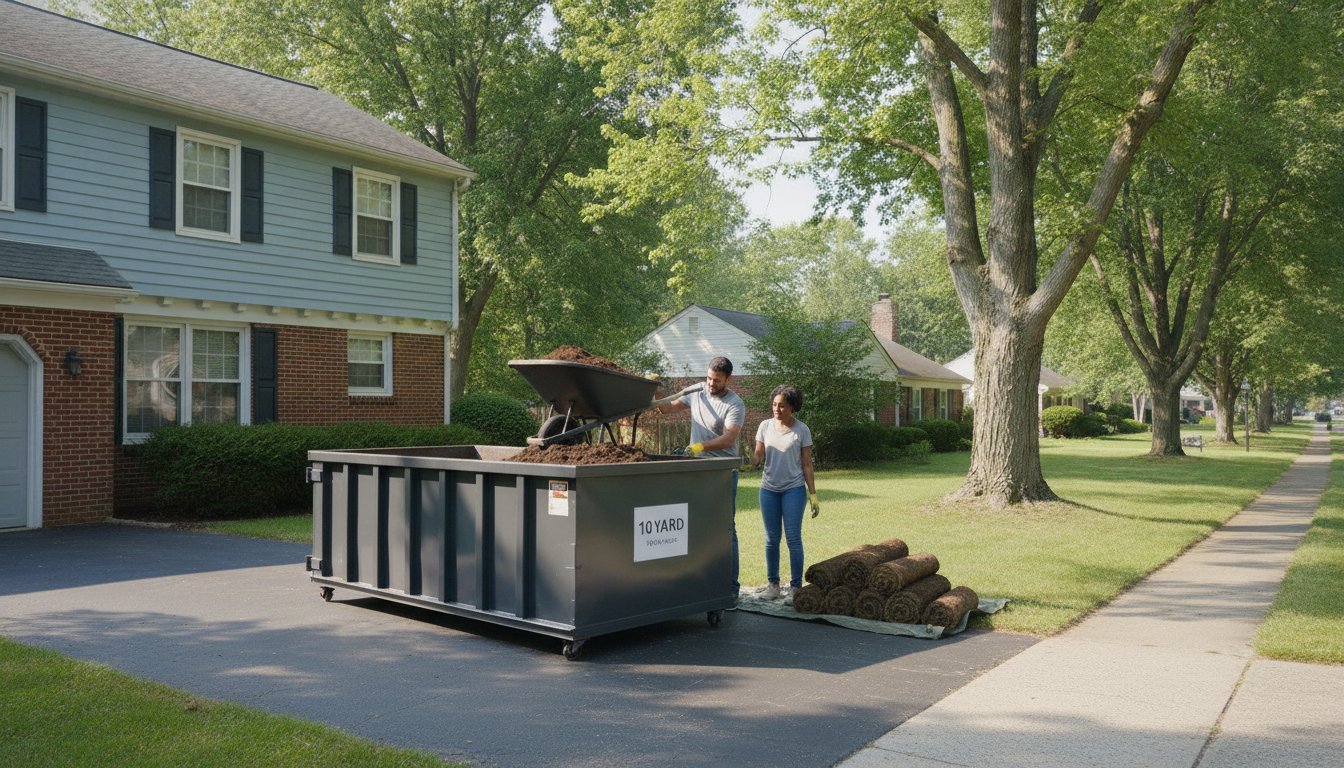
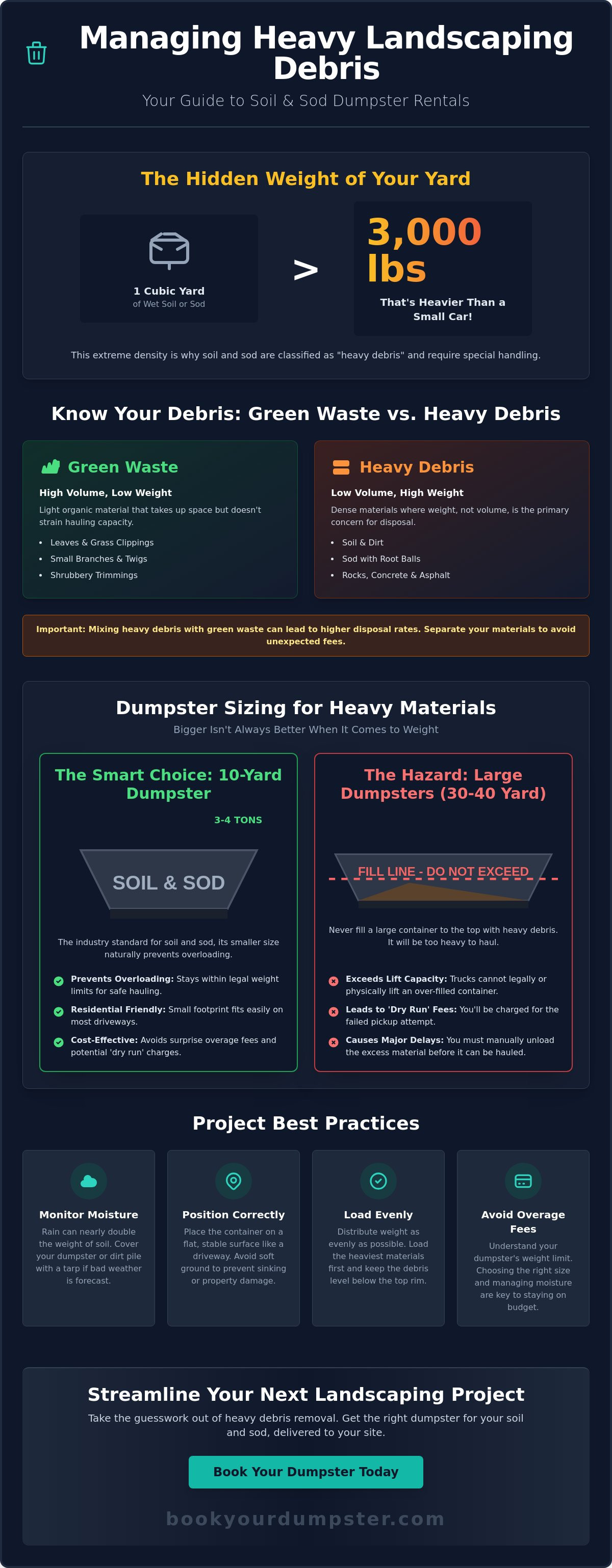
A single cubic yard of wet dirt weighs more than 3,000 pounds. This reality transforms a simple backyard refresh into a serious logistical challenge. When you strip old grass or dig new garden beds, you aren't just moving yard waste; you're moving tons of literal earth. Choosing the correct landscaping project dumpster for soil and sod is the only way to avoid massive overage fees and potential driveway damage. You need a container that handles the extreme density of organic material while staying within legal hauling limits.
You likely want the debris gone quickly without dealing with hidden surcharges or cracked pavement. It's frustrating when weight limits are unclear or rules about mixing dirt and yard waste feel like a guessing game. This guide teaches you how to manage heavy landscaping debris by selecting the right container for the specific density of your waste. We'll cover how to estimate your tonnage, stay within weight limits for a 10 yard dumpster or larger, and ensure your site stays clean and professional from start to finish.
Key Takeaways
- Categorize soil and sod as heavy debris to ensure you receive a container rated for high-density materials.
- Select a 10-yard or 20-yard dumpster based on whether you are hauling clean fill or mixed organic waste.
- Monitor weather conditions and moisture levels to prevent soil from becoming too heavy for legal transport.
- Position your container on a flat, stable surface and load the densest materials first to maintain site safety.
- Rent a landscaping project dumpster for soil and sod to streamline your removal process and eliminate overage fees.
Why Your Landscaping Project Needs a Dedicated Dumpster for Soil and Sod
Soil and sod are the heaviest materials you'll move during a backyard renovation. In the waste industry, these are classified as "heavy debris" because weight, not volume, determines the hauling strategy. Standard municipal trash services won't haul tons of excavation waste; their trucks simply aren't built for that kind of mass. Using Roll-off dumpsters provides the mechanical capacity to move earth without damaging your own vehicle or leaving unsightly dirt piles on your lawn. It's the most efficient way to maintain project momentum when you're stripping away old grass or digging out garden beds.
A landscaping project dumpster for soil and sod keeps your workspace organized and professional. It ensures organic material reaches a facility equipped to handle it, often allowing the soil to be repurposed as "clean fill" for construction projects elsewhere. This prevents the logistical headache of making dozens of trips to a local dump in a personal truck. By containing the debris, you also protect your driveway from the friction and weight of loose dirt piles that can stain or erode the surface over time. Keeping the job site contained is the best way to avoid logistical stress.
The Difference Between Yard Waste and Heavy Debris
Distinguish between green waste and heavy debris before you start your project. Green waste, like leaves and small branches, is high-volume but carries very little weight. Soil and sod are the exact opposite. A single cubic yard of dry soil can weigh up to 2,700 pounds. Wet sod is even more dense because thick root balls trap moisture and extra earth. Mixing light brush with heavy dirt can lead to higher disposal rates at the landfill. Keep these waste streams separate to ensure you're paying the correct rate for your specific materials and density.
When to Rent a Dumpster for Landscaping
Rent a container whenever your project involves significant ground disturbance. If you're re-grading a lawn to fix drainage issues or removing old grass to install a new paver patio, you'll generate more waste than you expect. Excavating for retaining walls, pond installations, or building new raised garden beds also creates tons of debris. For these intensive tasks, visit Book Your Dumpster USA to select a container that matches your weight requirements. We help you pick the right size so your project stays on schedule and your site stays clean throughout the transformation.
The Weight Factor: Why Soil and Sod Require a Heavy Debris Strategy
Weight is your most significant variable when planning a landscaping project dumpster for soil and sod. Unlike household junk or construction debris, earth is incredibly dense. While you might consider reducing yard waste through on-site composting for light branches or leaves, large excavation projects require a container that can handle thousands of pounds. A single cubic yard of dry soil weighs approximately 2,000 to 2,700 pounds. If you encounter rain or have wet sod with heavy root balls, that weight can double almost instantly.
Trucks have strict legal hauling limits for safety and road preservation. If your container exceeds these limits, the driver won't pick up the load. This leads to dry run fees and project delays while you manually remove material to reach a legal weight. Overage fees are typically calculated per ton, so failing to account for moisture or density can ruin your budget. It's better to plan for the maximum possible weight rather than hoping for the best. Precision matters when you're moving the earth.
The 10-Yard Dumpster: The Industry Standard for Soil
The 10-yard dumpster is the safest choice for dirt and sod. Its compact size naturally limits how much material you can load, preventing you from accidentally exceeding truck lift capacities. These containers have a small footprint, making them ideal for residential driveways where space is limited. They provide enough capacity for roughly three to four tons of debris while remaining manageable for standard roll-off trucks. This size ensures you stay within legal limits without sacrificing project efficiency.
The Danger of Overfilling Large Containers
You might think renting a 30 or 40-yard dumpster is more efficient, but these are dangerous for heavy materials. Never fill a large container to the top with soil or sod. Most haulers enforce a strict "fill line" rule for heavy debris, requiring you to stop at 1/3 or 1/2 full. An overfilled 40-yard dumpster filled with wet soil could easily weigh over 40 tons, which is far beyond the legal and mechanical limits of any residential roll-off truck. This creates a massive safety risk during transport and can cause severe damage to your property. To avoid these risks, view container specifications before you start your project.
Choosing the Right Dumpster Size for Your Landscaping Debris
Selecting the correct container size prevents logistical failures and keeps your project on budget. When you rent a landscaping project dumpster for soil and sod, ignore the temptation to choose based on visual volume alone. Large containers like 30 or 40-yard dumpsters are specifically reserved for light debris like branches, shrubs, and leaves. Loading these with earth will exceed legal weight limits before the container is even a quarter full. Stick to smaller sizes for high-density materials to ensure the truck can actually lift the load from your property.
The 10-yard dumpster is the most reliable option for clean dirt fill or small sod removals. It handles high-density loads while remaining within the mechanical lift capacity of standard roll-off trucks. If your project involves mixed debris, such as bushes, dirt, and some sod, a 20-yard dumpster may work. However, you must monitor the fill level with extreme care. A 20-yarder filled completely with sod is often un-haulable and will result in significant fines or the requirement to manually offload material. Always overestimate the weight and underestimate the volume when dealing with earth.
Calculating Your Soil Volume
Accurate estimation saves money and prevents dry-run fees. Use the standard volume formula: multiply length by width by depth in feet, then divide by 27 to find the cubic yards. Don't forget that soil expands once it's excavated. This "fluff factor" means 10 cubic yards of packed earth becomes roughly 13 yards once it hits the dumpster. For sod removal, account for the 2 to 3 inches of soil and root mass attached to the grass. This extra depth adds significant weight that many homeowners and contractors overlook during the planning phase.
Common Landscaping Project Matchups
Match your container to your specific task to maximize efficiency. A small garden bed excavation or a single-car driveway expansion typically fits in a 10-yarder. For a full lawn replacement under 2,000 square feet, a 10-yarder is usually the safest bet, though a 20-yarder works if you're mixing in lighter brush or shrubs. If you're performing a major clearing of trees and brush with absolutely no soil included, the 30-yarder is the better choice for sheer volume. Visit Book Your Dumpster USA to view available sizes and schedule a delivery that fits your timeline.
How to Load a Landscaping Dumpster for Soil and Sod
Loading a landscaping project dumpster for soil and sod requires more precision than a standard household cleanout. You aren't just tossing items into a bin; you're managing weight distribution and site safety. Start by placing the container on a flat, stable surface. Avoid soft grass or dirt patches at all costs. The extreme weight of a loaded dumpster will sink the rollers into soft ground, which makes pickup impossible and causes severe damage to your landscape. Proper placement ensures the roll-off truck can safely winch the container back onto the rails when the job is done.
Distribute the weight evenly by loading the heaviest materials first. Start at the front of the container—the end closest to the truck—and work your way toward the door. Keep the load level as you progress. Federal DOT regulations prohibit haulers from transporting containers where material peaks above the rim or hangs over the sides. If your soil pile creates a "mountain" in the center, use a shovel to flatten it. This prevents debris from falling onto the road during transport and protects you from liability.
Protecting Your Property During Delivery
Driveway protection is mandatory when dealing with heavy debris. Lay down 4x8 sheets of 3/4-inch plywood where the dumpster wheels will rest. This simple step distributes the pressure and prevents asphalt or concrete from cracking under several tons of earth. Before the truck arrives, verify you have at least 20 feet of vertical clearance. Roll-off hoists need significant overhead space to tilt and drop the container. If your driveway is too short or obstructed, you may need a local permit to place the dumpster on the street. Check your municipal codes to avoid unexpected fines.
Efficient Sod Loading Techniques
Maximize your space by stacking sod rolls tightly. This minimizes air pockets that waste valuable volume and cause the load to shift. Shake off excess loose dirt from root balls before loading them. This reduces unnecessary weight that contributes to the overage fees mentioned in earlier sections. If you have light brush or shrubs, place them on top of the soil. The lighter material helps "tamp down" the dirt and prevents dust from blowing out during transport. Avoid loading during heavy rain, as soil absorbs water and can add hundreds of pounds to your total weight. To ensure a smooth removal process, schedule your delivery with a team that understands heavy debris logistics.
Book Your Dumpster for Your Next Outdoor Project
Managing heavy debris requires a partner who understands the logistics of earth removal. Choosing a landscaping project dumpster for soil and sod shouldn't be a source of stress or unexpected costs. Book Your Dumpster USA offers simplified online booking for both residential and commercial landscaping needs. We prioritize pricing integrity, ensuring you receive a transparent quote with no hidden fees for heavy debris loads. By focusing on utility and digital convenience, we move you from a cluttered job site to a finished project with minimal friction.
Expert support is available to guide your selection. Don't guess whether a 10, 20, or 30-yard container is right for your specific debris. Our team analyzes your project scope to ensure the weight capacity matches your material density. We help you avoid the logistical error of renting a container that's too large to haul or too small to be efficient. This precision keeps your project on schedule and your budget intact. You get the exact equipment needed to handle the tonnage without the risk of failed pickups.
Reliable Service in Your Local Area
Local knowledge is vital when disposing of organic waste. We provide specialized dumpster rental in New York and Illinois, as well as New Jersey and Massachusetts. Our regional expertise means we understand local disposal regulations and composting requirements for soil and sod. We coordinate fast delivery and prompt pickups to ensure your landscaping crew never waits on an empty container. This localized approach combines the reliability of a neighborhood partner with the efficiency of a modern, tech-driven service.
Ready to Start Your Transformation?
A clean job site is the foundation of a successful landscaping transformation. By securing a dedicated landscaping project dumpster for soil and sod, you eliminate the physical and financial risks of improper debris management. You protect your property, stay within legal hauling limits, and ensure your organic waste is diverted to the correct facility. Stop worrying about overage fees and start focusing on your new lawn or patio. Visit Book Your Dumpster USA to select your container and schedule your delivery today. Our straightforward process ensures you get the right tool for the job without unnecessary fluff or delays.
Streamline Your Landscape Debris Removal
Successful landscaping requires more than just a creative design; it demands a pragmatic plan for the tons of earth you'll excavate. You now understand that weight is the primary constraint when moving organic materials. Selecting a 10-yard container prevents mechanical failures and keeps your project within legal hauling limits. Protecting your driveway with plywood and loading the container evenly ensures a safe, damage-free experience from delivery to pickup. These steps remove the logistical stress that often stalls major outdoor renovations.
Choosing the right landscaping project dumpster for soil and sod is the final step in securing a clean and professional job site. We offer transparent pricing on all heavy debris loads to eliminate the frustration of hidden fees. Our team serves NY, NJ, IL, and MA with reliable 10, 20, and 30-yard options tailored to your specific project needs. Don't let waste management slow your progress. Book Your Landscaping Dumpster Online Now to keep your project moving forward without delay. Get started on your backyard transformation today with the confidence that your debris removal is handled by experts.
Frequently Asked Questions
Can I mix soil and sod with other household trash in the same dumpster?
No, you should not mix soil and sod with municipal solid waste. Landfills and recycling centers process heavy debris separately from standard household junk. Mixing these materials often results in contamination fees or a rejected load. Keep your landscaping project dumpster for soil and sod strictly for organic excavation materials to ensure predictable pricing and disposal.
How much soil can I put in a 10-yard dumpster before it is too heavy?
Limit your load to about 2 to 3 cubic yards if your 10-yard dumpster has a standard weight limit. Since dry soil weighs between 2,000 and 2,700 pounds per cubic yard, even a small container can become un-haulable if filled more than halfway. Always verify the specific tonnage limit on your rental agreement to avoid mechanical lift failures during pickup.
What happens if my landscaping dumpster is over the weight limit?
The driver will refuse the pickup if the container exceeds the truck's legal hauling capacity. This leads to a dry run fee and requires you to manually remove the excess material until the load reaches a safe weight. You'll also be responsible for overage fees, which are typically calculated per ton for any weight beyond your initial contract.
Do I need a permit to put a dumpster on my driveway for a landscaping project?
You typically don't need a municipal permit for placement on private property like a driveway. Permits are generally required only when a container occupies public space, such as a street or sidewalk. Always check with your Homeowners Association (HOA) first, as they may have specific bylaws regarding how long a container can remain on your property.
Is sod considered "clean" fill or yard waste?
Sod is generally classified as heavy debris rather than clean fill because it contains organic grass and root systems. Clean fill usually refers to pure soil, rock, or concrete that is free of organic matter. Because sod is extremely dense and retains significant moisture, it requires the same specialized hauling strategy as dirt or gravel to manage the total weight.
How do I prevent the soil from getting heavier if it rains during my project?
Cover your container with a heavy-duty tarp and secure it with bungee cords or weights. Wet soil can weigh up to 3,400 pounds per cubic yard, which is nearly 40 percent more than dry earth. Keeping the load dry is the most effective way to stay within your weight limit and avoid expensive overage charges after a storm.
Can I put large rocks or concrete in with the soil and sod?
You can often include rocks and concrete, but you must inform your rental provider before doing so. While these are all heavy debris, some facilities only accept "clean" loads of a single material. Mixing rocks with your landscaping project dumpster for soil and sod is usually permitted if the load remains inert and free of wood, plastic, or trash.
How much space do I need for the delivery of a landscaping dumpster?
Ensure you have at least 60 feet of linear space in your driveway or along the curb for the truck to safely drop the container. You also need 20 feet of vertical clearance to accommodate the roll-off hoist as it tilts. Clear away all vehicles, low-hanging branches, and debris from the delivery path before the truck arrives to prevent site delays.


