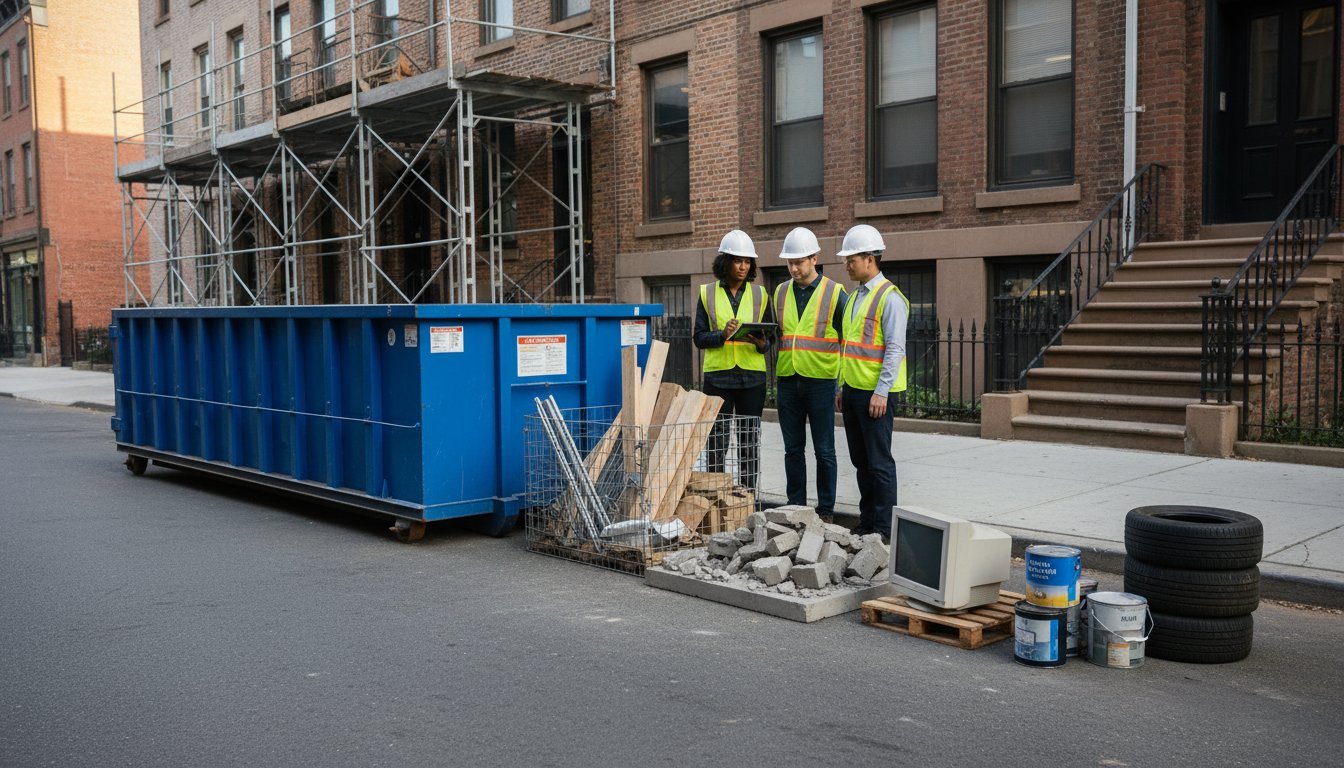
The Northeast is projected to lose 30% of its remaining landfill capacity within the next five years, leading to a surge in disposal regulations across New York, New Jersey, and Massachusetts. In this tightening regulatory environment, understanding the prohibited items for roll off dumpsters is the only way to shield your project budget from aggressive local surcharges. You've likely felt the frustration of confusing municipal guidelines versus what your hauler actually accepts. When landfill tipping fees increase annually, a single mistake at the curb can lead to a rejected load or a significant environmental penalty that stalls your timeline.
Master the rules of waste disposal to avoid hidden fees, environmental fines, and project delays with our comprehensive 2026 checklist. We provide a clear Yes/No list of materials and the legal disposal alternatives required for successful project completion. From the specific e-waste bans in Illinois to the strict mattress recycling mandates in San Francisco, this guide ensures you stay compliant. Get the clarity you need to move from a state of clutter to a state of resolution without the risk of surprise costs on your final invoice.
Key Takeaways
- Understand the legal and safety reasons why haulers enforce strict disposal rules to prevent project delays and rejected loads.
- Identify the specific list of prohibited items for roll off dumpsters, including flammable liquids and corrosive chemicals that carry heavy environmental fines.
- Learn which common household appliances and heavy items like cast iron tubs require specialized handling or removal.
- Master the limitations for construction debris to safely manage heavy materials like concrete and hazardous substances like asbestos.
- Apply pre-sorting best practices to streamline your waste management and ensure your project stays within budget and on schedule.
Understanding Prohibited Items for Roll Off Dumpsters
Prohibited items are materials legally barred from standard landfills or those requiring specialized, high-cost processing. These rules aren't arbitrary. They exist to satisfy environmental regulations, ensure landfill safety, and protect expensive hauling equipment. You might assume your local municipal trash rules apply to your rental, but roll-off agreements are often much stricter. While your weekly curbside pickup might overlook a stray battery, prohibited items for roll off dumpsters can trigger immediate load rejection or heavy surcharges. Heavy equipment like hydraulic compactors can be destroyed by concrete or metal debris if the container wasn't rated for that specific weight.
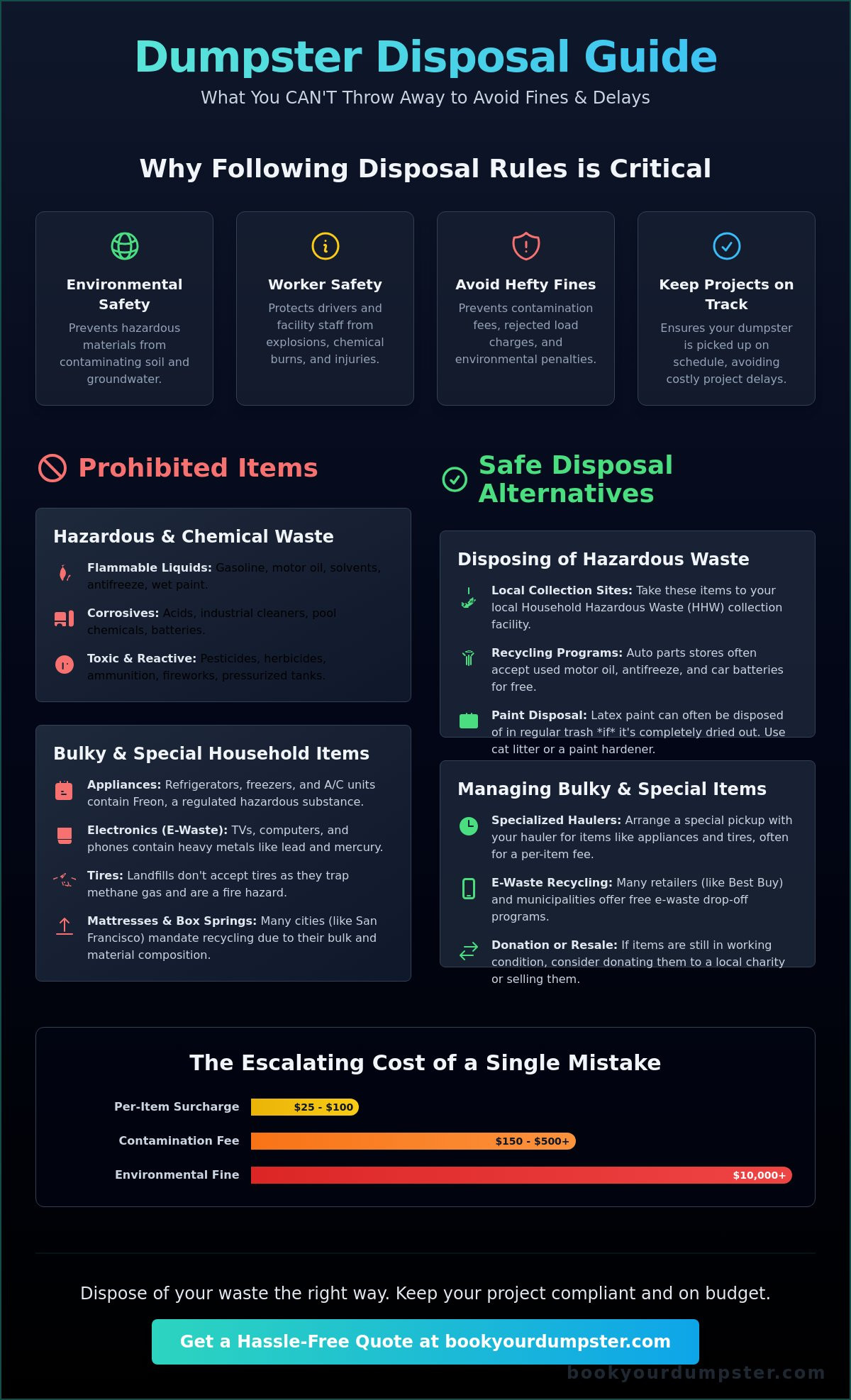
Haulers must comply with federal and state laws regarding Hazardous Materials and Chemical Waste. If a driver spots restricted items during pickup, they're legally obligated to leave the container on-site. This leads to a "Contamination Fee." This isn't just a small penalty; it's a charge designed to cover the high cost of secondary sorting, specialized transport, and the surcharges landfills levy against haulers who bring in tainted loads. Mixing even a small amount of restricted waste can compromise an entire 40-yard load. You aren't just paying for the item; you're paying for the logistical disruption.
Why Prohibited Items Matter for Your Project
Ignoring these rules creates a chain of logistical failures. First, you face legal liability. If hazardous materials leak into the groundwater from a standard landfill, the original waste generator can be held responsible for remediation. Second, landfill rejection halts your project. A rejected load means your full dumpster stays on your driveway in Queens or your job site in Boston, preventing you from continuing work until the items are removed. Finally, worker safety is a major concern. Chemicals or pressurized tanks can explode or leak, causing severe injury to drivers and facility staff. Protecting these workers is a non-negotiable part of the rental agreement.
The Financial Impact of Mixing Prohibited Waste
Contamination turns a predictable expense into a budget crisis. Most haulers apply standard surcharges for common restricted items like tires or mattresses. These fees are often applied per item. If the contamination is severe enough to cause a "dry run," you'll pay a trip fee for the attempted pickup plus daily rental rates while the container sits idle. In extreme cases, if a chemical leak occurs during transport, you could be responsible for environmental remediation costs. These expenses far exceed the cost of proper, legal disposal from the start. Clear communication with your hauler is the only way to avoid these surprise costs.
Hazardous Materials and Chemical Waste Checklist
Chemical waste represents the most dangerous category of prohibited items for roll off dumpsters. These substances can ignite, corrode metal containers, or release toxic fumes during transport. Federal guidelines under the Resource Conservation and Recovery Act (RCRA) dictate how these materials must be tracked and handled. Understanding Prohibited Items at the federal level helps you avoid the severe EPA fines mentioned earlier. If an item is labeled as "Warning," "Danger," or "Poison," keep it out of the bin. This includes common job site and household items like pesticides, herbicides, and lead-based paints. Corrosive materials like industrial-strength bleach and pool chemicals can eat through the metal floor of a container, leading to expensive equipment damage fees.
Reactive materials pose an immediate threat to life and property. Ammunition, fireworks, and pressurized cylinders can explode when compressed by the hydraulic systems in waste trucks. Even empty-looking cylinders often contain enough residual gas to cause a disaster. Keep these four categories in mind when sorting your debris:
- Flammable liquids: Gasoline, kerosene, and solvents.
- Corrosives: Acids, alkalis, and industrial cleaners.
- Toxic substances: Pesticides and mercury-containing devices.
- Reactive materials: Pressurized tanks and lithium batteries.
Automotive and Flammable Prohibitions
Automotive fluids are strictly regulated because of their high soil-contamination risk. Never dump used motor oil, transmission fluid, or antifreeze into a roll-off. Most auto parts stores accept these for recycling at no cost. Paint is another common point of confusion. Wet paint is a liquid and therefore prohibited. However, you can often dispose of paint cans if the paint is completely dried or hardened with sawdust or cat litter. Check your local regulations first. Review your inventory before you rent a 30-yard dumpster to ensure your disposal plan is legal and safe.
Electronics and Battery Restrictions
Electronics, or e-waste, contain heavy metals like lead and cadmium that shouldn't enter the general waste stream. Many states have passed specific laws banning TVs, monitors, and computers from landfills. Lithium-ion batteries are a particular concern for haulers. These batteries can short-circuit and start fast-moving fires that are nearly impossible to extinguish in a trash pile. Remove all batteries from tools and devices before disposal. Use a dedicated e-waste recycler for office equipment and old tech to keep your project compliant and safe. Managing prohibited items for roll off dumpsters properly protects both the environment and your bottom line.
Common Household Items Restricted from Standard Dumpsters
Distinguishing between prohibited and restricted waste is essential for a successful cleanup. Prohibited items are those never allowed in a container due to legal or safety risks. Restricted items are often accepted but require special handling and a per-item surcharge. Mixing these up leads to the contamination fees discussed earlier. For instance, biohazardous waste like medical needles, animal remains, and large quantities of used diapers are strictly prohibited. These materials pose biological risks to workers and require specialized medical waste disposal services that standard roll-off haulers do not provide.
Bulky household items often fall into the restricted category. Items like pianos or cast iron tubs aren't necessarily illegal to dump, but they frequently exceed the weight capacity of standard residential containers. If you're using a 20-yard dumpster for a bathroom remodel, a single cast iron tub can consume a significant portion of your weight limit. Exceeding these limits results in overage fees, which averaged between $40 and $100 per extra ton in recent industry reports. Always disclose these heavy items to your provider before the container arrives to ensure you have the right equipment for the job.
Refrigerants and the Clean Air Act
Federal law under the Clean Air Act prohibits the venting of refrigerants into the atmosphere. This makes refrigerators, freezers, and air conditioning units some of the most common prohibited items for roll off dumpsters unless they are properly decommissioned. You cannot simply toss an old fridge into the bin. You must have a certified technician remove the Freon and provide a "Certified Recycled" tag or documentation. Without this proof, haulers will leave the appliance at your curb. Many municipalities offer separate appliance pickup programs that handle the recycling of these "white goods" more efficiently than a standard roll-off service.
Mattresses, Tires, and Bulky Items
Tires and mattresses create unique challenges for landfill operators. Tires are often banned because they trap methane gas and "float" to the surface of a landfill over time, damaging the protective liners. Mattresses are equally problematic because they don't compact well and can jam landfill equipment. States like New York and Massachusetts have implemented strict mattress recycling mandates that prohibit them from being buried in landfills. Because of this, you'll likely see a flat per-item fee for these materials. To avoid an "overloaded" status, place tires and mattresses at the bottom of the container. This keeps the center of gravity low and prevents items from shifting or flying out during transport. Managing these prohibited items for roll off dumpsters proactively keeps your project moving and your final bill predictable.
Construction and Industrial Waste Limitations
Job sites generate massive volume, but not everything belongs in a standard roll-off. Asbestos-containing materials like old floor tiles, insulation, and siding are strictly prohibited items for roll off dumpsters. If you're working on a structure built before 1980, you must treat these materials as hazardous. Contaminated soil is another common issue. If your site has a history of chemical spills or fuel leaks, that dirt can't go to a standard landfill. Similarly, treated lumber and railroad ties are often restricted because of creosote and other chemical preservatives that leach into the environment. These materials require specialized disposal routes that differ from standard C&D waste.
Managing these specific waste streams is about more than just checking a box. It's about protecting your project from the $2,500 to $25,000 daily fines mentioned in the EPA's 2017 Construction General Permit. When you mix railroad ties or contaminated soil with general debris, you compromise the entire load. This leads to immediate rejection at the scale house. You'll then be responsible for the cost of sorting and specialized transport. Be proactive by identifying these materials during the estimating phase of your project. This ensures you have the right disposal plan in place before the first hammer swings.
The Asbestos and Lead Warning
Haulers typically require a certified asbestos survey before accepting debris from older home renovations. This isn't just paperwork; it's a safety mandate. Lead-based paint debris also requires specific disposal protocols to prevent soil contamination. Contractors who attempt to hide hazardous debris under standard trash face severe legal consequences. If a landfill detects asbestos in your load, they will lock down the facility and charge you for the entire decontamination process. These costs can reach five figures easily. Be honest about your materials from the start to avoid a financial disaster.
Heavy Debris and the "Fill Line"
Managing weight is just as important as managing material types. When disposing of masonry, brick, or asphalt, a 10 yard dumpster is often your best tool. Larger containers like a 40-yard model are physically capable of holding more, but filling them with concrete will exceed the truck's legal hauling capacity. This results in an "unhaulable" load. You'll be forced to manually remove the excess debris before the driver can pick it up. Follow the "fill line" marked on the side of the container for heavy materials. For more volume tips, check our Construction Debris Removal guide. Understanding the weight limits for prohibited items for roll off dumpsters ensures your project stays on schedule. Order your 10-yard dumpster today to handle your heavy debris safely.
Best Practices for Safe and Legal Waste Disposal
Effective waste management starts with a plan. Pre-sorting your debris is the most reliable way to manage prohibited items for roll off dumpsters. Don't wait until the container is on-site to identify restricted materials. Designate a specific area on your property for hazardous waste, electronics, and chemicals as you clear out your space. This prevents accidental contamination and ensures your load remains landfill-legal. Always verify questionable items with your roll off dumpster rental provider before disposal. A quick confirmation protects you from the surcharges and legal liabilities discussed earlier in this guide.
Consider donation and recycling alternatives for restricted household goods that are still in usable condition. Organizations often accept furniture, working appliances, and even leftover construction materials like unopened boxes of tile. This reduces your total waste volume and keeps bulky items out of the landfill. For items that are truly waste but prohibited from dumpsters, utilize local municipal hazardous waste drop-off events. These programs are designed to handle the high-risk chemicals that standard hauling equipment cannot safely transport.
How to Properly Load Your Dumpster
Loading your container correctly ensures safety during transport and maximizes your available volume. Follow this four-step process for a successful project:
- Step 1: Place heavy, flat items like plywood or broken furniture at the bottom to create a stable base.
- Step 2: Fill gaps with smaller debris to maximize space and prevent the load from shifting.
- Step 3: Ensure no items protrude above the top rim. Drivers cannot legally haul a container with debris sticking out the top.
- Step 4: Double-check the "no-go" list for prohibited items for roll off dumpsters one last time before you schedule your pickup.
Finding Local Disposal Centers
Major hubs have specific protocols for handling restricted waste. In New York, including areas like Queens, the Department of Sanitation (DSNY) hosts SAFE Disposal events throughout the year for automotive fluids and electronics. Residents in Chicago and San Francisco should use 311 services to locate permanent Household Hazardous Waste (HHW) centers. These centers are the correct destination for pesticides, mercury-containing items, and industrial cleaners. If you have appliances or tires, check your city’s waste website to schedule a special pickup. Using these local resources keeps your project compliant and prevents the logistical stress of a rejected dumpster load.
Take Control of Your Project Disposal Today
Successful waste management requires more than just filling a bin. You now have the tools to identify prohibited items for roll off dumpsters before they become expensive liabilities. Remember to pre-sort your debris and utilize local municipal drop-off sites for chemicals or electronics. These simple steps protect your budget from rising landfill fees and prevent stressful project delays. Whether you're managing a bathroom remodel in New York or a commercial site in Chicago, following these guidelines ensures a clean finish without unexpected surcharges.
Don't let logistical confusion slow you down. We provide expert guidance for projects across NY, NJ, IL, and MA to help you stay compliant. Benefit from our no-nonsense pricing integrity and punctual delivery schedules that respect your timeline. Focus on your work and let us handle the removal logistics. Book Your Dumpster USA today to get transparent pricing and clear guidance for your next project. You're now equipped to clear the clutter and complete your job with total confidence.
Frequently Asked Questions
Can I put old paint cans in a dumpster if they are dry?
Yes, you can dispose of paint cans if the paint is completely solidified. Use cat litter or sawdust to dry out any remaining liquid before placing the cans in the bin. Leave the lids off so the driver can easily verify the contents are dry during pickup. Wet paint is strictly prohibited because it leaks during transport and stains public roadways.
Why are mattresses often restricted or charged extra?
Mattresses are charged extra because they don't compact and require manual recycling in many states. Landfills often ban them to prevent equipment damage and "air pockets" in the waste pile. These items are a common category of restricted waste that requires specialized handling. Check your rental agreement for specific per-item surcharges before you load these bulky items.
What happens if I accidentally put a prohibited item in the dumpster?
Contact your hauler immediately to resolve the issue before your scheduled pickup date. If a driver discovers prohibited items for roll off dumpsters during pickup, they will leave the container on-site. You'll likely face a trip fee and daily rental charges until you remove the item. Taking proactive steps prevents these avoidable surcharges and keeps your project on schedule.
Are there specific rules for dumpster rentals in New York City or Chicago?
Yes, both cities have strict localized regulations regarding street permits and hazardous waste. In New York City, you must obtain a DOT permit if the container sits on public property. Chicago requires specific separation of recyclable construction materials for certain projects. Always verify your local municipal codes to avoid city-issued fines that are separate from your hauler's fees.
Can I dispose of a television or computer monitor in a roll-off dumpster?
No, televisions and computer monitors are generally banned from roll-off containers due to state e-waste laws. These items contain heavy metals like lead and mercury that require specialized recycling facilities. Use a local electronics recycling event or a dedicated e-waste drop-off center to dispose of these devices legally. Managing prohibited items for roll off dumpsters correctly protects the environment and your budget.
Is yard waste like tree stumps and dirt allowed?
Mixed yard waste is often allowed, but heavy debris like dirt and large tree stumps require specialized containers. Dirt is extremely heavy and can easily exceed the legal weight limit of a standard truck. Stumps don't compact and take up excessive space in the bin. Request a dedicated "clean fill" or "green waste" container if you have large quantities of these materials.
How do I dispose of a propane tank safely?
Take propane tanks to a local propane exchange or a hazardous waste facility. Never put pressurized tanks in a dumpster. Even empty tanks can explode under the pressure of a waste truck's compactor. This creates a severe safety risk for drivers and facility workers. Most retailers that sell propane will accept old tanks for a small fee or exchange.
Can I put a refrigerator in a dumpster if I remove the door?
Removing the door does not make a refrigerator acceptable for standard disposal. The primary issue is the refrigerant gas, not the door. You must have the Freon professionally removed and tagged by a certified technician. Once tagged, some haulers accept the unit as scrap metal. Always confirm this policy with your provider before loading any appliance into the container.


