
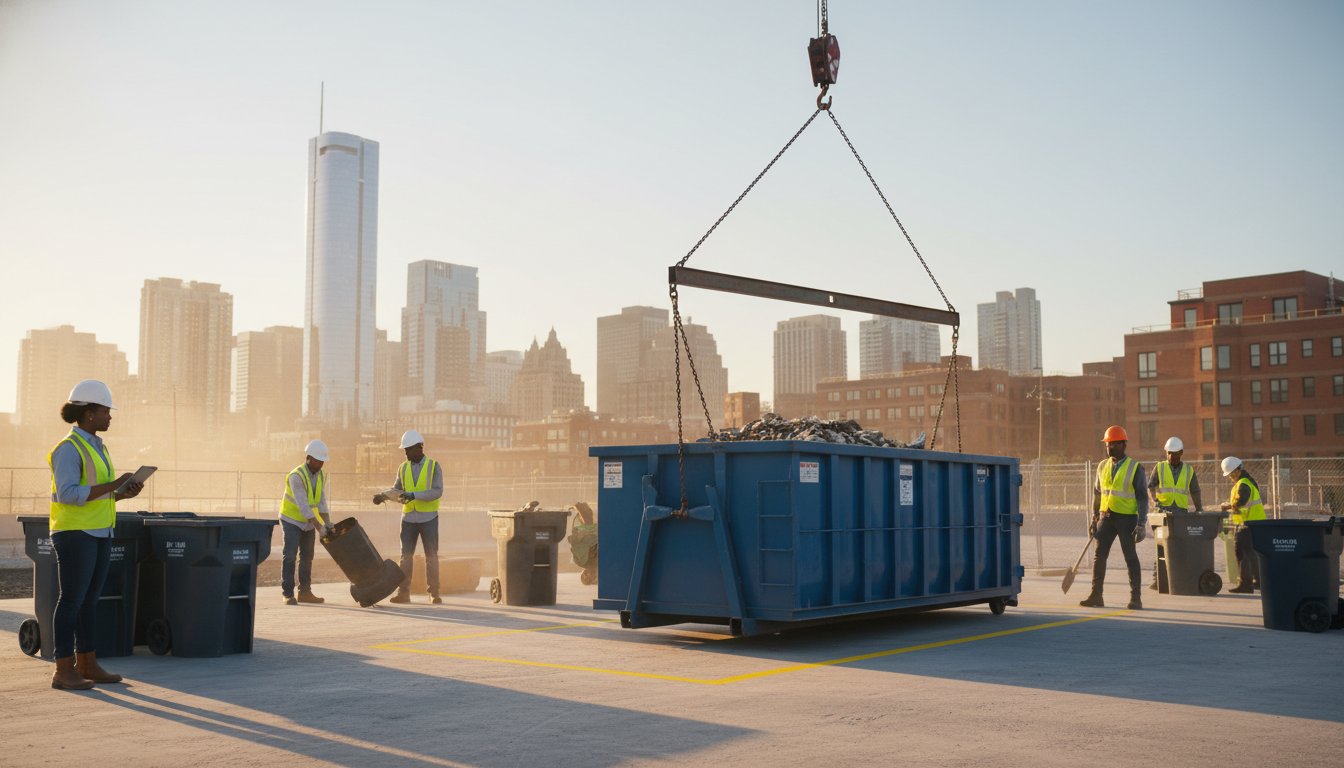
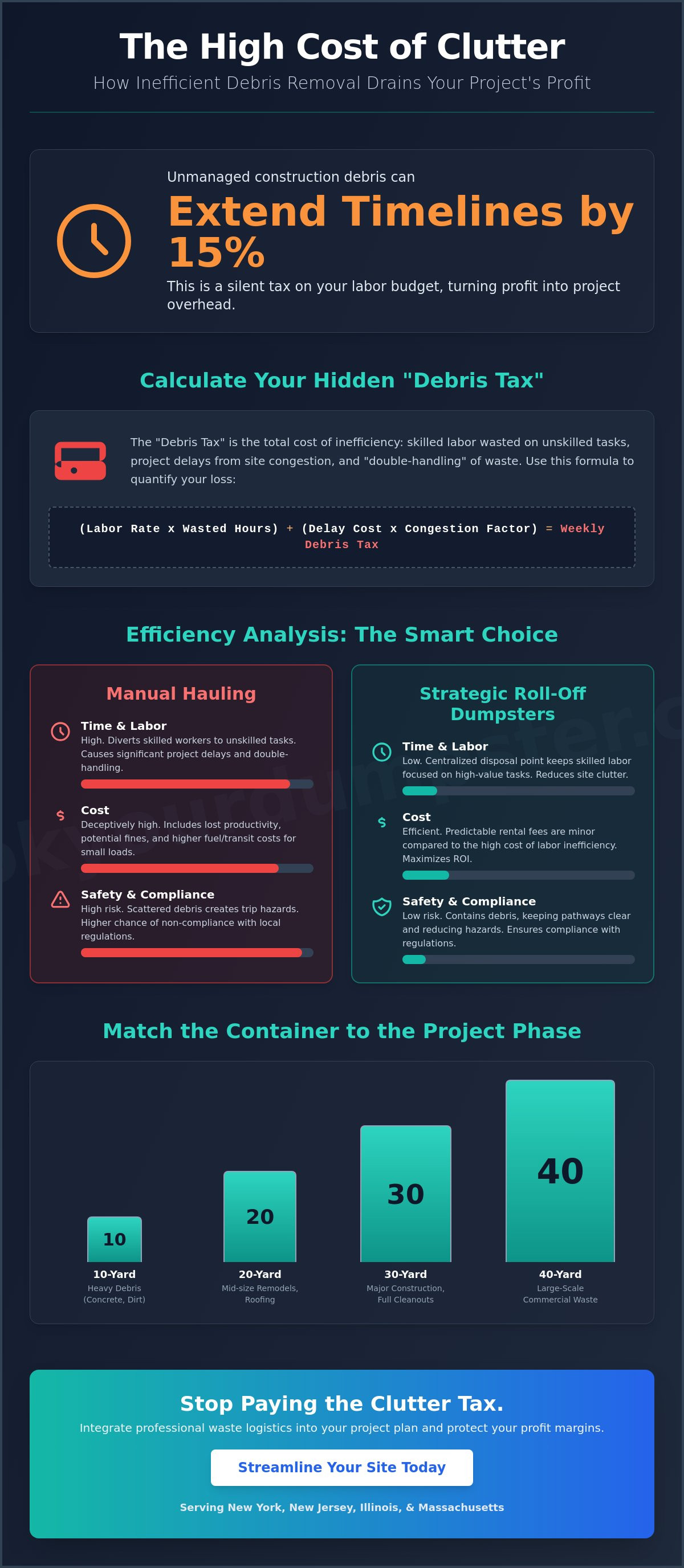
Did you know that unmanaged construction debris can extend your project timeline by up to 15 percent? It's a silent tax on your labor budget. Every hour your crew spends moving trash instead of framing or finishing is an hour of profit lost to inefficiency. You already know that a cluttered site is a dangerous site, often leading to safety hazards or avoidable delays. Reducing project overhead with efficient debris removal is no longer just a cleanup task. It's a critical financial strategy for 2026.
We understand the logistical stress of managing waste while trying to hit tight deadlines. This guide transforms your waste management from a burden into a cost-saving asset. You'll learn a clear framework for calculating waste-related overhead and a streamlined process for managing dumpster logistics. We also preview how better site logistics can shorten your project timelines and keep you compliant with evolving regulations. Stop letting clutter dictate your schedule. Start treating debris removal as a high-functioning tool for your success.
Key Takeaways
- Identify the hidden financial drain on your job site by using a simple formula to calculate labor hours lost to manual debris handling.
- Master the logistics of reducing project overhead with efficient debris removal through optimized container placement and strategic site mapping.
- Compare the volume capacity and transit time of roll-off dumpsters versus manual hauling to determine the most cost-effective disposal method for your region.
- Select the right-sized container for every project phase, from 10-yard bins for heavy debris to 40-yard dumpsters for large-scale commercial waste.
- Streamline your operations across New York, New Jersey, Illinois, and Massachusetts by positioning waste management as a core logistical tool rather than an afterthought.
Understanding the Impact of Debris on Project Overhead
Project overhead consists of the indirect costs required to keep your job site operational. While materials and direct labor are easy to track, many contractors overlook the financial weight of debris management. It is not just a cleanup task; it is a significant form of logistical overhead. Reducing project overhead with efficient debris removal requires shifting from a reactive mindset to a proactive strategy. When you treat waste as a logistical variable rather than a final chore, you protect your profit margins from invisible drains.
Effective site management rests on three primary pillars: labor, space, and risk. When piles of construction and demolition waste accumulate, your skilled tradespeople lose time navigating around obstacles. Site congestion limits the movement of heavy machinery and prevents the delivery of new materials. Most importantly, unmanaged waste increases the risk of worker injury and expensive regulatory fines. A proactive approach ensures that waste is contained and removed before it interferes with your critical path.
Direct vs. Indirect Costs of Waste
Direct costs are easy to identify on a balance sheet. These include your dumpster rental fees and disposal permits. However, indirect costs are often hidden within your labor budget. If a skilled carpenter spends thirty minutes a day moving trash to access their workspace, you're paying premium wages for unskilled tasks. This is the "Clutter Tax." A messy site slows down every subcontractor. This creates a ripple effect of delays that can extend a project timeline by weeks. Efficient systems eliminate this double-handling of materials and keep your crew focused on high-value work.
The 2026 Outlook on Site Efficiency
Labor costs in 2026 remain a top concern for the construction industry. Every wasted minute is more expensive than it was five years ago. Modern construction management now relies on digital logistics to maintain profitability. Proactive planning ensures that containers are available before the first sledgehammer swings. Book Your Dumpster represents this shift toward tech-enabled site solutions. By integrating professional waste logistics into your initial project plan, you eliminate the friction of site congestion. Use technology to schedule your 10, 20, 30, or 40-yard containers with precision. This modernization turns a messy necessity into a streamlined component of your project's success.
The Hidden Financial Drain: Calculating Your Site’s "Debris Tax"
Most managers view waste as a fixed cost. This is a mistake. Reducing project overhead with efficient debris removal starts with calculating your "Debris Tax." This tax is the sum of every minute your crew spends navigating around piles or moving trash from one corner of the lot to another. When dumpsters are poorly placed, you pay for "double-handling." This happens when workers move waste to a temporary pile and then move it again to the container later. It's a redundant expense that adds zero value to the build.
Site congestion also impacts your supply chain. When delivery trucks can't reach the staging area because of debris, you face standby fees and missed delivery windows. Heavy equipment like skid steers or forklifts operate slower in cramped spaces. This burns more fuel and increases the risk of property damage. Use this simple formula to find your tax:
- (Skilled Labor Rate x Weekly Hours Spent Moving Waste) + (Delay Cost per Hour x Site Congestion Factor) = Your Weekly Debris Tax.
The Labor Drain: Skilled Trades vs. Waste Removal
Consider a journeyman carpenter. If they spend just two hours a week clearing paths or hauling scrap, you're paying a premium rate for a laborer's task. The Opportunity Cost of Clutter is the lost revenue from those two hours of skilled craftsmanship that could have been spent finishing a room. Over a six-month project, this drain represents a massive leak in your profit margin. Renting a 20-yard or 30-yard roll-off is a minor operational cost compared to the high price of skilled labor inefficiency. Keep your pros on the tools, not the trash.
Regulatory Fines and Compliance Costs
In 2026, regulatory scrutiny is higher than ever. Cities like New York and Chicago, Illinois, have tightened site cleanliness standards to prevent runoff and public hazards. Improper disposal or blocked access can trigger environmental fines or immediate project shutdowns. Following EPA guidelines for Sustainable Materials Management isn't just about being green. It's about avoiding the financial risk of non-compliance. Blocked fire lanes or obstructed sidewalks are red flags for inspectors that lead to costly work-stoppage orders. If you want to stop the drain on your budget, evaluate your site logistics before your next project begins. Reducing project overhead with efficient debris removal ensures that your site stays compliant and your timeline stays on track.
Roll-Off Dumpsters vs. Manual Hauling: A Comparative Efficiency Analysis
Stop treating your company trucks like garbage haulers. A standard pickup bed holds roughly 2.5 cubic yards of loose material. In contrast, even a small 10-yard dumpster provides four times that capacity. Reducing project overhead with efficient debris removal means eliminating the need for constant, time-consuming trips to local transfer stations. Beyond simple volume, consider the physical toll on your fleet. Hauling heavy loads like tile, concrete, or wet lumber causes significant wear on transmissions and suspensions. These hidden maintenance costs quickly outpace the price of a professional roll-off rental. You might save on a rental fee today, but you will pay for a new transmission tomorrow.
Public transfer stations also introduce financial variables you can't control. Gate fees fluctuate, and wait times are unpredictable. In contrast, flat-rate roll-off pricing allows you to lock in your waste budget before the project starts. Research into the socio-economic and environmental impacts of construction waste suggests that poor management is a primary driver of project cost overruns. Manual hauling is the least efficient way to manage this risk. Keep your vehicles for material deliveries and your crew on the tools.
Volume and Capacity Benchmarks
Choosing the right size is essential to avoid "air hauling" or paying for space you don't use. We offer a full range of containers to fit your specific footprint. A 10-yard bin is perfect for heavy materials or small renovations. For larger projects, our 20, 30, and 40-yard dumpsters provide the necessary scale for commercial demolition or whole-home cleanouts. Read our 10 Yard Dumpster Rental: The Complete Buying Guide for 2026 to see which capacity fits your next phase. Right-sizing your waste solution ensures you never pay for overflow fees or multiple unnecessary deliveries.
Fuel and Time Logistics
Calculate the "True Cost" of a dump run. In congested areas like Queens or San Francisco, a single trip to a transfer station can take two hours or more. When you factor in fuel, labor hours for two workers, and gate fees, a "free" dump run becomes an expensive distraction. This is especially true in New Jersey and Massachusetts, where traffic and tight regulations increase the friction of manual hauling. A single roll-off delivery is the most sustainable choice for your project budget. It keeps your site clean and your labor focused on finishing the job. If you want to stop wasting time in traffic, schedule your next drop-off online and let us handle the logistics.
5 Ways to Reduce Overhead with Strategic Debris Removal
Success on a 2026 job site requires more than just renting a bin. It requires a tactical approach to site logistics. Reducing project overhead with efficient debris removal is achieved through small, deliberate adjustments to your daily workflow. By treating waste management as a core operational phase, you eliminate the bottlenecks that drain your profit. Implement these five strategies to keep your site moving at peak capacity:
- Optimize placement: Position containers as close to the debris source as possible to minimize worker travel time.
- Right-size every phase: Use a 10-yard bin for heavy masonry and scale up to a 40-yard dumpster for bulky demolition materials.
- Schedule "Just-in-Time" swaps: Coordinate your pickups to ensure a fresh container arrives before the current one overflows.
- Go digital: Use online booking systems to manage schedules and billing without wasting time on the phone.
- Separate heavy materials: Keep concrete, dirt, and asphalt in dedicated containers to simplify disposal and potentially lower costs.
Optimizing Dumpster Placement
The "10-Foot Rule" is a simple but effective standard. Whenever possible, keep your waste containers within ten feet of the primary work area. Every extra step a worker takes to reach a dumpster is a second of lost productivity. Over a full crew and a multi-month project, these seconds turn into days of lost labor. You must also ensure clear access for roll-off trucks. Blocked paths or tight corners lead to "dry run" fees when a driver cannot complete a drop-off or pickup. For a deeper look at site layout, consult The Ultimate Guide to Construction Debris Removal in 2026. Proper planning prevents these avoidable surcharges and keeps your site logistics fluid.
Digital Procurement and Administrative Speed
Managing multiple vendors through phone tag is a relic of the past. Modern contractors use digital procurement to reduce "soft costs" like administrative time and accounting errors. Online booking at bookyourdumpster.com allows you to schedule deliveries, swaps, and pickups in seconds. This speed is essential for maintaining momentum on fast-moving residential or commercial builds. Digital systems also provide instant receipts and transparent billing. This makes it easier to track overhead for specific projects and simplifies your tax preparation. If you manage multiple sites across New York or Illinois, centralized digital management is the only way to maintain control over your waste budget. Book your next dumpster online to experience a faster, more transparent way to handle site waste. Reducing project overhead with efficient debris removal starts with the right digital tools.
Maximizing ROI with Book Your Dumpster USA
Book Your Dumpster USA is more than a bin provider. We act as your dedicated logistics partner. We help you manage the flow of waste so your crew never stops building. Reducing project overhead with efficient debris removal requires a partner who respects your timeline and your budget. We provide reliable coverage across New York, New Jersey, Illinois, and Massachusetts. Our flat-rate pricing model removes the guesswork from your project accounting. You get one price with no hidden surcharges or surprise fees. This transparency allows for total financial predictability from the initial bid to the final invoice. Protect your profit margins by eliminating the variable costs of traditional waste hauling.
Our streamlined online booking system is built for the pace of 2026 construction. You don't have time for phone tag or manual billing cycles. Our digital platform allows you to schedule a 10, 20, 30, or 40-yard container in seconds. This level of control is essential for maintaining site agility. When your site stays clear, your subcontractors stay productive. This direct link between waste logistics and labor efficiency is how you maximize your return on investment. Stop viewing debris as a problem. Start treating its removal as a high-functioning tool for success.
Local Expertise in High-Stakes Markets
Urban job sites in Chicago, San Francisco, and Queens present unique challenges. Navigating narrow streets and strict local regulations requires specialized knowledge. You need a partner who understands where a roll-off can sit and what permits are required to keep it there. Our team handles these details to reduce the risk of permit violations and site delays. For a full breakdown of regional specifics, see Dumpster Rental in New York, Illinois, and Massachusetts: The 2026 Complete Guide. Local expertise ensures that your project doesn't grind to a halt because of a simple logistical oversight.
The Book Your Dumpster Promise
We commit to punctuality and pricing integrity. Reliability is our verbal handshake. Our fleet carries a full range of sizes to handle any project scale. Whether you need a 10-yard bin for a residential renovation or a 40-yard dumpster for a commercial demolition, we deliver on time. Use our modernized digital platform to manage your site waste without the friction of traditional communication. Secure your dumpster online now to lower your project overhead. Reducing project overhead with efficient debris removal is a strategic choice. Partner with an expert who values your time as much as you do.
Protect Your Project Margins
Inefficient waste management is a leak in your budget that you can't afford to ignore. By calculating your site's Debris Tax and optimizing container placement, you reclaim lost labor hours and keep your crew focused on the build. Reducing project overhead with efficient debris removal isn't just about cleaning up; it's about maintaining a high-velocity site that hits every deadline. We've shown you how right-sizing your containers and utilizing digital booking can transform your logistics from a burden into a profit-saving asset.
Book Your Dumpster USA provides the tools you need to succeed in high-stakes markets like New York, New Jersey, Illinois, Massachusetts, and San Francisco. We offer transparent flat-rate pricing with no hidden surprises and a streamlined online booking system designed for modern contractors and homeowners. Don't let site congestion dictate your timeline. Take charge of your site today and see the difference a professional logistics partner makes. Book Your Efficient Debris Solution Online Today and start building with confidence.
Frequently Asked Questions
How does efficient debris removal directly reduce my project budget?
Efficient debris removal reduces your budget by eliminating "double-handling" and skilled labor waste. Instead of paying journeymen to move trash, you maintain a clear site that allows trades to work at peak speed. Reducing project overhead with efficient debris removal ensures you aren't paying premium wages for cleanup tasks. This strategy keeps your project timeline tight and prevents the 15 percent delay factor common on cluttered sites.
What is the most cost-effective dumpster size for a residential renovation?
The 10-yard or 20-yard dumpsters are typically the most cost-effective choices for residential renovations. A 10-yard bin is ideal for heavy materials like bathroom tile or small kitchen gut jobs. For larger projects involving bulky items like cabinetry or flooring, the 20-yard dumpster provides more volume to prevent overfilling. Choose the size that matches your specific debris type to avoid paying for multiple deliveries or overflow fees.
How can I avoid hidden fees that increase my project overhead?
Avoid hidden fees by sticking to flat-rate pricing and staying within your container's weight limit. Overweight loads often trigger additional tonnage fees from landfills; distribute heavy materials like concrete or dirt across multiple smaller bins to stay compliant. Clear the drop-off area before the truck arrives to prevent "dry run" fees. Always review your rental agreement for specific tonnage allowances and prohibited item surcharges before you start loading.
Is it cheaper to rent a dumpster or use a junk removal service for construction waste?
Renting a roll-off dumpster is generally more cost-effective for construction projects than hiring a junk removal service. Junk removal services charge for labor and truck space, which adds up quickly during a multi-day build. A dumpster allows your crew to dispose of waste in real-time, keeping the site clear without waiting for a pickup appointment. This self-service model provides better control over your site logistics and long-term project budget.
What are the legal requirements for construction debris removal in New York and Illinois?
New York and Illinois require strict adherence to site cleanliness and material separation laws to prevent environmental hazards. In New York, you must ensure that debris does not obstruct public sidewalks or fire lanes. Illinois regulations focus on proper disposal of hazardous materials and tracking waste volumes for large commercial sites. Check with local municipalities regarding permit requirements for placing a container on a public street to avoid expensive daily fines.
Can I schedule a same-day dumpster swap to keep my project moving?
Check with our logistics team regarding current availability for dumpster swaps in your specific service area. While we strive for maximum speed, scheduling your swap at least 24 hours in advance is the most reliable way to prevent site downtime. Proactive scheduling ensures a fresh 30-yard or 40-yard container arrives exactly when you need it. This coordination is a key part of reducing project overhead with efficient debris removal and maintaining your build momentum.
How does the Book Your Dumpster online system save me time?
The Book Your Dumpster online system eliminates the need for lengthy phone calls and manual paperwork. You can select your size, schedule your delivery, and process your payment in under two minutes. Digital receipts are generated instantly; this simplifies your project accounting and overhead tracking. This digital-first approach allows you to manage waste logistics from your smartphone while remaining active on the job site without administrative distractions.
What happens if I put prohibited materials in my rented dumpster?
Placing prohibited materials like tires, batteries, or hazardous chemicals in your dumpster results in immediate surcharges and potential return of the items. Landfills have strict regulations regarding what they can accept, and these costs are passed directly to the user. Consult our list of restricted items before loading your container. Proper sorting at the source protects your budget from avoidable environmental fees and ensures a smooth pickup process for the hauling team.


