
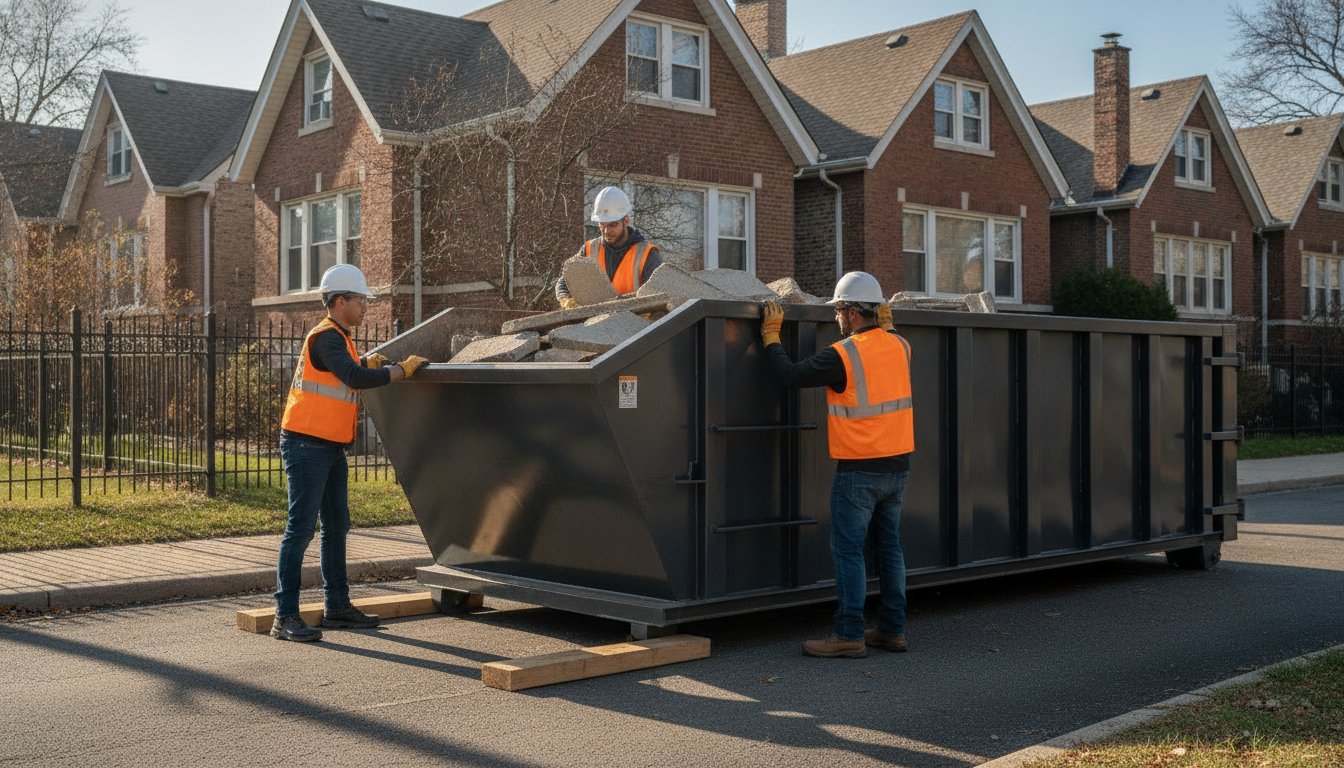
A standard driveway renovation can weigh over 10 tons, yet many homeowners worry about the volume of the container rather than the lifting capacity of the truck. Concrete disposal is a weight-management challenge, not a volume-management one. If you're planning a tear-out in Chicago, securing a reliable concrete dumpster rental is the only way to keep your project on track. You likely already know that heavy materials are the fastest way to trigger unexpected surcharges, especially given the premium tipping fees common in the Chicago metro area.
It's frustrating to deal with the logistical stress of heavy debris, but we're here to simplify the process. This guide teaches you how to manage heavy loads, choose the correct dumpster size, and avoid costly weight-related fees. We'll explain the differences between clean and dirty concrete recycling, why the 10-yard dumpster is your most efficient tool, and provide steps to protect your property during delivery. You'll gain a clear understanding of weight limits and disposal regulations so you can book your next haul with total confidence.
Key Takeaways
- Identify why reinforced containers are necessary for high-density Construction and Demolition (C&D) debris.
- Choose a 10-yard concrete dumpster rental to manage heavy loads safely without exceeding truck lifting capacities.
- Categorize your waste as clean or mixed concrete to minimize disposal costs and avoid unexpected overage fees.
- Prepare a level, hard surface and distribute weight evenly to protect your driveway and ensure a smooth pickup.
- Review regional recycling mandates in Illinois and the Northeast to stay compliant with local landfill regulations.
What is a Specialized Concrete Dumpster Rental?
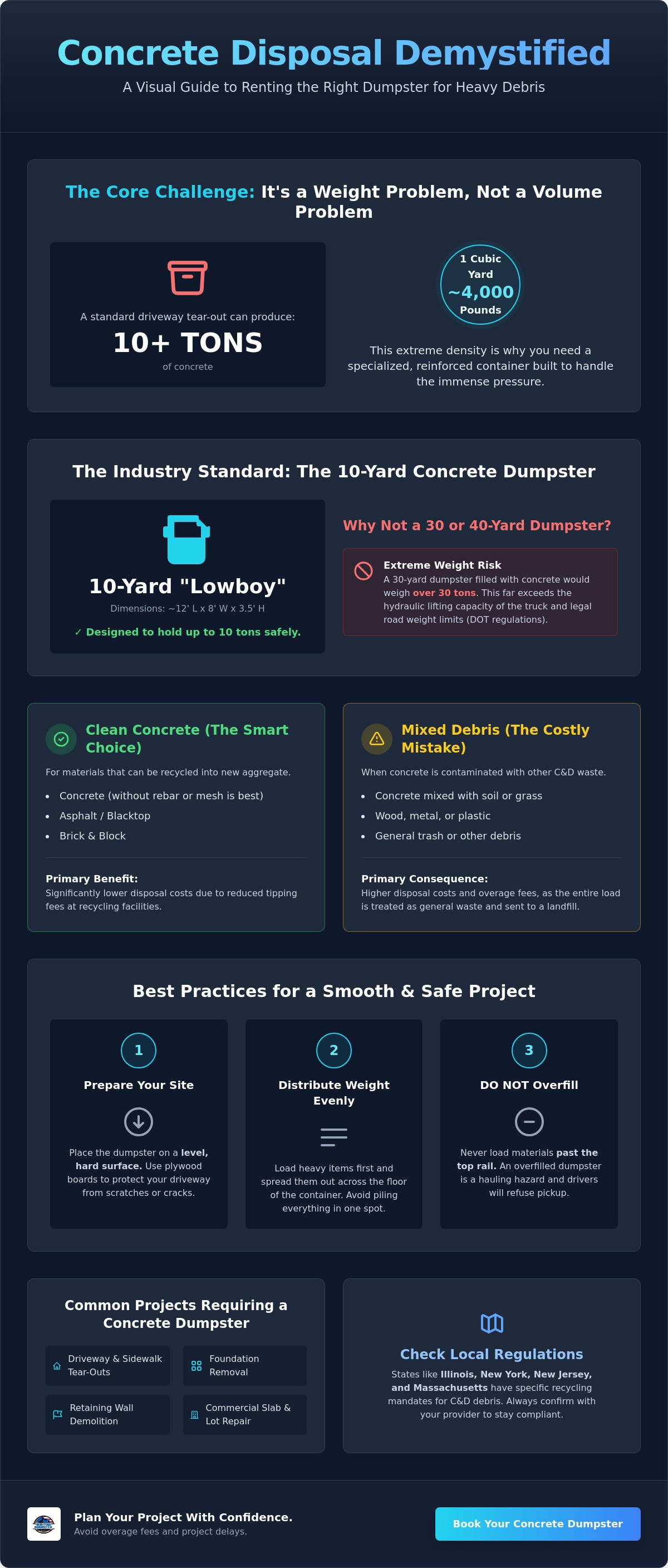
Concrete is uniquely heavy. A standard household bin isn't built for it. A specialized concrete dumpster rental uses reinforced steel to handle the extreme density of masonry. While municipal waste includes light materials like plastic or paper, Construction and Demolition (C&D) debris consists of heavy materials like stone and asphalt. A single cubic yard of concrete weighs roughly 4,000 pounds. If you load standard residential bins with this material, the floor will likely bow or the hydraulics on the truck will fail during pickup. Choosing a specialized container ensures your project remains safe and efficient.
The Role of Heavy Debris Containers in Waste Management
These containers are high-functioning tools. They feature thicker gauge steel and reinforced side rails to prevent structural failure under extreme pressure. Understanding What is a Roll-off Dumpster helps you see why these specific units are necessary; they're designed for the heavy lifting that standard garbage trucks can't manage. Specialized hauling trucks use heavy-duty cable or hook-lift systems to pull these massive loads onto the chassis. Beyond durability, these containers facilitate concrete recycling. Instead of sitting in a landfill, your old driveway is crushed into aggregate for new roads. This process is often cheaper because recycling centers charge lower tipping fees for "Clean Concrete" compared to mixed debris. In the Chicago area, separating your materials can lead to significant savings on disposal costs.
Common Projects Requiring Concrete-Specific Rentals
Residential homeowners often need these for sidewalk or driveway tear-outs. These projects generate massive weight quickly. For example, a standard 10-foot by 20-foot driveway slab can easily exceed the weight capacity of a standard waste bin. Local contractors rely on them for foundation removals or retaining wall demolition where structural integrity is paramount. At the commercial level, parking lot repairs and slab removals require high-capacity, reinforced bins to keep the job site clear. Using the correct equipment prevents delays and keeps your job site compliant with local waste regulations. Don't risk property damage by using the wrong equipment for a heavy-duty task.
Choosing the Right Size: Why the 10-Yard Dumpster is the Standard
Selecting a concrete dumpster rental requires a shift in mindset from volume to weight. While you might use a 30 or 40-yard container for household junk, using those sizes for masonry is a recipe for disaster. Most roll-off trucks cannot physically lift a 30-yard bin filled with concrete; it would weigh over 30 tons. This exceeds both the hydraulic capacity of the vehicle and legal DOT road weight limits. For these reasons, the 10-yard dumpster is the standard for heavy debris projects.
Safety starts with the "Fill Line" rule. Even in a 10-yard container, you must never load material past the top rail. Overfilling creates a top-heavy load that can shift during transit, leading to dangerous hauling accidents. A standard 10-yard "Lowboy" typically measures 12 feet long, 8 feet wide, and 2.5 to 3.5 feet high. These lower walls allow you to distribute the weight evenly and stay within safe operating limits. If you're ready to start your project, you can check current availability for these specialized units online.
The Physics of Hauling: Weight vs. Volume
Managing concrete is about understanding density. Use a simple rule of thumb: concrete weighs approximately 4,000 pounds per cubic yard. This means a container that looks half-empty might already be at its maximum weight capacity. A 10-yard dumpster full of concrete can weigh up to 10 tons. This massive weight puts immense pressure on your driveway and the hauling equipment. Following Best Practices for Loading is essential to ensure the truck can safely hoist the bin without damaging its hoist system or blowing a tire. DOT regulations are strict; drivers will refuse to pick up a container that exceeds legal weight limits to avoid heavy fines and road hazards.
When to Consider a 20-Yard Option
There are rare instances where a 20-yard container is acceptable, but only for "lightweight" heavy debris. This includes materials like asphalt shingles or thin brick veneer. These materials have more air gaps and less density than solid concrete slabs. However, the loading limits remain incredibly strict. You can usually only fill a 20-yard bin halfway with these materials. Don't fall into the "Empty Space" trap. Seeing extra room in a large container often tempts users to add more debris, which quickly leads to an overweight fail. Stick to the 10-yard unit for solid concrete to ensure a guaranteed, hassle-free pickup.
Clean Concrete vs. Mixed Debris: Avoiding Overage Fees
Mixing materials is the most expensive mistake you can make during demolition. To keep your budget under control, you must understand the difference between clean concrete and mixed debris. Clean concrete consists of pure masonry material that can be crushed and repurposed. When you secure a concrete dumpster rental, the price often assumes you are providing a recyclable product. If you toss in wood, plastic, or even excessive amounts of dirt, the load becomes "dirty."
Recycling centers reject dirty loads because contaminants damage their crushing equipment. When a load is rejected, it must be diverted to a standard landfill. Landfills charge significantly higher tipping fees for heavy materials compared to recycling facilities. In the Chicago area, this price gap can be substantial. Sorting your debris at the source is not just an environmental choice; it is a financial necessity to avoid massive overage charges. Keep a separate bin for trash if your project involves more than just masonry.
The Clean Concrete Checklist
Maintaining a clean load requires discipline on the job site. Use this checklist to ensure your container stays within the lower-cost recycling category:
- Acceptable: Concrete slabs, bricks, patio pavers, and cinder blocks.
- Prohibited: Household trash, lumber, tree roots, sod, and hazardous liquids.
- The Rebar Rule: Most facilities allow rebar if it is embedded within the concrete and not protruding excessively. However, a container filled with more metal than stone will likely be reclassified as mixed debris.
Understanding Weight Limits and Overage Charges
Your rental agreement includes a specific weight allowance. Exceeding this limit triggers per-ton overage fees. At the disposal site, the truck drives onto a certified scale to record the gross weight. After emptying the container, the truck is weighed again to find the tare weight. The difference between these two numbers is your actual tonnage. This is the net weight used for billing.
To estimate your load, remember that one square foot of 4-inch thick concrete weighs about 50 pounds. If you are tearing out a 500-square-foot driveway, you are looking at roughly 12.5 tons of debris. This is why the 10-yard container discussed earlier is so critical; it helps you stay within the lifting limits of the hauling equipment even when dealing with these high-density materials. Plan your rental based on these calculations to avoid surprises on your final invoice.
Best Practices for Loading and Site Preparation
Success with a concrete dumpster rental starts before the truck arrives. Choose a level, hard surface like a concrete driveway or a paved street for placement. Avoid soft soil or grass. The immense weight of a loaded container will sink into soft ground, making it impossible for the truck to retrieve the bin later. This can lead to costly towing fees or property damage that is easily preventable with proper planning.
Distribute the weight evenly as you load. Tossing all the heavy material into the back of the container makes it tail-heavy, which can cause the truck to tip during the hoist. Lay down 3/4-inch plywood or specialized "street pads" where the dumpster’s steel rollers will sit. This simple step protects your driveway from scratches and pressure cracks. Additionally, observe the "No Overhang" rule. No debris should stick out over the sides or the top rail. Drivers are legally required to tarp every load; protruding concrete prevents this and will result in a refused pickup.
Safe Loading Techniques for Heavy Masonry
Use a "Low-to-High" strategy when filling the bin. Place your largest, heaviest concrete slabs at the bottom to create a stable foundation. This keeps the center of gravity low. Never use a makeshift ramp to walk heavy chunks into the dumpster. Concrete is unstable and slippery; a fall can cause serious injury. If you are using a skid steer or small loader, maintain a safe distance from the container walls to avoid structural damage. Drop the material gently rather than slamming it down to prevent the bin from shifting on its tracks.
Protecting Your Property During Delivery
Assess your site for overhead and underground hazards. The roll-off hoist requires at least 22 feet of vertical clearance to tip the container into place. Check for low-hanging tree branches and power lines before the driver arrives. Underground, be mindful of septic tanks, sprinkler lines, or thin asphalt that might collapse under a 10-ton load. You must clear a 50-foot straight path for the delivery truck to maneuver safely into position. Clear all vehicles and equipment from the staging area ahead of time to ensure a seamless drop-off. Schedule your concrete dumpster rental now to lock in your project timeline.
Local Concrete Disposal in NY, NJ, IL, and MA
Regional disposal laws vary significantly across the country. In Massachusetts, you cannot legally dispose of concrete in a landfill because the state mandates recycling for all asphalt, brick, and masonry. New Jersey classifies concrete as "Class B" recyclable material, which requires specific handling and storage exemptions if you plan to process it on-site. If you are managing a project in Chicago, you face premium tipping fees that differ from the surrounding suburbs. Managing a concrete dumpster rental across these different jurisdictions requires a partner who understands local mandates and landfill surcharges.
New York presents its own set of unique challenges. The state uses a strict registration system for Construction and Demolition Debris Handling and Recovery Facilities (CDDHRFs). Every shipment requires tracking documents to prove the material reached a permitted site. When seeking a dumpster rental in New York, you must account for these regulatory layers to avoid project delays. Failure to comply can result in project shutdowns or heavy environmental fines from state regulators.
Navigating Urban Permits and Regulations
Urban environments like Queens or San Francisco rarely offer enough private driveway space for a roll-off container. You must secure a "Street Use" or "Right of Way" permit from the local Department of Transportation or Public Works if the bin sits on a public road. These permits often come with strict time limits, sometimes restricting placement to just a few days in residential zones. In New Jersey and Massachusetts, local waste departments may also require specific notification for heavy debris hauling. Apply for your permits at least one week in advance. This ensures your container is legally positioned and avoids the risk of immediate impoundment or ticketing by city officials.
Why Book Your Dumpster USA for Your Concrete Project?
We act as your local expert in multi-state waste logistics. Our digital-first platform simplifies the booking process, allowing you to schedule service in seconds without the back-and-forth of traditional brokers. We offer a full range of 10, 20, and 30-yard containers tailored for construction debris removal. Whether you are a homeowner in Chicago or a contractor in Boston, you receive the same pricing integrity and punctual service. Trust our competence to handle the messy details of your next concrete dumpster rental. Visit our booking page to secure your delivery date today.
Streamline Your Heavy Debris Disposal
Managing concrete demolition is a logistical challenge that rewards careful preparation. By selecting a specialized 10-yard container, you ensure that your debris stays within safe hauling limits and avoids the structural failures common with standard bins. Remember that keeping your load "clean" is the most effective way to eliminate unexpected overage fees and keep your project on budget. Securing a reliable concrete dumpster rental is the first step toward a clean job site.
Book Your Dumpster USA provides the specialized 10-yard heavy load containers you need for a successful tear-out. We offer transparent pricing with no hidden fees across NY, NJ, IL, MA, and San Francisco. Our streamlined digital platform removes the stress of scheduling so you can focus on the job at hand. Don't let heavy masonry stall your progress. Book Your Concrete Dumpster Online Today and get your project moving with total confidence.
Frequently Asked Questions
How much concrete can I put in a 10-yard dumpster?
You can fill a 10-yard container to the top rail, provided the total weight doesn't exceed the truck's lifting capacity. A 10-yard bin holds roughly 10 cubic yards of debris. Because concrete is extremely dense, this volume typically hits the maximum legal road weight limits. Always verify your specific weight allowance during the booking process to ensure a safe and successful pickup.
Do I need a permit for a concrete dumpster in New York or Chicago?
You need a permit if the container sits on a public street, sidewalk, or alley. In Chicago, this is a Public Right-of-Way permit. New York requires a DOT street permit for any container placed on public property. If you place the concrete dumpster rental entirely on your private driveway, you generally don't need a city permit, but check your local HOA rules first.
Can I mix dirt and concrete in the same dumpster?
You should avoid mixing dirt and concrete to keep your disposal costs low. Most recycling facilities only offer discounted rates for source-separated "clean" concrete. Adding dirt, sod, or trash reclassifies the load as mixed debris. This change triggers higher landfill tipping fees and prevents the material from being recycled into aggregate. Keep your masonry pure to maximize your project budget.
What happens if my concrete dumpster is over the weight limit?
You'll face per-ton overage fees if the load exceeds the weight limit specified in your contract. More importantly, if the weight exceeds the truck's hydraulic lifting capacity, the driver will leave the container on-site. You'll then have to manually remove heavy slabs until the weight is manageable. This results in dry-run fees and significant delays to your project timeline.
Can I put rebar-reinforced concrete in a rental dumpster?
Yes, you can dispose of concrete containing rebar as long as the metal is embedded and not protruding excessively. Recycling centers use industrial magnets to separate metal during the crushing process. However, if the load contains more metal than concrete, it may be rejected as a clean load. Ensure the rebar is cut flush with the concrete slabs to allow for safe tarping and transport.
How long can I keep the concrete dumpster on my property?
Standard rental periods usually last between 7 and 14 days, depending on your specific agreement. You can schedule an earlier pickup if you finish the demolition ahead of time. If your project runs long, you can typically extend the rental for a flat daily fee. Always notify us at least 24 hours in advance to change your scheduled pickup date.
Is there a difference between a lowboy and a standard dumpster?
A lowboy is a specialized container with shorter side walls designed specifically for high-density materials like concrete. While a standard 10-yard bin might be taller, a lowboy stays lower to the ground. This design makes it easier to load heavy slabs over the side by hand or with a skid steer. It also helps prevent the dangerous overfilling that often occurs with taller bins.
What is the "fill line" for heavy debris?
The "fill line" is the top edge of the dumpster's side walls. You must never stack concrete, brick, or stone higher than the rails. Protruding debris prevents the driver from securing the safety tarp required by law for transport. If your load is over the top, the driver will refuse the pickup for safety reasons, leading to extra service charges.


