
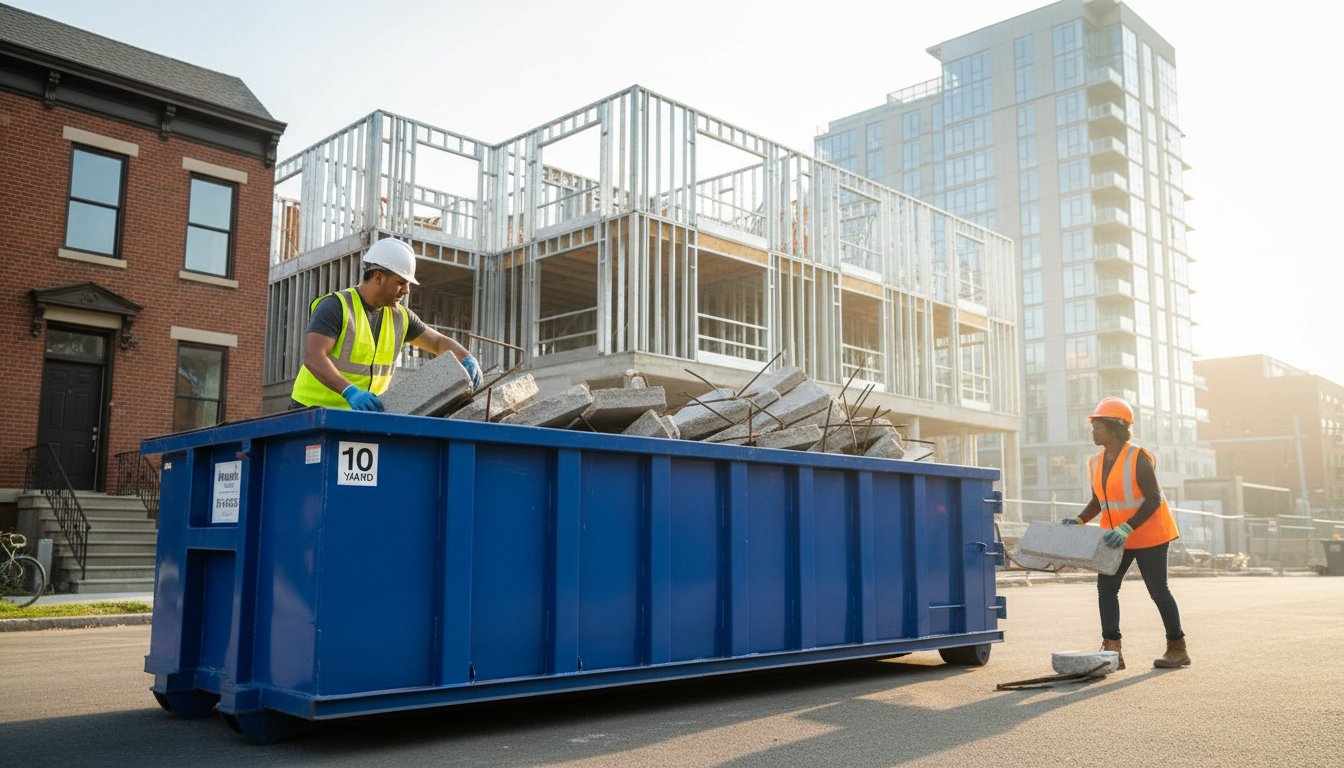
Filling a standard bin with reinforced concrete is the fastest way to double your project costs before the haul truck even arrives. Concrete weighs approximately 4,000 pounds per cubic yard. When you add the weight of steel reinforcement, you're dealing with a specialized material that requires a specific dumpster for concrete with rebar to avoid massive weight overage fees or equipment failure.
You've likely dealt with the frustration of a driver refusing a pickup because the bin was too heavy to lift. It's a common pain point that leads to project delays and unexpected expenses. This 2026 guide provides the exact steps to manage your heavy debris efficiently. You'll learn how to utilize "clean loading" to potentially lower your disposal costs and how to prep your materials for a seamless pickup. Follow these instructions to secure a flat-rate price that eliminates the fear of landfill rejections and keeps your job site moving.
Key Takeaways
- Select a 10-yard container for reinforced concrete projects to maintain safe weight limits and ensure a successful haul.
- Break slabs into 18-inch chunks and trim rebar flush to maximize bin capacity and adhere to landfill safety standards.
- Secure a flat-rate price for your dumpster for concrete with rebar to eliminate the risk of surprise overage charges.
- Keep concrete loads free of general debris to avoid contamination fees and project delays caused by rejected loads.
What is a Dumpster for Concrete with Rebar?
A specialized dumpster for concrete with rebar is a heavy-duty roll-off container engineered specifically for inert, high-density materials. Unlike standard bins used for household junk or light construction debris, these containers are built to withstand the extreme weight and abrasive nature of masonry. When you're tearing out a driveway or a foundation, you aren't just dealing with stone and cement. You're handling Reinforced concrete, a composite material where steel bars or mesh are embedded to provide tensile strength. This combination of materials changes the disposal logistics entirely.
Hauling reinforced concrete requires a different approach because the steel complicates the recycling process. While concrete and asphalt have a recovery rate exceeding 95% according to EPA data, that efficiency depends on how the material is sorted. Facilities must use industrial magnets and specialized crushing equipment to separate the metal from the aggregate. Because this requires more labor and machinery than processing "clean" concrete, your choice of container and how you load it will directly impact your final project cost.
Clean Concrete vs. Concrete with Rebar
Understanding the classification of your debris prevents landfill rejection and surprise surcharges. Facilities generally categorize heavy waste into three groups:
- Clean Concrete: This consists of poured concrete entirely free of trash, soil, or metal reinforcement. It's the most cost-effective to recycle.
- Reinforced Concrete: This is concrete containing rebar or wire mesh. It requires magnetic separation at a specialized facility before the concrete can be crushed into recycled aggregate.
- Mixed Heavy Debris: This includes a combination of reinforced concrete, brick, block, and asphalt. Many facilities accept these together, but they must remain separate from general municipal waste.
Why Rebar Matters for Your Rental
Rebar significantly increases the density of your load. Standard concrete already weighs approximately 4,000 pounds per cubic yard. Adding steel reinforcement pushes that weight higher, which can quickly exceed the lifting capacity of a standard haul truck. If you overload a bin, the driver won't be able to safely pull it onto the truck bed, leading to a "dry run" fee and a delay while you remove the excess material.
Safety is the other primary concern. Exposed rebar that sticks out over the top or sides of the bin creates a hazard for our drivers and anyone on your job site. It can snag equipment or cause injury during transport. Always ensure rebar is cut flush with the concrete slabs. If you fail to declare that your load contains metal, you may face a "contamination" fee at the disposal site, as the material will have to be rerouted to a different processing line. Clear communication about your debris type ensures you get the right flat-rate pricing from the start.
Choosing the Right Size: The 10-Yard Standard
Don't let the compact footprint fool you. A 10 yard dumpster rental is the industry standard for heavy debris for a simple reason: weight. Concrete is incredibly dense. One cubic yard of concrete weighs roughly 4,000 lbs. If you fill a 10-yard bin to the top, you're looking at 20 tons of material. Most standard haul trucks have a maximum lifting capacity of approximately 10 tons. This means even our smallest bin can be overloaded if you aren't careful. When you order a dumpster for concrete with rebar, you're paying for the ability to move that weight safely and legally.
If you have a larger project, you might be tempted to order a 20-yard bin. We allow this, but you must follow the "Half-Full Rule." You cannot fill a 20-yard container more than halfway with concrete. Doing so exceeds the physical limits of the equipment and violates Department of Transportation (DOT) road safety regulations. Physics dictates the haul. A 30 or 40-yard dumpster filled with concrete would weigh between 60 and 80 tons. No roll-off truck in existence can lift that, and no residential street can support it. Stick to the 10-yard standard to ensure your project stays on schedule. If you're unsure about your specific load weight, contact our team for a sizing consultation before you book.
The Danger of Overloading
Overloading your bin creates a cascade of logistical failures. First, the truck's hydraulic system may fail when attempting the lift. This isn't just a delay; it's a major safety hazard. Second, even if the truck can lift the bin, it may exceed legal road weight limits. In 2026, DOT enforcement is stricter than ever to protect infrastructure. If a driver determines your bin is too heavy, they'll leave it on-site. You'll then be charged a "dry run" fee and be forced to manually unload the excess concrete before we can attempt a second pickup. This doubles your labor and your costs.
When to Use Multiple 10-Yard Bins
For large-scale demolition, the most efficient strategy is to use multiple 10-yard bins or a series of swap-outs. This approach offers several advantages:
- Site Accessibility: Smaller bins fit into tighter spaces, allowing you to place the container closer to the demolition point.
- Weight Compliance: It's easier to gauge a full 10-yard bin than a half-full 20-yard bin, reducing the risk of overage fees.
- Continuous Workflow: Contractors can keep working while one bin is being hauled and replaced.
Properly managing your debris also supports the process of recycling concrete and rebar. When loads are kept within weight limits and free of contaminants, they are much easier for facilities to process into reusable aggregate. Plan your staging area for two 10-yard bins rather than one massive container to keep your job site moving and compliant.
How to Prep and Load Concrete with Rebar
Properly preparing your debris ensures a safe haul and maximizes the utility of your dumpster for concrete with rebar. Do not throw large, irregular slabs directly into the bin. They create massive air pockets and lead to an uneven, unstable load. Use a jackhammer to break the concrete into chunks no larger than 12 to 18 inches. This size is manageable for manual loading and allows the material to settle densely at the bottom of the container, ensuring you use every cubic inch of available space.
Address the rebar directly before the container arrives. Protruding metal is a primary cause of bin damage and safety rejections. Use an angle grinder or a reciprocating saw with a metal-cutting blade to trim any exposed rebar flush with the concrete surface. If you are dealing with thin wire mesh, high-quality bolt cutters are the most efficient tool for the job. Cutting the metal prevents it from snagging the dumpster walls or the truck's tarping system during transport. This step is non-negotiable for maintaining a safe job site.
Keep the load "clean" to avoid weight spikes. Shake off excess soil and remove organic debris like tree roots or grass before loading the concrete. Dirt is deceptive. It fills the gaps between concrete chunks and adds significant weight without providing any structural volume. A clean load is also easier for facilities to process. By removing soil, you minimize the risk of exceeding your weight limit and avoid potential contamination surcharges at the landfill.
Tools Needed for Debris Prep
Select your tools based on slab thickness. A 10-pound sledgehammer works for thin walkways, but any slab over four inches thick requires a jackhammer to avoid physical exhaustion. Use bolt cutters for snaking wire mesh. Safety gear is mandatory. Always wear heavy-duty gloves, impact-resistant eye protection, and a respirator. Concrete dust contains silica, which poses a serious long-term health risk if inhaled during the breaking process.
Loading Strategies for Maximum Volume
Employ the "Tetris" method to maximize your bin's capacity. Place the largest, flattest pieces at the bottom to create a stable base. Layer smaller chunks on top to fill the voids between larger pieces. This nesting technique prevents the load from shifting during transit and keeps the center of gravity low. Ensure all rebar ends are tucked inward toward the center of the bin. Finally, never load material above the top rail. If debris exceeds the fill line, the driver cannot safely tarp the load, and they will refuse the pickup.
Avoiding Hidden Fees and Overage Charges
Financial transparency is the foundation of a successful demolition project. When you rent a dumpster for concrete with rebar, you must choose between flat-rate and tonnage-based pricing. Flat-rate options are generally safer for heavy debris because they include a set weight limit in the initial cost. If you opt for tonnage-based pricing, you're at the mercy of the scale. Industry data from May 2026 indicates that overage fees typically range from $30 to $200 per additional ton. Since concrete weighs roughly 4,000 pounds per cubic yard, even a small miscalculation can lead to hundreds of dollars in unexpected costs. Review our dumpster rental prices guide to see how these fees vary across major markets like New York and Chicago.
Verify local landfill rules regarding rebar length before you start loading. Some facilities in the Northeast require rebar to be cut into lengths of three feet or less to prevent it from tangling in the crushing machinery. If your load doesn't meet these specifications, you'll face a "special handling" fee. Always declare the presence of metal upfront. Honesty at the time of booking prevents the driver from being surprised at the scale and ensures your debris is routed to the correct processing facility. Order your roll-off container online now to lock in a transparent rate for your heavy debris.
What Counts as Contamination?
Contamination occurs when non-masonry items are mixed into a concrete-only bin. Facilities charge "dirty load" fees because they must pause the recycling line to manually remove debris. Avoid putting these items in your concrete bin:
- Wood scraps and dimensional lumber.
- Plastic sheeting or packaging materials.
- General household trash or organic yard waste.
- Rebar with thick chemical coatings or lead-based paint.
"Clean" rebar is standard steel reinforcement that's free of excessive rust or hazardous coatings. If your concrete was part of an older structure, test for lead-based paint. Contaminated concrete is classified as hazardous under RCRA Subtitle C and requires specialized disposal that's significantly more expensive than standard recycling.
Permit Requirements for Street Placement
Placement logistics can be just as costly as the rental itself. In New York City, placing a bin on a public street requires a specific permit from the Department of Transportation. Failure to display a valid permit can result in daily fines that exceed the cost of the dumpster. Chicago has similar "Right of Way" permit requirements. Whenever possible, place the dumpster on private property to avoid these administrative hurdles.
Protect your property from the physical weight of the load. A full 10-yard dumpster for concrete with rebar can easily exceed 20,000 lbs. This pressure is enough to crack residential driveways or sink into soft ground. Place 2x10 wooden planks under the dumpster's rollers. This simple step distributes the weight and prevents thousands of dollars in property damage. If your driveway is on a steep incline, notify us during booking so we can ensure the driver has the proper equipment for a safe drop-off.
Book Your Concrete Dumpster with Book Your Dumpster USA
Book Your Dumpster USA provides a high-functioning tool for your most demanding projects. We've modernized the rental process through digital convenience and straightforward honesty. Our platform offers streamlined online booking for 10, 20, 30, and 40-yard roll-off containers. Whether you're a homeowner tackling a driveway or a professional managing a high-rise demolition, we deliver the reliability you need. We specialize in construction debris removal, ensuring your site stays clear and compliant.
Our local service footprint covers New York, New Jersey, Illinois, and Massachusetts. We understand the specific logistical hurdles of these regions. From the narrow streets of Queens to the strict regulations in San Francisco, our drivers have the experience to place your bin exactly where you need it. When you book a dumpster for concrete with rebar, you receive transparent pricing from the start. We eliminate the stress of hidden fees by providing clear weight allowances for heavy reinforced concrete loads. We don't just drop off a box; we provide a logistical solution that respects your timeline and your budget.
Why Contractors Choose Us
Reliability is our signature. We provide prompt swap-out services to keep large-scale demolition projects on schedule. We know that a full bin can halt an entire crew's progress. That's why we prioritize punctuality and direct communication. Our team manages the complex coordination required for tight jobsite windows in dense urban environments. We act as your dependable partner, removing the logistical friction of waste management so you can focus on the build. Our reputation is built on being the most reliable link in your supply chain.
How to Secure Your Rental Today
Use our digital checkout to secure your equipment in minutes. First, select your container size. Second, choose your delivery date. Third, specify your debris type to ensure you receive the correct rate for your dumpster for concrete with rebar. For massive industrial projects or unique rebar configurations, contact our specialists for a custom quote. We provide the expertise needed for large-scale reinforced concrete disposal without the typical industry runaround. Rent your concrete dumpster now and experience a no-nonsense approach to waste management.
Streamline Your Concrete Demolition Project
Managing heavy debris shouldn't be the most difficult part of your job. By sticking to the 10-yard standard and prepping your slabs correctly, you eliminate the risk of equipment failure and costly dry run fees. Clean loading and declared rebar are the keys to a predictable final invoice. You've learned how to avoid the common pitfalls of 2026 disposal, from DOT weight limits to local permit requirements.
We've simplified the logistics for you. Our modern online booking system allows you to schedule a dumpster for concrete with rebar in just a few clicks. We provide specialized heavy debris logistics across New York, New Jersey, Illinois, and Massachusetts. You get transparent pricing and a partner who understands the urgency of your timeline.
Book your 10-yard concrete dumpster online today and keep your site moving. Let's get that old concrete out of your way and your project back on track.
Frequently Asked Questions
Can I put concrete with rebar in a 20-yard dumpster?
Yes, you can use a 20-yard bin, but you must only fill it halfway. Concrete is exceptionally dense, and filling a 20-yard container to the top would exceed the legal road weight limits and the physical lifting capacity of the haul truck. For most projects, a 10-yard bin is the more efficient choice because it's harder to accidentally overload.
How much does a 10-yard dumpster full of concrete weigh?
A 10-yard container filled to the top with concrete weighs approximately 20 tons, or 40,000 lbs. Since concrete weighs roughly 4,000 lbs per cubic yard, the weight adds up quickly. Most roll-off trucks have a maximum lift capacity of 10 tons. You must monitor your volume carefully to ensure the truck can safely remove the bin from your site.
Is there an extra fee for rebar in my concrete debris?
There is typically no extra fee if you declare the material correctly at the time of booking. However, if you order a "clean concrete" bin and include rebar, the recycling facility will charge a contamination fee. Using a specialized dumpster for concrete with rebar ensures your pricing is flat-rate and accounts for the magnetic separation required at the processing plant.
How should I prep large concrete slabs for the dumpster?
Break all slabs into manageable chunks approximately 12 to 18 inches in size using a jackhammer. Use an angle grinder to cut any protruding rebar flush with the concrete surface. This prep work prevents large air pockets from forming in the bin and ensures that metal ends don't snag the dumpster walls or the truck's safety tarp during transit.
What happens if the dumpster is too heavy for the truck to pick up?
The driver will refuse the pickup and leave the bin on your property. You'll be charged a "dry run" fee for the attempted service. You must then manually remove enough material to bring the bin under the weight limit before we can schedule a second pickup attempt. Always follow the fill line to avoid these costly project delays.
Do I need a permit to put a concrete dumpster on the street in New Jersey?
Yes, most New Jersey municipalities require a permit for street placement. Regulations vary by city, so check with your local building department or public works office before delivery. If you have space on your property, driveway placement is the preferred option. It eliminates permit costs and keeps the container closer to your demolition point for easier loading.
Can I mix brick and block with my reinforced concrete?
Yes, you can mix brick, block, and asphalt with your reinforced concrete. These are all classified as inert heavy debris and are processed similarly at recycling facilities. However, you must keep all other trash out of the bin. Adding wood, plastic, or general construction waste will result in the entire load being reclassified as "mixed debris," which carries higher disposal rates.
How long can I keep the dumpster for my demolition project?
Our standard rental period typically ranges from 7 to 10 days. If your project requires more time, contact us to arrange an extension. We also offer rapid swap-out services for contractors who need to move large volumes of concrete quickly. Scheduling your pickup as soon as the bin is full keeps your job site clear and prevents unauthorized dumping from neighbors.


