
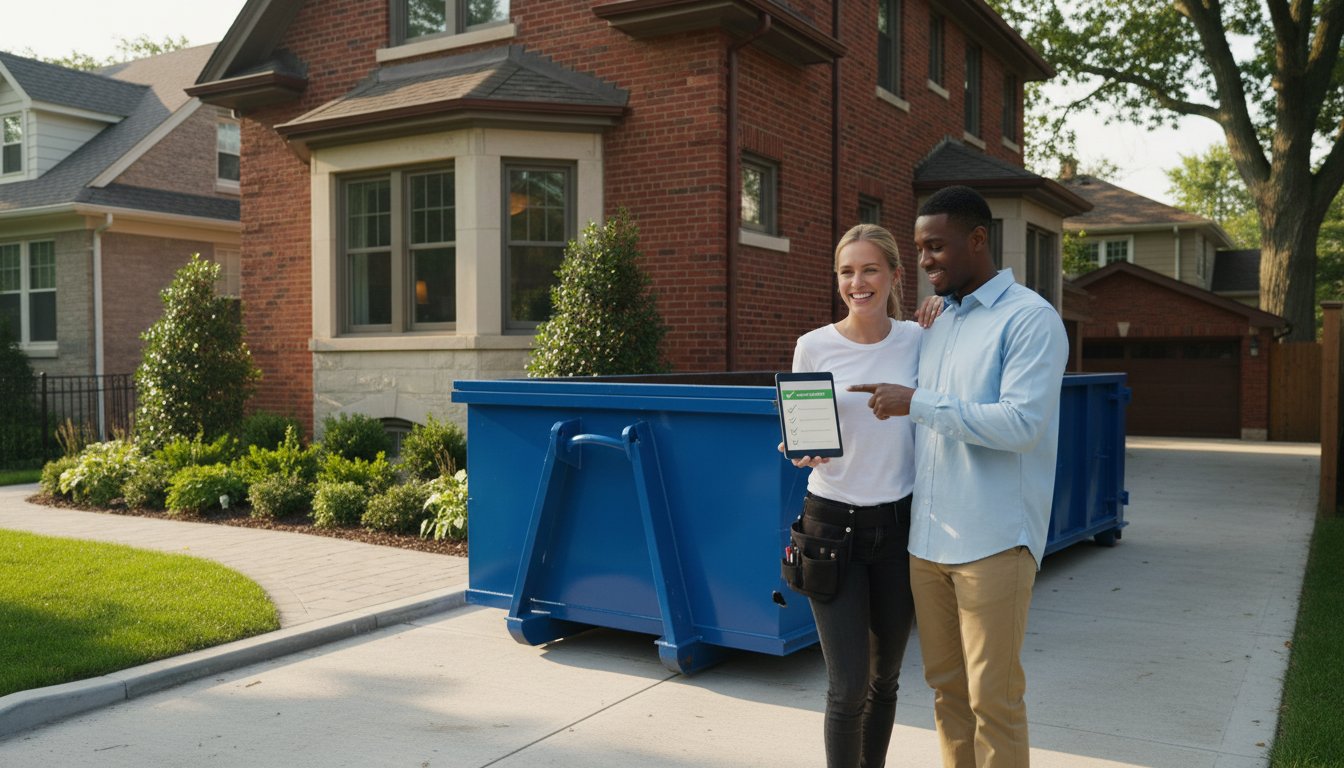
Last October, a homeowner in Chicago paid $150 in city fines because they placed their rental on the curb without a valid public space permit. It's a common mistake that affects roughly 12% of residential projects in major metro areas. You shouldn't have to worry about legal technicalities or driveway cracks when you're trying to clear out a property. Renting a roll off dumpster should be a simple, transparent transaction that helps you finish your job on time and under budget.
We understand that hidden fees and confusing local regulations are the biggest hurdles to a successful cleanup. You need a reliable partner who handles the logistics so you can focus on the work. This 2026 checklist provides the exact steps to choose the correct size, secure your permits in NY, IL, or MA, and prepare your site for delivery. You will learn how to avoid surprise surcharges and ensure your container fits your debris perfectly. Follow this guide to master the rental process and book your dumpster with total confidence.
Key Takeaways
- Identify your specific debris type and volume accurately to avoid unnecessary overage charges.
- Choose the right roll off dumpster size for your project using our 2026 capacity guide for NY, IL, and MA.
- Determine if your project requires a street permit based on specific municipal regulations in NYC, Chicago, or Boston.
- Prepare your delivery site by clearing a 60-foot path and checking for overhead obstructions like power lines.
- Book your dumpster online to lock in real-time availability and ensure a hassle-free delivery schedule.
The Essential Roll Off Dumpster Selection Checklist
Renting a container shouldn't be a guessing game. Efficiency starts with a clear plan to manage your waste. Before you book your dumpster, you must define the scope of your project. Start by understanding exactly What is a Roll Off Dumpster? and how it fits your site. These rectangular, open-top containers are designed for easy loading and transport via specialized trucks. In states like New York and Illinois, where space and regulations are tight, choosing the right equipment saves time and money.
Follow these four critical steps to secure the right service:
- Identify your debris: Categorize your waste as household junk, construction debris, or heavy masonry. Mixing these can lead to unexpected costs.
- Calculate volume: Estimate your load in cubic yards. A standard 10-yard dumpster holds about three pickup truck loads. Overfilling leads to safety risks and overage charges.
- Check the clock: Confirm the rental period. Most projects in MA and IL require at least 7 to 14 days of onsite time.
- Demand transparency: Verify that your quote includes weight limits, fuel surcharges, and environmental fees.
A roll off dumpster is a high-functioning tool for your job site. Using it correctly means knowing your limits. If you underestimate your volume by even 5 cubic yards, you risk paying for a second haul. Get it right the first time by measuring your largest items first.
Matching Debris Type to Container
Landfills in New York and Illinois enforce strict separation rules. A "clean load" of concrete or dirt is often cheaper to process than "mixed waste" containing wood, plastic, and insulation. If you are stripping a roof in the Northeast, specify your shingle type. Heavy materials like asphalt shingles require reinforced 10-yard or 20-yard containers to stay within legal road weight limits. Avoid tossing prohibited items like tires, batteries, or electronics. These items trigger immediate fines at the scale house in every major metro area.
Comparing Rental Terms and Integrity
Direct communication beats a digital middleman every time. National brokers often lack the fleet flexibility needed for unpredictable weather in Massachusetts or Chicago. Choose a local hauler who understands regional logistics. Ask about their policy for snow delays or emergency pickups. A reputable provider offers a verbal handshake backed by clear, written terms. They ensure on-time delivery and haul-away without hidden fuel hikes. This reliability keeps your job site moving and your budget on track. Schedule your delivery with a provider that answers the phone and knows your neighborhood.
Sizing Your Container: Capacity Guide for NY, IL, and MA
Selecting the correct roll off dumpster prevents project delays and unexpected costs. Your choice depends on the specific volume of waste and the physical footprint available on your property in New York, Illinois, or Massachusetts. Use these capacity standards to match your project scale to the right bin.
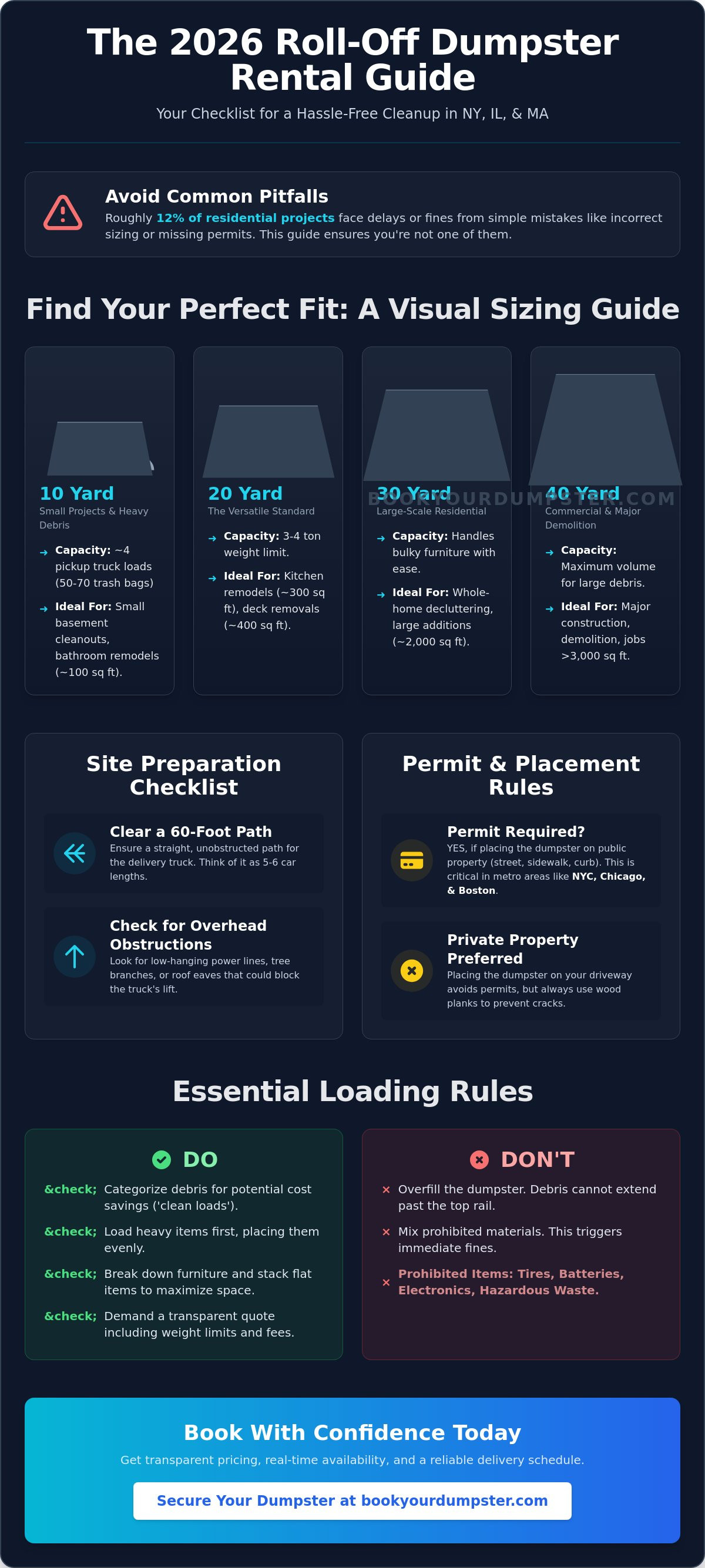
- 10 Yard Dumpster: This size handles approximately 50 to 70 heavy-duty trash bags. It is the go-to option for small basement cleanouts or a 100-square-foot bathroom refresh.
- 20 Yard Dumpster: As the industry standard, this container fits most residential needs. It accommodates debris from a 300-square-foot kitchen remodel or the removal of a 400-square-foot wooden deck.
- 30 Yard Dumpster: Choose this for whole-home decluttering involving bulky furniture or large-scale home additions. It provides the necessary volume for 2,000-square-foot residential projects.
- 40 Yard Dumpster: These units are reserved for major construction sites and commercial demolition. They manage massive amounts of siding, roofing, or structural timber from jobs exceeding 3,000 square feet.
Visualizing Cubic Yards
A 10 cubic yard container holds the equivalent of four standard pickup truck loads. This visualization helps you estimate how many manual trips to a local transfer station you are saving. To maximize every inch of space, stack flat items like plywood or drywall at the bottom. Break down large furniture to avoid creating empty air pockets. Never allow debris to extend past the top rail; haulers cannot legally transport overfilled containers on public roads. Learn which size fits your project to ensure a smooth, compliant pickup.
Weight Limits and Regional Variations
Weight capacity is just as vital as physical dimensions. A roll off dumpster might have plenty of physical room left but still exceed its legal weight limit. For instance, 20-yard containers in residential areas typically carry a weight limit of 3 to 4 tons. If you are disposing of heavy materials like concrete, brick, or soil, you must follow EPA guidelines for construction debris to ensure proper sorting and recycling. Heavy loads often require specialized containers to prevent damage to delivery trucks or driveway surfaces. Read our 20-yard guide for more detail on weight restrictions in your specific zip code. If you are ready to clear the clutter, book your dumpster now for reliable, on-time delivery.
Navigating Local Regulations and Permits in 2026
Compliance isn't optional when you rent a roll off dumpster in 2026. Local municipalities in New York, Illinois, and Massachusetts have tightened enforcement on where containers sit and what they contain. Ignoring these rules leads to immediate project delays and expensive citations. You must determine your placement strategy before the truck arrives at your site.
Street Permits vs. Private Property
The 'Driveway Rule' remains the most efficient way to manage your project. If you place the container entirely on your private land, you generally avoid municipal permit fees and paperwork. This keeps your costs predictable and your timeline intact. However, if your property lacks the space and the dumpster must occupy a sidewalk, parking lane, or public alley, you need a temporary occupancy permit.
- Chicago (IL): The Chicago Department of Transportation (CDOT) requires a Public Right-of-Way permit. Expect a processing time of 3 business days.
- Boston (MA): You must secure a Street Occupancy Permit through the Boston Transportation Department. Fees are calculated daily based on the specific neighborhood zone.
- New York City (NY): DOT permits are mandatory for any street placement. NYC also requires specific reflective marking and lighting on the container to prevent traffic accidents.
Permit costs in 2026 vary by city but usually range from $50 to $150 for the initial application. Always apply at least five days before your scheduled delivery to account for administrative backlogs.
Regional Disposal Bans
State environmental agencies have specific lists of prohibited items that cannot enter the waste stream. In New York, strict laws govern how you handle construction debris. Review the EPA guidelines on C&D debris to understand the federal baseline for these materials. New York state specifically requires high recovery rates for metal, concrete, and wood from large-scale projects.
In Illinois, the EPA prohibits all electronics, including monitors and printers, from landfills. If these items are found in your roll off dumpster, the entire load may be rejected at the transfer station. Massachusetts maintains some of the nation's strictest rules. Since late 2022, mattresses and textiles have been banned from disposal. You must coordinate separate pickups for these items to avoid heavy contamination penalties. To stay ahead of these shifting requirements, check our residential guide for local compliance.
Don't overlook your Homeowners Association (HOA). Even if the city grants a permit, your HOA might have bylaws restricting how long a container can stay on your driveway. Some associations in suburban Chicago and Boston suburbs impose fines starting at $100 per day for containers left out past a 72-hour window. Clear the placement with your HOA board before you schedule your delivery.
Site Preparation Checklist: Getting Ready for Delivery
Preparation is the difference between a smooth delivery and a logistical headache. When you rent a roll off dumpster, you aren't just receiving a container; you're coordinating the arrival of a heavy-duty vehicle that requires specific conditions to operate safely. Follow these steps to ensure your site is ready before the driver arrives.
- Clear a 60-foot path: Roll-off trucks require significant space to maneuver. Ensure you have at least 60 feet of straight-line clearance in front of the drop-off location. This allows the driver to back in and align the container without hitting obstacles.
- Check for overhead obstructions: Look up before you book. You must have clear vertical space, free from low-hanging power lines, communication cables, or tree branches.
- Mark the spot: Don't leave the placement to guesswork. Use orange traffic cones or large pieces of plywood to mark exactly where the container should sit.
- Protect the surface: Heavy steel containers can damage soft surfaces. Lay down wood planks or 3/4-inch plywood to create a protective barrier for your driveway.
Safety and Clearance Requirements
The "23-foot rule" is a standard safety protocol in the waste industry. To safely hoist and tilt the roll off dumpster during the delivery process, the truck needs 23 feet of vertical clearance. If your driveway is tucked under a thick canopy of oak or maple trees, trim the branches back before the delivery date. Remember that these trucks have a much wider turning radius than a standard pickup or SUV. A typical roll-off truck needs 50 to 60 feet of space to make a clean turn. Keep pets and children inside during the scheduled delivery window to ensure the "drop and go" process remains hazard-free.
Protecting Your Property
A loaded container weighs several tons, and the pressure on the four small rollers can lead to asphalt scarring or concrete cracking. This is especially true during hot summer months in IL or MA when asphalt softens. Plywood is the best friend of a residential driveway because it distributes the weight across a larger surface area. Place two 4x8 sheets of plywood where the wheels will rest to prevent structural damage. For more detailed advice on handling large-scale debris, get more tips in our complete waste management guide.
Ready to clear your space? Book your dumpster and schedule your delivery now.
Book Your Dumpster: The Pragmatic Choice for 2026
Efficiency isn't a luxury anymore; it's a requirement for any project in 2026. Managing waste shouldn't stall your progress or complicate your schedule. Our streamlined online booking system handles the logistics so you can focus on the actual work. We provide real-time availability for 10, 20, 30, and 40-yard containers across New York, Illinois, and Massachusetts. You won't find generic estimates or vague arrival windows here. You get instant access to the specific roll off dumpster you need for your job site or home renovation.
We operate on a strict "No Hidden Fee" promise. The price you see during checkout is the price you pay. This total includes delivery, pickup, and specified weight limits. We've eliminated the opaque surcharges and administrative fees that often plague the waste management industry. Reliability drives our operations. Whether you're coordinating a job in Manhattan, a suburban project in Illinois, or a renovation in Massachusetts, we prioritize on-time delivery to keep your timeline intact. Our logistics team monitors local routes and traffic patterns to ensure your container arrives exactly when promised.
The Book Your Dumpster USA Advantage
Our digital-first approach removes the traditional headaches of waste removal. You don't have to spend hours on hold or wait days for a callback. Instead, you connect directly with local logistics experts who understand the specific parking regulations and neighborhood layouts in your area. We provide the right fit for every scale. Choose a 10-yard bin for small basement cleanouts or a 40-yard powerhouse for major structural demolition. Safety remains our top priority. Our drivers ensure professional debris placement, protecting your property while positioning the roll off dumpster for maximum accessibility. We treat your driveway or job site with the respect it deserves.
Ready to Start Your Project?
The entire booking process takes less than 3 minutes. Select your container size, enter your location, and choose your delivery date. It's a high-velocity solution for a high-demand world. We've modernized the industry to match your pace. Don't let debris pile up or delay your final inspections. Secure your equipment today and experience a service built on honesty, speed, and local expertise. Book your dumpster now at BookYourDumpster.com to finalize your logistics and clear the way for a successful project.
Secure Your 2026 Project Success
Managing waste shouldn't stall your progress. You now have the checklist to select the perfect container for your project in NY, IL, or MA. Remember to verify your local 2026 permit requirements and clear a 10 foot wide path for our delivery trucks to ensure a smooth drop-off. Choosing the right size container prevents the need for multiple hauls, which keeps your project timeline on track. Our A+ rated local delivery teams handle the heavy lifting so you can focus on the actual work.
We've simplified the entire logistics process to remove the stress of debris management. You get a no hidden fees guarantee and a transparent process from start to finish. It takes less than 180 seconds to secure your equipment and schedule a delivery. Don't let clutter slow down your momentum. Take control of your site today and keep your project moving forward without delay. Book your roll off dumpster online today
Frequently Asked Questions
Do I need a permit for a roll off dumpster in New York or Illinois?
You need a permit if you place the container on public property, such as a street or sidewalk. In Chicago, the Department of Transportation requires a Public Way permit, which typically takes 3 to 5 business days to process. New York City residents must obtain a permit from the DOT for any street placement. We help you navigate these local requirements to ensure your project stays compliant and moves forward without delays.
How much space does a roll off dumpster truck need for delivery?
You must provide at least 60 feet of straight-line space and 23 feet of vertical clearance for a successful delivery. The truck itself is 35 feet long and requires ample room to maneuver and tilt the hoist. Clear all vehicles, low-hanging branches, and power lines from the drop zone before our driver arrives. Measure your site twice to avoid dry run fees and ensure an on-time delivery for your roll off dumpster.
What items are prohibited in a roll off dumpster in Massachusetts?
Massachusetts law prohibits disposing of hazardous waste, tires, lead-acid batteries, and appliances containing CFCs in rental containers. The Massachusetts Department of Environmental Protection also bans "easy-to-recycle" materials like cardboard and yard waste from local landfills. Don't put paints, oils, or asbestos in the bin. Follow these 1990 Waste Disposal Ban regulations to ensure a hassle-free pickup and avoid environmental fines from the state.
Can I move the dumpster once it has been delivered to my site?
No, don't attempt to move the dumpster once our driver has placed it. Shifting a heavy steel container with personal vehicles or machinery causes significant damage to the equipment and your driveway. If the initial placement doesn't work for your workflow, call us to schedule a professional relocation. We prioritize safety and precision to keep your site organized and your surfaces intact throughout the duration of your project.
How long can I keep the roll off dumpster rental?
Our standard rental periods typically last between 7 and 14 days depending on your specific zip code and project scope. You can extend your rental for a flat daily fee if your renovation takes longer than you originally planned. Schedule your delivery for the day your work begins to maximize your rental window. Contact us 24 hours before you're finished to ensure we get you on the schedule for a prompt pickup.
What happens if I exceed the weight limit on my dumpster?
Exceeding the weight limit results in an overage fee based on the specific tonnage recorded at the local transfer station. Every roll off dumpster has a set weight capacity, such as 2 tons for a 10-yard bin or 5 tons for a 30-yard bin. Dense materials like concrete, brick, or dirt reach these limits very quickly. Use our online size guide to choose the right capacity and maintain transparent, predictable project costs.
Is there a difference between a roll off dumpster and a front-load dumpster?
Roll off units are temporary, open-top containers for construction debris, while front-load bins are permanent, lidded containers for recurring commercial trash service. Roll off dumpsters are delivered by trucks that slide the bin off a tilting bed. Front-load bins are much smaller, usually 2 to 8 cubic yards, and are emptied by trucks with front-facing forks. Choose a roll off for one-time projects like home clean-outs or roof replacements.
Do you offer same-day delivery in Chicago or Boston?
We offer same-day delivery in Chicago and Boston when you book your dumpster before 10:00 AM local time. This service depends on current inventory levels and driver availability in your specific neighborhood. Our digital-first platform allows you to check real-time stock and schedule your delivery instantly. If same-day slots are full, we prioritize next-day service to keep your project on track and eliminate logistical stress.


