
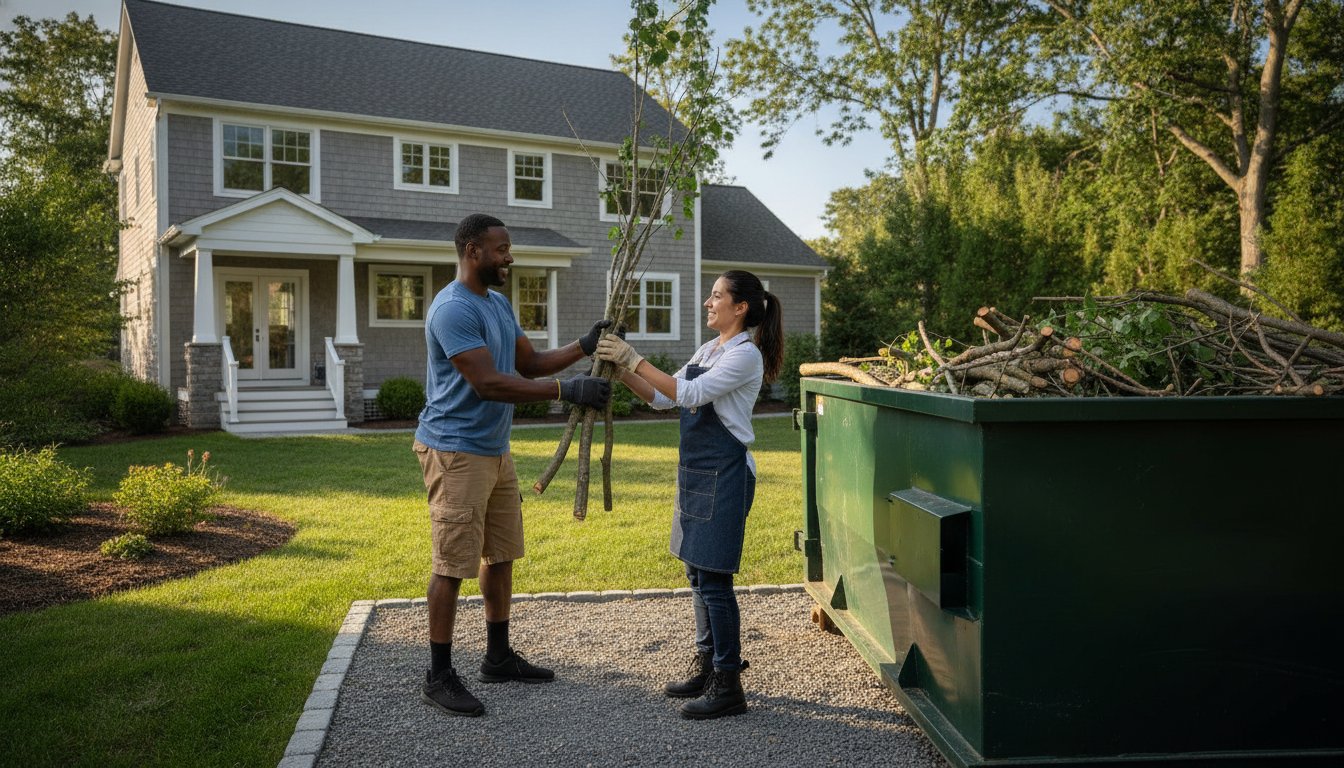
Most homeowners pay to haul away empty air because they don't know how to pack a container for yard waste. You've likely stared at a massive pile of downed limbs and wondered if a 10-yard or 20-yard bin is actually enough. It's a frustrating guessing game. Estimating the volume of "fluffy" brush is notoriously difficult, and the wrong choice leads to either a half-empty bin or a second rental. Securing a reliable tree and brush removal dumpster service shouldn't be this complicated.
You're right to worry about the logistics. Between hidden fees for heavy logs and new 2026 municipal restrictions on curbside organic waste, the rules are shifting. This guide gives you a clear path to booking the right container for your specific project. We'll show you how to select the perfect size for organic materials, navigate current disposal regulations, and ensure fast delivery so you can clear your land and move on.
Key Takeaways
- Select the optimal 10, 20, 30, or 40-yard container by accurately estimating the volume of branches and limbs versus heavy logs.
- Discover why a professional tree and brush removal dumpster service is necessary to bypass strict 2026 municipal volume limits and curbside restrictions.
- Identify specific organic waste disposal mandates in NY, NJ, and IL to ensure your debris qualifies for "Clean Green" processing.
- Master the "cut and stack" loading technique to eliminate wasted space and maximize the capacity of your rental.
- Secure your rental through a streamlined online booking system that provides transparent pricing and reliable delivery schedules.
Tree and Brush Removal Dumpster Services: Why Professional Rental Beats the Curb
A tree and brush removal dumpster service provides a heavy-duty, roll-off container specifically for organic yard debris. Think of it as a specialized tool for managing What is Green Waste? This category includes branches, leaves, grass clippings, and large tree sections. These containers are different from standard trash bins because the contents are hauled to composting facilities instead of landfills. This ensures your yard waste is recycled into mulch or soil amendments rather than contributing to methane production in a dump.
Relying on municipal curbside pickup for a major landscaping project is a mistake. Most local waste departments impose strict volume limits. They might accept three bundles of branches per week, but they won't take an entire downed tree. In cities like New York, the DSNY has fully reinstated fines as of January 1, 2026, for buildings that fail to separate organic waste correctly. Fines start at $25 and reach $300 for repeat offenses. A professional rental bypasses these restrictions and keeps your property in compliance.
Safety is another major factor. Professional roll-off dumpsters feature a large rear swinging door. This design allows you to walk heavy logs and bulky stumps directly into the container. You don't have to strain your back lifting heavy debris over high side walls. It keeps the worksite organized and reduces the risk of injury during the cleanup process. By centralizing the mess, you maintain a clear path for equipment and workers.
The Advantages of Roll-Off Containers for Landscaping
Renting a dumpster centralizes your debris in one manageable location. You won't have to spend your weekend making multiple trips to a local recycling center or landfill. This saves on fuel costs and vehicle wear. Keeping all brush in one container prevents piles from becoming hazards for pests or tripping risks for your family. It also protects you from municipal fines associated with leaving large brush piles on the street or blocking public sidewalks for extended periods.
When to Choose a Dumpster Over Junk Removal
Choose a dumpster rental when you want full control over your project timeline. A full-service junk removal crew charges for labor and usually works on their schedule. With a roll-off on-site, you work at your own pace. It's significantly more cost-effective for DIY tree removal projects where you are already doing the physical labor. Additionally, junk removal services often reject heavy, oversized items like large stumps or thick logs. A roll-off container handles these materials easily, provided you select the correct size for the job.
Sizing Your Dumpster for Tree Limbs, Brush, and Yard Debris
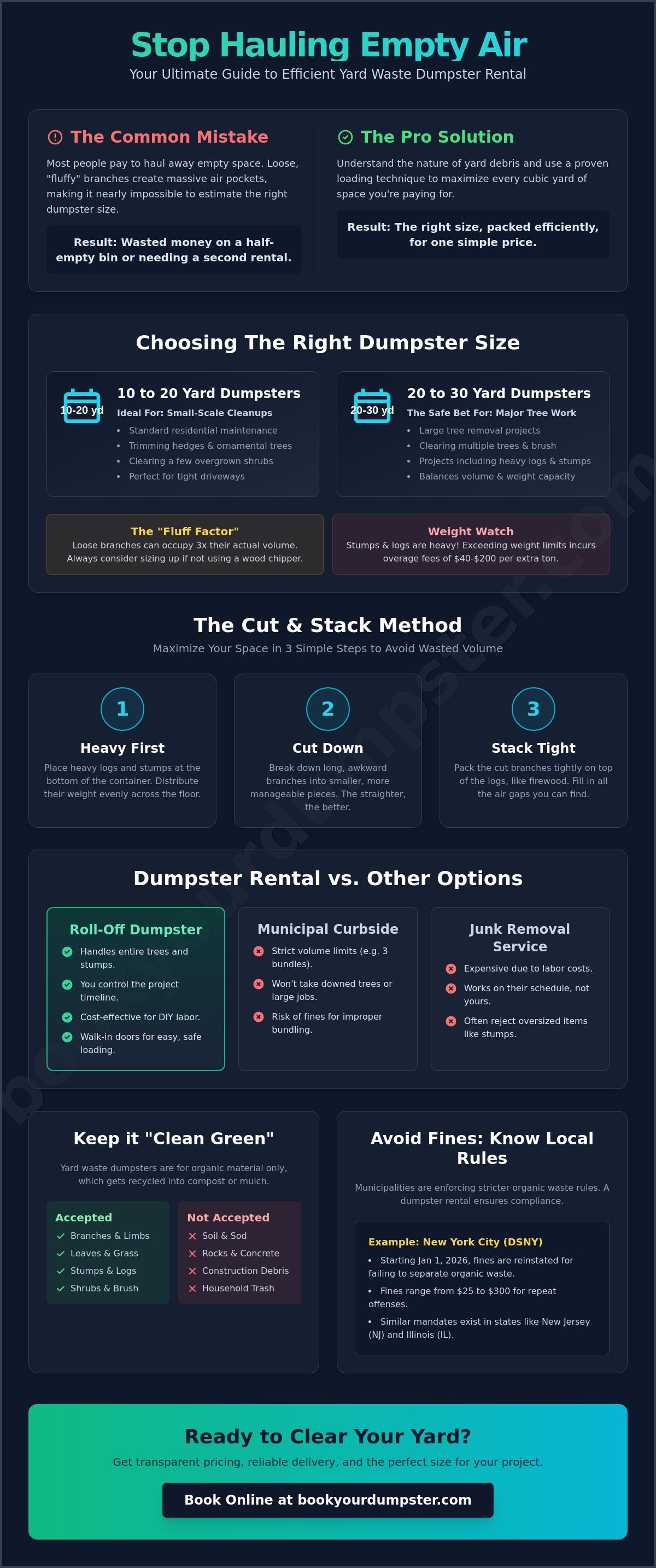
Choosing the right container for a tree and brush removal dumpster service requires a shift in perspective. Unlike construction waste, yard debris is high-volume but low-density. Un-chipped brush creates massive air gaps, meaning a 10-yard bin fills up much faster than you anticipate. You aren't just paying for weight; you're paying for space. If you are clearing a few overgrown shrubs or a single small fruit tree, a smaller bin works. For anything larger, you must account for the "fluff factor." This is the tendency of loose branches to spring back and occupy three times their actual mass. Without a wood chipper, you will likely need one size larger than you originally planned.
Weight limits become a concern when your project moves from branches to trunks and stumps. While a 10-yard dumpster is rated for several tons, a single large oak stump or a few logs can consume that limit quickly. If your project involves digging up root balls or clearing soil, you must follow Organic Waste Regulations in NY to ensure your load stays within legal disposal categories. Exceeding weight limits results in overage fees, which usually range from $40 to $200 per extra ton depending on local landfill rates in 2026. This is why the 20-yard and 30-yard options are often the safest bet for major tree work; they offer a balance of volume for brush and weight capacity for thicker wood.
10 To 20 Yard Dumpsters: Small Trees and Shrubs
These sizes are perfect for standard residential maintenance. If you're trimming hedges or removing ornamental trees, a 10-yard bin provides enough capacity without taking up your entire yard. These containers are ideal for tight driveways in Queens or Boston neighborhoods where space is limited. Check out our 10 Yard Dumpster Rental guide for specific dimensions. For slightly larger yard cleanups, the 20-yard dumpster is our most requested versatile option because it provides the extra length needed for six-foot branches.
30 To 40 Yard Dumpsters: Large Tree Removal and Land Clearing
Professional contractors and homeowners clearing multiple trees should opt for 30 or 40-yard containers. These bins offer the vertical space needed for long, un-cut branches and high-volume brush. A 40-yard dumpster is a massive tool, but use caution with heavy trunks. Filling a 40-yard bin to the top with solid oak logs will likely exceed the truck's hauling capacity. Always stack heavy logs at the bottom and use the remaining space for lighter brush. This prevents the container from becoming too heavy to lift. If you're ready to start, you can view available sizes online to match a container to your project scope.
What Can You Toss? Navigating Organic Waste Regulations in NY, NJ, and IL
Clear your property with confidence by knowing exactly what belongs in your container. A tree and brush removal dumpster service is designed specifically for "green waste." This category includes branches, leaves, hedge trimmings, and grass clippings. While these materials are all organic, they must remain uncontaminated to be processed at composting facilities. Mixing in trash or construction debris turns a recyclable load into a "mixed" load, which often results in higher disposal fees and prevents the material from being diverted from landfills.
Disposal rules change based on your location. In Massachusetts, you must adhere to specific state regulations for yard waste that ban these materials from standard landfills. Similarly, New Jersey solid waste management districts began implementing stricter organic diversion strategies in January 2026. These local mandates require haulers to verify that yard waste is free of non-organic matter. If you're working in Illinois or New York, checking local municipal codes is essential to ensure your debris qualifies for specialized green waste processing.
The "Clean Green" Load Requirements
Keep your load 100% organic to streamline the disposal process. A "Clean Green" load consists only of plant-based materials. Don't include dirt, sod, or rocks in these containers. Soil is incredibly heavy and can quickly push your rental over its weight limit, leading to expensive overage charges. If you are removing shrubs or small trees, shake off as much dirt as possible from the root balls. Most facilities reject brush loads if they contain excessive amounts of earth or sand.
Prohibited Items in Yard Waste Containers
Watch for hidden contaminants that can ruin a green load. Pressure-treated wood, such as old fencing or deck boards, is a major violation. These materials contain chemicals that make them unfit for composting. Never use plastic bags to collect leaves; either dump the leaves loose into the container or use biodegradable paper bags if permitted. Additionally, be mindful of stump sizes. Many local facilities in the Tri-State area refuse stumps with a diameter larger than 12 inches because they require specialized grinding equipment. If you have oversized stumps, call ahead to verify acceptance before loading them into your dumpster.
Maximizing Space: How to Load a Dumpster with Brush and Branches
Loading a container for a tree and brush removal dumpster service requires more strategy than tossing in household trash. Loose brush is notoriously inefficient. If you simply throw branches over the side, they will cross-hatch and create massive air pockets. You'll find the dumpster "full" while it still has 40% of its actual capacity available. To get the most value out of your rental, you must use the "cut and stack" method. This approach ensures you aren't paying to haul away empty air.
Start by placing your heaviest materials at the bottom. Large logs and thick trunk sections provide a solid foundation. This weight distribution keeps the container stable during transport and prevents it from becoming top-heavy. Once the base is set, focus on the limbs. Cut every branch into manageable pieces. Long, curved limbs are the primary cause of wasted space; breaking them down allows them to lay flat and compress under their own weight.
The Step-by-Step Loading Process
- Step 1: Open the rear swinging door. Don't try to lift heavy logs over the high side walls. Use the walk-in entry to place heavy trunks and large limbs flat on the floor of the container.
- Step 2: Cut long branches into sections no longer than 4 feet. This prevents "spring-back," where branches act like coils and push back against other debris, creating those costly air gaps.
- Step 3: Layer smaller brush and loose leaves on top of the heavy logs. Use this finer material to fill the internal gaps between the larger wood pieces. This nesting technique maximizes every cubic yard of space.
Avoiding Overage and Safety Fees
Follow the "water level" rule. Debris must never exceed the top rail of the dumpster. If branches stick out over the sides, it's called "bird-nesting." This is a major safety hazard. Hauling companies are required by law to tarp every load before hitting the road. If your brush is sticking out, the driver cannot secure the tarp. They will refuse the pickup, and you'll likely face a trip fee for the wasted journey. Keep everything flush with the top of the bin to ensure a smooth, fast pickup.
Overage fees are the specific costs incurred when the weight or volume of your debris exceeds the limit agreed upon in your rental contract. Monitor your progress and don't overfill the container. If you have more debris than expected, it's cheaper to order a second bin than to pay fines for an unsafe, overfilled load. Ready to start your cleanup? Book your tree and brush removal dumpster service online today to secure the right size for your project.
Rent Your Tree Debris Dumpster Online with Book Your Dumpster USA
Secure a reliable tree and brush removal dumpster service without the typical industry runaround. We provide direct access to roll-off containers for residents and contractors across NY, NJ, IL, and MA. Our online booking system is designed for speed. It eliminates the need for lengthy sales calls or waiting for manual quotes. You see the availability; you book the bin; you get to work. We prioritize your time because we know that landscaping projects are labor-intensive and often urgent.
We maintain a full inventory of 10, 20, 30, and 40-yard dumpsters. This range ensures you never pay for more space than your project requires. As established in earlier sections, selecting the right volume is the most effective way to control your costs. We provide the heavy-duty equipment needed for everything from hedge trimmings to massive oak stumps. You provide the debris, and we handle the hauling to the appropriate organic waste processing facilities.
Why Homeowners and Contractors Trust Us
Reliability is our primary product. We understand that a late delivery halts your entire project and wastes your crew's time. Our team focuses on punctual drop-offs and pickups to keep your landscaping schedule intact. We offer transparent pricing structures that strip away hidden fees and unnecessary logistical fluff. You receive a clear breakdown of your costs from the start. This commitment to honesty acts as our verbal handshake with every customer. For a deeper look at our professional standards, review our Roll Off Dumpster Rental Guide.
Secure Your Container in Minutes
Our digital platform simplifies the rental process into three straightforward steps. First, choose the dumpster size that fits your debris volume. Second, pick your delivery and pickup dates. Third, complete your payment through our secure portal. It's a high-velocity experience designed to reduce your cognitive load and move you toward a resolution quickly. We've modernized the traditional industrial sector through digital convenience and straightforward honesty.
We provide localized support for major hubs including Queens, San Francisco, and beyond. Our experts understand the specific regional mandates and 2026 organic waste regulations that affect your project. Whether you're navigating NYC bin mandates or tightening commercial organics laws, we provide the right tool for the job. Don't let yard waste pile up and create a safety hazard on your property. Book Your Tree and Brush Removal Dumpster Now and experience a professional, no-nonsense approach to waste management.
Clear Your Land Without the Logistical Stress
Managing yard waste effectively requires a balance of proper sizing and strategic loading. Remember that brush volume often exceeds its weight. Selecting a 20-yard or 30-yard container prevents the logistical headache of a second rental. By using the "cut and stack" method, you maximize every cubic yard of space and stay within the safety limits required for transport. Navigating the 2026 organic waste regulations in NY, NJ, IL, and MA is much simpler when you have a dedicated tree and brush removal dumpster service as your partner.
Reliability is the foundation of our service. We offer a streamlined online booking process that puts you in control of your project timeline. Whether you're a homeowner in Queens or a contractor in San Francisco, we provide 10, 20, 30, and 40-yard containers delivered on time and at transparent rates. Stop letting debris clutter your property and risk municipal fines. Order Your Tree and Brush Removal Dumpster Online now to clear your land and move forward with your next project. You have the plan; we have the tools to finish it.
Frequently Asked Questions
Can I put large tree stumps in a rental dumpster?
Yes, but size restrictions apply. Most local facilities reject stumps with a diameter larger than 12 inches because they require specialized industrial grinders. Stumps are also incredibly heavy and can quickly push your container over its weight limit. Always place stumps at the bottom of the bin to keep the load stable during transport.
What happens if I mix household trash with my brush and tree debris?
Mixing trash with yard waste ruins a "Clean Green" load. When you add plastic, household garbage, or construction materials, the entire container must be diverted to a landfill instead of a composting facility. This contamination usually results in higher disposal fees and prevents the organic material from being recycled into mulch or soil.
How much weight in tree limbs can a 20-yard dumpster hold?
A 20-yard dumpster typically has a weight capacity of 2 to 3 tons. Because tree limbs are low-density and create air gaps, you will likely fill the volume of the container before you hit the weight limit. However, if you are loading solid logs or root balls with attached soil, you must monitor the weight closely to avoid overage charges.
Do I need a permit for a dumpster in New York or New Jersey if it is on the street?
Street placement almost always requires a permit. In New York City, the DOT mandates a permit for any dumpster placed on a public roadway or sidewalk. New Jersey regulations vary by town, so you must contact your local municipal building department to secure a permit before your delivery date to avoid fines or pickup delays.
Can I put pressure-treated wood or old fencing in with my brush?
No, you must keep treated wood separate from organic debris. Pressure-treated lumber contains chemicals like arsenic or copper that make it unfit for composting. Including fencing in your tree and brush removal dumpster service will result in the entire load being rejected at the green waste facility and reclassified as more expensive construction debris.
What is the best way to estimate how much brush I have?
Use the "appliance method" to visualize your volume. One cubic yard is roughly the size of a standard washing machine. Measure the length, width, and height of your brush pile in feet, multiply those numbers, and divide the total by 27. This calculation gives you the total cubic yardage needed to select between a 10, 20, 30, or 40-yard container.
Is there a difference between a yard waste dumpster and a standard roll-off?
The steel container is exactly the same, but the disposal process differs. When you book a tree and brush removal dumpster service, the hauler takes the material to a specialized organic recycling center. Standard roll-off services for household junk or construction waste typically head to transfer stations or landfills where recycling is not the primary focus.
How long can I keep the dumpster on my property for a landscaping project?
Standard rental periods usually last between 7 and 10 days. This timeframe is typically sufficient for most residential landscaping or land clearing projects. If your project requires more time, you can often arrange a daily extension for an additional fee. Confirm your specific duration and any potential extension costs during the online checkout process.


