

It's 48 hours before the final move-out deadline in a crowded urban center like Queens or Chicago. The sidewalk outside the residence hall is rapidly disappearing under a mountain of abandoned futons, desks, and mini-fridges. Managing a university campus cleanout and dorm move-out dumpsters isn't just about hauling trash. It's a high-stakes race against a fixed graduation clock. You know that the "dorm-dump" can spiral out of control in mere hours if the logistics aren't perfect. We understand the pressure of clearing massive volumes of furniture while navigating tight street access and strict 2026 organic waste regulations.
This professional guide helps you master the complexities of high-volume waste management. You'll learn how to size your containers accurately, place them strategically in limited spaces, and book your equipment with confidence. We'll walk through the specific utility of 30 and 40-yard dumpsters for multi-unit halls and provide a clear roadmap for a stress-free transition. Stop reacting to the clutter and start controlling the process with a proven logistics strategy.
Key Takeaways
- Map out your 2026 graduation timeline early to separate donatable goods from landfill-bound debris. This keeps your site organized during the peak move-out madness.
- Select 30 or 40-yard roll-off containers for your university campus cleanout and dorm move-out dumpsters to handle the high volume of bulky furniture.
- Scout your placement areas for overhead wires and low branches before delivery. Use plywood under the rails to prevent asphalt damage on campus quads.
- Stay compliant with 2026 waste regulations by identifying prohibited items like electronics and mattresses that require special handling or surcharges.
- Secure your equipment through an online booking system to get instant reservations and transparent pricing for university administrative approvals.
Planning Your University Campus Cleanout Strategy
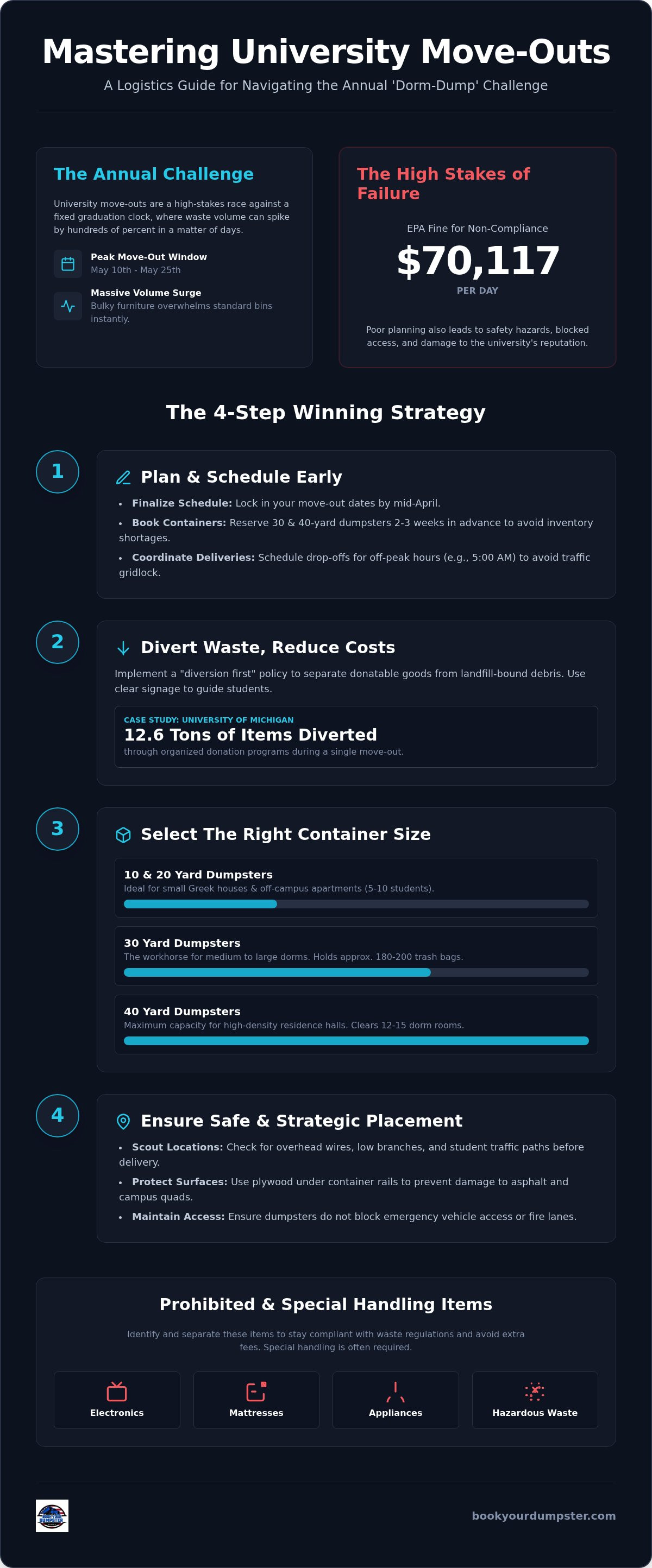
Effective planning for a university campus cleanout and dorm move-out dumpsters starts with the calendar. For the 2026 graduation cycle, peak move-out dates typically cluster between May 10 and May 25. During this two-week window, waste volume spikes by hundreds of percent. Facility managers and landlords must act as the primary coordinators, aligning with student organizations to manage the flow. Identify your stakeholders early. This includes campus security for gate access and local municipal offices for street permits. Mismanaging this surge does more than create an eyesore. It damages the university's brand and invites heavy penalties.
In 2026, the EPA continues to enforce strict disposal rules with fines reaching $70,117 per day for non-compliance. You must distinguish between donatable goods and landfill-bound debris immediately. In 2025, students at the University of Michigan diverted 12.6 tons of items through donation programs. Implementing a similar "diversion first" policy reduces your total disposal costs. Use clear signage to ensure students don't toss usable clothes into a container meant for broken furniture. Professional waste management strategies rely on this level of granular organization to prevent logistical collapse.
The 'Dorm-Dump' Phenomenon: Why Standard Trash Fails
Standard residential bins and front-load containers cannot handle the volume generated during a university campus cleanout and dorm move-out dumpsters project. Within hours of the final exam, these bins overflow with bulky items that don't compact. Futons, mini-fridges, and thick foam mattress toppers are the primary culprits. For a 50-unit student building, the volume of abandoned furniture can easily exceed 20 cubic yards in a single afternoon. If you don't have roll-off capacity on-site, the overflow ends up on the sidewalk. This creates a safety hazard and blocks emergency vehicle access. Calculate your surge capacity based on building occupancy rather than historical weekly averages.
Setting a Move-Out Calendar for 2026
Avoid the last-minute scramble by finalizing your schedule by mid-April. Book your containers at least two to three weeks before the graduation ceremonies begin. This lead time is essential to secure 30-yard and 40-yard units, which are in high demand during the spring. Coordinate your delivery and swap-out times for "off-peak" hours, such as 5:00 AM, to avoid the gridlock of moving vans and parents' vehicles. Securing a Roll off dumpster rental early ensures your logistics are locked in before the local inventory is depleted. Control the traffic flow by designating specific loading zones away from main campus arteries to keep the project moving.
Choosing the Right Dumpster Size for Dorm Move-Outs
Selecting the wrong container size leads to two expensive outcomes: paying for empty air or facing overage charges. For a successful university campus cleanout and dorm move-out dumpsters project, you must audit the specific building type before booking. Small Greek life houses or 5-10 student off-campus apartments are best served by a 10-yard unit. Conversely, high-density residence halls require the maximum volume provided by 30 and 40-yard containers. Don't underestimate the weight of cheap particle-board furniture. While it looks light, a dumpster full of water-damaged desks and bed frames can quickly exceed standard weight limits. Programs like Penn's recycling programs demonstrate the value of separating heavy furniture from lighter recyclables to stay within these limits.
Size Comparison for Campus Waste
Matching yardage to your student population is the most critical logistics step. A 10-yard dumpster is the ideal choice for small fraternity houses or focused cleanouts. It fits in tight alleyways common in Queens or Boston. For medium-sized off-campus housing, the 20-yard dumpster is the industry standard. It handles a mix of household trash and smaller furniture items. Large dormitories must use 30 or 40-yard containers. A 40-yard bin holds roughly 12 to 15 room cleanouts depending on the volume of abandoned items. For focused projects, see our 10 yard dumpster rental guide to see if a smaller unit fits your needs.
Estimating Your Load Volume
Visualize your capacity before the students start tossing items. A 30-yard bin holds approximately 180 to 200 standard trash bags. In terms of furniture, you can fit roughly 15 to 20 twin mattresses if they are stacked efficiently. However, you must maintain a "level full" load. Drivers cannot legally haul a container if debris extends above the side rails. Overfilling creates a safety hazard on city streets and results in immediate dry-run fees or reloading delays. Secure your university waste solution now to ensure you have the right capacity for the 2026 rush. Consistent monitoring of the fill line prevents these logistical bottlenecks during graduation weekend.
How to Coordinate Dumpster Placement on Crowded Campuses
Placing a 22-foot steel box in a congested university setting requires more than just an open spot. You must identify a "truck-friendly" zone before the driver arrives. This means checking for overhead wires, low-hanging tree branches, and building overhangs. A roll-off truck needs at least 23 feet of vertical clearance to safely hoist and drop the container. If your site has these obstructions, the driver will likely refuse the drop to avoid property damage. Managing a university campus cleanout and dorm move-out dumpsters project depends on this initial site survey to avoid costly delays.
Protect your campus infrastructure by preparing the drop site with 3/4-inch plywood. Heavy roll-off containers can crack aged asphalt or leave deep ruts in manicured quads. Laying down wood buffers distributes the weight and prevents the steel rails from digging into the surface. Additionally, you must secure the perimeter. Students often treat an empty dumpster zone as a convenient parking spot. Use traffic cones and "No Parking" signs to reserve the space 24 hours before delivery. If a vehicle blocks the zone, you'll face dry-run fees and a broken timeline.
Security is a major concern during graduation week. Residents from surrounding neighborhoods often see university containers as "free" disposal sites for their own household junk. This illegal dumping can quickly exhaust your weight limits and fill your capacity with non-campus waste. Use heavy-duty tarps or consider lockable units if the dumpster is located in a high-traffic public area. Assigning a staff member to monitor the bins during peak daylight hours ensures that only authorized dorm waste enters the container.
Step-by-Step Placement Logistics
Follow this sequence to ensure a seamless delivery during the high-stress move-out week:
- Step 1: Secure local permits for street placement. In cities like Queens or Boston, placing a dumpster on a public way without a permit results in immediate citations.
- Step 2: Clear a 60-foot straight path. The truck needs significant room to back in and pull away after the drop.
- Step 3: Mark the area with cones. Do this at least 24 hours before the scheduled drop to prevent student parking.
- Step 4: Verify the surface is level. Avoid placing heavy containers on soft dirt or steep inclines to prevent shifting or sinking.
Navigating Urban Constraints
Urban student hubs in Massachusetts and New Jersey present unique challenges with narrow alleys and one-way streets. Coordinate directly with campus security to manage gate access and temporary road closures. Providing the driver with a direct contact number for the on-site manager saves time and reduces confusion during the drop. For detailed regional regulations, review our guide on dumpster rental in New York, Illinois, and Massachusetts. This ensures you stay compliant with local ordinances while maintaining your tight schedule.
Managing Prohibited Items and Bulk Waste Regulations
Prohibited items are the primary source of financial friction during a university campus cleanout and dorm move-out dumpsters project. Unlike standard household waste, certain campus staples require specialized disposal routes. The "Big Three" offenders are electronics, mattresses, and appliances. Tossing these into a standard roll-off container without prior coordination leads to immediate contamination fees. In 2026, waste regulations have tightened significantly. For example, in Massachusetts, most landfills now mandate separate handling for mattresses. This often results in a per-unit surcharge that can quickly blow a facility budget if hundreds of beds are involved.
Hazardous waste traps often hide in the back of student closets. Cleaning chemicals, bleach, drain cleaners, and leftover paint cans are strictly forbidden in roll-off units. These substances can leak and create toxic runoff or chemical reactions inside the truck. Instruct your cleaning crews to set these items aside for a dedicated hazardous waste collection day. Don't risk a rejected load because of a few forgotten gallon jugs of paint. For projects involving heavier materials like renovation waste, review our guide on construction debris removal for advanced sorting tips.
Dealing with Mattresses and Upholstered Furniture
Efficient loading is the key to managing bulky upholstered items. Place flat items like wooden bed frames or desks at the bottom of the container to create a stable foundation. Stack mattresses vertically along the side walls to maximize the remaining open space. This strategy prevents "bridging," where large items create empty pockets of air that waste your yardage. If your state requires mattress recycling, designate a separate area on the curb rather than loading them into the main bin. This prevents the entire load from being flagged as contaminated at the scale house.
The E-Waste Challenge
Student-generated e-waste presents a unique fire hazard. Old monitors, printers, and especially devices containing lithium-ion batteries must never enter a roll-off container. Crushing a battery during the loading or hauling process can spark a dangerous chemical fire. Establish a designated "tech zone" adjacent to your university campus cleanout and dorm move-out dumpsters. This allows students to drop off electronics for specialized recycling while keeping the main waste stream safe. Clear signage is your best tool for compliance. Book your roll-off unit today to ensure your campus stays clean and compliant throughout the graduation rush.
Streamline Your Move-Out with Book Your Dumpster USA
Managing the high-velocity demands of a university campus cleanout and dorm move-out dumpsters project requires a partner that prioritizes speed and reliability. When the graduation clock starts ticking, you don't have time for opaque pricing or delayed deliveries. Our streamlined online booking system allows facility managers to secure 10 to 40-yard containers for the 2026 season in minutes. This digital-first approach removes the friction of traditional waste hauling, providing the immediate confirmation you need to keep your project on track. Transparent pricing ensures that university budget approvals move through the system without the delays caused by hidden fees or unexpected surcharges.
Local expertise is your greatest asset in high-density regions like New York, New Jersey, and Illinois. We understand the specific logistical hurdles of these areas, from permit requirements in Queens to the strict timing windows required in Boston's student hubs. Securing your university campus cleanout and dorm move-out dumpsters with a team that knows the local terrain prevents the dry-run fees and traffic delays that derail less experienced providers. We focus on the heavy lifting so you can focus on the thousands of students transitioning out of your halls.
Efficient Online Booking for Facility Managers
Facility managers handling multi-unit campus sites need a centralized way to coordinate waste. Our platform supports commercial accounts and property management groups, allowing you to secure multiple units for different dormitories through a single interface. Real-time scheduling means you get your dumpsters exactly when students start packing, not three days later. This precision is essential for maintaining clear sidewalks and fire-safe hallways. If your building occupancy requires a mix of 20-yard bins for smaller apartments and 40-yard units for main residence halls, you can manage the entire fleet from your dashboard.
Reliable Service in Major Student Hubs
We serve the most demanding university hubs across the country, including Queens, Boston, Chicago, and San Francisco. The Book Your Dumpster USA promise centers on punctuality and pricing integrity. We know that a missed pick-up on graduation weekend creates a massive bottleneck. Our drivers are trained to handle the tight constraints of urban campuses, ensuring that every drop and swap happens according to your master schedule. Don't leave your 2026 logistics to chance. Book Your Move-Out Dumpster Online Now to lock in your equipment and pricing before the spring rush begins.
Final Move-Out Checklist:
- Confirm Your Size: Audit your building occupancy to choose between 10, 20, 30, or 40-yard units.
- Verify Permits: Check local city rules for street placement in your specific student neighborhood.
- Clear the Zone: Ensure the drop site is free of parked cars and overhead obstructions 24 hours before delivery.
- Set Your Schedule: Align your delivery and pick-up times with the peak student traffic flow.
Master Your 2026 Move-Out Logistics
Successful campus cleanouts depend on precision and early preparation. You've learned that matching your container size to student volume is the only way to avoid overflowing bins or wasted budget. By coordinating placement zones 24 hours in advance and strictly managing prohibited items like mattresses and e-waste, you eliminate the most common logistical bottlenecks. Managing a university campus cleanout and dorm move-out dumpsters shouldn't be a source of constant stress. It's a high-stakes process you can control with the right tools and local expertise.
We serve major university hubs across NY, NJ, IL, and MA with a full range of 10 to 40-yard containers. Our transparent, no-nonsense pricing ensures you stay on budget without any hidden surprises. Don't wait for the graduation rush to secure your equipment. Lock in your reliability now. Secure your campus move-out dumpster with our easy online booking system and finalize your 2026 schedule today. You've built a solid plan; now get the containers to match. You can handle the "dorm-dump" with complete confidence.
Frequently Asked Questions
What is the best dumpster size for a fraternity or sorority house move-out?
A 10-yard or 20-yard dumpster is typically the best fit for Greek life housing. These units handle the debris from 10 to 20 students without occupying too much space in narrow urban driveways. If the house is disposing of large common area furniture like sofas or heavy wooden tables, the 20-yard option provides the extra volume needed to stay under the side rails while managing the load.
Can I put student mattresses in a roll-off dumpster?
You can, but you must check local state regulations first. In states like Massachusetts, mattresses are banned from landfills and require separate recycling; this often triggers a per-item surcharge. Always notify your provider before loading mattresses during a university campus cleanout and dorm move-out dumpsters project. Segregating them at the top of the load or on the curb helps avoid contamination fees and keeps your project moving.
How long can I keep the dumpster on campus during move-out week?
Standard rental periods generally last between seven and ten days. This timeframe covers the peak move-out window from finals week through graduation weekend. If your project requires a faster turnaround or an extended stay, coordinate your schedule through our online booking system. We recommend scheduling your pick-up for the Monday following graduation to ensure the campus is clear before summer sessions begin and to avoid weekend traffic congestion.
Do I need a permit to put a dumpster on a city street in Queens or Boston?
Yes, any container placed on a public right-of-way requires a permit from the local Department of Transportation or Public Works. In Queens and Boston, these permits must be secured before the delivery truck arrives. If the dumpster stays on private university property, a permit is usually not required. Verify your specific placement zone with campus security to ensure compliance with local street ordinances and avoid costly municipal citations.
What happens if the dumpster is overfilled by students?
Drivers cannot legally transport a container if the waste extends above the side rails. This creates a safety hazard for other drivers and pedestrians. If a unit is overfilled, you'll be required to remove the excess debris before the truck can haul it away. This often results in a dry-run fee and delays your cleanup timeline. Monitor fill levels daily during peak move-out hours to keep the project on track.
Are there items commonly found in dorms that are prohibited in dumpsters?
Several common dorm items are prohibited, including mini-fridges, air conditioners, and any electronics with lithium batteries. These items require specialized disposal due to refrigerants and fire hazards. Additionally, cleaning chemicals, paints, and car batteries must stay out of the bin. Setting up a designated collection point for these specific materials ensures your university campus cleanout and dorm move-out dumpsters remain compliant with environmental safety laws and avoid heavy fines.
How far in advance should I book for the May/June move-out season?
Book your equipment at least two to three weeks before the graduation peak. The spring move-out season is the busiest time of year for waste management providers in university hubs. Early booking ensures that 30 and 40-yard containers are available for your site. Using an online reservation system allows you to lock in your dates and inventory before the local supply is exhausted by competing projects in your city.
Do you offer multi-dumpster discounts for large university cleanouts?
We provide specialized support for commercial accounts and property management groups handling large-scale campus projects. If your site requires multiple 40-yard units or frequent swap-outs, contact us to discuss your specific volume requirements. Our focus on transparent pricing and logistical reliability makes us a dependable partner for institutions managing high-volume waste across several residence halls or entire campus quads during the busy graduation season.


