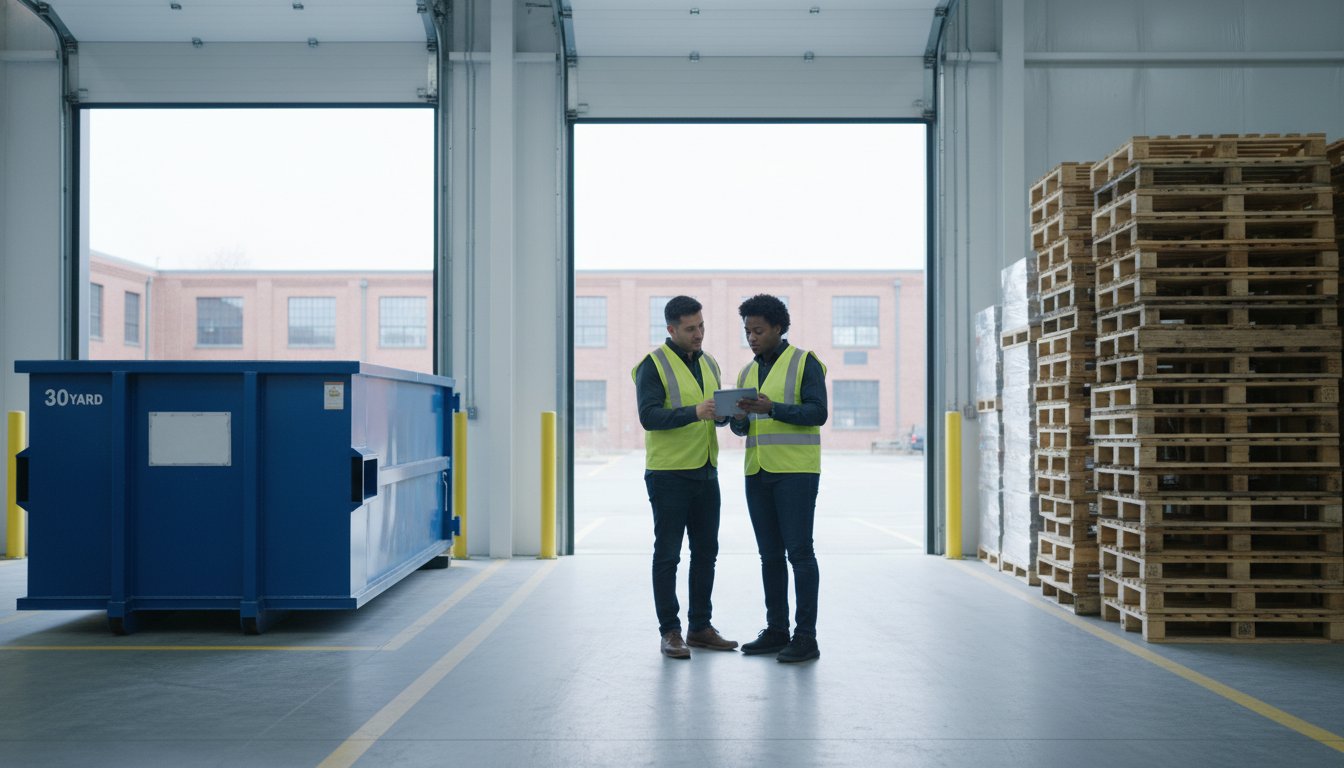
An overcrowded loading dock isn't just a mess; it's a logistical bottleneck that kills your facility's throughput. You know that when pallets, cardboard, and plastic wrap pile up, your team slows down and safety risks rise. Relying on inconsistent pickup schedules during peak seasons often leads to unexpected overage fees that gut your operational budget. It's frustrating to manage high-volume debris when your current provider can't keep pace with your output.
You can master your logistics by implementing a right-sized warehouse waste service and streamlined disposal schedules. This article explains how to achieve zero-friction waste removal using predictable flat-rate pricing. We will preview how to select the right 10, 20, 30, or 40 yard dumpsters to keep your docks clear and compliant with local regulations in New York, Illinois, and Massachusetts. Learn how to transition from a state of clutter to total operational resolution with minimal effort.
Key Takeaways
- Identify the difference between standard trash and a specialized warehouse waste service to prevent dock congestion.
- Select the ideal dumpster size, from 10 to 40 yards, based on your facility's weekly packaging and pallet throughput.
- Schedule timely swaps and plan for seasonal volume spikes in IL and MA to keep your loading docks clear.
- Review regional disposal laws in NY and IL to ensure your industrial waste remains compliant and safe.
- Use digital booking tools to streamline your waste logistics with reliable delivery and transparent scheduling.
What is a Specialized Warehouse Waste Service?
A specialized warehouse waste service is a logistics-focused solution designed for the specific demands of high-volume industrial and distribution facilities. It goes beyond simple trash removal. It focuses on maintaining operational uptime by ensuring that debris doesn't obstruct your loading docks or slow down your fulfillment teams. Standard commercial services often fail here because they lack the container variety and heavy-duty capacity required for large-scale operations. When you manage a warehouse, you aren't just throwing away trash; you're managing a flow of materials that must exit the building as efficiently as products enter it.
Think of this service as a tool for dock management. In high-density hubs like Queens, New York, or the industrial corridors of New Jersey, space is a premium. You can't afford to have waste sit idle. These facilities generate significant volumes of Industrial waste that require right-sized containers and punctual disposal to avoid logistical gridlock. This service provides the specialized handling necessary for bulk materials that standard residential or small-business haulers aren't equipped to touch.
The Anatomy of Warehouse Waste Streams
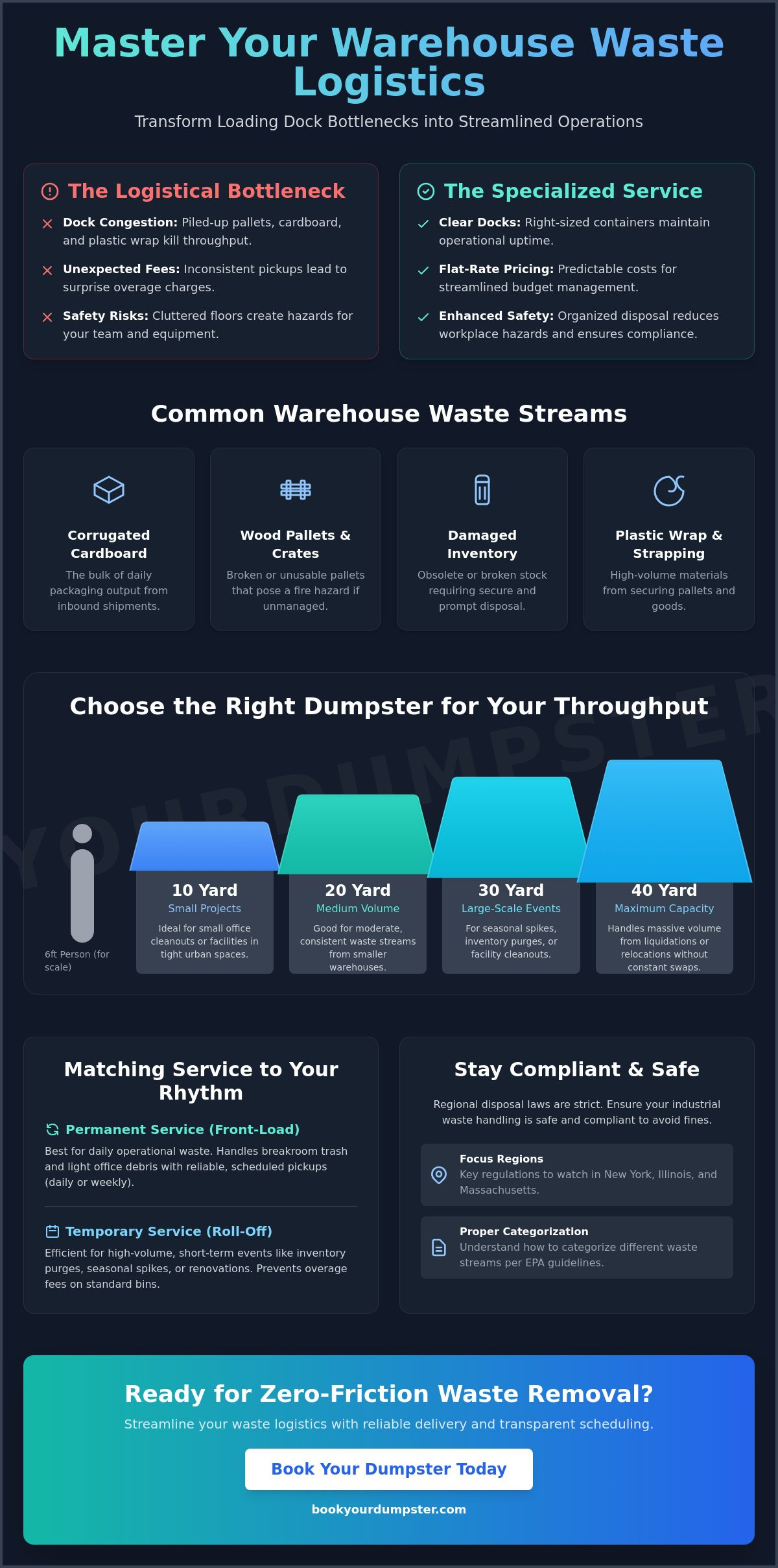
Your facility produces a specific mix of materials that require different handling strategies. Packaging materials like corrugated cardboard, pallet wrap, and strapping make up the bulk of daily output. You also have to manage damaged inventory that requires secure disposal to prevent brand liability. Finally, wood waste from broken pallets and crates can quickly become a fire hazard if left unmanaged. A dedicated warehouse waste service provides the heavy-duty infrastructure to move these materials out fast. It keeps your floor space dedicated to revenue-generating inventory rather than scrap.
Project-Based vs. Permanent Waste Solutions
Choosing the right equipment depends on your facility's rhythm. For daily operational trash, permanent front-load containers are the standard. They provide a reliable spot for general waste. However, when you face year-end inventory purges or seasonal spikes, temporary roll-off rentals are more efficient. You might choose a 30 yard or 40 yard dumpster for these high-volume events. Evaluate your monthly volume to decide which model fits best. You can book your specific equipment at Book Your Dumpster USA to ensure your facility remains clear and compliant. Matching the container to the project prevents overage fees and keeps your site organized.
Choosing the Right Dumpster Size for Your Facility
Selecting the right container is a strategic decision that affects your bottom line. A dumpster that's too small leads to overflow and safety hazards. One that's too large consumes valuable real estate on your loading dock. To optimize your warehouse waste service, you must match container volume to your weekly throughput of packaging materials and debris. This prevents logistical bottlenecks and ensures your facility remains operational during peak seasons. Precise sizing is the difference between a clear loading zone and a cluttered, dangerous workspace.
Weight capacity is just as critical as physical dimensions. Heavy materials like broken pallets or construction debris from a renovation can quickly exceed the weight limits of a standard bin. Exceeding these limits results in unexpected overage fees and potential pickup delays. Consult the EPA's Guide for Industrial Waste Management to understand how different waste streams should be categorized and handled. Strategic placement is the final step. Keep waste containers accessible to your team but out of primary forklift traffic lanes to maintain a safe work environment.
Roll-Off Dumpster Sizes for Large-Scale Cleanouts
Large-scale events like inventory liquidations or facility relocations require high-capacity solutions. The 10-yard dumpster is ideal for small warehouse offices or tight urban spaces where a larger bin won't fit. For comprehensive details on this size, see the 10 Yard Dumpster Rental: The Complete Buying Guide for 2026. When clearing out massive amounts of damaged stock or obsolete equipment, the 30-yard and 40-yard dumpsters are mandatory. These units handle the volume without requiring constant swaps, keeping your cleanup on schedule.
Front-Load Options for Daily Maintenance
For daily operational needs, front-load commercial waste pickup is the most efficient choice. These standard bins handle breakroom trash and light office waste. High-traffic facilities often require daily pickups to prevent odors and pests, while smaller distribution centers may find weekly service sufficient. In dense urban areas like New York and San Francisco, space-saving is a priority. Use smaller front-load bins tucked into designated alcoves to keep your perimeter clear. If you need to scale your capacity quickly for a temporary project, you can view available dumpster sizes online and schedule a delivery that fits your current needs. This proactive approach ensures your warehouse waste service scales alongside your business growth.
Optimizing Operations: Strategic Waste Management for Warehouses
Eliminate logistical gridlock by coordinating timely swaps of your containers. A full dumpster at a distribution center is more than an eyesore; it's a physical barrier that blocks incoming shipments and stalls fulfillment teams. In Illinois and Massachusetts, distribution hubs face intense pressure during Q4 spikes. Plan your warehouse waste service schedule in advance to handle the massive surge of e-commerce packaging. Maintaining clear waste zones isn't just about aesthetics. It directly impacts employee safety by removing trip hazards from high-traffic floor areas. Keep your docks moving by treating waste removal as a core component of your supply chain.
Maximize your operational budget by integrating recycling into your daily workflow. Separating corrugated cardboard and plastic wrap reduces the volume of general waste sent to landfills. This is especially critical in Massachusetts, where state law (310 CMR 19.017) bans the disposal of cardboard and metal containers in landfills. Effective management requires staying current with federal mandates. Review the EPA regulations for the warehousing sector to ensure your facility meets all environmental standards while optimizing its waste stream. In Illinois, monitor the progress of the Warehouse Pollution Reduction Act (HB5600) to prepare for potential new permitting requirements.
Handling Pallets and Bulky Debris
Break down wood waste and pallets before disposal to maximize your dumpster's physical capacity. Air pockets in a 30 yard or 40 yard dumpster waste money and lead to premature swaps. If your facility is undergoing a renovation, use dedicated roll-offs to separate construction debris from operational trash. For a deep dive into managing these materials, read The Ultimate Guide to Construction Debris Removal in 2026. This separation prevents contamination and helps you stay within specific weight limits for each container.
Dock Management and Container Placement
Ensure your site provides adequate clearance for roll-off truck delivery and pickup. A standard truck needs significant vertical and horizontal space to maneuver safely. If your facility is in Queens or San Francisco, check local permit requirements for dumpsters placed on public streets before scheduling delivery. Secure your containers at night to prevent illegal dumping by third parties. This protects your facility from unexpected overage fees and ensures your warehouse waste service remains predictable. Proper placement keeps your perimeter clear and your operations running without interruption.
Compliance and Safety: Industrial Waste Regulations
Adhering to local disposal laws is a non-negotiable part of facility management. In New Jersey and Illinois, regulatory oversight is increasing, and your warehouse waste service must align with state-specific mandates to avoid severe financial penalties. Illinois introduced the Warehouse Pollution Reduction Act (HB5600) in May 2026 to monitor emissions and waste impact more closely. If your facility generates hazardous materials, you cannot mix them with general debris. Non-compliance leads to environmental liability that can haunt your business for years. Segregate your waste streams at the source. Use clear labeling to ensure your team doesn't contaminate a 30 yard or 40 yard dumpster with restricted items.
The distinction between hazardous and non-hazardous waste is often a matter of legal definition rather than physical appearance. Industrial solvents, pressurized cans, and certain cleaning agents require specialized handling. Massachusetts law (310 CMR 19.017) is particularly strict, banning most electronics and cardboard from landfills. New York's Commercial Waste Zones (CWZ) program is also shifting how businesses manage their output, with specific transition periods rolling out through 2026. If you ignore these rules, you risk heavy fines and service interruptions. Implement a strict segregation policy today. It protects your brand and ensures your disposal costs remain predictable.
Prohibited Materials in Warehouse Bins
Standard dumpsters are not catch-all containers for every type of debris. Batteries, electronics, and hazardous chemicals require dedicated disposal routes because they leak toxic substances. In Illinois, a new Extended Producer Responsibility (EPR) program for batteries took effect in 2026, requiring specific recycling protocols for sellers and distributors. Tires and car parts are also excluded; these items damage hauling equipment and require specialized scrap services. Prohibited waste is any material that poses an environmental or safety risk and cannot be legally disposed of in a standard industrial dumpster.
Liability and Insurance Considerations
Hiring a licensed and insured provider is a critical step in risk management. It shields your business from liability if an accident occurs during delivery or pickup. Transparent pricing is equally important. It prevents "hidden fee" disputes that arise from poorly defined service terms. To understand the current market rates and avoid surprises, consult the Dumpster Rental Prices in New York, Illinois, and Massachusetts: 2026 Guide. Reliable documentation of your waste disposal is your best defense during a regulatory audit. Maintain clear records of every swap and pickup. If you're ready to secure a compliant disposal solution, book your warehouse dumpster today to ensure your facility meets all current safety standards.
Streamlined Solutions with Book Your Dumpster USA
Modernize your facility management with a digital-first approach to waste logistics. In 2026, you don't have time to waste on the phone negotiating with unreliable haulers. Book Your Dumpster USA provides a streamlined warehouse waste service that allows you to secure equipment in minutes. Our platform offers reliable delivery and strict punctuality across major industrial hubs in New York, New Jersey, Illinois, and Massachusetts. We eliminate the guesswork with transparent, flat-rate pricing for every commercial project and cleanout. Whether you need a compact 10-yard bin or a massive 40-yard roll-off container, our solutions scale to meet your facility's specific output. You get the equipment you need without the logistical stress of hidden fees or missed schedules.
Efficiency is the cornerstone of a high-functioning distribution center. When your waste removal is predictable, your team can focus on moving inventory rather than managing trash. We provide a range of options, including 10, 20, 30, and 40 yard dumpsters to handle everything from office debris to heavy industrial scrap. For daily operations, our front-load commercial waste pickup keeps your site clean and compliant with local regulations. By choosing a partner that understands the urgency of warehouse operations, you ensure that your loading docks remain clear and your throughput stays high. Control your costs and your schedule with a service built for the modern industrial landscape.
Why Logistics Pros Choose Us
Efficiency-focused service respects your facility's operating hours and prevents dock congestion. We understand the high stakes of fulfillment, so we ensure that swaps and deliveries happen exactly when planned. Our team possesses deep local expertise, allowing us to navigate the unique urban delivery challenges found in San Francisco and Queens. Use the Book Your Dumpster USA online portal to manage your entire waste inventory from a single, intuitive dashboard. This digital convenience removes the friction from traditional waste management.
Next Steps for Your Facility
Start by assessing your current waste volume to determine if your current containers are right-sized. If you're seeing frequent overflows or empty bins, it's time for a change. Schedule your first delivery to coincide with an inventory purge or a seasonal volume spike. This proactive approach prevents logistical gridlock before it starts. Contact our expert team today to develop a customized commercial waste plan that fits your facility's monthly volume and budget. Take control of your site's cleanliness and safety by booking your next warehouse waste service online today.
Master Your Facility’s Waste Logistics Today
You've learned how right-sized containers and strategic scheduling prevent dock congestion and keep your team safe. You also understand the importance of following local disposal regulations in New York, Illinois, and Massachusetts to avoid environmental liability. Managing your warehouse waste service effectively means choosing a partner that provides transparent pricing and reliable timing for every swap. When you treat waste removal as a core part of your supply chain, you eliminate the bottlenecks that slow down your fulfillment process.
We serve major industrial hubs including NY, NJ, IL, MA, and SF with flat-rate pricing that eliminates hidden fees. With 10, 20, 30, and 40-yard sizes available, you can scale your disposal to match any inventory purge or seasonal peak. Don't let debris stall your operations or clutter your loading zones. Order your warehouse dumpster online today to clear your floor space and restore operational efficiency. Take control of your facility's output and keep your supply chain moving without interruption.
Frequently Asked Questions
What is the best dumpster size for a warehouse inventory purge?
The 30-yard and 40-yard dumpsters are the most effective sizes for large-scale inventory purges. These high-capacity containers handle massive volumes of damaged stock, obsolete packaging, and bulky debris without requiring frequent swaps. Choosing a larger unit ensures your loading dock remains clear and your cleanup project stays on its tight logistical schedule.
Can I dispose of wooden pallets in a standard roll-off dumpster?
You can dispose of wooden pallets in any of our roll-off containers. It's best to break them down or stack them as flat as possible to maximize the physical space inside the bin. This prevents air pockets that lead to premature filling. Managing your wood waste this way is a core part of a professional warehouse waste service.
How often should a warehouse schedule waste pickups?
Schedule your pickups based on your facility's weekly material throughput. High-volume distribution centers in Illinois or Massachusetts often require daily front-load service to prevent overflow and safety hazards. For temporary projects, you can schedule swaps as your 20, 30, or 40 yard container reaches capacity to keep your operations moving.
Are there hidden fees for heavy warehouse debris like metal or wood?
We provide flat-rate pricing that includes a specific weight limit for your debris. You won't encounter hidden fees as long as the load stays within the tonnage allotted for your specific dumpster size. If you're disposing of exceptionally heavy materials, check your rental agreement's weight limits to avoid standard overage charges.
Do I need a permit for a warehouse dumpster in New York or San Francisco?
Permits are only necessary if the dumpster is placed on public property, such as a city street or sidewalk. Most warehouses use private loading docks or parking lots where permits aren't required. If your facility in Queens or San Francisco requires street placement, you must secure a local permit before the delivery truck arrives.
What happens if my warehouse waste contains prohibited hazardous materials?
Prohibited materials like industrial chemicals or batteries will result in service rejections and environmental fines. If these items are discovered during pickup, the hauler may refuse to transport the container. Always segregate your industrial waste streams at the source to ensure your warehouse waste service remains compliant with state safety laws.
How do I book a same-day dumpster delivery for an emergency cleanout?
Check the real-time availability through our online portal to find the earliest delivery window in your specific area. While we prioritize punctuality across NY, IL, and MA, delivery times depend on local inventory and current truck routes. Book your container as early as possible to ensure your emergency project stays on track without delays.
Can a warehouse waste service help with recycling packaging materials?
Using dedicated containers for cardboard and plastic wrap allows you to segregate recyclables from general trash. This reduces the volume of waste sent to landfills and helps you comply with state-specific disposal bans. Implementing a 10 or 20 yard dumpster for recycling can lower your total disposal costs while keeping your facility organized.


