
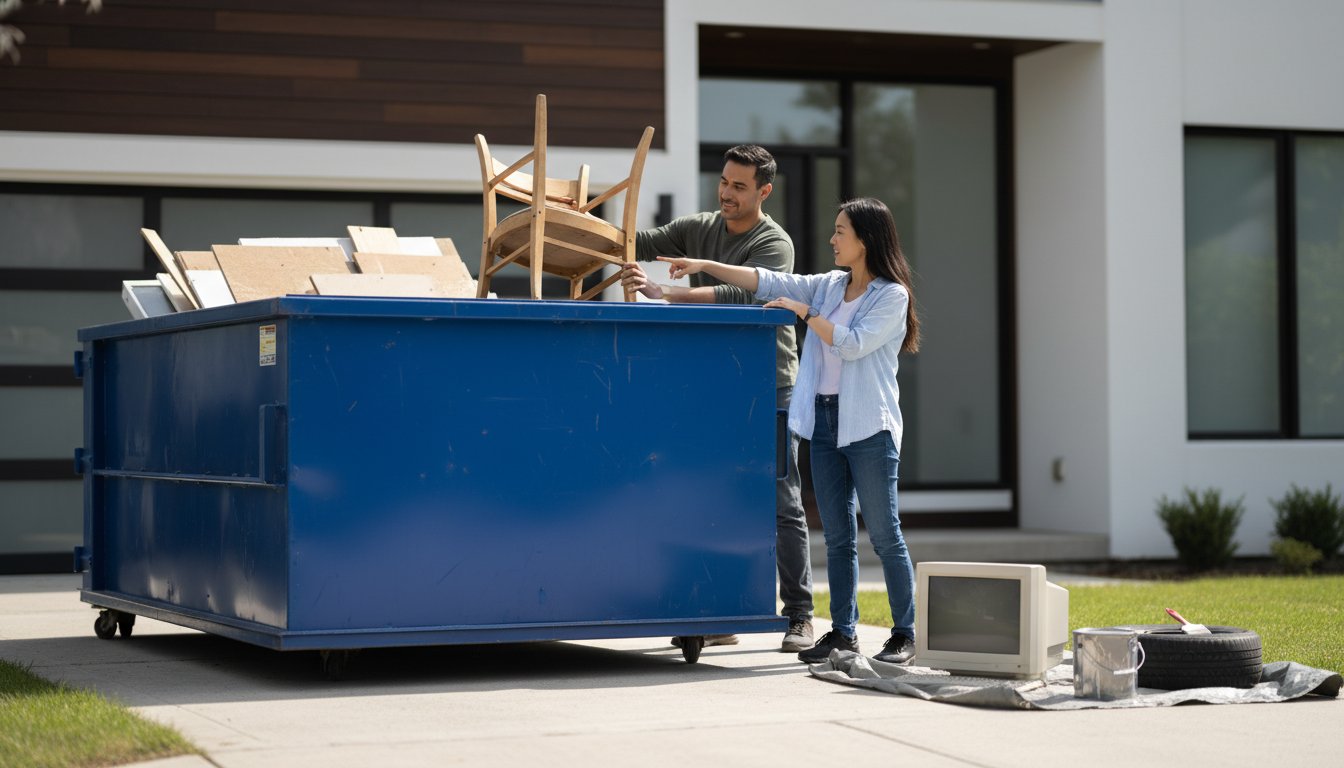
Did you know that improper e-waste disposal in California can now result in penalties reaching $70,000 per violation per day? It's a staggering figure that highlights why understanding exactly what can you throw in a dumpster is no longer just a matter of convenience; it's a financial necessity. Whether you're a homeowner clearing out a garage or a contractor managing a major job site, the rules for 2026 have become more stringent. Between new EPA guidelines for pharmaceutical waste and updated right-to-repair laws in states like Washington, the toss it and forget it mentality will cost you.
You're likely worried about hidden contamination fees or wasting expensive bin space because of poor packing. We understand that managing debris is the messiest part of any project, and you want to get it right the first time without the logistical headache. This guide provides the professional clarity you need to stay compliant and keep your budget intact. We'll give you a definitive "Yes/No" list for common materials, explain the 2026 legal requirements for electronics, and show you how to maximize every cubic yard of your 10 to 40 yard dumpster.
Key Takeaways
- Identify which common household and construction materials are safe for standard disposal to keep your project on schedule.
- Learn exactly what can you throw in a dumpster and which prohibited items, such as hazardous chemicals and e-waste, lead to heavy fines.
- Navigate the specialized rules for mattresses and tires to avoid unexpected recycling surcharges at the landfill.
- Protect your project budget by understanding how to prevent contamination fees and dry-run penalties.
- Select the most efficient container size for your needs, ranging from a 10 yard dumpster for heavy debris to a 30 yard bin for renovations.
The Green Light List: Common Items You Can Always Throw in a Dumpster
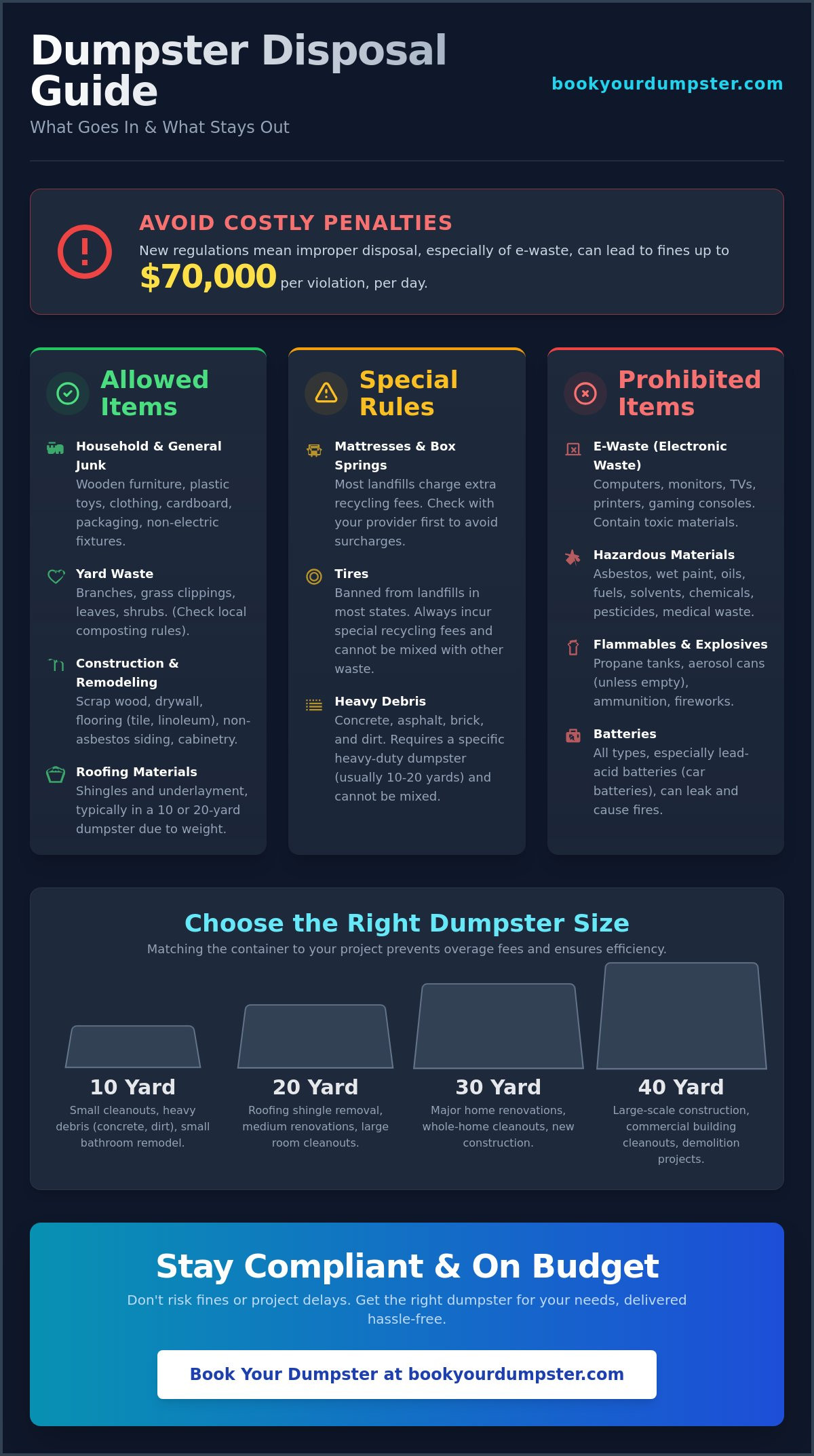
Start your project with a clear understanding of what fits in your bin. Most non-hazardous materials are perfectly acceptable for standard disposal. When you ask yourself what can you throw in a dumpster, think of it as a high-capacity tool designed for bulk volume. Since the early days and the history of the dumpster as a standardized waste solution, these containers have been the primary choice for managing massive cleanups. You can fill your unit with general household items like wooden furniture, plastic toys, and bags of clothing. Yard waste, including branches, grass clippings, and leaves, is usually permitted. However, always verify local composting mandates; some municipalities require separate processing for organic matter to reduce landfill impact.
Roofing projects also fall into the green light category. Shingles and underlayment are dense and heavy. Because of this weight, they typically require a 10 yard dumpster or a 20 yard dumpster to stay within legal hauling limits. Always spread the weight evenly across the floor of the bin to avoid pick-up delays or safety issues during transport. If you're stripping a large roof, plan for multiple swaps to keep the project moving without exceeding weight capacities.
Residential Cleanout Essentials
Empty your attic, garage, or basement with confidence. Standard residential cleanouts generate a lot of cardboard, paper, and general packaging materials that are safe for your bin. You can also dispose of old cabinetry and non-electric kitchen fixtures like stainless steel sinks or metal faucets. If it's a solid item that doesn't contain liquids, batteries, or hazardous chemicals, it likely belongs on the green light list. Focus on clearing out large, bulky items like old wooden chairs or desks first. This strategy allows you to fill the gaps with smaller debris later, ensuring you get the most value out of your rental.
Construction and Remodeling Debris
Construction sites generate specific debris that standard bins handle daily. This includes scrap wood, studs, and plywood from framing or demolition. You can also toss in tile, linoleum, and non-asbestos siding materials. For heavier materials like concrete, asphalt, and brick, you must use specialized heavy-load containers. These materials are significantly denser than standard trash. Consult with your provider before loading them into a larger 30 yard or 40 yard bin, as these sizes often have strict weight caps for heavy materials. Understanding exactly what can you throw in a dumpster helps you avoid costly mistakes on the job site. Miscalculating weight limits often leads to dry-run fees. Avoid these costs by matching the material to the right container size at BookYourDumpster.com. Staying compliant ensures your job site remains organized and your budget stays on track.
The Prohibited List: What You Cannot Toss and the Electronics Dilemma
Understanding what can you throw in a dumpster is only half the battle; knowing what to keep out is where you protect your budget. Landfills and hauling services enforce strict bans on materials that threaten environmental safety or worker health. If you ignore these rules, you face significant consequences of improper disposal, including immediate dry-run fees and long-term legal liability. When deciding what can you throw in a dumpster, remember that hazardous substances are always a hard "no." This includes asbestos, medical waste, and biohazards that require specialized, permitted handling.
Never toss flammable or explosive items into a standard bin. Propane tanks, even when perceived as empty, and aerosol cans pose a combustion risk during the compaction process. For commercial operators, the EPA has implemented new guidelines for Intermediate Bulk Containers (IBCs) with full enforcement beginning in October 2026. These rules mandate more stringent documentation and disposal requirements for bulk chemical storage. Proactive compliance is the only way to avoid the steep penalties associated with hazardous waste mismanagement.
How to Dispose of Electronics Legally
Electronic waste, or e-waste, comprises discarded devices containing toxic components like lead and mercury, which the EPA regulates under the Resource Conservation and Recovery Act (RCRA) to mandate specific recovery and disposal methods. You cannot put computers, monitors, TVs, or gaming consoles in your rental bin. In California, improper e-waste disposal can now result in penalties reaching $70,000 per violation per day. Additionally, as of 2026, California has expanded its recycling program to include a 1.5% fee on battery-embedded products at the point of sale to fund these recovery efforts.
Research your local municipal calendar for e-waste recycling events. Many cities host quarterly drop-off days where residents can dispose of old tech for free. You should also utilize manufacturer take-back programs. Major brands now offer mail-in or in-store recycling for old laptops and phones as part of the growing right-to-repair movement. Avoid these complications by renting a compliant container for your safe debris and handling the rest through specialized channels.
Chemical and Flammable Restrictions
Chemical disposal is a major source of project delays. Wet paint is strictly prohibited because it leaks and stains landfill equipment. However, if you dry the paint using sawdust or kitty litter until it is solid, some local rules may allow it. Always confirm this with your provider before loading. Automotive fluids like oil, gas, and antifreeze are never permitted and must be taken to a designated hazardous waste facility.
Handle lithium-ion batteries with extreme caution. These are found in everything from cordless drills to wireless earbuds. They are a leading cause of dumpster fires when crushed. Because of new 2026 regulations, many states now require these to be recycled through specific "covered battery-embedded product" programs rather than standard trash streams. Keep your job site safe by separating these items immediately upon discovery.
The "Yellow Light" List: Items with Special Rules and Fees
Some items occupy a middle ground between the "green light" materials and the prohibited hazardous waste mentioned previously. These "yellow light" items are typically allowed but often trigger additional surcharges or require specific preparation to remain compliant. Landfills charge extra for these materials because they are difficult to process, require manual labor to dismantle, or present unique environmental risks. When planning what can you throw in a dumpster, factor these potential fees into your project budget before you begin loading.
Tires and rubber products are prime examples of yellow light items. Most landfills refuse tires because they trap methane gas and have a tendency to "float" to the surface of a landfill cell over time, which can damage the protective liner. Heavy debris like dirt, rocks, and concrete also require caution. While these are safe materials, they are incredibly dense. Loading a 30 yard or 40 yard bin with concrete will quickly exceed the legal weight limit for the hauling truck. This results in an overweight fee or a required "dig-out" where you must manually remove the excess. Stick to a 10 yard dumpster for these heavy materials to keep the load manageable and within legal transport limits.
Managing Bulky Items
Mattresses and box springs are a logistical nightmare for waste processors because they don't compress easily. In states like New York and Illinois, strict recycling mandates require these items to be handled separately from general trash. Expect a per-unit fee from your provider for every mattress tossed into the bin. To maximize your space and potentially avoid bulk fees, disassemble large furniture before loading. Removing legs from tables or breaking down bed frames ensures you don't pay for "air space" inside the container. This simple step keeps your project organized and prevents overage charges.
Appliances and White Goods
Appliances containing refrigerants, such as refrigerators and air conditioners, require professional handling before disposal. You must obtain a Freon removal certificate from a licensed technician to prove the cooling agents were safely captured. Without this documentation, most haulers will leave the appliance on your curb to avoid environmental penalties. Refer to the EPA guidelines on hazardous waste to understand why these chemicals cannot enter standard waste streams. Standard "white goods" like washing machines and dryers are simpler to handle. These are often treated as scrap metal. If the appliance is primarily metal and lacks hazardous components, it is a safe addition to your cleanup. Knowing exactly what can you throw in a dumpster prevents the stress of last-minute rejections during pick-up.
Consequences of Contamination: Why Compliance Matters
Compliance is a financial strategy. When you ignore the guidelines for what can you throw in a dumpster, you invite immediate project delays and unexpected costs. Haulers are the first line of defense at the landfill scale. If a driver spots prohibited items like tires or wet paint during pick-up, they will refuse the load. This triggers a "Dry Run" fee, meaning you pay for the driver's time and fuel even though your bin remains on-site. Understanding what can you throw in a dumpster is the only way to ensure a seamless transition from a full bin to a clean site.
The environmental impact of a single contaminated load is significant. One gallon of old motor oil or a handful of lithium-ion batteries can contaminate tons of otherwise recyclable construction debris. When this happens at the transfer station, the entire load is reclassified as hazardous waste. The facility then passes these massive processing surcharges directly to you. In 2026, landfills typically charge overweight fees ranging from $40 to $200 per extra ton. These costs escalate quickly if you mismanage the weight or type of debris in your container.
Understanding Surcharges and Fines
Contamination fees are calculated based on the additional labor required to sort your load. If a transfer station must manually remove prohibited electronics or hazardous chemicals, they charge a premium for that specialized handling. Beyond simple surcharges, you face real legal liability. Disposing of hazardous materials in a standard roll-off violates state and federal environmental laws. In extreme cases, local authorities in hubs like New Jersey or New York may issue citations that far exceed the original cost of your rental. Secure your project by following the rules from day one.
Protecting Your Project Budget
Maintaining control over your bin is essential for cost management. On busy construction sites, clearly communicate disposal rules to all subcontractors. A single bucket of joint compound or a discarded laptop from a crew member can ruin your compliance. For residential projects, use a heavy-duty tarp to cover your bin overnight. This prevents "illegal dumping" from neighbors who might see your open container as an opportunity to discard their own prohibited items. Review our guide on Understanding Dumpster Rental Prices to see how regional regulations in New York, Illinois, and Massachusetts impact your total bill. To avoid these logistical headaches and keep your project on track, schedule your next roll-off with a provider that prioritizes transparent communication.
Booking the Right Size for Your Debris
Selecting the correct container size is the final step in mastering your disposal strategy. If you choose a bin that is too small, you'll face the cost of a second rental. If you choose one that is too large, you're paying for unused space. When determining what can you throw in a dumpster for your specific project, you must balance the physical volume of the junk with its total weight. Most residential and commercial projects rely on four standardized sizes, each designed to handle specific types of debris without exceeding legal hauling limits.
The 10 yard dumpster is the primary choice for heavy materials like concrete, dirt, or brick. While it's the smallest option, its compact size prevents you from overfilling it with dense materials that would make a larger bin impossible to lift. For standard home renovations, the 20 yard and 30 yard containers are the industry workhorses. These bins offer enough vertical space for bulky furniture and construction materials like drywall or flooring. Large-scale commercial cleanouts or massive demolition jobs require the 40 yard dumpster, which provides the maximum volume allowed for a single haul. Remember that a bigger bin doesn't always permit more weight; landfills have strict caps regardless of the container's physical dimensions.
Matching Size to Project Type
Use the "pickup truck load" method to estimate your needs accurately. A 10 yard bin holds roughly four to five level pickup truck beds worth of debris. If you're managing a small garage cleanout or a bathroom tear-out, this is usually sufficient. For more detailed specs, consult our 10 Yard Dumpster Rental Guide. If you're stripping a roof or clearing out an entire floor of a house, step up to a 20 yard or 30 yard unit. Always prioritize the 10 yard bin for dirt and concrete projects to stay compliant with safety regulations. Choosing the right size ensures you stay within the weight limits discussed in previous sections and avoids the logistical stress of a rejected pick-up.
The Book Your Dumpster USA Advantage
We've modernized the waste management process through a digital-first approach that respects your time. Our streamlined online booking system serves major hubs across New York, New Jersey, and Illinois, providing immediate access to the inventory you need. We prioritize pricing integrity; the rate you see is the rate you pay for compliant loads. There are no hidden surcharges or opaque fees when you follow the disposal guidelines outlined in this guide. We act as your dependable partner, moving you from a state of clutter to a state of resolution with minimal friction. Don't let your project stall due to poor planning. Rent your dumpster online today and experience a no-nonsense approach to professional waste management.
Master Your Cleanout Strategy Today
Successful waste management depends on preparation. You now know that while most construction debris and household junk are safe for disposal, specialized items like e-waste and appliances require specific handling to avoid steep penalties. Understanding exactly what can you throw in a dumpster is the difference between a project that finishes under budget and one plagued by hidden surcharges. By matching your debris volume to the right 10, 20, 30, or 40 yard bin, you eliminate the risk of overweight fees and dry-run delays.
We provide the transparent, upfront pricing you need to maintain total control over your project logistics. Serving NY, NJ, IL, MA, and SF, we ensure your waste removal is the easiest part of your job. Book your roll-off dumpster online in seconds and get back to the work that matters. You have the rules; now get the bin and finish your project with total confidence.
Frequently Asked Questions
Can I throw a TV in a dumpster in New York?
No, you cannot throw a TV in a dumpster in New York. State law prohibits the disposal of electronic waste in landfills. You must take televisions to a designated e-waste collection site or wait for a community recycling event. Violating these rules can result in fines for the property owner. Always check the New York Department of Environmental Conservation website for current drop-off locations near you.
What happens if I accidentally put a prohibited item in the dumpster?
You will likely face a contamination fee or a dry-run charge if a prohibited item is discovered. If the driver identifies the item during pick-up, they will leave the bin on-site until you remove it. If it reaches the transfer station, the facility will charge a surcharge for sorting and proper disposal. These costs are passed directly to you, so verify your load before scheduling a haul.
Can I put a mattress in a roll-off dumpster?
You can typically put a mattress in a roll-off dumpster, but expect an additional per-item fee. Landfills charge extra because mattresses are difficult to compact and require specialized processing. In some regions, recycling mandates require mattresses to be handled separately from general trash. Always notify your provider in advance if you plan to discard bedding to ensure you have the correct pricing for what can you throw in a dumpster.
Are there weight limits for household debris in a 20-yard dumpster?
Yes, every 20-yard dumpster has a specific weight limit, typically ranging from two to four tons for household debris. Exceeding this limit results in overweight fees, which landfills charge by the ton. Household junk like furniture and clothing is lighter than construction material, but heavy books or files add up quickly. Distribute the weight evenly and avoid filling the bin past the top rail to ensure a safe pick-up.
How do I dispose of old paint cans legally?
You can only dispose of paint cans in a dumpster if the paint is completely dried. Use sawdust, sand, or a commercial paint hardener to solidify the liquid before tossing the can. If the paint is still wet, it is considered hazardous waste and must be taken to a local Household Hazardous Waste (HHW) facility. Never pour wet paint into the bin, as it leaks and causes expensive equipment damage.
Can I throw away old tires in a rented dumpster?
No, you generally cannot throw old tires in a rented dumpster. Tires trap gases and damage landfill liners, so most facilities reject them or charge a significant premium for recycling. If you must dispose of tires, contact a local auto shop or tire retailer, as many participate in state-mandated recycling programs for a small fee. Keeping tires out of your bin prevents immediate load rejection and extra hauling costs.
Is it legal to put electronics like computers in the trash in Illinois?
No, it is illegal to put computers and other electronics in the trash in Illinois under the Electronic Products Recycling and Reuse Act. This law mandates that certain electronic items be recycled rather than landfilled. To remain compliant, locate a registered e-waste collector in your county. Understanding these regional restrictions is a key part of knowing what can you throw in a dumpster without risking state-level legal penalties.
Can I put a refrigerator in a dumpster if I remove the door?
No, removing the door is a safety measure, but it does not solve the disposal problem. Refrigerators contain Freon and other refrigerants that must be professionally drained and certified before the unit can enter a landfill. You must provide a Freon removal certificate to your hauler before they will accept the appliance. Without this documentation, the refrigerator will be left at your site to avoid environmental violations and heavy fines.


