
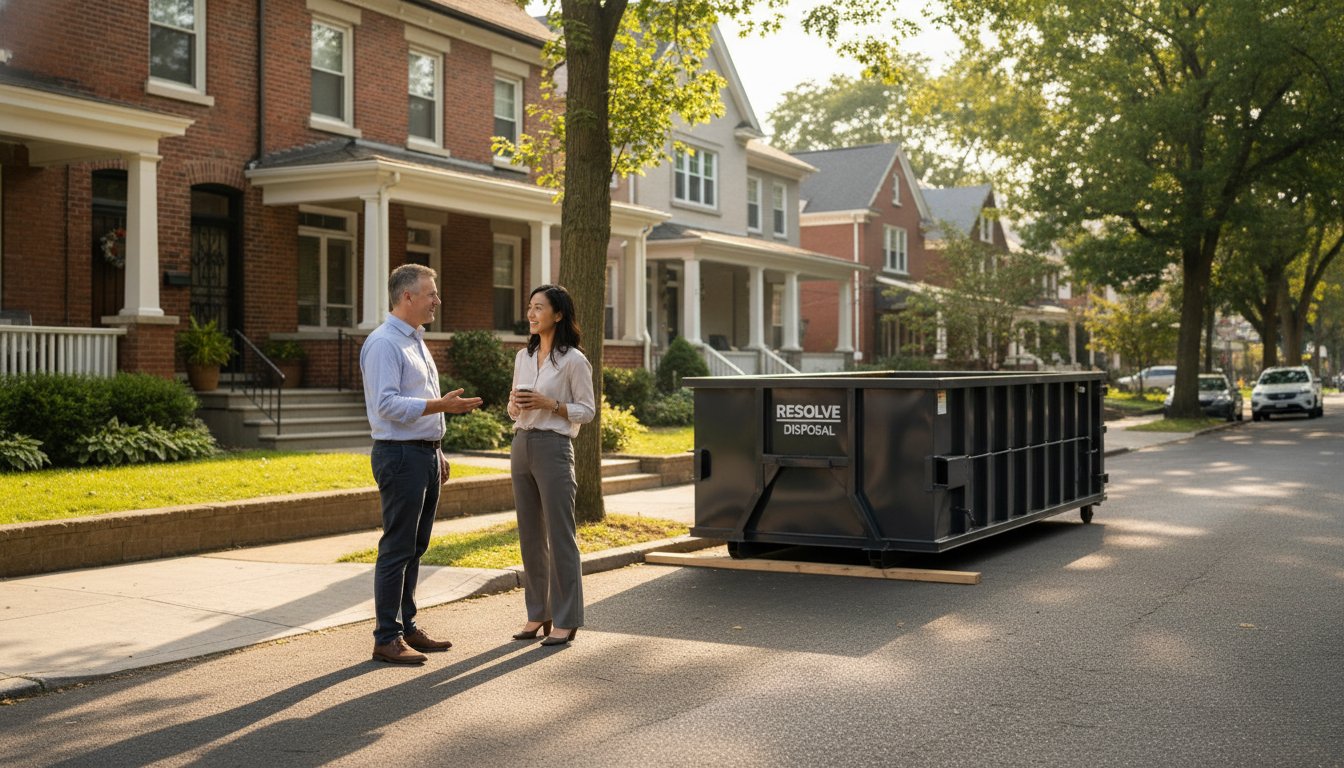
Imagine you're finally making progress on your home renovation when a knock at the door brings your momentum to a halt. Your neighbor is frustrated, claiming your rental is an eyesore or blocking their view. Knowing what to do if a neighbor complains about my dumpster can be the difference between a minor conversation and a costly project delay. It's a stressful situation that puts your timeline and your local reputation at risk. Most homeowners just want to get the job done, but a single complaint can lead to city inspections or HOA fines if you aren't prepared.
You likely feel that your project is already complicated enough without adding interpersonal tension to the mix. It's frustrating when essential tools like 10 yard or 20 yard dumpsters become sources of neighborhood conflict. This guide will show you how to handle these complaints professionally while staying firmly within your legal rights. You'll learn how to verify your permits, address legitimate concerns without backing down, and set up your next rental to avoid these headaches entirely. Let's look at how to de-escalate the situation and keep your project on track.
Key Takeaways
- Learn how to de-escalate tension by verifying your placement against local permits and rental agreements immediately.
- Discover exactly what to do if a neighbor complains about my dumpster, specifically regarding city right-of-way and sidewalk encroachment rules.
- Implement simple etiquette fixes like using protective boards and tarps to address concerns about driveway damage and debris visibility.
- Prevent future logistical headaches by selecting a rental provider that offers professional placement guidance during the booking process.
Why Neighbors Complain: Identifying Common Dumpster Placement Issues
Understanding the logic behind a grievance is the first step in deciding what to do if a neighbor complains about my dumpster. Most disputes stem from legitimate safety or accessibility concerns rather than personal grudges. When a bin arrives, it changes the local landscape immediately. If that change creates a hazard or an eyesore, neighbors will react. Knowing what to do if a neighbor complains about my dumpster starts with identifying whether the placement violates local codes or simply irritates a resident's sense of order.
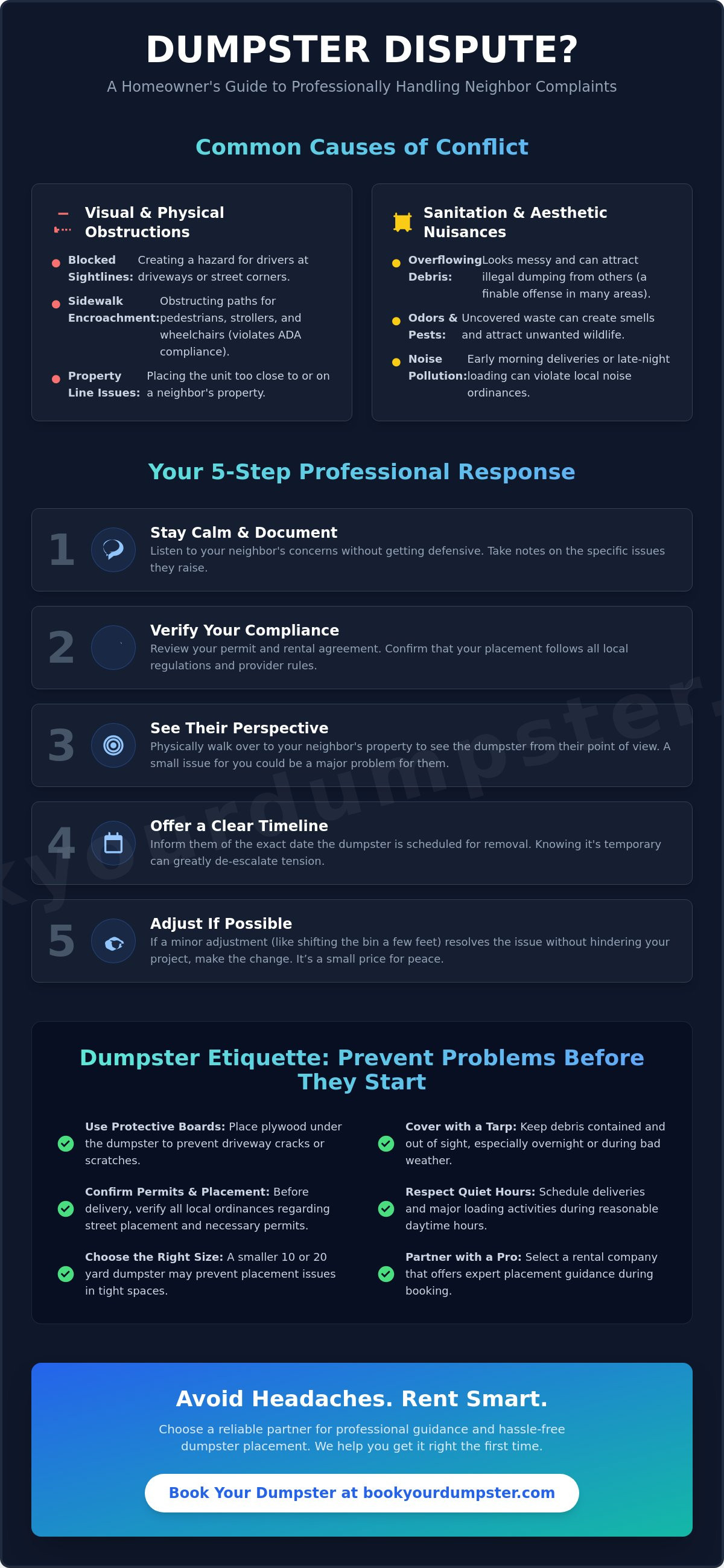
Visual and Physical Obstructions
Large units like a 30 yard dumpster or a 40 yard dumpster take up significant space on residential streets. In high-density areas like Chicago or the Queens borough of New York, narrow streets make every inch of curb space critical. Blocking sightlines at driveways or street corners is a major safety concern. Drivers need clear visibility to pull out into traffic safely. If your rental obstructs that view, you're creating a liability. Urban areas often enforce a three-foot rule regarding building lines. Encroaching on this space or blocking sidewalk access triggers 311 reports quickly. Maintain ADA compliance at all times. Pedestrians, especially those with limited mobility or strollers, must have a clear, unobstructed path on the sidewalk.
Sanitation and Aesthetic Concerns
Aesthetics often mask deeper legal concerns regarding property rights. Neighbors have a right to the "quiet enjoyment" of their property. This relates to the legal concept of a nuisance, which covers issues like persistent odors, dust, and pests. Construction waste can be messy; overflowing debris is the top reason for neighbor-initiated inspections. It looks unstable and frequently attracts illegal dumping from passersby. In some regions, like Greenville County, SC, placing garbage in another person's private dumpster can result in fines between $50 and $150. If others start tossing their trash into your bin, it makes your site look neglected and may lead to a misdemeanor charge. Manage dust and runoff from heavy materials. Use tarps to keep debris contained and out of sight during off-hours.
Logistics also play a role in neighborhood tension. Noise pollution during early morning deliveries or late-night loading sessions can disrupt an entire block. Respect local noise ordinances to keep the peace. If you're planning a large cleanout, visit learn more to select the right size and schedule a delivery time that minimizes disruption to your neighbors' daily routines. Choosing a smaller 10 yard or 20 yard dumpster for tighter spaces can often prevent these physical and visual complaints before they start.
Immediate Actions: How to Respond to a Neighbor's Complaint Professionally
When a neighbor approaches you with a grievance, your immediate reaction determines whether the issue escalates or dissolves. Knowing what to do if a neighbor complains about my dumpster involves a mix of diplomatic communication and rigorous documentation. Don't ignore the knock on the door; ignoring complaints often leads to formal city inspections and fines that could have been avoided with a short conversation. Follow these five steps to regain control of the situation:
- Step 1: Stay calm and document. Listen to the neighbor without getting defensive. Record the specific nature of their complaint. Is it a safety issue, like a blocked sightline, or a purely aesthetic concern?
- Step 2: Verify your compliance. Immediately check your original permit or rental agreement. If you've followed the guidelines for your roll off dumpster rental, you'll have the confidence to explain your position clearly.
- Step 3: Perform a site walk. Stand where your neighbor stands. If you find yourself wondering what to do if a neighbor complains about my dumpster, start by seeing the unit from their perspective. A small adjustment you didn't notice might be a massive daily headache for them.
- Step 4: Offer a clear timeline. Most people can tolerate a mess if they know it's temporary. Provide the exact date the dumpster will be removed.
- Step 5: Adjust if possible. If shifting the bin three feet solves the problem and doesn't interfere with your project, do it. It's a small price to pay for neighborhood peace.
The Power of Direct Communication
A five-minute conversation can prevent a week-long city permit dispute. When you speak with your neighbor, provide your direct contact information. Tell them to call you first if they have further concerns instead of calling the authorities. Explain the scope of your project. When people understand that the mess is part of a necessary home improvement, they're more likely to offer grace. If you need to move your project along faster to minimize neighborhood friction, you can schedule a prompt pickup online to clear the site as soon as you're finished.
Documenting Your Compliance
Protect yourself by gathering evidence of your proper placement. Take clear photos of the dumpster's position relative to property lines and sidewalks. Keep a physical copy of your permit on-site at all times. This is especially important in cities with strict enforcement, as an on-site permit often stops an inspection before it starts. Record the exact dates of delivery and your scheduled pickup. Demonstrating that you're adhering to a standard 7 to 14 day rental period proves the situation is temporary and legally compliant.
Navigating Local Regulations: Permits, Sidewalks, and Property Lines
Legal compliance is your best defense against neighborhood disputes. Many homeowners assume their property rights extend all the way to the street curb. In reality, the "right-of-way" usually includes the first several feet of what looks like your lawn or driveway apron. This area is city property. If your bin sits in this zone without the proper paperwork, you need to know what to do if a neighbor complains about my dumpster before the city gets involved. Local authorities prioritize public access over private project convenience every time.
Street permit requirements are mandatory in major hubs like New York, San Francisco, and Boston. NYC requires a specific permit for any container placed on the street. San Francisco mandates "Encroachment Permits" through their Public Works department. Boston uses "Street Occupancy Permits" to track every unit on the pavement. If you're in an area governed by a Homeowners Association (HOA), remember that their rules often take priority over city ordinances in a private dispute. While the city might allow street placement, your HOA bylaws might forbid it entirely. Check your "Covenants, Conditions, and Restrictions" (CC&Rs) before delivery to avoid daily fines that can exceed the cost of the rental itself.
Permit Boundaries and Street Usage
An encroachment permit is a temporary license to use public space. It does not grant you permanent rights to block traffic or parking. Placement rules vary wildly by geography. For example, Queens, NY, enforces strict rules about keeping containers within three feet of the building line to maintain sidewalk flow. In contrast, suburban New Jersey townships often allow street placement for 48 hours without a permit, but require one for any "overnight" stay. Always verify your specific municipal code. If you're unsure about your local limits, consult with a professional rental partner who understands the permit landscape in your specific zip code.
The Role of 311 and Local Code Enforcement
City inspectors generally operate on a complaint-driven basis. When a neighbor calls 311, the city generates a work order for a code enforcement officer. These officers prioritize safety violations. Blocking a fire hydrant, obstructing a handicap access ramp, or placing a bin too close to a stop sign are high-priority targets. Fines for these violations often range from $250 to over $1,000 depending on the city's fee schedule. If an inspector finds an unpermitted dumpster, they can issue a "stop-work" order on your entire renovation project. Part of knowing what to do if a neighbor complains about my dumpster is identifying these safety hazards immediately and moving the unit before the inspector arrives on-site.
Dumpster Etiquette: Best Practices for Stress-Free Debris Removal
Proactive etiquette is the most effective way to prevent neighborhood friction. While legal permits give you the right to place a bin, property etiquette ensures you don't alienate the people living next door. Knowing what to do if a neighbor complains about my dumpster is important, but preventing the complaint through professional site management is even better. Adopting a few simple habits shows your neighbors that you respect their space and the shared environment of the street.
Start by protecting the placement surface. Always use street-saving boards or plywood under the rollers to prevent driveway cracking or asphalt scarring. This small step demonstrates a high level of care for the property. Cover your dumpster with a heavy-duty tarp every night. This prevents odors from escaping, keeps rain from adding weight to the load, and discourages unauthorized people from using your bin for their own trash. Timing is also critical. Schedule your delivery and pickup for mid-morning, ideally between 9:00 AM and 10:00 AM. This avoids waking the neighborhood with the loud hydraulics of a delivery truck during the early morning hours.
Optimizing Your Placement
Follow the "Driveway First" rule whenever possible. Off-street placement is always better for neighbor relations because it keeps the public right-of-way clear. If you must use the driveway, try to maintain a five-foot clearance from your neighbor's property line. This prevents the bin from feeling like an overwhelming wall when they pull out of their own garage. Ensure the delivery truck has a clear, wide path for the drop-off. If the driver has to maneuver over a curb or lawn, you risk permanent landscaping damage that will certainly trigger a complaint. For smaller residential cleanouts, choosing a compact 10 yard dumpster can significantly reduce the physical footprint on your property.
Managing Your Waste Load
An overflowing dumpster is a major legal liability and a magnet for city inspectors. Follow the "Level Full" rule strictly. Debris should never extend past the top rim of the container. If items are sticking out, they can catch the wind or fall out during transport, creating a safety hazard. Proper construction debris removal involves sorting materials to reduce bulk and height. Break down large boxes and place heavy items at the bottom to keep the load stable. If you're working with dusty materials like drywall or concrete, lightly mist the load with water or keep it tarped to prevent dust from blowing into neighboring yards. If you're already searching for what to do if a neighbor complains about my dumpster, these etiquette steps can often turn a hostile situation into a manageable one.
Ready to start your project with professional support? Book your next dumpster online and get expert advice on the best placement for your specific site.
Choosing a Reliable Rental Partner to Avoid Logistical Headaches
Your choice of a rental company is your first line of defense against neighborhood conflict. A professional partner provides more than just a steel box; they offer logistical expertise that prevents disputes before they start. If you're already worried about what to do if a neighbor complains about my dumpster, start by selecting a provider that understands the specific regulatory landscape of your area. Local expertise in NY, NJ, and IL matters because permit requirements and property line setbacks vary significantly between these states. A company that knows the difference between a Queens building line and a suburban Illinois driveway can guide your placement for maximum compliance.
Use a modern online booking system to specify exact drop-off instructions during the reservation process. Don't leave the placement to chance. Provide clear details about where the unit should land, noting shared driveways or narrow access points that must remain clear. This precision prevents the driver from accidentally blocking a neighbor's path. Reliability also includes flexible pickup schedules. If tensions rise with a neighbor, you need a partner who can adjust your haul-away date quickly. Moving the unit 24 hours earlier can be the difference between a handshake and a city fine.
The Benefit of Right-Sizing Your Rental
Size selection is a critical factor in neighborhood friction. A 20 yard dumpster is often the "sweet spot" for residential projects. It provides enough volume for most cleanouts while fitting comfortably within a standard driveway. Avoid the overkill of a 40 yard dumpster in tight urban settings. A massive bin that overflows into the sidewalk or blocks a neighbor's sightline is a guaranteed trigger for a 311 report. Match your container size to the legal space available on your property. Choosing a smaller footprint, like a 10 yard or 20 yard unit, keeps your project manageable and reduces the visual impact on the street.
Streamlining the Removal Process
Punctuality is a powerful tool for maintaining peace. Neighbors are usually more tolerant of a temporary eyesore if it leaves exactly when promised. Book Your Dumpster USA handles the logistics with precision, ensuring an "in and out" schedule that respects the neighborhood's rhythm. Once the project ends, your final step is a clean sweep of the area. Removing small debris, nails, and dust from the pavement shows a final act of respect for the shared space. Following these steps ensures you won't have to scramble for what to do if a neighbor complains about my dumpster halfway through your project. Finish your work, clear the site, and keep your reputation intact.
Keep Your Project Moving Forward
Resolving neighborhood tension requires a combination of clear communication and strict adherence to local permits. You've learned that right-sizing your container and practicing site etiquette can stop disputes before they escalate. Knowing what to do if a neighbor complains about my dumpster ensures you stay in control of your project timeline and avoid unnecessary city fines. Focus on professional placement and transparent timelines to maintain a positive reputation on your block.
Reliability is the foundation of a stress-free renovation. Since 2018, we've served homeowners and contractors across NY, NJ, IL, and MA with a focus on punctuality and pricing integrity. We specialize in residential-friendly 10 and 20-yard bins designed to fit your property without overwhelming the street. You get transparent pricing with no hidden fees and expert advice on logistical compliance. Don't let logistical hurdles slow down your cleanup efforts.
Book your stress-free dumpster rental today with Book Your Dumpster USA. Clear the clutter and finish your project with total confidence.
Frequently Asked Questions
Can a neighbor force me to move my dumpster if I have a permit?
No, a neighbor cannot legally force you to move a permitted dumpster as long as you comply with the permit terms. However, if the placement creates a safety hazard or violates local code, an inspector can override your permit. Review your placement and consider a minor adjustment to maintain peace. Diplomacy often resolves these issues faster than a legal standoff.
What is the most common reason for a dumpster-related fine?
Blocking public access is the most frequent cause of dumpster-related fines. This includes obstructing sidewalks, fire hydrants, or handicap ramps. Municipalities prioritize safety and ADA compliance above project convenience. Ensure your unit maintains a clear path for pedestrians and emergency services to avoid these costly citations. Check your placement daily to ensure the bin hasn't shifted into a restricted zone.
How far should a dumpster be from a neighbor's property line?
Maintain a minimum clearance of five feet from your neighbor's property line whenever possible. While city codes may allow you to place it closer, this buffer prevents complaints about visual obstruction or perceived encroachment. Always verify specific setback requirements with your local building department or Homeowners Association to ensure full compliance. Respecting these boundaries reduces the likelihood of interpersonal tension during your project.
Do I need a permit to put a dumpster in my own driveway?
Most municipalities don't require a permit for dumpster placement on private property, such as a driveway. However, some cities and many HOAs have strict rules regarding how long a unit can stay or where it sits relative to the building line. If you are wondering what to do if a neighbor complains about my dumpster on your driveway, check your local bylaws first to confirm your rights.
What should I do if someone else puts trash in my rented dumpster?
Lock your dumpster or cover it with a heavy tarp immediately if you notice unauthorized use. Illegal dumping is a common issue that can lead to weight overage fees or fines for improper disposal. If the dumping persists, document the incident with photos and contact local authorities. Preventing access is the most effective way to manage your waste load and avoid paying for someone else's debris.
Can I get a dumpster permit for a one-way street in New York or Queens?
Yes, you can obtain a permit for a one-way street in New York or Queens, but the rules are extremely strict. The container must not block traffic or emergency vehicle access. You are generally required to keep the unit within three feet of the building line. Consult with a specialized rental provider to navigate the specific NYC Department of Transportation requirements and avoid immediate towing or heavy fines.
How long can a roll-off dumpster legally stay on a residential street?
Legal time limits vary by city, but a standard rental period is typically 7 to 14 days. Some urban areas require permit renewals for stays longer than 48 hours on a public street. Knowing what to do if a neighbor complains about my dumpster involves tracking these dates carefully. Schedule your pickup as soon as you finish to minimize neighborhood friction and ensure you stay within your legal permit window.


