
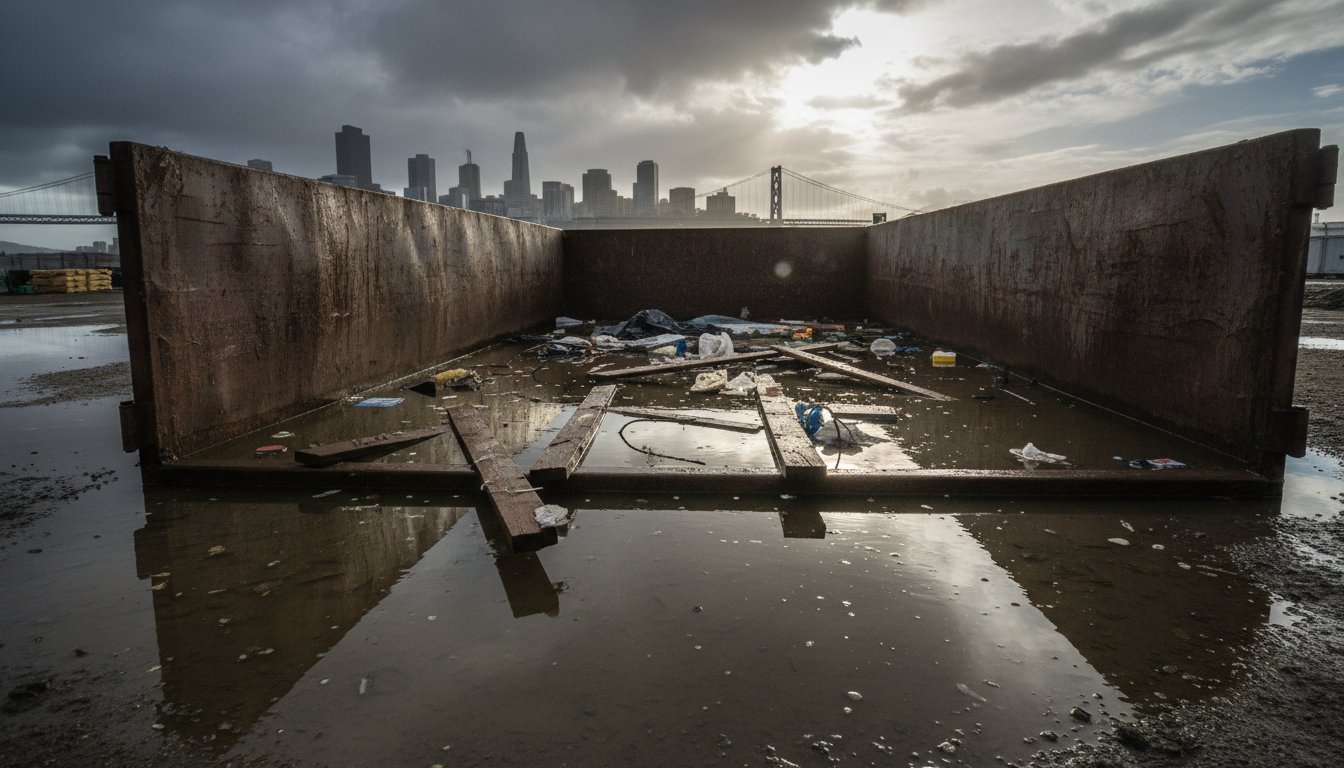
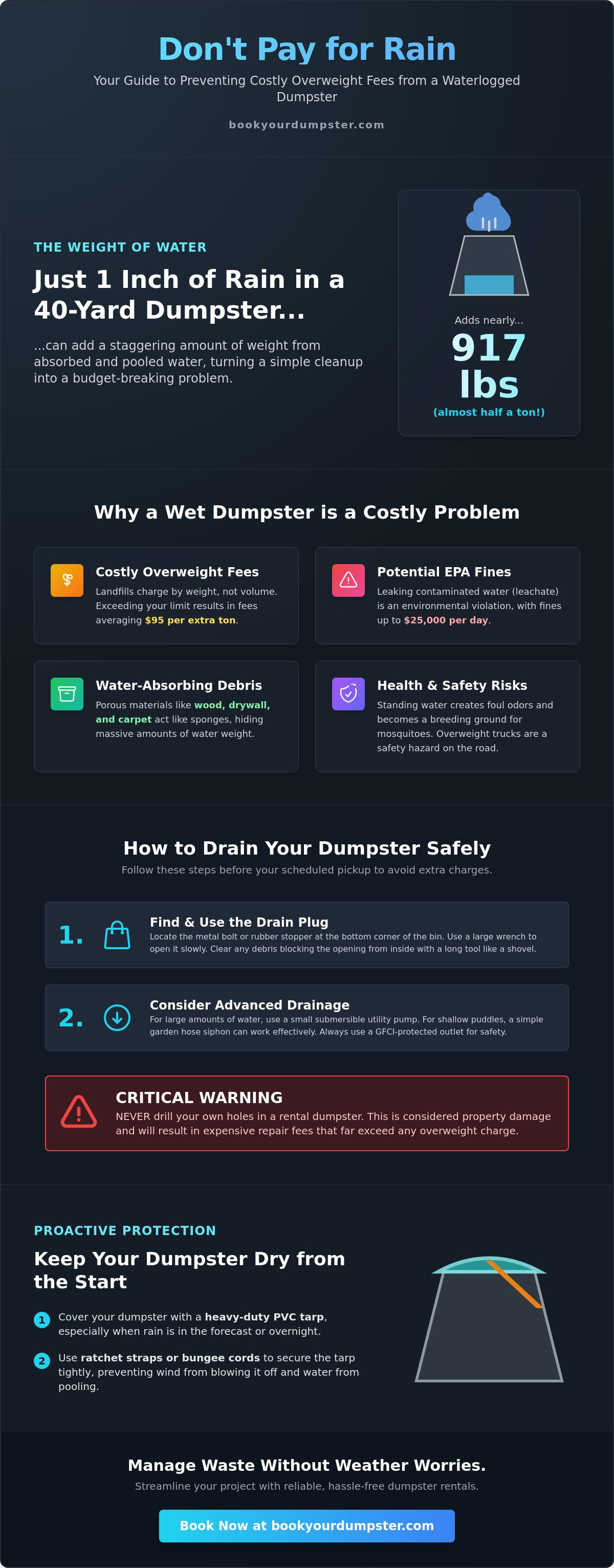
Did you know that just one inch of rainfall in a standard 40-yard dumpster adds nearly 917 pounds to your total weight? That is almost half a ton of liquid weight that does nothing but threaten your project budget. You rented a bin to clear out debris, not to pay for the weight of a passing storm. If you are currently staring at a flooded container and wondering what to do if my dumpster is filled with rainwater, you need to act quickly. It's a common frustration that leads to expensive overweight fees and potential EPA fines of up to $25,000 per day for non-compliance.
We understand the urgency of keeping your site clean and your costs under control. This guide provides a direct, practical method to drain your dumpster and avoid heavy weight penalties. You will learn how to handle the immediate water accumulation, understand the specific cost implications of wet debris, and implement simple prevention strategies to keep the remainder of your rental dry and manageable. Follow these steps to regain control of your workspace and protect your bottom line.
Key Takeaways
- Understand how rainwater turns light debris into heavy tonnage, significantly increasing your disposal costs at the landfill.
- Discover what to do if my dumpster is filled with rainwater by locating drainage plugs and clearing internal clogs before the pickup driver arrives.
- Use simple calculations based on the weight of water to estimate potential penalties and decide if immediate drainage is necessary.
- Implement a proactive defense using heavy-duty PVC tarps and ratchet straps to keep your bin dry during active storm cycles.
- Leverage professional online booking tools to streamline your waste management logistics and maintain project momentum despite unpredictable weather.
Why Rainwater in Your Dumpster Is a Costly Problem
Rainwater is a silent budget killer for any cleanup project. It transforms a manageable pile of debris into a heavy, expensive liability. When you find yourself wondering what to do if my dumpster is filled with rainwater, you are likely facing the "weight trap." This occurs when porous materials like wood, drywall, or old carpeting soak up moisture. These items are light when dry but gain massive weight once saturated. Landfills charge based on tonnage, not volume. You might have plenty of space left in your bin, but the scale at the facility will still record the weight of every gallon of trapped water.
Safety is another major concern. An over-weighted truck is difficult to handle and may exceed legal road limits. Hauling a waterlogged container increases the risk of mechanical failure or accidents during transport. Beyond the logistics, standing water creates immediate environmental and health issues. It produces foul odors quickly and serves as a prime breeding ground for mosquitoes. If you let water sit, you aren't just paying more; you're creating a localized nuisance on your property.
The Impact of Water on Tonnage Limits
Every rental comes with a specific weight allowance. A 10-yard dumpster or a 20-yard dumpster typically has a set tonnage limit included in the base price. Exceeding this limit results in overweight fees that currently average about $95 per ton. The math is simple but brutal. A single gallon of water weighs approximately 8.345 pounds. In a 40-yard container, just one inch of rain can add nearly 917 pounds to your total. That is nearly half a ton of weight added by a single storm. If your debris is absorbent, it will hold that weight even after the visible puddles are gone.
Local Regulations and Landfill Rules
Regional regulations add another layer of complexity. In high-traffic areas like New York or New Jersey, many disposal facilities refuse loads that are dripping wet. This policy prevents Stormwater contamination. When rain mixes with trash, it creates "leachate," a contaminated liquid that can leak onto public roads. Transporting a leaking dumpster is an environmental violation that can lead to heavy fines. Don't count on evaporation to solve the problem. In humid climates, moisture trapped beneath layers of debris rarely dries out on its own. You must take active steps to remove the water before scheduling your collection at Book Your Dumpster USA.
How to Drain a Water-Filled Dumpster Safely
If you're currently staring at a flooded bin and wondering what to do if my dumpster is filled with rainwater, don't panic. Professional roll-off containers are designed with drainage in mind. You don't need to bail water out with a bucket or resort to drilling holes that could damage the equipment. Follow a systematic approach to remove the liquid weight before your scheduled pickup. This keeps your project moving and prevents unnecessary overweight charges at the scale.
Finding and Using the Drain Plug
Most modern roll-off dumpsters feature a built-in drainage system. Look for a threaded metal bolt or a heavy-duty rubber stopper located near the bottom corners of the bin. This plug is designed specifically for this scenario. Use a large wrench to slowly unscrew the metal plug. Be prepared for a high-pressure stream of water once the seal breaks. Before you open it, ensure the area behind the plug is clear of loose debris. If trash blocks the opening from the inside, use a long tool like a shovel or rake to move the obstruction. Never drill your own holes in a rental container. This is considered property damage and will lead to repair fees far more expensive than any weight penalty.
Advanced Drainage: Siphons and Pumps
For shallow flooding, a simple garden hose siphon is often enough. Submerge the entire hose in the water to remove all air, then cap one end and pull it over the side of the bin to a lower drainage point. If you're dealing with massive accumulation in 30-yard or 40-yard dumpsters, a small submersible utility pump is the most efficient choice. Place the pump in the deepest corner and run the discharge hose away from your driveway or foundation. Always prioritize safety. Keep all electrical connections and extension cords completely away from the metal bin and standing water. Use a GFCI-protected outlet to prevent electrical shock during the process.
If the water is concentrated at one end, you might consider elevating the opposite side. This should only be done with professional equipment or by placing heavy wooden blocks under the front feet if the bin is empty enough to move safely. For most users, it's better to focus on clearing the drain plug and using a pump. Once the water level drops, take photos of the empty bin as proof of your efforts. If persistent storms are stalling your cleanup, you can easily schedule a dumpster swap online to get a dry container delivered to your site.
Documentation is your final step in knowing what to do if my dumpster is filled with rainwater. If you're unable to drain it completely due to the type of debris inside, notify your service provider immediately. Clear communication helps the driver prepare for the extra weight and allows the office to note the weather conditions on your account. Being proactive shows you've taken reasonable steps to manage the load weight responsibly.
Calculating the Rainwater Weight Penalty
Knowing what to do if my dumpster is filled with rainwater starts with understanding the scale of the problem. You aren't just dealing with a puddle; you're dealing with a significant weight penalty that hits your wallet at the landfill scale. Water weighs approximately 8.345 pounds per gallon. This density is why even a small amount of accumulation can push your load over its tonnage limit before you've even finished your project.
Consider a standard 20-yard dumpster. These units often share the same footprint as larger 30 or 40-yard containers, roughly 22 feet by 8 feet. If an unexpected storm drops just one inch of rain into that open bin, you're suddenly hauling nearly 110 gallons of extra liquid. That translates to roughly 917 pounds. If your rental agreement includes a two-ton limit, that single inch of rain has just consumed nearly 25% of your entire weight allowance. Proactive drainage is always cheaper than paying overage fees. Landfill overweight charges currently average about $95 per ton. If you leave that water in the bin, you're essentially paying a premium to haul rain.
Material Absorbency Factors
The type of debris in your bin determines how long that weight stays there. Ranking materials by absorbency is crucial for your timeline. Concrete and brick have low absorbency; water usually runs off them and pools at the bottom. However, materials like drywall, insulation, and old lumber act like sponges. These items can hold hundreds of pounds of water even after you've opened the drain plug. "Clean fill" rentals for dirt or concrete are particularly sensitive. Because these materials are already heavy, even a small amount of moisture can trigger an immediate overage. If your bin is filled with porous debris, allow at least 24 to 48 hours for a "dry-out" period after a major storm before scheduling your pickup.
Understanding Your Rental Contract
Review your rental agreement before the truck arrives. Most contracts include specific "tonnage" or "overweight" clauses that outline exactly how much you'll pay for every pound over the limit. Identify whether you have a "flat rate" contract, which might have a generous limit, or a "per-ton" pricing model where every drop of rain counts. For more context on how these fees vary by region, consult this Dumpster Rental Prices Guide. Understanding these financial stakes makes the effort of tarping and draining your bin a clear priority for your project budget.
Proactive Protection: Keeping Your Dumpster Dry
The most effective way to manage water weight is to prevent it from entering the bin in the first place. You've already seen how quickly a single storm can ruin a project budget. A heavy-duty PVC tarp is your primary line of defense. Cheap plastic sheets or cardboard will fail during heavy coastal storms or sustained winds. Buy a tarp that is slightly larger than your container's dimensions. For a 20-yard or 30-yard dumpster, ensure you have enough material to cover the entire opening with a significant overhang on all sides.
Securing the tarp is just as important as the material itself. Do not rely on heavy rocks or loose debris to hold the edges down. High winds will easily pull the tarp loose, leaving your debris exposed and heavy. Use bungee cords or ratchet straps to anchor the tarp to the tie-down cleats found on the sides of the roll-off. This creates a tight seal that resists wind and prevents water from seeping through the gaps. While you now know what to do if my dumpster is filled with rainwater, acting before the clouds arrive is always more efficient. Check the 7-day forecast before you finalize your delivery date to ensure you have a dry window for your heaviest work.
The "Tent" Strategy for Drainage
Flat tarps often collect water in the center. This creates a heavy pool that can eventually collapse into the bin or tear the cover. Use a "peak" strategy to encourage natural runoff. Place a tall, sturdy piece of debris, like a broken chair or a stack of wood, in the center of the load before covering it. This creates a tent-like slope that directs water off the sides of the container. Ensure the tarp overhangs the side rails by at least six inches. If water pools on top of the tarp, it becomes just as heavy and dangerous to remove as water inside the bin. Always clear any standing water from the cover before you attempt to pull it back.
Site Selection and Geography
Where you place your container matters. Avoid low spots on your property where surface Stormwater naturally gathers. If possible, place the dumpster on a slight incline. This positioning encourages any water that does enter to move toward the drainage plugs. In dense urban areas like New York or San Francisco, space is limited, but you should still prioritize a level or slightly sloped surface over a dip in the pavement. Utilize natural cover like building overhangs as long as they don't block the truck's overhead clearance. If you need a fresh container after a heavy storm, you can order a 10, 20, 30, or 40-yard dumpster online to keep your project moving without delay.
Handling Storm Cleanup with Book Your Dumpster USA
Managing a project in rainy regions like New Jersey, Illinois, or Massachusetts requires a waste partner who understands local challenges. We handle the logistical stress so you can focus on the work. If you see a major storm in the forecast, take immediate action. Schedule an early pickup to avoid the weight trap entirely. Don't wait until the bin is waterlogged to decide what to do if my dumpster is filled with rainwater. Our team coordinates quick swaps through our digital platform to keep your site dry and your budget intact. This proactive approach is the most effective way to eliminate the risk of weather-related overage fees.
Local regulations in cities like Boston or Chicago are strict regarding stormwater runoff and leachate. We understand these regional requirements and help you stay compliant with environmental standards. Our expertise ensures that your debris is hauled safely and legally, even after a heavy downpour. By using our streamlined online booking system, you can manage your rental from any device. This allows for rapid adjustments when the weather turns, giving you total control over your project's waste management timeline.
Our Commitment to Pricing Integrity
We believe in transparent communication and straightforward honesty. Every rental agreement clearly outlines your tonnage limits to help you avoid hidden fees. If you're working on a smaller residential project, choosing a 10 Yard Dumpster can minimize your surface area exposure to rain. Our experts provide direct support if you face a flooded bin emergency. We help you calculate the best path forward to ensure you aren't paying for excess water weight. This focus on pricing integrity acts as a verbal handshake, distinguishing our service from the often-opaque communication found elsewhere in the waste industry.
Ready to Clear the Debris?
Stop letting the weather dictate your project costs. We provide fast, dependable service across Queens, Boston, and Chicago. Whether you need a 20-yard dumpster for a home renovation or a 40-yard dumpster for a major construction site, we have the inventory ready to deploy. Knowing what to do if my dumpster is filled with rainwater is helpful, but having a partner that prevents the problem is better. Book your next roll-off today and experience a waste management service that respects your time and your bottom line. Professional cleanup shouldn't be a gamble against the clouds. Secure your bin now and stay ahead of the next storm.
Secure Your Project Against the Elements
Rainfall doesn't have to derail your project budget or your timeline. By understanding the massive weight of water and the importance of active drainage, you maintain total control over your disposal costs. Remember that even an inch of rain can add nearly 917 pounds to a 40-yard container. Use the drainage plugs provided on your roll-off and always secure a heavy-duty tarp before the clouds arrive. Now that you know what to do if my dumpster is filled with rainwater, you can focus on the job at hand without fearing the next weigh-in at the landfill.
We provide the tools and transparency you need for a stress-free cleanup. With coverage across NY, NJ, IL, and MA, our team ensures your waste management is handled with professional precision. Use our streamlined online booking to select your bin size and schedule delivery with confidence. Our transparent pricing means no hidden weight surprises after the storm passes. Get a reliable, storm-ready dumpster rental from Book Your Dumpster USA and keep your project moving forward. You've got this.
Frequently Asked Questions
Will a dumpster rental company pick up a dumpster filled with water?
Most drivers will refuse to pick up a dumpster with significant standing water due to safety and weight limits. Excessive water creates leachate, which can leak onto public roads during transport and lead to environmental violations. Drain the container completely before your scheduled pickup to avoid service delays. If the driver does accept the load, you will likely face high overweight charges at the landfill scale.
How much extra weight does rainwater add to a dumpster?
Rainwater adds approximately 8.345 pounds per gallon to your total load weight. For a standard 40-yard dumpster, just one inch of rainfall equals about 110 gallons of water. This results in nearly 917 pounds of additional weight. Knowing what to do if my dumpster is filled with rainwater is essential because this extra half-ton can easily push you over your tonnage limit and trigger expensive overage fees.
Is it okay to drill holes in a rental dumpster for drainage?
Never drill holes into a rental dumpster under any circumstances. This constitutes property damage to the equipment and will result in significant repair fees from the rental company. Use the manufacturer's built-in drain plugs located near the bottom corners instead. If the bin lacks a plug or the opening is clogged, use a submersible pump or a hose siphon to remove the water safely and effectively.
Does my dumpster rental come with a lid or cover?
Most open-top roll-off dumpsters do not come with built-in lids. You are responsible for providing a cover, such as a heavy-duty PVC tarp, to keep the contents dry during your project. This is not just a cost-saving measure. EPA regulations mandate that waste containers must be covered when not in use to prevent stormwater pollution. Secure your tarp with bungee cords to remain compliant and avoid potential fines.
What is the fastest way to get water out of a flooded dumpster?
The fastest method to clear a flooded bin is using a submersible utility pump. Place the pump at the lowest point of the container and run the discharge hose to a proper drainage area. If you are struggling with what to do if my dumpster is filled with rainwater, opening the drainage plug is the next best option. Ensure you clear any debris blocking the internal side of the plug to maintain a steady flow.
Can I be charged an extra fee if my debris is wet?
Yes, you will be charged for the increased weight of wet debris because landfills charge by tonnage. Materials like wood, drywall, and carpeting act like sponges and become significantly heavier when they absorb moisture. Even if you drain the standing water, the weight trapped inside these porous materials remains. Keeping your bin dry is the most effective way to protect your budget from these unexpected weight penalties.
Should I cover my dumpster if it is only supposed to rain a little?
You should always cover your bin even during light rain. Porous materials hold onto moisture long after the rain stops, increasing the total weight of your load. Additionally, EPA regulations updated in 2017 require waste containers to be securely covered to prevent leachate from entering local waterways. Fines for non-compliance can range from $2,500 to $25,000 per day, making a simple tarp a necessary investment for any site.
How do I secure a tarp on a 30-yard dumpster during high winds?
Use ratchet straps or heavy-duty bungee cords hooked directly to the tie-down cleats on the side of the bin. Do not use rocks, bricks, or loose debris to weigh down the edges because these will fail during high winds. Pull the tarp taut to prevent wind from getting underneath and creating a sail effect. This method ensures your cover stays in place and effectively directs water away from the container opening.