
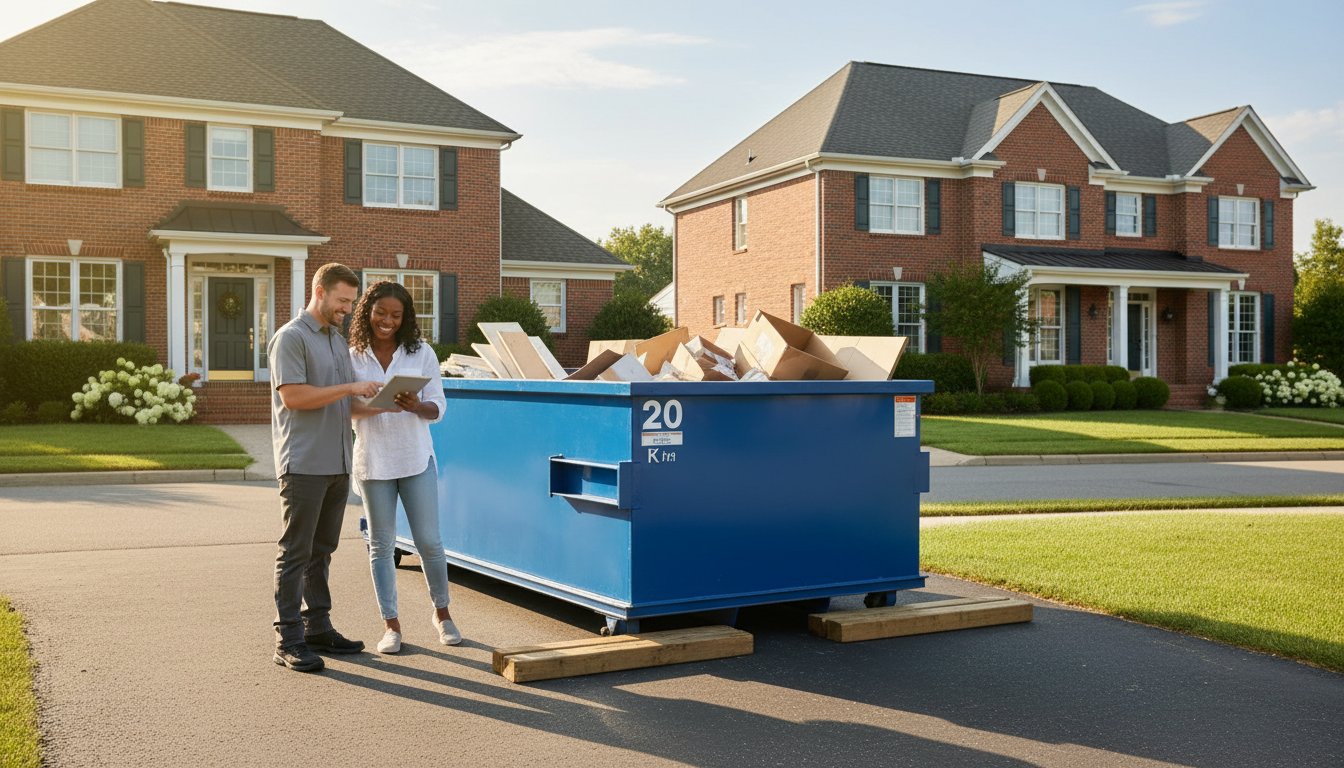
Choosing a dumpster based on a guess is the fastest way to blow your project timeline before the first wall even comes down. You need a 20 yard dumpster that handles the load without triggering overage fees or blocking your street illegally. It's frustrating to deal with vague delivery windows and the constant worry about heavy steel wheels gouging your driveway. We understand that you want the waste gone so you can focus on the actual work.
This 2026 guide gives you the exact specifications to confirm if this size fits your debris, whether you're clearing 120 trash bags of waste or 6 pickup truck loads of construction material. You'll learn how to secure a reliable rental in New York, Illinois, or Massachusetts while avoiding common permit headaches. We cover everything from weight limits to surface protection so you can Book Your Dumpster with total confidence and zero logistical stress. Follow these steps to ensure your delivery is on time and your site stays clean.
Key Takeaways
- Determine if a 20 yard dumpster is the right fit by comparing its 10-pickup-load capacity against your specific project volume.
- Understand the precise dimensions and clearance requirements to ensure a smooth, hassle-free delivery to your job site.
- Identify the specific permit and placement regulations required for street-side rentals in New York, Illinois, and Massachusetts.
- Avoid unexpected overfill penalties by learning how to properly estimate debris weight for common DIY and contractor projects.
- Streamline your cleanup with transparent pricing and reliable scheduling from a dependable roll-off partner.
Understanding the 20 Yard Dumpster: The Versatile Choice for Local Projects
Choose the 20 yard dumpster for your next renovation to balance capacity and footprint. It is the most popular mid-sized container for a reason. The "20 yard" designation refers to the total cubic volume capacity of the unit. Specifically, it holds 20 cubic yards of waste, which is roughly equivalent to eight to ten full pickup truck loads. This Roll-off (dumpster) design is a staple for contractors and homeowners across New York, Illinois, and Massachusetts because it handles significant debris without requiring a massive staging area.
If you are deciding between sizes, consider that a 10 yard dumpster holds half the volume and often falls short for multi-room projects. Opting for the larger 20-yard model provides the breathing room needed to finish a job without the cost of a second haul. It eliminates the stress of overfilling a container halfway through your schedule.
Why It Is the 'Goldilocks' Size
The 20 yard dumpster strikes a perfect balance for residential and light commercial work. It is large enough to handle full-room renovations but compact enough to fit on a standard 20-foot driveway. You don't need to worry about blocking the entire street or violating neighborhood access rules. It is the ideal choice when a 10-yard unit is too small and a 30-yard container is overkill for your budget. Homeowners in suburban Illinois and Massachusetts frequently use this size for kitchen remodels or basement cleanouts. It handles heavy items like flooring, cabinetry, and old furniture without reaching weight limits as quickly as smaller alternatives.
Common Use Cases in NY, IL, and MA
Project requirements vary by location, but this container remains the go-to tool for diverse environments. In Westchester or Long Island, residents rely on it for massive attic and garage cleanouts before a move. It provides the necessary volume for decades of accumulated household items. In the Boston suburbs, this size is perfect for deck removals and flooring projects in older, historic homes where space is limited. For commercial needs, business owners in the Chicago Loop use these containers for mid-sized office cleanouts and retail renovations. It handles the bulk of desks, chairs, and construction debris efficiently. Book your dumpster today to ensure your project stays on schedule and your site remains clear of hazards.
Dimensions and Capacity: How Much Can a 20 Yard Roll-Off Actually Hold?
Understanding the physical footprint of a 20 yard dumpster ensures your project site stays organized and accessible. A standard unit typically measures 22 feet long, 8 feet wide, and 4.5 feet high. These dimensions make it the most versatile choice for residential driveways and tight commercial lots across New York, Illinois, and Massachusetts. The 4.5-foot height is particularly useful because it's low enough for most people to toss debris over the side without straining.
To visualize the volume, 20 cubic yards equals roughly eight to ten standard pickup truck loads. If you prefer a kitchen appliance comparison, imagine six standard refrigerators stacked together. This capacity provides a significant amount of room for medium-sized projects without taking up excessive space on your property. While these measurements are industry standard, dumpster rental sizes often fluctuate by a few inches depending on the specific manufacturer's design or the age of the container.
Breaking Down the Weight Limits
Capacity isn't just about volume; it's about weight. Most 20 yard units come with a weight limit ranging from 2 to 4 tons. You must stay within these limits to avoid "overage" charges, which occur because landfills charge by the ton. When disposing of heavy materials typically found in Construction and Demolition (C&D) Landfills, the weight adds up faster than you might expect. It's vital to remember that a 20 yard dumpster filled entirely with concrete, dirt, or brick will exceed the lifting capacity of almost any roll-off truck. If you're handling heavy masonry, talk to us about specialized heavy-debris containers instead.
What Fits Inside (Real-World Examples)
If you're planning a specific renovation, these real-world benchmarks help determine if this size is right for you:
- Roofing Projects: This container holds up to 3,000 square feet of single-layer asphalt roof shingles.
- Deck Removals: It easily accommodates the debris from a 300 to 400 square foot deck demolition, including the railings and joists.
- Kitchen Remodels: You can comfortably fit standard kitchen cabinets, old appliances, and flooring from a large-scale renovation.
- Whole-Home Cleanouts: It's ideal for clearing out a garage or basement filled with bulky furniture, old exercise equipment, and boxes of household junk.
If your project matches these descriptions, you can schedule your delivery online today to keep your job site moving. We handle the logistics so you can focus on the work.
Is a 20 Yard Dumpster Right for Your Project?
A 20 yard dumpster serves as the industry standard for mid-sized projects. It strikes a balance between capacity and footprint, making it a favorite for residential driveways in Illinois and tight job sites in Massachusetts. This size handles approximately 110 to 130 standard 33-gallon trash bags. Booking the right size prevents overfill penalties and logistical delays. These fees occur when debris rises above the side walls, creating a road hazard for the driver. Compare sizes using our roll off dumpster rental guide before you schedule your delivery to ensure your project stays on budget.
Renovations vs. Cleanouts
Project type dictates how you fill the bin. Estate cleanouts involve bulky items like armoires, mattresses, and old appliances. These items consume cubic yardage fast but often stay well under the weight limit. Home renovations generate heavier debris like plaster, flooring, and wood framing. Weight limits are critical here. If you're stripping 2,500 square feet of asphalt shingles, a 20 yard dumpster is usually the correct choice. Load the bin strategically. Place heavy, flat materials on the floor. Break down cabinets and tables to save space. Fill the remaining voids with loose waste. This method prevents air pockets and maximizes your rental value.
The Heavy Debris Exception
New York construction projects often involve "heavy" materials like dirt, brick, sand, and concrete. You cannot fill a standard 20-yard container to the top with these items. The weight would exceed legal hauling limits and damage the truck's hydraulic system. For these specific materials, use a 10-yard low-boy container instead. It's safer and more efficient for dense loads. Proper disposal aligns with the EPA's principles for the Sustainable Management of C&D Materials, which encourages recycling masonry to reduce landfill impact. To estimate weight, remember that a single cubic yard of wet soil weighs roughly 2,100 to 3,000 pounds. Calculate your volume carefully. Book your dumpster based on the densest material you plan to discard. If your project involves mixed loads, keep the heavy materials at the bottom to maintain a stable center of gravity during transport.

Local Rental Requirements: Permits and Placement in NY, IL, and MA
Renting a bin involves more than just picking a size. You must handle the logistics of where that container sits. Local municipalities in New York, Illinois, and Massachusetts enforce strict codes to keep streets clear and safe. If you place a 20 yard dumpster on a public street, you usually need a permit. Failure to secure one results in fines or immediate removal of the bin by city officials. For more detailed site prep, check this residential dumpster rental guide to avoid common delivery delays.
Permit Rules in Major Metro Areas
In NYC, the Department of Transportation (DOT) requires a permit for any container placed on the street. You must ensure the bin has reflective tape to meet 2026 safety standards. In Chicago, you need a "Public Way" permit. This is mandatory if the bin touches city property, including alleys or parkways. Boston requires a "Street Occupancy" permit through the city's online portal. These permits often have strict duration limits, sometimes restricted to 72 hours in high-traffic areas like the North End.
Site Preparation and Clearance
Logistics matter. A roll-off truck requires 60 feet of straight-line clearance to drop a 20 yard dumpster safely. This distance allows the driver to align the rails and slide the bin into place without hitting vehicles or structures. You should also verify overhead clearance. Many historic neighborhoods in Massachusetts have utility lines lower than the 14-foot height required for a raised roll-off hoist. Prune any tree branches that might obstruct the truck's path to prevent property damage.
Protect your surfaces from the weight of the steel rollers. Heavy loads can crack asphalt or leave ruts in driveways, especially during the humid summers of Illinois or the spring thaws in New York. Follow these steps to prepare your site:
- Clear all vehicles from the driveway and the street directly in front of the drop-off zone.
- Lay down two sheets of 4x8 plywood where the dumpster wheels will rest.
- Ensure the delivery area is level; avoid placing bins on steep inclines to prevent shifting.
- Confirm there are no low-hanging wires or basketball hoops in the immediate vicinity.
Planning these details ahead of time ensures a smooth delivery. It also protects you from unexpected municipal fines or property repair costs. Once your site is ready, you can move forward with your project with confidence.
Book Your Dumpster: Reliable 20 Yard Roll-Off Rentals
Secure your rental with Book Your Dumpster USA. We serve as the primary choice for professional waste management across New York, Illinois, and Massachusetts. We prioritize reliability and remove the logistical stress from your project site. Our team handles the heavy lifting so you can stay focused on your work. We've refined our entire operation for 2026 to ensure every delivery meets our strict standards for punctuality. Whether you're managing a residential cleanout in Massachusetts or a commercial renovation in Illinois, we provide the tools you need to succeed. Our service is built for efficiency and direct results.
Our Commitment to Transparency
We operate on a foundation of honesty. You won't find hidden fees or unexpected environmental surcharges in our billing. What you're quoted is exactly what you pay for your 20 yard dumpster rental. This transparency allows you to budget accurately for your project without fear of back-end costs. Our customer support experts are available to guide you through the process. They help you determine if a 20 yard dumpster is the right fit, ensuring you don't pay for space you don't need. We also offer flexible rental periods. This flexibility is essential for projects in New York or Chicago where timelines often shift due to weather or permit delays. We work around your schedule to keep your site clear.
- Direct, flat-rate pricing with no surprises or hidden administrative costs.
- On-time delivery and pickup promise for every zip code we serve in NY, IL, and MA.
- Proactive communication throughout the rental period to manage your waste effectively.
- Expert knowledge of local weight limits and regional disposal laws to prevent fines.
Schedule Your Delivery Today
Booking your rental takes less than five minutes on our modernized platform. We've designed our online system to be the fastest way to secure a roll-off container in 2026. Our deep local presence means we understand the specific waste regulations of your region. We handle the logistics of delivery in tight urban spaces and suburban driveways alike. You get a high-functioning tool for your project, not just a container. Stop letting waste pile up and take control of your workspace today. Our process is instant, easy, and entirely digital. Book your 20 yard dumpster now and experience a professional, straightforward rental process that respects your time.
Secure Your 2026 Project Success
Choosing this specific container size provides the capacity to manage approximately 110 to 130 contractor-grade trash bags of debris. This volume fits the specific needs of most residential renovations and cleanouts across New York, Illinois, and Massachusetts. We handle the logistical heavy lifting and permit considerations so you can focus on the job at hand. You won't deal with hidden fees or surprise surcharges when the final bill arrives; we prioritize transparent pricing for every customer.
Our team ensures on-time delivery to your site in all three states, keeping your construction or cleanup timeline on track. Use our streamlined system to manage your waste removal whenever it's convenient for you. Our 24/7 online platform is built for speed and efficiency, allowing you to secure a container in minutes. Don't let piles of debris stall your progress or create safety hazards on your property. Get the reliable roll-off service you need to finish your project strong and reclaim your space. Book your 20 yard dumpster rental online today.
Frequently Asked Questions
How long can I keep a 20 yard dumpster rental?
You can typically keep your 20 yard dumpster for 7 to 14 days depending on your specific project needs. Most residential rentals include a 10 day period in the initial quote. If your renovation takes longer, you can extend your rental for a daily fee. Always schedule your pickup at least 24 hours in advance to ensure on-time removal from your site. We handle the logistics so you stay on schedule.
Does a 20 yard dumpster fit in a standard residential driveway?
Yes, the container fits in a standard residential driveway, which usually measures 10 to 12 feet wide. The unit itself is approximately 22 feet long and 8 feet wide. Ensure you have 60 feet of straight-line clearance for the truck to drop the bin. Clear all vehicles and low-hanging branches before our driver arrives to avoid delivery delays. This ensures a hassle-free drop-off process for your home project.
What items are prohibited in a 20 yard roll-off container?
Prohibited items include hazardous materials like lead-acid batteries, wet paint, asbestos, and combustible fuels. Local regulations in Illinois and New York also restrict electronics and tires from landfills. If you dispose of these items, you'll face contamination fees from the processing facility. Stick to construction debris, household junk, and yard waste to keep your project on track and avoid extra charges. Call us if you're unsure about a specific item.
Do I need a permit for a 20 yard dumpster in Chicago or New York City?
You need a permit if you place the container on a public street or sidewalk in Chicago or New York City. In Chicago, the Department of Transportation requires a Public Right-of-Way Permit for any bin blocking the street. New York City requires a DOT Street Opening Permit. You don't need a permit if the 20 yard dumpster sits entirely on your private driveway. Always check local municipal codes before scheduling your delivery.
How much weight can I put in a 20 yard dumpster before extra fees apply?
Most rentals include a weight limit of 2 to 3 tons, which equals 4,000 to 6,000 pounds. This capacity covers roughly 110 to 130 heavy-duty trash bags. If your load exceeds this limit, the landfill charges a per-ton overage fee. Monitor your debris levels closely when disposing of heavy materials like roofing shingles or old flooring to stay within your limit. This transparency helps you avoid unexpected costs at the end of your project.
Can I move the dumpster once it has been delivered to my site?
You can't move the dumpster once our driver sets it in place. Attempting to shift a heavy roll-off container with personal vehicles or machinery can damage your property and the bin itself. If the current placement hinders your work, call us to schedule a relocate service. A professional driver will return to safely reposition the unit using the proper hydraulic equipment. Plan your drop-off location carefully to ensure the best workflow for your crew.
What happens if I overfill the dumpster past the top rim?
Our drivers won't pick up a dumpster filled past the top rim because it creates a safety hazard during transport. Legal requirements dictate that all loads must be covered and secured before hitting the road. If your debris exceeds the height of the side walls, you must remove the excess items before we can complete the haul. This results in a dry-run fee for the missed pickup. Keep your waste level to avoid these project delays.
Are there different rules for 'clean' concrete or dirt in a 20 yard bin?
Clean concrete and dirt require specific handling and can't be mixed with general household trash. While a 20 yard bin is large, you can only fill it halfway with heavy materials like dirt or brick to stay under the 10-ton legal hauling limit. Mixed loads containing both concrete and general debris incur higher processing costs at the transfer station. Book a dedicated clean-load bin for the most efficient disposal of heavy masonry materials.


