

Imagine walking onto your loading dock to find a mountain of illegal bulky waste and a fresh health code violation. Managing waste management for a multi-tenant commercial building is often a chaotic cycle of overflowing bins and shifting city mandates. You shouldn't have to choose between a clean facility and a predictable budget. Whether you face the 2026 Commercial Waste Zone implementation in NYC or strict refuse audits in San Francisco, the logistical pressure is constant.
We understand that a messy dock is a liability you can't afford. This guide promises to help you master these logistics to reduce costs and eliminate tenant disposal friction once and for all. You will learn how to use dynamic scaling to handle everything from daily front load pickup to large-scale tenant renovations. We also preview the critical 2026 regulatory updates and container solutions that ensure your property remains compliant, organized, and efficient.
Key Takeaways
- Categorize your tenant mix to prevent waste contamination and ensure retail, office, and medical streams remain separate.
- Select the right container size for your needs, using front-load bins for daily refuse and 10 to 40-yard roll-offs for renovations.
- Streamline waste management for a multi-tenant commercial building by following 2026 mandates in NYC and SF to eliminate fines.
- Improve loading dock efficiency by strategically placing containers to minimize travel distance and reduce tenant friction.
- Use digital booking systems to manage scheduling and maintain predictable costs with transparent pricing.
Understanding the Complexity of Multi-Tenant Waste Streams
Effective waste management for a multi-tenant commercial building requires more than just a bin in the alley. It demands a strategy that accounts for the distinct behaviors of every business under your roof. One tenant might produce dry office waste while another generates heavy food scraps. When these streams collide in a single container, the entire waste management process breaks down. You face contamination fees, health code violations, and frustrated tenants who can't find room for their daily disposal needs.
Standard front-load services often fail during tenant turnover or renovations. A law firm moving out generates massive amounts of paper and furniture. A new retail build-out produces drywall, wood, and metal debris. Your daily pickup schedule won't handle these sudden spikes. This is where dynamic scaling becomes essential. You must augment permanent front-load pickup with temporary roll-off containers from Book Your Dumpster USA to maintain a clear loading dock. Don't let a renovation project derail your standard operations.
The Retail vs. Office Waste Profile
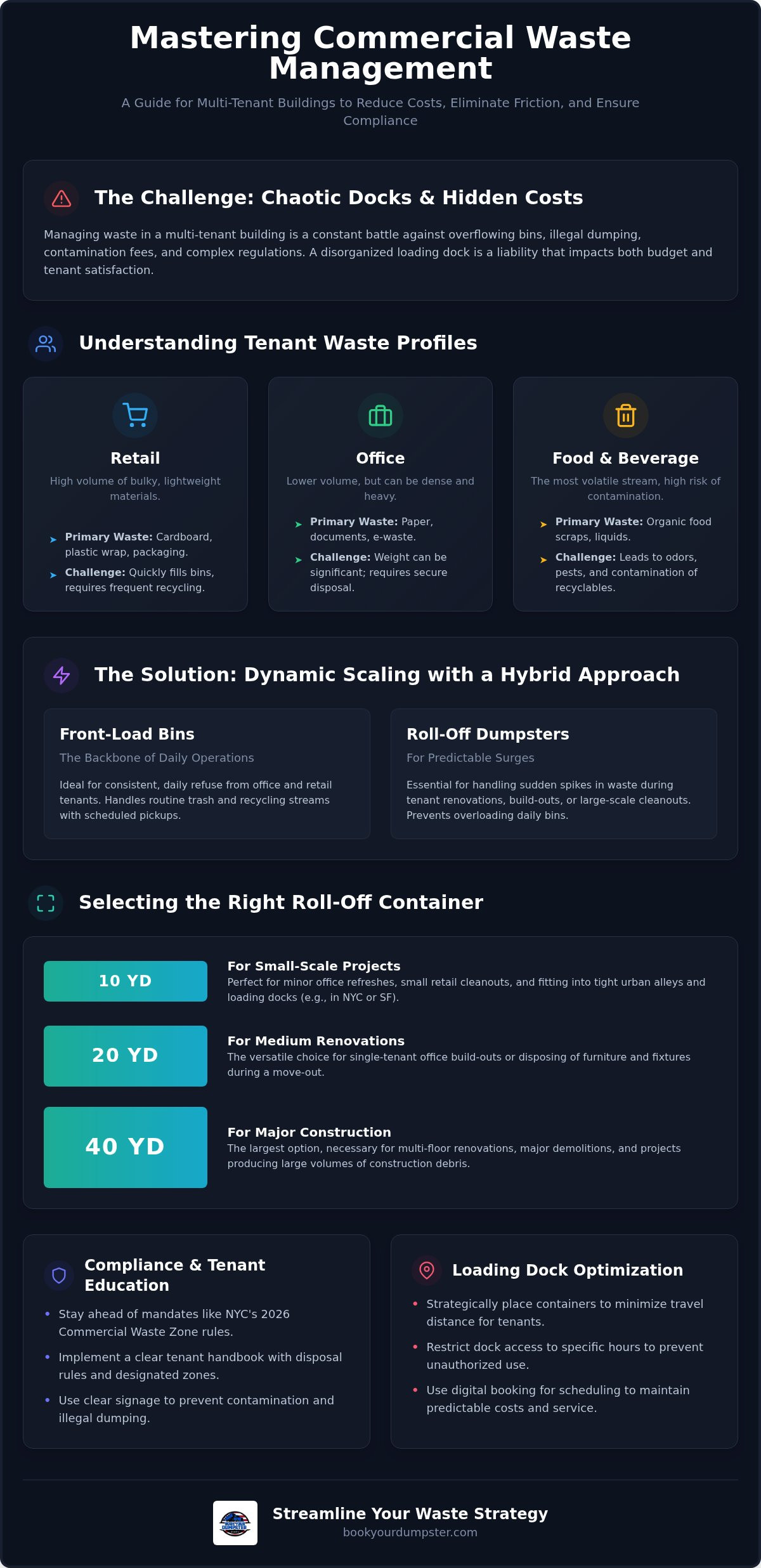
Identify your tenant mix immediately to prevent logistical bottlenecks. Each category presents unique challenges:
- Retail: Expect high volumes of cardboard and plastic wrap. These materials take up significant space. They require frequent recycling hauls to prevent bin overflows that block emergency exits.
- Office: These tenants focus on paper and secure document destruction. While the volume is often lower, the weight can be significant.
- Food and Beverage: This is the most volatile category. High organic waste leads to odors and pests. If a restaurant shares a bin with a boutique, the boutique's packaging will likely become contaminated by liquids. This renders it unrecyclable and increases your costs.
The Impact of Shared Infrastructure
Shared loading docks are the primary friction point in any commercial building. Without clear rules, tenants dump bulky items like old desks or pallets illegally in shared containers. This leads to "Waste Contamination" where non-compliant items cause haulers to reject the entire load. Calculate your waste per square foot based on tenant type to avoid scheduling guesswork. A medical office generates less volume than a cafe, but requires stricter protocols. Implement a clear tenant handbook that outlines disposal zones. Restrict dock access to specific hours to prevent unauthorized dumping from outside parties. A secure, well-monitored dock is your best defense against unexpected fees.
Auditing Your Building’s Needs: Selecting the Right Container Sizes
Audit your current waste output before you sign a long-term contract. Many property managers make the common mistake of over-scheduling pickups for undersized bins. This leads to overflow fines and unsightly loading docks. To improve waste management, you must balance permanent front-load services with temporary roll-off containers. Effective waste management for a multi-tenant commercial building requires a hybrid approach that adapts to your tenant's lifecycle.
Front-load commercial waste pickup serves as the backbone of your daily operations. These bins are ideal for low-density office waste and routine trash. However, they aren't designed for the surges that happen during tenant transitions. If you rely solely on front-load bins during a major build-out, you'll face logistical gridlock. You'll spend more on emergency pickups than you would on a single temporary roll-off.
Evaluate your physical space before selecting a bin size. Measure your alley width and dock height carefully. A bin that's too wide for your service area will cause property damage or prevent the hauler from completing the pickup. Optimizing waste management for a multi-tenant commercial building means choosing the right tool for the job. If your space is extremely tight, increasing pickup frequency is often more cost-effective than trying to force a larger container into a small footprint.
When to Use a 10-Yard Dumpster
Select a 10-yard dumpster for targeted, small-scale projects. It's the ideal solution for retail cleanouts or minor office refreshes. Its compact footprint makes it perfect for tight urban environments in cities like San Francisco or Queens where larger trucks simply can't maneuver. Review our 10 yard dumpster rental guide to confirm these dimensions fit your specific loading zone.
Scaling Up: 20 to 40-Yard Solutions
Deploy larger containers when the project scope grows beyond simple cleanups. A 20-yard dumpster handles mid-sized commercial flooring or roofing replacements. It offers enough volume for bulky items without occupying your entire dock area.
For full-floor office de-installations, use a 40-yard dumpster. This is the industry standard for structural debris and massive cleanouts. Always monitor your weight limits during these projects. Heavy materials like concrete, brick, or stone can quickly exceed the capacity of the container. Overloading leads to safety hazards and costly overage fees. You can book your roll-off online to handle these temporary surges and keep your permanent bins clear for daily use.
Optimizing Space and Logistics for High-Density Commercial Zones
High-density urban environments leave no room for logistical errors. If your building sits in a tight corridor in Chicago or New York, every square foot of your loading dock must be productive. Optimizing waste management for a multi-tenant commercial building starts with bin placement. Place your primary containers as close to tenant service exits as possible. This reduces the time janitorial staff spends transporting bags, which minimizes the risk of leaks and floor damage in common areas. If your dock is small, prioritize vertical space by using compactors for general trash and dedicated bins for cardboard.
Choose between compactors and open-top dumpsters based on your building's height and volume. High-rise buildings with hundreds of tenants benefit from stationary compactors. These units crush waste to a fraction of its size, reducing the number of weekly hauls and lowering your carbon footprint. For mid-sized buildings with more dock space, open-top dumpsters offer easier access for bulky items. Managing bulky waste is a constant struggle. Don't let old office chairs or broken pallets block fire exits. Designate a specific "bulky zone" and schedule immediate removal to maintain safety compliance.
Timing is everything in a busy city. Avoid peak traffic hours to ensure your hauler can actually reach your dock. Scheduling pickups for late-night or early-morning windows prevents trucks from getting stuck in gridlock. This reliability keeps your dock clear and prevents waste from backing up into tenant hallways. If a truck can't access your bin because of a blocked alley, you'll likely face a "dry run" fee and an overflowing container by noon.
Dock Management and Access Control
Secure your waste rooms to prevent unauthorized dumping. Use RFID or keycard access to track which tenants are using the facilities. This data helps you identify businesses that might be exceeding their waste allotments. Install high-definition cameras near your containers. This deters non-tenants from dumping household trash or hazardous materials in your bins. Ensure your loading dock maintains a clear path for roll-off truck maneuverability. A single parked car can derail your entire waste schedule for the day.
Handling Overflow and Seasonal Spikes
Implement an "on-call" strategy for sudden surges. Keep a 10-yard roll-off container available or on standby for tenant move-outs or seasonal peaks. Coordinate with a reliable partner for roll off dumpster rental to ensure you have the capacity when you need it. You can reduce administrative friction by using online booking for emergency pickups. This digital-first approach allows you to resolve overflow issues in minutes, keeping your property clean and your tenants satisfied without the need for lengthy phone calls.
Compliance and Tenant Education: Avoiding Fines in NYC, SF, and Beyond
Compliance isn't optional in 2026. Regulatory bodies in major hubs have moved from suggestions to strict enforcement. Managing waste management for a multi-tenant commercial building now requires a deep understanding of local laws to avoid heavy fines. You're responsible for what happens at your loading dock, even if a tenant caused the violation. Establish a zero-tolerance policy for contamination and hazardous materials immediately. Clear communication is your best defense against the rising costs of non-compliance.
Start by creating a comprehensive tenant handbook. This document should outline exactly where waste goes and what items are forbidden. Hazardous waste, including electronics, batteries, and chemicals, must never enter your shared containers. If a hauler discovers these items, they'll reject the load and the city may issue a citation. Use color-coded signage at every disposal point. High-visibility posters help retail and janitorial staff sort materials correctly without constant supervision. Labeling should be unmistakable: blue for recycling, green for organics, and black for general trash.
Regional Regulatory Highlights
Stay ahead of the 2026 implementation dates to protect your bottom line. In New York City, the Commercial Waste Zone (CWZ) program is reaching a critical phase. For Midtown South and Staten Island, the customer sign-up period begins July 1, 2026, with full implementation by August 31, 2026. Brooklyn North and Upper Manhattan follow shortly after, with zones going live on November 30, 2026. Remember that NYC also mandates containerization for all businesses to address rodent issues. Failure to use approved bins will result in immediate fines.
In San Francisco, zero-waste initiatives require large refuse generators to undergo audits every three years. You must prove your building is actively diverting recyclables and compostables. In Chicago, large-scale debris removal permits are mandatory for any commercial renovation. Always verify your local requirements before starting a project. If you're unsure about your zone or permit status, schedule your commercial waste pickup with a partner that understands these local nuances.
Tenant Accountability Strategies
Hold your tenants responsible for their waste habits. Conduct regular waste audits to identify which businesses are failing to sort correctly. If one tenant consistently contaminates the recycling stream, you shouldn't have to absorb the resulting fees. Integrate specific waste management clauses into your commercial lease agreements. These clauses should give you the legal authority to pass fines back to the responsible party. When tenants have a financial stake in compliance, their disposal habits improve overnight. Use these audits as educational opportunities to show staff the direct impact of their actions on building operations.
Streamlining Your Waste Strategy with Book Your Dumpster USA
Stop wasting hours on the phone with traditional haulers who leave you on hold. Managing waste management for a multi-tenant commercial building shouldn't be a full-time job. Book Your Dumpster USA provides a digital-first platform designed specifically to remove logistical friction for busy property managers. Schedule your service in minutes and get back to your core responsibilities. We prioritize pricing integrity and punctuality. This ensures you never have to guess when a bin will arrive or what the final invoice will look like. Reliability is our standard, not a premium feature.
Match your building's specific needs to our versatile inventory. We offer 10, 20, 30, and 40-yard roll-off containers alongside our permanent front-load commercial waste pickup. This variety allows you to scale your service up or down as tenant needs change. Whether you are handling daily office refuse or a massive multi-floor de-installation, we have the right tool for the job. Our online booking system gives you total control over your waste strategy. It eliminates the administrative burden of manual scheduling and allows for immediate adjustments during unexpected waste surges.
Transparency is a verbal handshake in this industry. We understand the logistical challenges of managing diverse waste streams in high-density areas. Our service is built on straightforward honesty and modern convenience. You get a dependable partner who understands the urgency of a clean loading dock. Don't let waste management for a multi-tenant commercial building become a source of stress. Use our platform to create a predictable, efficient system that satisfies both your tenants and your budget.
Commercial Renovation and Cleanout Support
Tenant turnover and renovations require fast, reliable solutions that standard trash pickups can't provide. Our roll-off rentals offer essential support for construction debris removal during major build-outs. We specialize in challenging urban environments where space is at a premium. Our drivers navigate the tight alleys of Boston, Chicago, and San Francisco with expert precision. You get flexible rental periods that align perfectly with your project timelines. This ensures your loading dock stays clear and compliant from the first day of demolition to the final inspection.
Get Started with Your Building Audit
Perform a thorough audit of your building's waste output before you book your first container. Identify your highest-volume tenants and pinpoint where contamination typically occurs. Review your current dumpster rental prices to ensure you are not overpaying for inefficient or unreliable service. Once you have a clear picture of your requirements, use our streamlined online system to secure your containers. Simplify your commercial waste management today and experience a direct, no-nonsense way to handle your building's logistics.
Future-Proof Your Loading Dock Logistics
Mastering waste management for a multi-tenant commercial building requires a blend of permanent infrastructure and temporary flexibility. You've learned how to categorize tenant waste profiles and select the right container sizes to prevent dock congestion. Staying ahead of 2026 mandates in cities like NYC, Chicago, and San Francisco isn't just about avoiding fines; it's about maintaining building value. Implement clear tenant guidelines and use data-driven audits to keep your shared containers free from contamination.
Book Your Dumpster USA acts as your dependable partner in removal. We are local experts in NYC, Chicago, and San Francisco, providing the reliability you need for complex properties. Our easy online booking system allows you to manage logistics without the administrative headache. From 10-yard cleanout bins to 40-yard structural debris containers, we offer a full range of roll-off sizes for any commercial project. Don't let waste accumulate while you wait for a call back from a traditional hauler.
Book Your Commercial Dumpster Online Now and take control of your facility today. You can achieve a clean, compliant, and friction-free loading dock with just a few clicks.
Frequently Asked Questions
How do I determine the right dumpster size for a multi-tenant commercial building?
Calculate your total weekly volume by auditing each tenant's specific waste stream. Retailers and restaurants generate significantly more volume than standard office spaces. Use permanent front-load bins for daily refuse and supplement with 10 to 40-yard roll-offs for temporary surges. Optimizing waste management for a multi-tenant commercial building requires balancing your available dock space with the density of the waste produced.
What are the most common waste management regulations for commercial buildings in NYC?
Adhere to the Commercial Waste Zone (CWZ) implementation schedule and mandatory containerization rules. Midtown South and Staten Island must sign with authorized haulers by July 1, 2026. Brooklyn North and Upper Manhattan follow on October 1, 2026. You must also ensure all waste is stored in rodent-proof containers rather than bags on the curb to avoid DSNY citations and heavy fines.
Can I use a roll-off dumpster for a commercial tenant move-out?
Deploy a 10 or 20-yard roll-off dumpster to handle the sudden surge of bulky items during move-outs. Standard front-load containers aren't designed for furniture, shelving, or heavy office equipment. Using a temporary roll-off prevents your permanent bins from overflowing and ensures your loading dock remains clear for other tenants. Book your rental online to coordinate the delivery exactly when the transition begins.
How often should waste be picked up in a building with a mix of retail and office space?
Schedule pickups based on the most volatile tenant type in your mix. Food and beverage tenants typically require daily or six-day service to prevent odors and pest issues. Office-only buildings can often manage with two or three pickups per week. If your retail tenants produce high volumes of cardboard, increase your recycling frequency to prevent fire hazards in shared waste rooms.
What items are prohibited in commercial waste containers?
Exclude all hazardous materials, electronic waste, batteries, and flammable liquids from your shared containers. These items require specialized disposal and can lead to rejected loads or environmental fines. Ensure your tenants know that tires, paints, and medical waste are also strictly prohibited. Provide a clear list of banned items in your tenant handbook to protect your building from legal liability.
How can I prevent illegal dumping in my commercial building dumpsters?
Secure your disposal area with RFID access and high-definition surveillance cameras. Restricting dock access to authorized tenants only is the most effective way to stop outside parties from using your bins. Install clear signage stating that the area is under 24-hour monitoring. Regular dock inspections help you identify unauthorized materials early before they cause logistical bottlenecks or contamination fees.
Is it better to have one large compactor or multiple smaller dumpsters?
Choose a stationary compactor if you manage a high-rise with hundreds of daily users and high waste density. Compactors reduce the number of weekly hauls and save valuable dock space. Multiple smaller dumpsters are better for buildings with diverse waste streams that require strict separation for recycling compliance. Evaluate your building height and tenant mix to decide which configuration maximizes your operational efficiency.
How do I manage recycling compliance for diverse commercial tenants?
Implement color-coded sorting stations and clear signage at every disposal point to simplify waste management for a multi-tenant commercial building. Use blue bins for paper, green for organics, and black for landfill trash. In cities like San Francisco, you must also prepare for mandatory audits every three years. Consistent tenant education and lease-enforced recycling rules are essential for maintaining a compliant, zero-waste facility.


