
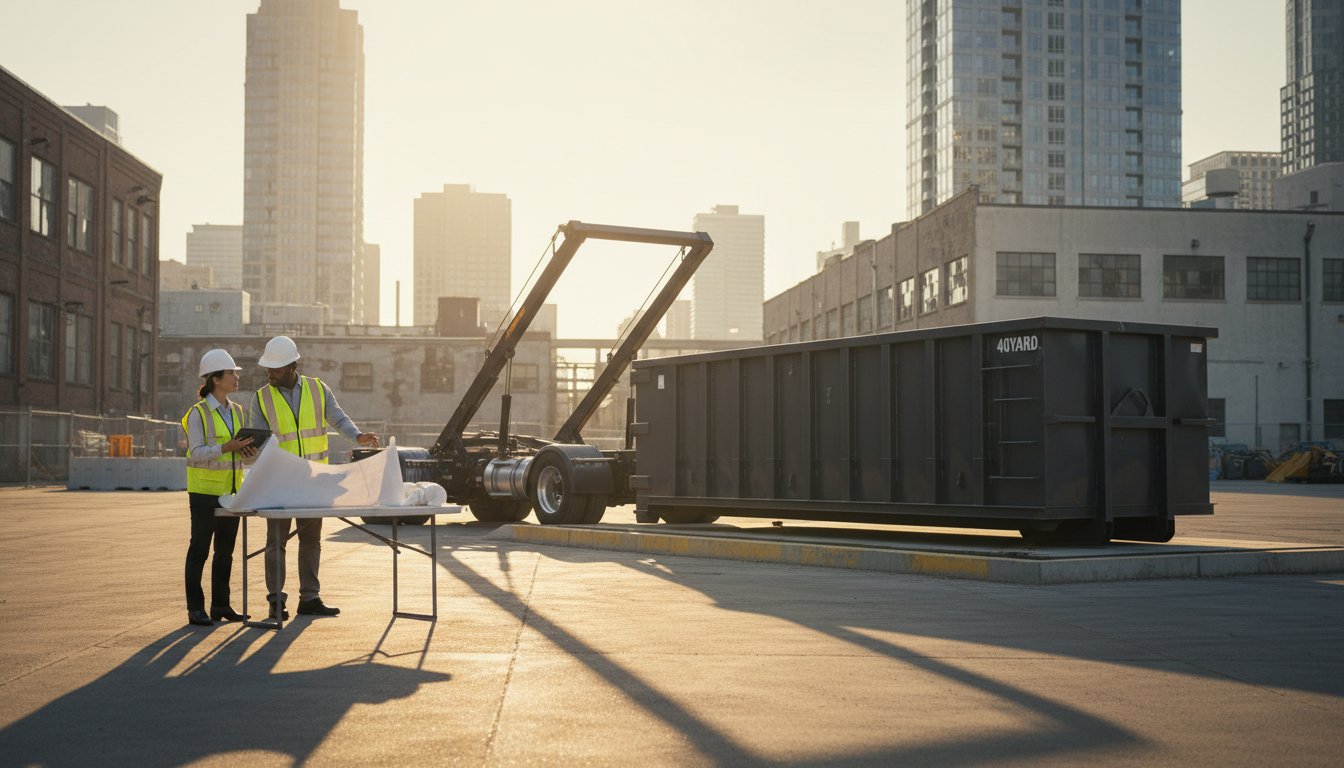
What if the largest container available is actually the safest way to protect your project's bottom line? Many contractors and homeowners worry about the massive footprint of a heavy-duty rental, yet they often end up paying for multiple smaller units because they underestimated their waste volume. Mastering the 40 yard dumpster dimensions is the first step in avoiding these costly logistical errors. You need a reliable way to consolidate 12 to 16 pickup truck loads of debris into a single, efficient haul.
We'll provide the technical specs and site requirements you need to manage the logistics of the industry's largest roll-off container. You'll learn the exact physical clearance required for a 22-foot-long bin and how to prepare your surface for a 4 to 6-ton load. We also outline the weight limits and prohibited items to help you sidestep surprise fees. This guide covers everything from footprint measurements to essential site prep to ensure your cleanup moves forward without a hitch.
Key Takeaways
- Verify the 40 yard dumpster dimensions to confirm the 22-foot exterior length fits your site while maintaining necessary interior volume for large-scale debris.
- Calculate your disposal needs accurately by comparing this container's 40-cubic-yard capacity to roughly 16 pickup truck beds.
- Clear a delivery path with 100 feet of straight-line space and 23 feet of overhead room to ensure a safe, successful drop-off.
- Manage your project budget by staying within the standard 4-to-6-ton weight allowance and avoiding the 10-ton legal hauling maximum.
- Check local permit requirements for street placement in major cities to prevent project delays or municipal fines.
Standard 40 Yard Dumpster Dimensions and Measurements
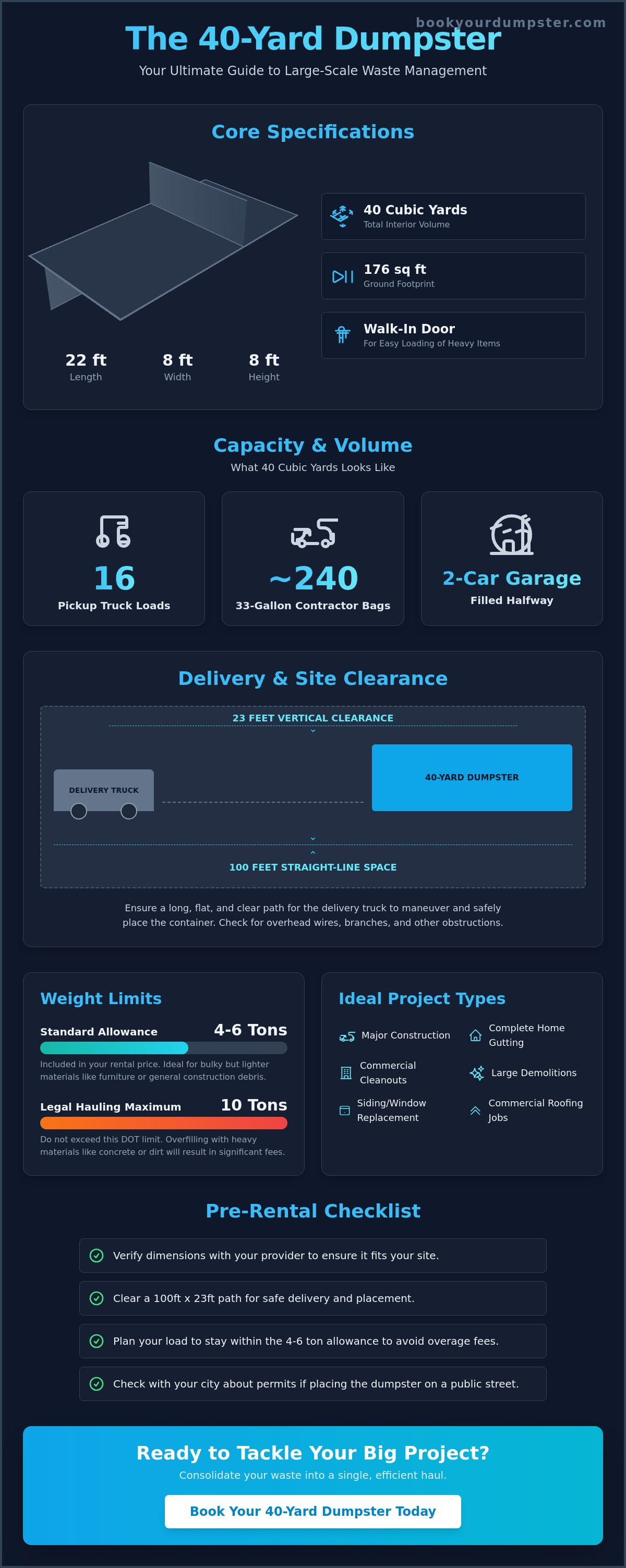
The 40-yard unit is the heavy hitter of the waste industry, designed for projects that generate massive amounts of debris. Standard 40 yard dumpster dimensions typically measure 22 feet long, 8 feet wide, and 8 feet high. These exterior measurements define the physical box, but the interior usable space is slightly smaller. You can expect approximately 20 to 21 feet of internal length and 7.5 feet of width. This difference accounts for the steel walls and structural ribbing necessary to hold several tons of waste.
Don't confuse the footprint with the clearance. The footprint is the 176-square-foot patch of ground the bin occupies once it's on the floor. However, the clearance required for a successful delivery is much larger. If you only have 22 feet of available space, the truck cannot drop the container. These large-scale roll-off dumpsters require a long, flat approach to ensure the driver can maneuver the hoist safely. Always measure your site twice to confirm you have the runway needed for both the bin and the truck.
When comparing this to a 20 yard dumpster, the primary change is vertical. Both units often share the same 22-foot length. The 40-yard model simply doubles the height of the side walls. This makes it a superior choice for bulky, lightweight materials that take up a lot of room but don't necessarily exceed weight limits. It provides twice the volume without requiring a longer driveway, making it a highly efficient choice for commercial sites.
Why Height Matters More Than You Think
The 8-foot side walls change how you interact with the container. You won't be able to toss heavy items over the side. To manage this, 40-yarders include a heavy-duty rear swinging door. Open the door to walk your materials directly into the unit. Use a smart loading strategy: place your heaviest items at the bottom to create a stable foundation. Pack lighter debris on top to fill the remaining 40 cubic yards of volume. This method prevents the load from shifting during transport.
Variations in Manufacturer Specs
Specifications can vary slightly depending on the manufacturer. You might encounter "low-profile" versions that are longer or "high-side" versions that are slightly shorter in length. However, the width almost always remains a constant 8 feet to comply with DOT road regulations. This width ensures the container fits within a standard traffic lane. Always verify the exact unit dimensions with your provider before scheduling, especially if you're working in narrow alleys or tight urban construction zones.
Capacity and Volume: What Fits in a 40 Yard Container?
The total volume of a 40-yard container is exactly what the name suggests: 40 cubic yards of waste material. To put this in perspective, this capacity is equal to approximately 14 to 16 standard pickup truck beds filled to the rails. If you're packing debris into 33-gallon contractor bags, the unit fits roughly 230 to 250 bags. Understanding these 40 yard dumpster dimensions and their corresponding volume helps you avoid the logistical nightmare of a container that overflows before the job is done. This size is the standard for total home gutting, commercial roof replacements, and large-scale new construction where debris accumulates fast.
Common Commercial and Residential Uses
Commercial office cleanouts require significant space for furniture, desks, and cubicle partitions. These items are notoriously difficult to stack, making the 8-foot walls of a 40-yarder essential for containment. For residential property managers, this size is ideal for siding or window replacements on multi-story buildings. If your demolition project exceeds 3,000 square feet, a smaller unit will likely result in multiple expensive swap-outs. Using a single large container keeps your job site clear and your workflow steady. It's the most efficient way to handle large volumes of bulky waste without constant interruptions for hauling.
Visualizing the Volume: Real-World Examples
Visualizing 40 cubic yards can be difficult without a point of reference. Imagine a standard two-car garage filled halfway to the ceiling with debris. That is the amount of space you're working with. For outdoor projects, this unit holds roughly 1,200 to 1,500 square feet of deck removal materials. Roofing contractors can typically fit 60 to 80 squares of shingles, provided they monitor the weight limits closely. When managing Construction and Demolition Materials such as metal, wood, and drywall, you need this level of volume to maintain a safe and organized workspace. These 40 yard dumpster dimensions ensure that even long pieces of lumber or large drywall sheets lay flat, maximizing your available space.
Don't risk a project delay by choosing a box that's too small for the task. You can schedule your delivery today to ensure you have the capacity required for your heaviest work days. This allows you to focus on the build rather than the waste management logistics.
Site Preparation: Space and Clearance Requirements for Delivery
Preparing your site for a delivery of this scale requires more than just clearing a 22-foot patch of concrete. While the 40 yard dumpster dimensions tell you how much space the box occupies, the delivery truck needs significantly more room to maneuver. You must provide at least 60 to 100 feet of straight-line clearance for the truck to back into position. Additionally, ensure the path is at least 10 to 12 feet wide. This width allows for the truck body and its side-view mirrors to pass without striking fences, gate posts, or parked cars. If your space is tighter than these specs, the driver may be unable to complete the drop-off.
Surface integrity is just as critical as physical space. A 40-yarder is a heavy-duty tool; when fully loaded, it exerts massive pressure on the ground. Avoid placing the container on soft soil, manicured lawns, or thin asphalt. These surfaces can sink or crack under the weight. To protect your property, lay down thick plywood sheets where the dumpster's rollers will land. This distributes the pressure and prevents the steel from gouging your driveway. Always choose a level, hard-packed surface to ensure the container remains stable during the loading process.
Navigating Narrow Streets in Queens and San Francisco
In densely populated areas like Queens or San Francisco, "swing room" is the biggest hurdle for delivery. Long-wheelbase trucks cannot make sharp turns into narrow driveways or alleys. If your site lacks a wide entrance, street placement is often mandatory for 40-yard units. Check your local municipal website for permit requirements before scheduling. Pro-tip: use traffic cones to hold the required 100-foot clearance zone on the street 24 hours before the truck arrives. This prevents neighbors from parking in the drop zone and ensures a seamless delivery experience.
Overhead Obstructions to Avoid
Look up before you book your rental. The truck requires 23 feet of vertical clearance to raise its hoist and slide the container off the bed. This "hoist height" is significantly higher than the 8-foot height listed in standard 40 yard dumpster dimensions. Identify low-hanging power lines, tree branches, or building eaves that could snag the equipment. Also, verify the location of underground septic tanks or utility lines. These structures are not designed to support the weight of a loaded roll-off truck and will likely collapse if driven over.
Weight Limits and Material Restrictions for Large Projects
A massive container offers significant volume, but weight capacity is the true limiting factor for your project. While the 40 yard dumpster dimensions allow for 40 cubic yards of debris, you must stay within the standard weight allowance. This typically ranges from 4 to 6 tons, or 8,000 to 12,000 pounds. Exceeding this limit leads to per-ton overage fees that can quickly inflate your budget. Most roll-off trucks cannot legally or physically haul more than 10 tons. If your bin exceeds this 20,000-pound maximum, the driver will be forced to leave the container on-site until you remove enough material to make it transportable.
Avoid the common "Heavy Debris Trap" by monitoring what you toss. Never fill a 40-yarder with heavy materials like concrete, dirt, brick, or asphalt. Because of the large 40 yard dumpster dimensions, filling the unit even halfway with these items will exceed the 10-ton legal road limit. These dense materials require smaller 10 or 20-yard containers designed specifically for heavy loads. Use the 40-yard model for bulky but lighter items such as drywall, wood, furniture, and general construction waste to ensure you don't hit the weight ceiling prematurely.
What Happens if You Overfill?
Safety is the primary concern when a container is overfilled. Trucks cannot safely lift or transport bins that are "heavy-high," meaning the weight is concentrated too high or exceeds the hoist's lifting capacity. You also face legal risks. DOT fines for overweight vehicles are steep, and these costs are passed directly to the customer. Follow the "Level Full" rule: debris must never extend above the top rim of the dumpster. If items are poking out the top, the driver cannot secure a tarp, making the load a road hazard and resulting in a failed pickup attempt.
Prohibited Items in 40-Yard Containers
Certain materials are strictly prohibited due to environmental regulations and safety protocols. Do not dispose of hazardous waste, tires, car batteries, or appliances containing Freon in your rental. Flammable liquids, industrial chemicals, and sealed drums are also banned. If you are managing construction debris removal, check local rules regarding treated lumber or asbestos. These materials often require specialized handling at dedicated facilities. If you have questions about a specific material, contact our team before you toss it to avoid contamination fines and project delays.
How to Rent a 40 Yard Dumpster in Your City
Renting a large roll-off requires more foresight than smaller residential units. These containers are in high demand for commercial construction and large-scale renovations. Because of the specific 40 yard dumpster dimensions, local inventory is often limited. Plan to schedule your rental at least 48 hours in advance to guarantee the unit is ready for your project start date. Waiting until the last minute often leads to delays that can stall an entire crew and inflate your labor costs. When you finalize your booking, confirm that your quote is comprehensive. A professional agreement must include delivery, pickup, and a clearly defined tonnage limit. This transparency ensures you won't face unexpected fees when the project is complete.
Confirming the logistics of your delivery is the final step in project preparation. Make sure the drop-off location is clear of vehicles and debris before the truck arrives. If the driver cannot access the site due to obstructions, you will likely be charged a trip fee for the failed attempt. Provide the driver with specific instructions regarding the orientation of the dumpster door. Having the door face the building allows your team to walk heavy debris directly into the unit, maximizing the efficiency of the 40-cubic-yard volume.
Local Permit Requirements: NY, NJ, and MA
In cities like New York, Boston, or Chicago, you cannot simply drop a massive bin on a public street without authorization. Navigating the DOT permit process is mandatory for street placement in Queens or Boston. These municipalities have strict rules regarding safety and visibility. You may be required to apply reflective tape to the container or set up orange barricades to alert traffic. In New Jersey, local ordinances vary by township, so always check with your local clerk's office. Failure to secure these permits before the truck arrives will result in a dry-run fee and potential city fines. Review our dumpster rental prices guide to understand how permit fees impact your total project cost in these specific regions.
Streamlined Booking with Book Your Dumpster USA
We provide a direct, no-nonsense online system to help you secure the equipment you need. Simply select your city and size to see real-time availability. Our team offers pragmatic support to ensure you don't overbuy. While the 40 yard dumpster dimensions are perfect for total gut renovations, we might suggest a 10 yard dumpster if you are only disposing of heavy, dense materials like concrete. We focus on the most efficient solution for your specific debris type. This approach eliminates the stress of overpaying for space you don't need or underestimating your waste volume.
Clear the path for your project and eliminate logistical stress. Book your 40-yard dumpster today to lock in your delivery date and secure the capacity your job site demands.
Secure the Right Capacity for Your Heavy-Duty Project
You've now mastered the 40 yard dumpster dimensions and the specific logistics required for a successful large-scale rental. You know that the 22-foot exterior length requires up to 100 feet of straight-line clearance for a safe delivery. Staying within your tonnage limit and avoiding prohibited heavy materials like dirt or concrete will prevent surprise overage fees. Proper site preparation, including vertical clearance and surface protection, ensures your workflow remains uninterrupted from drop-off to final haul.
We provide reliable service across NY, NJ, IL, MA, and SF with transparent pricing and no hidden fees. Our expert support team understands the logistical challenges of both commercial and residential projects. We help you navigate local permit requirements and size selection so you can focus on the build. Don't risk project delays with an undersized container or poor site planning. Get your debris under control with a single, high-capacity solution.
Order Your 40 Yard Dumpster Online Now
Frequently Asked Questions
How much space do I need for a 40 yard dumpster delivery?
You need approximately 100 feet of straight-line clearance for the truck to safely drop the container. The driver requires a path at least 12 feet wide to accommodate the vehicle and mirrors. Additionally, ensure you have 23 feet of vertical room to allow the hoist to raise without hitting power lines or tree branches. If your site lacks this runway, the delivery cannot be completed safely.
Can I put concrete in a 40 yard dumpster?
Avoid putting concrete, dirt, or brick in this unit. Because of the massive 40 yard dumpster dimensions, filling it even halfway with heavy debris will exceed the 10-ton legal hauling limit for road safety. Use a 10-yard or 20-yard dumpster for these dense materials instead. Attempting to haul a 40-yarder full of concrete will result in a failed pickup and significant fines.
Do I need a permit for a 40 yard dumpster in New York City?
You must obtain a permit from the NYC Department of Transportation if you plan to place the container on a public street or sidewalk. Street placement is often necessary in urban centers because these large bins rarely fit in private driveways. Check local borough regulations regarding reflective tape and barricade requirements for overnight placement. Failure to secure a permit before delivery leads to immediate municipal fines.
How much weight can a 40 yard dumpster hold?
A standard rental typically includes a weight allowance of 4 to 6 tons. While the container can physically hold more, federal and state laws prohibit trucks from hauling more than 10 tons on public roads. Always monitor your debris type to ensure you stay within these weight limits and avoid per-ton overage fees. If you exceed 10 tons, you must remove material before we can haul it away.
Is a 40 yard dumpster too big for a residential driveway?
Most residential driveways are not long enough to accommodate the 22-foot bin plus the 60 to 100 feet of truck clearance needed for delivery. The weight of a loaded 40-yarder can also crack standard residential concrete or thin asphalt. Measure your space carefully and consider street placement if your driveway is shorter than 30 feet or lacks a wide entrance. Protecting your surface with plywood is mandatory for residential drops.
What is the difference between a 30 yard and a 40 yard dumpster?
The primary difference is the height of the side walls. Both units share the same 22-foot length and 8-foot width, but the 40-yard model is 8 feet high while the 30-yard model is typically 6 feet high. This extra 2 feet of height provides 10 additional cubic yards of volume. Choose the 40-yarder for bulky materials that require the maximum available 40 yard dumpster dimensions.
Can I walk heavy items into a 40 yard dumpster?
Yes, use the rear swinging door to walk heavy items directly into the container. Since the side walls are 8 feet high, tossing debris over the top is impossible for most users. Open the door and stack your heaviest materials on the floor first to create a stable base. This method allows you to fill the 40 cubic yards of space efficiently without straining yourself or the equipment.
What happens if the dumpster is too heavy for the truck to pick up?
The driver will leave the container on-site if the weight exceeds the truck's lifting capacity or legal road limits. You will be responsible for unloading enough debris to bring the weight down to a manageable level. You will also be charged a dry-run fee for the failed pickup attempt. Always estimate your weight before the final day of your project to avoid these costly delays.