
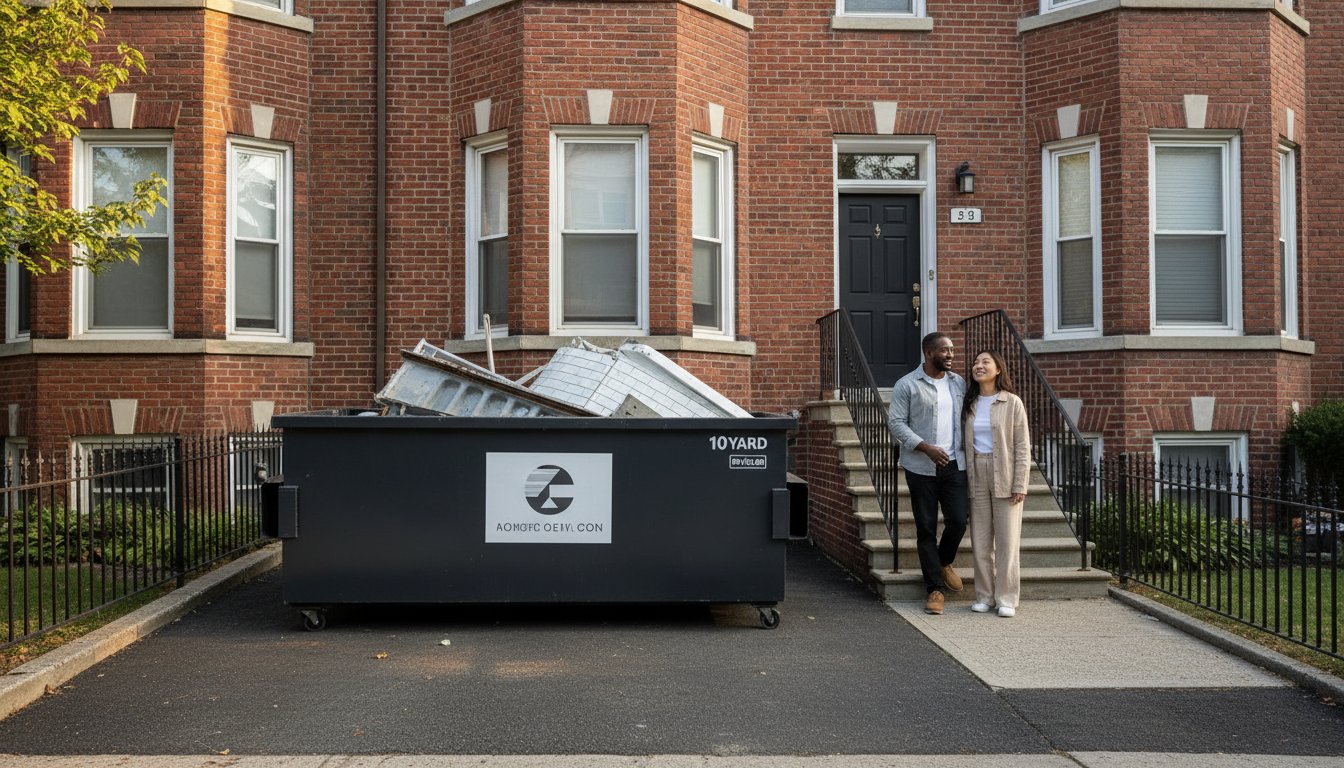
Did you know a single cast iron tub can weigh up to 500 pounds before you even touch the tile or plaster? Tearing out a small space creates unexpectedly heavy debris that can quickly trigger overage fees ranging from $40 to $200 per ton. You need a bathroom remodel dumpster rental that handles the density of cement board and porcelain without blocking your entire driveway in cities like Queens or Boston. It is easy to feel overwhelmed by local permit rules and the threat of hidden costs while your renovation sits at a standstill.
We believe waste management should be the simplest part of your project. This guide ensures you manage your 2026 renovation waste efficiently by choosing the right dumpster size and understanding local regulations in New York, New Jersey, Illinois, and Massachusetts. You will learn how to secure transparent pricing, avoid trip fees, and maintain a clean job site from start to finish. We provide a clear roadmap for your disposal needs so you can book your dumpster and get back to building your new space.
Key Takeaways
- Understand why small bathroom spaces generate massive volumes of debris and how a roll-off container prevents dangerous pile-ups on your property.
- Compare the footprint of a 10-yard bin to a standard parking space to ensure your bathroom remodel dumpster rental fits perfectly on your site.
- Identify specific permit rules for New York City and Boston to ensure your dumpster placement stays legal and avoids costly municipal penalties.
- Use our streamlined booking process to secure on-time delivery and transparent, flat-rate pricing while avoiding hidden overage fees.
- Learn to manage heavy debris like mortar and cast iron by understanding weight limits and how they impact your transport costs in New Jersey and New York.
Why a Bathroom Remodel Dumpster Rental is Essential
Renovating a bathroom produces a high volume of heavy, sharp, and bulky debris that standard trash services won't touch. You cannot leave a 500-pound cast iron tub or jagged porcelain tile on the curb for your weekly pickup. Using a bathroom remodel dumpster rental is the only way to keep your project moving forward without logistical bottlenecks. These Roll-off dumpsters are designed specifically for the weight of construction materials, allowing you to toss everything from old drywall to heavy mortar beds into one central container.
The "pile-up" risk is a real threat in tight urban spaces like Chicago or Queens. Debris piles become safety hazards and eyesores within hours of starting demolition. Because materials like plaster and lath don't pack down tightly, they occupy more space than you expect. For contractors in New Jersey and Illinois, on-site disposal is a necessity for professional efficiency. Driving to a local disposal site can waste 2 to 4 hours of labor per trip. A single rental replaces multiple trips to the dump, helping you avoid the $60 per ton overage fees often associated with poorly managed loads that exceed the 2.0-ton limit.
The Hidden Volume of a Small Bathroom
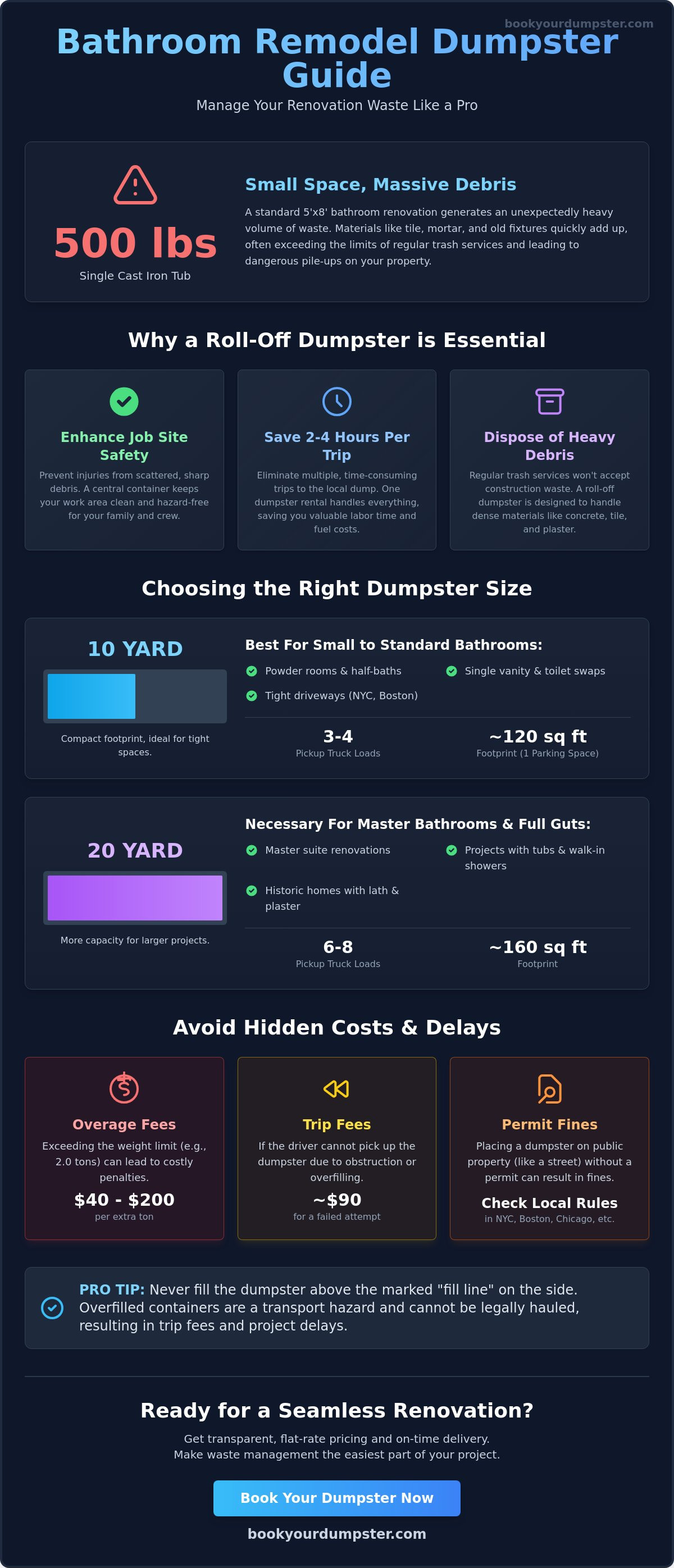
A standard 5x8 bathroom seems small until you tear out the vanity cabinets and the bathtub. These bulky items consume cubic yardage instantly. Safety is paramount in residential homes. Keeping a clean work area prevents crew injuries and protects your family from tripping over scattered debris. For most standard updates, a 10 yard dumpster rental serves as the ideal baseline. It holds the equivalent of three to four pickup truck loads while maintaining a small enough footprint for most suburban driveways.
Residential vs. Commercial Bathroom Gutting
Your waste management strategy depends on the scope of the demolition. A simple fixture swap produces minimal waste, but a full gutting involves removing everything down to the studs. Professional contractors working in San Francisco or Queens must handle heavy debris like cement board, which weighs about 3 pounds per square foot. In May 2026, C&D waste is strictly defined as non-hazardous materials such as steel, wood, brick, and concrete resulting from construction or demolition activities. Understanding these categories helps you stay compliant with local disposal regulations while maintaining a clean, professional job site.
Choosing the Right Size: 10 Yard vs. 20 Yard Dumpsters
A 10-yard container occupies approximately 120 square feet, which is the same footprint as a single standard parking space. This compact size makes it the most efficient choice for a bathroom remodel dumpster rental when your driveway space is limited. While room square footage is a helpful starting point, you must book your bin based on the specific debris type. Heavy materials like porcelain and tile take up less physical space but reach weight limits much faster than bulky items like fiberglass shower inserts or vanity cabinets.
Safety during transport is a non-negotiable priority. Always adhere to the "fill line" marked on the side of the container. Overfilling a bin creates a hazard for drivers and other motorists on the road. Following the guidelines for Sustainable Management of C&D Materials ensures that your waste is handled responsibly and efficiently according to May 2026 standards. If you have debris sticking out over the top, the driver cannot legally pick up the load. This often results in a $90 trip fee and delays your project timeline. Avoid these costs by selecting a size that accommodates your specific demolition plan.
When the 10 Yard Dumpster is King
For half-baths or powder room updates in Massachusetts, the 10-yard bin is almost always the correct choice. It fits easily into the narrow driveways of Jersey City or the tight residential streets of Queens without blocking sidewalk access. This size handles roughly 50 to 60 trash bags of debris. If you are swapping out a single vanity and a toilet, book your 10 yard dumpster rental today to keep your driveway clear and your work site organized.
Scaling Up for Master Bathrooms
Master suite renovations usually require more capacity. When your plans include a double vanity, a standalone soaking tub, and a new walk-in tile shower, a 20-yard container is necessary. Historic homes in Illinois often hide layers of heavy lath and plaster behind the walls. This material is dense and high-volume, quickly filling a smaller bin before the demolition is even finished. Before your delivery arrives, use this checklist to ensure your site is ready:
- Measure a clear path at least 10 feet wide for the delivery truck.
- Verify there are no low-hanging branches or power lines below 15 feet.
- Clear a flat, paved area at least 20 feet long for the bin placement.
Choosing the right size upfront prevents the logistical headache of a mid-project swap. If you aren't sure which bin fits your debris profile, choose your size online to see detailed dimensions and weight limits for your specific location.
Managing Heavy Debris: Tile, Plaster, and Weight Limits
Bathroom materials are deceptively heavy. While a bedroom renovation might produce light drywall and carpet, a bathroom gutting involves porcelain, ceramic, and thick mortar beds. These materials weigh significantly more than standard household junk. A single layer of ceramic tile with a one-inch mortar bed can weigh 15 pounds per square foot. This extreme density is why a bathroom remodel dumpster rental requires careful weight management. In New York and New Jersey, transport regulations are strictly enforced to prevent road damage and ensure vehicle safety. If your load exceeds the legal limit, you face fines or the driver may be forced to leave the container on-site until you remove the excess weight.
Use a "nested" loading technique to maximize your space. Place heavy items like tile and plaster at the bottom of the bin to create a stable base. Avoid creating air pockets by breaking down larger items like vanities or fiberglass tubs. However, watch out for old cast iron tubs. These fixtures can weigh up to 500 pounds. If you are disposing of one, place it in the center of the bin to keep the weight balanced. Properly managing these materials aligns with the Sustainable Management of Construction and Demolition Materials to ensure efficient disposal and recycling. This approach keeps your job site safe and your project on schedule.
Understanding Tonnage and Overage Fees
In the waste industry, weight is measured in tons. For a typical bathroom, every 50 to 60 square feet of tile and its associated setting bed equals roughly one ton (2,000 pounds). If your 10-yard bin has a two-ton limit, you can reach that capacity with just the floor and wall tile from a standard master bath. We provide transparent dumpster rental prices to help you budget for these weight requirements. Modern roll-off trucks are equipped with weight sensors that verify the load at the scale. If you go over your allotted tonnage, expect an overage fee ranging from $40 to $200 per ton depending on your local landfill rates.
Prohibited Materials in Bathroom Remodels
Not everything from your renovation can go into the container. Adhesives, liquid paints, and hazardous chemicals are strictly prohibited. If your home was built before 1978, you may encounter lead-based paint on old plaster or trim. This requires specialized disposal and cannot be mixed with standard C&D waste. For residents in Illinois and Massachusetts, local hazardous waste collection centers offer safe alternatives for these items. Old copper or galvanized plumbing pipes are often better handled by a local scrap yard. Always verify your local list of prohibited items before you start loading to avoid contamination fees.
Local Permitting and Placement in Major Metro Areas
Placement is just as important as size when arranging your bathroom remodel dumpster rental. In high-density areas like Queens and Manhattan, the New York Department of Transportation (DOT) requires a Street Opening Permit if the container sits on a public road. These permits typically cost between $50 and $150 as of May 2026. While we usually handle the filing for you in NYC, always confirm the status before the truck arrives. In Boston, a Street Occupancy Permit is mandatory for any public way, involving a base fee of $25 to $50 plus daily occupancy charges. Placing the bin on your private driveway usually bypasses these fees and the paperwork entirely.
If your renovation takes place in San Francisco, you must secure a "Space Requirement" permit for any public right-of-way placement. Suburban projects in Illinois and Massachusetts come with their own hurdles, specifically Homeowners Association (HOA) regulations. Many HOAs limit dumpster placement to 72 hours or require specific screening. Before delivery, use the "planking" method to protect your property. Lay down 2x4 boards or thick plywood where the roll-off wheels will rest. This distributes the weight of heavy tile and plaster, preventing cracks in your asphalt or pavers.
Street vs. Driveway Placement
A street permit adds to your budget, but it saves your driveway from potential stress. Weigh the $150 permit cost against the convenience of keeping your parking space open. Review the latest debris removal regulations for 2026 to stay compliant with local waste diversion mandates. Before the driver arrives, run through this clearance checklist:
- Ensure at least 15 feet of vertical clearance from power lines.
- Trim any low-hanging tree branches that block the truck's lift arm.
- Clear a 10-foot wide path for the vehicle to back into position.
Regional Logistics: From Queens to San Francisco
Urban centers require precision. Our drivers specialize in "tight-squeeze" deliveries in crowded neighborhoods where every inch counts. Seasonal weather also dictates your strategy. In Illinois and Massachusetts, avoid placing bins in designated snow removal routes during winter months. A blocked plow can result in heavy municipal fines. Coordinate your drop-off with your contractor's demolition schedule to avoid paying for empty days. To ensure your project stays on track, book your dumpster for the day before your crew begins work.
Book Your Dumpster for a Seamless Bathroom Renovation
Booking a bathroom remodel dumpster rental shouldn't take longer than the demolition itself. Our 3-step online system at bookyourdumpster.com removes the need for manual quotes or tedious callbacks. First, select your container size based on your specific debris volume. Second, choose your delivery date and precise placement location. Third, complete your payment through our secure portal to lock in your project on our 2026 calendar. We provide an instant digital confirmation. This ensures your waste management is settled before your crew even picks up a sledgehammer.
Transparency is our core standard. For all rentals in New York and New Jersey, we stand by a strict "No Hidden Fees" promise. You won't find surprise fuel surcharges, environmental fees, or administrative costs on your final bill. We believe in straightforward utility and a verbal handshake on every deal. Once your demolition is complete, simply log in to your account or call us to schedule your pickup. We offer the flexibility to adjust your timeline if your project hits unexpected delays. Because 10-yard dumpsters fit the waste profile of 90% of standard bathroom projects, they remain the most logical and cost-effective choice for residential homeowners.
The Book Your Dumpster USA Advantage
We built a digital-first platform to match the speed of modern construction. Our system provides real-time availability for 2026 projects, which is a significant improvement over traditional models that require manual phone calls. If your project expands into a larger home addition or a full-scale commercial gutting, we offer a comprehensive roll off dumpster rental guide to help you scale up to 30 or 40-yard bins. Our logistics network ensures on-time delivery across Massachusetts and Illinois. We respect the strict schedules of your hired contractors and the urgency of your renovation timeline.
Final Preparation for Your Rental
Success on delivery day depends on a clear and accessible site. Remove all vehicles from the driveway and ensure the path is completely unobstructed before the truck arrives. If you are using the planking method to protect your driveway, have your 2x4 boards or plywood ready for immediate placement. It's professional to inform your neighbors about the temporary container. This simple step prevents parking disputes and maintains goodwill in your community during the noisy demolition phase. Take control of your project waste now. Schedule your bathroom remodel dumpster rental today to secure your delivery date and start your renovation with a clean, organized slate.
Take Control of Your Renovation Waste Today
You have the data on dumpster sizing and the permit rules for cities like Boston and Chicago. Now you can move from planning to demolition without worrying about debris pile-ups. A 10-yard bin remains the most efficient tool for handling heavy tile and plaster while fitting into tight residential spaces. By securing your bathroom remodel dumpster rental early, you ensure your contractors stay on schedule and your driveway remains safe from damage. This proactive approach prevents the $90 trip fees associated with blocked access or overfilled containers.
We simplify the logistics through our digital-first platform. Enjoy instant online booking and transparent pricing with no hidden fees in NY, NJ, IL, MA, and SF. It's time to clear the way for your new space. Book your bathroom remodel dumpster online now to guarantee an on-time delivery. Your project deserves a clean start and a professional finish. We have the logistics under control so you can focus on the build. Get started today and keep your renovation moving forward.
Frequently Asked Questions
What size dumpster is best for a standard 5x8 bathroom remodel?
A 10-yard dumpster is the most efficient choice for a standard 5x8 bathroom gutting. It provides enough volume for the vanity, toilet, and bathtub while handling the heavy weight of floor and wall tile. This size occupies the same footprint as a single parking space, making it easy to place in most residential driveways without blocking access.
Can I put a cast iron bathtub in a 10-yard dumpster?
Yes, you can dispose of a cast iron bathtub in a 10-yard bin. These fixtures typically weigh between 250 and 500 pounds, so you must account for this weight when calculating your total load. Place the tub in the center of the container to keep the weight balanced for the roll-off truck during pickup and transport.
Do I need a permit for a dumpster in Queens or San Francisco?
You need a permit if you place the container on a public street or sidewalk in these cities. In Queens, a DOT Street Opening Permit costs between $50 and $150 as of May 2026. San Francisco requires a "Space Requirement" permit for any public right-of-way placement. You don't need a permit if the bin sits entirely on your private driveway.
How much weight can a 10-yard dumpster hold for tile and concrete?
A 10-yard bathroom remodel dumpster rental typically has a weight limit of 2 to 3 tons, which equals 4,000 to 6,000 pounds. Because bathroom tile and mortar are dense, you can reach this limit quickly. Monitor your debris levels to avoid overage fees that range from $40 to $200 per ton depending on local landfill rates in your state.
What happens if I overfill my bathroom remodel dumpster?
Drivers cannot legally transport a container if the debris exceeds the top "fill line" of the side walls. If your bathroom remodel dumpster rental is overfilled, the driver will leave the bin and charge a trip fee of approximately $90. You must remove the excess material before we can schedule a new pickup date for your site.
How long can I keep the dumpster on my driveway in New Jersey?
Most residential rental periods last 7 to 14 days, but you can call for an earlier pickup once your demolition is finished. In Newark, NJ, keeping a dumpster on public property requires a permit that costs about $100 for the first week. Always check with your local municipality or HOA for specific rules regarding how long a container can sit on a private driveway.
Will the dumpster rental damage my new driveway or pavers?
Heavy steel containers can scratch or crack driveway surfaces if you don't take precautions. Protect your property by using the "planking" method, which involves laying down 2x4 boards or plywood for the dumpster wheels to rest on. This simple step distributes the weight of the heavy renovation debris and prevents the metal from making direct contact with your asphalt or pavers.
Can I mix bathroom debris with regular household trash in the same bin?
You can mix construction materials like drywall and tile with standard household junk, but you must exclude all prohibited items. Don't put liquid adhesives, paints, or hazardous chemicals in the bin. If you contaminate the load with these materials, you'll face significant sorting fees at the scale. Stick to dry construction waste and non-hazardous furniture to keep your disposal costs predictable.


