
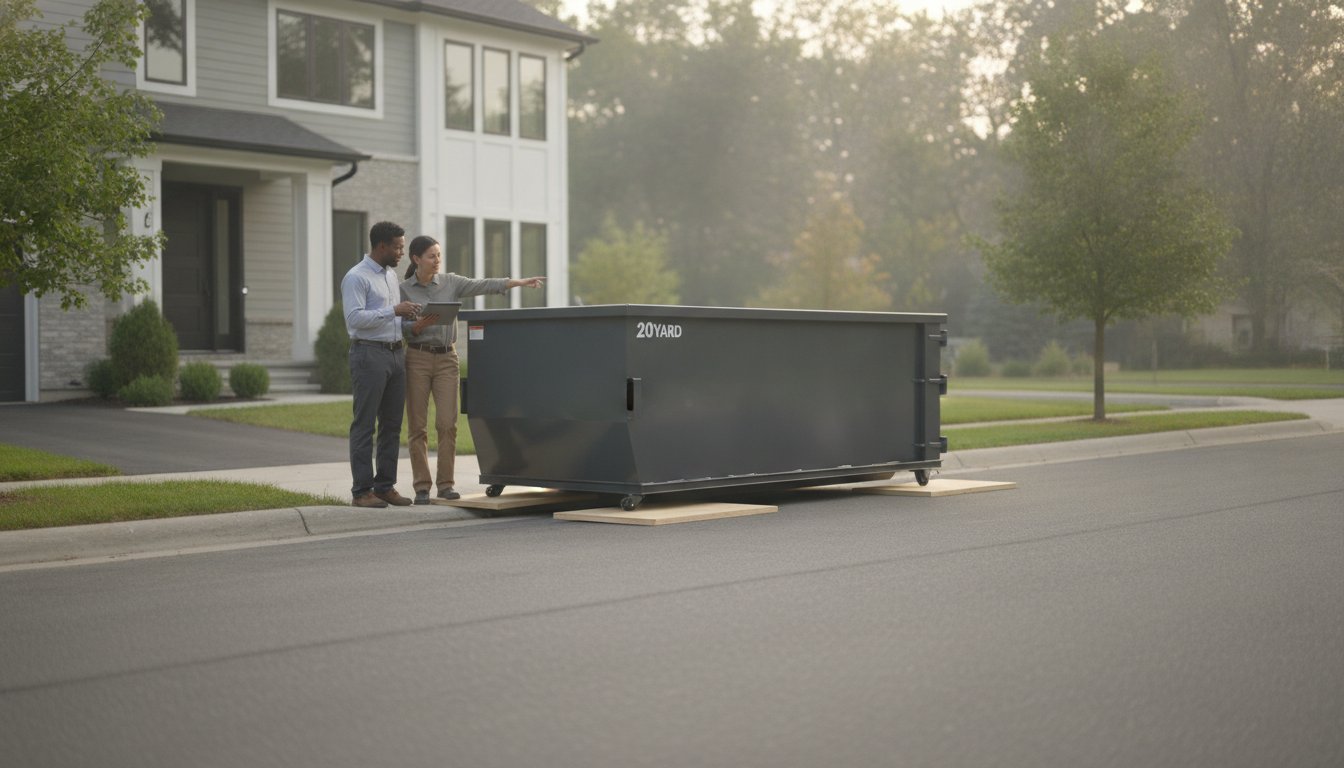
A single 20-yard dumpster can weigh several tons before you even start loading debris. Choosing the wrong spot doesn't just make your project harder; it can lead to expensive driveway repairs or unexpected city fines. You want your cleanup to be the most efficient part of your project, not a source of logistical stress. It's common to worry about cracked asphalt or blocking emergency access when you're managing a tight urban space. Finding the best place to put a dumpster on my property requires a balance of structural safety and easy loading access.
This 2026 guide provides the professional framework you need to select a site that protects your investment. You'll learn how to identify high-risk surfaces, navigate local permit requirements, and prepare your property for a seamless delivery. We'll outline the specific steps to ensure your rental arrives and departs without damaging your driveway or upsetting the neighbors. Follow these expert placement strategies to keep your project on schedule and your property intact.
Key Takeaways
- Position your rental near the main debris exit and maintain 60 feet of straight-line clearance for the delivery vehicle.
- Prevent driveway damage by identifying vulnerable concrete edges and potential asphalt sinkage before the truck arrives.
- Identify the best place to put a dumpster on my property based on whether you're renting a 10, 20, 30, or 40-yard unit.
- Check local right-of-way permits and HOA guidelines to avoid fines for street placement or visibility violations.
- Prepare for a smooth delivery by clearing the path of all vehicles and marking the drop-off zone with cones or chalk.
Strategic Planning: Identifying the Ideal Dumpster Location
Finding the best place to put a dumpster on my property starts with logistical math. You need a spot that balances your physical labor with the mechanical requirements of the delivery truck. Prioritize a location closest to your primary debris exit point, such as a garage door or a basement walk-out. If the bin is too far away, you pay a "walking tax" in the form of wasted hours and physical exhaustion. A poorly placed bin turns a one-day job into a weekend-long ordeal.
The 60-Foot Rule for Delivery Trucks
Roll-off trucks are massive. To safely place a container, a driver needs at least 60 feet of straight-line approach. This space allows the truck to back in, tilt the hoist, and slide the unit onto the ground. If you don't provide this runway, the driver may refuse delivery to avoid property damage. Vertical clearance is equally critical. During the tilt phase, the top of the dumpster can reach heights of 22 to 25 feet. Check for low-hanging power lines or tree branches that could snag the equipment. Before the truck arrives, move all parked cars from the driveway and the street directly opposite your entrance. Even portable basketball hoops can become expensive obstacles if left in the swing zone.
Proximity to the Project Site
Every extra step you take with a heavy load adds up. Moving debris 50 feet instead of 10 feet can double the time required for a cleanout. For residential projects, place the unit near the garage or a side entry to keep your path of travel short and direct. If you're dealing with a confined urban lot, a 10 yard dumpster rental is often the most strategic choice. These smaller units fit into parking pads or narrow driveways where larger bins simply won't go. Understanding Roll-off dumpster sizes helps you match the container to your available footprint without sacrificing capacity.
Ensure the chosen surface is level. A dumpster placed on a significant incline can shift while you're loading it, creating a safety hazard. If your driveway has a steep grade, consider alternative spots on your property that offer a flatter foundation. Verifying these details before scheduling ensures your project starts with total control and zero delays.
Surface Analysis: Protecting Your Property from Damage
The surface you choose dictates whether your project ends with a clean yard or a repair bill. Concrete is the standard choice for many homeowners, but it isn't invincible. While it handles vertical weight well, the edges are prone to cracking if the delivery truck's wheels catch the corner during the drop-off. Asphalt presents a different challenge. In high summer temperatures, asphalt softens significantly. A heavy dumpster can leave permanent divots or sinkage spots that require professional patching later. When deciding on the best place to put a dumpster on my property, you must look beyond the initial footprint and consider the long-term structural impact.
Avoid grass and lawns whenever possible. Even if the ground feels dry, the weight of the dumpster causes deep ruts and severe soil compaction. This damage is often permanent and kills the underlying root system. Pavers and stamped concrete are also high-risk areas. Individual stones can shift or crack under concentrated pressure, ruining the aesthetic of your landscaping. If your project involves a formal C&D Waste Management Plan, you already know that site preparation is a critical step in maintaining safety and compliance.
The Plywood and Plank Method
Protect your investment by using a physical barrier between the metal and your driveway. Place 2x4 planks or 4x8 plywood sheets exactly where the dumpster's rollers will rest. This setup distributes the PSI (pounds per square inch) across a wider area, preventing the metal rollers from scarring your driveway. Surface protection is the most effective way to avoid post-project repair costs. If you're worried about your driveway's capacity, choosing the right dumpster size is the first step toward a damage-free rental.
Slope and Grade Safety
Gravity is a major factor in safe dumpster placement. Never place a container on a steep incline where it could roll or become unstable during the loading process. A safe grade for most roll-off containers is less than a 5% slope. Anything steeper risks the unit shifting as you add weight. If a slight incline is unavoidable, you must use heavy-duty chocks to secure the wheels. Always prioritize a flat, level surface to ensure the rear doors of the unit can open and close without binding. Taking these precautions ensures the best place to put a dumpster on my property remains a safe, functional work zone.
Size-Specific Placement: From 10-Yard to 40-Yard Units
Placement strategy changes as the container grows. A 10-yard unit has a much smaller footprint than a 40-yard industrial bin. Determining the best place to put a dumpster on my property requires matching the physical dimensions of the unit to the available open space on your lot. Measure your intended spot before the truck arrives to avoid delivery delays.
The 10-yard dumpster is the most versatile for residential use. It fits easily into standard driveways and small parking pads. If you choose a 20 or 30-yard unit, prepare to clear a double-car driveway or a long side-yard. These mid-sized bins are the industry standard for home renovations but require significant length. For the largest projects, 40-yard dumpsters are often too long for residential driveways. These units usually require street placement, which often involves local permitting and specific safety equipment like traffic cones.
Always account for the rear swing door. This door allows you to walk heavy debris directly into the container. You need roughly 8 feet of clearance behind the unit to swing the door fully open. Without this space, you'll be forced to lift every item over the high side walls, which increases the risk of injury and slows your progress. Selecting the right size ensures the best place to put a dumpster on my property remains functional for the duration of your project.
Optimizing for Small Footprints
Measure your driveway width before the truck arrives. Most delivery vehicles need at least 10 feet of width to maneuver safely. For tight urban spaces or narrow alleys, a small dumpster rental is the most pragmatic choice. A 10-yard unit provides enough capacity for basement cleanouts or bathroom remodels without overwhelming your property. Use these smaller bins for heavy materials like concrete, brick, or dirt to keep the load manageable and within legal weight limits.
Managing Large-Scale Commercial Placement
Large job sites demand precise logistics. When managing construction debris removal, place 30 or 40-yard units in a location that serves the crew without blocking site traffic. Verify that the dumpster does not obstruct fire lanes or essential loading docks. Coordinate with other contractors to ensure the bin stays clear of scaffolding, excavators, and staging areas for new materials. Maintaining a clear buffer around the unit prevents accidental collisions with heavy machinery.

Local Regulations: Permits, HOAs, and Street Placement
Legal compliance is the final hurdle in determining the best place to put a dumpster on my property. If you place the container entirely on your private driveway, you typically don't need a city permit. However, if any part of the unit touches the sidewalk or street, it enters the "public right-of-way." In high-density cities like Boston or San Francisco, street placement is often the only option due to narrow lot sizes. These municipalities require specific safety markers, such as traffic cones or high-visibility reflective tape, to prevent accidents after dark. Ignoring these requirements can lead to immediate impoundment of the bin or heavy daily fines.
Navigating the Street Permit Process
Contact your local Department of Public Works (DPW) or Department of Transportation (DOT) at least two weeks before your project begins. In major hubs like New York or Chicago, permit approval lead times vary, but securing your paperwork early prevents a "blocked delivery" fee. Be prepared for additional costs. Total dumpster rental prices usually increase when street permits are involved, as cities charge for the use of public space. Provide the city clerk with your exact delivery date and the container's dimensions to ensure the permit covers the correct footprint.
Winning Over Your HOA
Homeowners Associations often have stricter rules than the city. They may limit how long a container can sit on your driveway or dictate where it can be seen from the street. To get approval, present a clear project timeline to the board. If they object to the visual clutter, suggest "hidden" placement options like a side yard or behind a temporary fence. Maintaining a "clean site" is your best defense against neighborhood complaints. Don't let debris spill over the top and keep the area around the unit swept daily to avoid HOA fines.
The best place to put a dumpster on my property is the spot that satisfies both your labor needs and your local ordinances. Taking the time to verify these details ensures your project stays on schedule and within budget. If you've confirmed your placement spot and checked your local rules, you can book your dumpster rental online to secure your delivery date.
Final Preparation: The Day of Delivery Checklist
Execution on delivery day determines how smoothly your project starts. Clear all vehicles from your driveway and the street area directly opposite your entrance. Drivers require every inch of available space to back the truck into position safely. Use chalk, spray paint, or traffic cones to mark the exact footprint for the container. This eliminates guesswork and ensures the driver places the bin exactly where you've planned the best place to put a dumpster on my property.
Orient the dumpster so the rear swing-door faces your primary work area. Loading heavy items is significantly easier when you can walk them straight into the bin rather than lifting them over the high side walls. If your property has a septic system or shallow underground utilities, communicate these locations to your rental provider before the truck arrives. A loaded 30-yard dumpster can weigh over 10 tons; placing that weight over a septic tank or drain field can cause thousands of dollars in structural damage.
Communicating with the Driver
You don't need to be home for the delivery if you provide clear instructions. Leave a physical note on the garage door or use high-visibility markers to show the drop zone. The path must remain completely unobstructed for the roll off dumpster rental truck to finish the job. Perform one final check for low-hanging wires or tree branches. If the driver determines the path is unsafe, they'll skip the delivery, and you may be charged a trip fee for the delay.
Securing the Site
Once the unit is on the ground, take steps to manage your load weight and security. If the forecast calls for rain, cover the dumpster with a heavy-duty tarp. Saturated debris, especially drywall or carpeting, adds significant weight that can push you over your tonnage limit. To prevent "neighbor dumping," consider placing a lock on the door handle or keeping the site well-lit at night. Unauthorized waste can lead to prohibited item fines or overage charges that you didn't budget for.
Proper preparation transforms a messy logistical hurdle into a controlled, efficient process. When you've identified the best place to put a dumpster on my property and cleared the path, you're ready to begin. Book your dumpster online today and let our experts handle the placement logistics so you can focus on the work ahead.
Secure Your Project Site Today
Effective waste management depends on proactive site planning. You now know how to evaluate surface integrity to prevent driveway damage and how to navigate the complexities of local right-of-way permits. By applying the 60-foot rule and accounting for swing-door clearance, you ensure the best place to put a dumpster on my property is both safe and highly accessible for your crew. These simple adjustments prevent the logistical delays and extra fees that often derail residential or commercial projects.
We provide reliable 10, 20, 30, and 40-yard containers to help you maintain a clean, organized work zone. It's easy to schedule your delivery through our 24/7 online booking system. We proudly serve homeowners and contractors across New York, New Jersey, Illinois, Massachusetts, and San Francisco with transparent pricing and punctual service. Ready to start your project? Book Your Dumpster USA today! Take the stress out of debris removal and keep your property protected from start to finish.
Common Questions About Dumpster Placement
Can I put a dumpster on my lawn?
You should avoid placing a dumpster on your lawn. The heavy weight of the container and the delivery truck will cause deep ruts and severe soil compaction. If the ground is wet, the bin may sink, making it impossible for the truck to retrieve it without tearing up your landscaping. Stick to hard, level surfaces like concrete or asphalt to ensure your property remains intact.
How much space does a roll-off truck need to drop off a dumpster?
A roll-off truck requires at least 60 feet of straight-line clearance to back in and drop the container. You also need a vertical clearance of 22 to 25 feet to accommodate the hoist as it tilts during delivery. Ensure the area is clear of parked cars, low-hanging tree limbs, and power lines. This space is essential for the driver to maneuver safely without hitting your home or overhead obstructions.
Do I need to be home for the dumpster delivery?
You don't need to be present for the delivery if you provide clear instructions and an unobstructed path. Mark the intended drop-off zone with cones or chalk so the driver knows exactly where to place the unit. Ensure all vehicles are moved and gates are unlocked before the truck arrives. If the driver cannot access the site safely, they may skip the delivery, resulting in a trip fee.
Will a dumpster damage my driveway?
A dumpster can damage your driveway if the weight is not distributed correctly. Concrete is susceptible to edge cracking, while asphalt can develop permanent divots in high heat. Choosing the best place to put a dumpster on my property involves evaluating the structural integrity of your driveway before the truck arrives. Most damage occurs during the drop-off or pickup when pressure is most concentrated on the rollers.
How do I protect my driveway from a dumpster?
Use 4x8 plywood sheets or 2x4 wooden planks to create a physical buffer between the dumpster and the ground. Place these boards exactly where the unit's metal rollers will rest. This distributes the weight across a larger surface area and prevents the metal from scarring or cracking your driveway. It is a simple, low-cost step that effectively eliminates the risk of expensive post-project repairs.
What happens if the dumpster is too heavy for the surface?
If the dumpster exceeds the surface's load capacity, it will sink into asphalt or cause structural failure in concrete. This often happens when bins are overfilled with heavy materials like dirt or brick. Sinking makes it difficult for the truck to pull the unit back onto the hoist, potentially leading to additional equipment fees or property damage. Always monitor your weight limits to keep the load manageable.
Can I move the dumpster once it has been placed?
Do not attempt to move a dumpster yourself once it has been placed on your property. These units are extremely heavy and are not designed to be pushed or towed by consumer vehicles. Attempting to move one can result in severe personal injury or significant damage to your driveway and the container itself. If the initial placement is unworkable, you must call your service provider to schedule a professional relocation.
Are there places on my property where I cannot put a dumpster?
Avoid placing a dumpster over septic tanks, drain fields, or underground utility lines. The concentrated weight will cause these systems to collapse. You must also avoid steep inclines where the unit could become unstable or roll during loading. Identifying the best place to put a dumpster on my property means staying away from soft soil, fire lanes, and any area that blocks emergency access to your home.


