

What if filling your rental container with backyard soil actually costs you double the rental price in weight penalties? Many people assume a roll-off bin is a catch-all for any renovation debris. However, you need to know: can you put dirt in any dumpster? The answer is a firm no. Dirt is a heavy-haul commodity that quickly exceeds the weight capacity of standard residential containers. Loading it into the wrong bin often results in a truck that is unable to lift the load and hundreds of dollars in overage fees.
It's a common headache to face unexpected logistics when you simply want the mess gone. We agree that managing heavy debris should be straightforward and transparent. This guide shows you why dirt disposal requires specific container types and how to avoid costly weight penalties on your next project. We will cover the difference between clean fill and contaminated soil, why a 10-yard dumpster is the industry standard for heavy loads, and how to follow local regulations. Move your project forward without the stress of hidden fees or logistical delays.
Key Takeaways
- Discover why the answer to can you put dirt in any dumpster is a firm no and identify the specific "inert waste" containers required for soil.
- Select a 10-yard dumpster for heavy debris to stay within legal road weight limits and ensure the truck can lift the load.
- Learn to classify "clean fill" correctly to qualify for lower recycling rates and avoid contamination penalties.
- Protect your property from structural damage by using plywood or street pads under heavy-haul rollers.
- Avoid unexpected overage fees by matching your project volume to the right heavy-duty container from the start.
Can You Put Dirt in Any Dumpster? The Short Answer
The short answer is no. You cannot put dirt in just any dumpster rental. If you're asking can you put dirt in any dumpster, you're likely planning a landscaping or excavation project. Most standard roll-off containers are designed for bulky but relatively light materials like old furniture, drywall, or roofing shingles. Dirt belongs to a completely different category. It's officially classified as "heavy debris" or "inert waste" by most haulers. Loading soil into a standard 30 or 40-yard bin is a recipe for project delays. Once that bin is even partially full of dirt, it often becomes a "locked" container. This means the truck's hydraulic system cannot physically lift the weight. You end up with a massive, immobile metal box on your property and a failed pickup fee.
The Definition of Heavy Debris
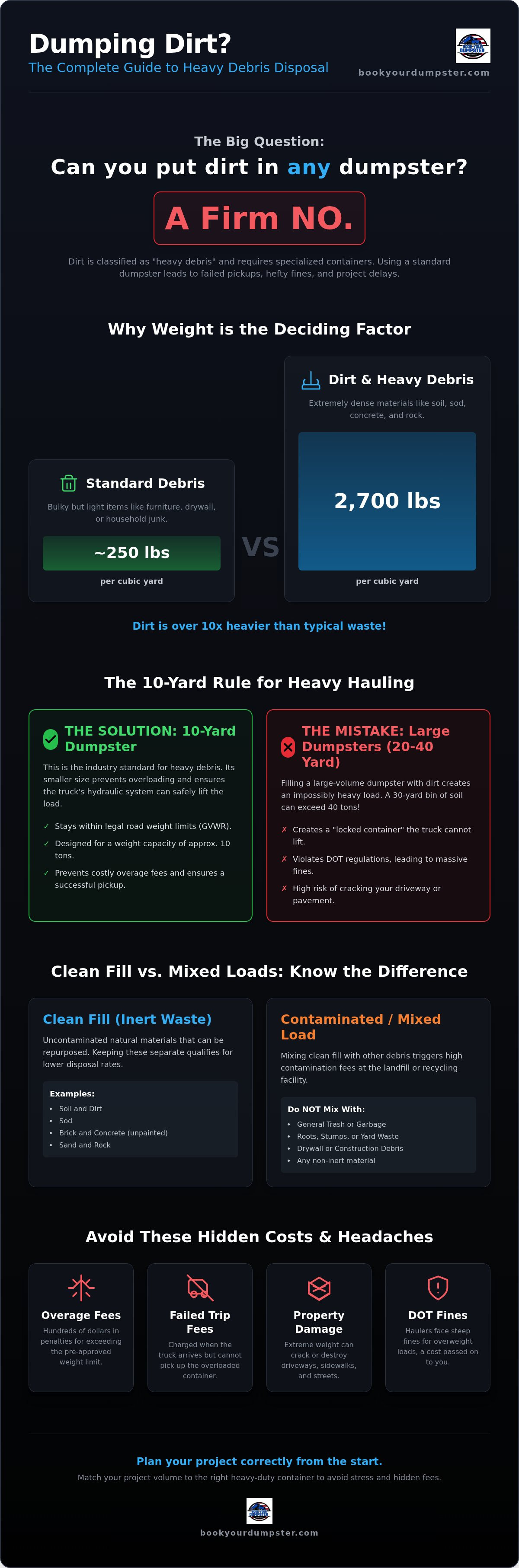
Waste management professionals treat dirt as a heavy-haul commodity because of its extreme density. A single cubic yard of dry dirt weighs approximately 2,000 to 2,700 pounds. To put that in perspective, one cubic yard of standard household junk might weigh only 250 pounds. When dirt gets wet, that weight increases significantly. Landfills and transfer stations categorize soil, concrete, and brick as "inert waste" because these materials don't decompose or produce greenhouse gases. Because they're so heavy, they require specialized disposal routes. They also need equipment that can handle tens of thousands of pounds in a single trip. Choosing the wrong container size for these materials is the fastest way to blow your project budget.
Standard vs. Specialized Dumpsters
Standard roll-off dumpsters are designed for volume. They give you space for light, airy items that take up a lot of room but don't weigh much. Specialized dirt dumpsters are designed for weight and structural stability. Mixing dirt with regular household trash or construction debris is a major mistake. This creates a "mixed load" that often triggers high contamination surcharges at the scale. Most facilities require Clean fill to be kept separate to ensure it can be repurposed for grading or construction. Contractors often wonder can you put dirt in any dumpster when they have a mixed pile, but the answer remains a strict no to avoid these surcharges. Use specialized bins to maintain soil stability during transport and ensure your project stays within legal road weight limits. Specialized bins are required for soil stability and to prevent the truck from bottoming out during the haul.
The Physics of Weight Limits: Why Size Matters for Dirt
Many homeowners and contractors ask can you put dirt in any dumpster because they see a 30-yard bin and think more space equals better value. This logic fails when dealing with soil. Dirt is roughly ten times denser than standard household waste. If you filled a 30-yard dumpster with soil, the total weight could exceed 40 tons. No standard roll-off truck can lift that load. Even if the hydraulics held up, the truck would likely crack your pavement or blow out its tires before leaving your property. When you wonder can you put dirt in any dumpster, the answer is limited by the physical capacity of the machinery involved.
The 10-Yard Rule for Soil and Sod
The 10-yard dumpster is the industry standard for a reason. It acts as a physical safety cap. Most 10-yard containers used for heavy debris have a weight limit of approximately 10 tons. Filling this specific size ensures the load stays manageable for the truck's hydraulic system. You'll often see a "fill line" painted inside these bins. Even in a 10-yarder, you cannot always fill it to the brim if the soil is wet or particularly dense. Compare this to household furniture; you could stack a 40-yard bin with old couches and still weigh less than a half-full 10-yarder of dirt. If you aren't sure which size fits your excavation, check the 10-yard dumpster options available for heavy-duty projects.
Understanding GVWR and DOT Regulations
Heavy debris disposal isn't just about what the truck can lift. It's about what the road can handle. The Department of Transportation (DOT) sets strict Gross Vehicle Weight Rating (GVWR) limits for commercial vehicles. Haulers face massive fines at highway scales if they're overweight. These regulations protect local infrastructure in densely populated areas like Queens or Chicago, where heavy loads can easily collapse aging sewer lines or crack residential streets. Following OSHA waste disposal regulations ensures that debris is handled safely without endangering workers or the public. Overloaded bins are a major safety risk. They shift the truck's center of gravity and make braking unpredictable. Stick to the weight limits to keep your project legal and your neighborhood safe.
Clean Fill vs. Mixed Loads: Understanding Disposal Rules
Don't treat all soil as equal waste. When people ask can you put dirt in any dumpster, they often overlook the purity of the material itself. "Clean fill" refers specifically to uncontaminated soil, sand, or gravel that is free from organic matter like roots or synthetic waste like plastic and metal. Landfills and recycling centers prioritize these loads because they are easy to process and repurpose. If your dirt contains trash, it becomes a "mixed load." Mixed loads are much more expensive to dump because they require extensive manual or mechanical sorting at a transfer station. Keeping your materials separated is the most effective way to control your project costs.
Be aware of what lies beneath the surface before you start digging. Contaminated soil containing lead, oil, or industrial chemicals cannot go into a standard roll-off container under any circumstances. These materials require specialized hazardous waste hauling to prevent environmental damage and legal liabilities. Use this checklist to ensure your load stays "clean" and avoids rejection at the scale:
- No tree roots, stumps, or large branches.
- No plastic sheeting, landscape fabric, or PVC piping.
- No metal scraps, rebar, or wire mesh.
- No asphalt or painted concrete.
- No chemical odors, oily sheens, or visible staining.
What Happens if You Mix Debris?
Mixing materials triggers a "Contamination Fee." This fee covers the extra labor and equipment time needed to sort your waste at the facility. If you throw wood, drywall, or shingles into a dedicated dirt bin, you've turned a recyclable product into garbage. This often results in your entire load being reclassified at the highest possible disposal rate. To keep your project efficient, use separate bins for dirt and construction debris removal. This strategy prevents cross-contamination and keeps your logistics moving without the threat of surprise surcharges.
Inert Waste Recycling
Clean soil is a valuable resource in the construction industry. Facilities often repurpose this material for grading projects or as "daily cover" to seal landfills at the end of the day. Keeping soil out of the general waste stream reduces the demand for virgin dirt and preserves limited landfill space. Because clean fill is easier to manage, it often results in lower dumpster rental prices compared to mixed household garbage. By following these rules, you protect the environment and your project budget simultaneously. It's a pragmatic approach that ensures your project remains both compliant and cost-effective.
Planning Your Dirt Removal Project: Logistics and Local Rules
Successful dirt removal requires more than just picking a container. Because soil is so dense, you must plan exactly where the bin will sit. A 10-yard dumpster filled with dirt can weigh over 20,000 pounds. This pressure can easily crack a standard residential driveway. Always choose a flat, hard surface for placement. To protect your property, place thick plywood or professional "street pads" under the rollers. This distributes the weight and prevents the metal wheels from sinking into asphalt or crushing concrete. If you're still wondering can you put dirt in any dumpster, remember that the location of the bin is just as important as the bin itself.
Permitting is another critical hurdle. In cities like New York or San Francisco, placing a dumpster on a public street requires a specific permit. Local authorities often have strict rules about how much space a container can occupy and how long it can stay. Failing to secure these documents before delivery leads to heavy fines and immediate removal of the bin. Always verify your local street occupancy laws before scheduling your drop-off.
Estimating Your Dirt Volume
Avoid the mistake of underestimating your load. Use the standard formula to find your cubic yardage: (Length x Width x Depth in feet) divided by 27. For example, a 10-foot by 10-foot area dug 1 foot deep equals roughly 3.7 cubic yards. However, you must account for the "fluff factor." Dirt expands by approximately 30 percent once it's excavated and no longer compacted. That 3.7 yards quickly becomes nearly 5 yards in the bin. Always round up your estimate. It's cheaper to have extra space than to pay for a second delivery because you ran out of room. If you need help calculating your specific needs, book your dumpster online and consult our sizing guides.
Regional Considerations: NY, IL, and MA
Geography dictates your project's rules. When arranging dumpster rental in New York, prepare for tight alleyways and limited clearance. Massachusetts and Illinois often enforce seasonal weight limits on secondary roads during the spring thaw. These "frost laws" protect roads from damage when the ground is soft, potentially delaying heavy dirt hauls. Before you break ground, call your local utility marking service. Striking a buried line is a safety hazard that will shut down your project instantly. If you ask can you put dirt in any dumpster without checking your local seasonal restrictions, you risk being stuck with a full bin that no truck is legally allowed to transport.
Book Your Dumpster: The Right Bin for Heavy Hauling
Managing a heavy debris project requires a partner who understands the specific logistics of soil and inert waste. While you now know the answer to can you put dirt in any dumpster is a firm no, the next step is selecting the right equipment for the job. Book Your Dumpster USA acts as a pragmatic partner for homeowners and contractors alike. We specialize in matching your specific excavation volume to the correct container size. Our goal is to remove the logistical stress from your project. We maintain strict pricing integrity, ensuring you never face hidden overage surprises or unexpected surcharges at the end of your rental period.
Efficiency is the core of our service. We provide a streamlined digital platform that allows you to secure a bin in minutes. This modern approach respects your time and urgency. Whether you are clearing a small residential garden or managing a large-scale commercial site, our system guides you to the most reliable disposal solution. We handle the heavy lifting and the regulatory compliance, so you can focus on the work at hand. Trust our no-nonsense expertise to keep your project moving toward a clean resolution.
Why Choose Our 10-Yard Dumpsters?
For most soil projects, the 10-yard bin is the most effective tool in our inventory. A 10 yard dumpster rental features a compact footprint that fits easily into tight residential driveways or narrow city alleys. These containers are designed with low-entry walls. This design feature makes hand-loading heavy dirt and sod much easier on your back compared to taller bins. We prioritize punctuality for every drop-off and pick-up. You don't have to worry about a full bin sitting on your property longer than necessary. Reliable service is our rhythmic promise to every customer.
Get Started with Your Dirt Removal
Ready to clear your site? Use our online booking system to schedule your delivery. During the checkout process, select the "Dirt" or "Inert" waste option. This selection ensures we provide a bin rated for heavy debris and helps you avoid contamination fees later. If you are planning a massive excavation project that exceeds 10 cubic yards, consult with our team directly. We can coordinate multiple bins or a specific haul schedule to keep your site clear. Take control of your project logistics today. Book Your Dumpster Online Now and experience a straightforward, professional disposal service. Don't settle for the confusion of asking can you put dirt in any dumpster when you can have the right bin delivered to your door.
Streamline Your Heavy Debris Disposal
You've learned that successful soil removal depends on choosing the right container and understanding weight density. Sticking to a specialized 10-yard bin prevents "locked" loads and keeps your project within legal road limits. Distinguishing between clean fill and mixed waste ensures you avoid high contamination surcharges while protecting the environment. Asking can you put dirt in any dumpster is a smart move that saves you from the logistical stress of an overweight bin. We make the process simple by offering transparent weight limits and containers designed specifically for heavy-haul materials.
Our team serves major metros across NY, NJ, IL, MA, and SF with a focus on punctuality and pricing integrity. Don't let excavation debris stall your progress or blow your budget. Ready to move some earth? Book your 10-yard dirt dumpster at bookyourdumpster.com today! Take the first step toward a clean site and a finished project. We are ready to help you get the job done right.
Frequently Asked Questions
Can I put sod and grass in the same dumpster as dirt?
No. Sod and grass are organic waste, not inert fill. Mixing them with dirt prevents the load from being recycled as clean fill. This often results in higher disposal fees at the transfer station because the load requires manual sorting. Keep soil and green waste in separate containers to maintain pricing integrity. If you're unsure, ask can you put dirt in any dumpster before mixing materials.
How much dirt can I fit in a 10-yard dumpster without going over the weight limit?
You can typically fit 10 tons of dirt in a specialized 10-yard dumpster. This is the maximum weight for most roll-off trucks and legal road limits. Even if the bin has more physical space, you must stop at the designated "fill line." Overfilling leads to a truck that cannot lift the load and significant safety risks during transport on public roads.
What happens if the dumpster is too heavy for the truck to pick up?
The driver will refuse the pick-up if the load exceeds the truck's hydraulic capacity. You'll be charged a "failed trip" fee and must remove the excess weight yourself. We'll return for pick-up only after the load meets legal weight limits. Avoid this logistical stress by confirming can you put dirt in any dumpster and following the weight guidelines provided at checkout.
Is it cheaper to rent a dumpster for dirt than for regular trash?
Renting a dumpster for clean dirt is often more cost-effective than for regular trash. Recycling facilities charge lower rates for inert materials like soil because they can repurpose them for grading. However, if you mix in household junk, the price reverts to the higher general waste rate. Keeping your load pure is the best way to ensure the lowest possible disposal cost.
Do I need a permit to put a dirt dumpster on my driveway?
Most municipalities don't require a permit for dumpster placement on private property like a residential driveway. You only need a permit if the bin sits on a public street or sidewalk. Check local regulations in cities like San Francisco or NYC, as street occupancy rules vary by neighborhood. Always ensure your driveway can support the weight of a 10-ton load before delivery.
Can I put rocks and concrete in with the dirt?
Yes, you can usually mix rocks and concrete with dirt in an inert waste bin. These materials are all considered heavy debris and go to the same recycling facilities for processing. Always confirm with our team first to ensure your specific mix meets the "clean fill" definition for your local area. Mixing in general trash will trigger contamination fees and complicate the recycling process.
How do I know if my dirt is "Clean Fill" or contaminated?
Clean fill is natural soil that hasn't been exposed to industrial chemicals or oil. If your dirt has a strong chemical odor, unusual staining, or comes from a site with known environmental issues, it's likely contaminated. Contaminated soil requires specialized hazardous waste hauling and cannot go in our standard bins. Most residential backyard soil is safe, but check the site history before you start digging.
What is the best way to load dirt into a roll-off dumpster?
Use the rear swing door to walk your material into the bin rather than lifting it over the side walls. Distribute the weight evenly across the floor rather than piling it in the center. This keeps the truck stable during the lift and prevents the bin from shifting during transport. Stop loading once the dirt is level with the painted fill line to stay within legal weight limits.


