
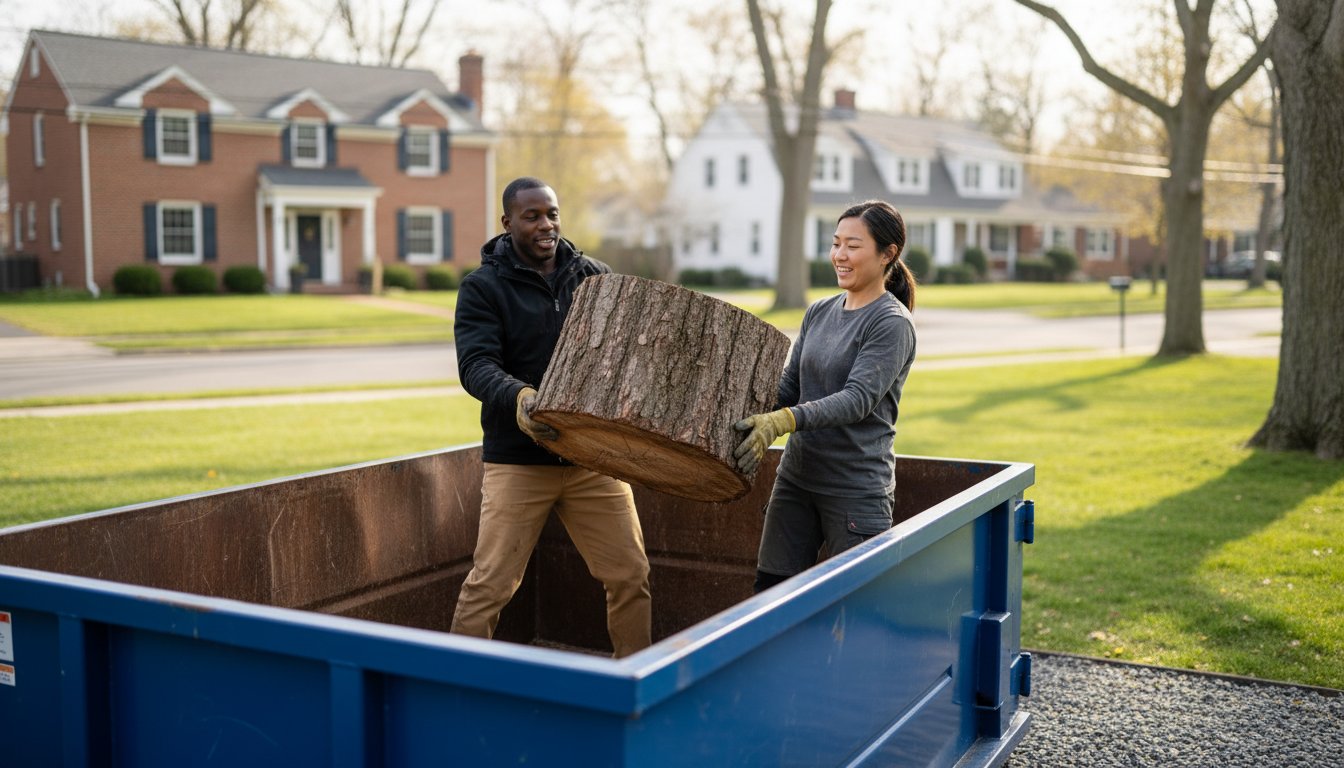
That massive tree stump on your lawn is more than just an eyesore; it is a high-density weight trap that can quickly derail your cleanup budget. You likely want to know, can you put tree stumps in a dumpster without triggering a $200 per ton overage fee like those found in Massachusetts? Most homeowners assume all wood is the same, but the wrong disposal method often leads to massive surcharges or rejected loads at the scale.
We know you need this heavy debris gone immediately so you can move on with your project. Discover how to safely and legally dispose of tree stumps using a roll-off dumpster while avoiding the financial pitfalls of "mixed waste" penalties. This guide breaks down the 2026 rules for "clean green" disposal, explains why root balls are restricted in states like Illinois, and helps you choose your size. Follow these steps to book your dumpster and clear your property without the logistical stress.
Key Takeaways
- Learn how local landfill classifications determine if can you put tree stumps in a dumpster or if they require specialized organic recycling facilities.
- Identify the "root ball weight trap" where trapped dirt and soil can spike your tonnage and lead to unexpected overage charges.
- Choose the correct container size, such as a 10-yard dumpster, to handle heavy debris safely without exceeding the truck's lifting capacity.
- Navigate state-specific disposal bans in regions like Massachusetts and New York that prohibit mixing stumps with standard residential waste.
- Book your dumpster online in minutes to secure transparent pricing and a reliable delivery schedule for your heavy yard waste.
Can You Put Tree Stumps in a Dumpster? The Short Answer
The short answer is yes, but the process is not as simple as tossing in a bag of trash. When homeowners ask can you put tree stumps in a dumpster, they are often surprised to learn that stumps are categorized as heavy debris or yard waste rather than standard household junk. Landfills in 2026 have strict diversion goals, meaning organic material is frequently routed to different processing lines than furniture or clothes. A tree stump is a dense, heavy object that requires specific handling at the tipping floor.
A Clean Green dumpster is a container reserved solely for organic matter to ensure the load can be processed at a composting facility rather than a landfill.
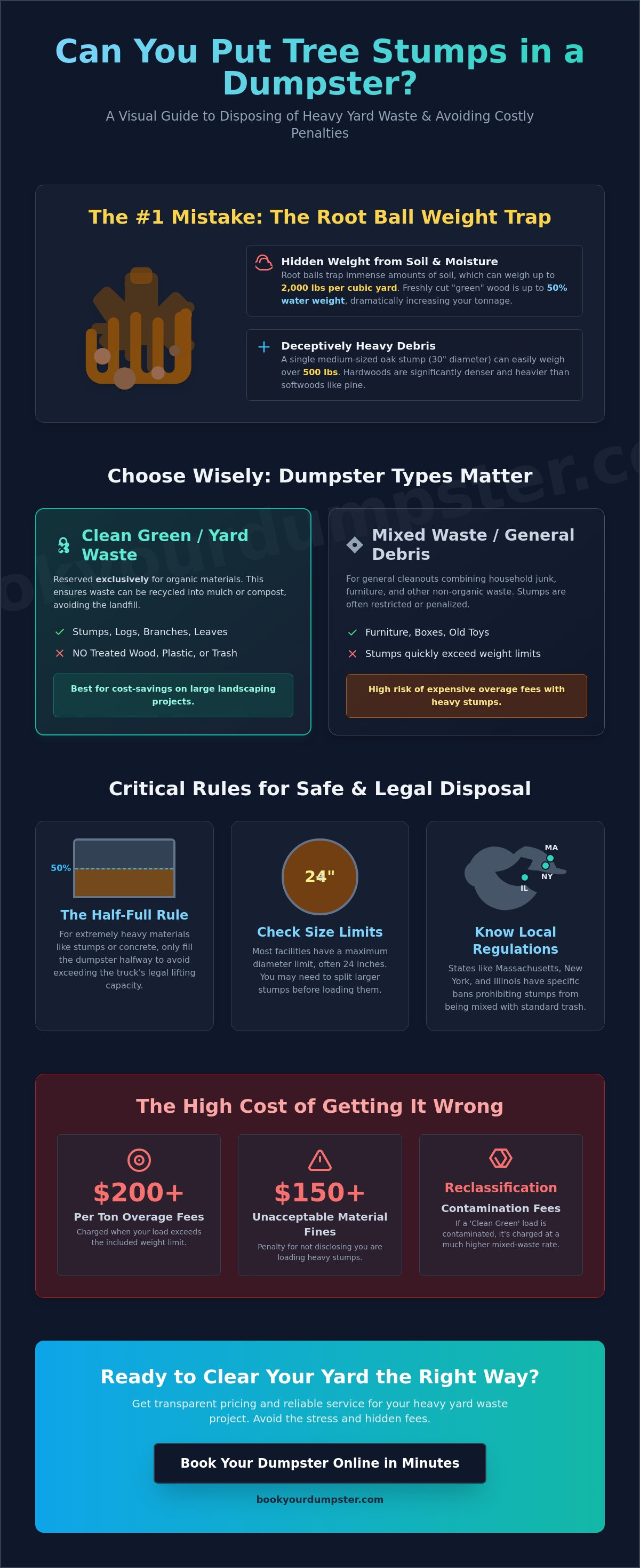
You must verify your load type before the truck arrives. If you fail to disclose that you are loading stumps, you risk an "unacceptable material" penalty. These fines can exceed $150 per occurrence because the driver may have to transport the load to a more expensive specialized facility. Clear communication ensures you get the right equipment for the job without the headache of unexpected fees.
Mixed Waste vs. Yard Waste Dumpsters
Mixed waste dumpsters offer flexibility for general cleanups. You can toss in old toys, boxes, and some yard trimmings, but the weight limits are strict. When deciding can you put tree stumps in a dumpster that is also holding household junk, always check the weight capacity first. Stumps are deceptively heavy; a single medium-sized oak stump can weigh 300 to 500 pounds. Dedicated yard waste containers are usually the better financial choice for large landscaping projects. They are strictly for organic material. If you contaminate a green load with just one piece of plastic or a single pressure-treated 2x4, the facility will charge you the higher mixed-waste rate plus a contamination fee. Keep your load pure to keep your costs low.
Size and Quantity Restrictions
Logistics play a huge role in stump disposal. Most rental companies limit the number of large stumps per container to prevent the truck from becoming overweight. Follow the "half-full" rule for heavy debris. This means you should stop loading once the material reaches the halfway point of the dumpster's height. Many local facilities also set a 24-inch diameter limit on individual pieces. If your stumps are larger, you may need to split them with a chainsaw or heavy machinery before loading. Check these specs when you book your dumpster to avoid a rejected pickup. Large root balls that exceed these dimensions can damage the hydraulic systems of the collection trucks, so compliance is mandatory for safety.
The Root Ball Problem: Weight and Dirt Contamination
Stumps are the ultimate weight trap in the waste management industry. While you might wonder can you put tree stumps in a dumpster, the real question is how much dirt you are throwing in with them. Root balls naturally trap large volumes of soil, which can double or triple the total weight of the debris. According to New York State disposal regulations, tree stumps are considered "land clearing debris." This classification often means they must be separated from general trash or mixed waste to avoid contamination at the processing facility.
Dirt is frequently treated as a separate waste category by transfer stations and recycling centers. If your dumpster contains a significant amount of loose soil along with your stumps, the facility might reclassify your entire load as "dirt and fill." This reclassification carries different pricing structures and much lower weight limits. To avoid this, use the "shaking out" method. Lift the stump with a backhoe or pry bar and drop it repeatedly from a height of two to three feet. This impact dislodges the bulk of the soil from the root system before you load it into the container. Soil can weigh up to 2,000 lbs per cubic yard, so leaving it on the ground saves you significant money on overage fees.
Estimating Stump Weight
Wood density is the primary driver of tonnage. Hardwoods like oak are significantly denser than softwoods like pine or spruce. A 30-inch oak stump can weigh over 500 lbs once you account for the root mass and internal moisture. Moisture is a critical factor; green wood that has just been cut contains up to 50% water weight. If your stumps have been sitting in rain or snow, expect your total tonnage to climb quickly. Always calculate your estimated weight before you load to ensure you don't exceed the dumpster's capacity.
Cleaning Stumps for Disposal
Clean stumps are more than just a weight-saving measure. Facilities prefer clean wood because it is easier to process into high-quality mulch. Use a shovel or a high-pressure hose to clear the root system of stones and thick mud. This preparation ensures your load is accepted at the lower "yard waste" rate rather than the more expensive mixed debris rate. Handling these heavy objects requires care; always use mechanical assistance for stumps over 18 inches in diameter. Once your stumps are cleaned and ready, choose your size and schedule your delivery to clear your site efficiently.
Choosing the Right Dumpster Size for Stumps
When you ask can you put tree stumps in a dumpster, you must consider the physical limitations of the hauling truck. Many people assume a larger bin like a 40-yard dumpster is the best choice for a big landscaping project. This is a mistake. A 40-yard container filled with heavy wood and root balls will likely exceed the truck's legal lifting capacity. Most roll-off trucks are rated to lift between 10 and 12 tons. Because stumps are so dense, you will hit your weight cap long before the debris reaches the fill line. For professional-grade efficiency, a 10 yard dumpster rental is the recognized industry standard for heavy debris disposal.
Choosing a smaller bin protects you from massive overage fees and ensures the hauler can safely lift the container. While you may have 10 cubic yards of space, the weight of the wood often limits you to only a few large stumps per load. This balance is critical in regions with strict Massachusetts yard waste regulations, where organic material must be handled with precision to meet composting standards. If you need more details on sizing for specific projects, read our 10 Yard Dumpster Rental: The Complete Buying Guide for 2026 to ensure you book the correct equipment.
The 10-Yard Advantage
A 10-yard container offers distinct ergonomic benefits for heavy lifting. These bins typically have lower sides, often standing only 3.5 to 4 feet tall. This height makes it significantly easier to lift heavy stumps over the edge without using a tractor or skid steer. These containers are specifically engineered for "heavy fill" materials like dirt, concrete, and large sections of wood. For a single-tree removal or a small residential lot clearing, this size provides the most cost-effective solution. It fits easily in most driveways and avoids the logistical stress of a massive 30-foot-long container blocking your street.
Loading for Balance and Safety
Proper loading is mandatory to prevent safety hazards during transit. Place your heaviest stumps at the bottom and center of the bin to keep the center of gravity low. This positioning prevents the dumpster from shifting or tipping when the truck tilts its bed to pull the container onto the rails. Ensure the load remains level across the top. Never allow a root ball or log to protrude above the "Maximum Fill" line. If the debris is sticking out, the driver cannot safely pull the tarp over the load. An untarpped load is a legal violation that can lead to fines or a refused pickup. Can you put tree stumps in a dumpster safely? Yes, provided you distribute the weight evenly and respect the fill limits of the container.
Local Disposal Rules in NY, NJ, MA, and IL
Local regulations dictate exactly how you handle heavy wood. In New Jersey, specialized providers offer flat-fee pricing for "Stumps, Logs & Tree Wood ONLY" containers to simplify the process. A 10-cubic yard dumpster for these materials costs $500, while a 30-cubic yard unit is $1,500. These specialized loads typically have no weight limit but strictly prohibit dirt or mixed trash. If you are working in New York City, your debris is often classified as land clearing debris. This requires specific disposal at solid waste authority sites. Always verify if can you put tree stumps in a dumpster in your specific borough. Queens and Brooklyn have distinct street permit requirements that range from $25 to $100 per permit.
Massachusetts has enforced a strict ban on yard waste in landfills since 1991. This mandate means your stumps must be diverted to a composting or recycling facility. Failure to comply or mixing wood with standard trash can result in overweight fees as high as $200 per ton in the Boston area. For a deeper look at regional specifics and local ordinances, consult our Dumpster Rental in New York, Illinois, and Massachusetts: The 2026 Complete Guide.
Northeast Composting Mandates
States across the Northeast require total organic diversion to reduce landfill pressure. Transfer stations in New York and New Jersey now use advanced sorting to pull wood debris from mixed loads, but they charge heavily for the extra labor. If you place your bin on a public sidewalk or street in a major city, secure your permit at least 72 hours in advance. Keep your root balls clean to ensure the facility accepts them at the lower yard waste rate. Contaminated loads are often rejected or reclassified at a much higher price point.
Midwest Landfill Guidelines
In Chicago, city-run pickup services often exclude oversized logs or root wads. Private roll-off services are the only reliable way to move these heavy items quickly. Illinois regulations are particularly strict about seasonal landscape waste. This material is often collected separately between March and December. If you exceed a 3-ton limit in Southern Illinois, you will face weight overage charges of approximately $105 per ton. To avoid these logistical headaches, book your dumpster through a provider that understands these local nuances and provides transparent pricing upfront.
Book Your Dumpster for Your Landscaping Project
Removing heavy debris shouldn't be the hardest part of your project. Now that you know the answer to can you put tree stumps in a dumpster depends on weight management and local mandates, it's time to take action. We've modernized the rental process to eliminate the guesswork. Our digital platform allows you to secure a container in minutes, ensuring your site stays clean and your project remains on schedule. We provide reliable service across New York, New Jersey, Illinois, Massachusetts, and San Francisco, handling the logistics so you can focus on the work.
Transparency is our standard. You won't face the "hidden fee" trap that often plagues the waste industry. We provide clear, upfront pricing that accounts for heavy organic material. Whether you're a homeowner clearing a single lot or a contractor managing a major land-clearing operation, we offer the professional support you need. Our team understands the nuances of 2026 disposal rules and helps you avoid the $200 per ton penalties common in the Northeast.
The Book Your Dumpster USA Process
Our three-step booking system removes the friction from waste management. Follow this sequence to get started:
- Step 1: Select your project type. Tell us if you're working on a residential cleanup or a professional construction site. This helps us provide the best advice for your specific debris.
- Step 2: Choose your size. Pick from our 10 Yard Dumpster, 20 Yard Dumpster, 30 Yard Dumpster, or 40 Yard Dumpster. For heavy tree stumps, we typically recommend the 10-yard or 20-yard options to stay within legal weight limits.
- Step 3: Schedule and pay. Use our digital-first platform for instant pricing and scheduling. Pick your delivery date and complete your booking with a few clicks.
Why Contractors and Homeowners Trust Us
Reliability is non-negotiable. We understand that a delayed dumpster means a delayed project. Our on-time delivery promise keeps your landscaping timeline intact. We don't just drop off a bin; we provide pragmatic advice on how to load your stumps to maximize space and minimize cost. We act as your expert partner in waste management, ensuring every load meets local standards for composting or landfill diversion. Don't let a massive root ball sit on your property for another day. Book your dumpster now at bookyourdumpster.com and get your project moving today.
Clear Your Site with Professional Efficiency
Managing heavy organic debris requires more than just a container; it requires a strategy. You now know that can you put tree stumps in a dumpster safely if you prioritize weight distribution and clean your root balls of excess soil. By selecting a 10-yard dumpster, you avoid the mechanical risks of overloading while staying within the strict 2026 disposal guidelines of the Northeast and Midwest. These steps ensure your landscaping project remains compliant and cost-effective.
Since 2018, we've provided reliable roll-off services across NY, NJ, IL, MA, and San Francisco. Our streamlined online booking system ensures you get transparent, no-hidden-fee pricing in seconds. We understand the urgency of homeowner cleanups and the precision required for contractor sites. We've modernized the traditional waste industry to provide you with a high-functioning tool that removes logistical stress. Don't let heavy logs and root wads stall your timeline. We have the logistics under control so you can finish your project on time and within budget.
Book your 10-yard dumpster for stump removal today! Your property is ready for its next phase; let us handle the heavy lifting and get that debris out of your way.
Frequently Asked Questions
How much does a typical tree stump weigh for disposal?
A medium sized oak stump with a 24 inch diameter typically weighs between 300 and 400 pounds once you include the root ball. Larger stumps measuring 48 inches or more can easily exceed 1,500 pounds. These weights increase by 30 percent if the wood is green or saturated from recent rain. Always estimate your total tonnage based on wood density to avoid exceeding your container's limit.
Can I put large tree branches in the same dumpster as the stump?
Yes, you can combine branches and stumps in a single container provided you book a yard waste or mixed debris load. To maximize your space, cut all branches into lengths of 4 feet or less. This prevents "air pockets" in the bin that waste valuable cubic yardage. Ensure the entire load remains below the top rail so the driver can safely secure the transport tarp.
Do I need to grind the stump before putting it in a dumpster?
You do not need to grind the stump, but splitting it is often necessary for larger specimens. Most facilities set a 24 inch diameter limit on individual pieces of wood. If your stump is wider than this, use a chainsaw or a hydraulic splitter to break it down. When people ask can you put tree stumps in a dumpster, they often find that smaller sections are easier to load and manage.
What happens if my dumpster is over the weight limit due to stumps?
You will incur overage fees that range from $105 to $200 per ton depending on your specific state regulations in Illinois or Massachusetts. If the load exceeds the truck's lifting capacity of 12 tons, the driver will refuse the pickup entirely. You must then remove the excess weight at your own expense before we can schedule a second attempt. Proper weight estimation prevents these costly project delays.
Are there any types of trees that are prohibited in dumpsters?
While no specific species are banned from the container itself, trees infested with invasive pests like the Emerald Ash Borer face strict transport restrictions. USDA quarantine rules often prohibit moving this wood across certain county or state lines. Verify your local quarantine status before loading ash or elm wood. Most facilities also refuse stumps that are heavily contaminated with rocks or metal fencing grown into the trunk.
Can I put a stump in a dumpster if it has been treated with chemicals?
No, you should not put chemically treated stumps into an organic yard waste container. If you used commercial stump killers containing potassium nitrate or sulfuric acid, the wood is no longer considered "clean" debris. These chemicals contaminate the composting process at recycling centers. You must disclose this treatment when you book so we can route the load to a facility equipped for treated wood disposal.
Is it cheaper to rent a dumpster or hire a stump grinding service?
Renting a dumpster is generally cheaper if you have three or more stumps to remove at once. A single stump removal in New York can cost up to $350 according to 2026 market data. If you have a large landscaping project, a 10 yard dumpster provides a flat-rate solution for all your debris. Grinding is a better choice only if you intend to leave the wood mulch on your property.
What is the largest stump diameter allowed in a standard roll-off?
The industry standard for individual stump diameter is 24 inches at most disposal facilities. This limit exists because oversized root balls can damage the processing equipment at the landfill or recycling center. When considering can you put tree stumps in a dumpster, always measure the widest part of the root flare. If it exceeds 2 feet, split the stump into manageable quarters before the truck arrives for pickup.


