
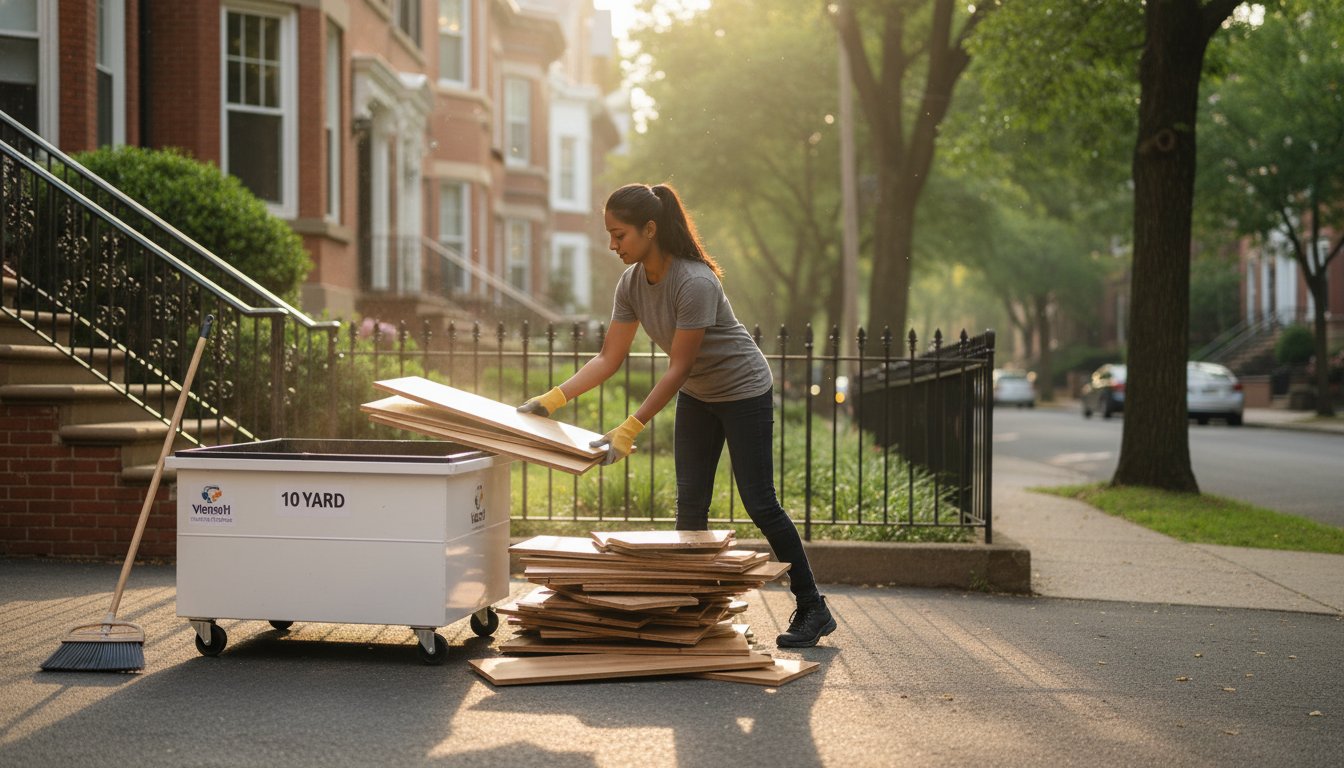
That stack of old laminate in your garage isn't just heavy; it's a logistical puzzle that could cost you $400 in hidden haul-away fees if handled incorrectly. You likely want to know how to dispose of laminate flooring without breaking your back or your budget. It's frustrating to face the physical burden of moving heavy planks only to realize your local curbside service might not take them. We understand the confusion surrounding recycling rules and the fear of unexpected costs from waste companies.
You deserve a clear, step-by-step plan for removal that keeps your project on track. This guide covers the safest, most cost-effective methods to clear your space while staying compliant with 2026 environmental standards. We'll explore why professional removal costs hit $200 to $1,000 this year and when booking a 10-yard dumpster is the most efficient choice for your project. From identifying pre-1986 asbestos risks to choosing the right container size for your debris, you'll gain total control over your renovation waste. We've simplified the process so you can focus on your new floors instead of the old mess.
Key Takeaways
- Identify why separating foam underlayment from synthetic planks is a critical first step for meeting 2026 disposal standards.
- Discover how to dispose of laminate flooring using municipal bulk pickup schedules in major cities like Queens or Chicago for smaller residential projects.
- Compare the cost-efficiency of roll-off dumpsters against junk removal services to ensure you don't overpay for debris hauling.
- Navigate complex local regulations, including permit requirements for dumpster placement in Boston and "Clean Construction" ordinances in San Francisco.
- Learn why a 10-yard dumpster is the industry-standard choice for managing waste from a single-room flooring renovation without logistical stress.
Understanding Laminate Flooring Composition and Safety Risks
Laminate flooring is a multi-layer synthetic product designed to mimic the look of hardwood or stone. While it looks like natural timber, it is actually a high-density fiberboard (HDF) core fused together with various chemical resins. This construction makes it durable and water-resistant, but it also complicates the question of how to dispose of laminate flooring safely. You cannot treat these planks like raw lumber or yard waste. They are industrial products that require specific handling to avoid environmental contamination.
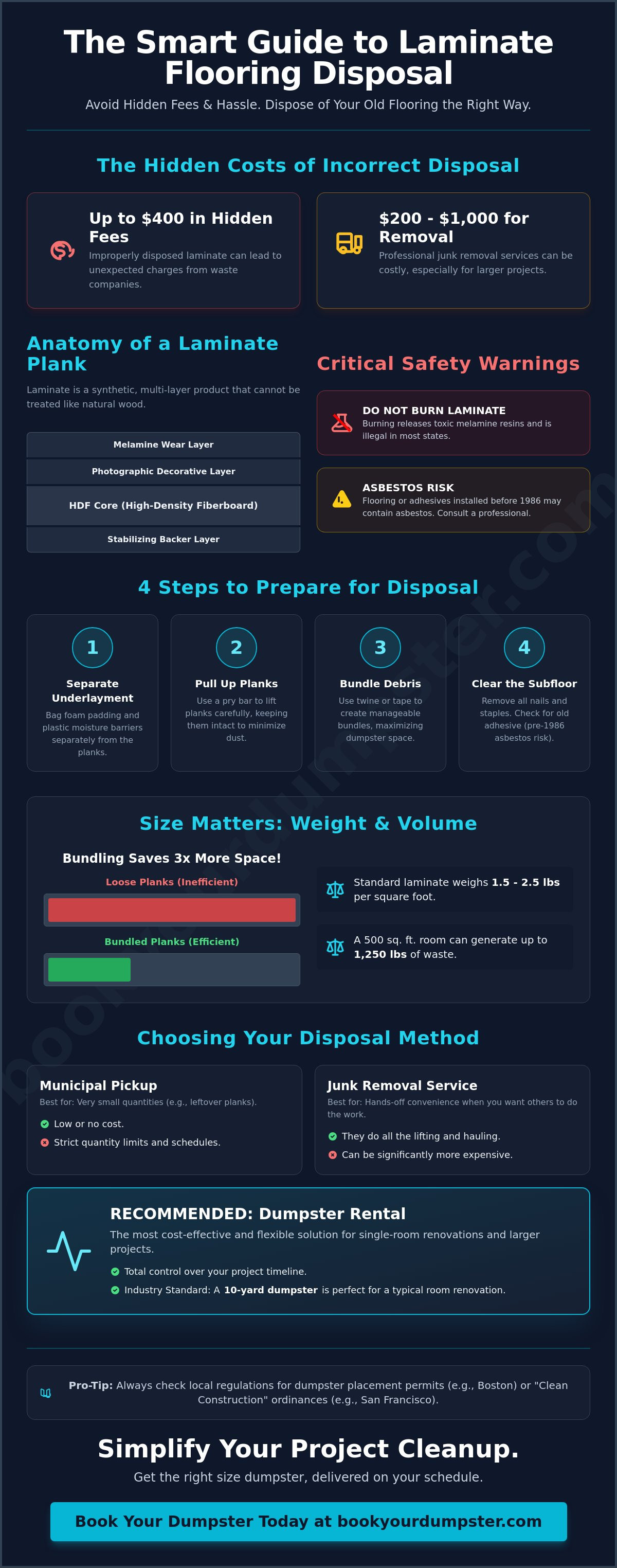
The internal structure relies on high-pressure bonding. Understanding laminate flooring composition is key to managing your waste. Most planks consist of four distinct layers: a melamine wear layer, a photographic decorative layer, the HDF core, and a stabilizing backer. Because these layers are chemically fused, they don't separate easily. This fusion is why laminate is not considered "natural wood" for disposal purposes. Laminate isn't natural wood. It won't biodegrade like a fallen branch or untreated pine board.
Never burn your old laminate planks. Burning laminate flooring is illegal in most US states due to the high concentration of toxic emissions. When the melamine resins and adhesives catch fire, they release hazardous chemicals into the air. This poses a direct health risk to you and your neighbors. If you're clearing out a large renovation site, stick to approved disposal methods to avoid heavy fines and environmental damage. We have the logistics under control to help you avoid these risks.
The Problem with Formaldehyde and Resins
Older laminate flooring often contains urea-formaldehyde, a resin used to bond the wood fibers. This chemical can lead to off-gassing, especially if the material is damaged or stored in high-heat environments. These resins also stall the decomposition process in landfills. Aluminum oxide coatings provide extreme durability but require specialized industrial disposal because they do not break down in standard waste streams.
Is Laminate Flooring Recyclable?
Most municipal blue bins do not accept laminate planks because the fused layers are nearly impossible to separate for traditional recycling. You shouldn't mix them with your household paper or plastic. However, some industry leaders like Tarkett or Mohawk have established manufacturer take-back programs. These programs aim to reclaim the wood fiber for new products. If your flooring is from a specific high-end brand, check their website for local drop-off points. For most homeowners, knowing how to dispose of laminate flooring means looking beyond the curb to professional waste solutions.
Preparing Your Flooring for Efficient Disposal
Efficient disposal starts long before the dumpster arrives. If you want to know how to dispose of laminate flooring without overpaying for space, you must organize your debris during the tear-out phase. Proper preparation reduces the physical burden and ensures you don't exceed weight limits or volume capacities. Follow these four steps to streamline your project.
- Step 1: Separate the underlayment. Remove all foam padding or plastic moisture barriers first. These materials are often made of polyethylene and should be bagged separately, as they are typically handled differently than the rigid planks.
- Step 2: Pull up planks with care. Use a pry bar to lift the first row. Work across the room to avoid splintering the material. Keeping planks intact minimizes the release of hazardous dust and makes the material easier to stack.
- Step 3: Bundle your debris. Don't let planks fall into a chaotic pile. Use twine or heavy-duty tape to create manageable bundles of 10 to 15 planks. This strategy is the best way to maximize every cubic yard of disposal space.
- Step 4: Clear the subfloor. Pull up every nail and staple. If you encounter old adhesive residue, don't scrape it until you've verified the installation date. Flooring or adhesives installed before 1986 often contain asbestos, which requires professional abatement.
Calculating the Weight and Volume of Your Debris
Most homeowners underestimate how much space unstacked flooring occupies. Standard laminate flooring weighs between 1.5 and 2.5 pounds per square foot. A 500-square-foot living room can generate up to 1,250 pounds of waste. While this weight is well within the limits of a 10 yard dumpster, the volume is where most people struggle. Planks tossed loosely into a container create "fluff," which takes up three times more space than bundled planks. By stacking your bundles tightly, you can fit approximately 1,500 square feet of flooring into a 10-yard container. If you have a larger project, you might need to choose your size from our larger roll-off options to keep the job site clear.
Safety Gear and Dust Mitigation
Tearing out old flooring generates significant dust from the fiberboard core and decorative resins. You must wear an N95 mask, heavy-duty work gloves, and impact-resistant eye protection. Open all windows and use a box fan to pull air out of the room during the removal process. This prevents fine particulates from settling into your HVAC system or adjacent rooms. If your floor was installed before 1986, stop work immediately if you find black adhesive. Have a professional test for asbestos before you continue to ensure your home stays safe.
Small-Scale Disposal: Curb vs. Donation
Not every project requires a massive roll-off container. If you have just finished a small repair or have three leftover boxes from a 200-square-foot bedroom update, your disposal strategy changes. You first need to assess if the material is "new" or "used." Used planks that have been ripped up are rarely accepted for donation because the tongue-and-groove locking systems often break during removal. However, if you are looking for how to dispose of laminate flooring that is still in its original packaging, you have several cost-effective options.
For used debris in very small quantities, you can utilize the "Batch Method." This involves placing small amounts of broken planks in your regular household trash over several weeks. Be careful with this approach. In cities like Queens, the DSNY requires bulk items to be bundled and weigh less than 60 pounds per bundle. Chicago residents must schedule a "Bulk Collection" through the 311 system for anything that doesn't fit in a standard cart. Overloading your bin can result in missed pickups or municipal fines as of May 2026.
When Donation is a Viable Option
Donation is a win-win for homeowners with surplus material. Organizations like Habitat for Humanity ReStore accept laminate flooring if it is in full, unopened boxes with no water damage. Donating keeps these synthetic materials out of landfills and provides you with a tax deduction. In cities with high renovation activity like Boston or San Francisco, architectural salvage yards also take high-end laminate lots of 50 square feet or more. Always call ahead to confirm their current inventory needs before driving down with a heavy load. It saves time and fuel.
Selling Your Leftover Flooring Online
If you have a "partial lot" of 20 to 50 square feet, someone in your neighborhood probably needs it for a closet or a small bathroom. Platforms like Facebook Marketplace and Craigslist are ideal for quick local pickups. To sell quickly, take high-quality photos of the box label showing the brand, color name, and square footage. Clearly state that the buyer must handle the loading and transport. Never attempt to sell or give away flooring that shows signs of mold, water swelling, or structural damage. Selling damaged goods is a liability and wastes everyone's time.
If your project grows beyond a few boxes, don't struggle with multiple curb trips. You can book your dumpster online in minutes to handle the entire load at once. This keeps your driveway clear and your project moving forward without waiting for the next trash day.
Large-Scale Solutions: Dumpster Rentals and Junk Removal
When your project expands from a single closet to an entire home, you need a professional strategy. Choosing how to dispose of laminate flooring effectively depends on your project timeline and your budget. There are two primary professional options: roll-off dumpsters and junk removal services. Roll-off dumpsters typically offer a flat-rate pricing model, while junk removal services use volume-based pricing. Because laminate is heavy, the volume-based model often leads to unexpected surcharges once the truck is loaded. A 10 yard dumpster rental provides a predictable cost and a dedicated spot for your debris, keeping your job site organized from start to finish.
Having a container on-site for the duration of the demo is a significant advantage. Unlike a junk removal team that requires a scheduled pickup window, a dumpster allows you to work at your own pace. You can toss planks as you pull them up, preventing hazardous piles from accumulating in your living space. This is especially helpful for multi-day renovations where keeping the work area clear is a safety priority.
Why a 10-Yard Dumpster is Ideal for Flooring
Laminate flooring is dense. As we established earlier, a 500-square-foot room can generate over 1,200 pounds of waste. A 10-yard container easily handles this weight, as it's designed to carry 2 to 3 tons of debris. These containers also feature a compact footprint. In residential driveways across New Jersey or Illinois, they fit perfectly without blocking sidewalk access or garage doors. For a deeper look at managing your project logistics, consult our guide on Roll Off Dumpster Rental.
Hiring Professional Debris Removal Services
For contractors or homeowners who prefer a hands-off approach, professional construction debris removal is an option. This service includes the labor of loading the material, but it comes at a premium price. If you choose this route, verify their "No Hidden Fee" promises before they start. Many companies add disposal fees or fuel surcharges that aren't in the initial quote. We focus on transparency and reliability to remove that stress. If you want to control your costs and your schedule, book your dumpster today to secure the best rate for your renovation.
Local Regulations and Professional Disposal in 2026
Local laws change faster than home design trends. Navigating the legal side of how to dispose of laminate flooring requires more than just a heavy-duty truck. In 2026, cities like San Francisco have tightened their 'Clean Construction' ordinances. These rules require documented proof that construction debris is handled through approved channels to minimize landfill impact. If you fail to separate prohibited items or exceed weight limits at municipal landfills, you risk fines that can exceed $500 per violation. We simplify this by managing the compliance details for you.
Weight overages are the most common cause of unexpected fees in the waste industry. While a 10-yard dumpster is ideal for a single room, filling it with soaked or heavy debris can push you past the legal limit for transport. Always keep your flooring bundles dry. Wet fiberboard weighs significantly more than dry material and can lead to surcharges at the scale. Our team monitors these regulations to keep your project moving without administrative headaches.
City-Specific Dumpster Rules
In New York City, particularly in congested areas like Queens, you must secure a DOT permit if the container occupies any part of a public sidewalk or street. We help you navigate these tight spaces. In Boston, seasonal debris restrictions often apply during winter months to ensure snow plows have clear access. Always check the local street cleaning schedule before scheduling your delivery. Chicago residents must adhere to strict alleyway placement rules, requiring at least two feet of clearance for emergency vehicles. Understanding these nuances prevents your renovation from being stalled by a city inspector.
Booking Your Disposal Solution
Efficiency is the backbone of a successful renovation. Use our streamlined online system for dumpster rental to secure your container in seconds. We prioritize on-time delivery because we know that a late dumpster stops your entire crew. Once you've loaded your last bundle of laminate, follow this final checklist: ensure the debris is level with the top of the container, remove any overhanging planks, and clear a path for our driver. Book your dumpster now and let us handle the logistics while you focus on finishing your new space.
Master Your Flooring Renovation Cleanup
Managing a home renovation is difficult enough without the stress of waste logistics. You now have a professional plan for how to dispose of laminate flooring by bundling planks and separating synthetic underlayment. Remember that stacking your waste can save up to 3x the volume in your container; this keeps your project footprint small and your costs predictable. Whether you are navigating the strict permit rules of Queens or the seasonal restrictions in Boston, preparation is your best tool for avoiding municipal fines in 2026.
We provide the reliability you need to finish your project on schedule. Our easy online booking system allows you to choose your size and schedule a delivery in seconds. We offer a no hidden fees guarantee and provide on-time delivery across NY, NJ, IL, MA, and SF. Book your 10-yard dumpster today for a hassle-free flooring renovation. Clear the old mess so you can enjoy your new space with confidence. You have this under control.
Frequently Asked Questions
Can I put laminate flooring in my regular trash bin?
You cannot put large quantities of laminate in a standard household bin. Most municipal waste authorities classify flooring as construction debris, which requires a separate disposal method. If you only have two or three broken planks, some curbside services might accept them. For anything more, you must schedule a bulk pickup or rent a roll-off container to avoid service interruptions and potential fines.
How much does it cost to dispose of laminate flooring?
Disposal and haul-away fees for laminate flooring typically range from $150 to $400 as of April 2026. This cost is separate from the actual removal labor, which averages $0.50 to $1.50 per square foot. If you choose a DIY approach, a 10-yard dumpster rental averages $350 per week. This provides a predictable, flat-rate solution for managing your project budget without hidden fees.
Is laminate flooring considered hazardous waste?
Laminate is not classified as hazardous waste for standard landfill disposal. However, it contains synthetic resins and aluminum oxide coatings that require industrial handling. The primary safety risk occurs during removal when fine dust is released. If your flooring was installed before 1986, you must test for asbestos in the adhesive before determining how to dispose of laminate flooring safely to protect your home environment.
Can I recycle my old laminate floors at a local center?
Standard municipal recycling centers rarely accept laminate flooring because the layers are chemically fused. Separating the melamine wear layer from the fiberboard core is too difficult for traditional facilities. You should contact the manufacturer instead. Companies like Tarkett or Mohawk often have dedicated take-back programs that reclaim the wood content for new products. This is the most sustainable way to handle your renovation waste.
What size dumpster do I need for 500 square feet of flooring?
A 10-yard dumpster is the most efficient choice for 500 square feet of laminate. This size container holds 2 to 3 tons of debris, which easily accommodates the 1,250 pounds of waste generated by a project of this scale. You'll have plenty of room for bundled planks and any associated underlayment. It fits conveniently in most residential driveways without blocking street access or sidewalk traffic.
Can I burn laminate flooring in a fire pit?
You should never burn laminate flooring in a fire pit or fireplace. The melamine resins and adhesives release toxic formaldehyde emissions when ignited. Burning this material is illegal in most US states because of these hazardous air pollutants. Stick to approved disposal methods to protect your health and stay compliant with local environmental regulations. We have the logistics under control to handle this debris safely.
Do I need a permit to put a dumpster on the street in New Jersey?
Most New Jersey municipalities require a permit for any dumpster placed on a public street or sidewalk. If you can fit the container entirely on your private driveway, you usually don't need a permit. Every town has unique rules regarding reflective tape and placement duration. Contact your local municipal clerk or building department to confirm the specific requirements for your neighborhood before you schedule your delivery.
What happens if I overfill my flooring dumpster?
We cannot transport a dumpster that is filled past the top rim. Overfilling creates a significant safety hazard for our drivers and other vehicles on the road. If your container is overfilled, you'll likely face a "dry run" fee and be required to remove the excess material before we can schedule a new pickup. Keep your debris level with the top to ensure a smooth, on-time haul-away.


