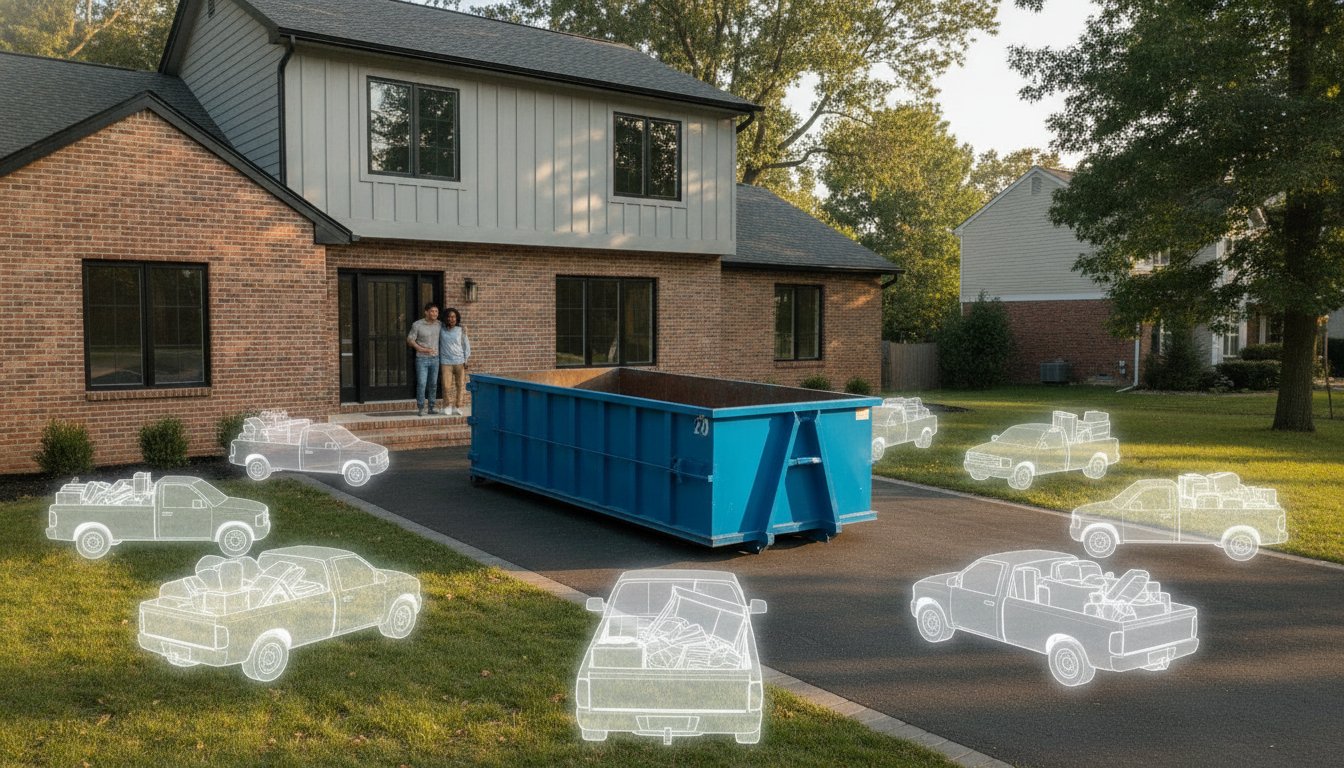
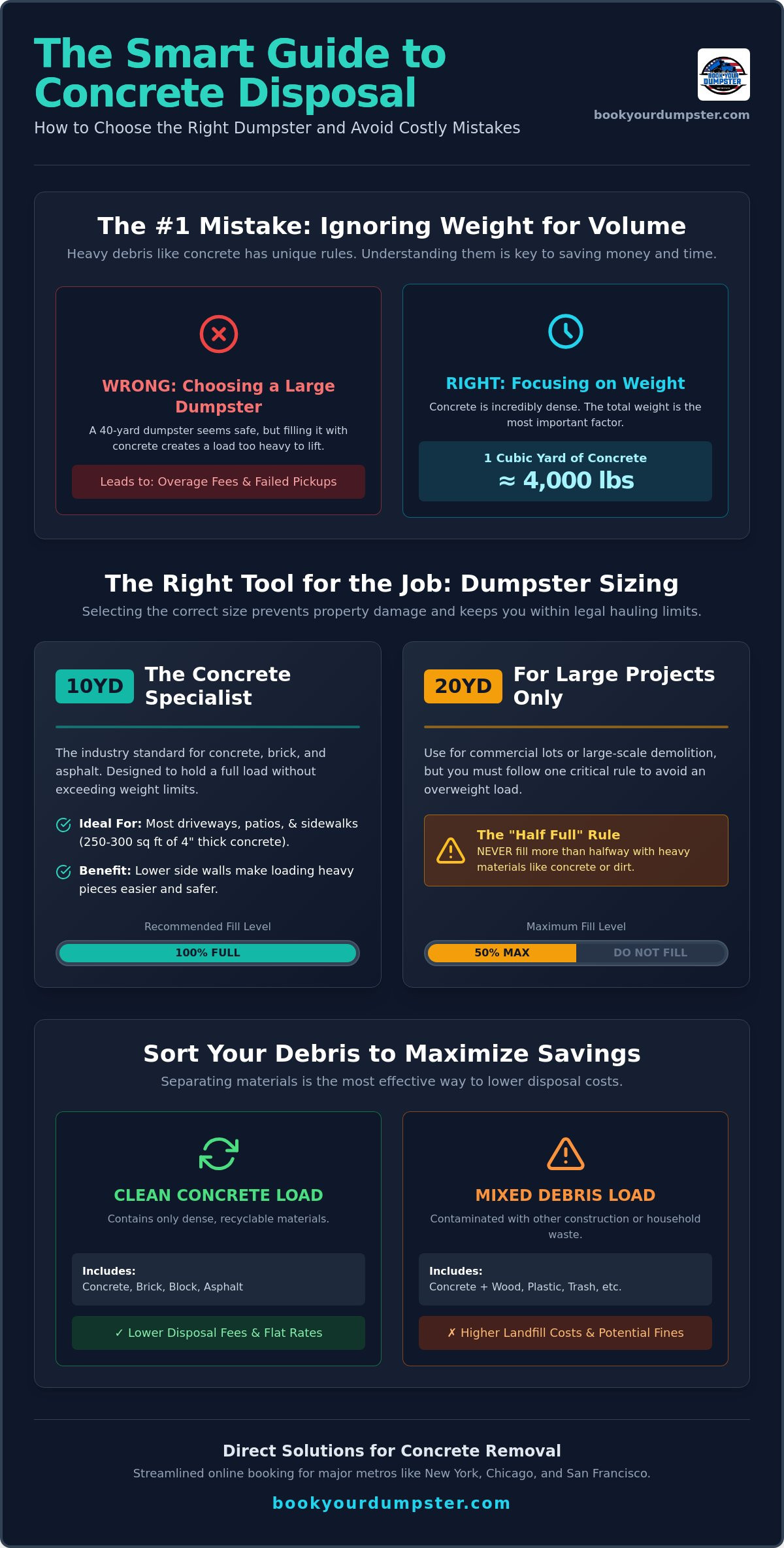
Renting a massive 40-yard container for your driveway tear-out might seem like the safest bet, but it's actually the fastest way to blow your budget. A single cubic yard of concrete weighs approximately 4,000 pounds. This means heavy debris quickly exceeds weight limits, leading to massive overage fees and potential damage to your property. Finding a reliable concrete disposal dumpster rental means prioritizing weight management over sheer volume.
You want the debris gone without the headache of hidden costs or cracked asphalt. It's frustrating to deal with confusing permit rules or containers that arrive late and stall your progress. We understand that efficiency is your top priority. This guide shows you how to choose the right dumpster size, avoid expensive overage fees, and ensure safe concrete disposal for your next project.
Get the facts on 2026 recycling mandates and learn why the 10-yard unit is the logical choice for heavy loads. We provide a clear checklist for mixing materials and explain how to secure necessary permits without the stress. Follow these steps to keep your job site clean and your project on schedule.
Key Takeaways
- Prioritize weight management over volume to avoid dangerous hauling conditions and expensive overage fees.
- Use a 10-yard unit for your concrete disposal dumpster rental to ensure the load stays within safe hydraulic limits.
- Prepare your drop-off site properly to prevent heavy containers from causing permanent damage to your driveway or pavement.
- Separate clean concrete from mixed construction debris to take advantage of significantly lower recycling and disposal rates.
- Utilize a streamlined online booking system for reliable heavy-debris removal in major metros like New York, Chicago, and San Francisco.
Why Concrete Disposal Requires a Specialized Dumpster Rental
Concrete changes the math of waste management immediately. Unlike household junk or light construction debris, concrete is incredibly dense. A single cubic yard of old pavement or foundation slabs weighs approximately 4,000 pounds. This density means that volume is rarely your primary concern. Instead, you must manage weight to avoid safety hazards and failed pickups.
Most standard roll-off trucks operate under strict hydraulic lifting limits. If you fill a standard large container with heavy aggregate, the truck simply cannot lift it off the ground. This results in a "dry run" fee and forces you to manually unload the heavy material until the weight is manageable. Securing a specialized concrete disposal dumpster rental ensures you have the right equipment for the job from the start.
The "Heavy Material" Rule
Heavy debris includes high-density materials like concrete, brick, block, and asphalt. These items require specialized handling because they reach weight capacities long before they reach the top of the bin. For example, a 40-yard dumpster is designed for volume, not mass. If you filled a 40-yard container with concrete, it would weigh nearly 80 tons. This far exceeds the 10-ton (20,000 lbs) industry limit common for residential streets and standard hauling equipment.
Overloading a container creates significant safety risks. It puts extreme stress on the truck's mechanical systems and can cause the container to shift dangerously during transport. It also increases the risk of the container "punching through" your driveway or the street surface. To stay safe and compliant, professionals use smaller, reinforced 10-yard bins that keep the total weight within the truck's mechanical rating.
Benefits of Dedicated Concrete Bins
Using a bin dedicated to aggregate simplifies the entire process. These containers often come with lower side walls, which makes it much easier to toss in heavy slabs without straining your back. It also helps you visualize the fill line more accurately. When you keep your load clean and free of other trash, you often qualify for better flat-rate pricing. This is because clean concrete is a valuable commodity.
Concrete recycling facilities turn your old debris into new aggregate for road bases and construction projects. If you mix in wood, plastic, or general trash, the entire load becomes contaminated. Contaminated loads are diverted to landfills where disposal fees are much higher. By using a dedicated bin, you ensure your project stays environmentally responsible and cost-effective. You can view our available inventory and book your unit directly at Book Your Dumpster USA to get started today.
Choosing the Right Size: 10-Yard vs. 20-Yard Concrete Dumpsters
1 cubic yard of concrete weighs roughly 4,000 pounds. That is two tons of mass in a very small footprint. If you rent a bin based only on how much space you think you need, you'll hit weight limits long before you hit the rim. This is why choosing the right concrete disposal dumpster rental size is a financial decision, not just a logistical one. In tight urban areas like Queens or Boston, the smaller footprint of a 10-yard container also makes it the only viable option for street placement where space is at a premium.
The 10-Yard Dumpster: The Concrete Specialist
This unit is the industry standard for residential projects. It perfectly handles about 250 to 300 square feet of 4-inch thick concrete, which covers most standard driveways or sidewalks. For a deeper dive into this specific unit, check out our 10 Yard Dumpster Rental: The Complete Buying Guide for 2026. The low side walls are a major advantage. You don't have to lift heavy chunks over your head. You can toss them directly into the bin, saving your back and speeding up the demolition process.
When to Scale Up to a 20-Yard Bin
Choose a 20-yard bin for commercial parking lots or large-scale demolition. However, you must follow the strict "half-full" rule. Never fill a 20-yard bin to the top with concrete. If you do, the truck won't be able to lift it. Most haulers require you to stop at the halfway mark to stay within legal weight limits for transport. Adhering to these standards for C&D materials recycling helps keep your costs predictable and your project environmentally sound. Mixed loads that exceed these levels often lead to significant fines at the scale.
Sometimes, renting two 10-yard units is more cost-effective than one 20-yard unit. It prevents property damage and ensures the hauling truck can safely navigate your street. You can view our 10 and 20-yard inventory online to find the best fit for your specific slab dimensions and project timeline. Plan your load carefully to ensure a smooth pickup and a clean site.
Site Preparation and Property Protection for Heavy Loads
A 10-yard bin filled with aggregate is a massive physical load. It often weighs as much as a fully loaded cement truck. Most residential driveways aren't engineered to handle 20,000 pounds of concentrated weight on four small steel rollers. If you don't prepare the surface, you risk "punch-through" damage. This happens when the weight of the bin forces the rollers directly into your asphalt or thin concrete slabs. This risk increases during hot summer months when asphalt softens or after heavy rain when the subsoil becomes unstable.
Identify a placement area that is level and offers at least 22 feet of vertical clearance. You must avoid placing the unit under power lines, low-hanging tree branches, or building eaves. In cities like Chicago or Jersey City, narrow alleys and tight street corners present unique challenges. You need a clear path for the truck to back in and drop the container without obstructing traffic or hitting parked vehicles. If the driver finds the site inaccessible, you'll face a dry-run fee and a delayed project. Ensure you have at least 60 feet of straight-line approach for the delivery vehicle to operate.
The Plywood Method for Driveway Safety
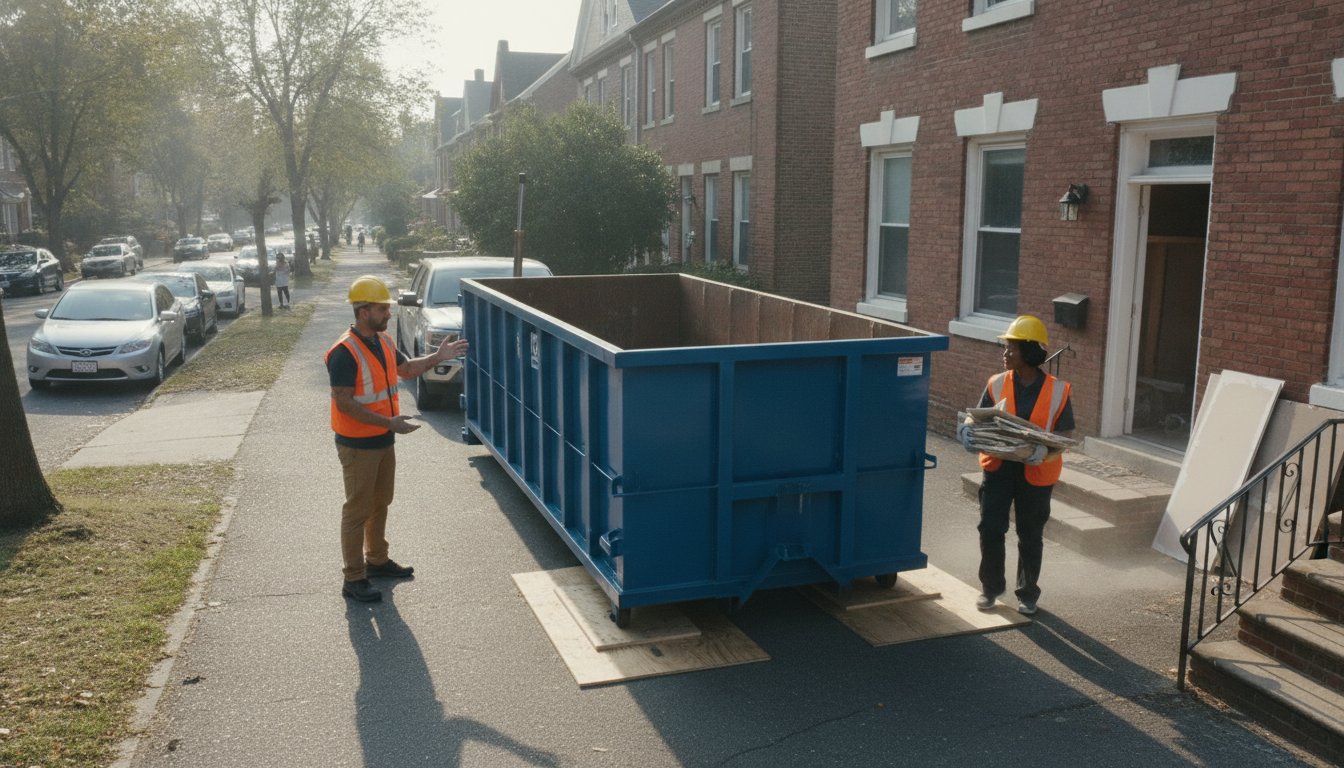
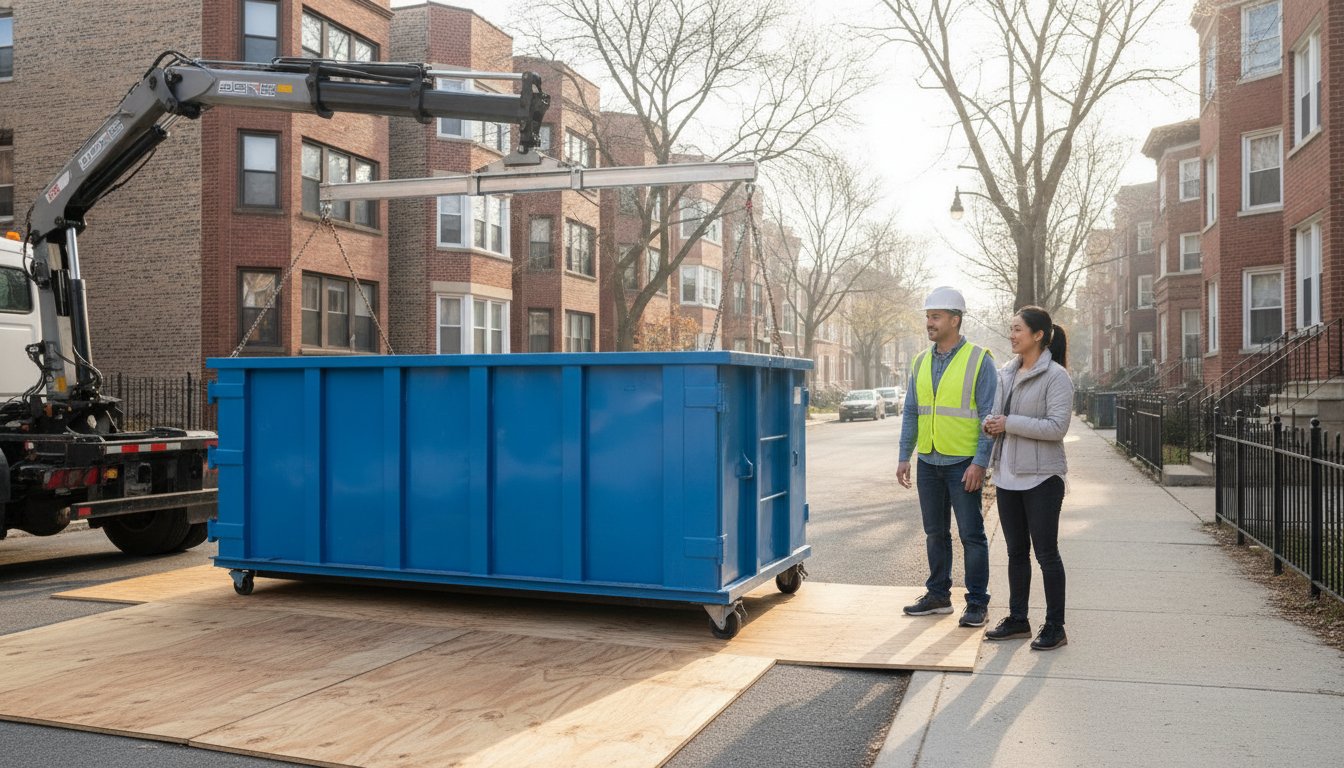
Protect your property by using the plywood method. Place two 4x8 sheets of 3/4-inch thick plywood exactly where the dumpster's rollers will land. This simple step distributes the 10-ton load across a much larger surface area. It prevents the steel from scarring your driveway or creating permanent indentations in the pavement. Never allow a driver to place a heavy container on grass or soft dirt. The weight will cause the bin to sink several inches into the ground. This makes it nearly impossible for the truck to retrieve the load without tearing up your landscaping or damaging the hauling equipment.
Permits and Street Placement
If your driveway is too short or too steep, you'll need to use the street. Most major metros, including NYC and San Francisco, require a right-of-way permit for any container placed on public property. These permits ensure the bin doesn't block fire hydrants, bus stops, or impede the flow of traffic. For a detailed breakdown of regional requirements, see our guide on Dumpster Rental in New York, Illinois, and Massachusetts: The 2026 Complete Guide.
Always coordinate with your local traffic department at least 72 hours before your scheduled concrete disposal dumpster rental delivery. Some municipalities require you to place orange cones or reflective tape on the bin to stay compliant with overnight safety codes. Securing your permit early prevents expensive fines and ensures your project starts without a visit from local code enforcement. Taking these precautions protects your investment and keeps your job site professional and safe.
Concrete Load Requirements: Clean vs. Mixed Debris
Your choice of material determines whether your concrete disposal dumpster rental stays affordable or becomes a financial burden. Clean concrete is a commodity, not just waste. Recycling facilities process pure loads into road base or new aggregate. Mixed loads, which combine concrete with wood, plastic, or general trash, fall under Construction and Demolition (C&D) rates. These rates are significantly higher because the material requires manual sorting or goes directly to a landfill. Keep your loads separated to maintain the lowest possible price point.
Violating the "No-Mix" rule is a costly mistake. Most haulers in the industry charge contamination fees ranging from $100 to $500 if they find non-aggregate debris in a clean bin. These fees aren't arbitrary. They cover the additional labor and transport costs required when a recycling center rejects a contaminated load. Stay disciplined during demolition to ensure only the allowed materials enter the container.
What Defines "Clean" Concrete?
Clean concrete must be free of organic matter like tree roots, excessive soil, and wood scraps. While thin wire mesh embedded in the slabs is typically acceptable, heavy rebar is a different story. Most recycling centers reject loads if rebar segments exceed 2 feet in length. Large amounts of dirt are also prohibited in clean loads, as they clog the crushing machinery used in the recycling process. For a deeper look at handling various project materials, read The Ultimate Guide to Construction Debris Removal in 2026.
Disposing of Asphalt and Brick
You can usually mix brick and stone with your concrete, but you must verify this with your provider before you start loading. Asphalt is also an aggregate, but it has a different density and recycling process than cured concrete. While many facilities accept a mix of asphalt and concrete, some specialized plants only take one or the other to maintain the quality of their recycled products. Always ask about the specific destination of your waste to ensure compliance.
Be cautious with painted concrete. Many recycling plants reject painted slabs because older coatings often contain lead or other toxins. If your debris comes from a structure built before 1978, you should treat it as a mixed or hazardous load unless it's been professionally tested. To ensure your project stays on track and within budget, book your specialized aggregate bin online and select the specific material type you need to haul. This transparency prevents surprises at the scale and keeps your site running efficiently.
Book Your Dumpster USA: Direct Solutions for Concrete Removal
Concrete removal demands precision and punctuality. You need a partner who understands the logistics of heavy hauls in high-density areas. Book Your Dumpster USA operates as a direct service provider in New York, New Jersey, Illinois, Massachusetts, and San Francisco. We eliminate the middlemen and the communication gaps that lead to project delays. Choose from our fleet of 10, 20, 30, and 40-yard roll-off containers to match your specific demolition needs.
Managing waste logistics shouldn't be a headache. While national brokers offer broad coverage, they often lack the localized expertise required for street placement in Queens or permit coordination in San Francisco. We bridge that gap with direct, reliable service. Our team knows the specific weight tolerances of local streets and the recycling mandates of each metro area we serve. This specialized knowledge protects you from unexpected fines and hauling failures.
Reliability is our verbal handshake. We promise on-time delivery and pickup because we know that a full bin sitting on your site costs you money. Our transparent pricing model ensures you know exactly what you're paying for aggregate disposal before the truck even arrives. We don't hide behind complex jargon or opaque fee structures. You get straightforward utility and professional results.
Why Contractors Choose Book Your Dumpster USA
Contractors rely on us because we act as a high-functioning tool for their business. Our 10-yard dumpster is the hero product for any concrete disposal dumpster rental. It fits in tight urban spaces and stays within legal weight limits. We use a digital-first booking system that respects your time. You get clear instructions and immediate confirmation. This efficiency prevents debris bottlenecks and keeps your crew moving.
Next Steps: Secure Your Bin Today
Secure your bin today. Visit our homepage and enter your zip code to check current availability. Use the Book Your Dumpster USA portal to generate same-day quotes. We provide fixed-price heavy debris removal with no hidden fees. Select your delivery date, provide your site instructions, and let us handle the logistics. Book your concrete disposal dumpster rental now to clear your site and finish your project on schedule.
Streamline Your Concrete Project Today
Managing a concrete demolition project requires careful planning and the right equipment. You're now equipped with the knowledge to handle heavy aggregate without the stress of hidden costs. You understand why the 10-yard unit is the industry standard for preventing overweight hauls and protecting your property from damage. By keeping your load clean and preparing your site with plywood, you'll avoid the common pitfalls of unexpected fees and surface scarring. Selecting a reliable concrete disposal dumpster rental partner ensures your project stays on schedule and within budget.
We provide direct service in New York, New Jersey, Illinois, Massachusetts, and San Francisco with transparent pricing and specialized heavy debris expertise. Our digital-first booking system eliminates the stress of traditional waste management. Stop worrying about logistics and focus on the job at hand. Order Your Concrete Dumpster Online Today to secure your container and clear your site with confidence. Your next renovation or demolition project is ready to move forward with professional support.
Frequently Asked Questions
How much concrete can I put in a 10-yard dumpster?
You can typically fill a 10-yard dumpster about halfway with concrete. Most hauling equipment and residential streets have a weight limit of 10 tons, or 20,000 pounds. Since one cubic yard of concrete weighs approximately 4,000 pounds, five cubic yards will reach that 10-ton threshold. Filling the container to the top with heavy aggregate will make it impossible for the truck to lift the load safely.
Do I need a permit to rent a dumpster for concrete disposal in New York City?
You need a permit if you place the container on a public street or sidewalk in NYC. The Department of Transportation (DOT) requires a right-of-way permit for any street placement to ensure traffic and pedestrian safety. These permits often cost between $10 and $100 depending on the duration. If you place the dumpster entirely on private property, such as a driveway, you generally don't need a permit.
What happens if my concrete dumpster is over the weight limit?
The driver will refuse to pick up the container if it exceeds the truck's hydraulic lifting capacity. You'll be charged a "dry run" fee and will have to manually remove the excess material before a second pickup attempt. If the load is hauled but exceeds the landfill weight limit, you'll face overweight fees. These industry penalties typically range from $40 to $200 for every ton over the limit.
Can I put dirt and concrete in the same dumpster?
Avoid mixing dirt and concrete if you want to maintain "clean" recycling rates. Many aggregate facilities only accept pure concrete for crushing. Mixing in soil or mud contaminates the load, forcing it to be processed as mixed Construction and Demolition (C&D) debris. This results in higher disposal fees. If your project requires hauling both, it's often more cost-effective to rent separate 10-yard units for each material.
Is it cheaper to rent a dumpster for clean concrete only?
Yes, disposing of clean concrete is significantly cheaper because the material is 100% recyclable. Recycling centers turn old slabs into new aggregate for road bases, which lowers their tipping fees. Mixed loads that include trash, wood, or plastic are sent to landfills where disposal costs are much higher. Keeping your concrete disposal dumpster rental free of contaminants ensures you pay the lowest possible flat rate.
How much does a concrete disposal dumpster rental cost in 2026?
Pricing depends on your specific location, the weight limit of the bin, and the purity of the material. Heavy debris rentals are priced differently than standard household bins because of the extreme weight involved. Factors like local landfill tipping fees and municipal permit requirements also influence the final total. To get an accurate price for your project, use an online booking portal to enter your zip code and material type.
Can I put rebar-reinforced concrete in a rental dumpster?
Most facilities accept rebar-reinforced concrete as long as the metal is cut to manageable lengths. Industry standards generally require rebar segments to be shorter than 2 feet. Long, protruding pieces of steel can jam the crushing machinery at recycling plants. If your concrete has excessive or very thick reinforcement, verify the acceptance rules with your provider first to avoid potential rejection fees at the scale.
How do I prevent the heavy dumpster from damaging my driveway?
Use the plywood method to distribute the weight of the load. Place two 4x8 sheets of 3/4-inch thick plywood on the ground where the dumpster's steel rollers will land. This prevents the 10-ton weight from scarring your pavement or causing asphalt to "punch through." Never place a heavy concrete bin on soft dirt or grass, especially during rainy seasons, as the container will sink and become stuck.