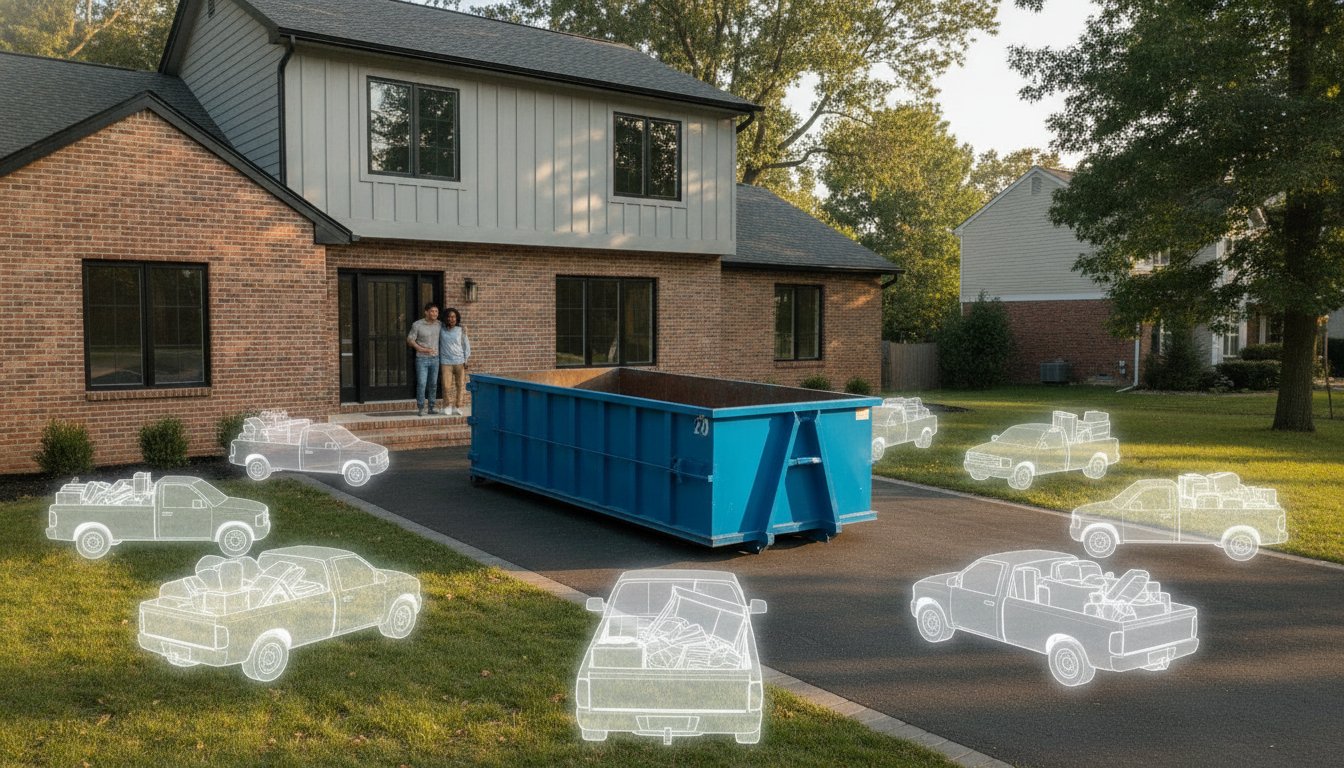
Tearing down a single bathroom can generate over two tons of debris before you even touch the subfloor. Managing this mess is often the most logistically draining part of a gut renovation. You shouldn't have to guess which interior demolition dumpster size fits your project or worry about a heavy load of tile cracking your driveway. Whether you're working on a tight San Francisco street or in a residential New Jersey suburb, the goal is a clean jobsite without the hidden fees or permit anxiety.
We understand that you need reliability, not fluff. This guide provides the tactical strategies required to master debris removal. You'll learn how to choose between 10 and 20-yard dumpsters, which are the sweet spot for most interior work. We also cover how to handle weight limits for heavy materials like plaster and lath. We'll show you how to protect your floors and navigate the permit process in crowded cities like Queens so your project stays on schedule. Read on to streamline your cleanup and book your next container with total confidence.
Key Takeaways
- Select the right interior demolition dumpster size by matching container volume to your material weight, typically using 10-yard bins for heavy tile or 20-yard bins for kitchen guts.
- Navigate urban logistics in cities like Queens or San Francisco by securing necessary street permits and planning for tight delivery clearances.
- Protect your property from damage by using plywood buffers under the roll-off wheels to prevent driveway cracks and floor scrapes during the demo process.
- Manage heavy debris limits effectively to avoid overweight fees, ensuring your load stays within legal hauling capacities even when the bin isn't physically full.
- Streamline your project timeline with an online booking system that offers transparent pricing and reliable scheduling for residential or commercial sites.
What Is an Interior Demolition Dumpster?
An interior demolition dumpster is a roll-off container specifically used for soft demo or selective demolition projects. Unlike general construction bins, these are sized and placed to handle the specific debris generated when you strip a room to its studs. This includes drywall, plaster, flooring, cabinetry, and non-load-bearing partitions. Mastering the disposal of demolition waste is the first step in maintaining a professional jobsite.
Structural demolition involves taking down entire buildings, including the foundation and framing. Interior gutting is different. It requires precision and speed. Relying on private curbside trash pickup for a kitchen gut is a mistake. Most municipal services won't take large volumes of construction debris. A dedicated interior demolition dumpster keeps your workspace clear of trip hazards and dust traps. It ensures your crew stays productive instead of moving piles of trash multiple times. High-volume debris removal requires a container that can handle the weight without damaging your property.
Common Interior Demo Materials
Drywall and plaster are the most common materials you'll face during an interior gut. They create high volume and significant dust. Plaster is particularly heavy because of the wood or metal lath attached. Flooring debris varies wildly. Expect heavy ceramic tiles, dense hardwood bundles, or bulky carpet rolls. Fixtures like sinks, toilets, and cabinetry are often lightweight but take up significant air space. Break these down before loading to maximize your container's capacity. If you don't crush cabinets, you're paying to haul air.
Selective vs. Total Demolition
Selective demolition focuses on specific areas while keeping the rest of the building intact. This often happens in tight urban environments like Queens or San Francisco. In these locations, space is a premium. You may need more frequent swap-outs of smaller 10-yard or 20-yard bins rather than one massive 40-yard container. Sorting your debris also helps with LEED compliance and recycling efforts. Keep wood, metal, and masonry separate if your project requires high sustainability standards. Use the Book Your Dumpster USA online system to schedule these swaps ahead of time. This prevents project delays and keeps the jobsite moving at a high velocity.
Choosing the Right Size for Interior Debris
Selecting the right interior demolition dumpster prevents two major headaches: paying for empty space or calling for a second container halfway through the job. Most interior debris is bulky but manageable if you select the correct volume. Your estimation should start with square footage, but material density matters more for your final choice. If you're pulling up heavy flooring, your needs will differ significantly from someone just removing drywall.
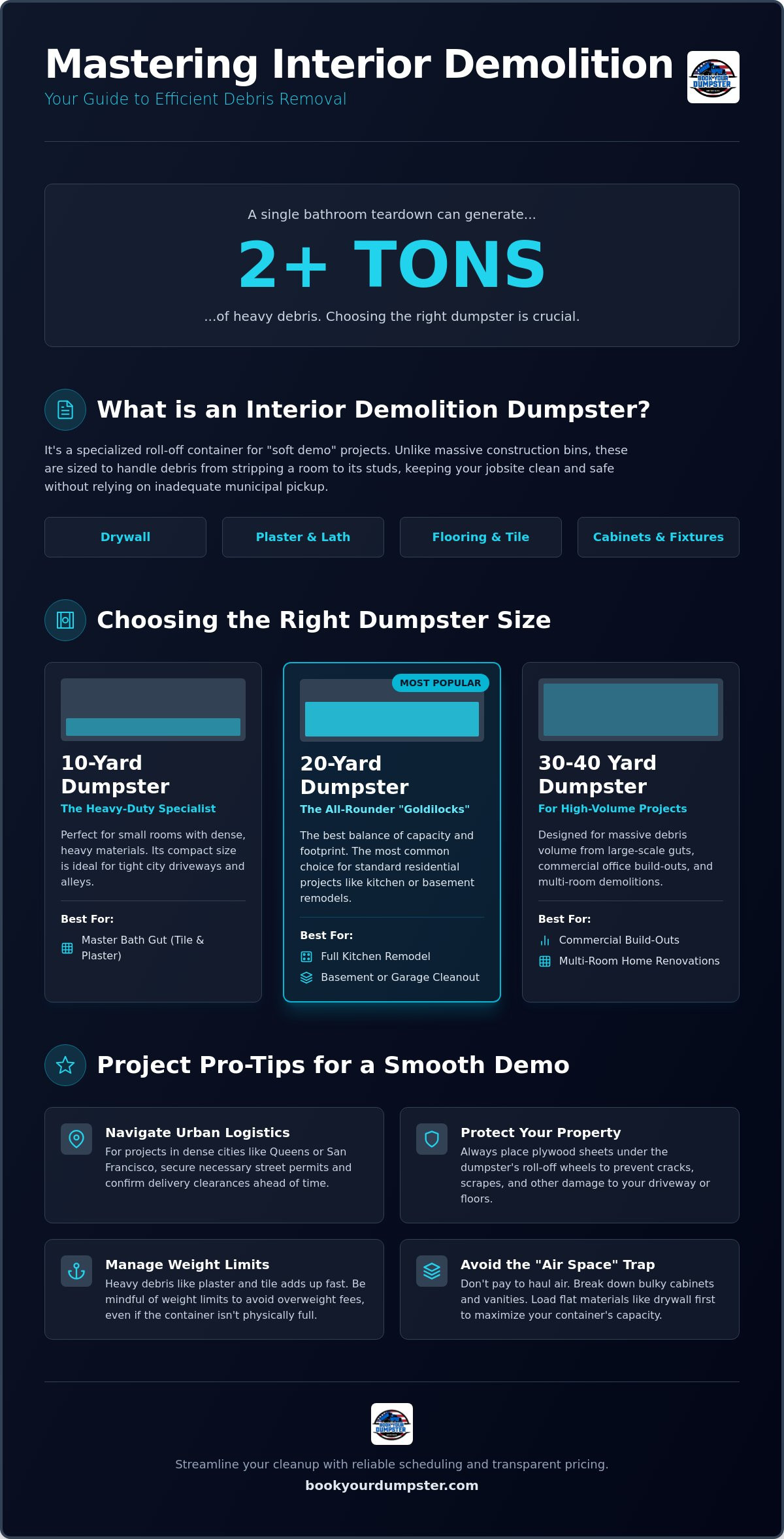
The 10-yard dumpster is your go-to for heavy, dense materials. If you're gutting a small bathroom filled with ceramic tile, mortar, and plaster, don't rent a large bin. The weight of masonry adds up fast. A 10-yard container handles these heavy loads efficiently without exceeding the truck's hydraulic lifting capacity. It's also the easiest size to place in tight alleyways or small city driveways.
The 20-yard dumpster is the "Goldilocks" size for residential work. It's the most common choice for a standard kitchen remodel or a basement cleanout. It provides enough length to lay down trim and drywall sheets while keeping a footprint small enough for most suburban driveways. This size offers the best balance between capacity and site footprint for homeowners and contractors alike.
For large-scale commercial office build-outs or multi-room guts, move up to the 30 or 40-yard dumpsters. These containers are designed for high-volume debris like metal studs, ceiling tiles, and large quantities of carpeting. A 40-yarder is massive. Confirm your site has the 22 feet of linear space required for placement before you schedule delivery. You can compare dimensions and book your size online to keep your project on schedule.
Interior Project Sizing Chart
- Kitchen Remodel: 20-Yard Dumpster. This accounts for cabinets, countertops, and flooring.
- Master Bath Gut: 10-Yard Dumpster. This is usually sufficient for tile, drywall, and old fixtures.
- Full Basement Demolition: 20-30 Yard Dumpster. Use the larger size if you're removing finished ceilings and heavy wood paneling.
The "Air Space" Trap
Don't pay to haul air. Bulky items like kitchen cabinets and vanities should be broken down or smashed flat before they enter the bin. If you toss them in whole, you'll hit the fill line before you've cleared half the room. Load the bottom of the interior demolition dumpster with flat materials like drywall or plywood first. Place heavier, awkward items on top to naturally compress the load. This strategy aligns with the Sustainable Management of Construction and Demolition Materials guidelines by ensuring efficient transport and reducing the total number of hauls. Efficient loading keeps your costs down and your jobsite safe.
Urban Logistics: Placement and Permits
Placement is the most critical logistical hurdle for an interior demolition dumpster in dense environments. In cities like Queens, New York, or San Francisco, curb space is a luxury. You cannot simply drop a container anywhere. You must identify a location that allows for safe loading without obstructing traffic or violating local ordinances. If you have a private driveway, use it. This placement usually bypasses the need for municipal permits and keeps your debris closer to the demo site.
Street placement requires more preparation. In many urban hubs, you must maintain at least 15 feet of clearance from fire hydrants and 20 feet from crosswalks to remain compliant. Failure to respect these boundaries results in immediate fines or the removal of your container at your expense. Ensure the delivery path is clear of parked cars on the scheduled day. A roll-off truck needs roughly 60 feet of linear space to safely drop or pick up a bin. If the driver cannot access the site, you'll face "dry run" fees that inflate your project budget.
Permit Requirements for Street Placement
A city permit is mandatory if any part of the dumpster touches a public right-of-way. These permits typically cost between $20 and $150. The price varies based on the duration of the rental and the specific city fee structure. Obtaining a permit is your responsibility. For more details on regional rules, see our guide on Dumpster Rental in New York, Illinois, and Massachusetts. Ignoring these regulations often leads to stop-work orders that can paralyze your renovation for days.
Protecting Your Property
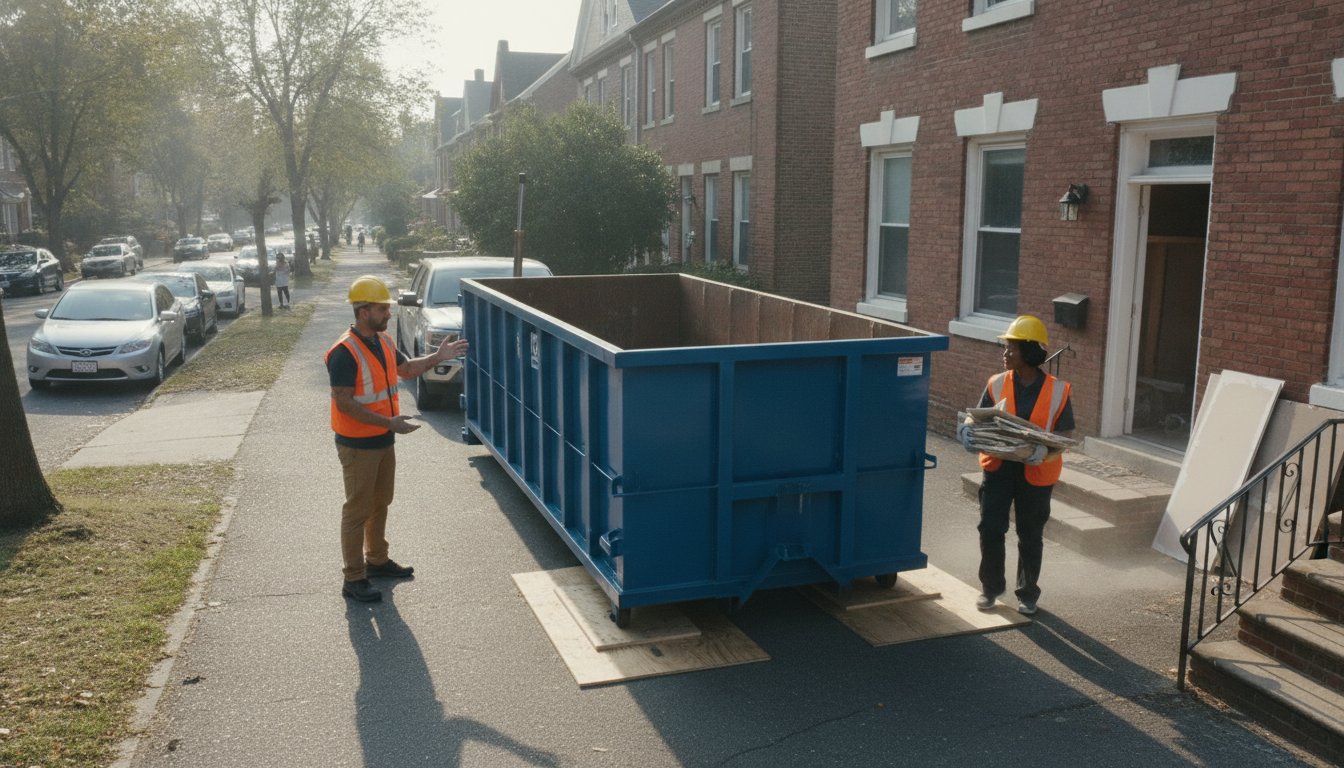
Roll-off containers are heavy. The steel rails can scrape or crack asphalt and concrete driveways during delivery. Protect your property by laying down two 4x8 sheets of 3/4-inch plywood before the truck arrives. This distributes the pressure and prevents the container from sinking into soft surfaces. Proper site preparation is a key part of Managing Weight and Prohibited Items safely. Communicate clearly with your driver about overhead obstructions. Low-hanging tree limbs or power lines can prevent the truck from tilting the bin into place. A 10-yard or 20-yard interior demolition dumpster is manageable, but only if the delivery site is prepped and accessible.
Managing Weight and Prohibited Items
Don't confuse volume with weight. A 20-yard container might look half-empty, but if it's filled with plaster and brick, it could already exceed legal hauling limits. Overweight loads are dangerous. They damage truck hydraulics and violate Department of Transportation regulations. You're responsible for monitoring the load height and density within your interior demolition dumpster. Keep the debris level with or below the top rail. If materials protrude above the rim, the driver cannot secure the safety tarp, and the truck will not leave the site.
Interior gutting often unearths hazardous materials that cannot go into a standard roll-off. Asbestos insulation, lead-based paint chips, and old chemical containers are strictly prohibited. These materials require specialized disposal at certified facilities. If you mix hazardous waste with general demo debris, the landfill will reject the entire load. This results in expensive decontamination fees and immediate project delays. Identify and separate these items before you begin the demo process to keep your costs predictable.
The Plaster and Tile Weight Factor
Plaster and lath are heavier than modern drywall because the thick layers of lime or gypsum cement are backed by dense wood or metal strips that significantly increase the mass per square foot. Because of this high density, heavy materials often require a smaller 10-yard container to stay under legal weight limits. Using a larger bin for masonry or plaster invites the risk of overloading the truck. Stick to smaller containers for high-density guts to ensure a safe, legal, and predictable pickup.
Safety and Compliance
Follow OSHA standards for waste management to protect your crew and your budget. If you're working on a second story or higher, use enclosed debris chutes to move waste into the interior demolition dumpster. This practice contains silica dust and prevents falling debris hazards. If you suspect asbestos or lead in an older building, stop work immediately. Hire a certified inspector to test the materials before you continue. Compliance keeps your jobsite legal and your workers healthy. Secure your project's logistics by visiting bookyourdumpster.com to reserve a container with a weight limit that matches your debris profile.
Booking Your Interior Demo Dumpster Online
Logistical stress can derail even the best-planned renovation. You need a waste management partner that values your time as much as you do. Our streamlined online system removes the friction of traditional rental processes. Secure your interior demolition dumpster with just a few clicks. We prioritize transparency, which means you'll never see surprise fuel surcharges or hidden environmental fees on your final invoice. The price you see during the booking process is the price you'll pay for delivery and pickup. This clarity allows you to manage your project budget with total precision.
Success depends on precise timing. Schedule your delivery at least 24 hours before your crew arrives on-site. This buffer ensures that your demolition starts on schedule without workers standing around waiting for a bin. We provide reliable service across NY, NJ, IL, MA, and SF. Our local drivers understand the nuances of these regions, from the narrow streets of San Francisco to the busy avenues of Queens. This regional expertise ensures that your container arrives exactly where you need it, avoiding the "dry run" fees associated with haulers who don't know the local landscape.
Step-by-Step Online Ordering
Our digital platform is designed for speed and clarity. First, select your container size based on the specific volume of your project. If you're unsure, use our interior project sizing chart to decide between 10, 20, 30, and 40-yard options. Second, provide precise delivery instructions. This is especially important for urban sites where every inch of curb space matters. Mention specific gate codes or overhead obstructions like low branches. Third, manage your rental duration. You can easily adjust your rental period if your multi-phase demolition takes longer than expected. This flexibility allows you to adapt to the realities of construction without unnecessary stress.
The Book Your Dumpster Difference
We've modernized a traditional industrial sector through digital convenience and straightforward honesty. Reliability is our rhythmic promise. We treat every booking as a verbal handshake, ensuring your project stays on track from start to finish. If you're tackling a smaller project like a master bath gut, read our 10 Yard Dumpster Rental: The Complete Buying Guide to maximize your efficiency. Clear the way for your next renovation today. Book your interior demolition dumpster now at BookYourDumpster.com and take control of your jobsite logistics.
Take Control of Your Project Logistics
Successful interior renovations depend on tactical waste management. You now understand how to select the ideal bin size for your debris volume and how to navigate the strict permit requirements of crowded urban hubs. Protecting your property with plywood and monitoring weight limits for heavy plaster and tile prevents expensive damage and hauling delays. These strategies ensure your jobsite remains clear, safe, and professional from the first wall tear-down to the final sweep.
Don't let logistical stress compromise your project timeline. We offer expert support for residential and commercial guts across NY, NJ, IL, MA, and San Francisco. Our system provides no-nonsense pricing and allows you to complete your online booking in under 5 minutes. Rent your interior demolition dumpster online today to secure a dependable tool for your cleanup. Your renovation is messy enough; your debris removal shouldn't be. Start your demo with the confidence of a professional.
Frequently Asked Questions
What is the best dumpster size for a kitchen demolition?
A 20-yard dumpster is the best choice for a standard kitchen demolition. This size provides enough volume for cabinetry, countertops, and old appliances without taking up excessive space on your property. If your kitchen includes heavy masonry or extensive tile flooring, consider a 10-yard bin to stay under legal weight limits. Always break down cabinets to maximize the available space.
Can I put plaster and lath in a standard roll-off dumpster?
Yes, you can place plaster and lath in a standard roll-off container. However, you must monitor the weight carefully because plaster is significantly heavier than modern drywall. Loading a large bin with nothing but plaster often leads to overweight fees. Use an interior demolition dumpster in a 10-yard or 20-yard size to keep the load manageable for the hauling truck.
Do I need a permit to put a dumpster on the street in Queens or San Francisco?
You must obtain a permit for any dumpster placed on a public street in Queens or San Francisco. These cities have strict right-of-way laws to maintain traffic flow and safety. If you place the container in a private driveway, a permit is usually unnecessary. Check local municipal websites for current application fees and processing times before you schedule your delivery.
How much weight can a 10-yard dumpster hold for interior debris?
A 10-yard dumpster typically holds between 2 and 3 tons of interior debris. This capacity is ideal for dense materials like ceramic tile, mortar, and bathroom fixtures. If you exceed this limit, the truck's hydraulic system may struggle to lift the bin safely. Always distribute the weight evenly along the floor of the container to ensure a successful and legal pickup.
Will a dumpster damage my driveway during a renovation?
A dumpster can damage your driveway if you don't take proper precautions. The heavy steel rails of a roll-off container can scrape or crack asphalt and concrete during the delivery and pickup process. Place two sheets of 3/4-inch plywood on the ground where the bin will sit. This simple step distributes the pressure and protects your property from costly repairs.
What items are prohibited in an interior demolition dumpster?
Prohibited items include hazardous materials like asbestos, lead-based paint, chemicals, and batteries. You also cannot dispose of appliances containing refrigerants, tires, or propane tanks in an interior demolition dumpster. Mixing these items with general construction waste results in landfill rejection and expensive decontamination fees. Contact a specialized waste facility for these specific materials to stay compliant.
How long can I keep the dumpster for my home renovation project?
Most residential rental periods last between 7 and 10 days. This timeframe is usually sufficient for a standard room gut or a basement cleanout. If your project timeline shifts, you can typically extend your rental for a daily fee. Communicate your needs early to ensure the container remains on-site until your demolition phase is completely finished.
How far in advance should I book my dumpster for a commercial demo?
Book your dumpster at least 24 to 48 hours in advance for any commercial demolition project. Large-scale jobsites require precise timing to keep crews productive and avoid logistical bottlenecks. Early scheduling ensures that the specific size you need is available and that the delivery truck can access the site before your crew begins the tear-out.