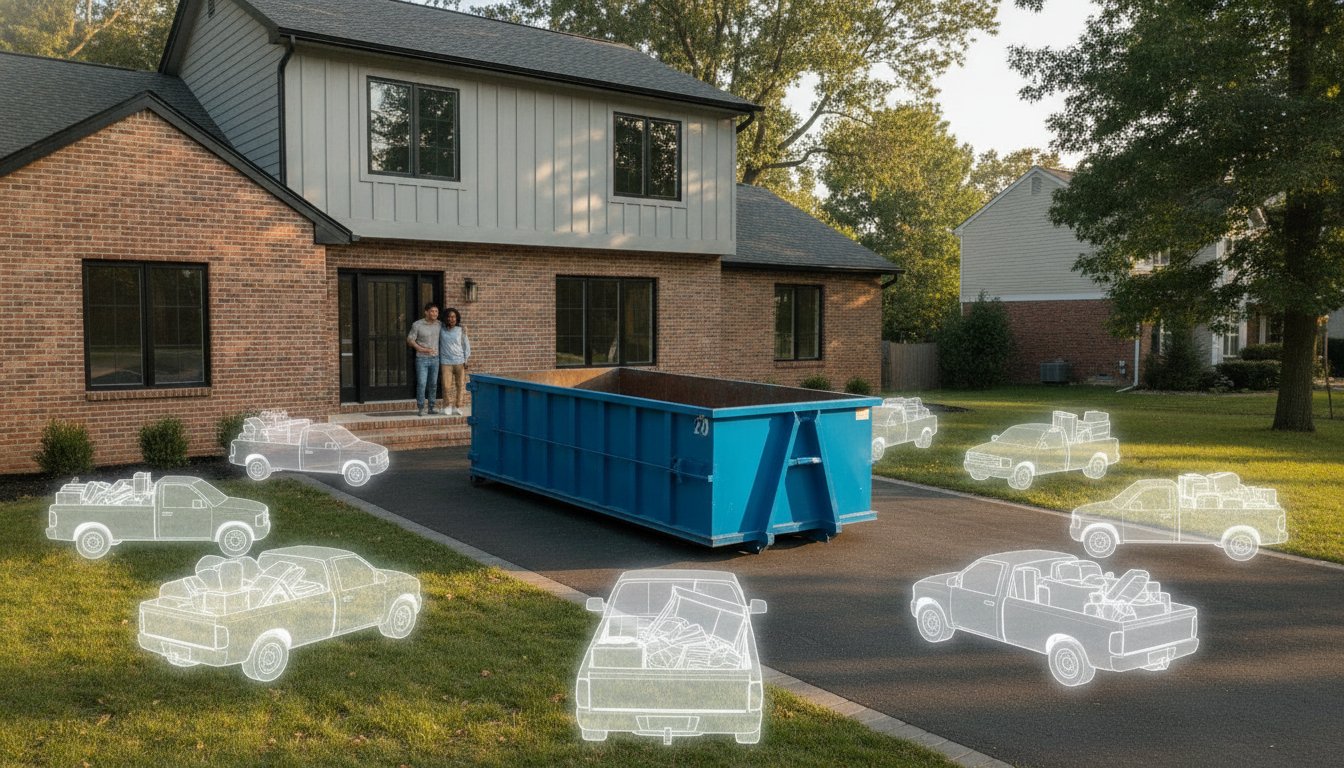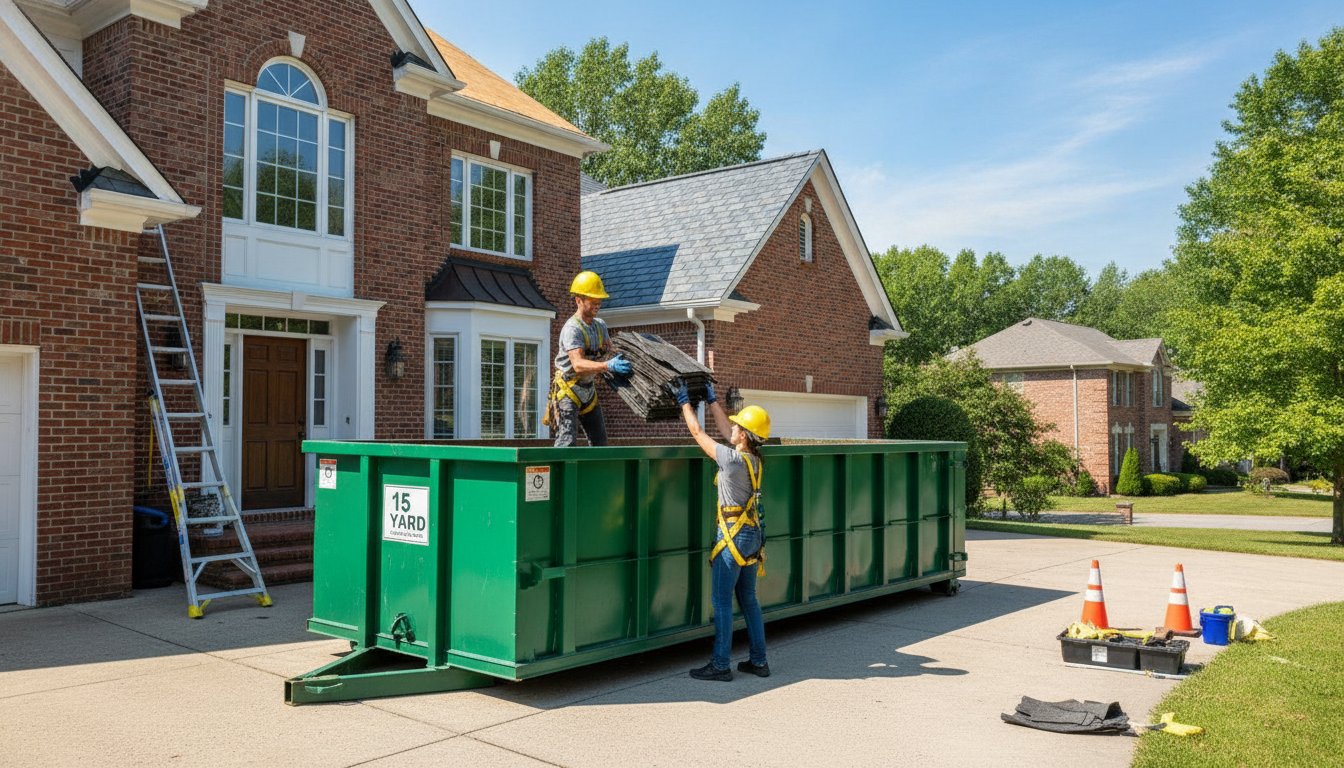

Your next roofing project's profit margin isn't determined by the quality of the shingles, but by how fast you can get the old ones off the property. You've likely dealt with the frustration of a crew standing idle because a container didn't arrive on time or felt the sting of an unexpected overage fee because of heavy asphalt shingles. Utilizing professional waste disposal services for roofing companies is no longer just a convenience; it's a critical component of your operational efficiency in 2026.
We understand that roofing is a game of weight and timing. This guide shows you how to optimize jobsite safety, manage heavy loads with precision, and protect your bottom line from hidden costs. You'll learn how to leverage transparent weight limits for asphalt and tile while using easy online booking to manage swap-outs directly from the jobsite. Stop letting logistics stall your progress and start streamlining your tear-offs today.
Key Takeaways
- Understand how specialized waste disposal services for roofing companies improve jobsite safety and ensure OSHA compliance during heavy tear-offs.
- Learn why the 10-yard dumpster is the essential choice for heavy debris and how to calculate roofing squares to avoid overloading.
- Identify the specific disposal and recycling requirements for asphalt, tile, and metal roofing to manage your waste streams efficiently.
- Implement best practices for container placement and timing to protect your customer's property and keep your crew moving.
- Access streamlined online tools for instant booking and reliable delivery in key service areas like New York, Illinois, and Massachusetts.
Why Specialized Waste Disposal Services are Critical for Roofing Companies
Roofing waste isn't standard trash. It's heavy, abrasive, and high-volume. Professional waste disposal services for roofing companies provide the specialized logistics required to move tons of asphalt and tile without slowing down your crew. If you treat your tear-off debris like residential garbage, you'll face delays and overage fees that eat your project margins. Efficient disposal is a logistics strategy that keeps your jobsite moving and your overhead low.
Clear jobsites are safe jobsites. OSHA inspectors look for debris accumulation that blocks egress or creates trip hazards. By keeping a roll-off container staged correctly, you eliminate the need for "double handling." This means your team throws debris directly from the roof into the bin once, rather than piling it on the lawn and moving it again later. Every time a worker touches a shingle twice, you lose money on labor efficiency.
The High Cost of Debris Mismanagement
Crew downtime is a silent profit killer. If your crew finishes a tear-off and the bin is full, but the swap-out is delayed, you're paying for idle hands. Reliable waste disposal services for roofing companies ensure that a fresh container is ready when you need it. Beyond labor costs, scattered shingles and loose nails lead to property damage claims. One flat tire on a customer's car can ruin your company's reputation. A clean, well-placed bin acts as a branding tool, signaling to the neighborhood that your operation is professional and organized.
Navigating Local Regulations in 2026
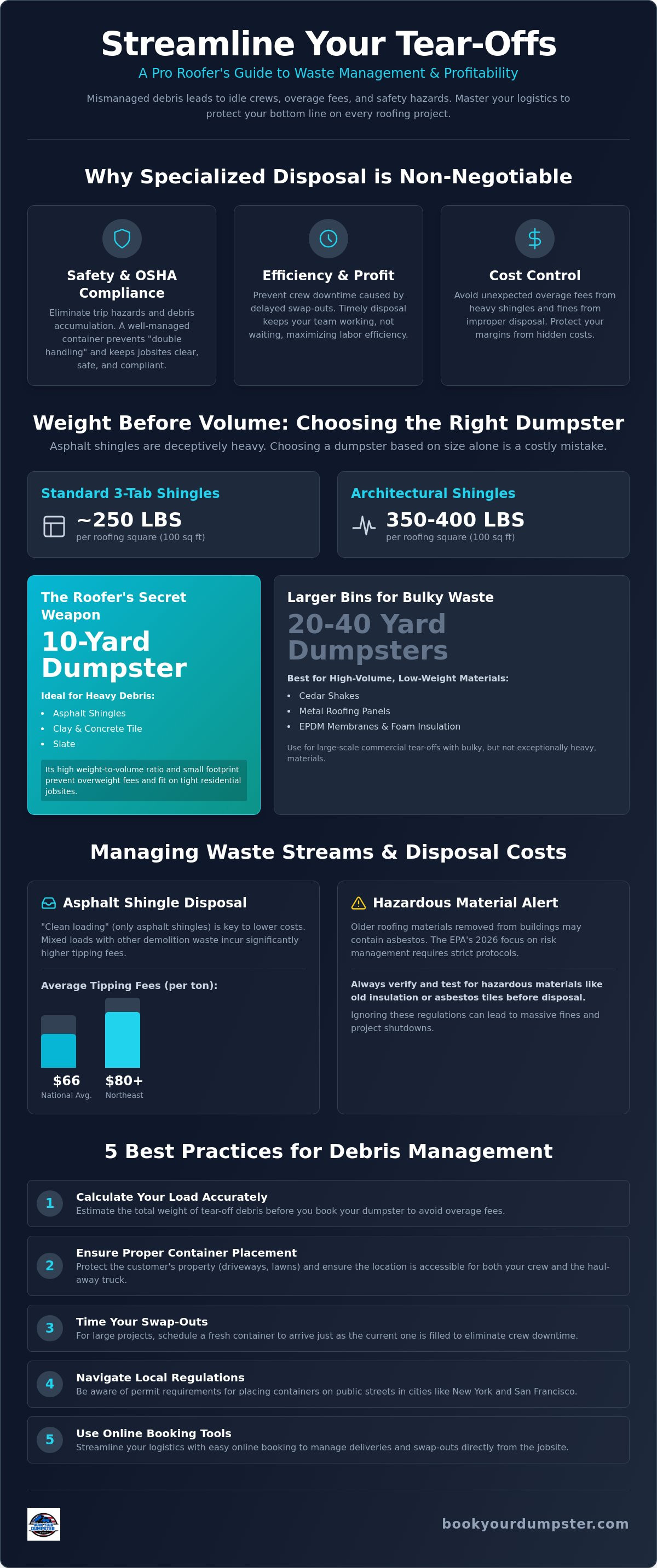
In 2026, compliance is more complex. Major hubs like New York and San Francisco have strict permit requirements for placing containers on public streets. You must also distinguish between "clean loading" asphalt shingles and mixed Demolition waste. Mixed loads often incur higher tipping fees, which averaged $65.84 per ton nationally in recent years, though rates in the Northeast can exceed $80 per ton. Be aware that the EPA's 2026 focus on asbestos risk management means older roofing materials require specific testing and disposal protocols. Ignoring these rules can result in massive fines and project shutdowns. Always verify if your load contains hazardous materials like old insulation or asbestos tiles before scheduling your pickup.
Choosing the Right Dumpster Size for Roofing Debris
Selecting a container based solely on cubic volume is a rookie mistake that costs roofing contractors thousands in rejected pick-ups. When you evaluate waste disposal services for roofing companies, you are buying weight capacity, not just empty space. Asphalt shingles are incredibly dense; a single square (100 square feet) of standard three-tab shingles weighs approximately 250 pounds. If you're tearing off architectural shingles, that number jumps closer to 350 or 400 pounds per square. Filling a 40-yard bin to the brim with these materials makes the container physically impossible for a standard roll-off truck to lift.
To stay compliant with the Resource Conservation and Recovery Act (RCRA) and local road safety laws, you must calculate your load before booking. For most residential tear-offs, a smaller container with a higher weight-to-volume ratio is the safer, more profitable choice. If you're unsure about your specific load requirements, you can check availability and weight limits online to ensure your project stays on track.
The 10-Yard Dumpster: The Roofer’s Secret Weapon
The 10-yard dumpster is the gold standard for heavy materials like slate, clay tile, and concrete shingles. While competitors often dismiss this size as being for small repairs, experienced contractors know it is often the only legal option for heavy debris. Its small footprint is essential for navigating tight residential driveways in metro areas like Queens, Boston, or San Francisco. Using a 10-yard bin prevents the overfilled weight penalties that occur when crews get overzealous with a larger container. It forces a disciplined loading process that keeps your haulers happy and your margins protected.
20 to 40-Yard Bins for Large Scale Tear-Offs
There are specific scenarios where scaling up is necessary. For high-volume but low-weight materials, 20-yard roll-off rentals offer the perfect balance for cedar shakes or foam insulation. Commercial flat roofs often generate massive amounts of bulky waste, such as EPDM membranes or thick polyiso board, which require the extra height of a 30-yard or 40-yard bin. When managing multi-family projects, coordinate your swaps carefully. Use larger bins for the light bulky items and stick to 10 or 20-yard containers for the primary shingle tear-off to avoid exceeding the truck's hydraulic lift capacity.
Asphalt vs. Metal vs. Tile: Managing Different Waste Streams
Effective waste management begins with material separation. Mixing different types of debris in a single bin often results in the highest possible tipping fee and limits your recycling options. For standard asphalt projects, differentiate between three-tab and architectural shingles. Architectural shingles are significantly denser and will hit your weight limit faster than standard shingles. When you utilize waste disposal services for roofing companies, specify the material type during the booking process. This ensures you receive a container rated for the specific tonnage of your tear-off and helps you avoid logistical bottlenecks.
Metal components require a different strategy. Metal roofing and aluminum flashing are highly recyclable and should be kept separate from asphalt whenever possible. Conversely, commercial membranes like EPDM, TPO, and PVC are bulky but relatively light. The real danger in commercial work is the ballasted roof system. Removing the river rock or gravel used in these systems creates extreme weight. Never attempt to load ballast into a large 30 or 40-yard bin without a strict plan for weight distribution. These systems require heavy-duty logistics to prevent truck lift failures and road weight violations.
Weight Limits and Overage Fees
Precision is your best defense against overage fees. Estimating a multi-layer tear-off requires careful calculation; two layers of asphalt shingles on a 30-square roof can easily exceed 7 tons. In states like Massachusetts and Illinois, where tipping fees are high, overage charges typically range from $50 to $100 per additional ton. The Northeast average tipping fee sits around $80.67 per ton, making weight errors expensive for your bottom line. Maintain a "Roofing Square" log for every job. Track the number of squares removed and the layer count to stay within your tonnage cap and avoid surprise costs on your final invoice.
Sustainable Disposal and Recycling
Sustainability is no longer a niche concern; it's a market driver. The asphalt shingle recycling industry reached a value of $2.27 billion in 2025. Many facilities now divert these shingles for use in road paving projects instead of letting them sit in landfills. For commercial contractors, providing LEED certification documentation for diverted waste is a powerful competitive advantage. It proves your commitment to professional standards and helps your clients meet their own environmental goals. Sort your metal and shingles at the jobsite to reduce your environmental footprint and lower your total disposal costs.
5 Best Practices for Roofing Debris Management
Coordinate every delivery for the "Tear-Off Morning" to maximize your crew's efficiency. If your team arrives at 7:00 AM and the container isn't staged until 10:00 AM, you've lost three hours of peak productivity. High-performing contractors treat waste logistics as a mission-critical schedule item. Professional waste disposal services for roofing companies prioritize punctuality to keep your project on track and your labor costs down. Schedule your delivery for the day before if you expect an early start.
Train your crew on the discipline of level loading. An overfilled bin is a safety hazard for the hauler and other motorists on the road. If shingles or tiles protrude above the top rail, the driver may refuse the pick-up to avoid DOT violations. This results in a "dry run" fee and stalls your progress. To maintain a high-velocity workflow, schedule your swap-outs when the bin reaches 80% capacity. This buffer prevents your team from standing idle while waiting for a fresh container. To secure your containers for the next job, book your dumpster online through our streamlined portal.
Jobsite Safety and Accessibility
Maintain clear egress paths for both your workers and the homeowners. A cluttered jobsite is an invitation for OSHA fines and worker injuries. Use professional roofing chutes to direct debris from the roof directly into the center of the bin. This minimizes ground-level mess and reduces the time spent on final clean-up. After the bin is removed, perform a final pass with a high-powered magnetic sweep. Spent nails are the most common cause of customer complaints; removing them before you leave the site ensures a professional finish and protects your reputation.
Protecting the Client’s Property
Prevent "dumpster rash" on residential driveways by using protective barriers. Heavy roll-off containers can scar soft asphalt or crack pavers if placed directly on the surface. Always place 3/4-inch plywood or dedicated pads under the wheels to distribute the weight. Before the truck arrives, check for overhead clearance issues. In dense metro areas like Queens or Boston, low-hanging power lines and tree limbs can block the hoist's path. Communicate clearly with the homeowner about where the bin will sit. This avoids the frustration of a blocked garage or an inaccessible mailbox during the project.
Streamline Your Roofing Logistics with Book Your Dumpster USA
Managing a roofing business is demanding enough without the headache of chasing down dumpster drivers. Book Your Dumpster USA provides the high-functioning tools you need to stay in control of your site. By integrating specialized waste disposal services for roofing companies into your daily workflow, you eliminate the friction of traditional rental models. We focus on reliability and punctuality across New York, New Jersey, Illinois, and Massachusetts, ensuring your crew stays on the roof and off the phone.
Our services are designed for the high-volume contractor who needs more than just a bin. By choosing professional waste disposal services for roofing companies, you gain a partner that understands the specific challenges of your trade. Whether you require a 10-yard dumpster for a residential tear-off or comprehensive construction debris removal for a commercial development, we provide the right equipment. We understand that in major hubs like San Francisco or Queens, permit requirements and tight spaces demand local expertise. We deliver that expertise through a digital-first platform that respects your time and urgency.
Transparency is our verbal handshake. Many providers hide behind vague quotes that eventually include fuel surcharges or environmental fees. We don't do that. You get clear, upfront pricing that allows you to bid your projects with confidence. This pricing integrity ensures your margins remain protected from the moment you book until the final pick-up is complete. We remove the logistical stress so you can focus on building roofs.
The Advantage of Instant Online Scheduling
Stop wasting time on hold or waiting for callbacks. Use our streamlined online booking system to schedule your next bin directly from the jobsite. Manage multiple projects through a single digital dashboard and receive real-time updates on your delivery and pickup status. This level of control allows you to coordinate crew arrivals and material deliveries with surgical precision, even while you're standing on the roof. Our mobile-friendly portal is available 24/7 to match your working hours.
Partnering for High-Volume Roofing Success
We prioritize our recurring roofing partners with dedicated scheduling and customized waste management plans. For large-scale commercial developments, we coordinate complex swap-out sequences that keep your site compliant and efficient. Don't settle for unreliable vendors who stall your momentum with delivery delays. Take control of your project logistics and book your roofing dumpster now to experience a more professional way to manage your tear-offs.
Optimize Your Tear-Off Efficiency
Mastering the logistics of a tear-off is what separates profitable roofing contractors from those struggling with administrative overhead. You now know that choosing the right container size and managing weight limits for asphalt or tile is essential for avoiding overage fees. Utilizing professional waste disposal services for roofing companies ensures that your crew stays focused on the installation rather than waiting for a delayed swap-out. Efficiency is a choice that impacts every project margin.
We provide the specialized 10 and 20-yard bins required for heavy shingle loads and the local expertise needed to navigate complex parking permits in New York, Illinois, and San Francisco. Our digital-first booking system gives you 24/7 access to schedule deliveries and swap-outs directly from the jobsite. This removes the logistical friction and lets you manage multiple projects with total transparency. Streamline your next roofing project—Book Your Dumpster Online and keep your jobsite moving without the stress. Your next successful tear-off starts with a reliable partner who understands the weight of the job.
Frequently Asked Questions
How many squares of shingles fit in a 10-yard dumpster?
A 10-yard dumpster typically holds 30 to 40 squares of standard three-tab asphalt shingles. If you're removing architectural shingles, they're denser and heavier, so you should limit the load to 25 or 30 squares. Always calculate your weight based on 250 pounds per square for three-tab and up to 400 pounds for architectural shingles to avoid hitting the truck's lift limit.
Can I put roofing felt and underlayment in the same dumpster as shingles?
You can dispose of roofing felt, synthetic underlayment, and plastic caps in the same container as your shingles. These items are standard components of a tear-off and are accepted at most construction and demolition landfills. Keep metal flashing and aluminum gutters separate if you want to take advantage of lower tipping fees for clean metal recycling at specialized facilities.
What happens if my roofing dumpster is over the weight limit?
Exceeding the weight limit results in overage fees that typically range from $50 to $100 per additional ton. If the container is so heavy that the truck's hydraulic system can't lift it, the driver will leave the bin on your jobsite. You'll then have to manually remove the excess debris and pay a dry run fee for the failed pick-up attempt.
Do roofing companies need a permit for a dumpster on the street in Chicago or New York?
Yes, both Chicago and New York require specific permits for any container placed on a public street or sidewalk. New York requires a Department of Transportation permit, while Chicago uses a public way use permit. Check these local regulations before scheduling your waste disposal services for roofing companies to ensure you have the required documentation displayed on the jobsite.
Can I dispose of cedar shakes and asphalt shingles together?
You can mix cedar shakes and asphalt shingles, but it's often more expensive than keeping them separate. Cedar is bulky and light, while asphalt is dense and heavy. Mixing them usually results in a "mixed load" rate at the landfill, which is higher than the "clean load" rate many facilities offer for pure asphalt shingle recycling.
How much clearance does a roll-off truck need for a roofing jobsite delivery?
A roll-off truck needs approximately 22 to 25 feet of vertical clearance to raise the hoist and drop the bin. You also need a path at least 10 feet wide and 60 feet of straight distance for the truck to maneuver. Ensure there are no low-hanging power lines or tree limbs that could block the hoist during the delivery or pick-up process.
Are there specific dumpsters for heavy tile or slate roofing?
Use a 10-yard or 20-yard dumpster for tile, slate, or concrete roofing materials. These materials are extremely heavy and will exceed the weight capacity of larger bins before the container is even half full. Professional waste disposal services for roofing companies recommend these smaller sizes to ensure the truck can safely lift the load without damaging the customer's driveway.
How far in advance should a roofing company book a waste disposal service?
Book your dumpster at least 24 to 48 hours before your scheduled tear-off to ensure the container is staged on time. While our online portal allows for instant scheduling, peak roofing seasons can limit the availability of specific sizes like the 10-yard bin. Scheduling early prevents your crew from standing idle on the morning of the project while waiting for a delivery.